It was listed by Opus Antiques. Sold pieces stay on Sellingantiques as a record of what has passed through, and the next one is rarely far away.
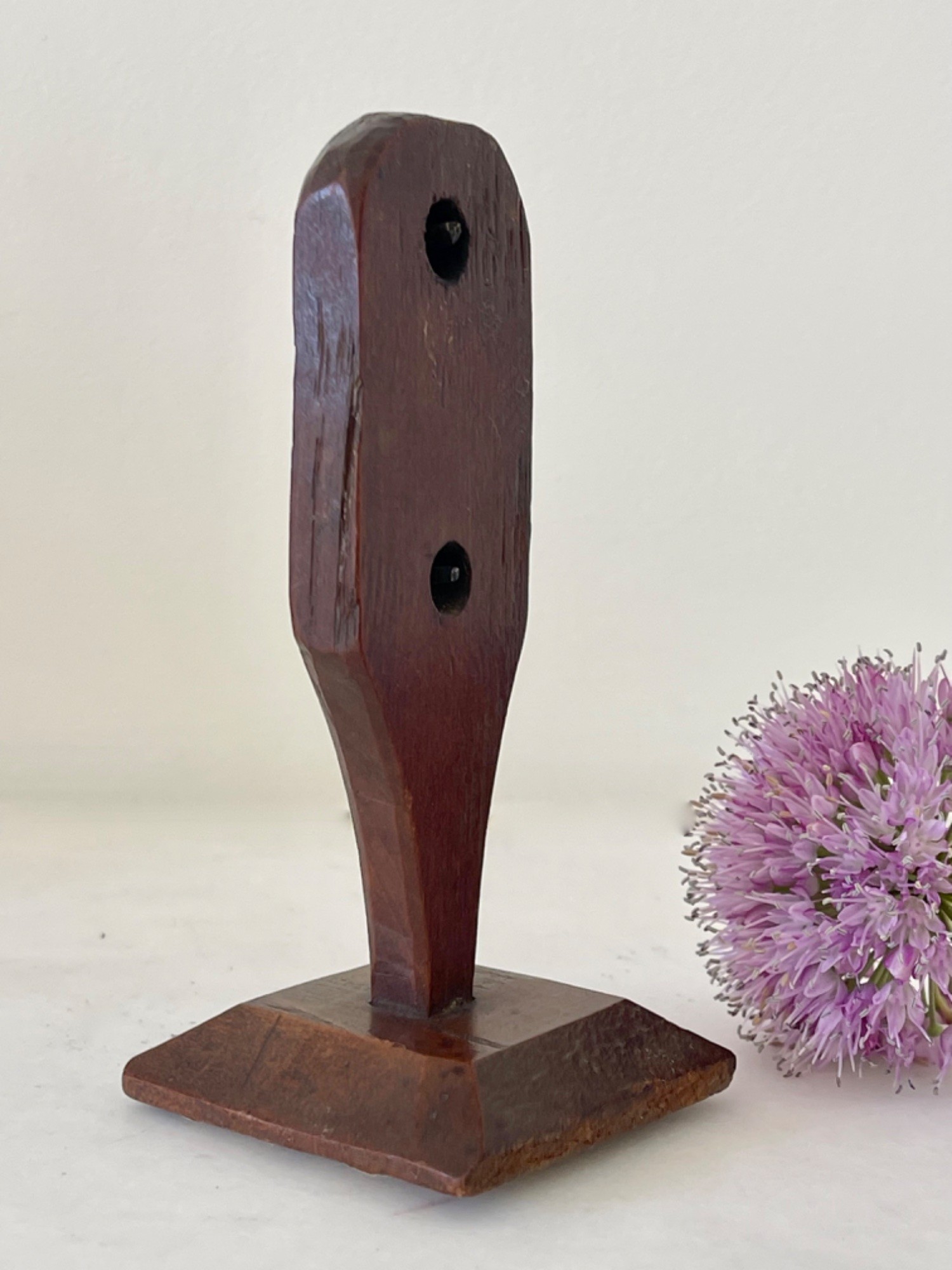
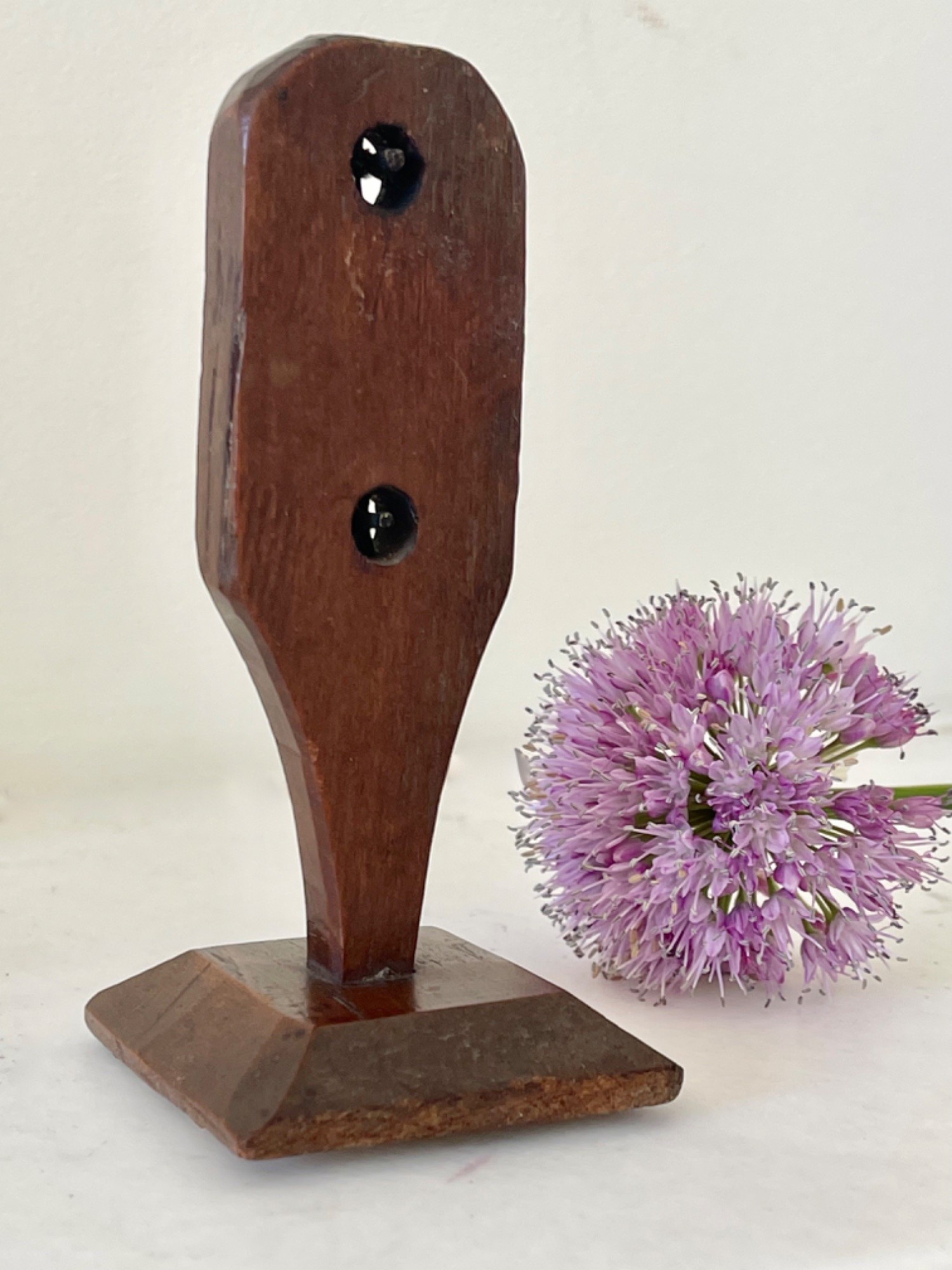
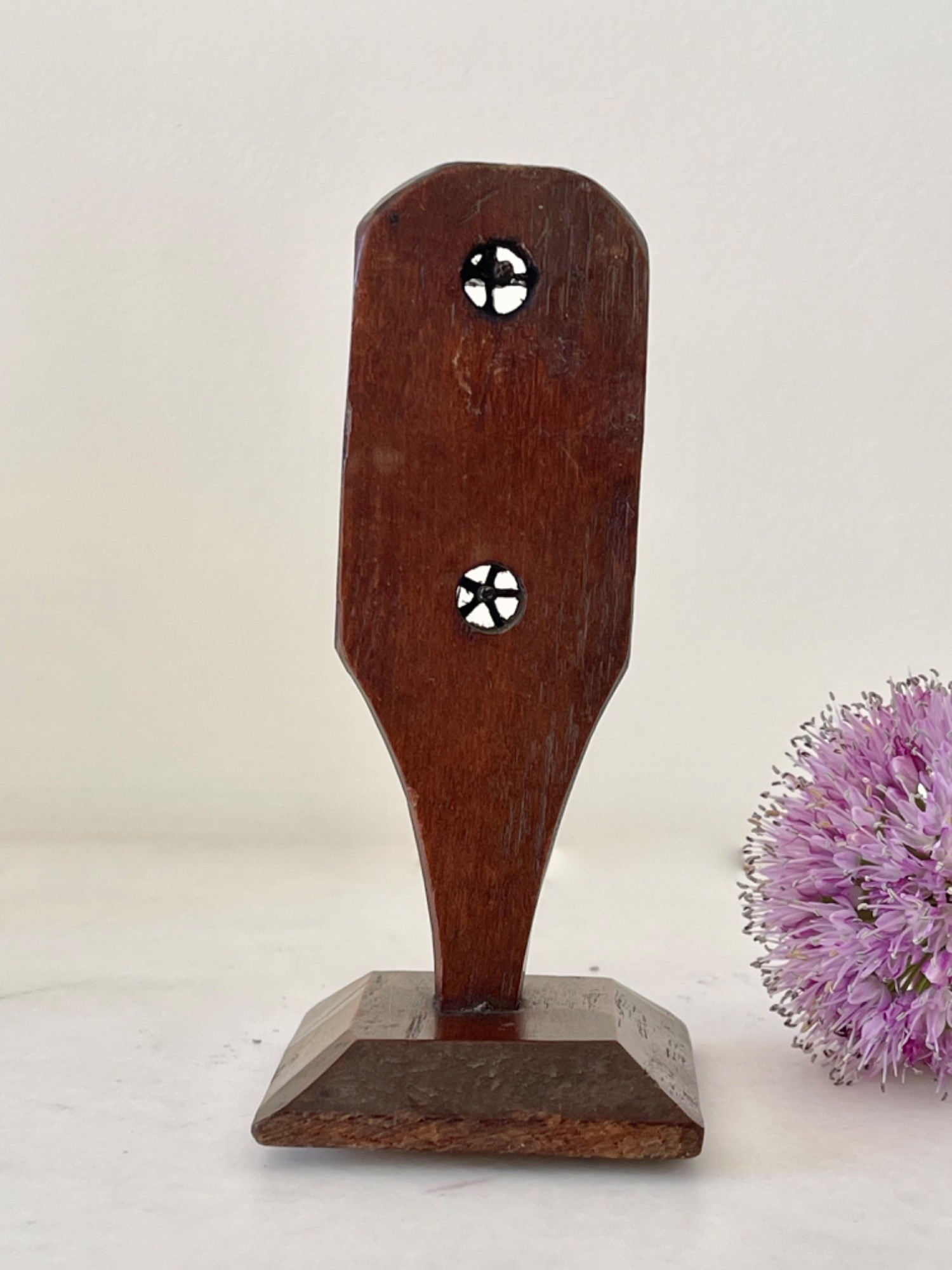
Opus Antiques has dated this Antique Treen Straw Splitter to the 19th Century.
An old owners label is on the underside of the base.
It measures 11cm h x 4.7cm w.
But it is now widely accepted that it was invented by a French Prisoner of War whilst in England, documents refer to it being invented at Yaxley Barracks near Stilton around 1803-1806.
It was a fantastic tool for splitting straw, rather than by using knives, which was laborious and inconsistent and not possible to cut it very fine.
The straw splitter is a very simple tool consisting of circular central pins from which small knives or blades radiated out, from three to ten blades., like spokes.
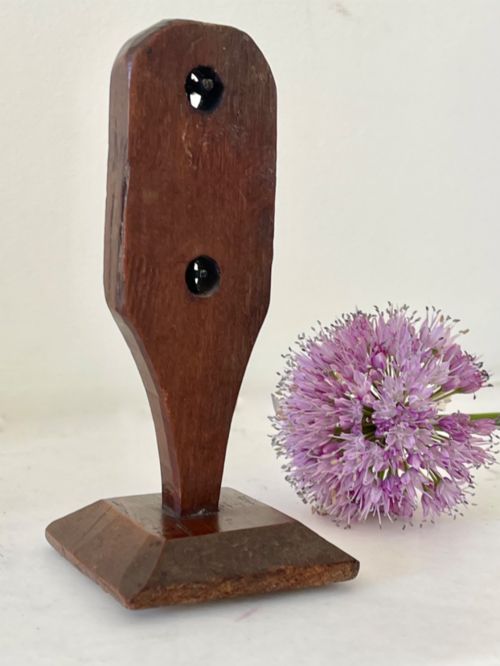
The central pin was used as a guide and a dampened straw was pushed through the blades where it was sliced into thin slithers.
After splitting, the straw would be flattened by rollers so that it would then be ready for plaiting.
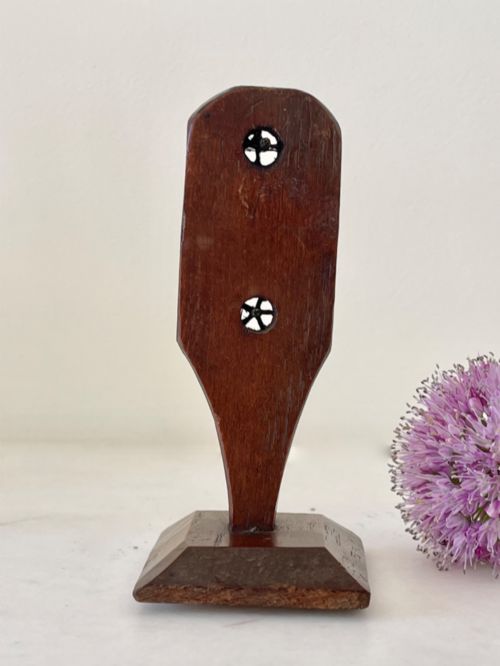
The prisoners would use both the shiny yellow outside of the straw or the white inside of the straw or alternate between the two.
This little invention enabled the French Prisoners to produce very fine plait which in turn was used to make very skilful straw boxes, cabinets etc. which were in very high demand at the time.
This is a 19th century straw splitter, with two different blade sizes, 5 and 4.
An old owners label is on the underside of the base.
It measures 11cm h x 4.7cm w.
There have been many different English men, (at least half a dozen), who claim to have invented the humble straw splitter. But it is now widely accepted that it was invented by a French Prisoner of War whilst in England, documents refer to it being invented at Yaxley Barracks near Stilton around 1803-1806.
It was a fantastic tool for splitting straw, rather than by using knives, which was laborious and inconsistent and not possible to cut it very fine.
The straw splitter is a very simple tool consisting of circular central pins from which small knives or blades radiated out, from three to ten blades., like spokes.
The central pin was used as a guide and a dampened straw was pushed through the blades where it was sliced into thin slithers.
After splitting, the straw would be flattened by rollers so that it would then be ready for plaiting.
The prisoners would use both the shiny yellow outside of the straw or the white inside of the straw or alternate between the two.
This little invention enabled the French Prisoners to produce very fine plait which in turn was used to make very skilful straw boxes, cabinets etc. which were in very high demand at the time.
The paddle straw splitter dates from around 1830-40 and should be remembered for their importance in the straw plaiting industry.
Opus Antiques has dated this Antique Treen Straw Splitter to the 19th Century.
Antique treen, boxes & decorative georgian items
You can view the stock and full dealer information on the Opus Antiques Profile Page
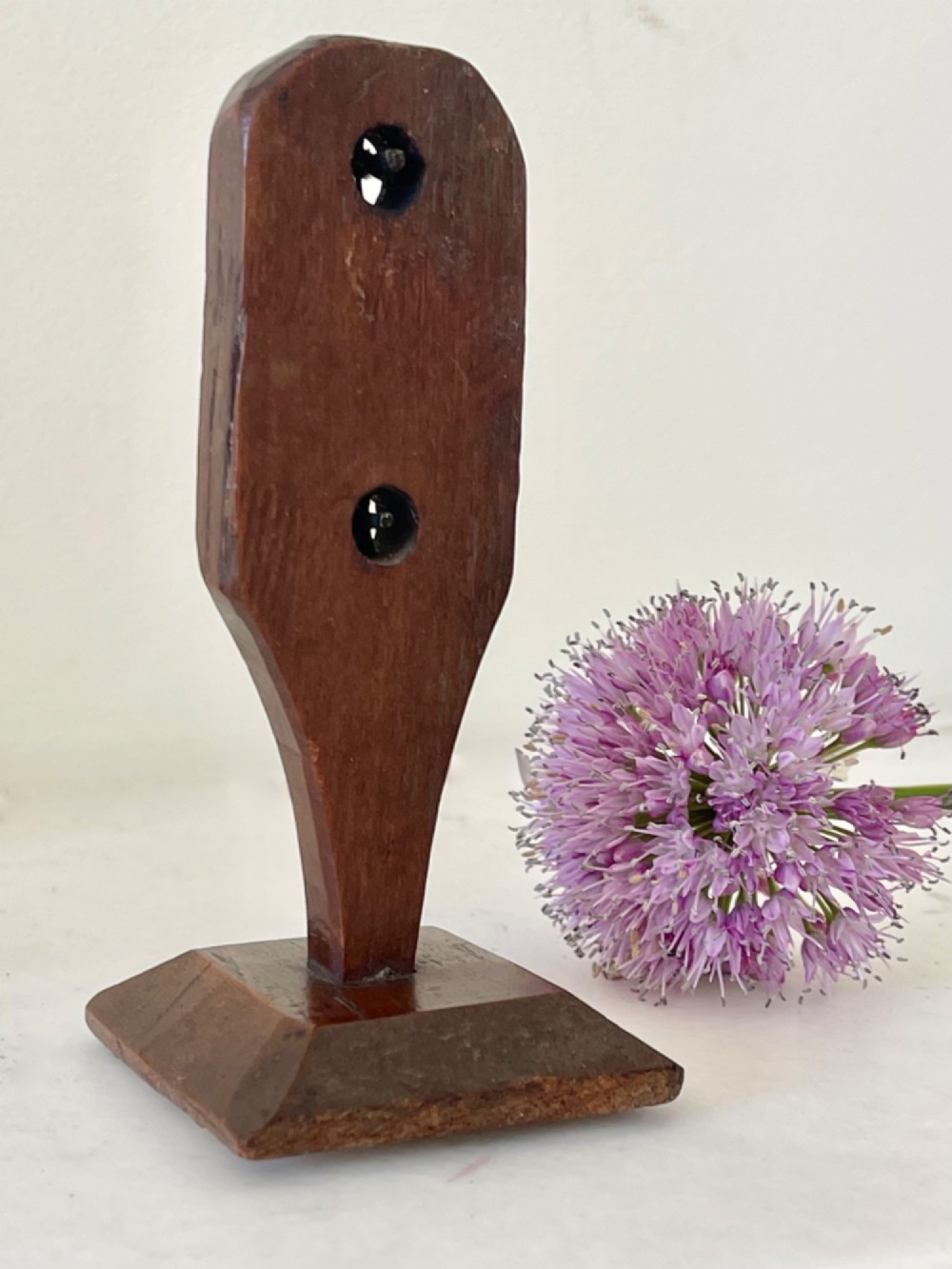
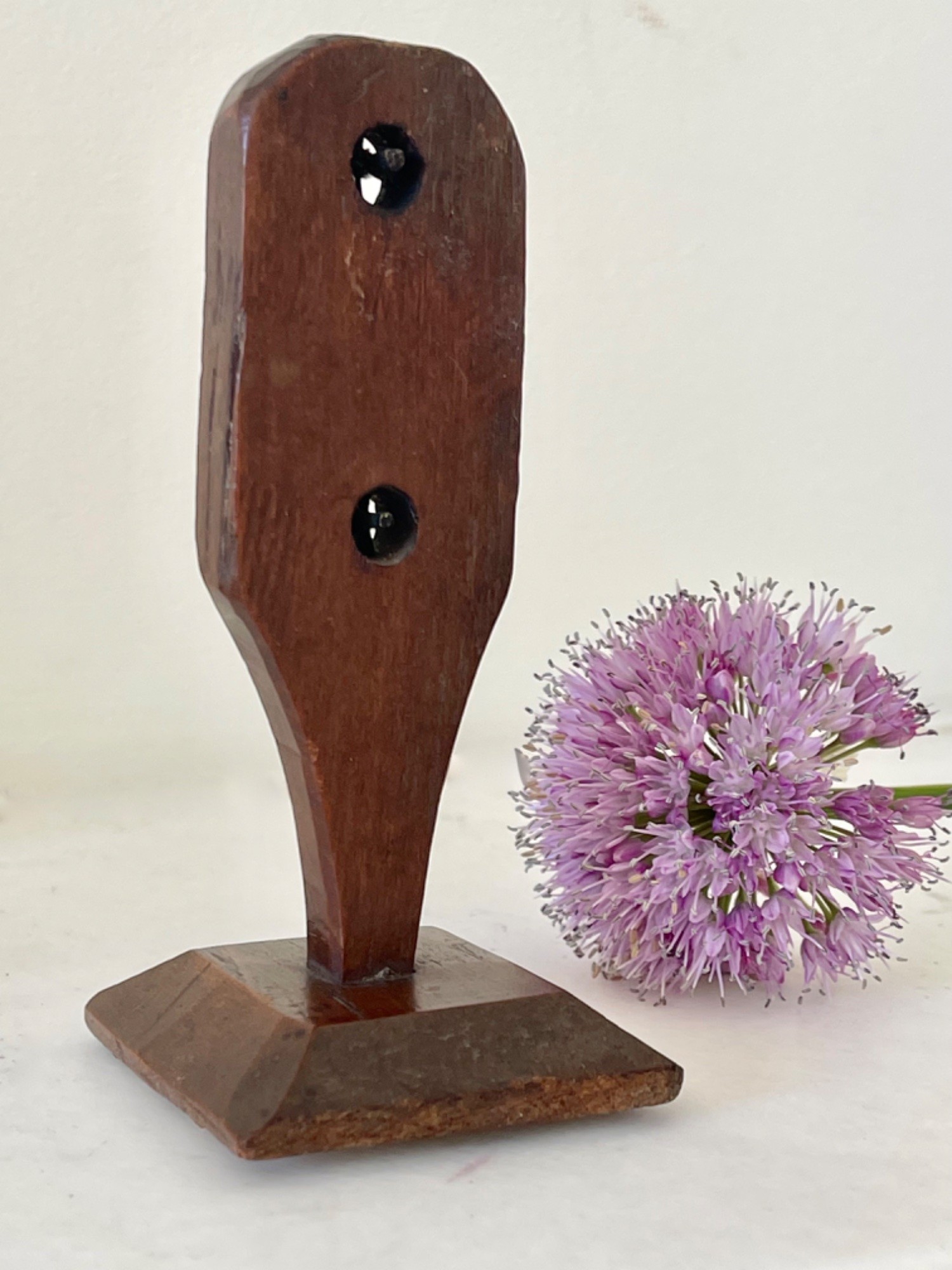
Antique Treen Straw Splitter