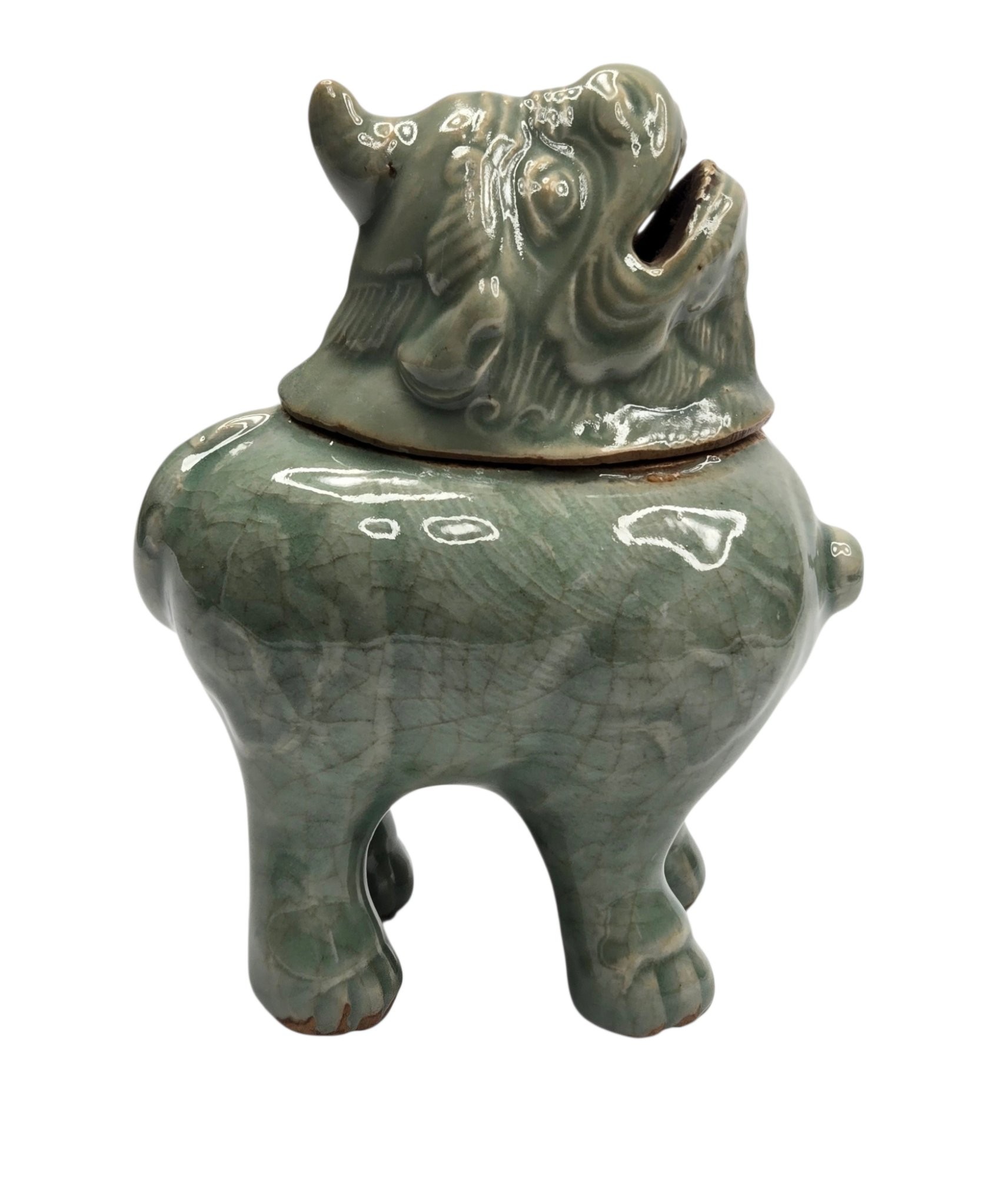
Sandbanks Antiques has dated this Longquan Celadon Incense Burner to the 16th Century.
Ming Dynasty, 16th Century
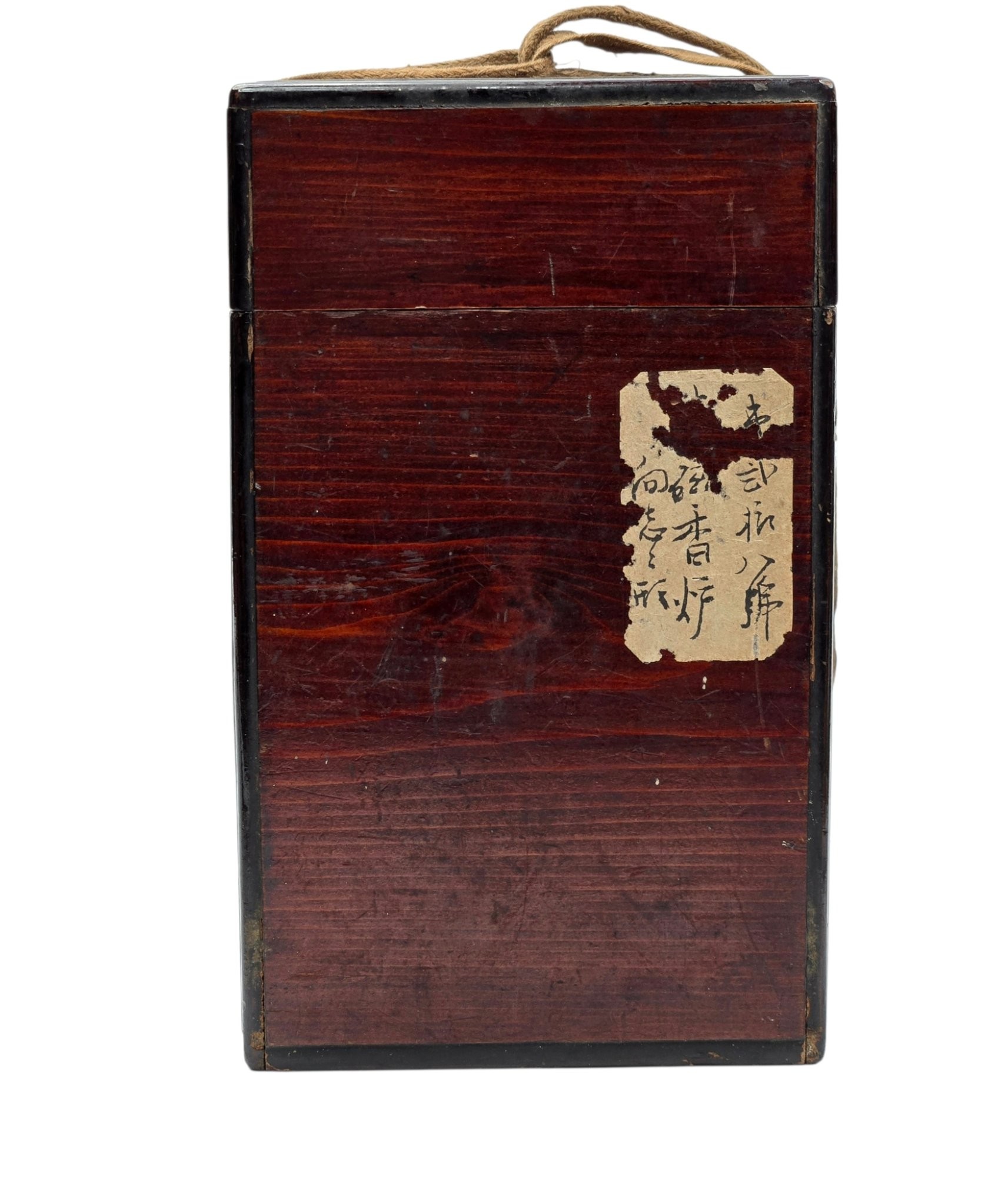
Accompanied by a Fitted Japanese Collector’s Wooden Box (Tomobako), circa 1900
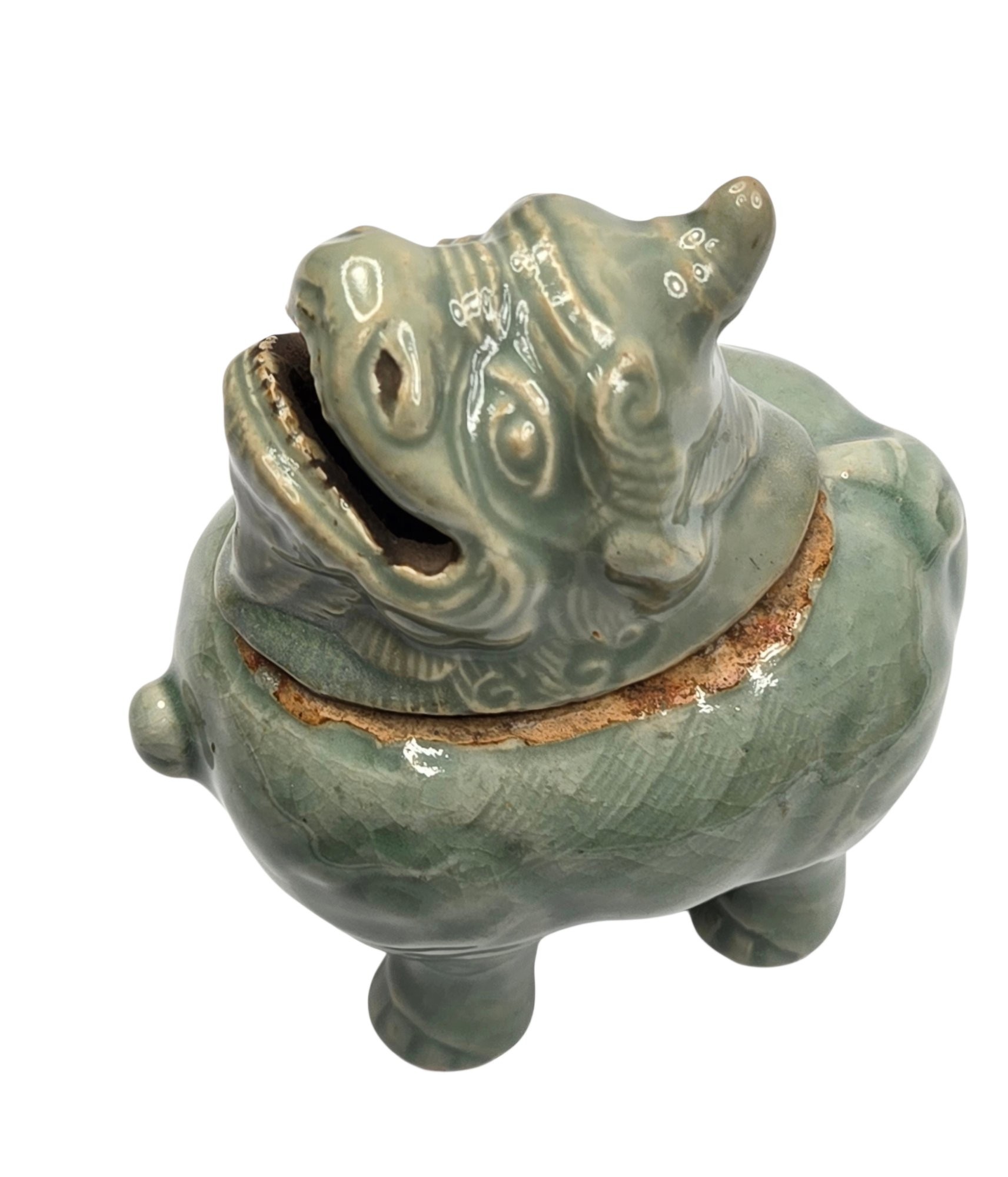
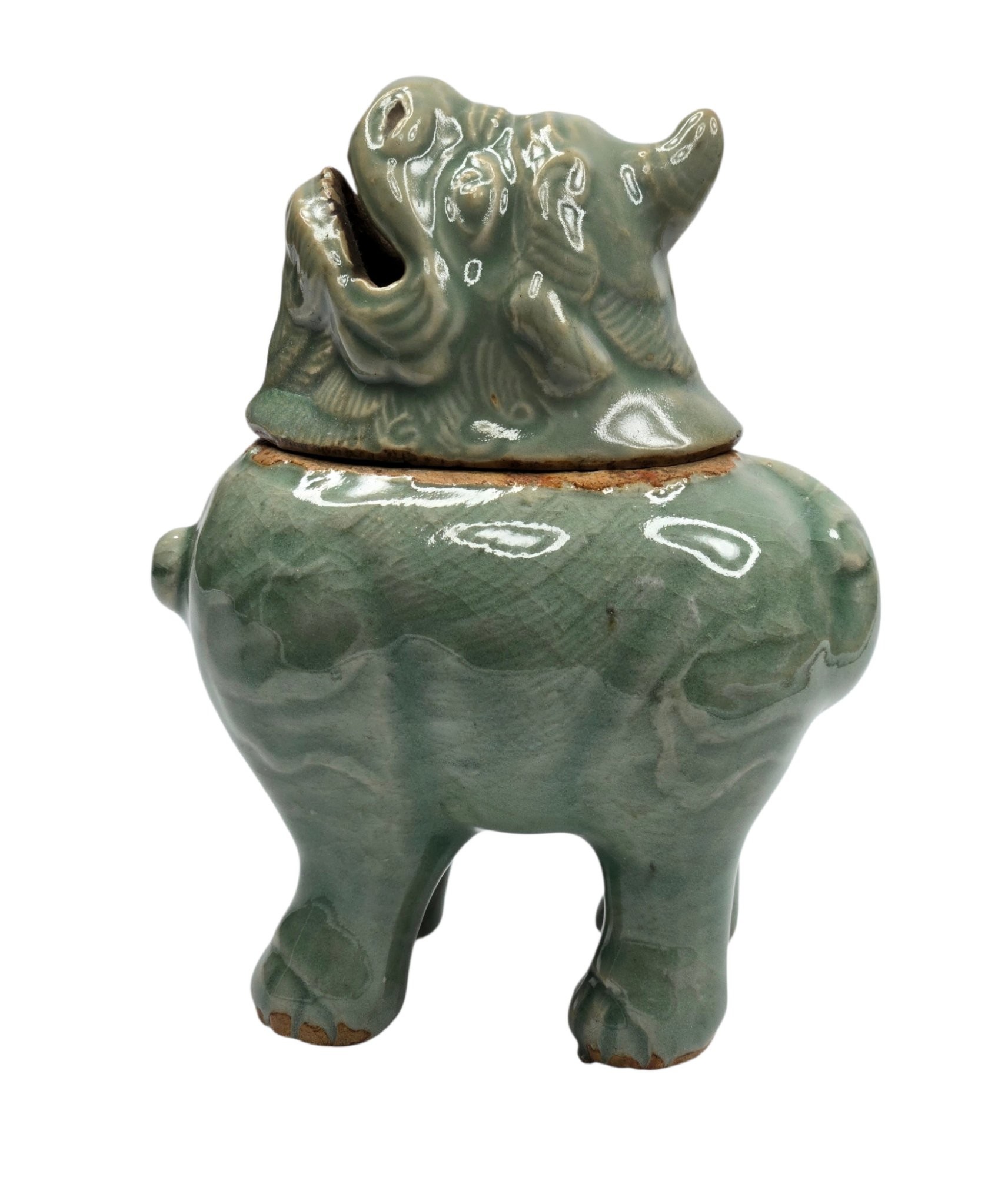
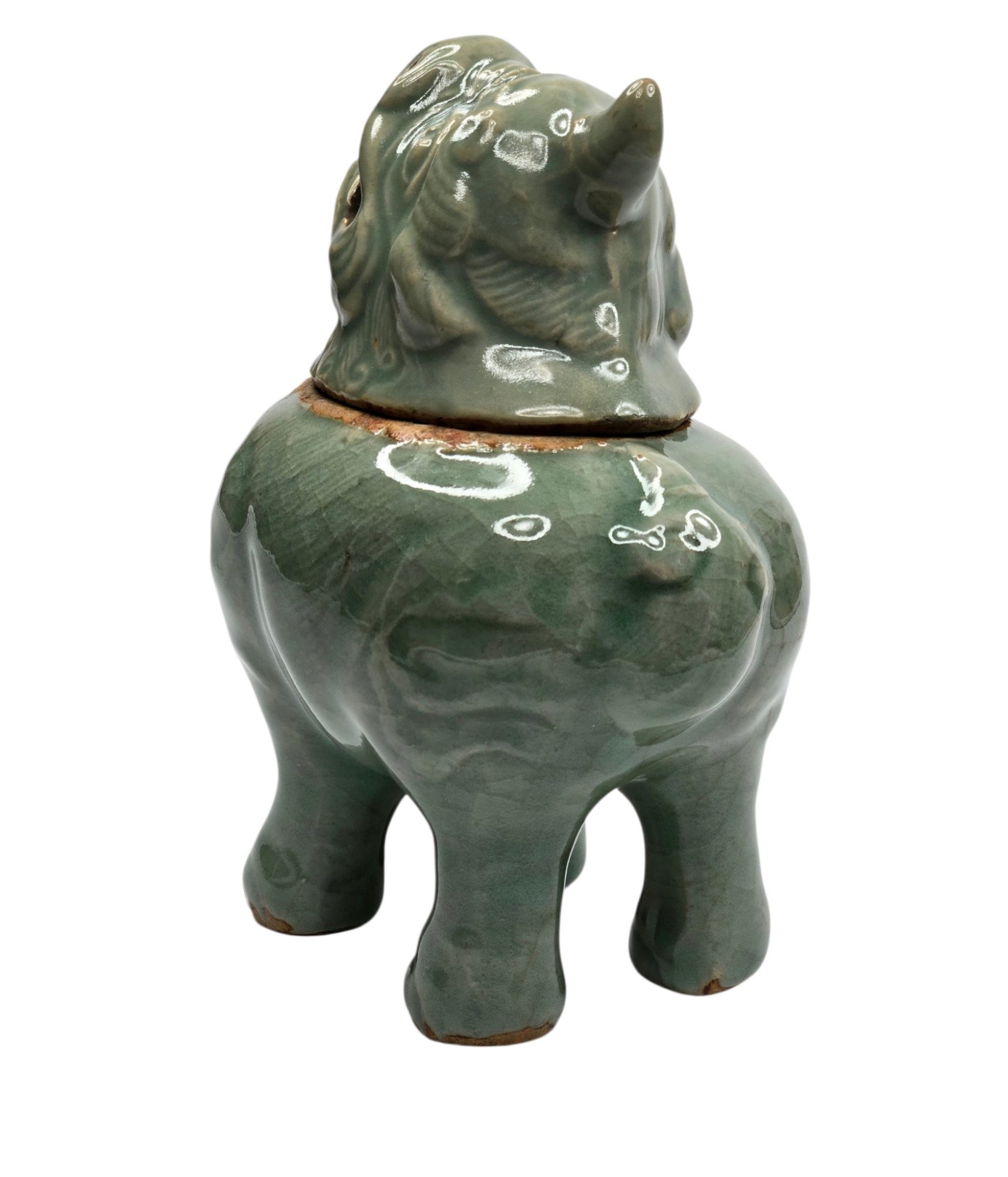
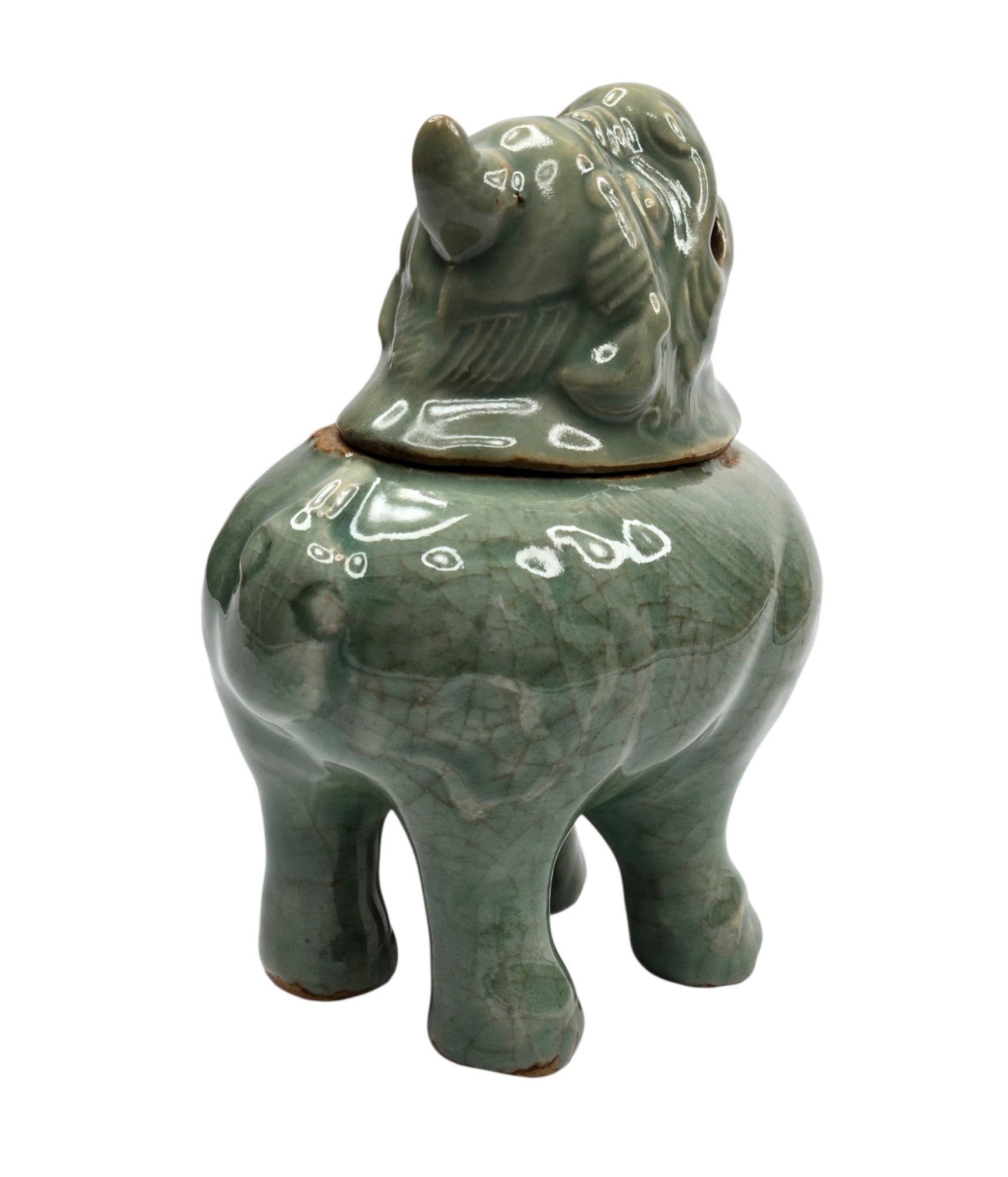
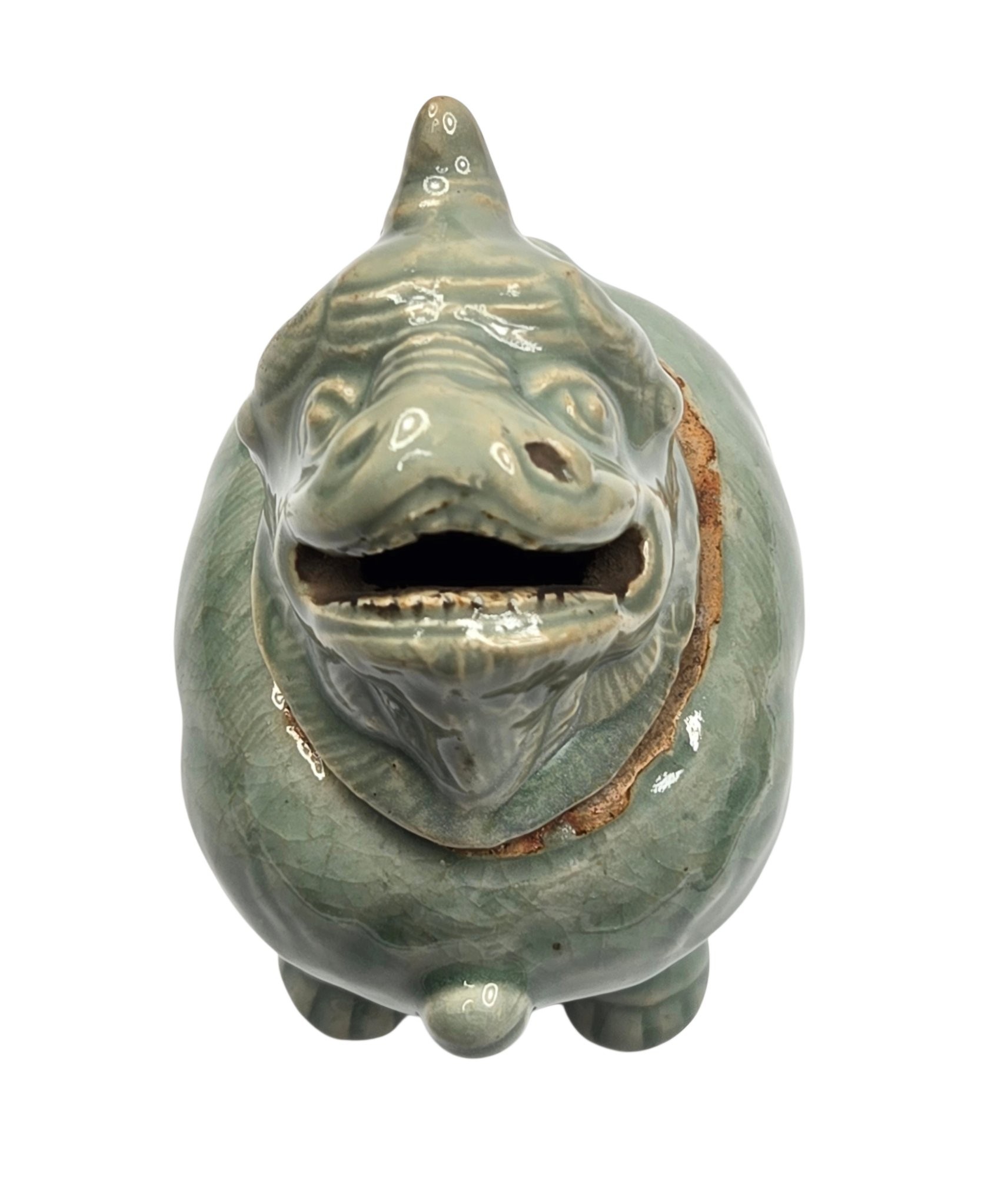
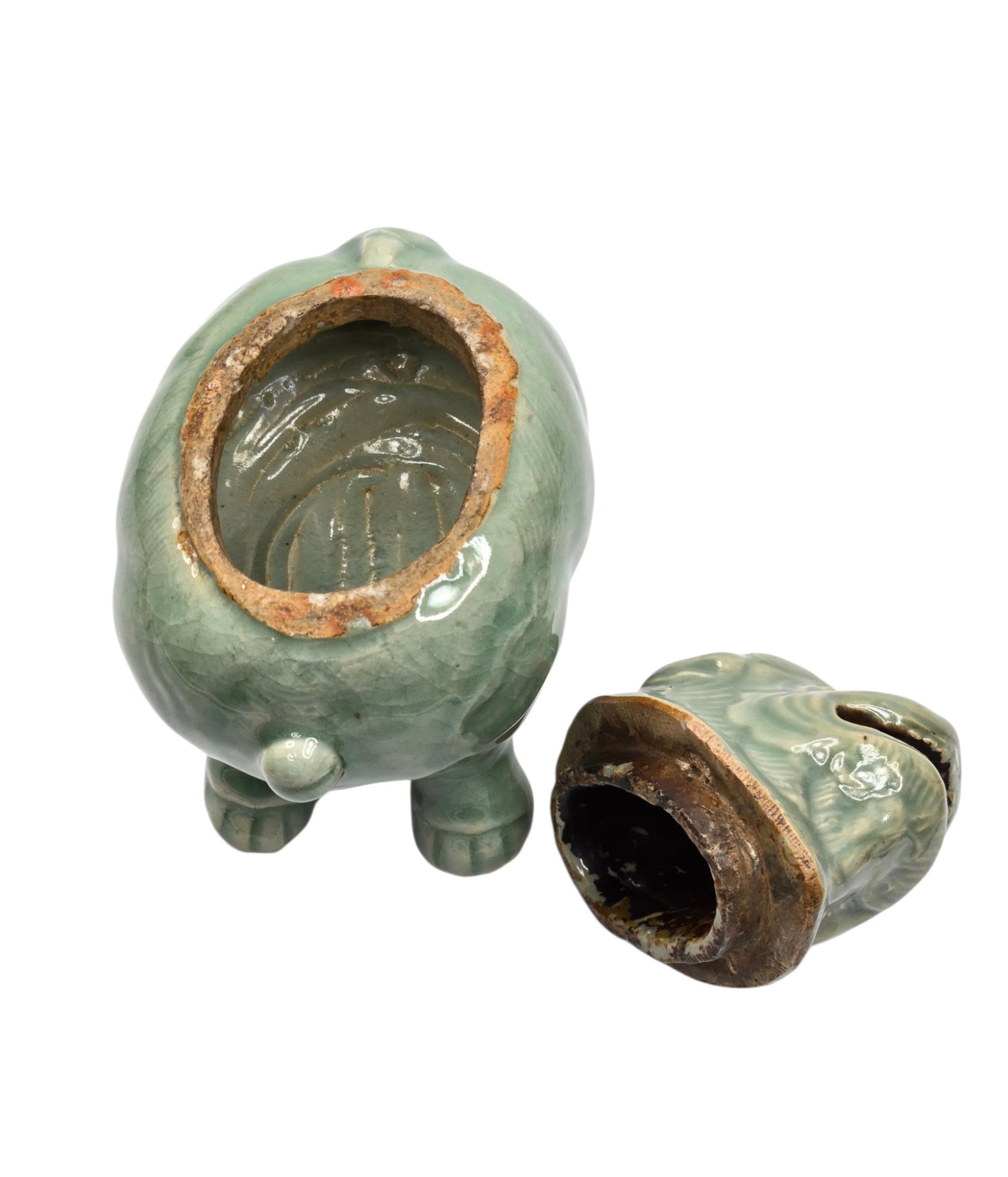
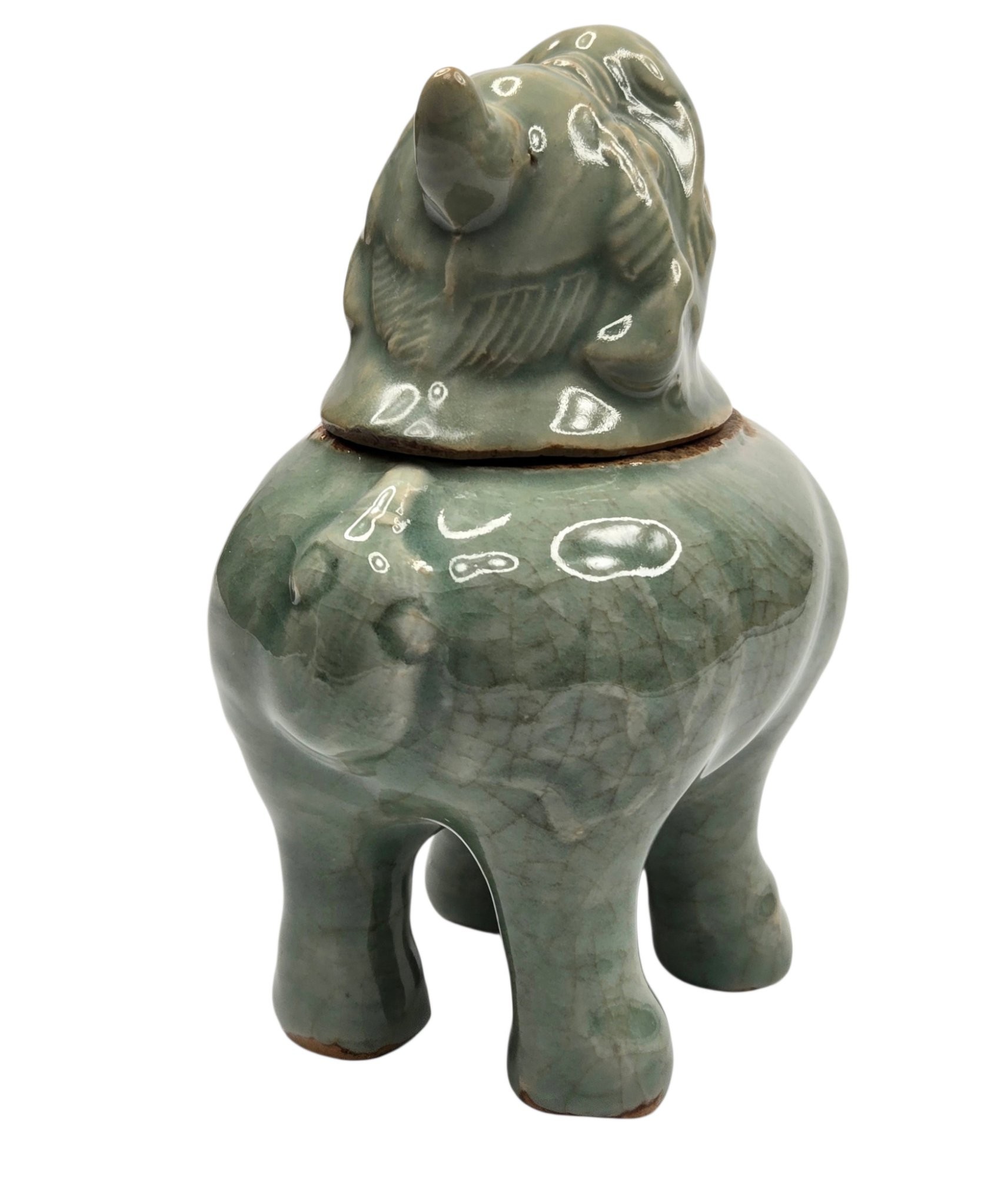
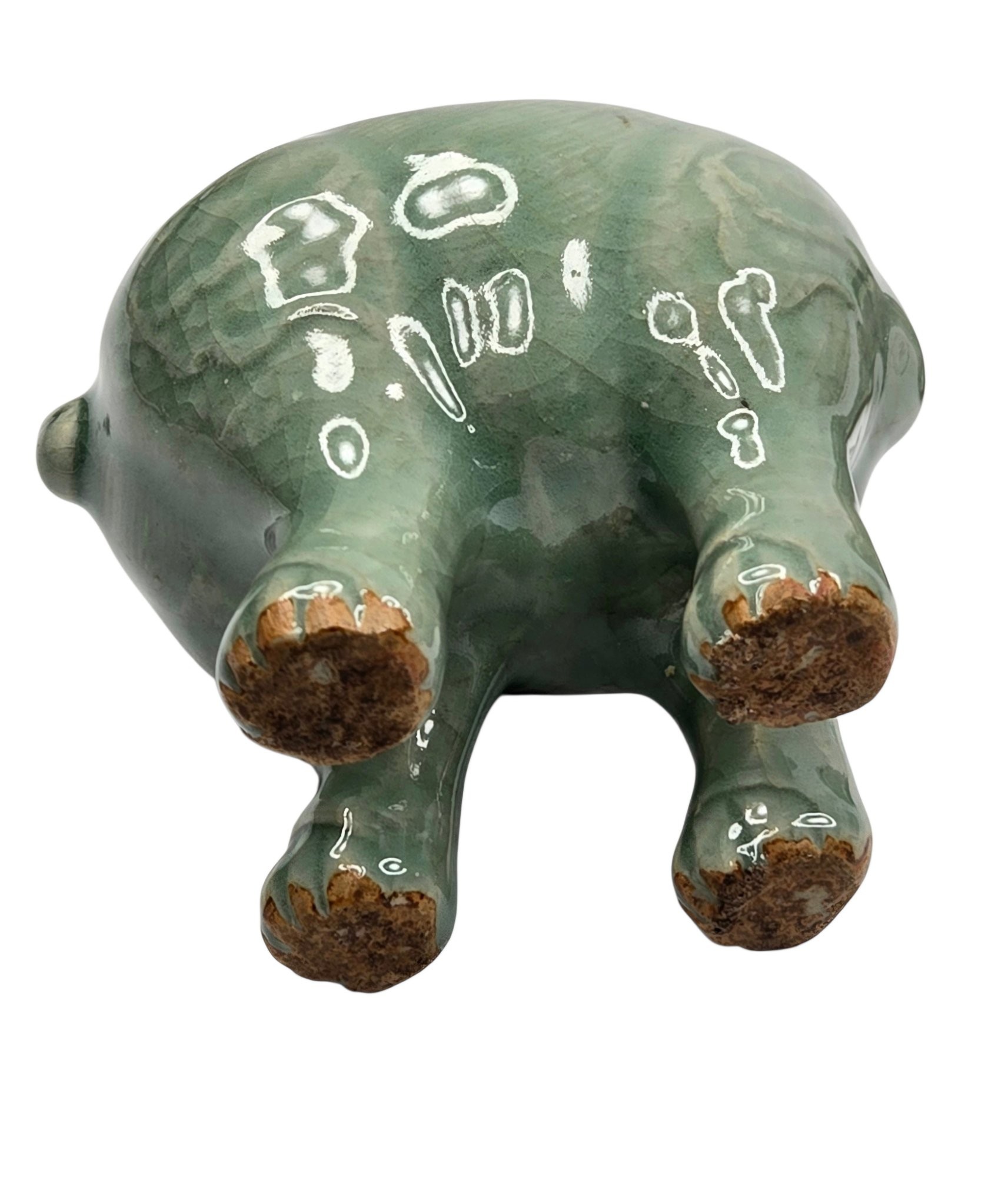
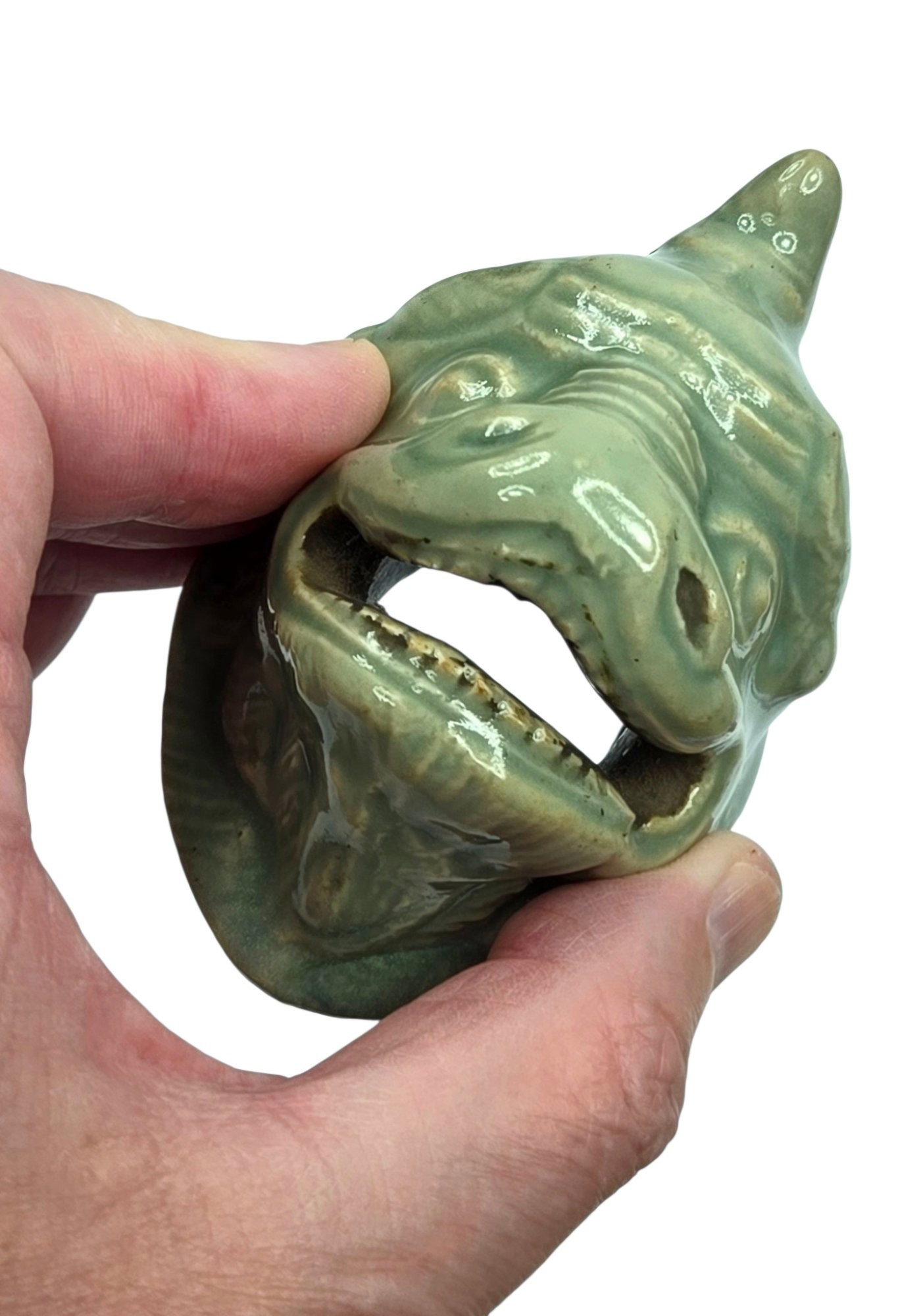
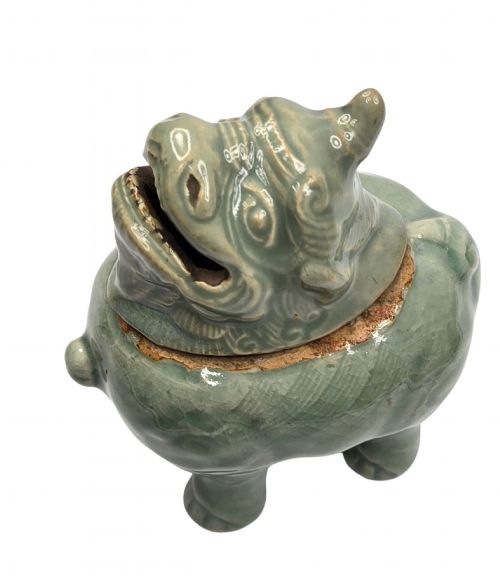
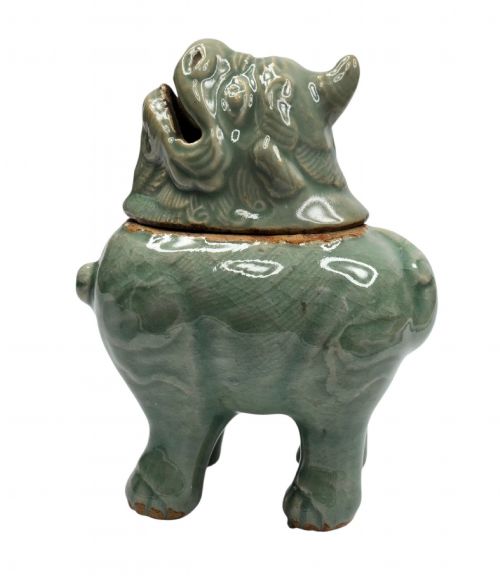
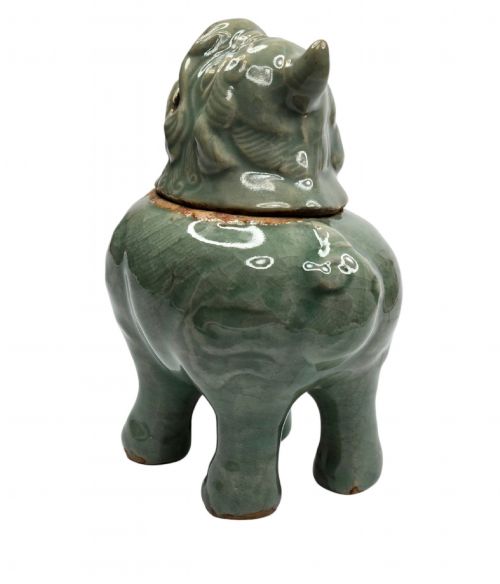
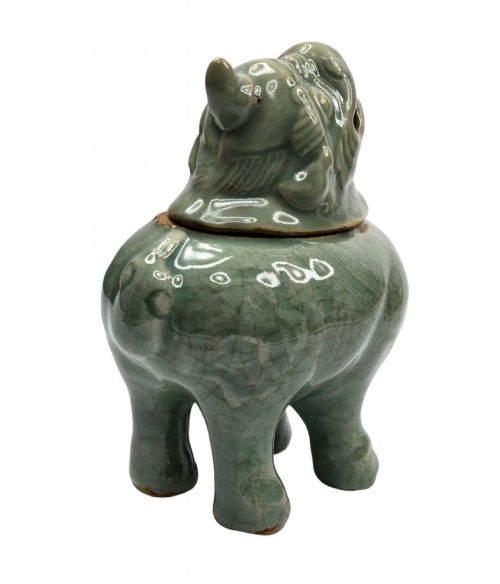
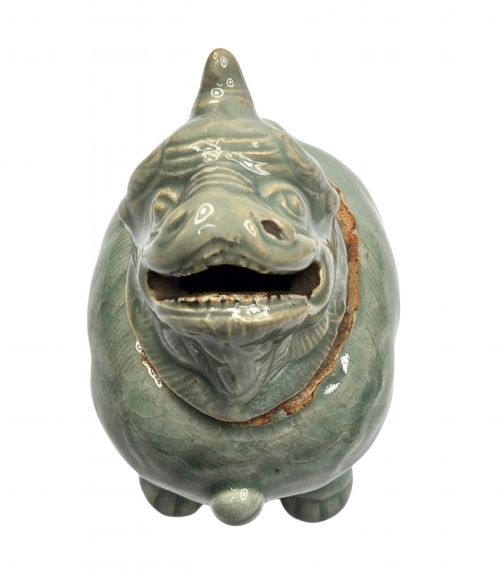
Artfully potted in two sections, the hollow, globular body serves as the primary incense chamber, supported on four robust, hand-formed legs terminating in stylized claws. The beast is naturalistically sculpted with a prominent single horn to the head, a layered mane composed of flame-like curls, and an upturned, highly expressive face. The wide-open mouth is incised with a stylized, continuous serrated jawline, designed to allow plumes of fragrant smoke to elegantly rise and escape.
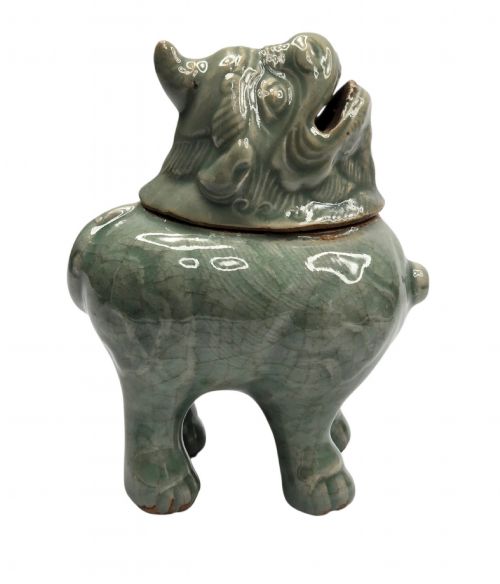
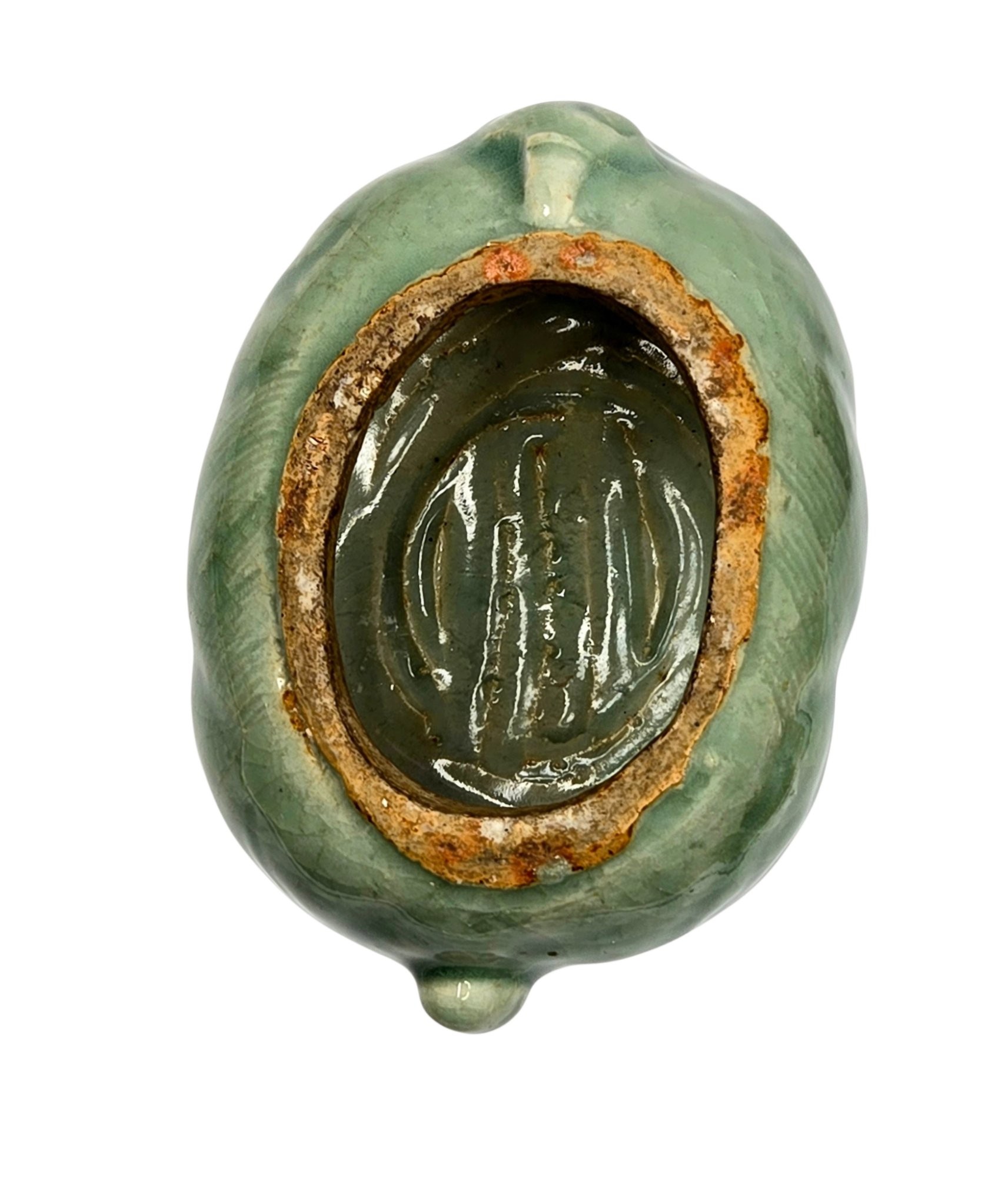
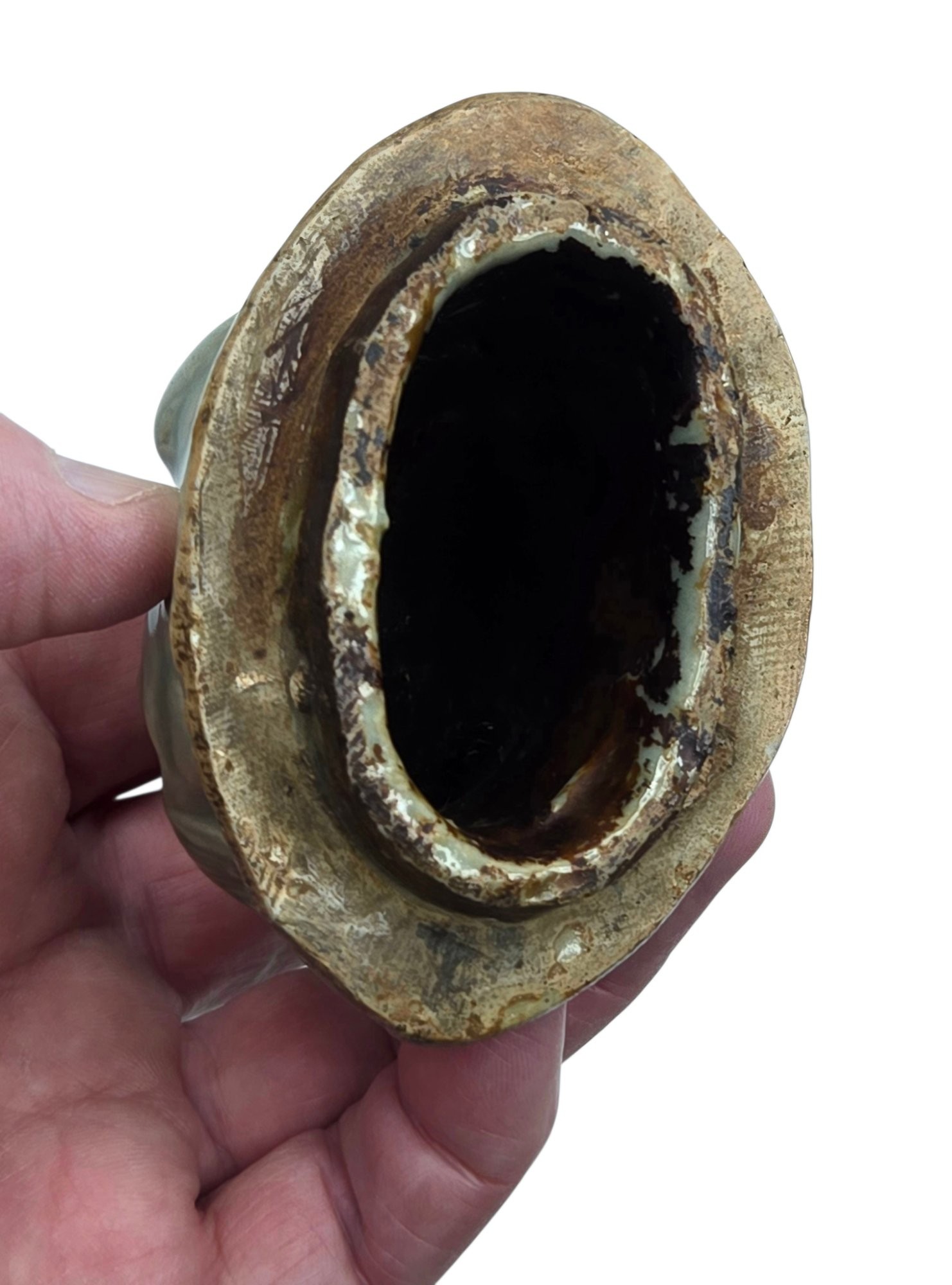
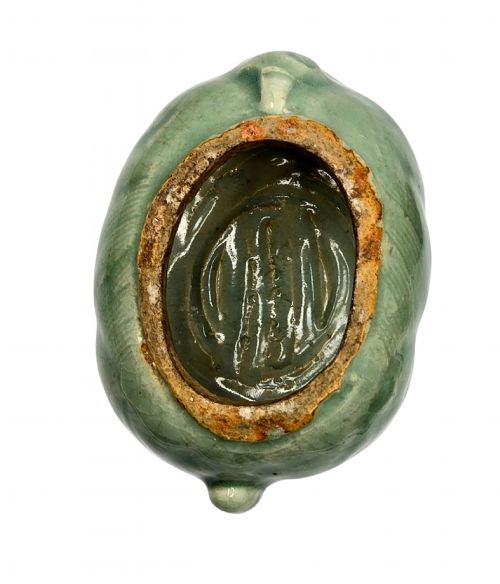
The censer is enveloped in a thick, viscous, and lustrous sea-green to olive-celadon glaze. The glaze pools brilliantly within the recesses of the moulded decoration to create deep, tonal variations, while a natural, irregular network of dark-stained glaze crackle (kanyu) runs throughout the exterior matrix. The unglazed interlocking collar and the interior rims reveal a classic, iron-rich "burnt orange" oxidation line—a hallmark pathology of traditional wood-fired regional kilns. Strikingly, the interior of the cover retains a heavy, untouched, historical accretion of genuine carbonization and resinous soot from decades of ritual incense use.
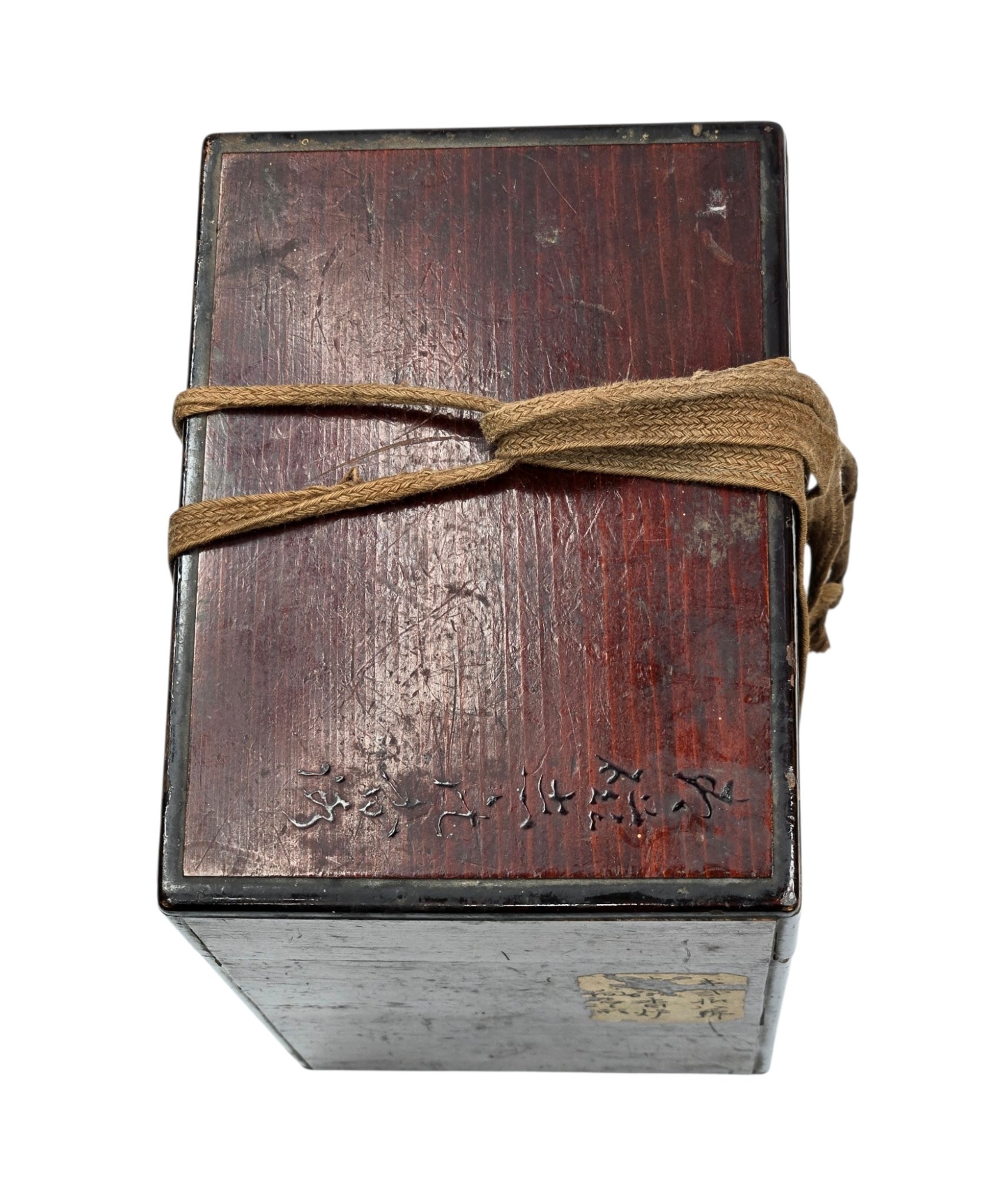
The Japanese Collector's Box (Tomobako)
The censer is accompanied by its original or long-associated Japanese fitted storage box, demonstrating an elite cross-cultural provenance.
The Lid: The exterior edge of the oxidized, naturally patinated wooden lid is brushed in fluid cursive ink calligraphy (sosho) reading (Seiji Shishi Kōrō), translating directly to "Celadon Lion Incense Burner."
The Paper Label: The side of the box features an antique, hand-written washi paper inventory label with natural insect and friction losses. It reads from right to left: identifying the piece as "Chinese Celadon Incense Burner," alongside an archival note translating to "Opposite [Matching Pair], One Piece," confirming its historical placement within an elite Japanese collection. The box is secured with its original woven flat cotton sanada-himo cord.
Height: 16 cm
Overall Condition: Excellent structural condition, completely free of modern restoration, chips, or hairline cracks.
Surface & Glaze: Superb presentation. The glaze crackle is entirely stable and natural, displaying a rich, deep patination from age. Natural, minor firing imperfections and iron spots consistent with 16th-century regional kiln production.
Interior: The interior remains in an untouched, historically honest state with heavy carbonization and aged incense tar residue on the raw paste.
The luduan, a legendary Chinese unicorn, is often mistaken for the qilin but is distinct in Chinese mythology for its profound ability to ascertain the truth, master any language, and travel immense distances quickly.
These ceramics are generally dated to the 16th century by virtue of style, appearing relatively late in the long history of Longquan production. While ceremonial and scholars' censers of this type are more commonly encountered in cast bronze, surviving ceramic versions from the Ming dynasty remain inherently rare due to the intense technical difficulties of firing two-part interlocking forms without warping or cracking in regional wood-fired kilns.
That the form was profoundly important—not only because of its auspicious nature but because it was of intense interest to the period's antiquarians—is beautifully illustrated in a famous painting by the Middle Ming artist Du Jin (ca. 1465–1509), where a scholar is depicted examining treasures, including a closely related bronze luduan censer, carefully arranged on a viewing table in an elegant garden setting.
Sandbanks Antiques has dated this Longquan Celadon Incense Burner to the 16th Century.
Specialising in antique silver, gold boxes, gold coins and objects de vertu. Rare fine-quality imperial chinese porcelain, jades, cloisonné
You can view the stock and full dealer information on the Sandbanks Antiques Profile Page
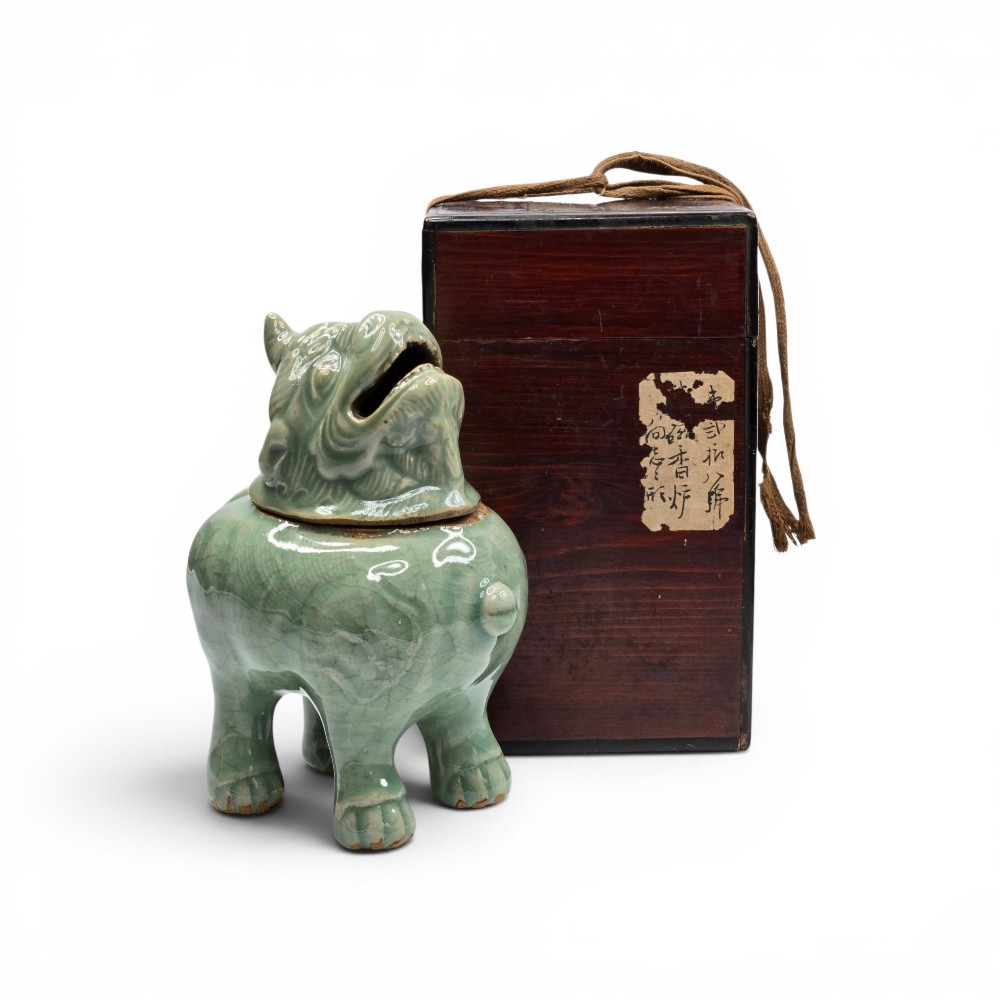
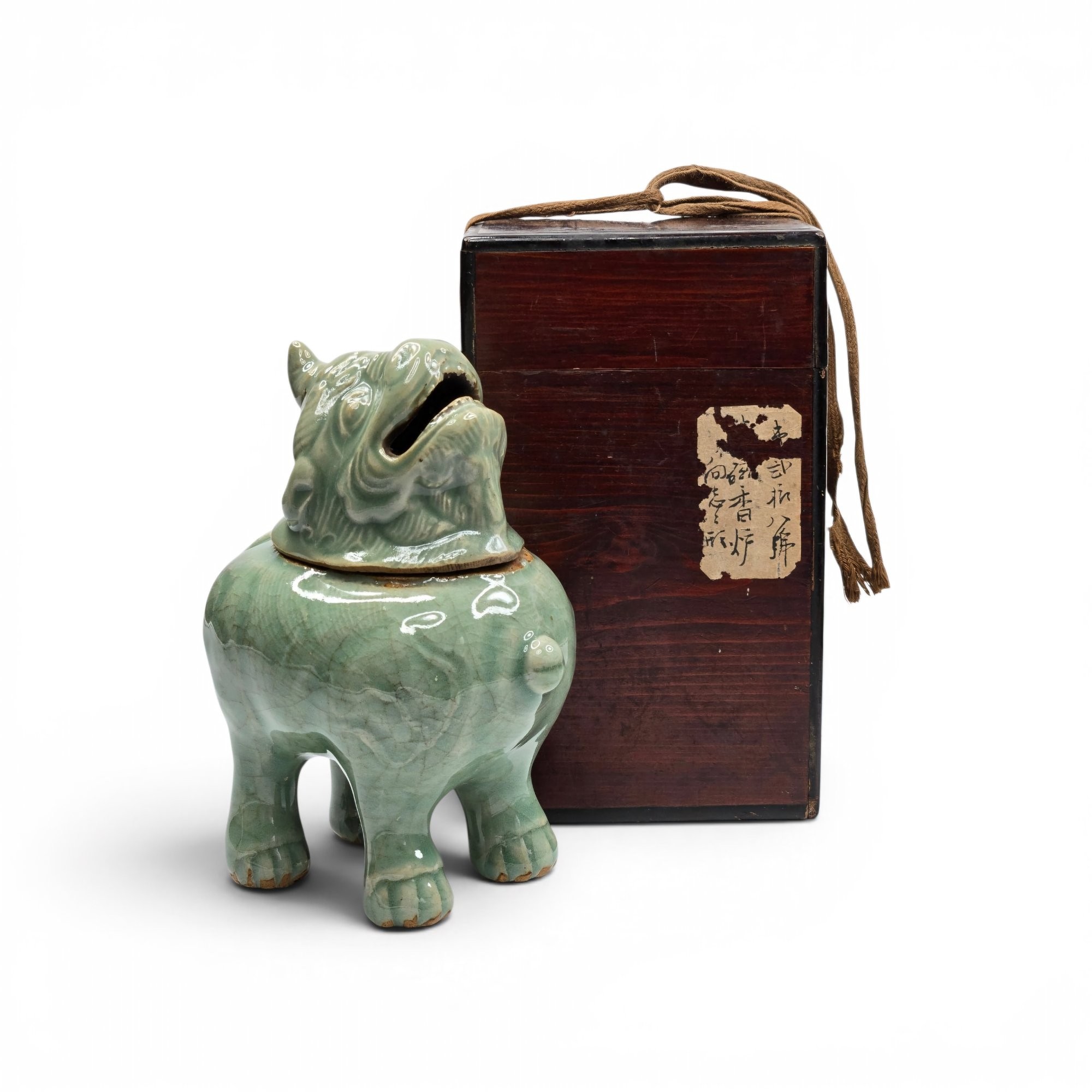
A Rare Longquan Celadon-glazed 'Luduan' Incense Burner and Cover Ming Dynasty, 16th Century