



Ming Dynasty Censer
These bronze and celadon ming dynasty censer pieces bring scholarly refinement and ritual weight to a room.
Ming Dynasty Censer
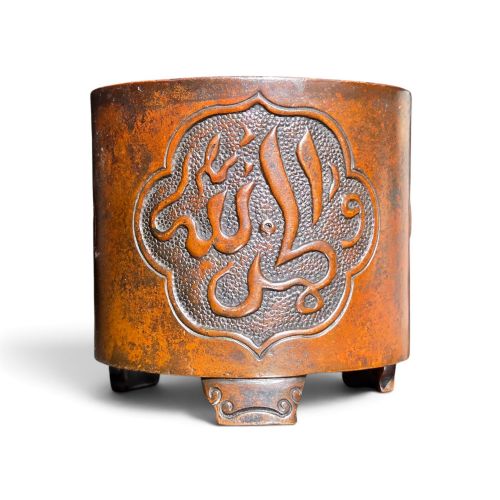
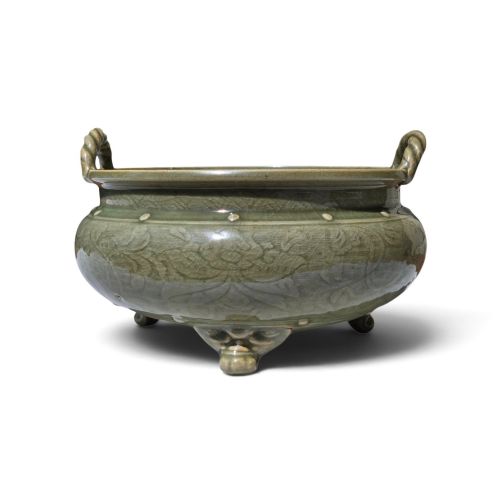
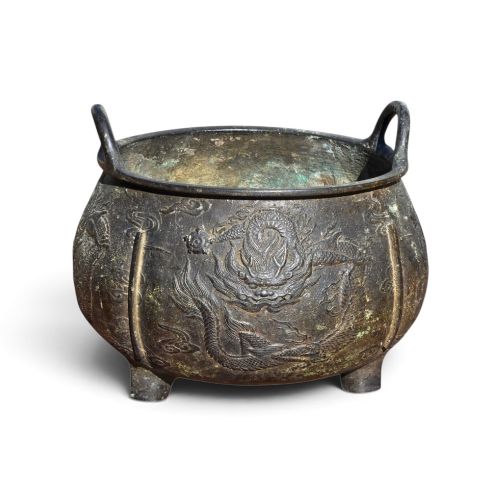
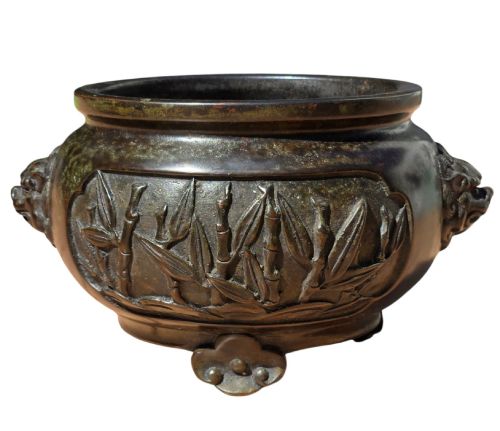
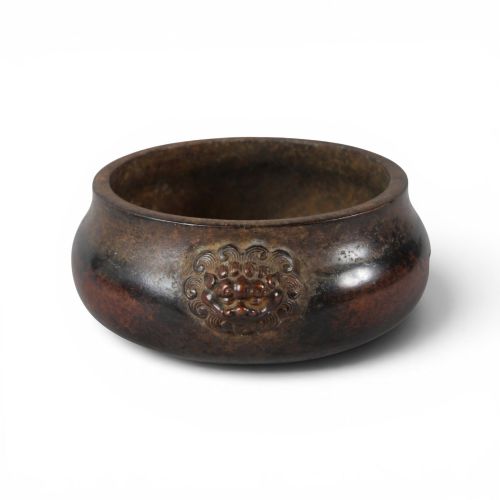
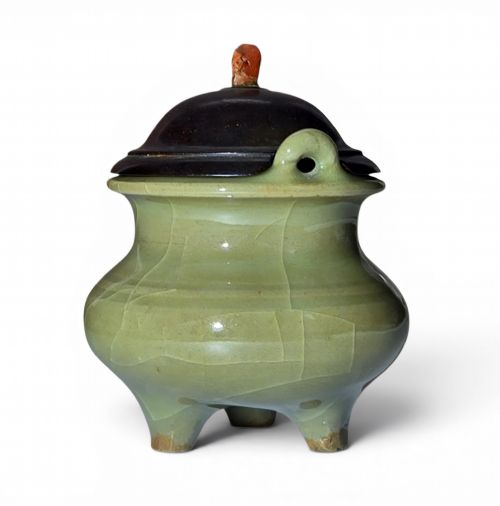
When you search for a ming dynasty censer, you look for vessels designed to burn incense in scholar's studios and ritual spaces. The examples on this page span the sixteenth and seventeenth centuries, taking forms from cylindrical tripods to lobed lotus bowls.
Most pieces you meet here are cast in bronze or shaped in celadon glazed stoneware, often accompanied by zitan wood stands and covers. These objects reflect the sophisticated tastes of Ming period scholars who prized subtle glazes and archaic bronzes.
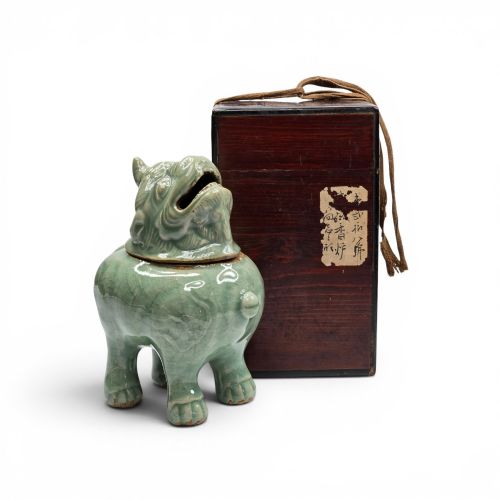
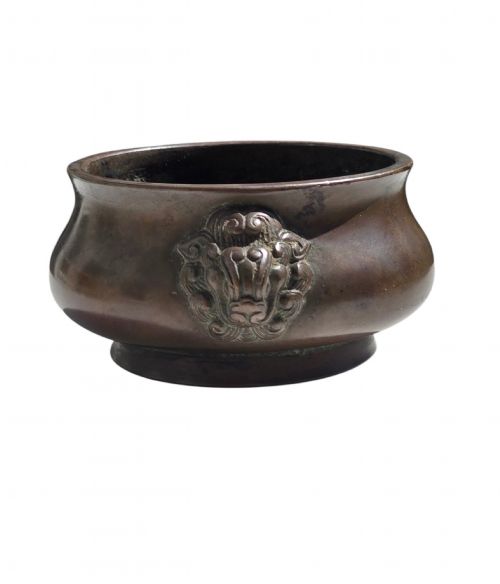
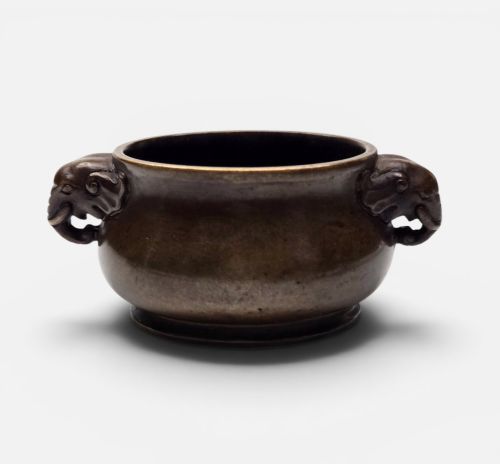
You will encounter specialised forms such as taotie mask handlers, elephant head designs, and mythical luduan burners. Each version demonstrates the distinct utilitarian and aesthetic purposes intended by their makers.
How They Were Made
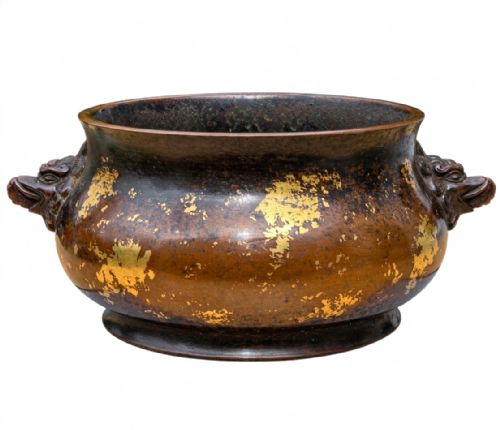
The bronze censers are heavily cast using traditional metalworking techniques, sometimes finished with gilt splashes or relief panels depicting motifs like the three friends of winter. Copper alloy and cast bronze provide the dense weight required for these substantial scholar's pieces.
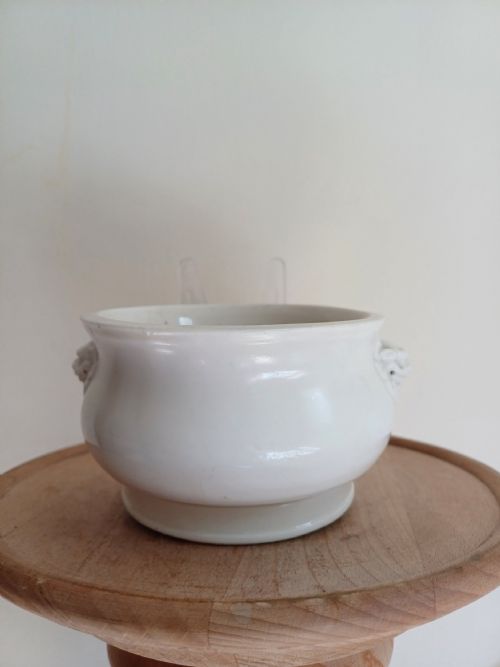
Stoneware examples utilise celadon glazes applied to ceramic bodies, creating smooth monochrome surfaces that imitate earlier jade and archaic wares. Artisans also turned dense zitan wood and coral to craft bespoke covers and stands for miniature vessels.
Ming Dynasty Censer Retail Price Guide 2026
Typical asking prices for ming dynasty censer among the pieces listed under this phrase on Sellingantiques today, from the lower quarter to the upper quarter. They describe what is for sale here now, not the wider market.
Object forms span cylindrical tripods, scholar's censers, luduan incense burners, and gui vessels.
What Varies in Quality
The distinction between ordinary and exceptional pieces rests upon the crispness of the casting and the depth of the metal or glaze. Heavily cast bronzes with sharp taotie masks and well-defined relief panels demonstrate superior workshop execution.
The presence of contemporary or bespoke zitan wood and coral additions elevates an object's completeness. Finer examples balance substantial weight with harmonious proportions, whether in miniature scholar pieces or monumental tripods.
The Ming Dynasty Censer Glossary
- Tripod censer
- An incense burner supported by three legs. This form draws on ancient ritual bronze vessels.
- Celadon
- A green glazed ceramicware originating in China. The glaze varies from sea-green to olive tones.
- Zitan
- A dense, dark hardwood native to Asia. Artisans frequently utilised it for custom stands and covers.
- Taotie
- A mythological zoomorphic mask motif. It frequently decorates the sides of archaic-style bronze vessels.
- Luduan
- A mythical beast capable of travelling great distances. Burners shaped in this form feature removable heads as covers.
Ming Dynasty Censer: Frequently Asked Questions
How were these censers used?
Scholars and nobles burned aromatic incense during meditation, writing, and gathering. The rising smoke aided concentration and purified the surrounding air.
Many vessels sat on desks or altar tables paired with wooden stands. Their substantial weight ensured stability during daily use.
What materials are common?
Bronze and copper alloy dominate the metal examples, often exhibiting deep patinas built over centuries. Stoneware glazed in celadon provides an alternative ceramic medium.
Complementary materials include dense zitan wood and coral used for fitted covers. These organic elements contrast with the cold metal and stone.
How do I date a censer?
Stylistic markers such as archaic taotie masks and lotus forms point toward Ming production periods. Material tests and casting methods help confirm sixteenth and seventeenth-century origins.
Associated zitan stands sometimes offer clues to later eighteenth-century stewardship. Comparing surface wear and patination assists in establishing age.
Can I burn incense in them?
These vessels retain their original function as incense burners. Collectors often place modern or traditional incense inside matching metal or ceramic bodies.
Care must be taken to protect ancient surfaces from direct heat and ash residue. Many owners prefer to display them as sculpture without active burning.