




Green Celadon Vessel
A green celadon vessel brings ancient kiln mastery and translucent jade-like beauty straight to your interior.
Green Celadon Vessel
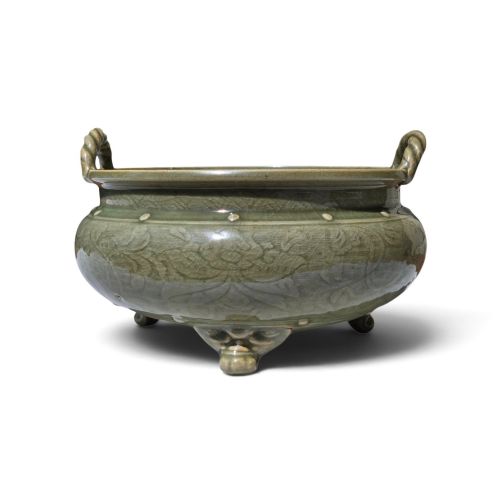
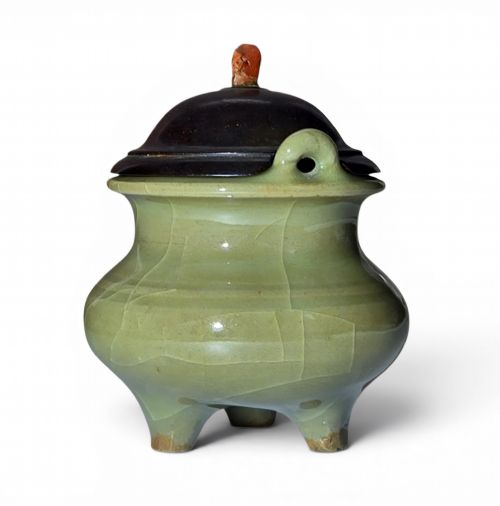
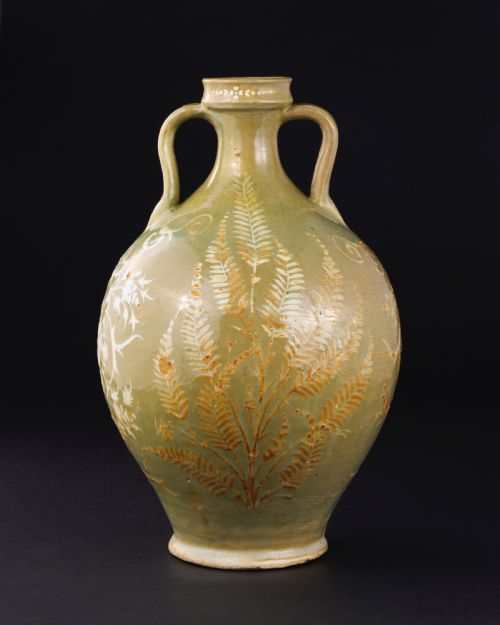
When you search for a green celadon vessel, you enter a deep tradition of Asian ceramics that spans many centuries and styles. These pieces range from monumental tripod censers to delicate brush washers, decorative bowls, and tall pottery vases.
On this page, you are most likely to meet stoneware and porcelain bodies covered in characteristic green glazes originating from Chinese dynasties like the Song, Ming, and Qing, alongside Japanese Meiji and Persian Safavid examples.
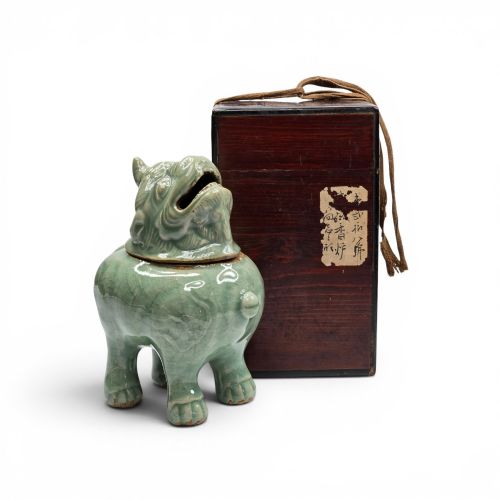
Forms vary from utilitarian vessels and ritual incense burners to carved jars depicting ducks and lotus, reflecting both domestic use and ceremonial court life.
How they were made
Makers shaped dense bodies of stoneware, porcelain, and earthenware before applying iron-rich glaze that shifted tone during high-temperature reduction firing in the kiln. This chemical reaction produced the characteristic green hues, ranging from pale sea-green tones to deep olive.
Many items show meticulous hand-carving or moulding beneath the glaze, creating floral motifs, fluted panels, and animal forms like the legendary luduan. Artisans also paired these ceramics with bespoke fitted covers fashioned from zitan wood and coral.
Listings feature items from the Song Dynasty, Ming Dynasty, and Qing Dynasty, alongside Meiji Period Japanese works and Safavid Persian pottery.
What varies in quality
Quality rests in the depth and subtlety of the glaze, the precision of the carved or moulded decoration beneath it, and the overall balance of the form. Finer pieces display an evenness of tone and a lustrous, jade-like texture that interacts with light.
The sophistication of the potting and the presence of associated elements, such as period zitan wood covers, elevate certain examples above standard utilitarian wares.
Makuzu Kozan
The Green Celadon Vessel Glossary
- Celadon Glaze
- A family of transparent green glazes containing iron oxide, fired in a reducing atmosphere to achieve soft grey-green or sea-green colours.
- Stoneware
- A robust, vitrified ceramic body fired at high temperatures until non-porous and vitreous. It provides a heavy and durable foundation for thick glazes.
- Zitan Wood
- A dense, dark tropical hardwood valued in traditional Asian furniture and bespoke decorative covers. It is prized for its weight and fine grain.
- Tripod Censer
- A ritual vessel supported by three legs, commonly utilised for burning incense in scholarly or ceremonial settings.
- Brush Washer
- A small scholarly vessel designed for rinsing ink brushes during calligraphy and painting sessions.
Green Celadon Vessel: Frequently Asked Questions
What is a green celadon vessel?
A green celadon vessel is a ceramic piece finished with a distinctive iron-based green glaze developed across various Asian dynasties and periods.
These items encompass everything from utilitarian storage jars and bottles to ritual incense burners and scholarly brush washers.
How do I date a celadon piece?
Dating relies on examining the characteristics of the clay body, the tone and thickness of the glaze, and the style of any carved decoration.
Comparing the form and potting technique to known pieces from Song, Ming, or Qing contexts helps establish the period of origin.
Where were these vessels made?
The majority of these ceramics originated in historical Chinese kilns, notably Longquan, though production also spread to Japan and Persia.
Different kiln centres produced distinct variations in clay composition and glaze colour over the centuries.
How should I display my vessel?
Place your piece where natural light can catch the translucent qualities of the glaze and reveal the subtleties of its surface texture.
Ensure it rests on a stable, flat surface away from busy edges, allowing the form and colour to stand out without competing clutter.