18,632  PAGES BROWSED TODAY PAGES TODAY 36  ANTIQUES UPLOADED TODAY NEW ARRIVALS
ID #SA1196469
FOR SALE
£165
Email
Save
Early 20th Century Dummy Boardor or Silent Companion
Pareglio & Ayres Antiques Interiors
for sale €193     $210
£165
Pareglio & Ayres Antiques Interiors

Pareglio & Ayres Antiques Interiors

Sellingantiques Verified Since Dec 2015
View Dealers Stock Page
  • About Us
    Specialists in english and italian antiques
Id #SA1196469
PDF SHARE
SAVE

Early 20th Century Dummy Boardor or Silent Companion

1900 - 1920
Description

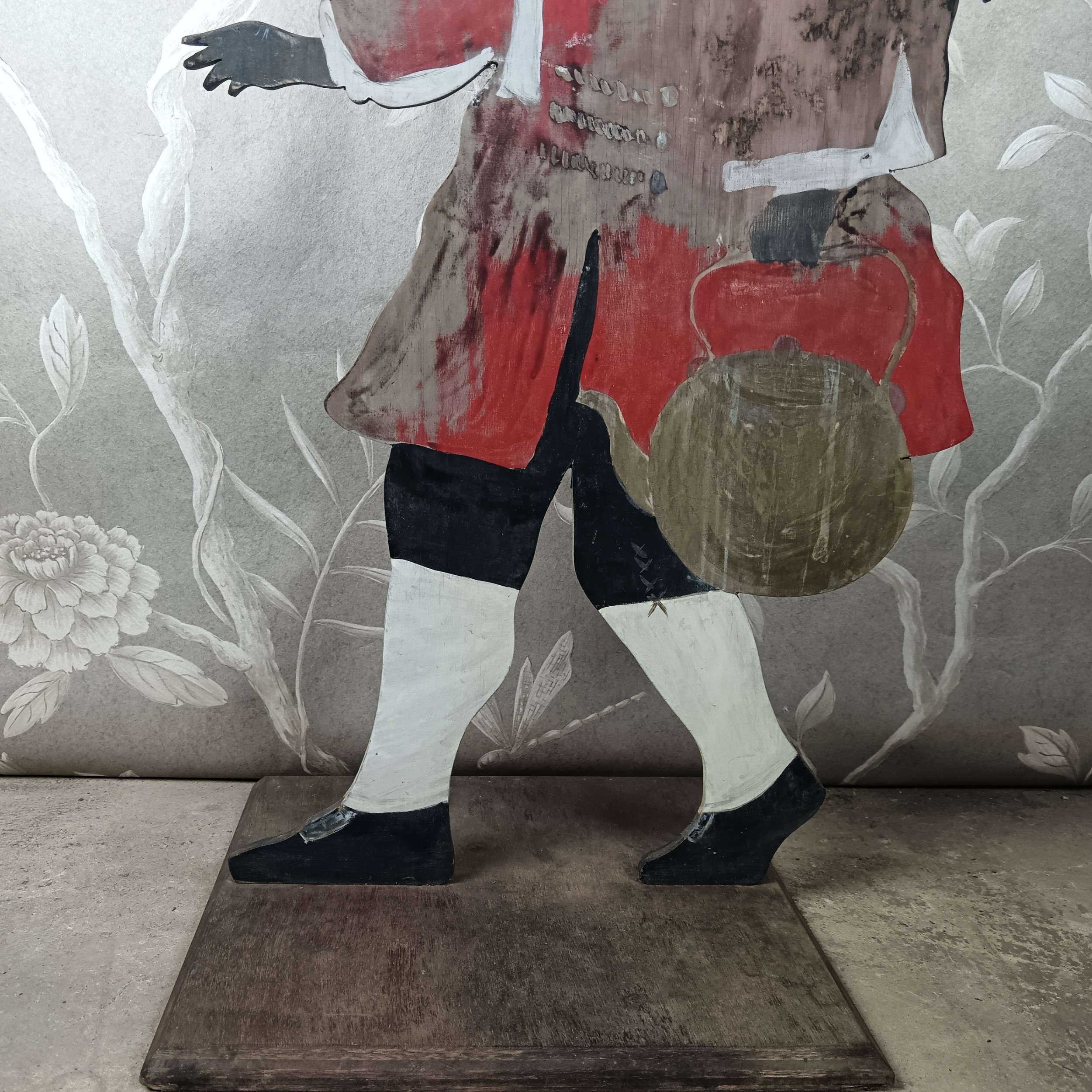
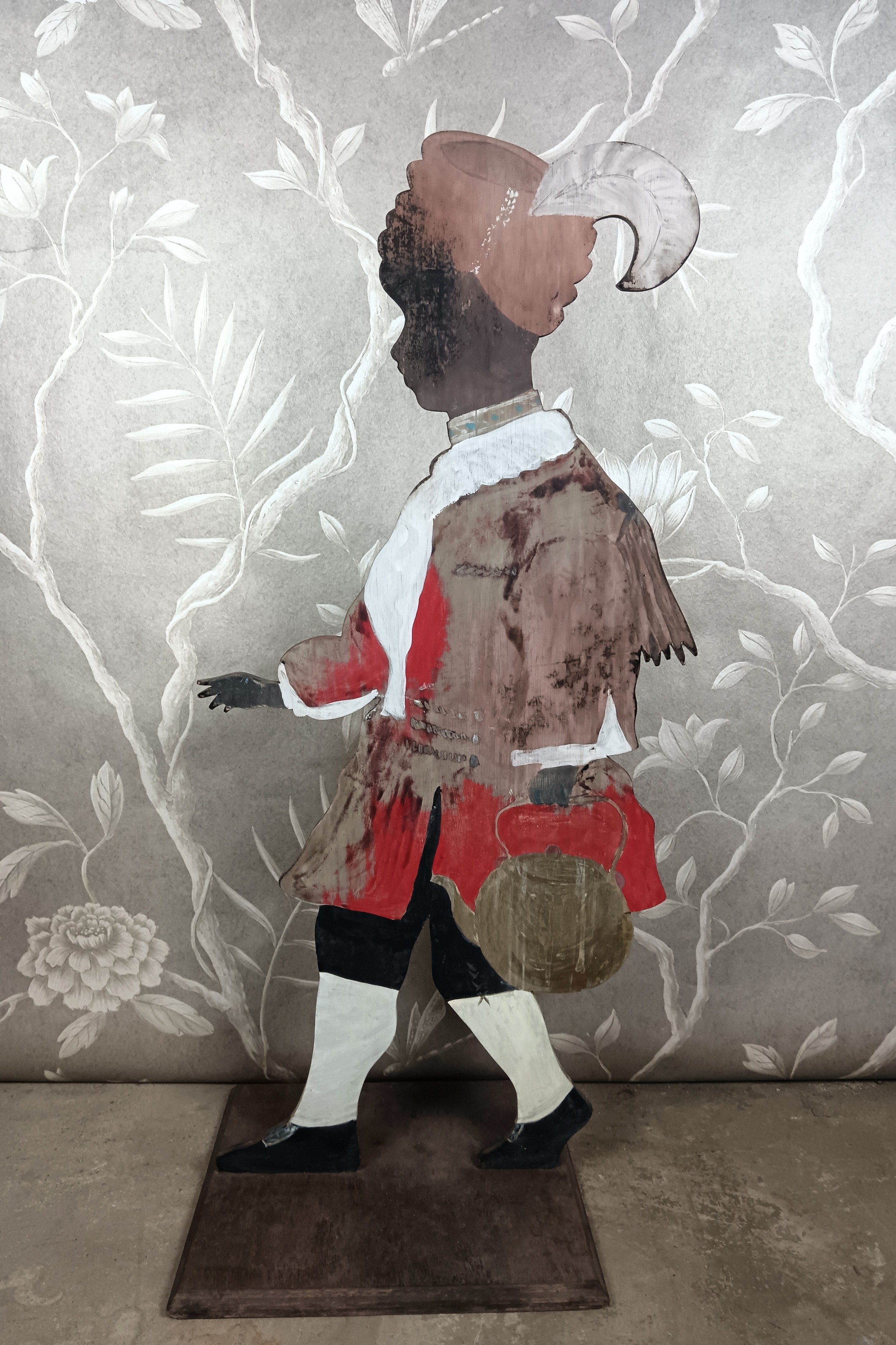
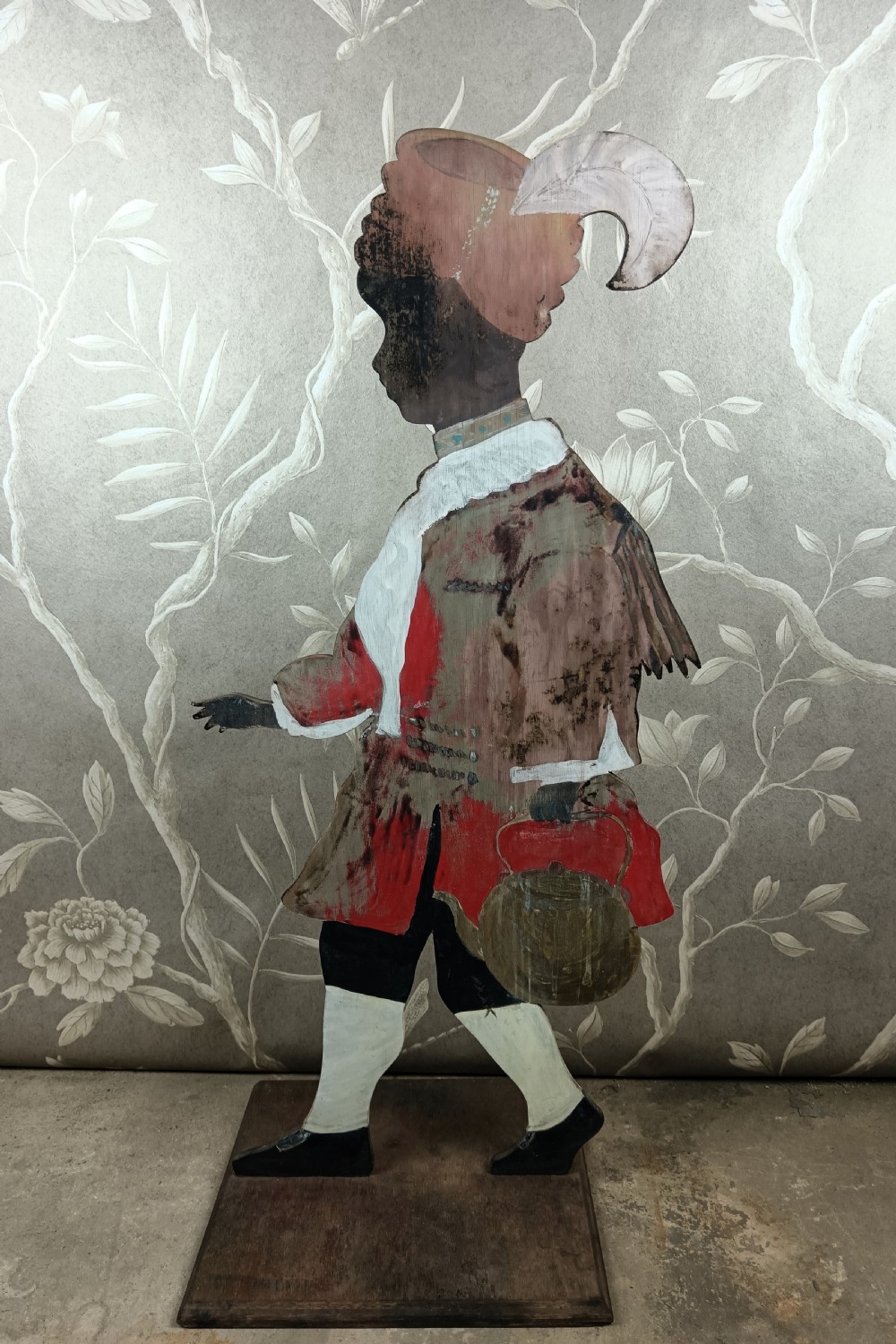
An early 20th century dummy board or silent companion depicting a dark-skinned young boy carrying a kettle.

Dummy boards (or "silent companions") from the Edwardian period (1901–1911) are life-sized, or smaller, hand-painted wooden figures designed to resemble servants, soldiers, children, or animals. While their popularity peaked in the 17th and 18th centuries (after which, the fashion for dummy boards in homes had waned and they were sometimes placed outdoors in gardens, with many succumbing to the elements), they experienced a revival during the late Victorian and Edwardian eras.
They were often placed in the corners of rooms and on stairways of houses to surprise (uninvited) visitors. They were also known to reside in front of empty or unused fireplaces during the summer months. Some even suggest that, when just under life-sized, these painted wooden figures were intended to create an optical illusion, making a room appear larger.
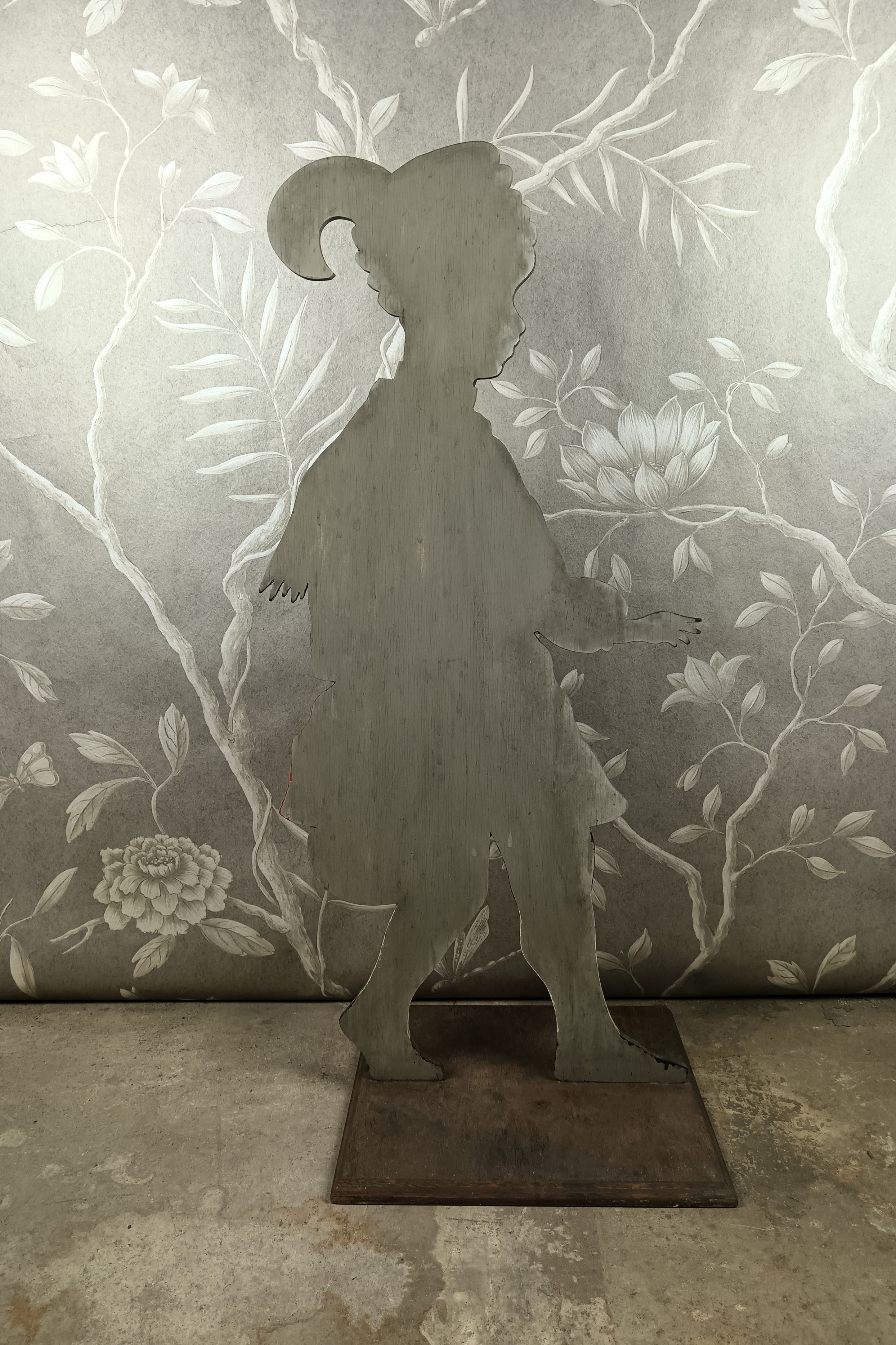
Crafted from slim 9mm plywood, this decorative piece displays surface marks suggestive of prior exposure to outdoor conditions or extended storage in an unsound loft. Despite these signs of wear, it retains undeniable charm and remains stable and sturdy.
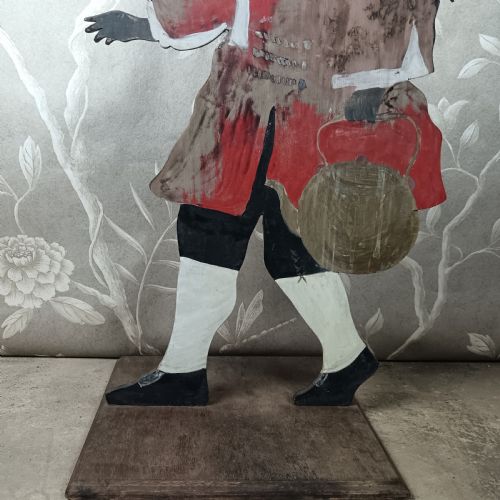
The use of plywood for these decorative figures, instead of solid wood panels, is not tied to a single historical event, the transition generally aligns with the industrial evolution of plywood in the late 19th and early 20th centuries. While invented at the end of the 18th century, the large-scale commercial production of plywood began in the 1880s. Around this time, reproductions of earlier dummy board styles started being made using newer industrial materials.

Dimensions: H 91

Declaration

Pareglio & Ayres Antiques Interiors has dated this Painted Wooden Dummy Board to the 1900s.

Reference Numbers
Sellingantiques Reference
SA1196469
Dealers Notes

Unless individually specified, prices do not include delivery costs.

www.pareglioayresantiques.com

Please call us if you do not receive a reply to your email within 24 hours.

T & Cs

Sizes: please contact us if you need a very accurate measurement to fit the item in a specific space or niche. Otherwise always allow 2 cm tolerance for each measurement.

Please be sure to check all the images as these form part of the description and do not hesitate to ask for more photos.

We can normally organise delivery throughout UK. Please contact us for a quote to your postal code.

For Europe and Worldwide, we are able to recommend reputable shipping companies and obtain shipping quotes for you, or customers may select their own company to organise collection from us and their own shipping.

Return Policy for Distance Selling to Consumers:

Satisfying our customers is very important to us and we are committed to complying with legislation for the protection of online buyers and also to protect ourselves and our valuable stock from any type of return fraud.

Buyers have the right to ask to return an item purchased from us within 14 days of receiving the goods. The item can be returned for the full purchase price, provided that the item:

a) is in the same original condition;

b) is not different from what was shipped;

c) has not been used.

Buyers are responsible for the costs of return shipping, packaging, insurance, seller's customs clearance fees, and any non-refundable import duties incurred and, when the shipping is organized by us, must utilize the same shipping method used when the goods were dispatched (any upgrade of the shipping service is acceptable but should be agreed with us first).

A refund of the full purchase price paid to us, minus the costs listed above, will be issued to the original payment source once the returned item has been received and we are satisfied that the conditions under a), b) and c) above are fulfilled. Buyers are responsible for the insurance coverage and claims for any damage, loss or theft of the goods that may occur during return shipment.

By paying for one of our items, you agree to the terms and conditions above.

Description
An early 20th century dummy board or silent companion depicting a dark-skinned young boy carrying a kettle.
Dummy boards (or "silent companions") from the Edwardian period (1901–1911) are life-sized, or smaller, hand-painted wooden figures designed to resemble servants, soldiers, children, or animals.
Pareglio & Ayres Antiques Interiors

While their popularity peaked in the 17th and 18th centuries (after which, the fashion for dummy boards in homes had waned and they were sometimes placed outdoors in gardens, with many succumbing to the elements), they experienced a revival during the late Victorian and Edwardian eras.

fig 1. An early twentieth-century painted wooden dummy board figure depicting a man in a red coat and feathered hat holding a kettle.
fig 1. Early 20th Century Dummy Boardor or Silent Companion

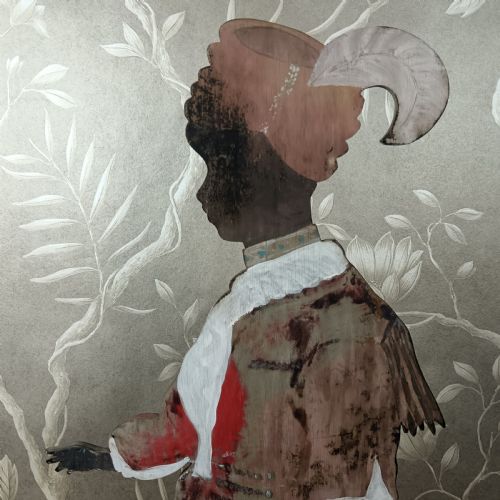
They were often placed in the corners of rooms and on stairways of houses to surprise (uninvited) visitors. They were also known to reside in front of empty or unused fireplaces during the summer months. Some even suggest that, when just under life-sized, these painted wooden figures were intended to create an optical illusion, making a room appear larger.

fig 2. An early twentieth-century painted wooden dummy board figure depicting a man in a red coat and feathered hat holding a kettle.
fig 2. Early 20th Century Dummy Boardor or Silent Companion

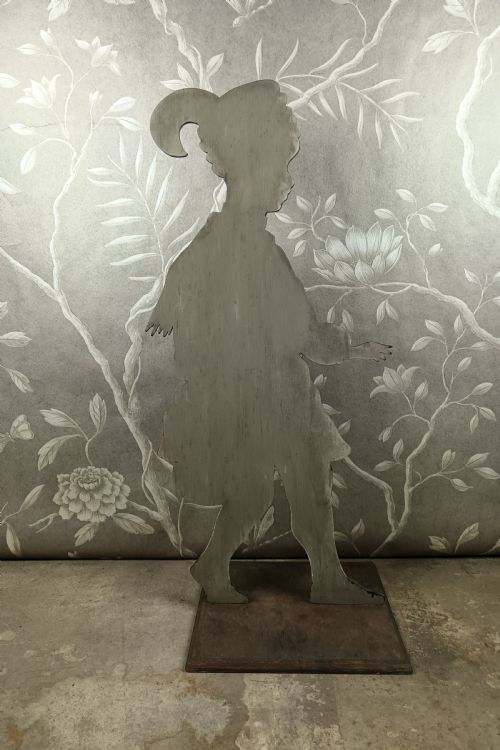
Crafted from slim 9mm plywood, this decorative piece displays surface marks suggestive of prior exposure to outdoor conditions or extended storage in an unsound loft. Despite these signs of wear, it retains undeniable charm and remains stable and sturdy.

fig 3. An early twentieth-century painted wooden dummy board figure depicting a man in a red coat and feathered hat holding a kettle.
fig 3. Early 20th Century Dummy Boardor or Silent Companion

The use of plywood for these decorative figures, instead of solid wood panels, is not tied to a single historical event, the transition generally aligns with the industrial evolution of plywood in the late 19th and early 20th centuries. While invented at the end of the 18th century, the large-scale commercial production of plywood began in the 1880s. Around this time, reproductions of earlier dummy board styles started being made using newer industrial materials.

Dimensions: H 91

Date of Manufacture

Pareglio & Ayres Antiques Interiors has dated this Painted Wooden Dummy Board to the 1900s.

Reference Numbers
Sellingantiques Ref
SA1196469
Pareglio & Ayres Antiques Interiors
Sellingantiques verified Since Dec 2015

Specialists in english and italian antiques

Dealer Profile

You can view the stock and full dealer information on the Pareglio & Ayres Antiques Interiors Profile Page
PDF SHARE
SAVE
An early twentieth-century painted wooden dummy board figure depicting a man in a red coat and feathered hat holding a kettle.
1 / 5
Archive I An early twentieth-century painted wooden dummy board figure depicting a man in a red coat and feathered hat holding a kettle.

Early 20th Century Dummy Boardor or Silent Companion
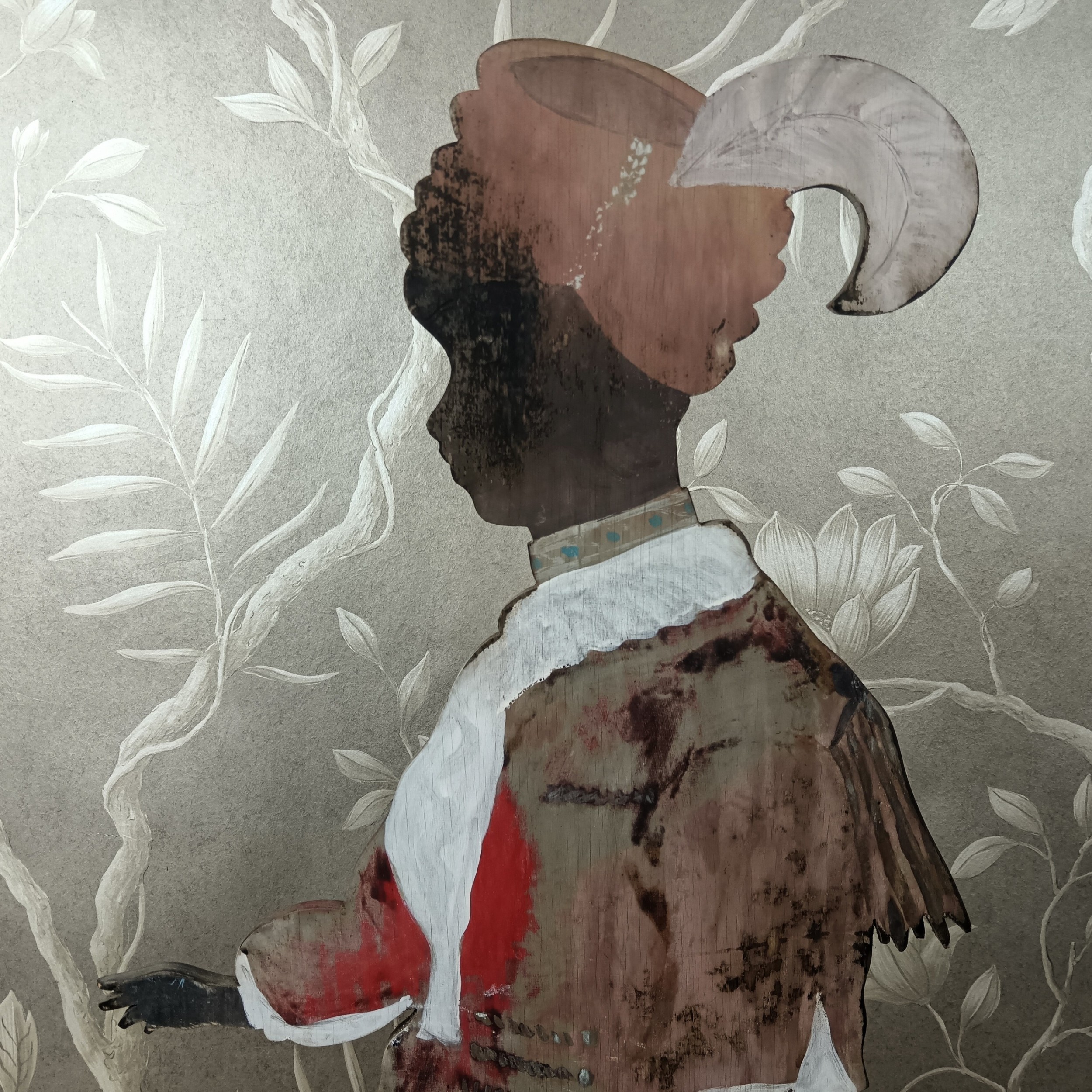
Archive II An early twentieth-century painted wooden dummy board figure depicting a man in a red coat and feathered hat holding a kettle. View II
Archive III An early twentieth-century painted wooden dummy board figure depicting a man in a red coat and feathered hat holding a kettle. View III
Archive IV An early twentieth-century painted wooden dummy board figure depicting a man in a red coat and feathered hat holding a kettle. View IV
Archive V An early twentieth-century painted wooden dummy board figure depicting a man in a red coat and feathered hat holding a kettle. View V
Enlarged Archival View
Telephone 0755 4708628
Location
102 Wincheap
Canterbury
Kent
CT1 3RS
United Kingdom
Verified Since Dec 2015
Items For Sale 151
Items Sold 406
Pareglio & Ayres Antiques Interiors
Verified Since Dec 2015
View Dealer Info
Location: 102 Wincheap, Canterbury, Kent, CT1 3RS, United Kingdom
Verified
Dec 2015
For Sale
151
Sold
406
An early twentieth-century painted wooden dummy board figure depicting a man in a red coat and feathered hat holding a kettle.
Early 20th Century Dummy Boardor or Silent Companion
Ref: SA1196469
An early twentieth-century painted wooden dummy board figure depicting a man in a red coat and feathered hat holding a kettle.
Detail View 1
Detail View 2
Detail View 3
Detail View 4
Archival Detail
Every single antique dealer on our platform is individually approved by our internal team. We verify their professional trade history, ethical standards, and photographic quality to ensure a secure, high-standard buying environment. Upon joining, every dealer agrees to a strict 9-point code of conduct. While issues can occasionally arise, our dealers typically resolve them swiftly and directly with the buyer. In fact, since our founding in 2002, Sellingantiques has only had to step in to help resolve an issue on roughly five occasions—a true testament to the quality of our dealers and their dedication to your happiness.
Our dealers are highly experienced in packing and shipping fragile, high-value antiques. Because you are in direct contact with the dealer, you will be able to easily go through all available shipping and insurance options together to ensure your item arrives safely.
Antiques are the ultimate green purchase. By choosing historical pieces over newly manufactured goods, you completely eliminate the carbon footprint of modern mass production while preserving exceptional, timeless craftsmanship.

Dummy boards, also known as silent companions, originated in the seventeenth century in the Netherlands and spread throughout Britain and Europe. These flat, painted wooden cutouts depicted human figures, pets, or household objects, and were placed around rooms and fireplaces to create a welcoming atmosphere or provide visual interest.

Traditional dummy boards were constructed from solid wood panels or thin timber boards, often with bevelled or chamfered edges to enhance the illusion of three-dimensionality. The figures were hand-painted using oil or tempera paints and attached to a flat wooden base or rear iron bracket for stability.

Authentic period dummy boards exhibit hand-cut timber panels, visible joinery, chamfered reverse edges, and historical paint pigments showing age-appropriate craquelure or oxidisation. Later twentieth-century examples often use plywood or machine-sawn timber and synthetic paint layers.

Dummy boards function well as decorative folk art accents in entryways, stair landings, or alongside a fireplace hearth. Placing them against plain walls or inside alcoves allows their unique silhouette and figurative detail to stand out against modern backdrops.

Dust the painted surface gently using a soft, dry microfibre cloth or pony hair brush to avoid lifting loose paint flaking. Keep the wooden panel away from direct heat sources, damp areas, and intense sunlight to prevent warping and pigment fading.
items
Add keywords to the filter
Price
£100
£250000
Era
Movements
Material
Origin
Stock Location
Freshness
Online Payments
Categories