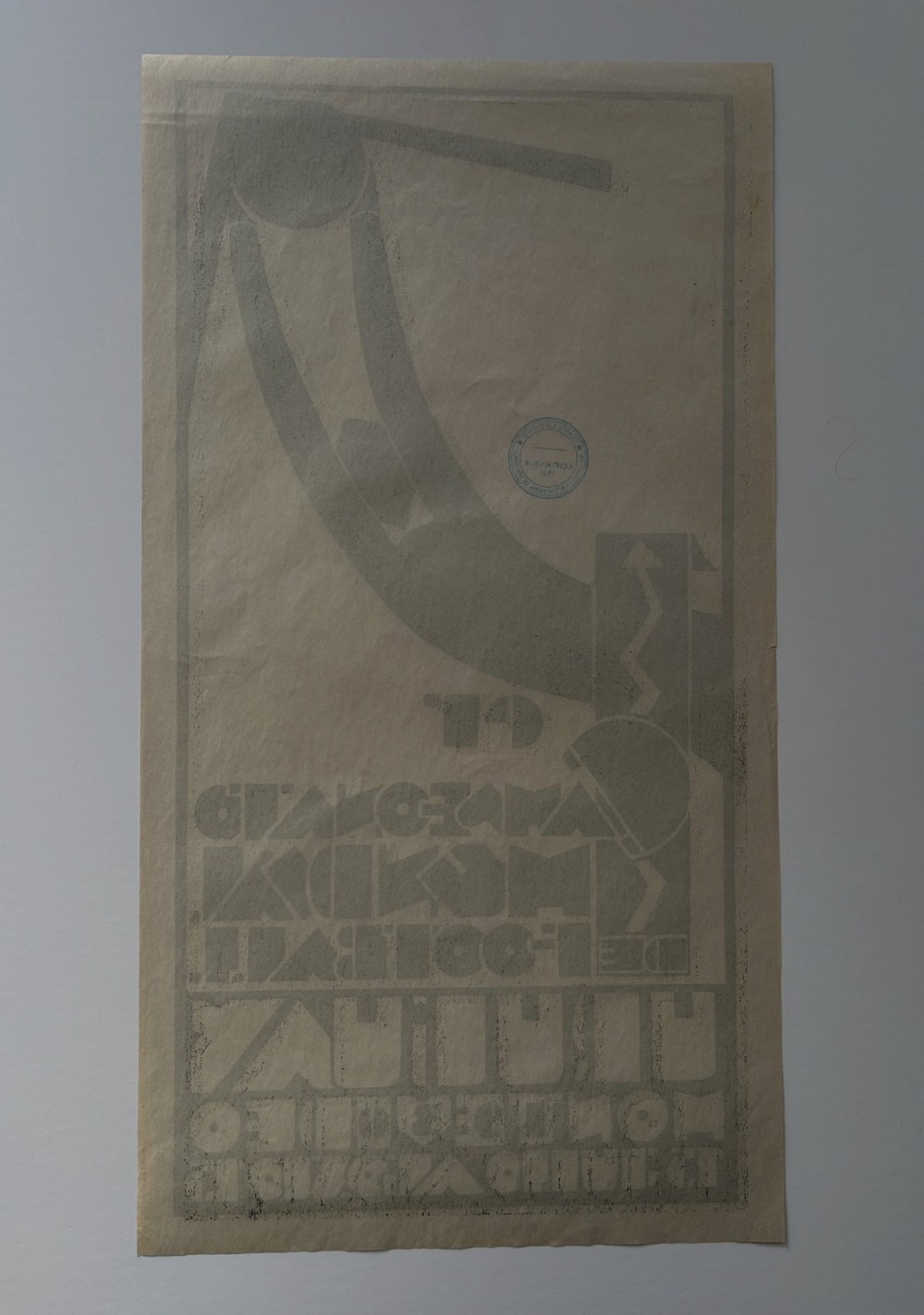
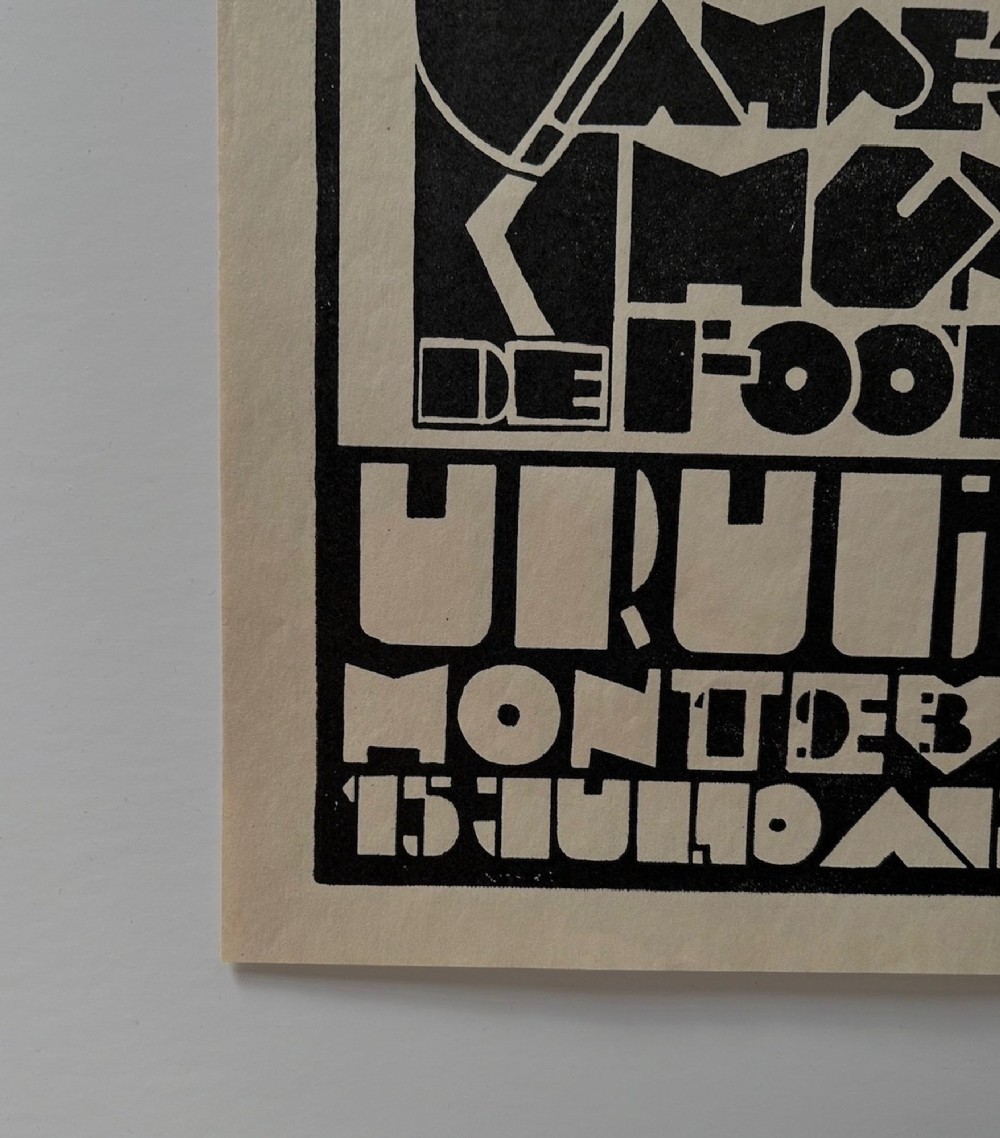
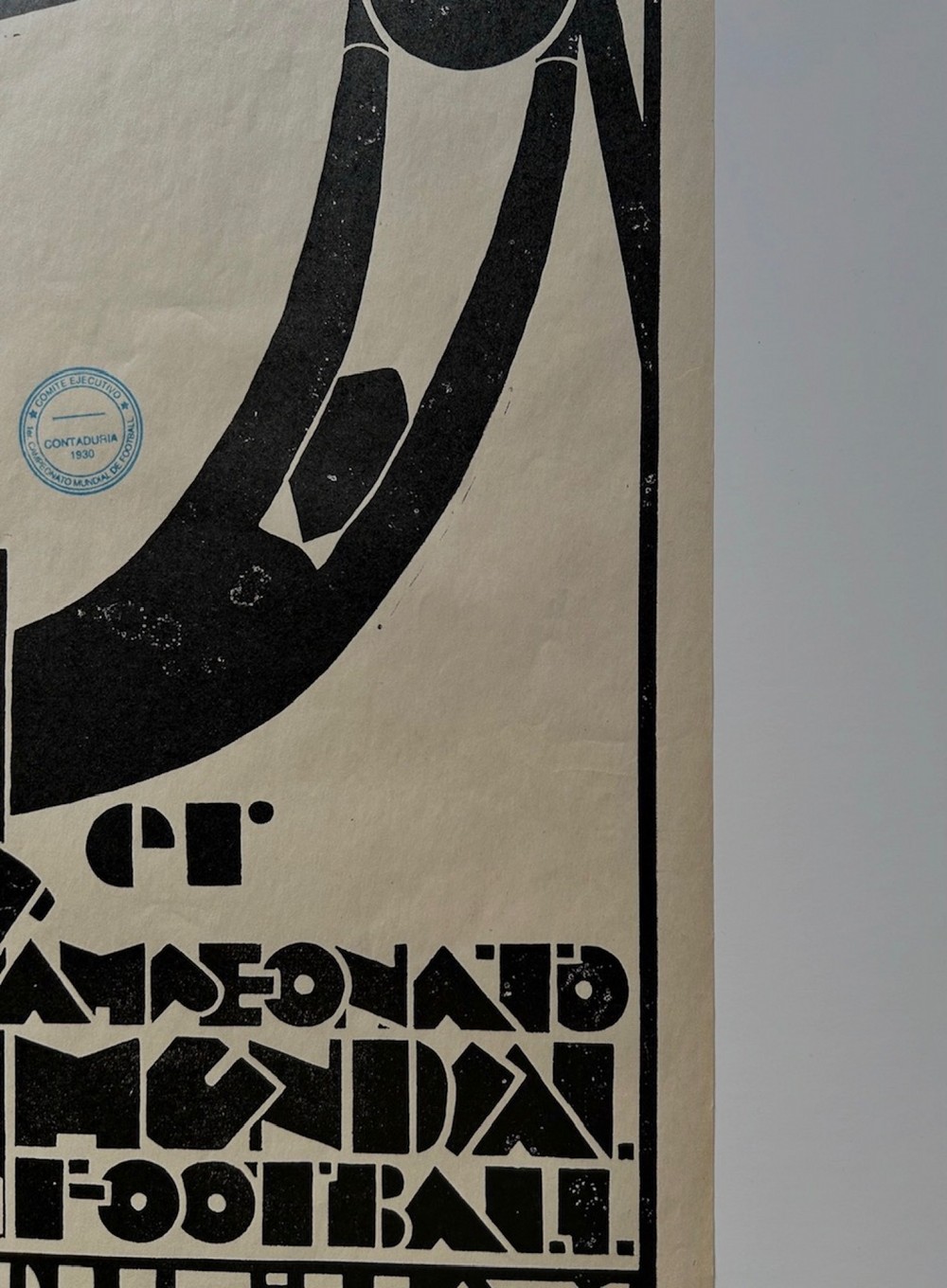
Marlborough Antiques & Interiors has dated this 1930 World Cup Poster to the 1930s.
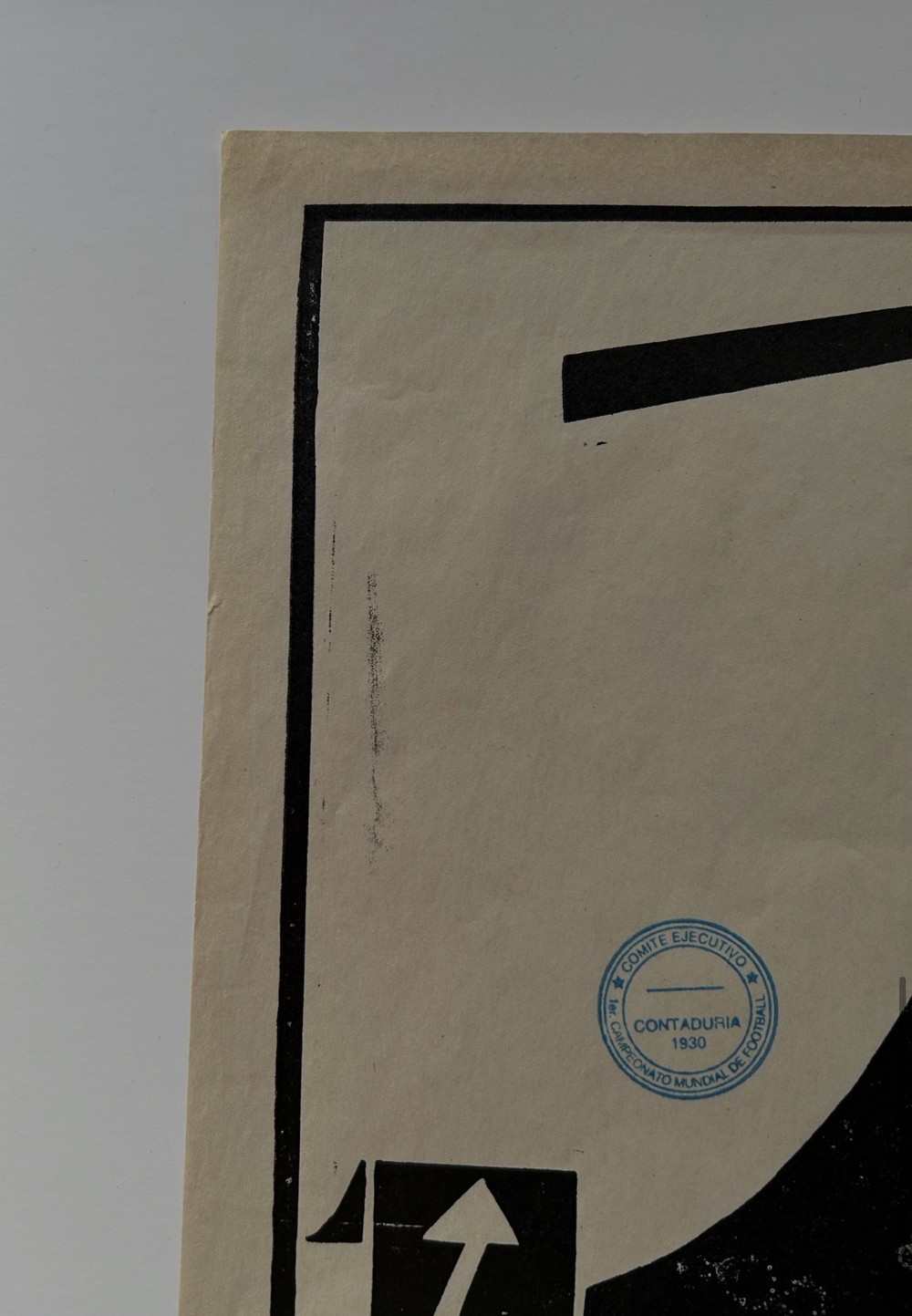
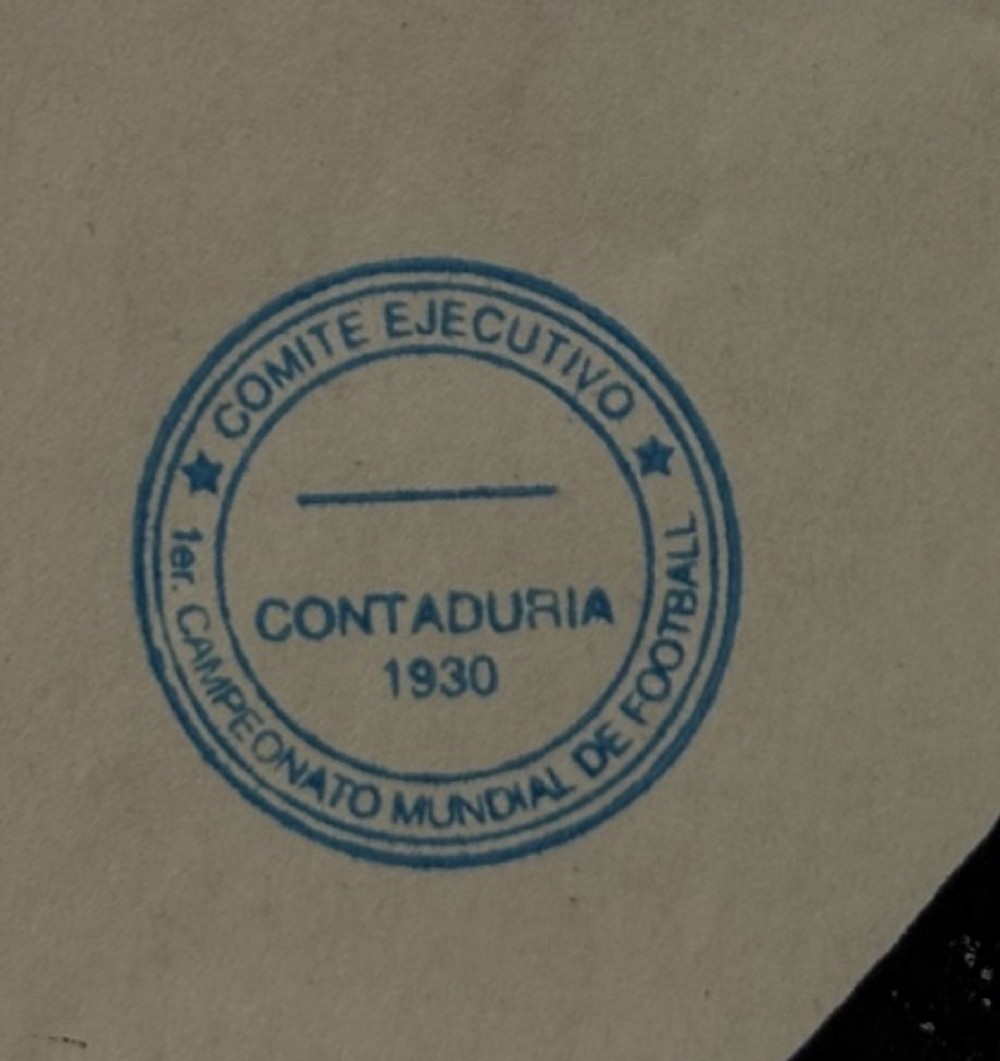
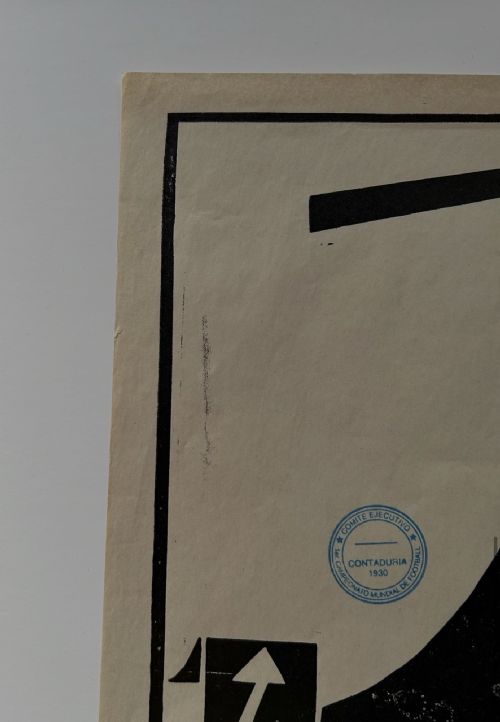
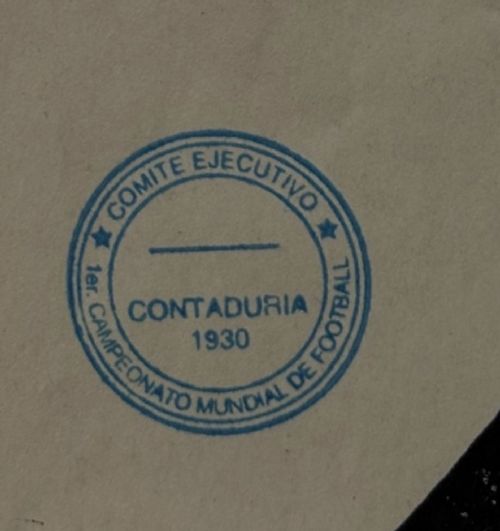
The poster also carries the original blue stamp of the Comite Ejecutivo, marked 1930.
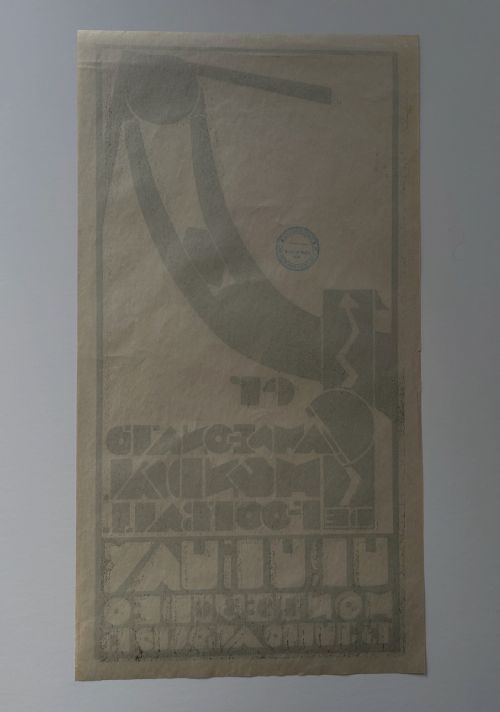
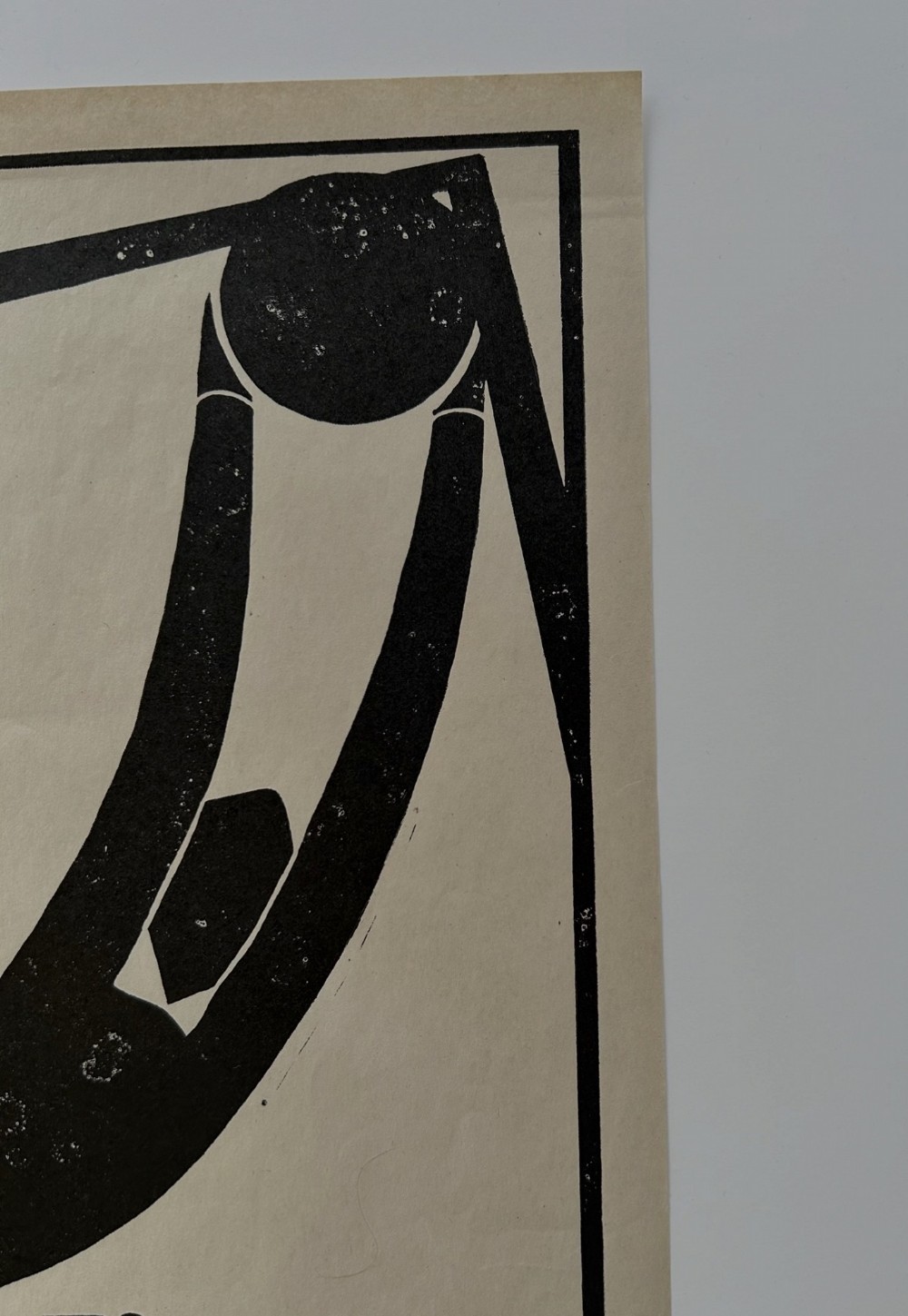
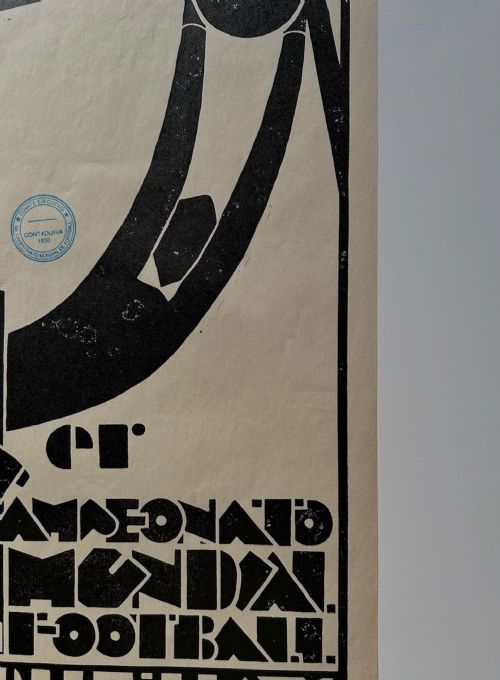
The poster created in keeping with the Art Deco movement embodies its geometric shapes, bold lines and stylized figures. It depicts in its upper half a stylised figure of a faceless goalkeeper lurching upwards in a valiant attempt to stop a ball aimed at the top right-hand corner of the goal posts from entering the goal area, with the position of the ball shown by placing the crossbar and the right-hand goal post at the back of it in an angular fashion.
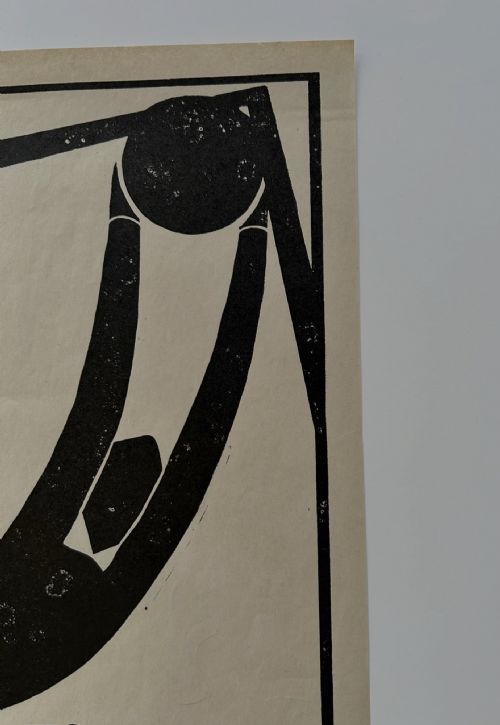
The image of the goalkeeper is central to the design, conveying the excitement and drama of the game of football.
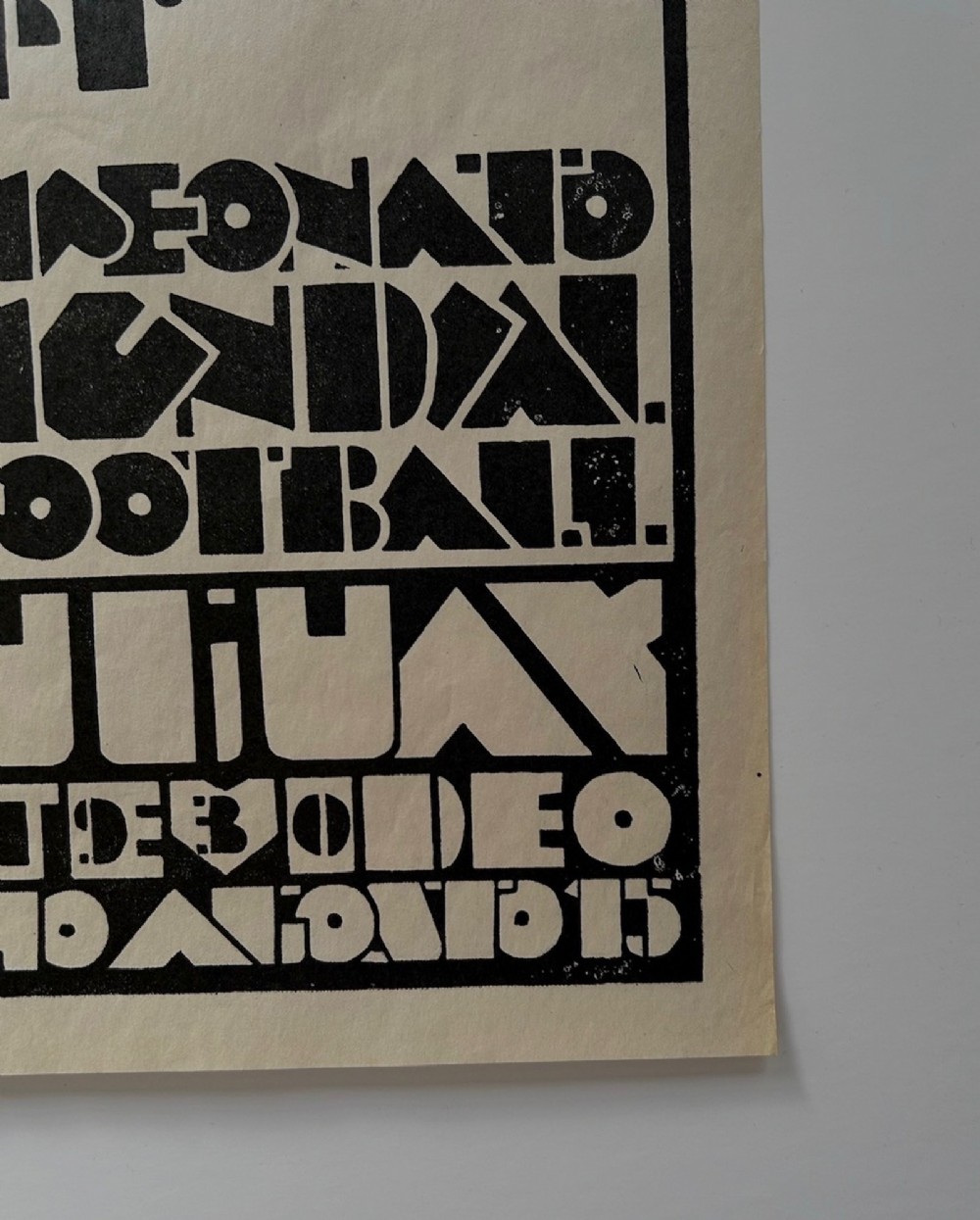
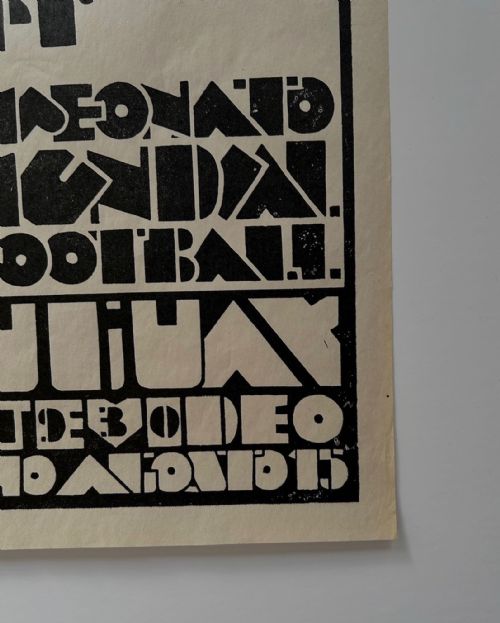
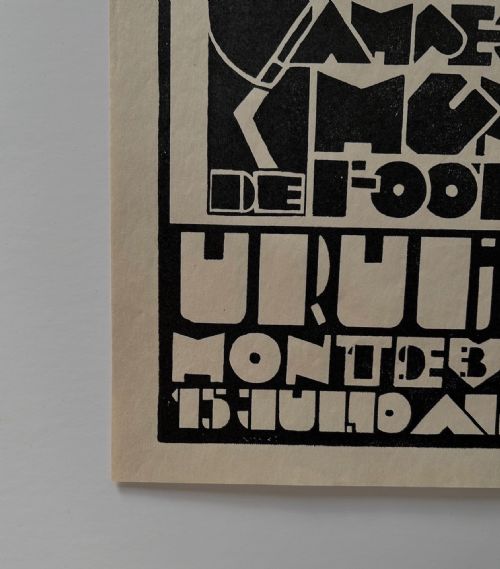
The lower half contains writing in a heavily stylized font details about the tournament dates and location: ‘1er Campeonato Mundial de Futbol’ in black, and ‘Uruguay 1930 Montevideo 15 Julio Augusto 15’. The I is shown enlarged and prominent to emphasise the historical fact that it is the First World Football Championship.
The vivid imagery enshrined in this most iconic of sports posters strikingly reflects the creative imagination and the consummate skills of a graphic artist at the height of his career.
This historic poster has come to be known as the ‘Laborde Affiche’. The posters were published by Olivera y Fernandez of Reconquista 624, Montevideo.
Guillermo Laborde
Guillermo Laborde studied at the Circulo Estimulo de Bellad Artes with Carlos Maria Herrerea in Buenos Aires, before travelling to Europe between 1910 and 1912 visiting Florence, Milan, Rome, Paris and Spain. On his return to South America his work was widely exhibited in Uruguay, Argentina, Peru and Ecuador and was the winner of various art awards.
In view of his recognition in the Uruguayan art world, Laborde was originally selected as a juror on the panel that was formed to select the winner of the competition to design the official poster for the historic first World Cup of 1930.
However, he subsequently decided to resign from the jury as he wished to enter the competition himself.
Laborde in fact entered two designs and finished first and third
In later life he became a teacher at the Circulo Estimulo de Bella d’ Artes, the Escuela de la Construccion and the Instituto Magisterial. Laborde also forged close links with the theatre, managing stage design at the Casa del Arte.
Background Information
FIFA, football’s international body governing, selected Uruguay as the host nation, acknowledging the twin-facts that in 1930 the country would be celebrating the centenary of its first constitution, and the Uruguay national football team had successfully retained their football title at the 1928 Olympic Games.
All the matches were played in the capital of Uruguay, Montevideo, the majority at the Estadio Centenario, which was specially built for the tournament.
Thirteen teams (seven from South America, four from Europe and two from North America) entered the tournament. Only a few Europeans teams chose to take participate because of the difficulty of travelling to South America at the time.
The teams were divided into four groups, with the winner of each group progressing to the semi-finals. The first two World Cup matches took place simultaneously, and were won France and the United States, who defeated Mexico 4-1 and Belgium 3-0, respectively. Lucien Laurent of France scored the first goal in World Cup history, while the US goalkeeper, Jimmy Douglas posted the first official ‘clean sheet’ in the tournament.
Argentina, Uruguay, the United States and Yugoslavia won th
Marlborough Antiques & Interiors has dated this 1930 World Cup Poster to the 1930s.
We display a variety of antiques at all price levels, including furniture, paintings and other decorative items
You can view the stock and full dealer information on the Marlborough Antiques & Interiors Profile Page
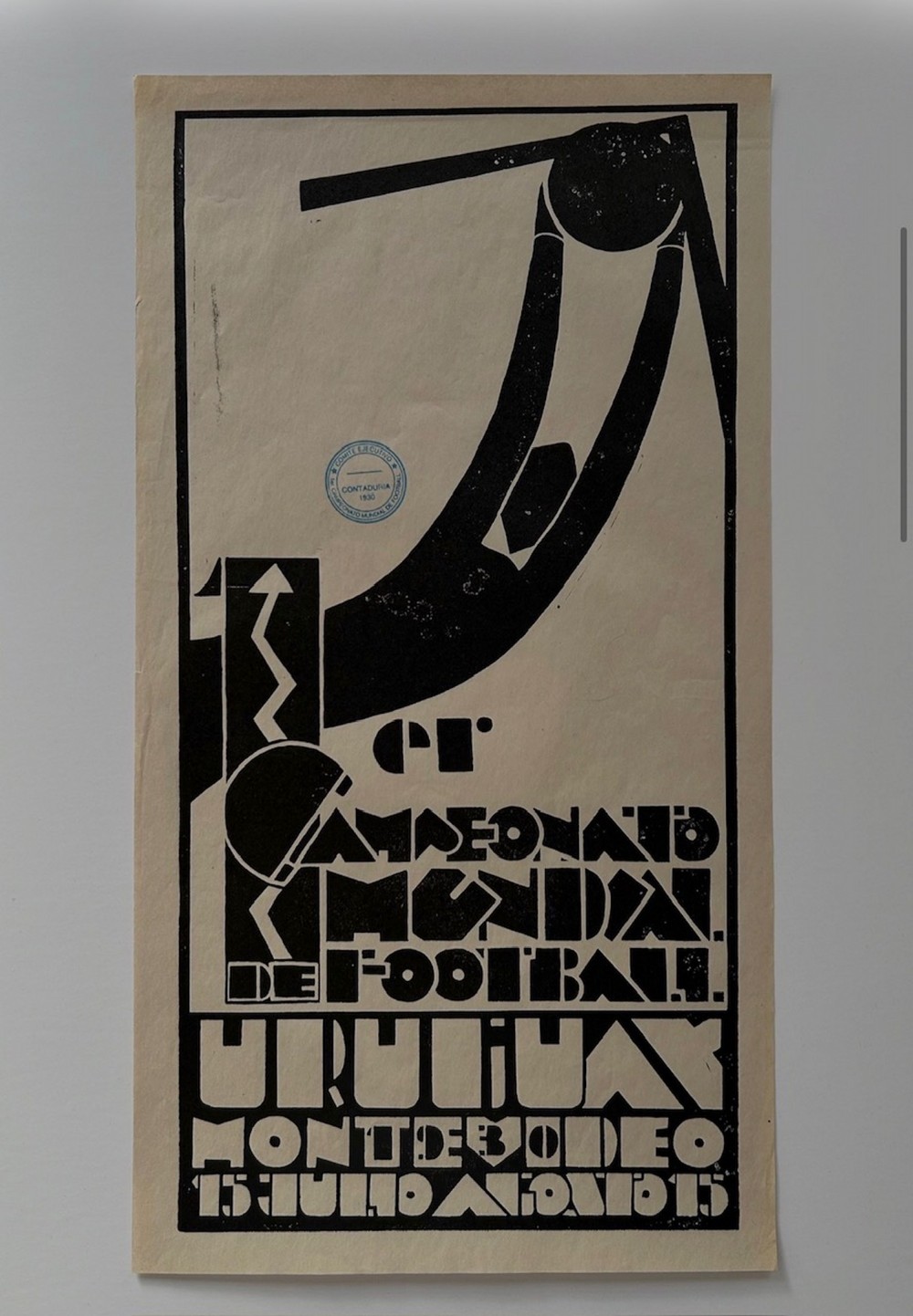
1930 Fifa World Cup Poster (Monochrome Version)