


Vintage Sports Wall Print
A vintage sports wall print brings competitive history onto the wall through framed watercolours, lithographs and etchings.
Vintage Sports Wall Print
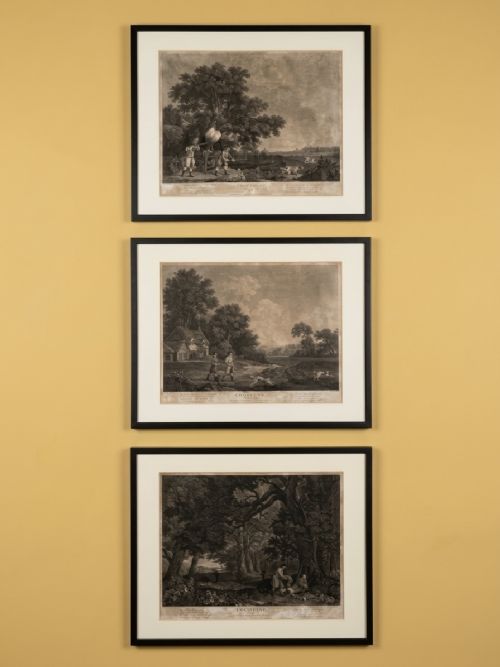
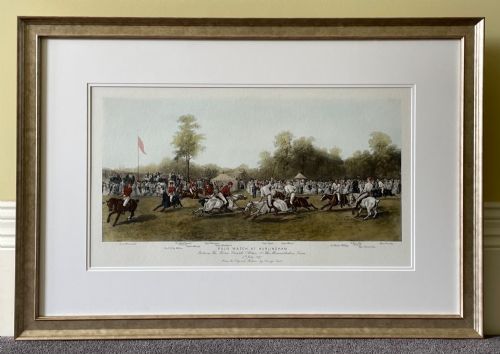
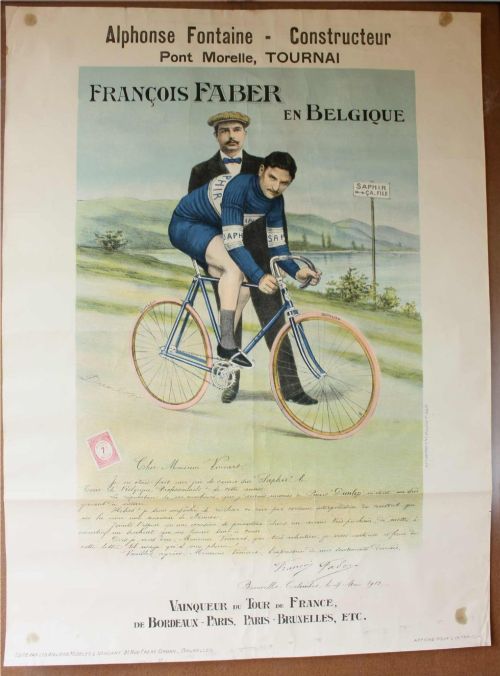
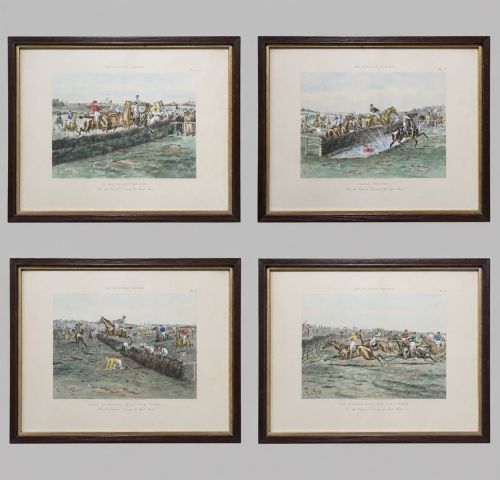
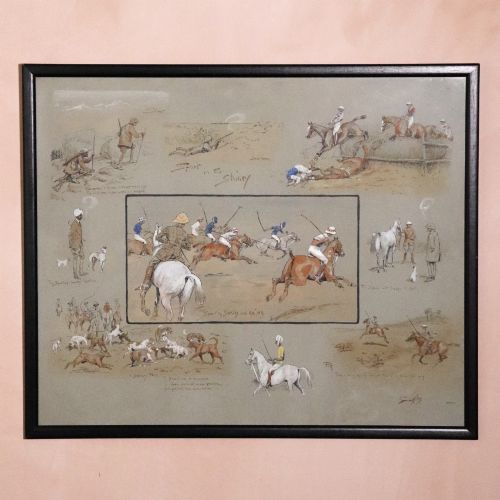
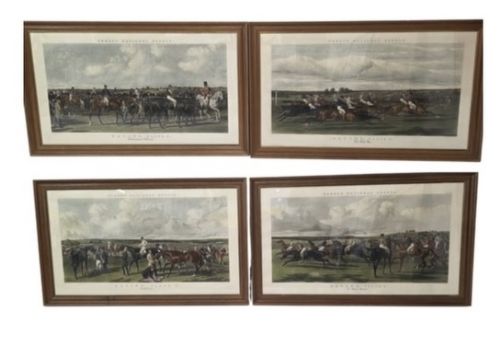
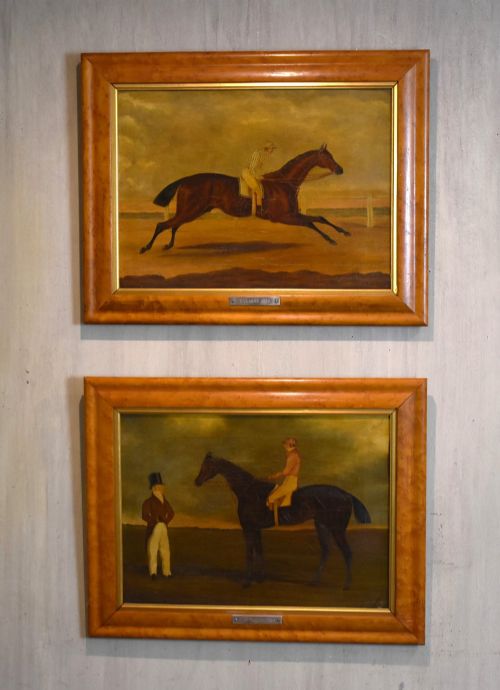
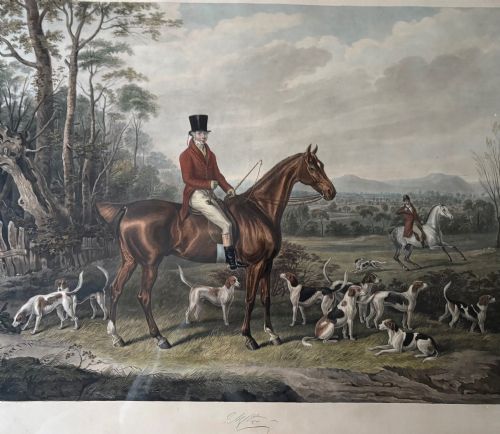
A vintage sports wall print captures athletic pursuits and equestrian events from the nineteenth and twentieth centuries. These pieces encompass framed lithographs, engravings, watercolours and posters depicting horse racing, polo, football and cycling.
The selection ranges from Victorian hand-coloured engravings to mid-century cycling and motoring posters. Buyers frequently encounter framed prints and paintings by notable sporting artists from the Georgian, Victorian and Edwardian periods.
Subjects stretch across team sports, field sports and canine subjects like foxhounds and bull bitches. Most examples arrive behind glass within wooden frames, often retaining original oak or moulded surrounds.
How they were made
Image creation relies on traditional printmaking techniques including lithography, aquatint and steel engraving alongside original watercolour and oil paintings on paper and canvas. Artisans applied ink onto plates or stones before pulling impressions by hand or press.
Many historical examples feature hand-colouring with watercolour washes applied over monochrome printed lines. Posters from the twentieth century utilise flat lithographic colour blocks to achieve bold advertising graphics.
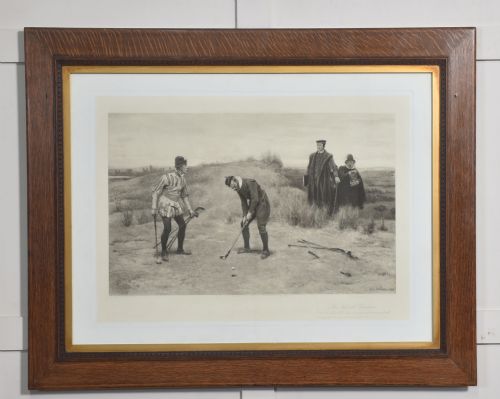
Framing typically employs glass protection over paper surfaces, secured within wooden mouldings such as oak frames. Eglomise variants incorporate reverse-painted glass panels surrounding the central artwork.
The listings span works produced across the Victorian, Edwardian, and mid-twentieth century periods.
What varies in quality
Quality rests on the skill of the artist and the fidelity of the print impression against the original composition. Master sporting artists capture equine anatomy and athletic movement with anatomical precision rather than rigid stiffness.
The depth of the ink and the preservation of the paper stock dictate visual impact across older sheets. Strong plate marks, crisp etching lines and clean unblemished margins separate superior impressions from faded examples.
George Finch Mason·Samuel Rabin·George Rankin·John Frederick Herring Snr·Alfred Wheeler·Tom Carr
The Vintage Sports Wall Print Glossary
- Lithography
- A printing process based on the repulsion of oil and water using a flat stone or metal plate. This technique allows for smooth tonal gradations and vibrant poster art.
- Aquatint
- A variant of etching that produces broad tonal areas resembling watercolour washes. It was widely utilised for nineteenth-century sporting prints.
- Eglomise
- A technique involving cold gilding and painting on the reverse face of glass. Framed pieces using this method display a reflective, glossy border.
- Engraving
- A method where an artist cuts lines directly into a metal plate with a burin. The resulting prints exhibit sharp, precise linear detail.
Vintage Sports Wall Print: Frequently Asked Questions
How do I date a vintage sports wall print?
Dating relies on the paper type, printing technique, and stylistic markers of the period shown. Victorian engravings differ visibly from twentieth-century offset lithographs and poster prints.
Frame construction and backing materials also provide clues to age, though frames are frequently replaced over time. Signatures and published dates printed on the margin offer definitive chronological anchors.
Where were sports prints displayed originally?
These works hung in clubhouses, country houses, and private studies during the nineteenth and twentieth centuries. Sporting art reflected the personal hobbies and competitive interests of the owners.
Posters appeared on public hoardings and velodromes to promote international cycling tours and football tournaments. Domestic interiors later adopted these framed artworks to celebrate equestrian and athletic achievements.
How do I care for paper art under glass?
Protect framed paper from direct sunlight to prevent the fading of inks and watercolours. Stable humidity levels prevent moisture damage and foxing spots on older paper stocks.
Keep pieces away from sources of direct heat to avoid warping wooden frames or cracking painted surfaces. Ensure hanging fixings remain secure to support the combined weight of glass and timber.
What is the difference between an etching and a lithograph?
An etching is created by acid biting lines into a metal plate, producing raised ink lines and plate marks on paper. This technique yields fine, sharp detail favored in nineteenth-century sporting scenes.
Lithography relies on a chemical greasy drawing surface on stone or metal, allowing for painterly strokes and flat colour areas. Posters and high-volume prints commonly utilised this method.