27,362  PAGES BROWSED TODAY PAGES TODAY 74  ANTIQUES UPLOADED TODAY NEW ARRIVALS
ID #SA1226328
FOR SALE
£7,000
Email
Save
Samuel Rabin a Work Out
Darnley Fine Art
for sale €8,190     $8,890
£7,000

Darnley Fine Art

Sellingantiques Verified Since Jul 2026
View Dealers Stock Page
Id #SA1226328
PDF SHARE
SAVE

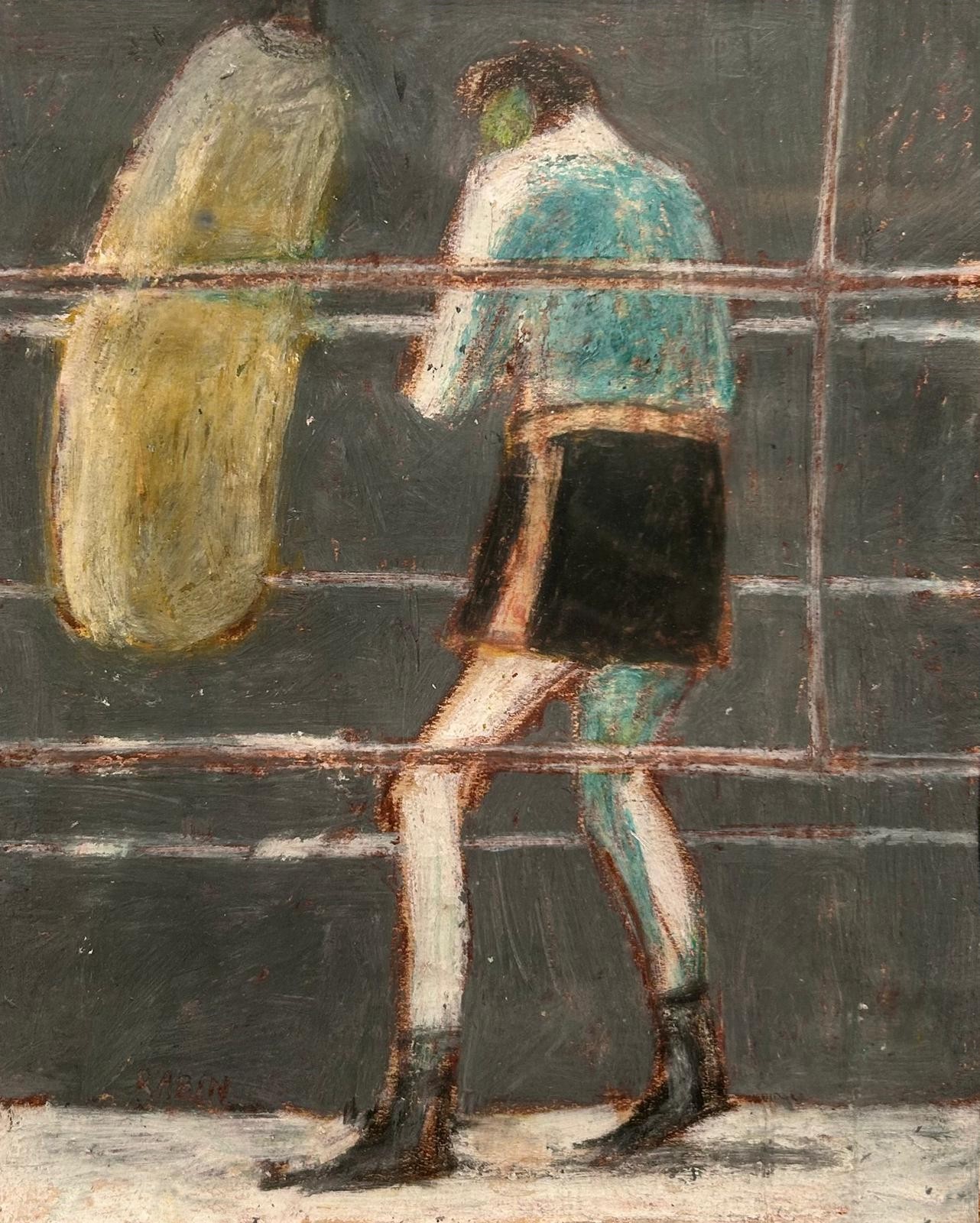
Samuel Rabin a Work Out

1940 - 1960
For Sale by Darnley Fine Art
Description

Pastel and wax crayons on paper, signed lower left

Image size: 6 1/3 x 7 5/6 inches (16 x 20 cm)

Original frame

Provenance:

John Russell Taylor Collection

R Westerby Esq, Farringdon

Exhibited:

Wildenstein & Co, London, Some Contemporary British Painters, 1951
Dulwich Picture Gallery, London, Samuel Rabin Retrospective, 1985-6

Samuel (Sam) Rabin, originally Samuel Rabinovitch, was an English sculptor, artist, teacher, singer, wrestler and Olympic bronze medallist. Rabin, who was Jewish, was born Samuel Rabinovitch on 20 June 1903 at Dewhurst Street, Cheetham, North Manchester. His parents were both Russian Jewish exiles from Vitebsk (now in Belarus).

During his childhood, the family moved to Salford where Rabin grew up and where his parents encouraged his talent for drawing. In 1914 Rabin won a scholarship to the Manchester Municipal School of Art making him, at the age of 11, the youngest pupil ever to attend the college. There he was taught drawing by French artist Adolphe Valette. In 1921 he moved to the Slade School of Fine Art in London where he continued his studies under Henry Tonks until 1924. After the Slade, Rabin studied in Paris where he met and was greatly impressed and influenced by sculptor Charles Despiau.

Rabin’s own sculpture from this time is little known as he was a perfectionist and destroyed work that he considered unsatisfactory. In 1928, working under his full surname, he was commissioned by architect Charles Holden to carve West Wind, one of eight personifications of the four winds for the headquarters of the Underground Electric Railways Company of London at 55 Broadway. The sculpture was partly completed in-situ on the building. In 1930, he produced his only other public sculptures; two decorative winged masks, The Past and The Future, for the Daily Telegraph building in Fleet Street. These were carved on the building directly from the scaffold.

Both commissions were well received at the time, but Rabin was unable to make a living as a sculptor and turned to another career – wrestling, for which he abbreviated his surname. Rabin was physically strong and had boxed and wrestled as an amateur to fund his art. He won a bronze medal in the middleweight division of the free-style wrestling at the 1928 Olympics in Amsterdam. Rabin turned professional in 1932 and fought as Rabin the Cat and Sam Radnor the Heb. Alexander Korda cast him as a wrestler in 1933 and as Mendoza, a Jewish prize-fighter, in in 1934. Despite lacking any formal musical training, Rabin was a talented baritone and worked professionally during the 1940s singing with Stars in Battledress and sang operatic arias with the army’s Classical Music Group. In 1946 he auditioned for La Scala’s conductor, Victor de Sabata.

In 1949, Rabin began teaching drawing at Goldsmith’s College of Art in New Cross, London. His disciplined teaching style including the production of demonstration works, followed that of his own teacher, Valette. His students included Mary Quant, Bridget Riley and Tom Keating. He left Goldsmith’s in 1965, due to differences over teaching methods and taught at Bournemouth College of Art until 1985 and then at Poole Art Centre until shortly before his death in December 1991.

Little of Rabin’s work from before his time at Goldsmith’s College survived his critical destruction and an accidental destruction by a wartime landlady. Much of what exists are figure studies prepared as demonstrations for students and coloured boxing scenes produced with thickly applied wax crayons of his own making.

Rabin exhibited rarely, but had a retrospective at Dulwich Picture Gallery in 1985–86. Collections containing his work include the British Museum, the Government Art Collection and the Musée National du Sport in Paris.

Physical Dimensions
Height
41.5cm (16.34")
Width
36.2cm (14.25")
Declaration

Darnley Fine Art has dated this Samuel Rabin Boxing Artwork to the 1950s.

Reference Numbers
Sellingantiques Reference
SA1226328
Description
Pastel and wax crayons on paper, signed lower left

Image size: 6 1/3 x 7 5/6 inches (16 x 20 cm)

Original frame

Provenance:

John Russell Taylor Collection

R Westerby Esq, Farringdon

Exhibited:

Wildenstein & Co, London, Some Contemporary British Painters, 1951

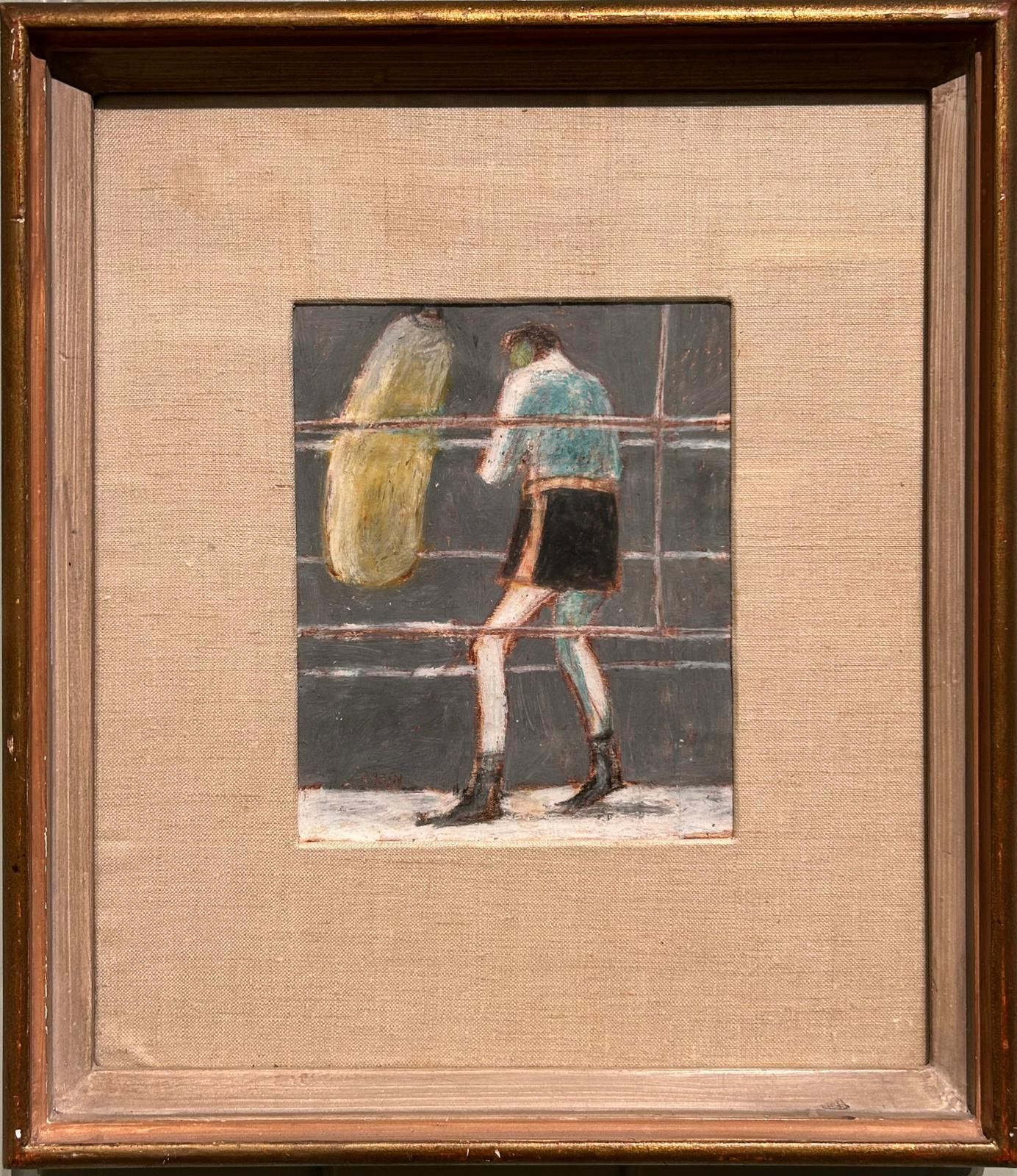
fig 1. A mid-century style painting depicting a boxer wearing a blue top and black shorts training with a light-coloured heavy bag inside a ring.
fig 1. Samuel Rabin a Work Out

Dulwich Picture Gallery, London, Samuel Rabin Retrospective, 1985-6

Samuel (Sam) Rabin, originally Samuel Rabinovitch, was an English sculptor, artist, teacher, singer, wrestler and Olympic bronze medallist.
Darnley Fine Art

Rabin, who was Jewish, was born Samuel Rabinovitch on 20 June 1903 at Dewhurst Street, Cheetham, North Manchester. His parents were both Russian Jewish exiles from Vitebsk (now in Belarus).

During his childhood, the family moved to Salford where Rabin grew up and where his parents encouraged his talent for drawing. In 1914 Rabin won a scholarship to the Manchester Municipal School of Art making him, at the age of 11, the youngest pupil ever to attend the college. There he was taught drawing by French artist Adolphe Valette. In 1921 he moved to the Slade School of Fine Art in London where he continued his studies under Henry Tonks until 1924. After the Slade, Rabin studied in Paris where he met and was greatly impressed and influenced by sculptor Charles Despiau.

Rabin’s own sculpture from this time is little known as he was a perfectionist and destroyed work that he considered unsatisfactory. In 1928, working under his full surname, he was commissioned by architect Charles Holden to carve West Wind, one of eight personifications of the four winds for the headquarters of the Underground Electric Railways Company of London at 55 Broadway. The sculpture was partly completed in-situ on the building. In 1930, he produced his only other public sculptures; two decorative winged masks, The Past and The Future, for the Daily Telegraph building in Fleet Street. These were carved on the building directly from the scaffold.

Both commissions were well received at the time, but Rabin was unable to make a living as a sculptor and turned to another career – wrestling, for which he abbreviated his surname. Rabin was physically strong and had boxed and wrestled as an amateur to fund his art. He won a bronze medal in the middleweight division of the free-style wrestling at the 1928 Olympics in Amsterdam. Rabin turned professional in 1932 and fought as Rabin the Cat and Sam Radnor the Heb. Alexander Korda cast him as a wrestler in 1933 and as Mendoza, a Jewish prize-fighter, in in 1934. Despite lacking any formal musical training, Rabin was a talented baritone and worked professionally during the 1940s singing with Stars in Battledress and sang operatic arias with the army’s Classical Music Group. In 1946 he auditioned for La Scala’s conductor, Victor de Sabata.

In 1949, Rabin began teaching drawing at Goldsmith’s College of Art in New Cross, London. His disciplined teaching style including the production of demonstration works, followed that of his own teacher, Valette. His students included Mary Quant, Bridget Riley and Tom Keating. He left Goldsmith’s in 1965, due to differences over teaching methods and taught at Bournemouth College of Art until 1985 and then at Poole Art Centre until shortly before his death in December 1991.

Little of Rabin’s work from before his time at Goldsmith’s College survived his critical destruction and an accidental destruction by a wartime landlady. Much of what exists are figure studies prepared as demonstrations for students and coloured boxing scenes produced with thickly applied wax crayons of his own making.

Rabin exhibited rarely, but had a retrospective at Dulwich Picture Gallery in 1985–86. Collections containing his work include the British Museum, the Government Art Collection and the Musée National du Sport in Paris.

Height
41.5cm (16.34")
Width
36.2cm (14.25")
Date of Manufacture

Darnley Fine Art has dated this Samuel Rabin Boxing Artwork to the 1950s.

Reference Numbers
Sellingantiques Ref
SA1226328
Darnley Fine Art
Sellingantiques verified Since Jul 2026
Dealer Profile

You can view the stock and full dealer information on the Darnley Fine Art Profile Page
PDF SHARE
SAVE
A mid-century style painting depicting a boxer wearing a blue top and black shorts training with a light-coloured heavy bag inside a ring.
1 / 2
Archive I A mid-century style painting depicting a boxer wearing a blue top and black shorts training with a light-coloured heavy bag inside a ring.

Samuel Rabin A Work Out

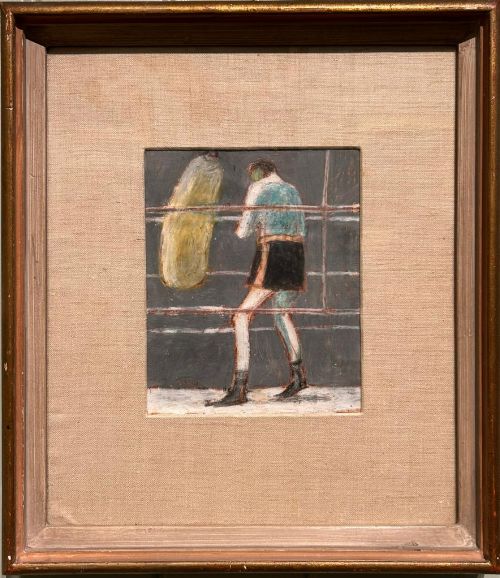
Archive II A mid-century style painting depicting a boxer wearing a blue top and black shorts training with a light-coloured heavy bag inside a ring. View II
Enlarged Archival View
Telephone 0207 379 0499
Location
2-4 Cecil Court
London
WC2N 4HE
United Kingdom

Opening Times
Monday to Saturday: 10:30 - 5:30
(excluding Bank Holidays)
Dealer Profile Page sellingantiques.co.uk/dfa
Verified Since Jul 2026
Items For Sale 76
Darnley Fine Art
Verified Since Jul 2026
View Dealer Info
Location: 2-4 Cecil Court, London, WC2N 4HE, United Kingdom, , Opening Times, Monday to Saturday: 10:30 - 5:30, (excluding Bank Holidays)
Verified
Jul 2026
For Sale
76
A mid-century style painting depicting a boxer wearing a blue top and black shorts training with a light-coloured heavy bag inside a ring.
Samuel Rabin A Work Out
Ref: SA1226328
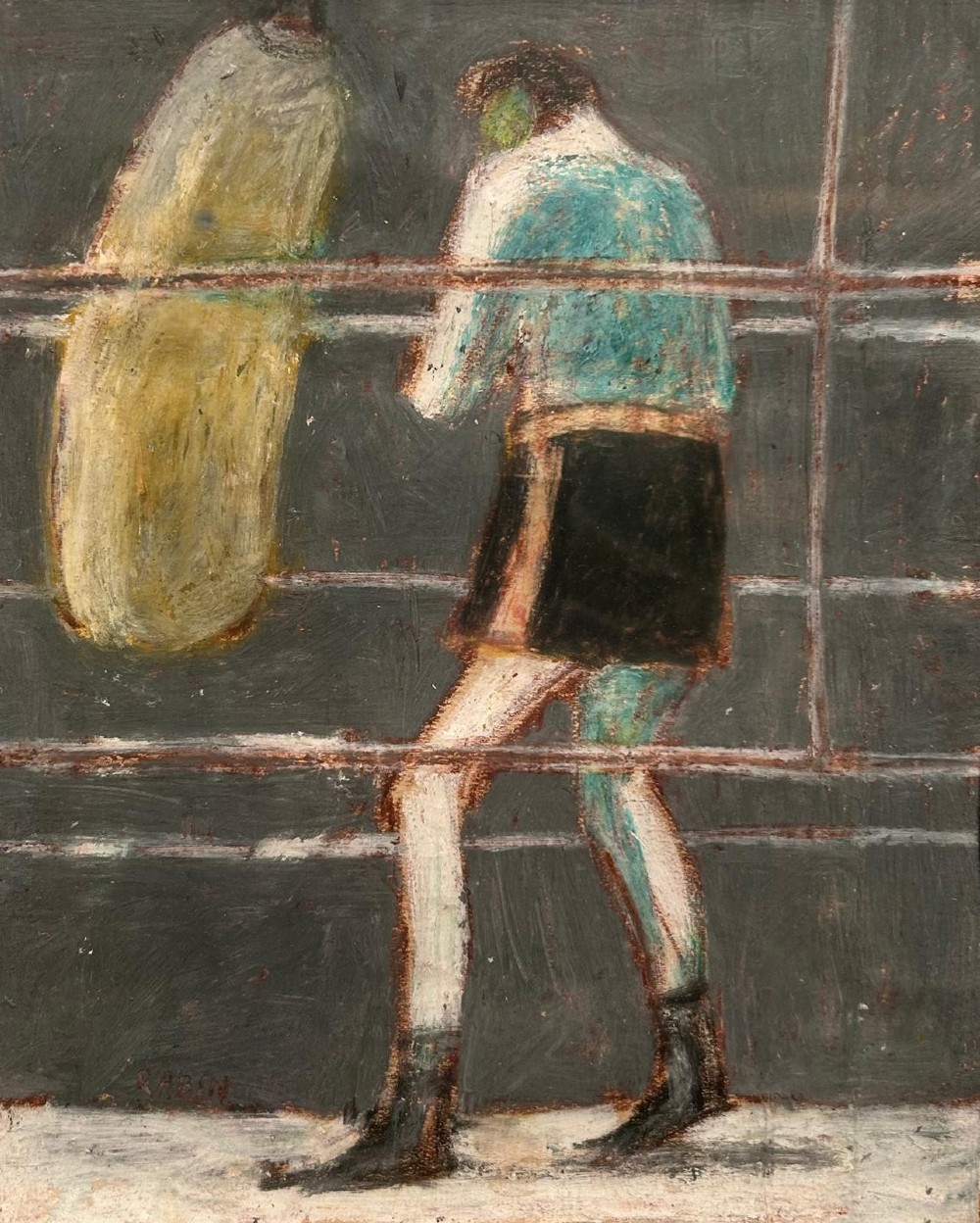
A mid-century style painting depicting a boxer wearing a blue top and black shorts training with a light-coloured heavy bag inside a ring.
Detail View 1
Archival Detail
Every single antique dealer on our platform is individually approved by our internal team. We verify their professional trade history, ethical standards, and photographic quality to ensure a secure, high-standard buying environment. Upon joining, every dealer agrees to a strict 9-point code of conduct. While issues can occasionally arise, our dealers typically resolve them swiftly and directly with the buyer. In fact, since our founding in 2002, Sellingantiques has only had to step in to help resolve an issue on roughly five occasions—a true testament to the quality of our dealers and their dedication to your happiness.
Our dealers are highly experienced in packing and shipping fragile, high-value antiques. Because you are in direct contact with the dealer, you will be able to easily go through all available shipping and insurance options together to ensure your item arrives safely.
Antiques are the ultimate green purchase. By choosing historical pieces over newly manufactured goods, you completely eliminate the carbon footprint of modern mass production while preserving exceptional, timeless craftsmanship.

Mid-20th century British sporting art often focuses on the human form in motion, incorporating modernist textures, muted colour palettes, and graphic compositions to capture physical discipline and strength.

Artists during this era frequently utilised oil paint, pastel, tempera, or mixed media on board or heavy paper, applying layered strokes to create tactile surface effects.

Authentic pieces often feature original signatures, period gallery or auction labels on the reverse, and consistent age to the canvas, board, or paper backing.

Display the artwork framed in a neutral wooden moulding within a study, hallway, or living area to add a sophisticated graphic element alongside classic or mid-century furniture.

Keep the artwork framed behind UV-filtering glass, avoid direct sunlight and humid environments, and clean the glass gently using a dry microfibre cloth.
items
Add keywords to the filter
Price
£100
£250000
Era
Movements
Material
Origin
Stock Location
Freshness
Online Payments
Categories