




Antique Tapestries
Woven wool and silk panels made to cover and warm a large wall, sold alongside the framed domestic needlework that dealers also call tapestry.
Antique Tapestries
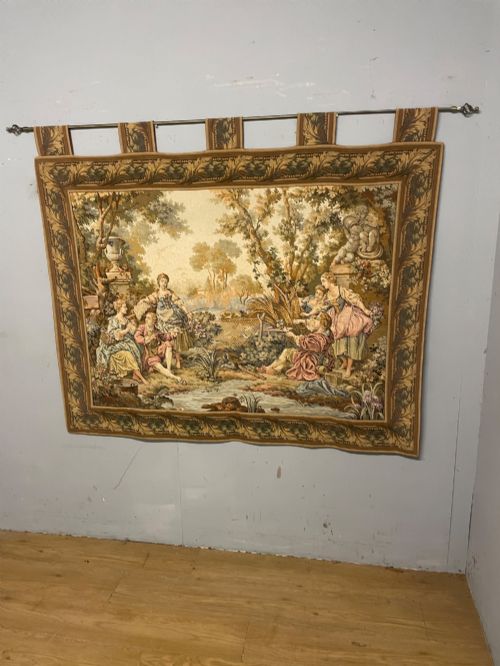
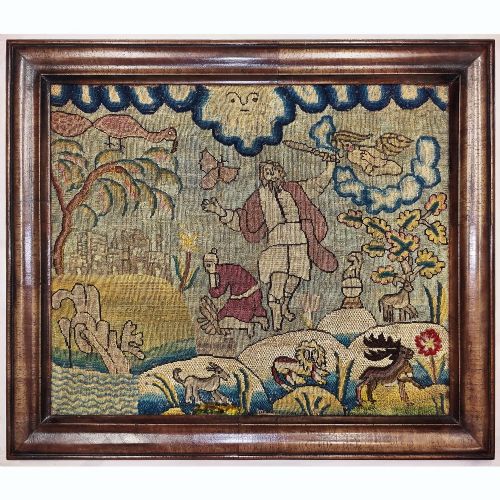
Two different things sit under this heading. One is genuine woven tapestry, where the design is formed by the weft on a loom, most often a Verdure landscape of French or Flemish type. The other is hand-worked domestic needlework - needlepoint, petit point, Berlin wool work, crewelwork, samplers, silk pictures - which dealers have long called tapestry too. The needlework group is the larger of the two.
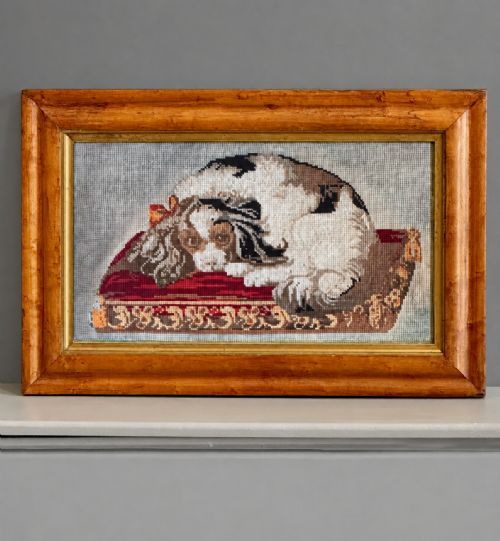
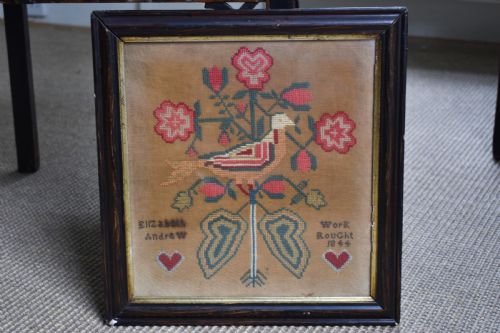
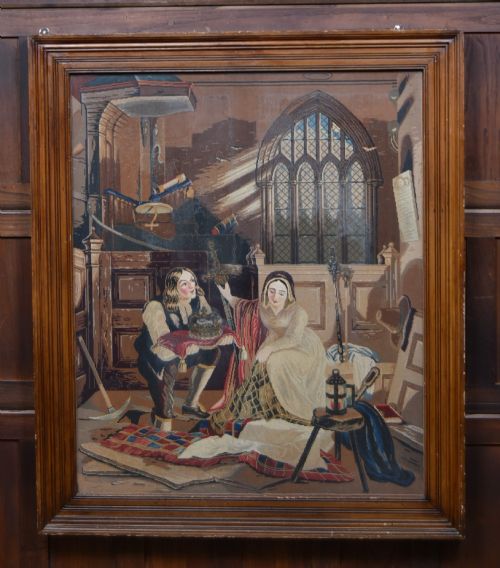
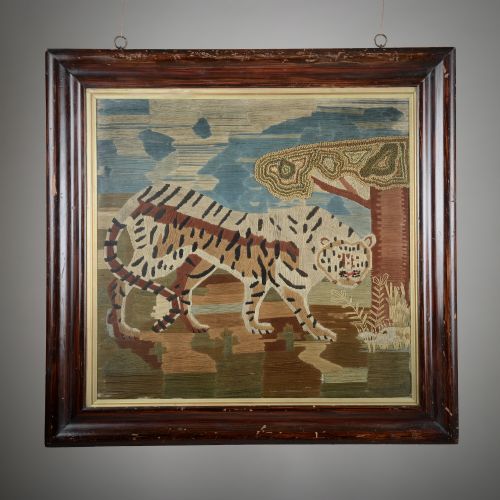
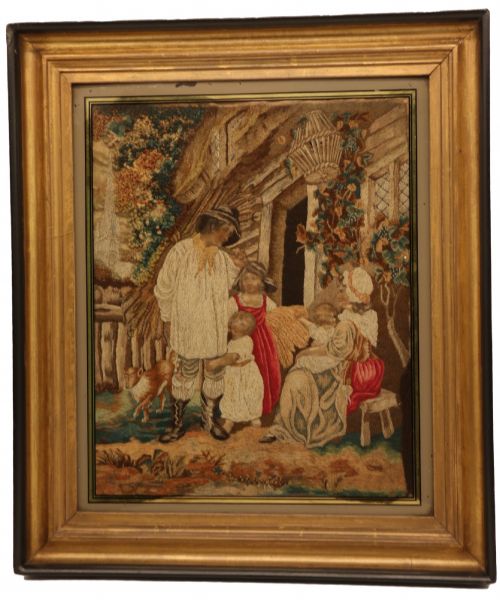
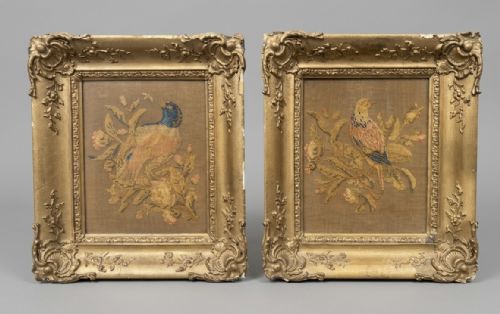
The version you are most likely to meet is a framed needlework or needlepoint picture of 19th-century date, hung as wall decoration. 'Framed' turns up in around one in five titles on Sellingantiques, which says as much about how these are sold as about what they are: pictures for a wall rather than loose cloth. Period labels lean the same way, with 19th Century and Victorian well ahead of everything else.
Woven tapestry was a European wall covering and a piece of status furnishing from the medieval period on, made to insulate and decorate big rooms. The stitched pictures served the same decorative purpose at domestic scale, and by the 19th century were largely amateur or workshop work made to be framed.
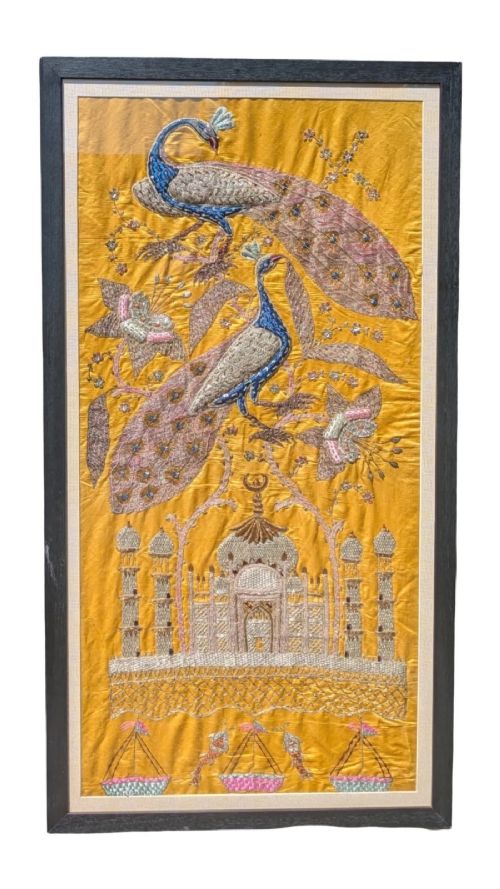
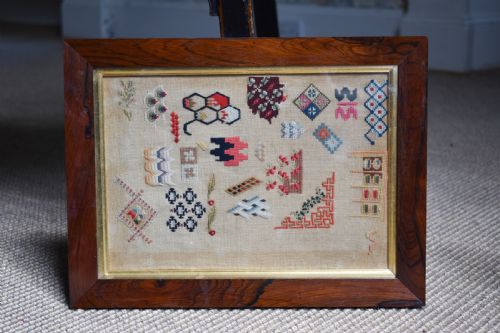
Outside those two groups sit a handful of others: Berlin wool work and samplers, Indian embroidery on silk, an Asian wall hanging, four framed Kuba raffia panels dated around 1940. Two pieces are tapestry mounted as fire screens rather than hung flat, and one entry is an oil painting of a tapestry room, shelved here on subject alone.
Where The Range Splits
Woven beats stitched. The Verdure and Aubusson panels cluster in the upper part of the range, while framed needlework pictures occupy the middle. Size pushes the same way: stated dimensions climb to 287 x 250cm and 230 x 365cm, and 'Large' and 'Huge' recur through the upper half. A narrow 61 x 207cm piece has the proportions of an entre-fenêtre.
Named origin separates listings that otherwise read alike. Aubusson, 'possibly Audenarde', English, Italian and French all appear on the dearer pieces, while an unattributed 'Large Tapestry' or 'Victorian tapestry wall hanging' carries no place at all. Aubusson is the only weaving centre named more than once, and one of those entries is the gouache cartoon rather than the cloth.
Among the stitched pieces, fineness of stitch does the work. Petit point, fine English silk needlework and stumpwork sit above plainer wool work, and early date lifts a piece further: the 17th- and 18th-century entries hold the top, Victorian and Edwardian framed work the bottom. Frames get named as a selling point too - burr maple, maple, gilt, walnut.
Antique Tapestries Retail Price Guide 2026
Typical UK retail prices for tapestries, calculated from the Sellingantiques database of over a million retail prices indexed since 2003. This retail price guide relies exclusively on Sellingantiques data; no external sources or auction records are used, so the figures do not describe the wider market.
The biggest to pass through Sellingantiques are woven Verdure panels, at stated sizes of 287 x 250cm and 230 x 365cm.
The Antique Tapestries Glossary
- Tapestry
- Strictly a woven panel with the design formed by the weft. On Sellingantiques the word is also applied to framed needlework, so the title alone won't tell you which you're looking at.
- Verdure
- A tapestry whose design is dense foliage and landscape rather than figures. The commonest woven type in this category, and usually the largest.
- Needlepoint
- Stitching worked in wool through open canvas, covering the ground completely.
- Petit point
- Fine needlepoint worked on a high thread count, giving a close, painterly surface. It appears on the better stitched pieces, including one mounted as a fire screen.
- Cartoon
- The full-scale painted design a weaver worked from. One Aubusson entry is a gouache cartoon sold as a picture in its own right, the design rather than the cloth.
- Stumpwork
- Raised, padded embroidery standing off the ground, associated with 17th-century pictures. A stumpwork embroidery holds the very top of the range.
Antique Tapestries: Frequently Asked Questions
Is everything here actually woven tapestry?
No. Genuine woven tapestry - wool and silk panels made on a loom - is the smaller of the two groups, roughly a sixth of the samples.
The larger group is hand-worked needlework: needlepoint, petit point, Berlin wool work, crewelwork, samplers and silk pictures, framed and hung as pictures. Dealers have called these tapestry for generations.
How big do woven panels get?
The Verdure panels are the giants of the category. Stated sizes reach 287 x 250cm and 230 x 365cm, with a 170 x 318cm panel in between.
One narrow piece measures 61 x 207cm, the proportion of an entre-fenêtre, woven to fill the wall between two windows. Framed needlework runs far smaller, down to modest pictures.
What dates do these pieces carry?
The dated field spans 1700 to 1940, though only sixteen listings carry a clean year. The rest sit under loose labels, chiefly 19th Century and Victorian.
Decade-level dating is thin: 1860s, 1880s, and one each for the 1830s, 1820s and 1920s. The 18th century tends to show up as a flat '1700s' on Verdure panels.
One 19th-century piece is described as worked in 15th-century style, which is a note about design, not date.
Which weaving centres get named?
Aubusson is the only one named more than once, appearing on panels and on a gouache cartoon. 'Possibly Audenarde' appears once and is the rarest origin claim in the archive.
Beyond that, origin tends to be stated as a country rather than a workshop: English, Italian, French. No workshop or weaver is named across the listings.
Are there non-European examples?
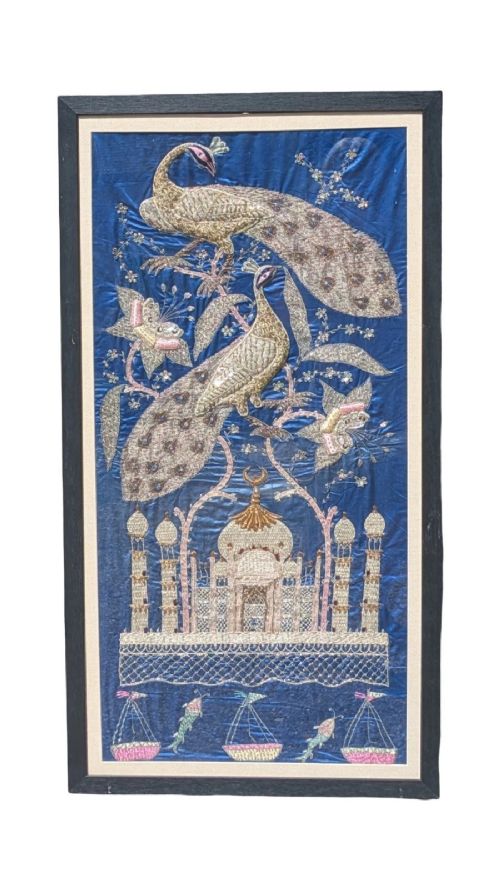
A handful. Indian embroidery on silk with the Taj Mahal and peacocks turns up twice, and there is one large 19th-century Asian wall hanging.
A set of four framed Kuba raffia tapestries dated around 1940 is the latest-dated group in the archive.
How often do tapestries come up for sale?
This is a small, slow category. About five come to market a year on Sellingantiques.
Yet 29 different dealers have listed one, which tells you most sell a tapestry once and move on rather than trading in them steadily.