

Antique Religious Art
Framed images of Christian subjects, painted or printed, made for churches, chapels and private devotion, and catalogued as often by school and prototype as by artist.
Antique Religious Art
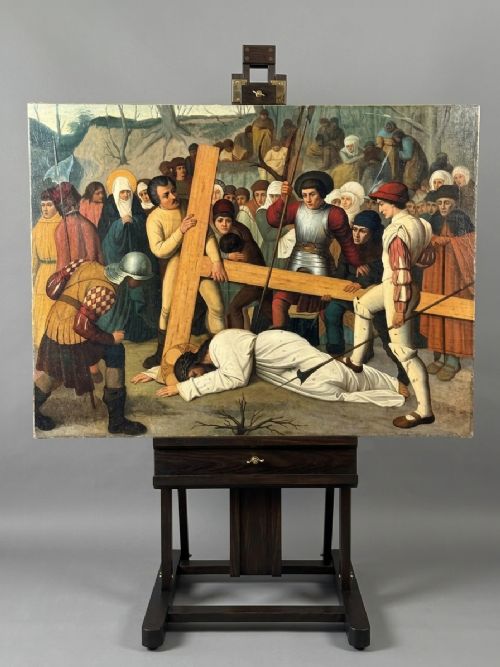
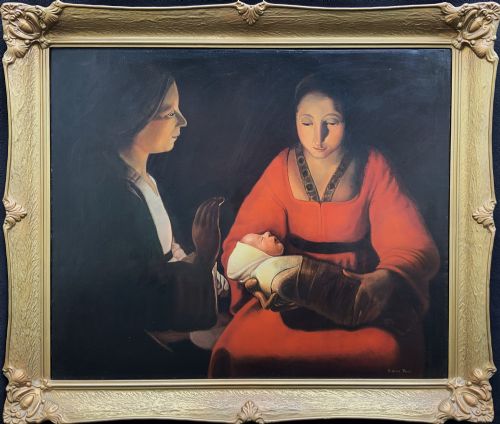
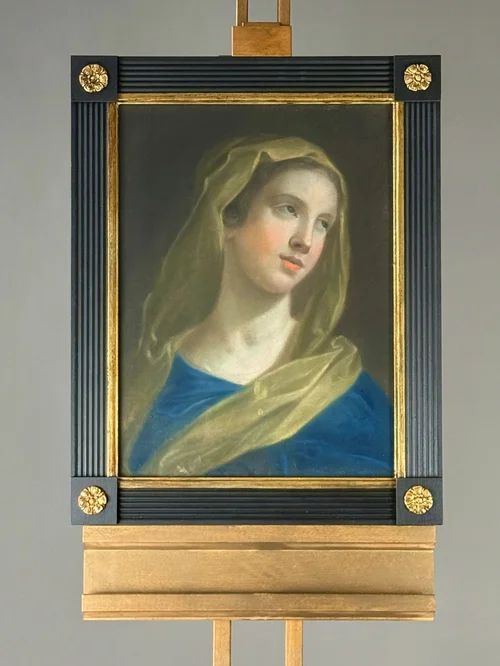
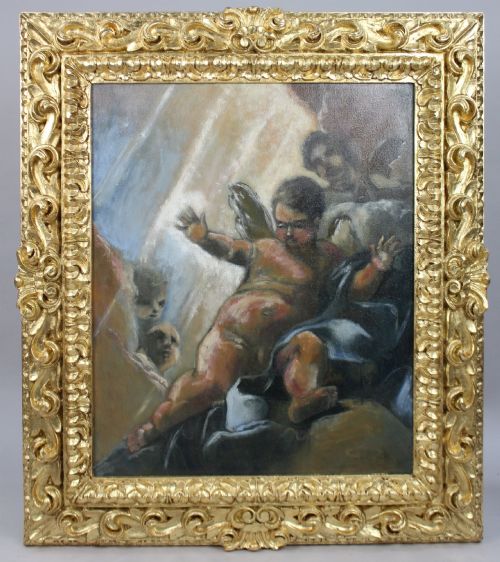
Paintings dominate. Of the titles on Sellingantiques, 76 say "painting" and 71 say "oil", most often on canvas, sometimes on panel, copper or wood. The picture you're most likely to meet is an unsigned oil on canvas of a devotional subject, framed, and sold on its region and its relation to a known composition rather than on a name.
That is why attribution words crowd the titles as much as saints do. "School" appears in 28, "after" in 23, "follower" in 9, with circle of, attributed to, workshop and manner filling out the rest. Roughly two in five pieces are described by their distance from another artist's hand.
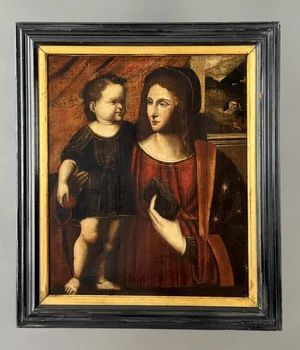
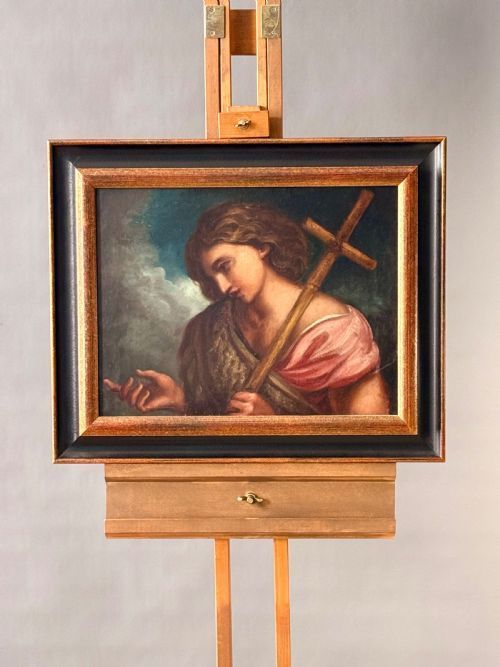
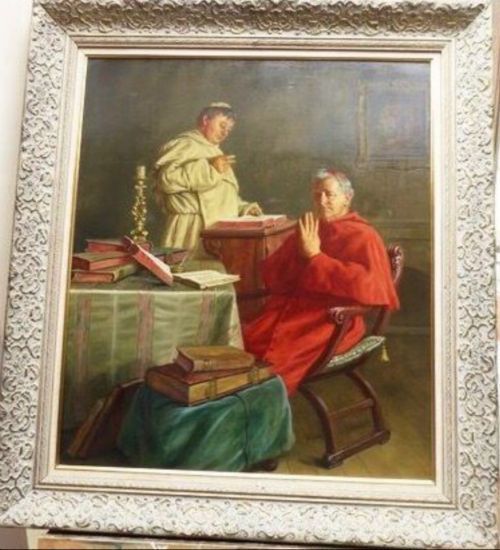
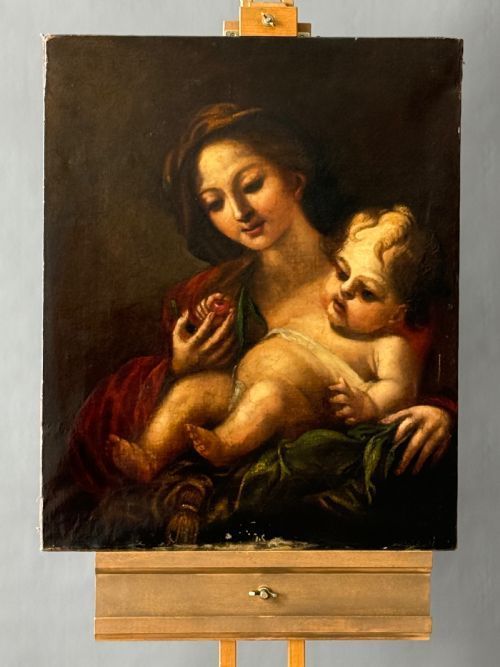
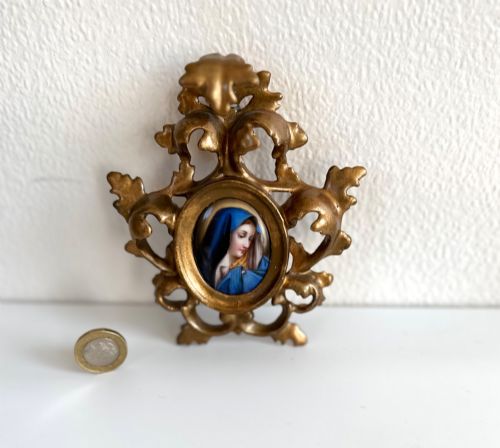
The Madonna and Child is the most repeated subject, followed by saints, John the Baptist among them, and Christ. Italian origin or school is the commonest attribution, though titles also name Spain, France, the Netherlands, Poland, Hesse, Genoa, Naples, Madrid and the Veneto. Ecclesiastical portraits run steadily alongside: clergymen, cardinals, popes and Reformation figures.
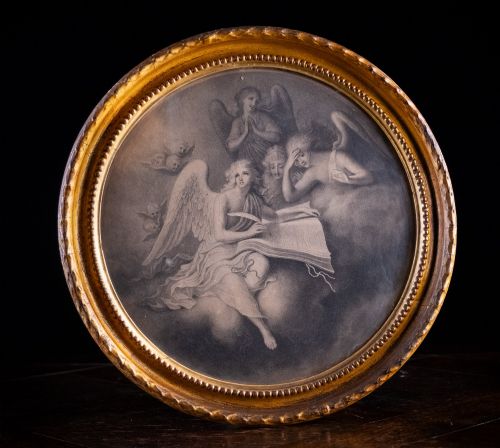
Behind the oils sits about a fifth of the category in prints and works on paper - engravings, chromolithograph triptychs, mezzotints, etchings, pastel, watercolour, pen and ink - and a smaller group of icons and painted panels, several Russian or Orthodox, tempera and gold on wood. Odd single objects appear too: bronze plaques, a silver angel relief, an embroidered silk panel, a pokerwork panel.
Where The Range Splits
Attribution does most of the work. Titles carrying "circle of", "attributed to", "workshop" or a named hand sit at the top of the range; a bare "school" or "after" sits well below, and an unattributed 18th-century Italian oil on panel lower still. The subject may be identical. The claim about who painted it is not.
Medium separates the bands almost as cleanly. Oils fill the middle and upper reaches, while engravings, chromolithographs and oleographs cluster at the bottom, which is where the cheap devotional prints of the 18th and 19th centuries have ended up. Miniature oils sit down there with them.
After that it's age, scale and support. Sixteenth and 17th-century pictures push upward, and dealers use size as a selling point in twelve titles, escalating from "large" through "very large proportion" to "monumental" and "huge". Copper supports, fruitwood panels and carved giltwood frames all lift a picture above the plain canvas in a plain frame.
Antique Religious Art Retail Price Guide 2026
Typical UK retail prices for religious art, calculated from the Sellingantiques database of over a million retail prices indexed since 2003. This retail price guide relies exclusively on Sellingantiques data; no external sources or auction records are used, so the figures do not describe the wider market.
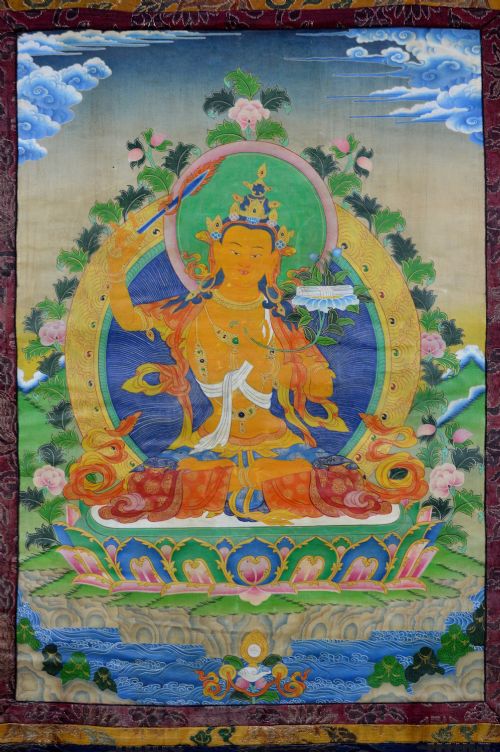
One-offs from the archive: an 1848 Pennsylvania pyrography panel, a Tibetan Manjushri painting and a Chinese Qing scroll of the Daoist Jade Emperor.
The Antique Religious Art Glossary
- After
- A later copy or version of a known composition, by another hand. It appears in 23 titles, making it one of the commonest words in the category.
- School of, or [Place] School
- Painted in the region and idiom named, artist unidentified. Twenty-eight titles use it, among them Italian, Venetian, Neapolitan, Madrid and Hessian.
- Follower of
- A painter working in the named artist's manner, usually later than him. Nine titles carry it.
- Circle of
- Close to the named artist in time and place, without being by him. Attributed to, workshop and studio of mark further degrees of proximity, from probable authorship down to the shop.
- Icon
- An Orthodox devotional image, usually tempera and gold on wood. Eleven titles use the word, several of them Russian.
- Ex-voto
- A picture made in fulfilment of a vow, often naming the donor or the occasion that prompted it.
Antique Religious Art: Frequently Asked Questions
What subjects turn up most often?
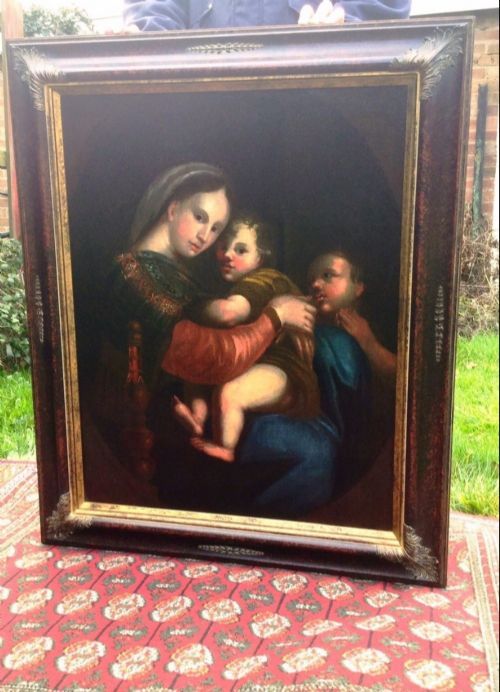
The Madonna and Child leads by a distance. "Madonna" appears in 21 titles, "child" in 15, "mary" in 13 and "virgin" in 9, and the subject is rising as a share of live stock.
Saints come next, with John the Baptist recurring, then Christ. Portraits of clergymen, cardinals, popes and Reformation figures form a steady seam of their own.
Why do so many listings say "after" or "school of"?
Because most of these pictures are unsigned. Workshops across Italy, Spain, the Netherlands and Central Europe turned out devotional images in quantity from the 16th to 18th centuries, including copies and variants of celebrated compositions.
So the catalogue language describes a relationship instead of an author. "School" in 28 titles, "after" in 23, "follower" in 9.
How old are these pieces?
The 18th and 19th centuries are close to level, with 30 and 29 listings, and the 17th century just behind on 26. Seven are dated to the 16th century, and two carry the blunt label "Before 1700".
Only thirty listings give a clean year. The rest are century labels, often hedged with "early", "late" or a slash such as "17th/18th". Twentieth-century entries are few.
Are prints part of this category?
Yes, roughly a fifth of it. Engravings, chromolithograph devotional triptychs, mezzotints, etchings, an oleograph and a lithograph, plus pastel, watercolour and pen and ink work.
They sit at the lower end of the range. Cheap printed devotional images spread the same imagery into ordinary households from the 18th century onward.
What is reverse glass painting?
An image worked on the back of a sheet of glass and viewed through it, so the artist paints the details first and the background last.
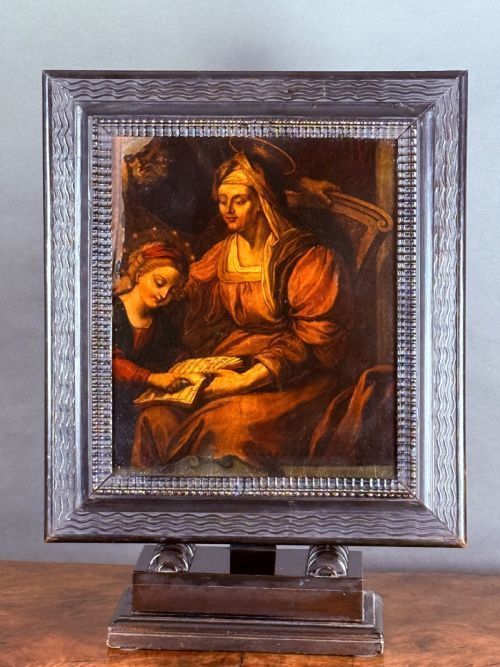
It's a small persistent thread on Sellingantiques: a St Peter picture, a pair of Georgian glass paintings and two 18th-century reverse-glass mezzotints.
How many come up for sale?
Around sixteen pieces a year. Sixty different dealers have listed one, so almost every seller who handles the category has handled just one or two.
That spread is why the descriptions vary so much in the detail they carry.