






Antique Posters
A printed or hand-painted sheet made to sell something - soap, a railway route, a circus, an opera season - mostly from the first half of the 20th century, and now framed or loose for the wall.
Antique Posters
The form you'll meet most often is a single lithographic sheet, French or British, from the 1920s to the 1950s, promoting a product, a place or an event. Colour pictorial posters became practical with commercial chromolithography in the later 19th century, printed to be pasted up in public and thrown away, which is why survival is uneven.
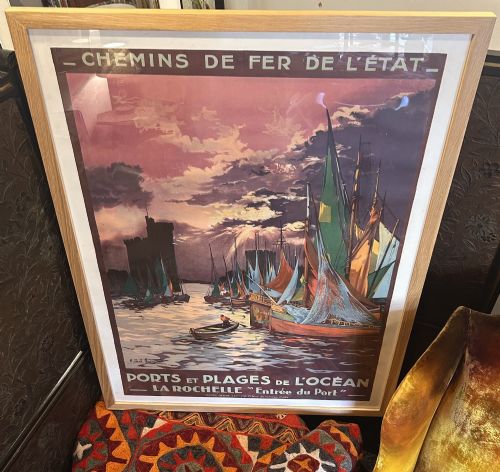
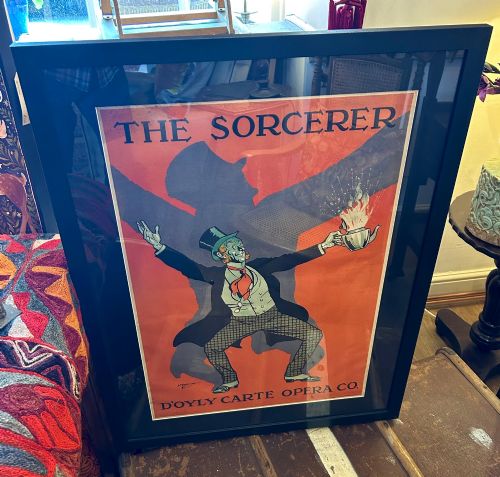
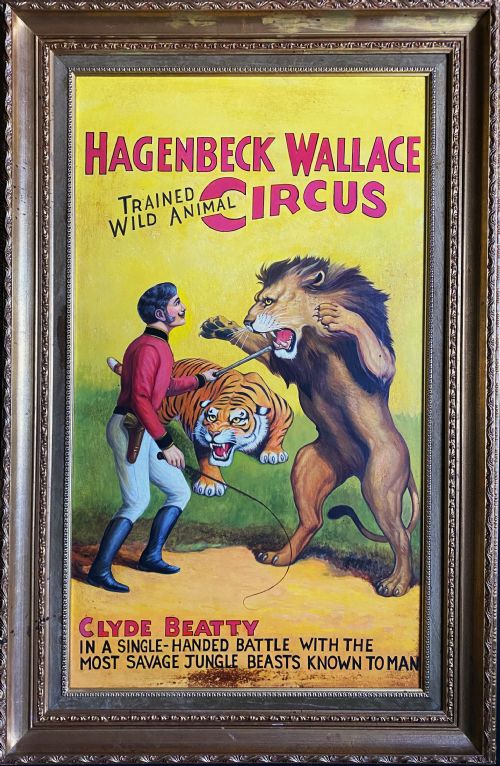
Subjects spread wide. French advertising and travel work turns up throughout, alongside British railway posters with their small carriage prints, theatre and opera bills, circus and magic subjects, and sporting posters. Aircraft, balloons, a football tournament, a lion trainer: each appears once, and little repeats.
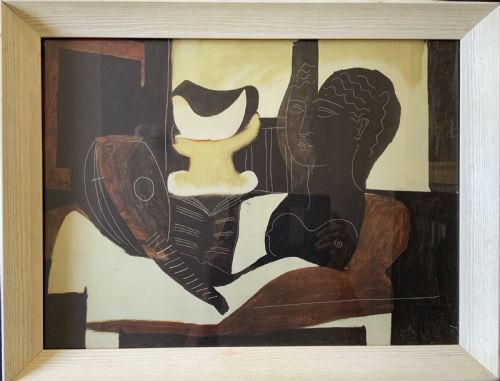
The heading also carries work that was never pasted to a wall. Original gouache poster designs, an oil, a group described as 'Original Painted Posters' - hand-painted artwork accounts for five of the twenty-four listings. Framed decorative and fine-art prints, including sets after named painters, sit under the same label.
Dating is loose. Eighteen listings carry a clean year and the span runs 1890 to 1960, with the 1930s the busiest decade at seven entries and the 1950s next at five. Dealer years often mean the decade a piece belongs to rather than a printing date, so read 1930 as shorthand for the thirties.
What Sets Them Apart
Subject does more work than anything else. The two highest-priced pieces the archive has seen are both posters for the inaugural 1930 football World Cup, sitting several times above the next entry. An event or name with international weight behind it pulls a sheet clear of the field, whatever else is true of it.
Then comes the question of what you're actually buying. Original hand-painted artwork - the gouache designs, the painted posters - sits in the upper half of the range. Titles that insist on 'Original', meaning a period printing rather than a later run, sit higher than sheets described as after a named artist, and those after-the-artist prints and print sets occupy the bottom of the range.
Scale lifts things. 'Large' and 'Huge' show up in the titles through the middle and upper part of the range, which follows from posters being made for public display. Presentation adds a modest amount: one title names a new frame of good quality, while others are given simply as framed prints.
Antique Posters Retail Price Guide 2026
Typical UK retail prices for posters, calculated from the Sellingantiques database of over a million retail prices indexed since 2003. This retail price guide relies exclusively on Sellingantiques data; no external sources or auction records are used, so the figures do not describe the wider market.
Original hand-painted poster artwork turns up often on Sellingantiques: gouaches, an oil and a set of painted posters make up five listings.
The Antique Posters Glossary
- Lithograph
- Printed from a flat stone or plate. It's the usual process behind a colour poster of this period.
- Original
- In these titles, either a period printing or the artist's own artwork, as against a later reproduction.
- After (Aft:)
- An image reproducing a named artist's work, made by another hand. Such titles sit at the bottom of the sampled range.
- Gouache
- Opaque watercolour, used here for one-off poster designs rather than printed sheets.
- Poster design
- The artist's painted artwork for a poster, not the printed result that came from it.
- Carriage print
- A small railway poster made for display inside a carriage compartment, often sold alongside the full-size sheet.
- On canvas
- A paper poster laid onto canvas backing, a traditional way of handling large sheets.
Antique Posters: Frequently Asked Questions
What period do most of these come from?
The dated listings run from 1890 to 1960. The bulk sits between the wars and just after, with the 1930s the busiest decade at seven entries and the 1950s next at five.
One or two entries each cover the 1920s, 1910s, 1900s and 1890s. Some years are entered vaguely, as '19th Century', 'Victorian' or '1930'S'.
Are gouache poster designs the same as posters?
No. A design is the artist's original painted artwork, made so a printer could work from it. The printed sheet is what got pasted up.
On Sellingantiques, hand-painted work is a real part of the category: gouaches, an oil and a set called 'Original Painted Posters' make up five of the twenty-four listings, and they sit in the upper half of the range.
Which subjects turn up most often?
French travel and advertising is the one thread that repeats. Beyond it, subjects scatter: soap, railways, circus animals, opera, magicians, aircraft, balloons, a football tournament.
Most of those appear exactly once.
Why are framed prints listed under posters?
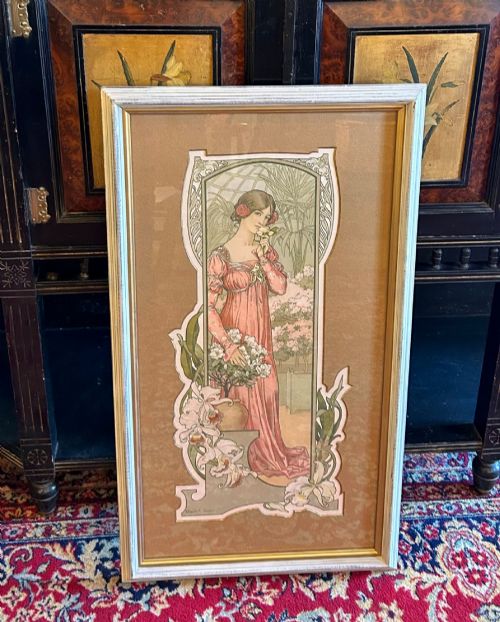
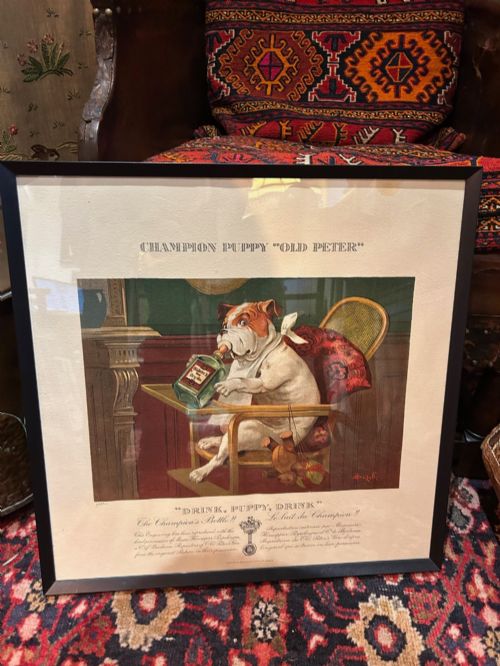
The heading takes in framed pictorial and fine-art prints as well as posters proper. Around a fifth of the sample falls into that group, including a Victorian soap advertising print and sets of prints after named painters.
Those after-the-artist prints occupy the bottom of the sampled range, while titles insisting on an original period printing sit higher up.
Does one maker dominate this category?
No. Seventeen different dealers have handled these listings, and no maker, printer or publisher recurs across them.
Names appear in titles as the artist behind an image rather than as a workshop you can follow from piece to piece.
What does a poster laid on canvas mean?
It means the paper sheet has been mounted onto canvas backing, a long-standing way of handling and hanging large posters.
In this archive it's named once, in the title of a 19th-century poster advertising Paris magicians.