



Antique Watercolours
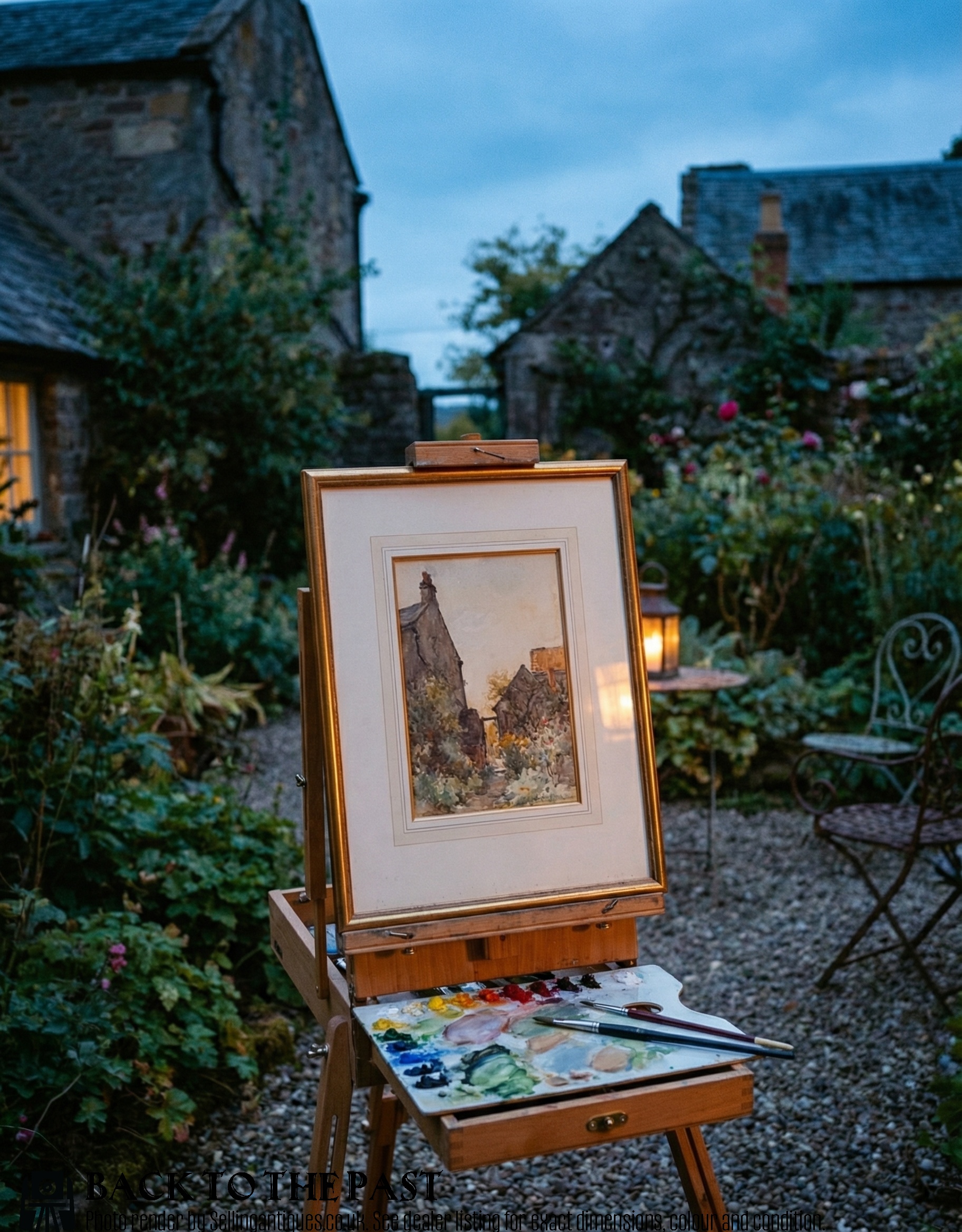
A watercolour is pigment worked with water on paper, and in Britain it became the standard way to record a real place: a framed view, usually landscape or coast, made to hang on a wall.

What Are Antique Watercolours?
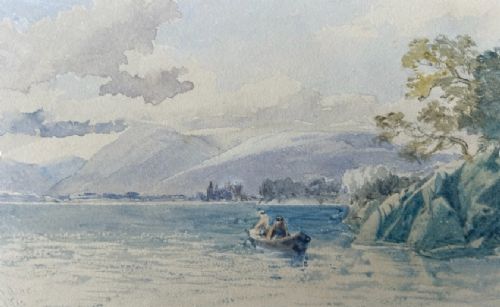
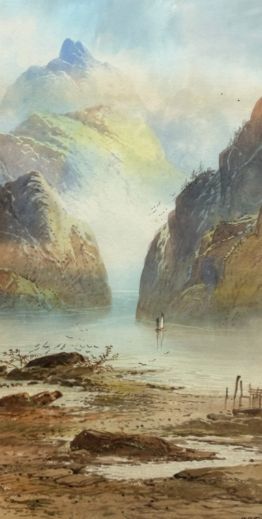
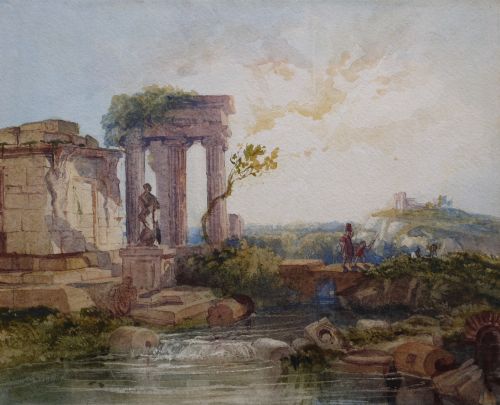
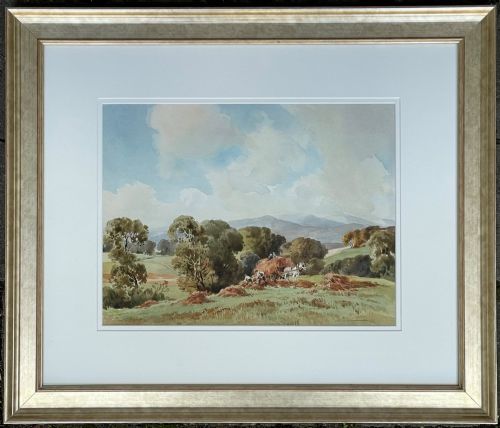
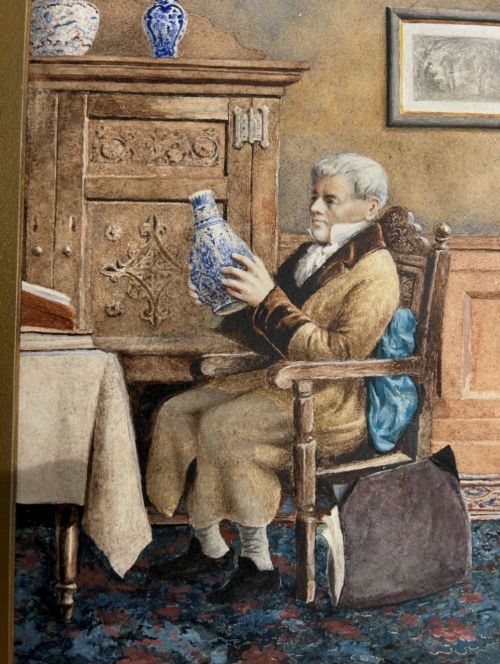
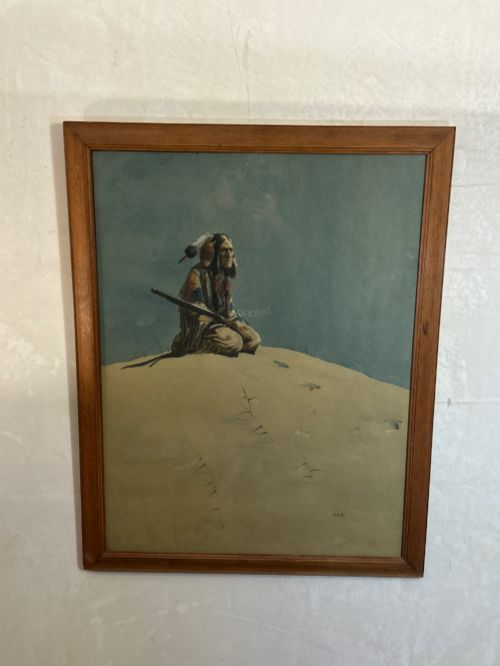
A modest-sized framed painting on paper, British, and topographical more often than anything else. Across 4,293 listings the word "painting" leads the titles and "landscape" follows it, so the piece you meet is likely a landscape or coastal view of a named place, signed or unsigned, from the 19th or early 20th century.
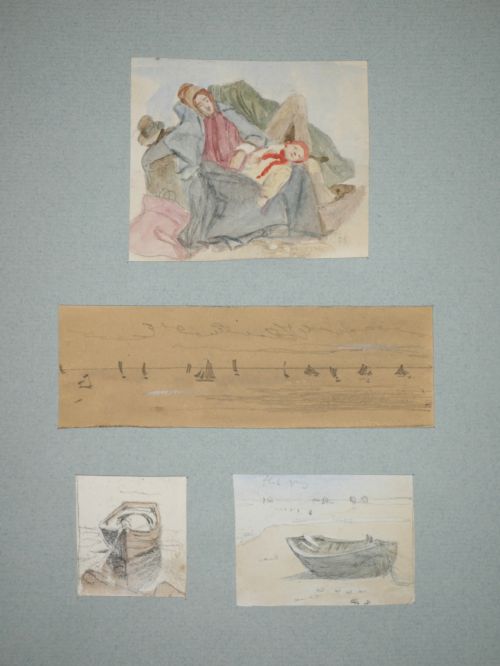
The medium suited that job. Portable, quick to work outdoors and cheap to frame, watercolour served amateurs, drawing masters, exhibiting professionals and jobbing view-painters from the later 18th century onwards. Rivers, castles, lakes, cottages and bridges recur throughout, and Yorkshire is the strongest regional bloc in the archive, with York and Whitby the two commonest towns.
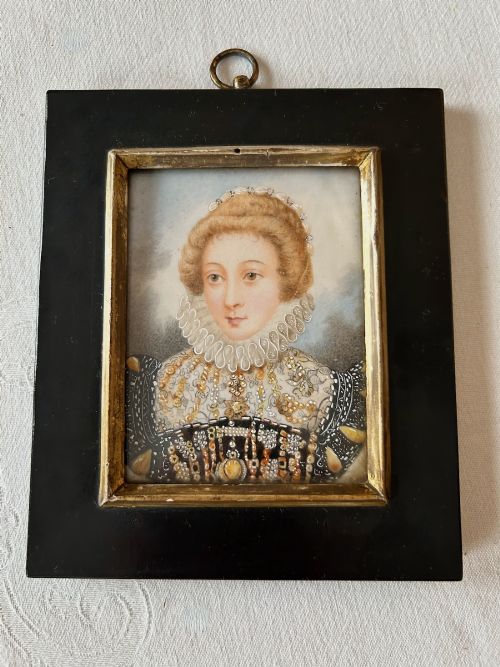
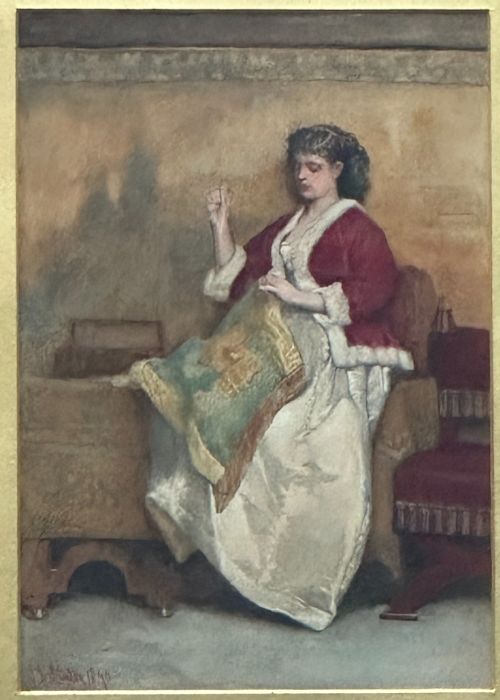
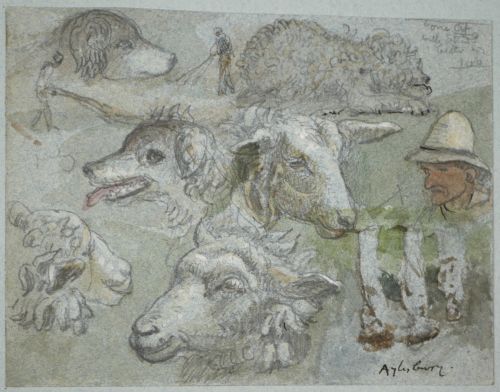
Away from the views there are portraits, including miniatures on ivory and card in piano-key, rosewood and boullework frames. Still lifes, botanical studies of irises and fuchsias, and bird and animal studies form another small group. Chinese work appears steadily, painted on silk or on thin pith paper, alongside occasional Japanese, Indian, Mughal, Persian and Ottoman subjects.
Dating is loose at the front end. The dated field runs 1700 to 1960, but the largest single group is the catch-all "19th Century", with "Victorian" close behind, so a good part of the archive is placed by century or reign rather than year. Where decades are given they cluster in the 1900s, 1910s and 1920s.

What Sets Them Apart
Authorship does most of the work. A clear, legible signature sits at the top of the range, and "signed" appears in 919 titles. Below that come the hedged forms the trade uses when it can't be certain: indistinctly signed, monogrammed, attributed to, Circle of, Manner of, After, Follower of, Possibly by, or simply English School. Those qualifiers track the lower and middle reaches.
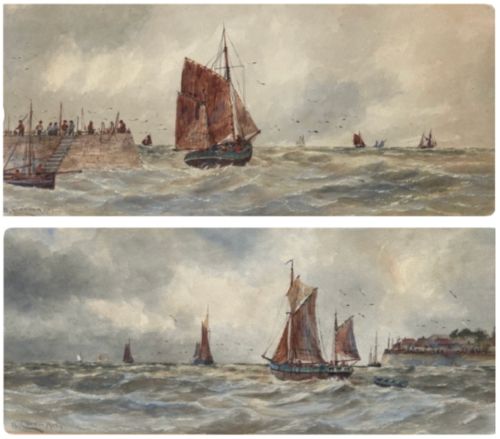
Letters after a name lift a work further. Sampled titles carry society and academy initials, along with studio sale stamps, auction-house labels and named-house provenance. Scale and number count too: titles announcing a large sheet, and pairs or sets running to three, four, six, eight and one framed run of twelve, sit well above the middle of the range.
Subject separates the rest. Cottage gardens, figure subjects, hunting and steeplechasing sets, clowns and bird studies dominate the upper end, and animal and bird work is scarce but reaches the very top. Unsigned sketches, street studies and single flower studies sit at the bottom.
Retail Price Guide 2026
Typical UK retail prices for watercolours, calculated from the Sellingantiques database of over a million retail prices indexed since 2003. This retail price guide relies exclusively on Sellingantiques data; no external sources or auction records are used, so the figures do not describe the wider market.
19th Century is the period label used most on Sellingantiques for watercolours, with the 1900s next and the 1920s third.
The Antique Watercolours Glossary
- Signed
- Bears the artist's name or initials. Common in titles, though often qualified as indistinctly signed or monogrammed.
- Attributed to
- The dealer's opinion of who painted it, without documentary proof. Used in 78 titles.
- Circle of / Follower of
- By someone working close to a named artist, but not by that artist's hand.
- English School / British School
- An anonymous native hand of the period. The word "school" appears in 123 titles.
- Gouache
- Opaque bodycolour, sometimes laid over or beside transparent watercolour on the same sheet.
- Pith painting
- Chinese work on thin, spongy pith "rice paper", seen in several Qing-dynasty sets.
Frequently Asked Questions
What subjects come up most often?
Landscape and coastal views of real, named places. "Landscape" is the commonest subject word in the titles, with rivers, castles, lakes, cottages and bridges recurring, and seascapes forming a smaller run.
Portraits are the next group, followed by still lifes. Botanical studies, birds, dogs and cattle, and architectural and design drawings make up the remainder.
Why are so many dated only to a century?
Because that is how the works themselves are marked. Watercolours were rarely dated on the sheet, so dealers fall back on "19th Century", used on 889 listings, or "Victorian" on a further 229.
Where a decade is given, the 1900s, 1920s and 1910s hold the largest groups. Looser tags such as Georgian, Regency and Edwardian also appear.
Are pairs and sets common?
Steadily present rather than common. The word "pair" is in 192 titles, roughly one listing in twenty.
Sets run beyond two: three, four, six, eight, and one framed run of twelve Chinese Export gouaches.
Which places turn up in the titles?
Yorkshire is the dominant name, in 301 titles, with York in 108 and Whitby in 85. No other county or town comes close.
The Lake District, Cornwall, Wales and Scottish lochs all recur, and "near" appears in 78 titles, placing a view at the edge of a village or town rather than in it.
Does "attributed to" mean the same as signed?
No. Signed means the sheet carries a name or initials. Attributed to is the dealer's judgement on style and handling, without documentary backing.
The archive uses a whole sub-language for degrees of doubt: Circle of, Manner of, After, Style of, Follower of and Possibly by. These hedged forms sit in the lower and middle reaches of the range.
How many are listed on Sellingantiques each year?
Around 535 antique watercolours a year, handled by 217 different dealers. That is one of the broadest dealer bases of any category on Sellingantiques.
The spread of forms is wide too. Alongside framed views the archive has carried a London wallpaper design, a stained-glass window design for a cottage, three designs for a swimming pool in Nairobi, and watercolours painted on postcard, linen, silk, pith and ivory.