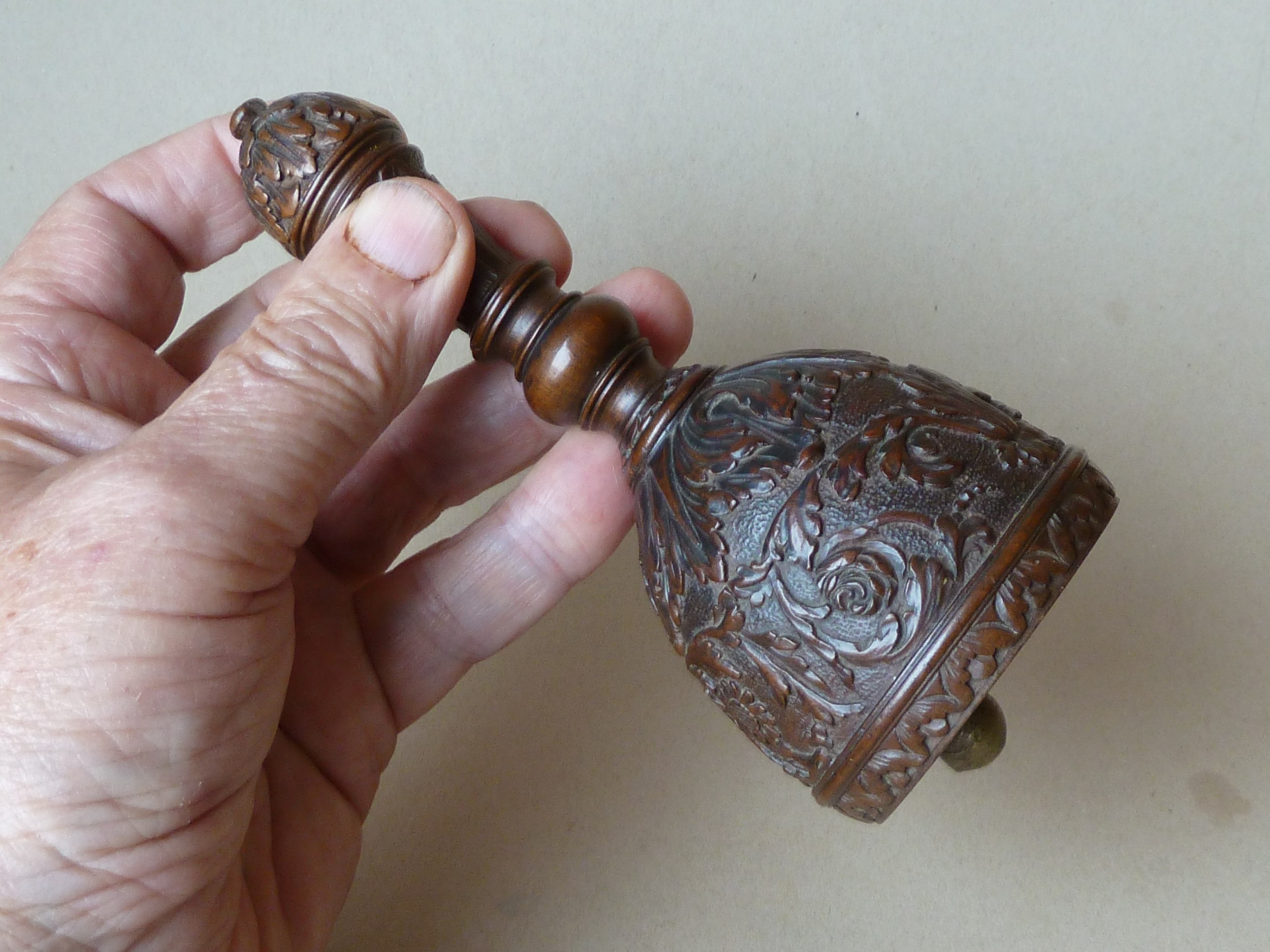
Andrew Nethercott Antiques has dated this piece to the 1700s.
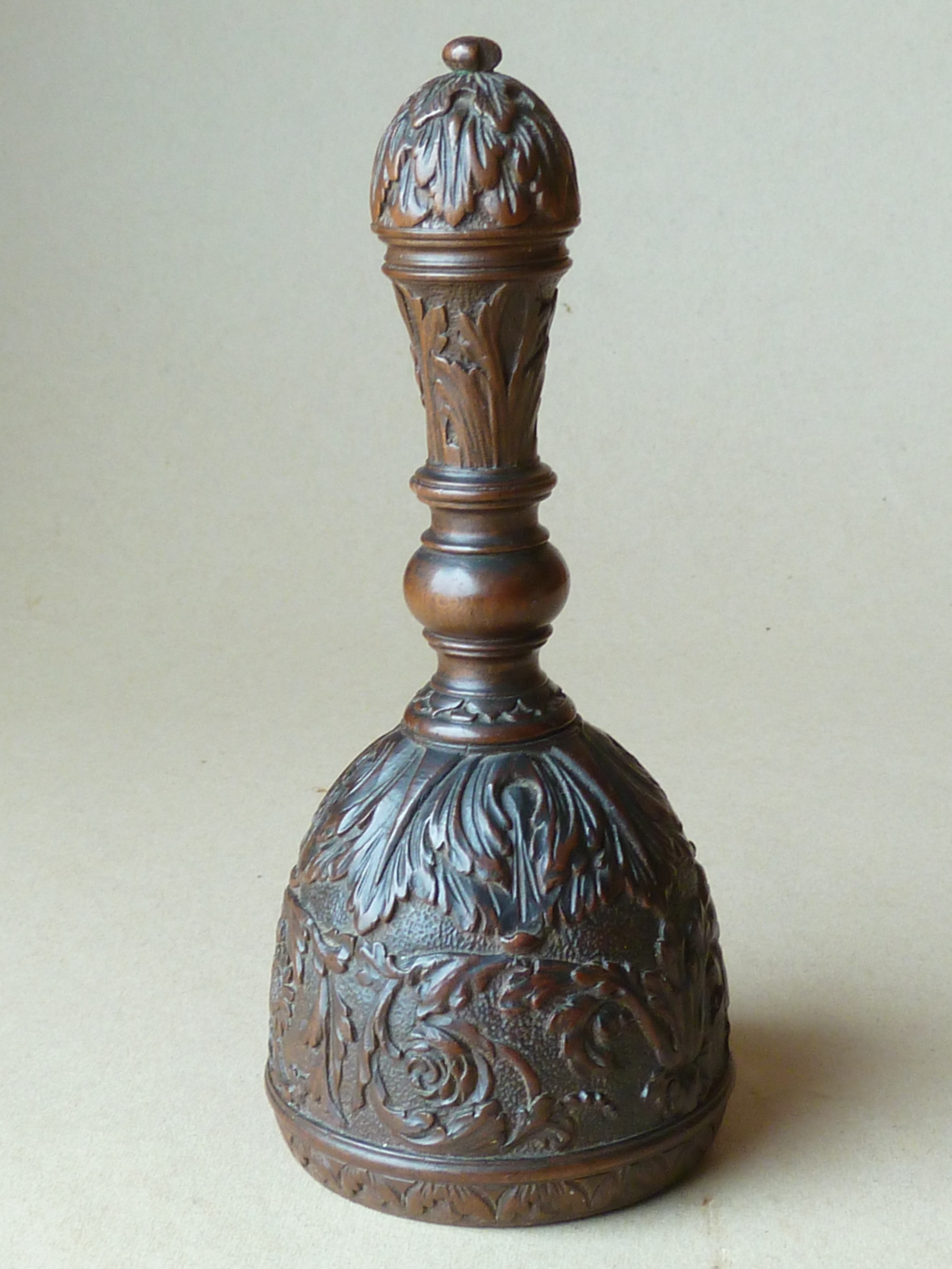
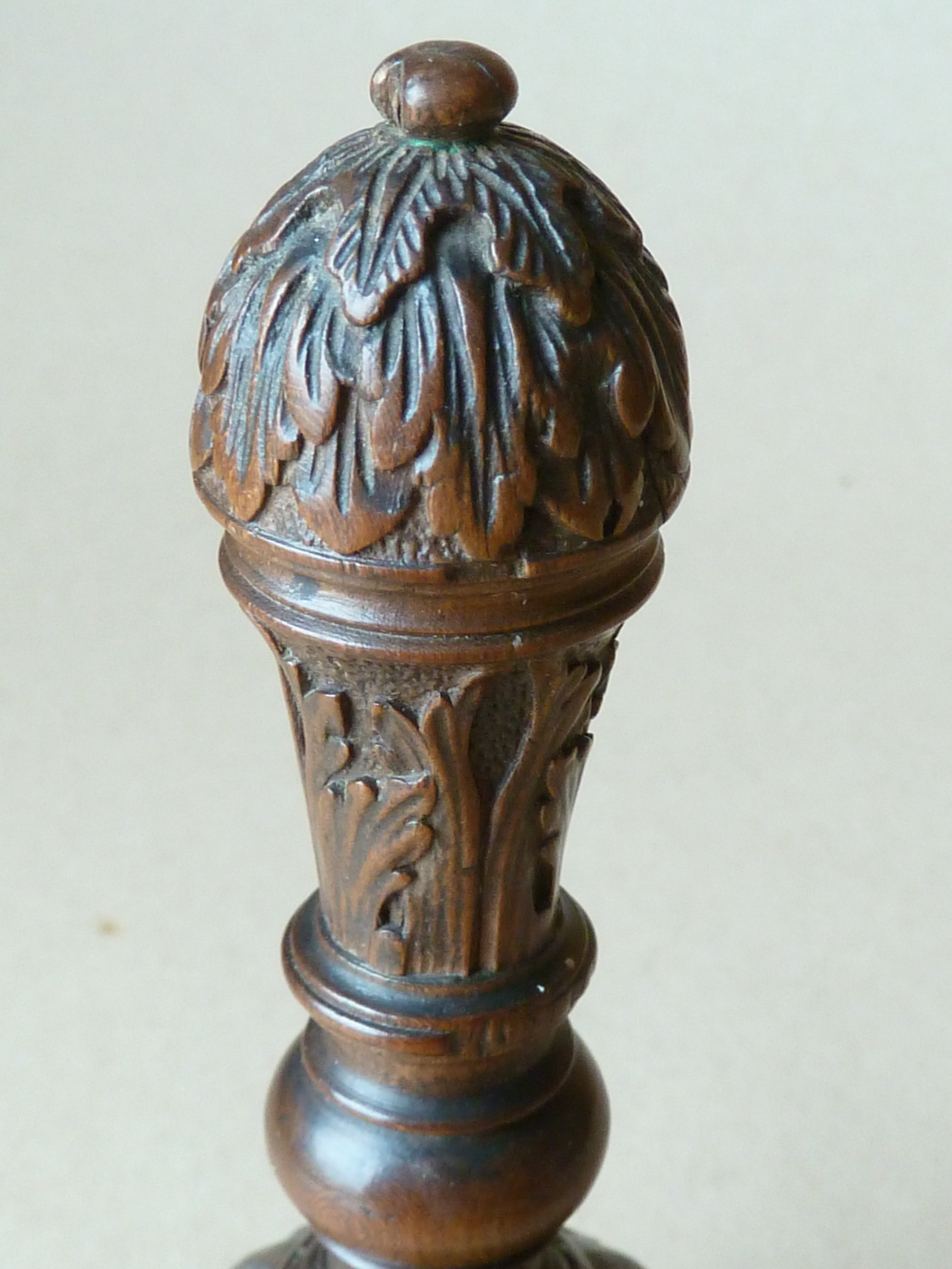
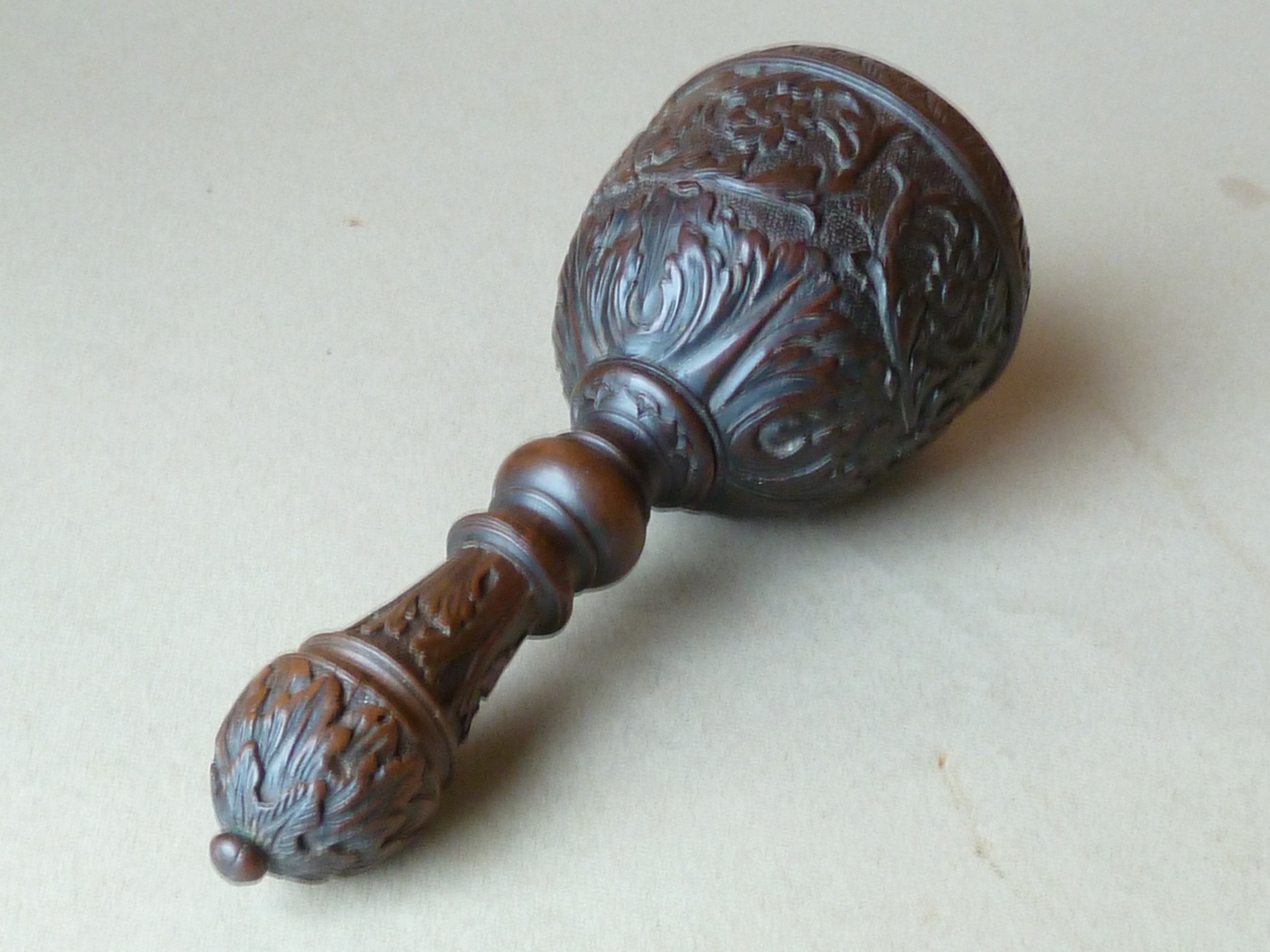
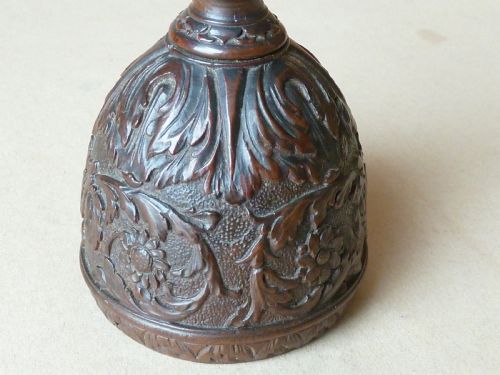
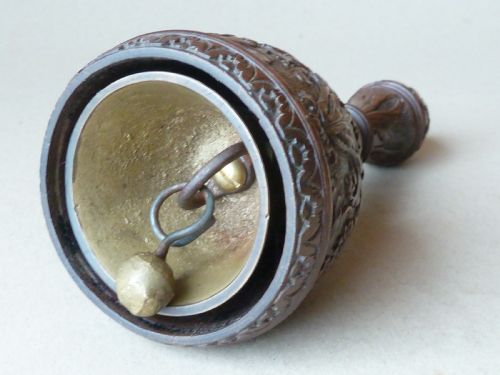
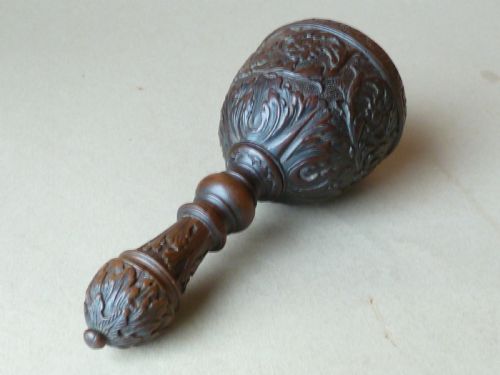
Very finely hand carved with Forget-me-not type flower heads forming the terminals to Renaissance Acanthus scrolls set on a stippled punched ground.
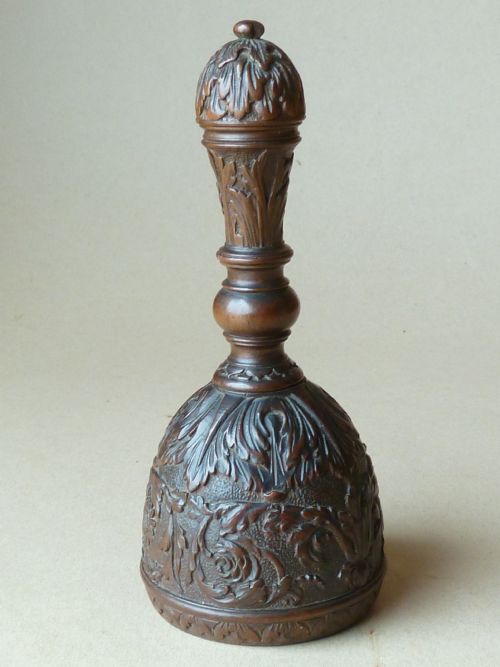
In excellent condition with no damage or repair
Height 5,5/8" or 143mm
weight 158 grams
Works attributed to Cesar Bagard are mostly dressing table boxes which though well carved were poorly constructed ( probably by silver smiths) with little regard to the onset shrinkage of the timber and are typically effected.
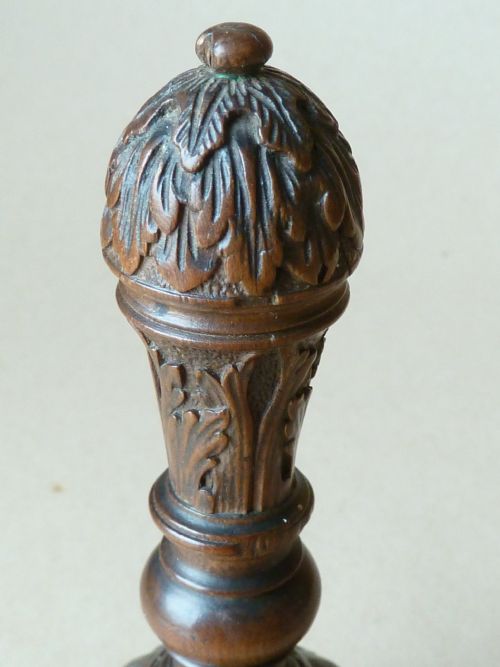
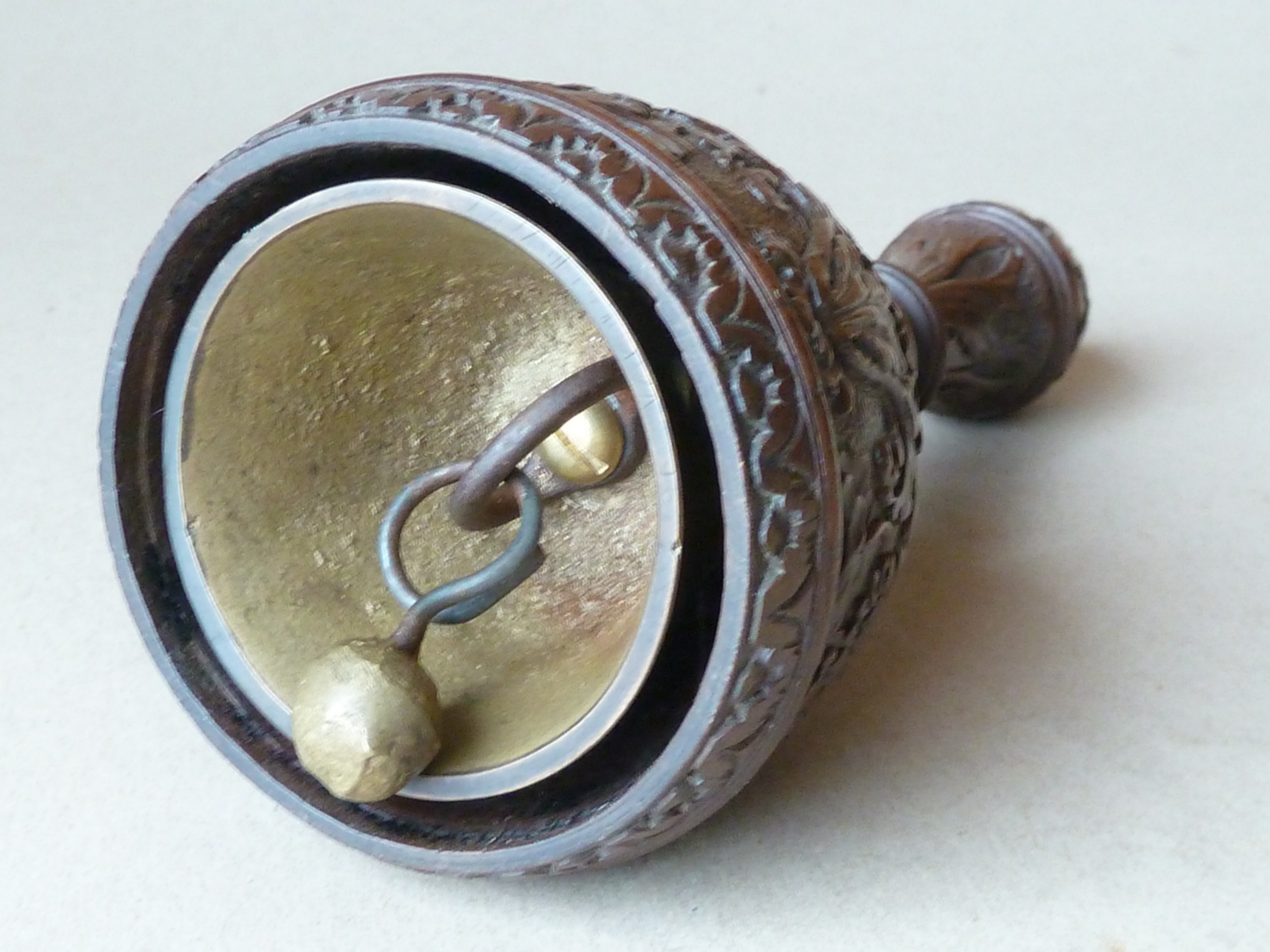
This bell being turned is still most sound and has no splits or shrinkage.
The wood known as "Bois de Sainte Lucie" comes from the forest surrounding a chapel dedicated to Saint Lucy located in Sampigny on the Meuse River near Nancy, south of Verdun.
These very special trees, called mahareb cherries of Sainte Lucie, grow only in this specific geographical area.
The wood of this tree, which can grow up to 8 meters high, is of such excellent quality and possesses such a strikingly beautiful golden-red colour that many artisans have chosen it for the carving of precious objects.
Following a wartime ban on gold and silver in 1689, the material, like the faience produced in France, offered an alternative for buyers of luxury objects.
In the design of these objects, artisans adopted motifs and forms used in goldsmith's works, such as the fine foliate tendril reliefs that adorn this bell.
The most famous craftsman to work in this precious wood was César Bagard (1620-1709) from Nancy. The material is still called "bois de Bagard" after him to this day. In addition to decorative carvings, his workshop also produced many objects for everyday use such as mirror frames, wig boxes, powder boxes, candlesticks and tobacco rasps.
Andrew Nethercott Antiques has dated this piece to the 1700s.
Works of art, collectables, scientific and decorative antiques from the 17th - 20th century
You can view the stock and full dealer information on the Andrew Nethercott Antiques Profile Page
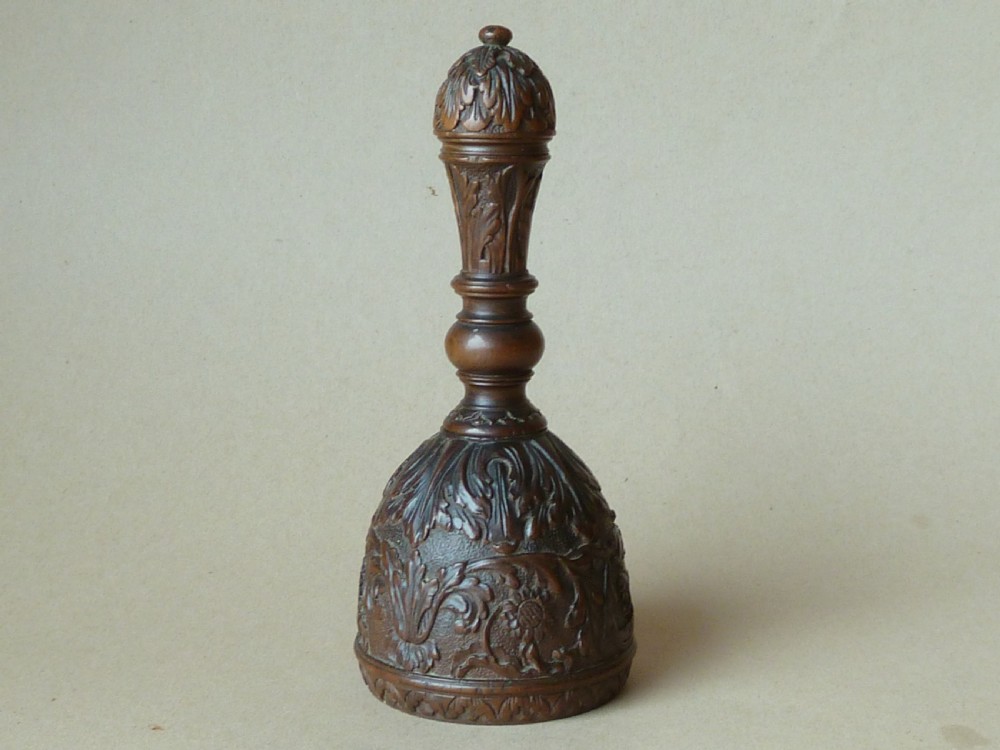
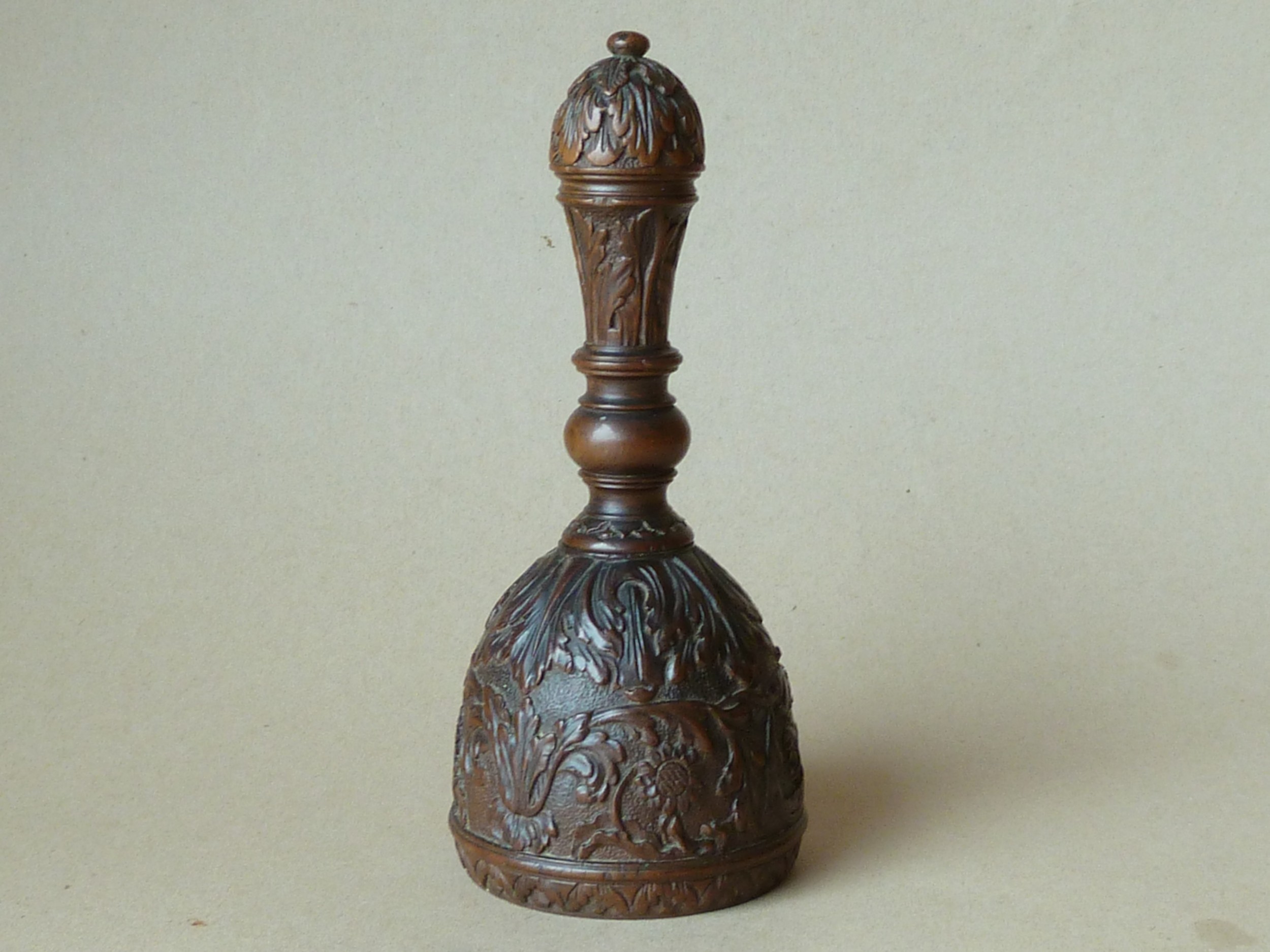
French Cesar Bagard Carved Fruitwood Hand Bell Dressing Table 17th Century