Andrew Nethercott Antiques has dated this piece to the 1800s.
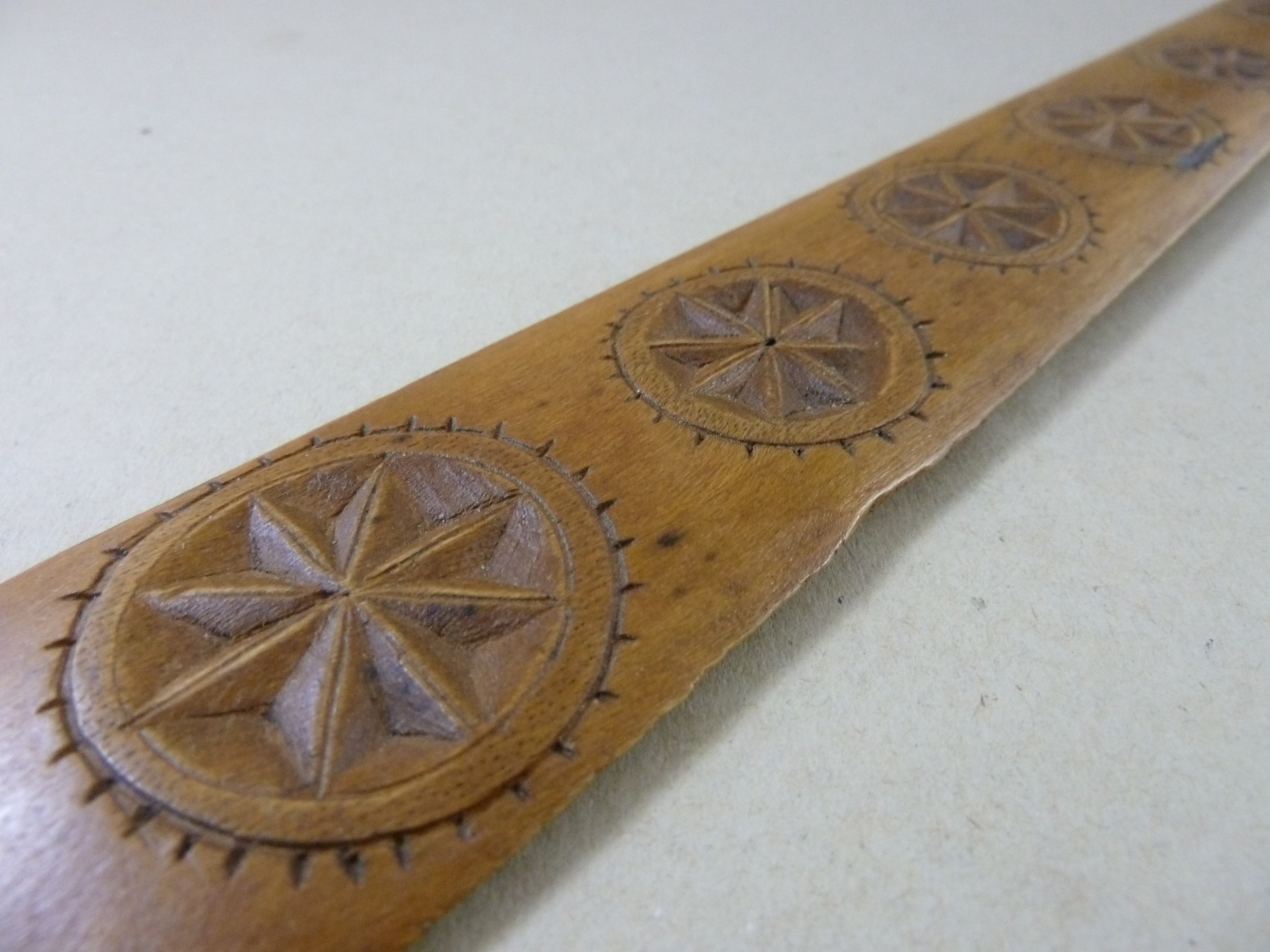
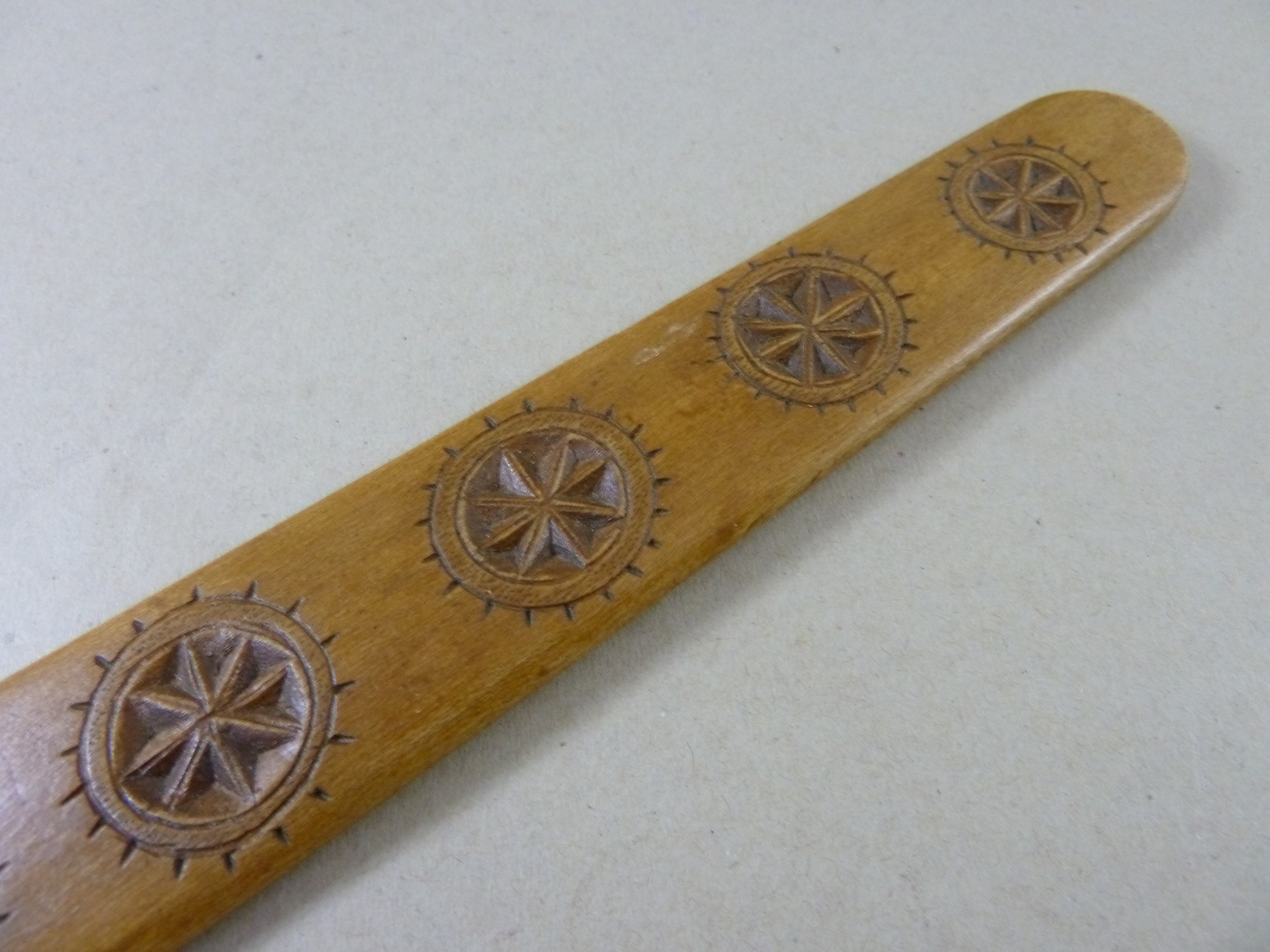
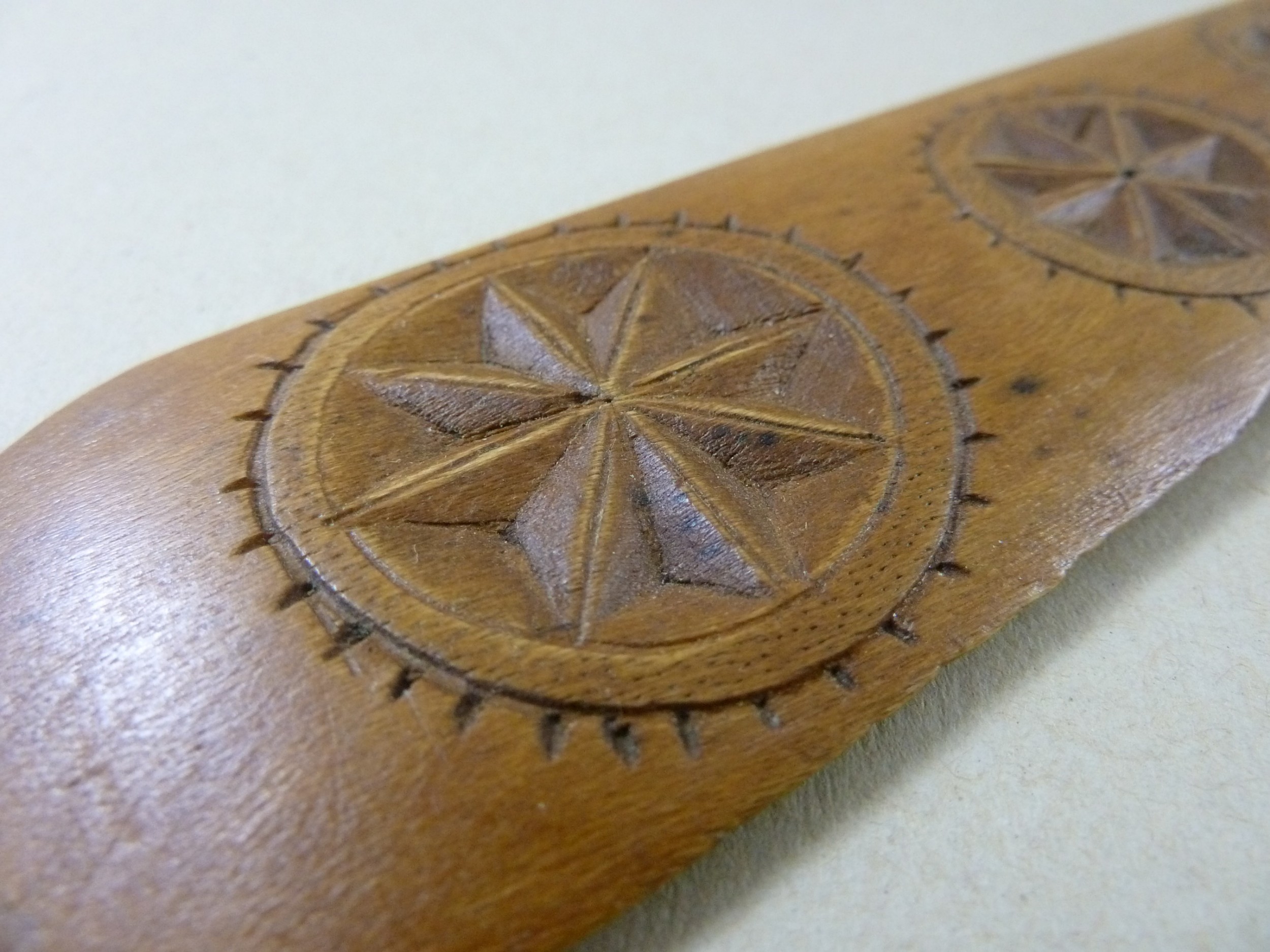
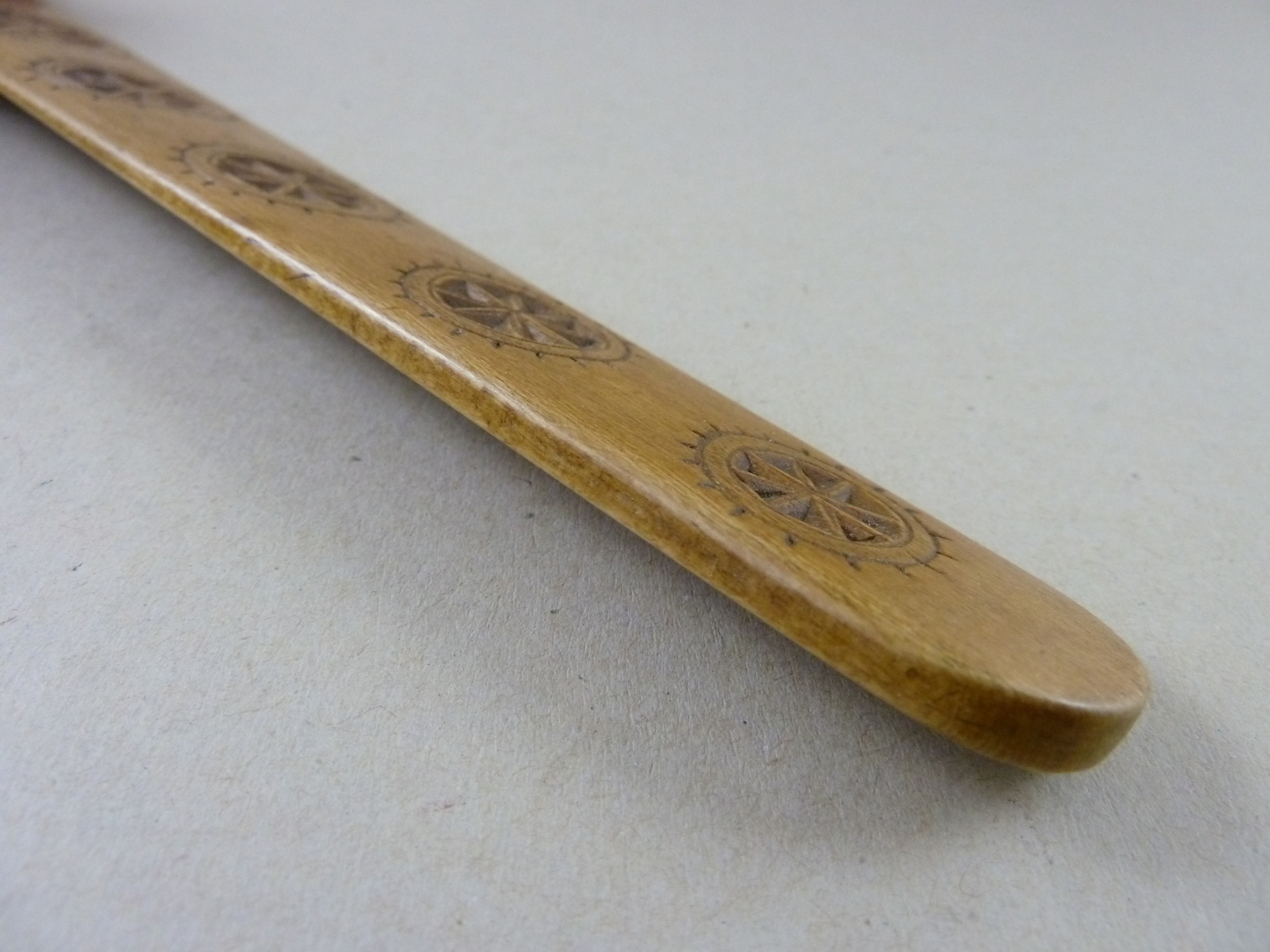
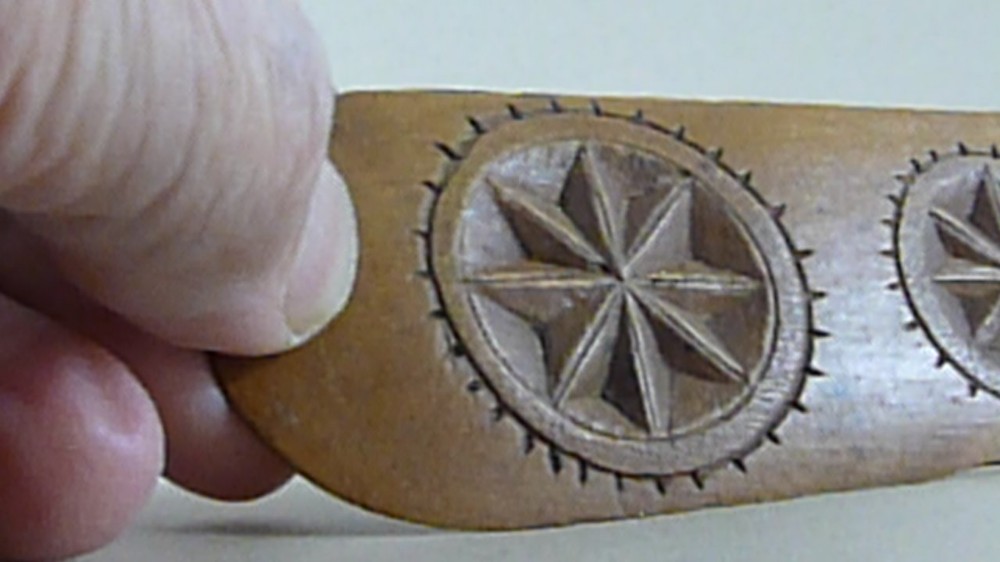
Carved with graduated roundels with toothed wheel edges.
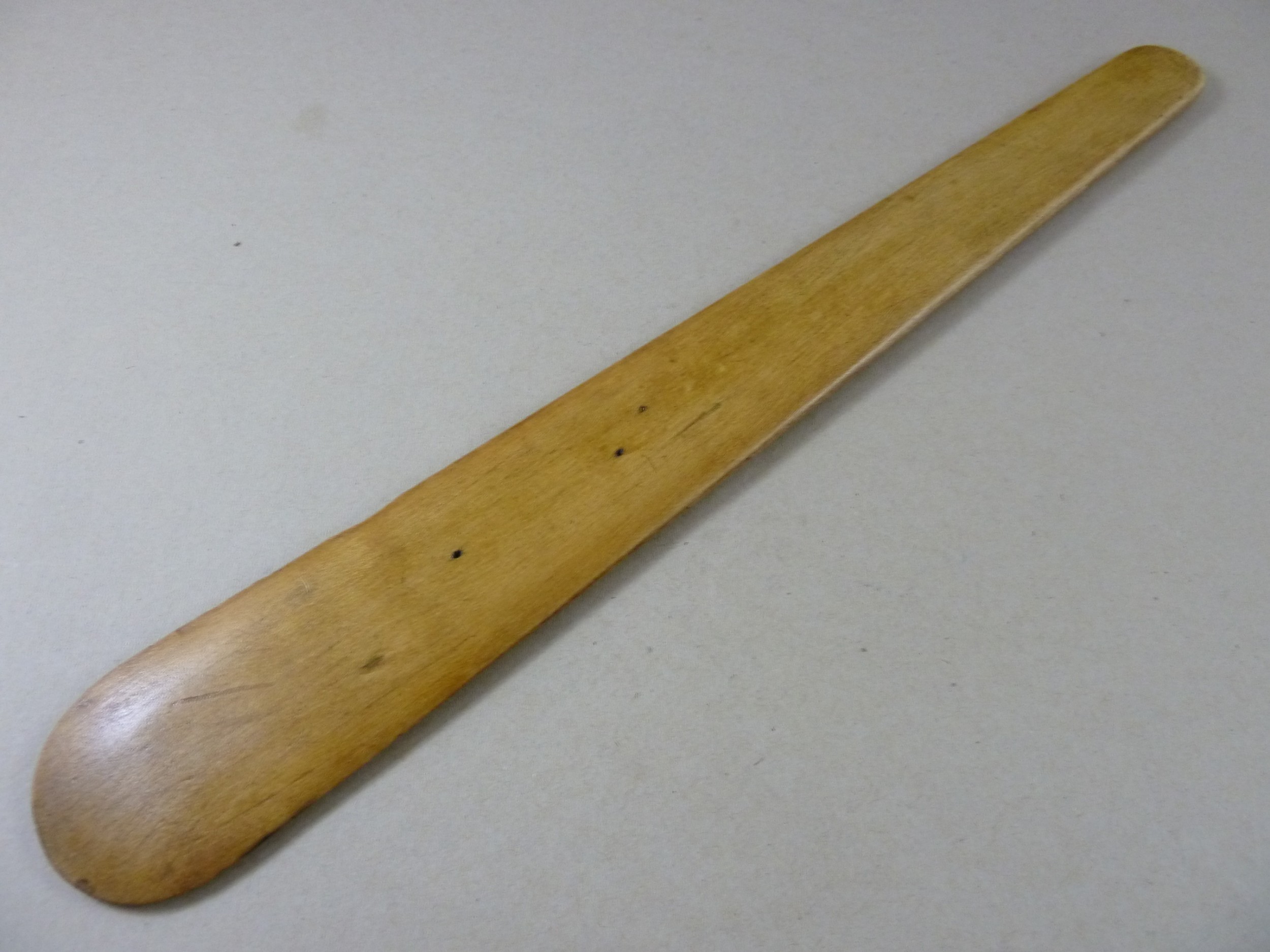
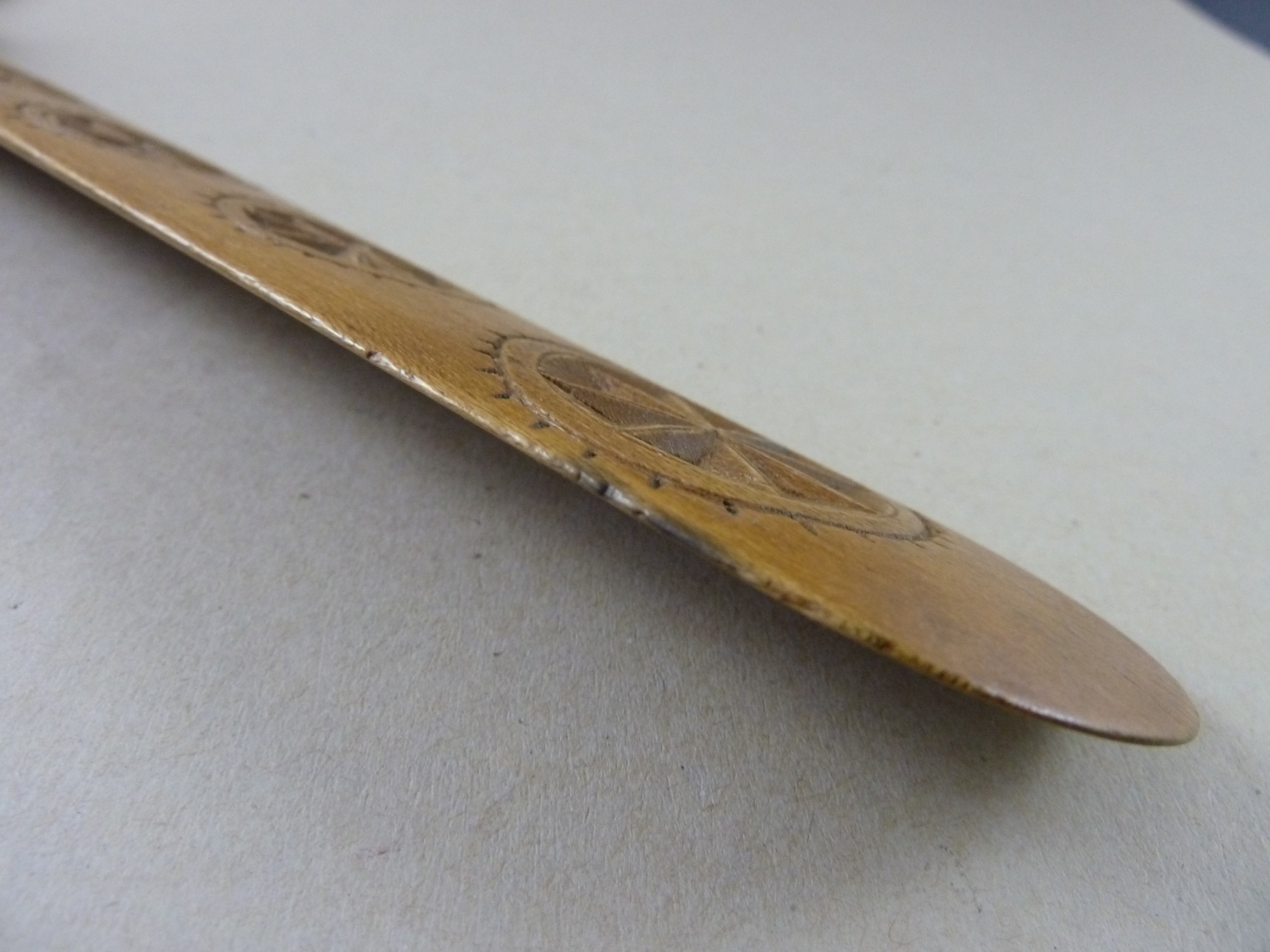
The tapered form with a squared edge to the narrow end thinning to a blade edge at the wider end.
In very good condition, minimal losses or wear, original lightly finished surface
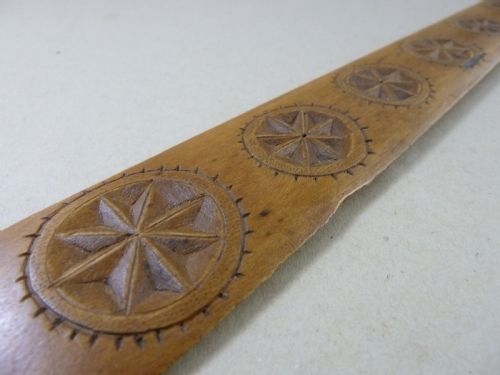
Probably Welsh, intended as a sentimental / romantic gift, in the love token / love spoon tradition.
12,1/4" or 31cm Weight 25 grams
’Stay Busks. In the eighteenth century, one might have expected to find a stay busk on a country dressing-table. Stay busks had been worn for a short time in the seventeenth century, and came into use again about 1760 and remained for nearly forty years – only going out when high-waisted dresses needing no corsets came in about 1800’ ‘The busks were triangular wedge-shaped pieces of wood or horn, 12- 15” long and about 2” wide at the top, tapering to a rounded end at the bottom.they are now extremely rare, and seldom come on to the open market.’ ‘The chip carving with the busks were decorated included all the well-known symbols such as hearts, flowers,circles, initalls of both parties and a date, and in some cases – texts, which were quite long, and were carved on the flat back of the busk.’
Andrew Nethercott Antiques has dated this piece to the 1800s.
Works of art, collectables, scientific and decorative antiques from the 17th - 20th century
You can view the stock and full dealer information on the Andrew Nethercott Antiques Profile Page
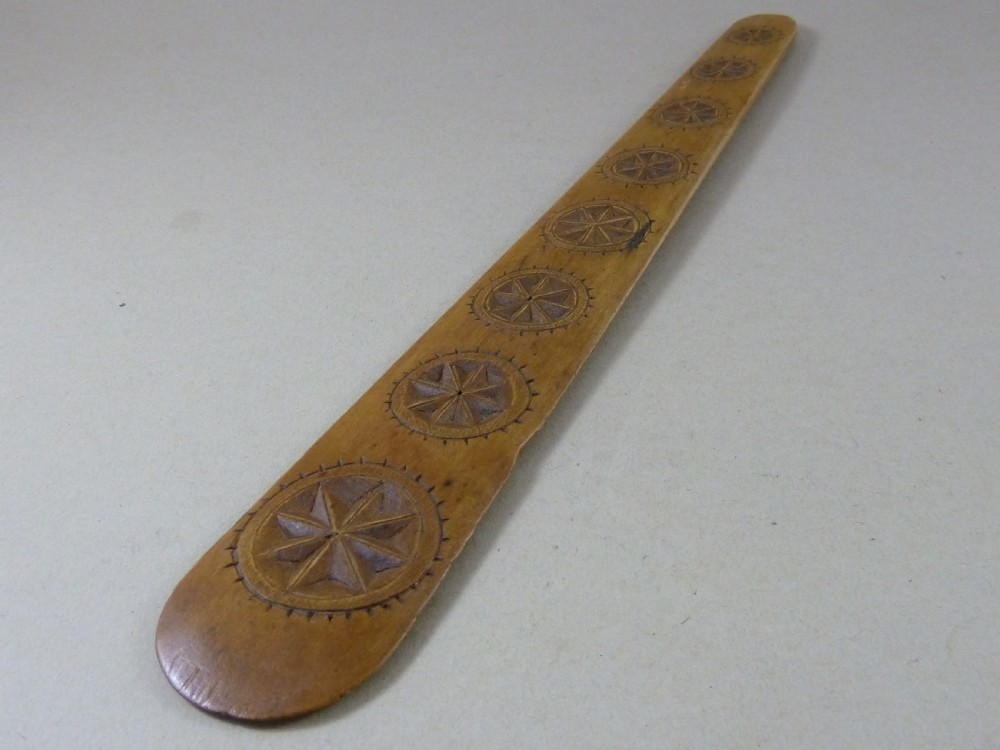

Corset Stay Busk Welsh Treen Folk Art Love Token Hand Carved Sycamore