29,612  PAGES BROWSED TODAY PAGES TODAY • 122 ANTIQUES UPLOADED TODAYNEW ARRIVALS
GIFTS
122 ITEMS ADDED TODAY
Sort Order
Items Per Page
Antiques dealer?
Join as a Seller
Browse Categories
Sort order
Relevant Links
Items per page
sold SA1108996
Sorry, but this item has been sold.
Regent Antiques

Regent Antiques

Sellingantiques Verified Since Sep 2016
Browse dealers 639 items
  • About Us
    We specialise in english and continental furniture, silver, porcelain and decorative items.
  • Trade Associations
    Regent Antiques is a registered member of LAPADA  CINOA
Id #SA1108996
SHARE
SAVE

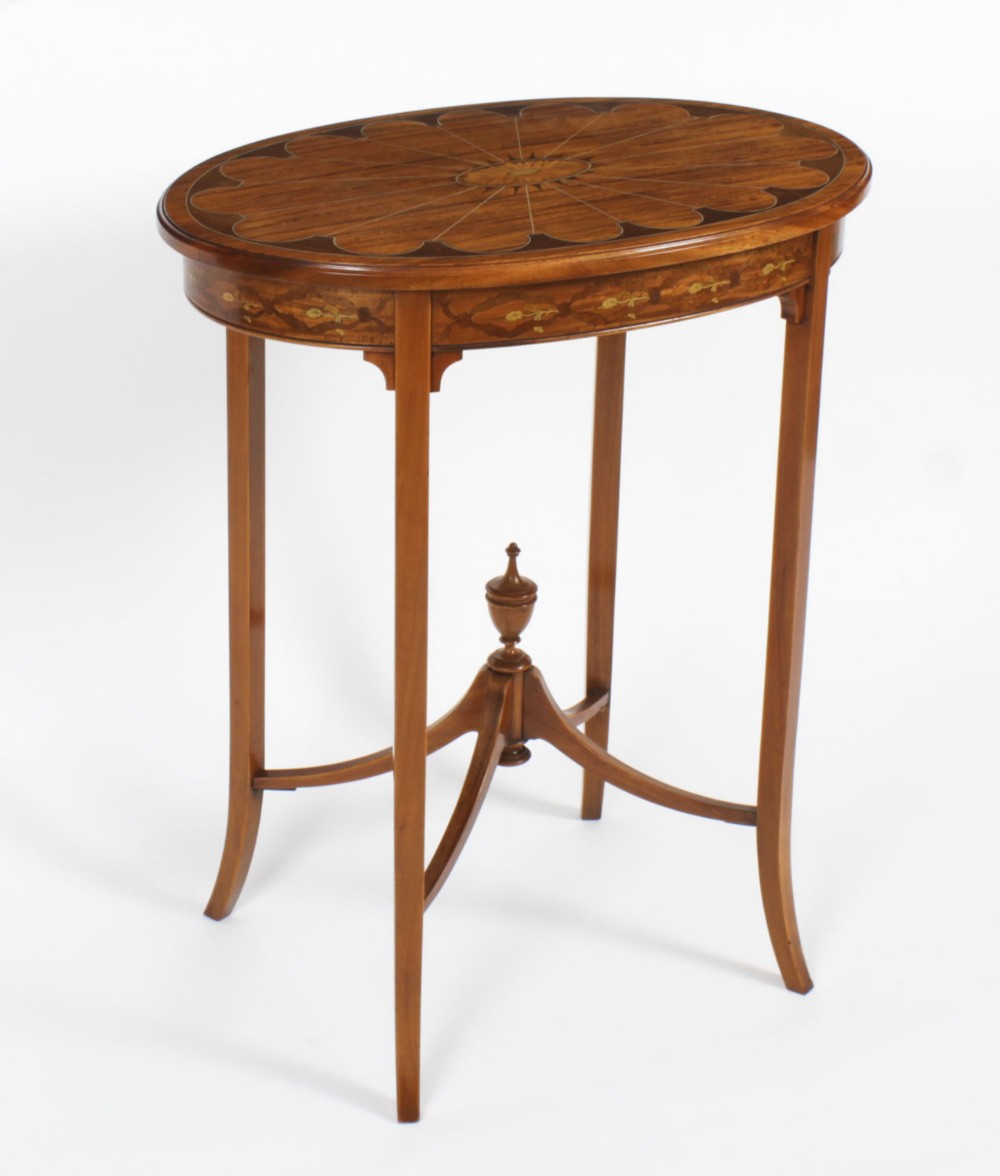
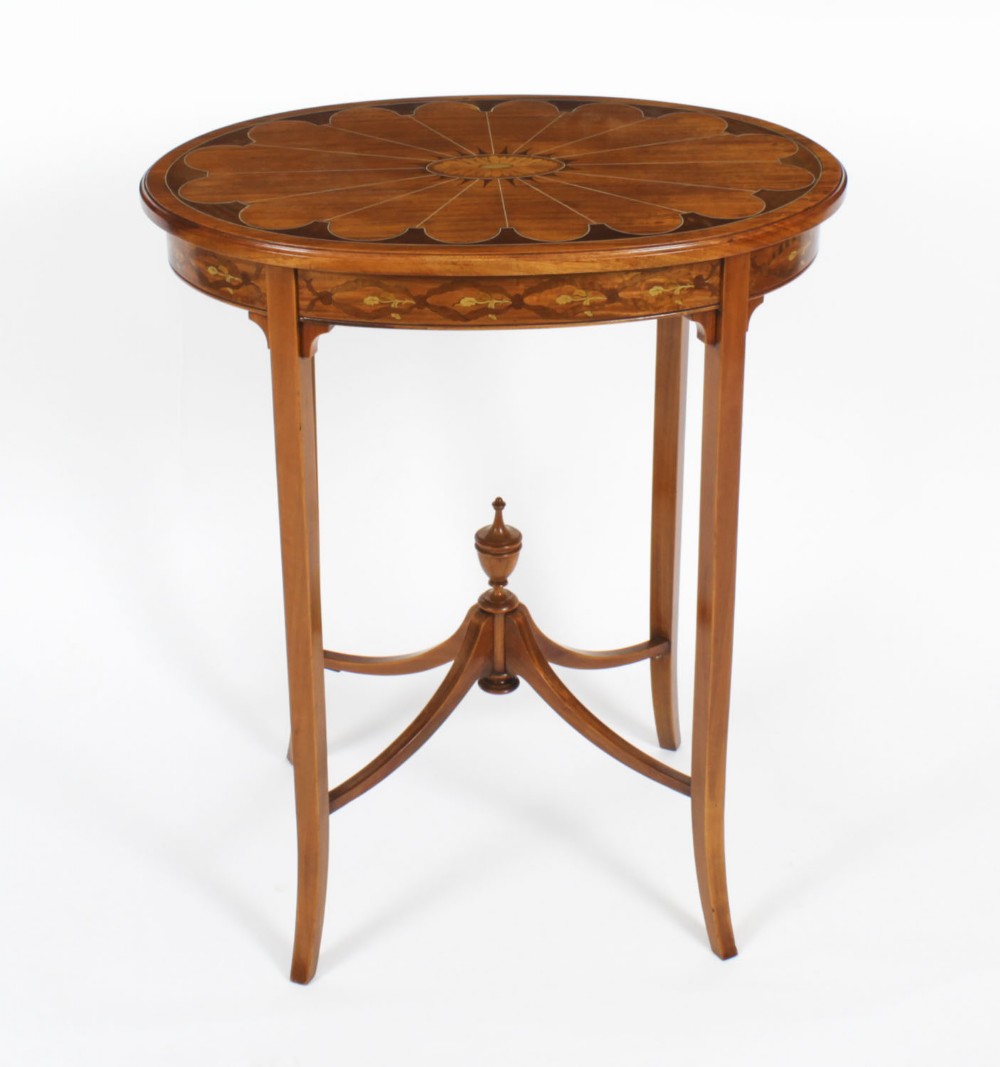
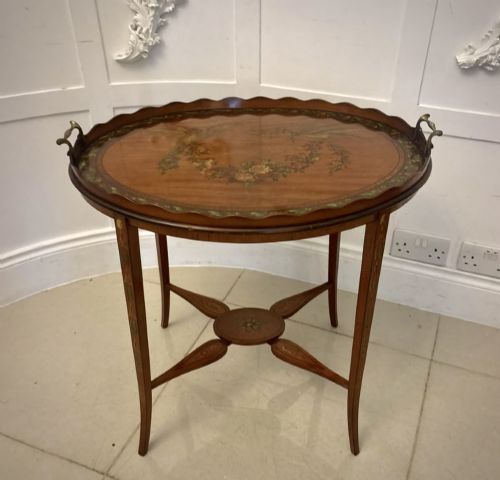
Antique Marquetry Shell Inlaid Oval Satin Wood Occasional Table 19th C

19th century
Sold 22 January 2025 · Regent Antiques
This “Antique Marquetry Shell Inlaid Oval Satin Wood Occasional Table 19th C” found a buyer.

It was listed by Regent Antiques. Sold pieces stay on Sellingantiques as a record of what has passed through, and the next one is rarely far away.

Description

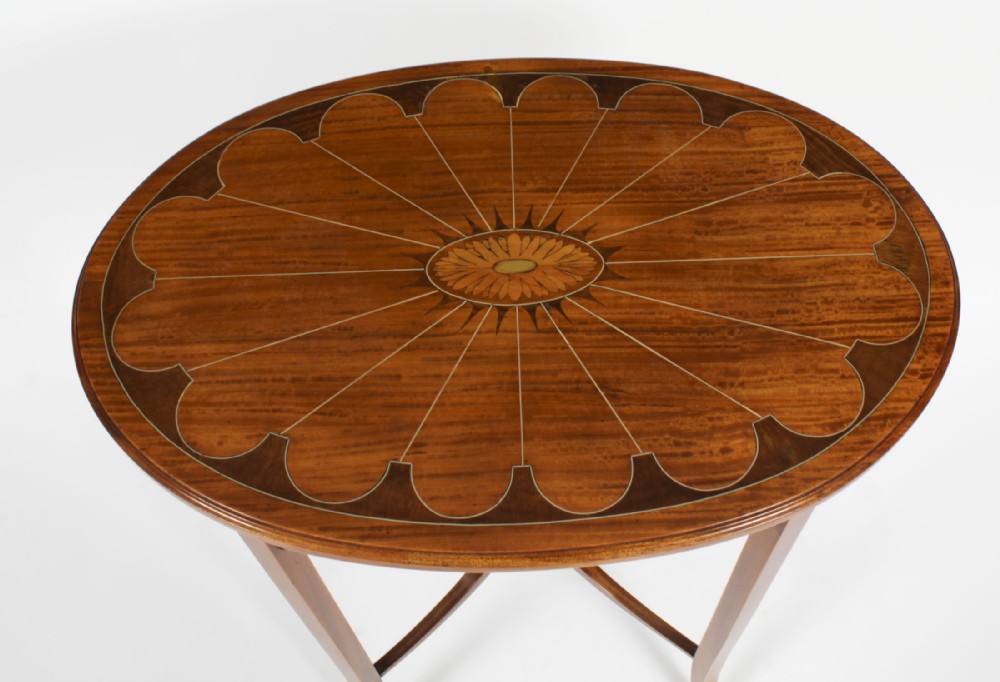
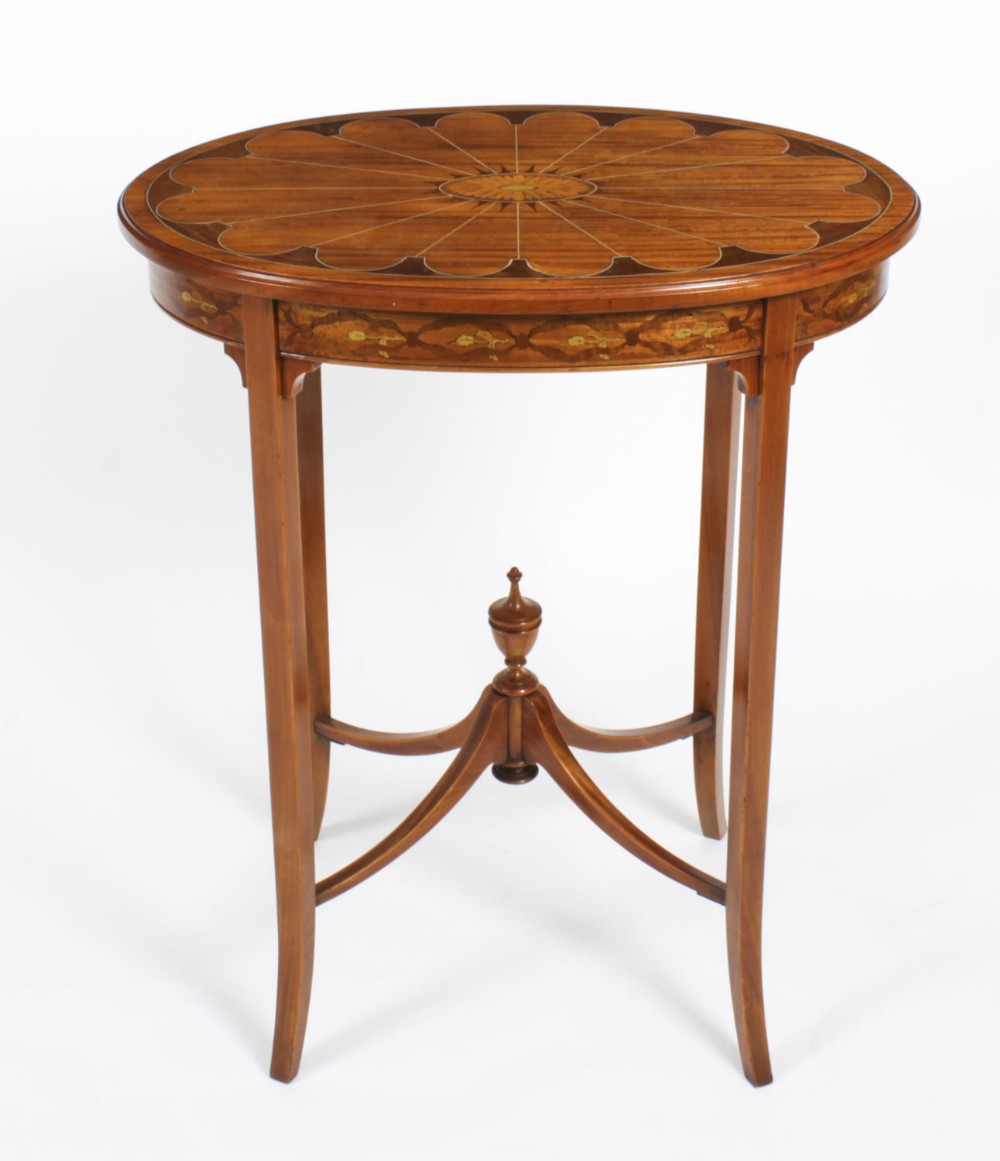
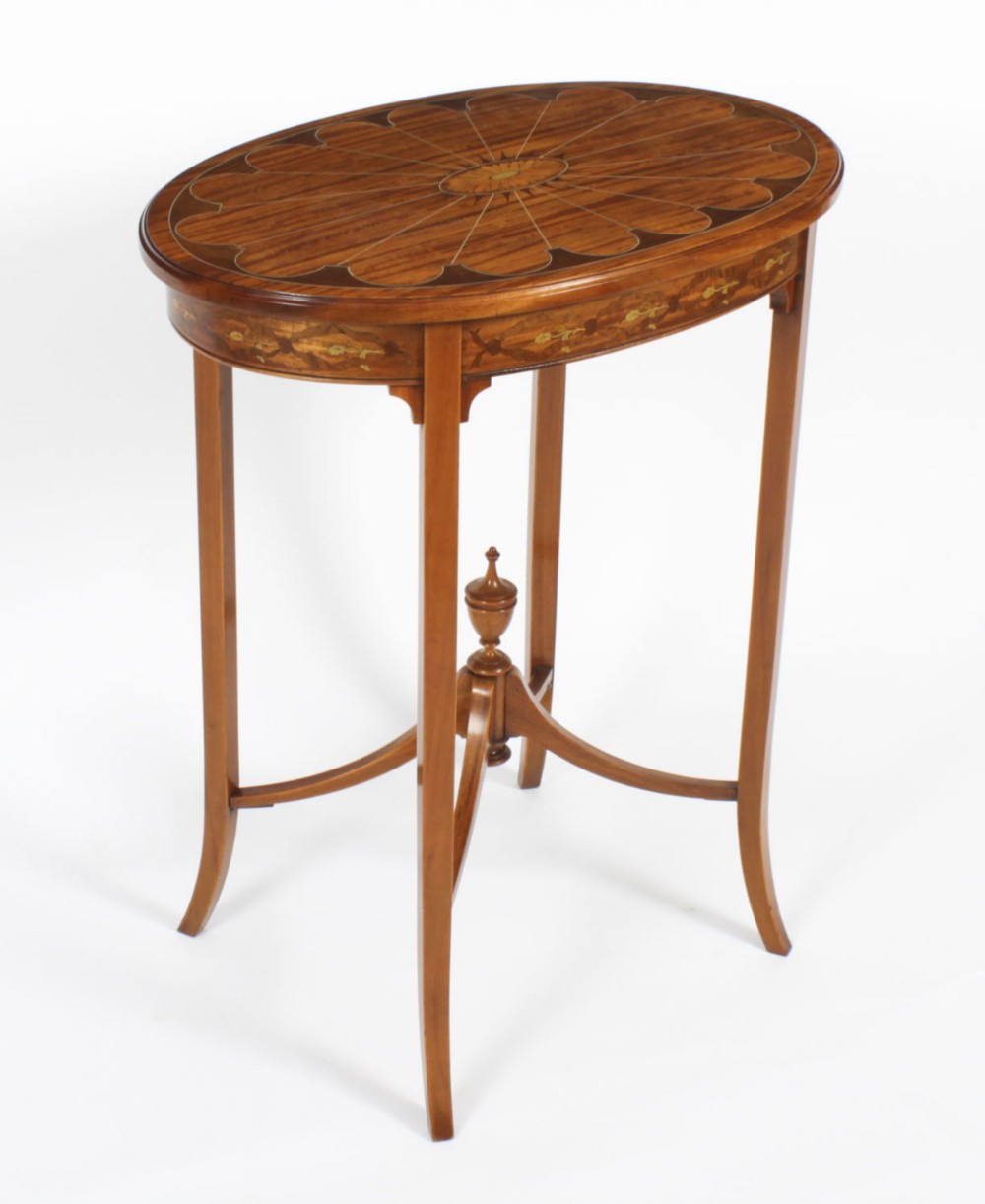
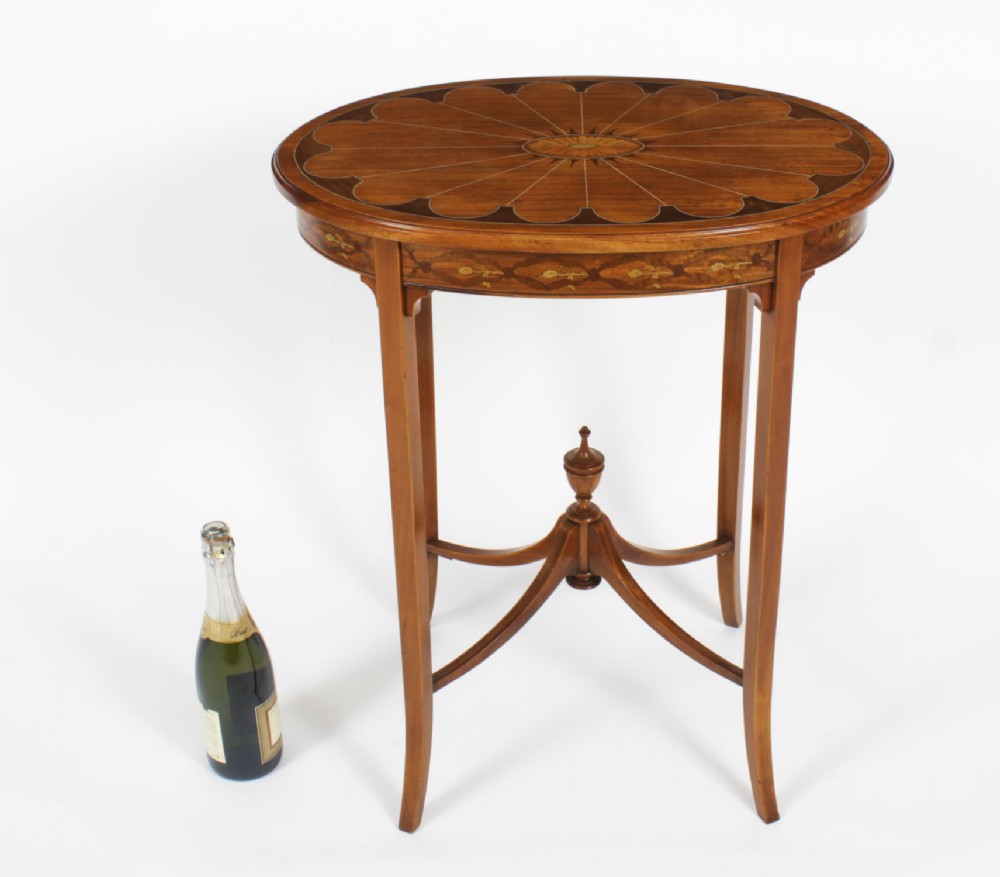
This is a superb antique satin wood  oval occasional table, circa 1880 in date.

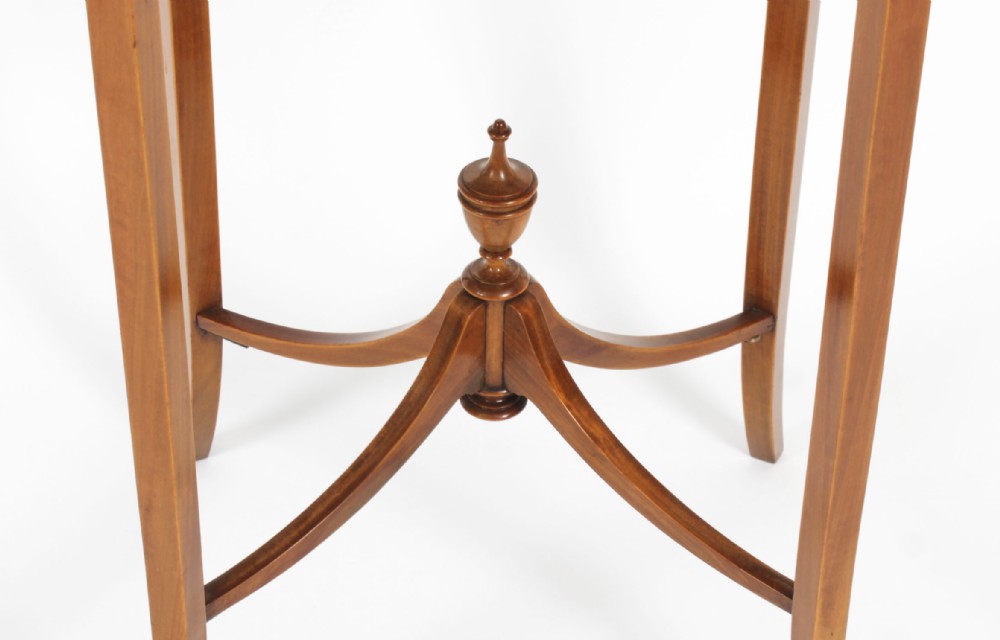
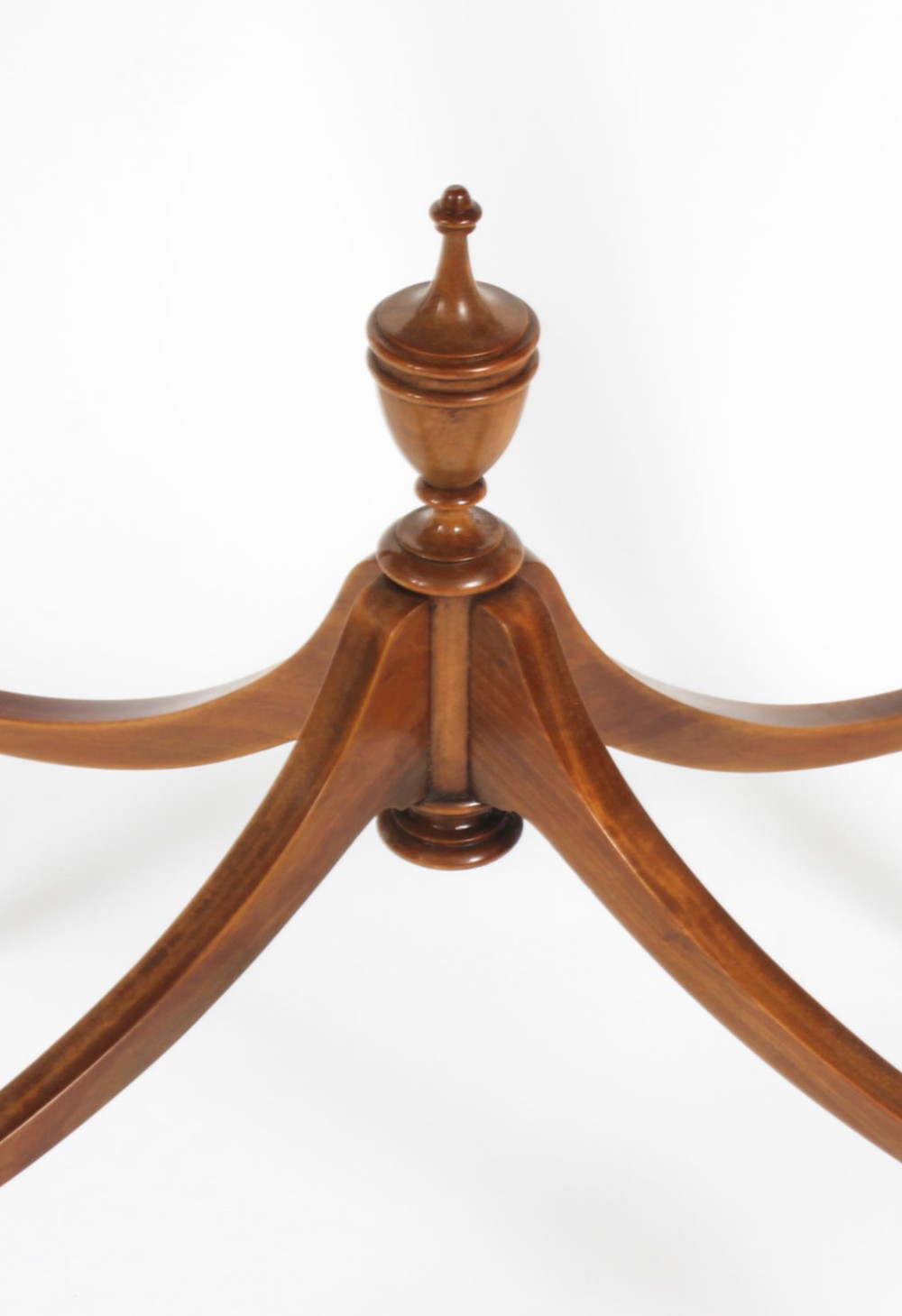
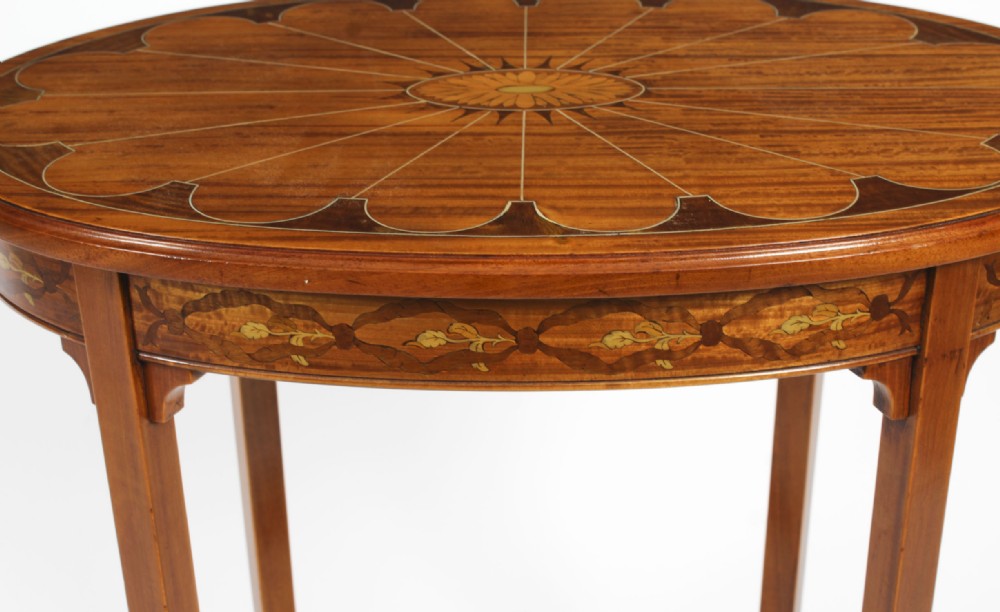
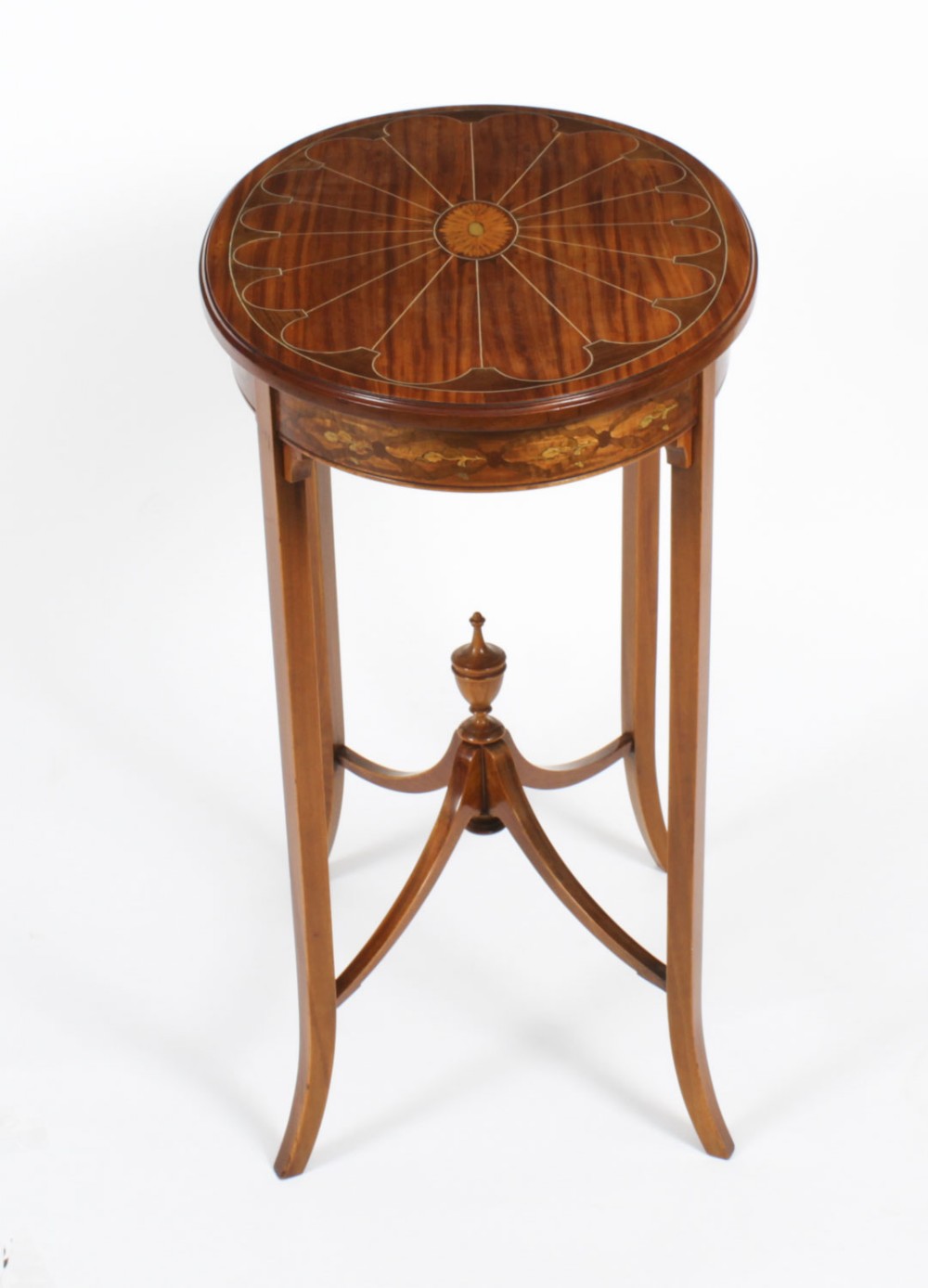
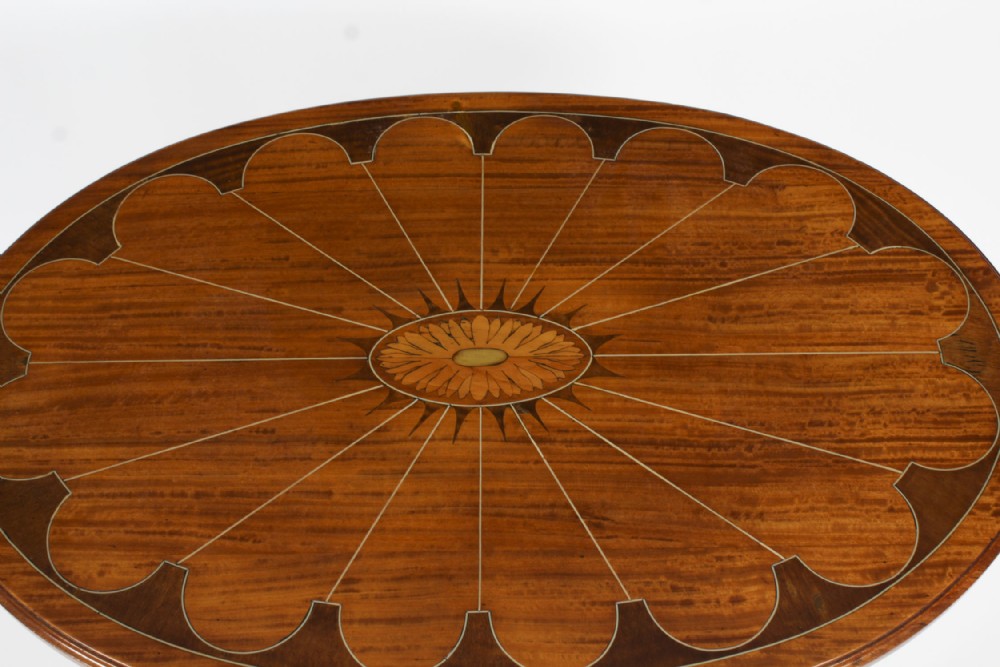
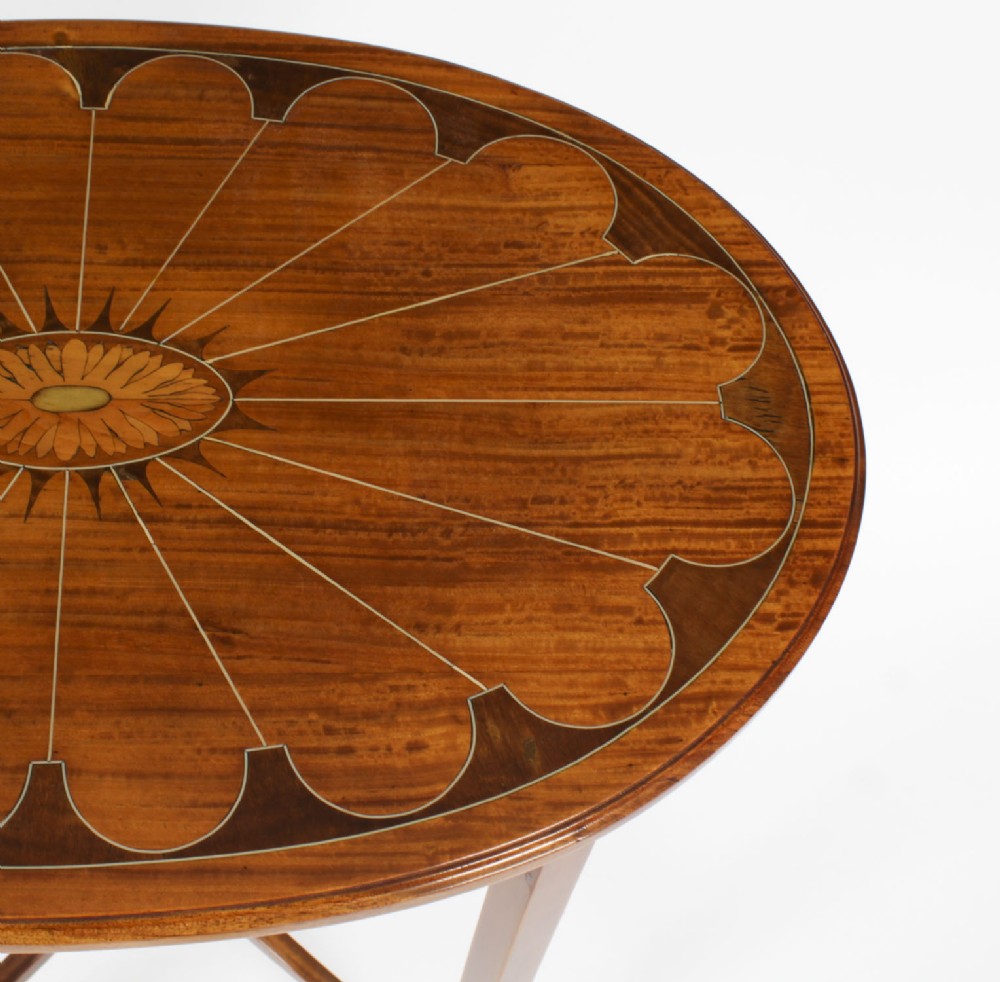
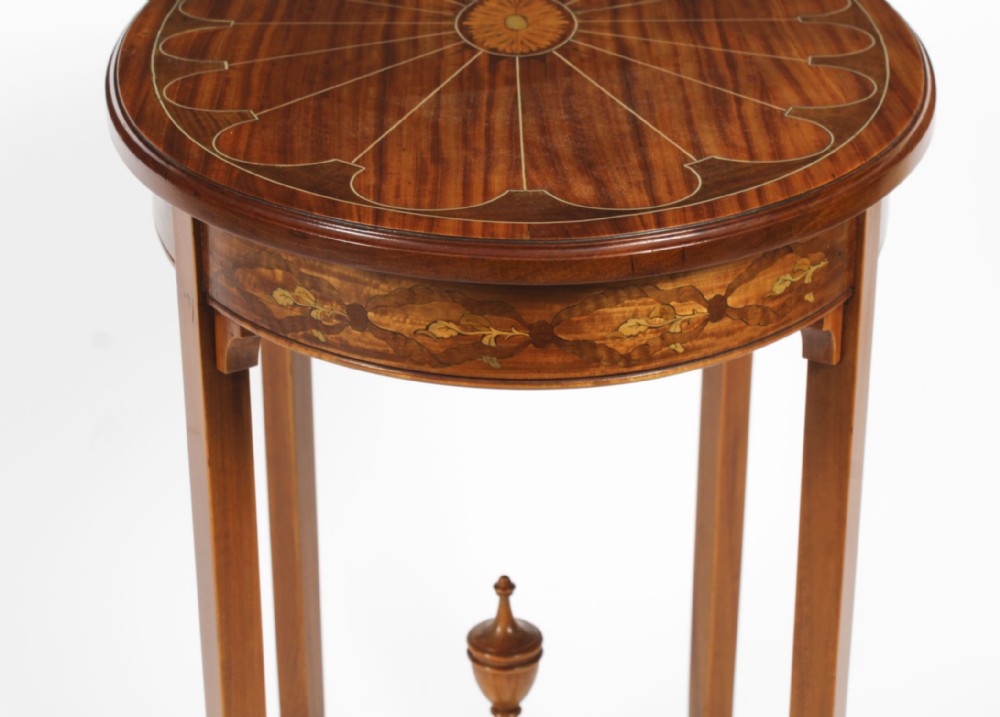
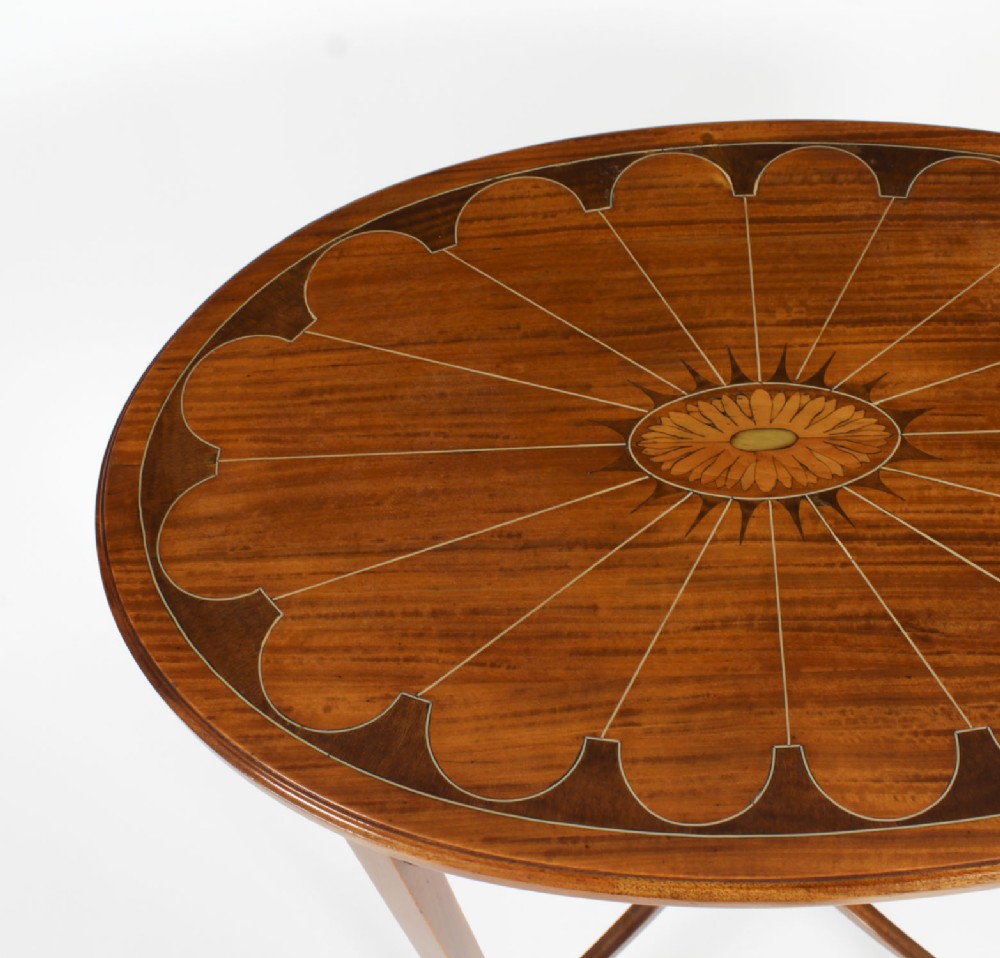
The table is exquisitely crafted in rich satin wood, it features oval shell marquetry with boxwood line inlaid decoration throughout,  and is raised on sqaure tapering legs united with shaped stretchers crowned with an urn.

Add an elegant touch to your home with this exceptional piece of antique English furniture.

Condition:

In really excellent condition having been beautifully cleaned, polished and waxed in our workshops, please see photos for confirmation.

Dimensions in cm:

Height 71.5 cm x Width 60 cm x Depth 40 cm

Dimensions in inches:

Height 2 foot, 4 inches x Width 2 feet x Depth 1 foot, 4 inches

Satin wood 

is a hard and durable wood with a satinlike sheen, much used in cabinetmaking, especially in marquetry. It comes from two tropical trees of the family Rutaceae (rue family). East Indian or Ceylon satin wood is the yellowish or dark-brown heartwood of Chloroxylon swietenia. 

The lustrous, fine-grained, usually figured wood is used for furniture, cabinetwork, veneers, and backs of brushes. West Indian satin wood, sometimes called yellow wood, is considered superior. It is the golden yellow, lustrous, even-grained wood found in the Florida Keys and the West Indies. 

It has long been valued for furniture. It is also used for musical instruments, veneers, and other purposes. Satin wood is classified in the division Magnoliophyta, class Magnoliopsida, order Sapindales, family Rutaceae.

Marquetry

is decorative artistry where pieces of material of different colours are inserted into surface wood veneer to form intricate patterns such as scrolls or flowers.

The technique of veneered marquetry had its inspiration in 16th century Florence. Marquetry elaborated upon Florentine techniques of inlaying solid marble slabs with designs formed of fitted marbles, jaspers and semi-precious stones. This work, called opere di commessi, has medieval parallels in Central Italian "Cosmati"-work of inlaid marble floors, altars and columns. The technique is known in English as pietra dura, for the "hardstones" used: onyx, jasper, cornelian, lapis lazuli and colored marbles. In Florence, the Chapel of the Medici at San Lorenzo is completely covered in a colored marble facing using this demanding jig-sawn technique.

Techniques of wood marquetry were developed in Antwerp and other Flemish centers of luxury cabinet-making during the early 16th century. The craft was imported full-blown to France after the mid-seventeenth century, to create furniture of unprecedented luxury being made at the royal manufactory of the Gobelins, charged with providing furnishings to decorate Versailles and the other royal residences of Louis XIV. Early masters of French marquetry were the Fleming Pierre Golle and his son-in-law, André-Charles Boulle, who founded a dynasty of royal and Parisian cabinet-makers (ébénistes) and gave his name to a technique of marquetry employing brass with pewter in arabesque or intricately foliate designs.

Our reference: A4146

Date of Manufacture

Regent Antiques has dated this Antique Satinwood Occasional Table to the 1880s.

Physical Dimensions
Height
71.5cm (28.15")
Width
60cm (23.62")
Depth
40cm (15.75")
Reference Numbers
Sellingantiques Reference
SA1108996
Dealers Internal Reference
A4146
An oval 19th-century satinwood occasional table featuring intricate floral marquetry inlay on the top and tapered legs.Detail view 1Detail view 2Detail view 3Detail view 4Detail view 5Detail view 6Detail view 7Detail view 8Detail view 9Detail view 10Detail view 11Detail view 12Detail view 13
SOLD6+ MONTHS AGO
1 / 14
1880s · SA1108996
Antique Marquetry Shell Inlaid Oval Satin Wood Occasional Table 19th C
Sorry, but this item has been sold.
Description
This is a superb antique satin wood  oval occasional table, circa 1880 in date.

The table is exquisitely crafted in rich satin wood, it features oval shell marquetry with boxwood line inlaid decoration throughout,  and is raised on sqaure tapering legs united with shaped stretchers crowned with an urn.

Add an elegant touch to your home with this exceptional piece of antique English furniture.

Condition:

In really excellent condition having been beautifully cleaned, polished and waxed in our workshops, please see photos for confirmation.

Dimensions in cm:

Height 71.5 cm x Width 60 cm x Depth 40 cm

Dimensions in inches:

Height 2 foot, 4 inches x Width 2 feet x Depth 1 foot, 4 inches

Satin wood 

is a hard and durable wood with a satinlike sheen, much used in cabinetmaking, especially in marquetry. It comes from two tropical trees of the family Rutaceae (rue family). East Indian or Ceylon satin wood is the yellowish or dark-brown heartwood of Chloroxylon swietenia. 

The lustrous, fine-grained, usually figured wood is used for furniture, cabinetwork, veneers, and backs of brushes. West Indian satin wood, sometimes called yellow wood, is considered superior. It is the golden yellow, lustrous, even-grained wood found in the Florida Keys and the West Indies. 

It has long been valued for furniture. It is also used for musical instruments, veneers, and other purposes. Satin wood is classified in the division Magnoliophyta, class Magnoliopsida, order Sapindales, family Rutaceae.

Marquetry

is decorative artistry where pieces of material of different colours are inserted into surface wood veneer to form intricate patterns such as scrolls or flowers.

The technique of veneered marquetry had its inspiration in 16th century Florence. Marquetry elaborated upon Florentine techniques of inlaying solid marble slabs with designs formed of fitted marbles, jaspers and semi-precious stones. This work, called opere di commessi, has medieval parallels in Central Italian "Cosmati"-work of inlaid marble floors, altars and columns. The technique is known in English as pietra dura, for the "hardstones" used: onyx, jasper, cornelian, lapis lazuli and colored marbles. In Florence, the Chapel of the Medici at San Lorenzo is completely covered in a colored marble facing using this demanding jig-sawn technique.

Techniques of wood marquetry were developed in Antwerp and other Flemish centers of luxury cabinet-making during the early 16th century. The craft was imported full-blown to France after the mid-seventeenth century, to create furniture of unprecedented luxury being made at the royal manufactory of the Gobelins, charged with providing furnishings to decorate Versailles and the other royal residences of Louis XIV. Early masters of French marquetry were the Fleming Pierre Golle and his son-in-law, André-Charles Boulle, who founded a dynasty of royal and Parisian cabinet-makers (ébénistes) and gave his name to a technique of marquetry employing brass with pewter in arabesque or intricately foliate designs.

Our reference: A4146
Date1880s
Height71.5cm (28.15")
Width60cm (23.62")
Depth40cm (15.75")
ReferenceSA1108996
Dealer's referenceA4146
Regent Antiques
Regent AntiquesSellingantiques verified since Sep 2016

We specialise in english and continental furniture, silver, porcelain and decorative items.

Member of LAPADA CINOA

SHARE
SAVE
Archive I An oval 19th-century satinwood occasional table featuring intricate floral marquetry inlay on the top and tapered legs. SOLD6+ MONTHS AGO

Antique Marquetry Shell Inlaid Oval Satin Wood Occasional Table 19th C

Archive II An oval 19th-century satinwood occasional table featuring intricate floral marquetry inlay on the top and tapered legs. View II
Archive III An oval 19th-century satinwood occasional table featuring intricate floral marquetry inlay on the top and tapered legs. View III
Archive IV An oval 19th-century satinwood occasional table featuring intricate floral marquetry inlay on the top and tapered legs. View IV
Archive V An oval 19th-century satinwood occasional table featuring intricate floral marquetry inlay on the top and tapered legs. View V
Archive VI An oval 19th-century satinwood occasional table featuring intricate floral marquetry inlay on the top and tapered legs. View VI
Archive VII An oval 19th-century satinwood occasional table featuring intricate floral marquetry inlay on the top and tapered legs. View VII
Archive VIII An oval 19th-century satinwood occasional table featuring intricate floral marquetry inlay on the top and tapered legs. View VIII
Archive IX An oval 19th-century satinwood occasional table featuring intricate floral marquetry inlay on the top and tapered legs. View IX
Archive X An oval 19th-century satinwood occasional table featuring intricate floral marquetry inlay on the top and tapered legs. View X
Archive XI An oval 19th-century satinwood occasional table featuring intricate floral marquetry inlay on the top and tapered legs. View XI
Archive XII An oval 19th-century satinwood occasional table featuring intricate floral marquetry inlay on the top and tapered legs. View XII
Archive XIII An oval 19th-century satinwood occasional table featuring intricate floral marquetry inlay on the top and tapered legs. View XIII
Archive XIV An oval 19th-century satinwood occasional table featuring intricate floral marquetry inlay on the top and tapered legs. View XIV
FURTHER BROWSING

Visitors also looked at these ⇣

Enlarged Archival View
Location
Manor Warehouse
318 Green Lanes
London
N4 1BX
United Kingdom
Verified Since Sep 2016
Items For Sale 639
Items Sold 2,756
Regent Antiques
Regent Antiques
Verified Since Sep 2016
View Dealer Info
Location: Manor Warehouse, 318 Green Lanes, London, N4 1BX, United Kingdom
Verified
Sep 2016
For Sale
639
Sold
2,756
An oval 19th-century satinwood occasional table featuring intricate floral marquetry inlay on the top and tapered legs.
Antique Marquetry Shell Inlaid Oval Satin wood Occasional Table 19th C
Ref: SA1108996
An oval 19th-century satinwood occasional table featuring intricate floral marquetry inlay on the top and tapered legs.
Detail View 1
Detail View 2
Detail View 3
Detail View 4
Detail View 5
Detail View 6
Detail View 7
Detail View 8
Detail View 9
Detail View 10
Detail View 11
Detail View 12
Detail View 13
Archival Detail
Every single antique dealer on our platform is individually approved by our internal team. We verify their professional trade history, ethical standards, and photographic quality to ensure a secure, high-standard buying environment. Upon joining, every dealer agrees to a strict 9-point code of conduct. While issues can occasionally arise, our dealers typically resolve them swiftly and directly with the buyer. In fact, since our founding in 2002, Sellingantiques has only had to step in to help resolve an issue on roughly five occasions—a true testament to the quality of our dealers and their dedication to your happiness.
Our dealers are highly experienced in packing and shipping fragile, high-value antiques. Because you are in direct contact with the dealer, you will be able to easily go through all available shipping and insurance options together to ensure your item arrives safely.
Antiques are the ultimate green purchase. By choosing historical pieces over newly manufactured goods, you completely eliminate the carbon footprint of modern mass production while preserving exceptional, timeless craftsmanship.
Written by Sellingantiques from the dealer’s photographs and listing
  • ObjectOccasional Tables
  • Period19th century
  • StyleGeorgian / Victorian Revival
  • MaterialSatinwood, Various Marquetry Timbers
  • ColourGolden Brown
  • MotifsFloral marquetry, Shell inlay, Tapered legs, Central stretcher with finial
  • SizeH 71.5 cm (28 in) x W 60 cm (24 in) x D 40 cm (16 in)

Satinwood became highly fashionable in British cabinet-making during the late 18th and 19th centuries, prized for its lustrous golden grain. Marquetry, the art of applying pieces of veneer to form decorative patterns, experienced a significant revival during the Victorian era, heavily influenced by earlier Neo-classical designs.

These pieces typically feature a secondary timber framework supporting fine exotic veneers like satinwood, rosewood, or mahogany. Construction methods often include delicate hand-cut dovetailing, mortise and tenon joints, and precise hand-inlaid stringing and marquetry motifs.

Authentic pieces exhibit natural signs of age and wear, such as subtle oxidisation of the timbers and minor shrinkage cracks in the veneer. Examination of the underside and interior often reveals hand-planed surfaces, traditional old glue residues, and hand-forged or early brass fixings.

An antique satinwood table provides a focal point of intricate texture and warm tone in a contemporary space. It works effectively as a standalone accent piece next to a minimalist sofa or paired with modern abstract art to create a curated, layered aesthetic.

Maintain stable indoor humidity levels and keep wooden furniture away from direct sunlight and heat sources to prevent veneer cracking. Dust regularly with a soft, dry cloth and occasionally nourish the wood with traditional beeswax, avoiding modern silicone-based polishes.
items
Add keywords to the filter
Price
£100
£250000
Era
Period
Style
Material
Origin
Stock Location
Recently Added
Online Payments
Categories