61,245  PAGES BROWSED TODAY PAGES TODAY • 108 ANTIQUES UPLOADED TODAYNEW ARRIVALS
GIFTS
108 ITEMS ADDED TODAY
Sort Order
Items Per Page
Browse Categories
Sort order
Relevant Links
Items per page
ID #SA1067543
FOR SALE
£1,550
Email Phone
Save
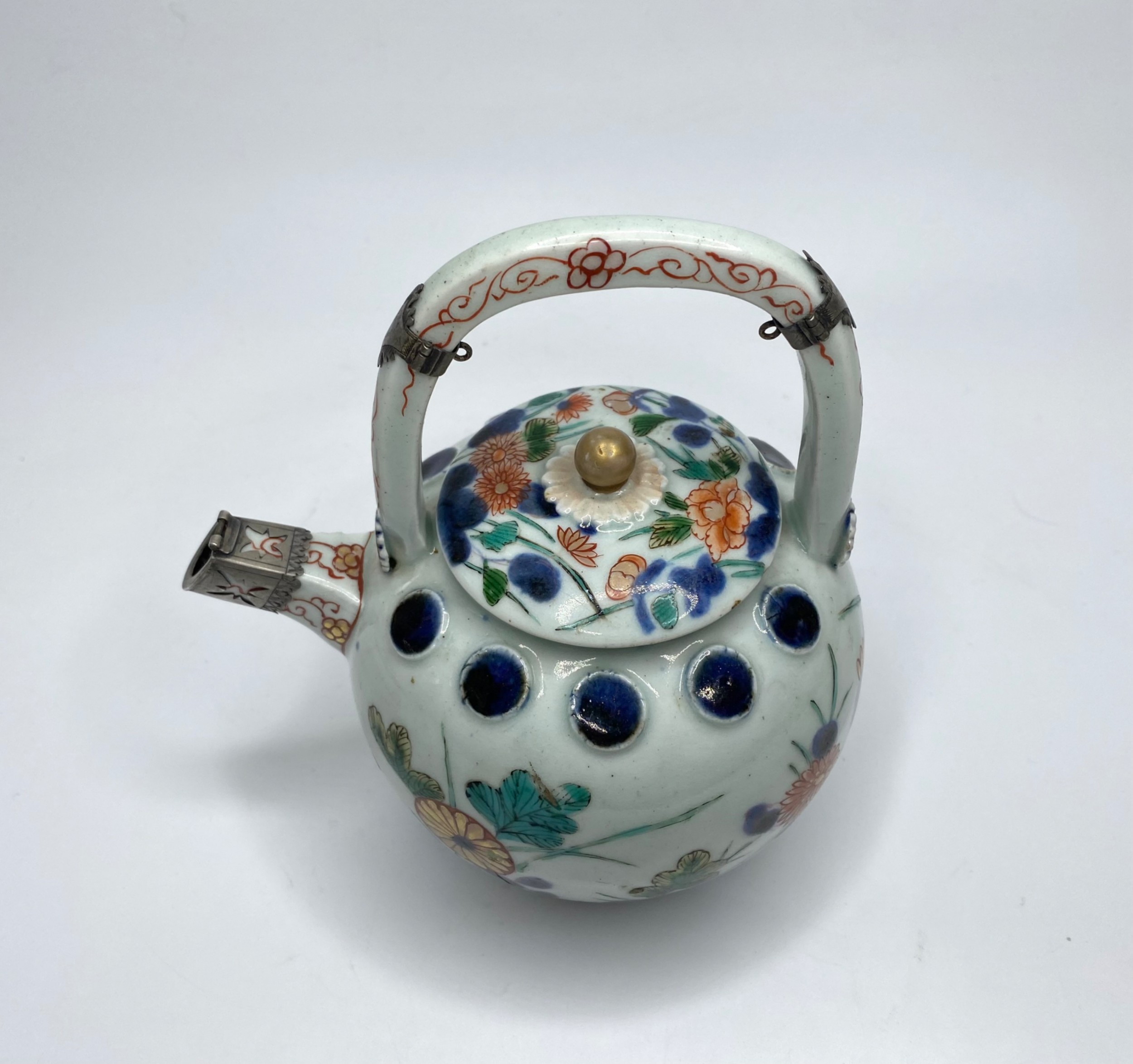
Imari Sake Ewer, Arita, Japan, C. 1700.
For sale by Philip Carrol Antiques
for sale €1,814     $1,969
£1,550
Philip Carrol Antiques

Philip Carrol Antiques

Sellingantiques Verified Since Dec 2017
Browse dealers 96 items
  • About Us
    Philip carrol antiques was established in 1983
  • Trade Associations
    Philip Carrol Antiques is a registered member of BADA 
Id #SA1067543
PDF SHARE
SAVE

Imari Sake Ewer, Arita, Japan, C. 1700.

17th century
Description

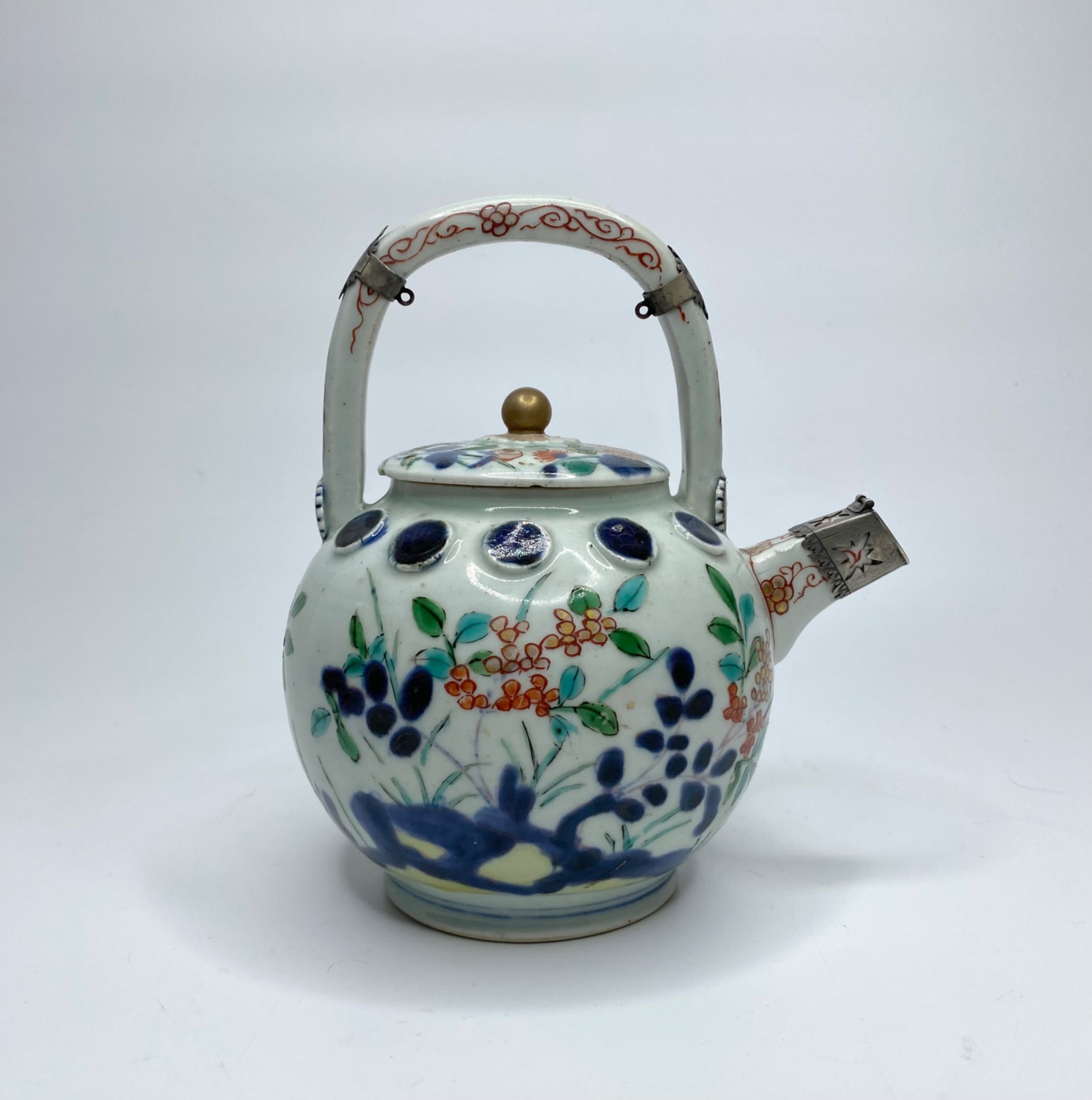
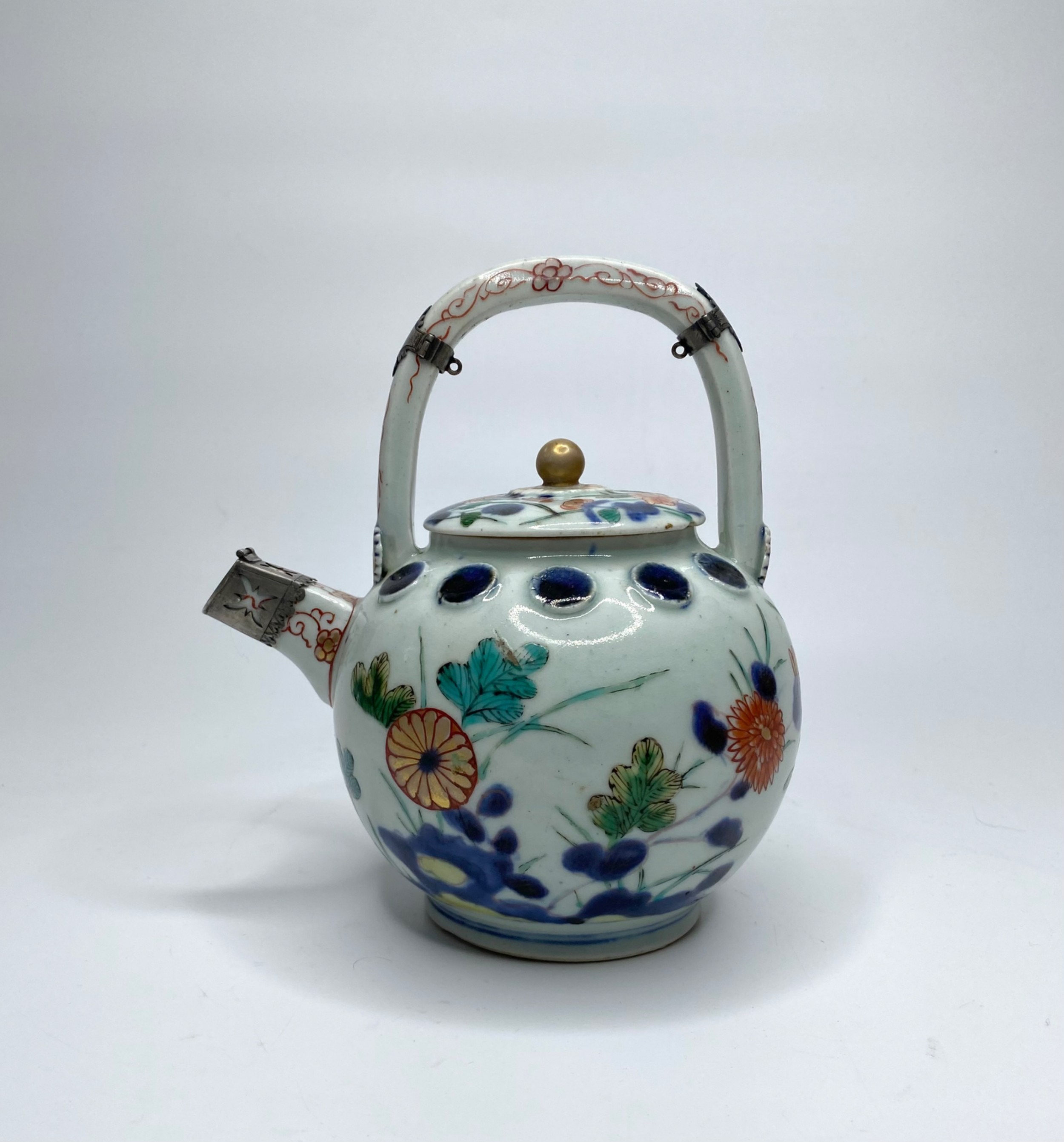
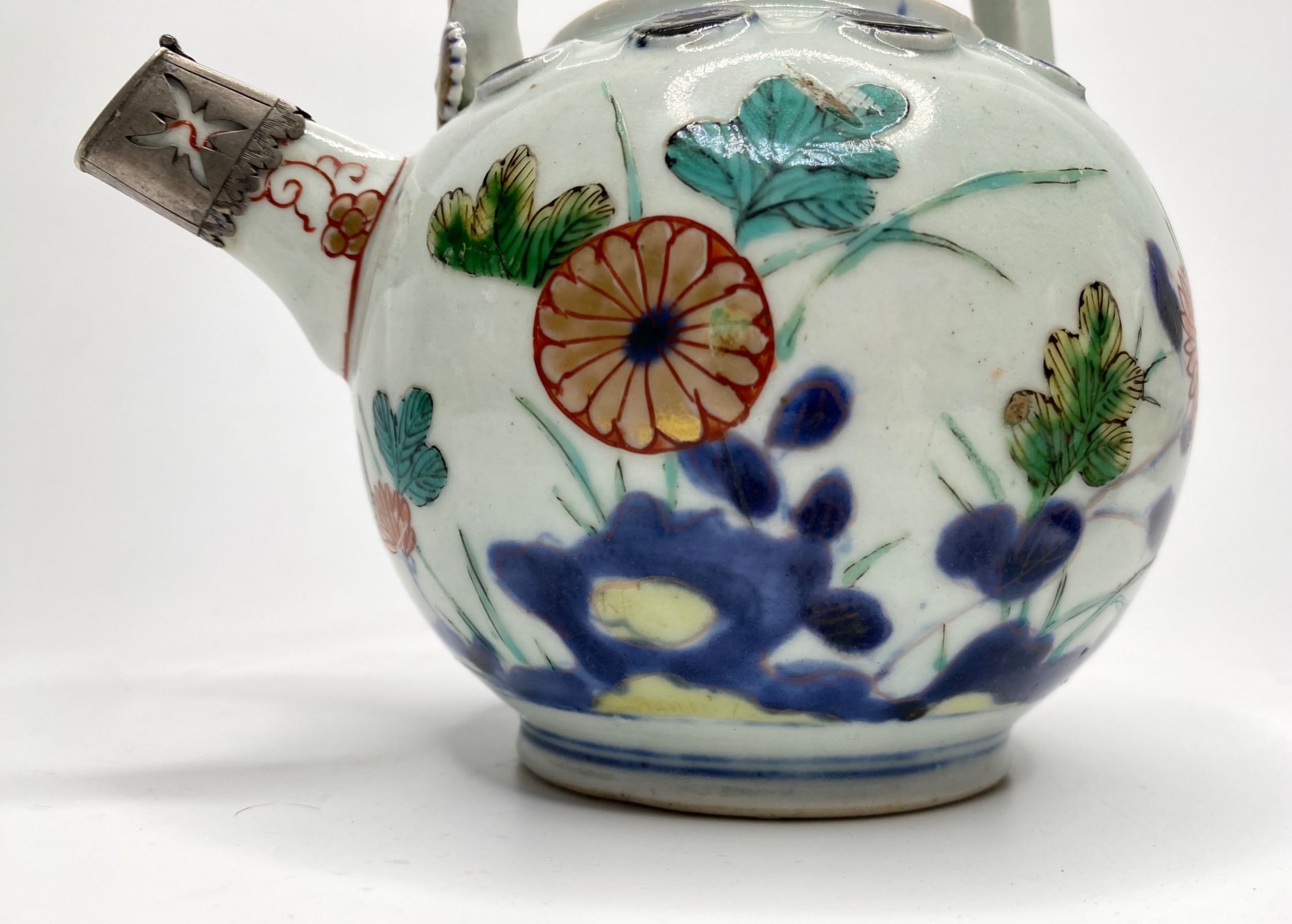
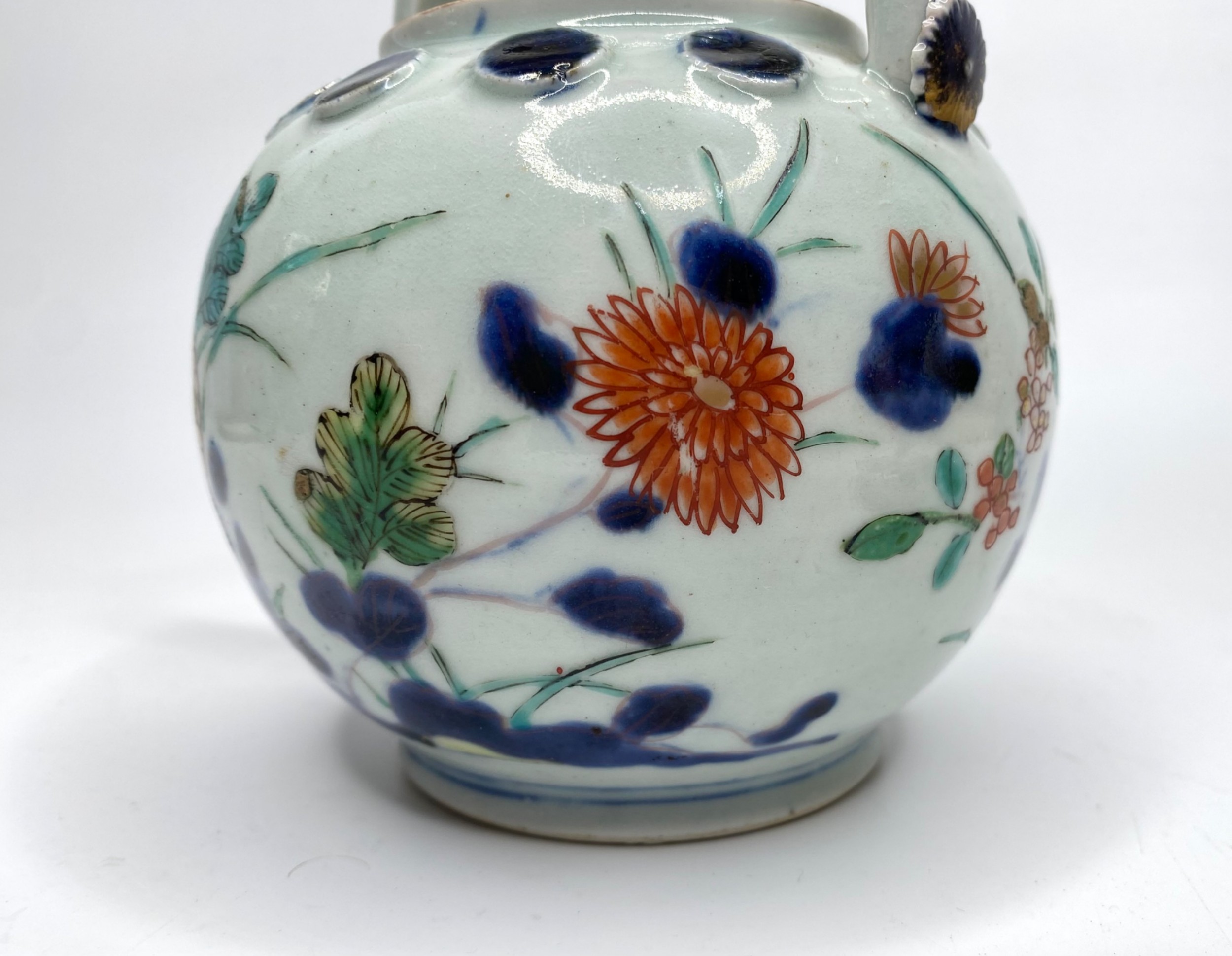
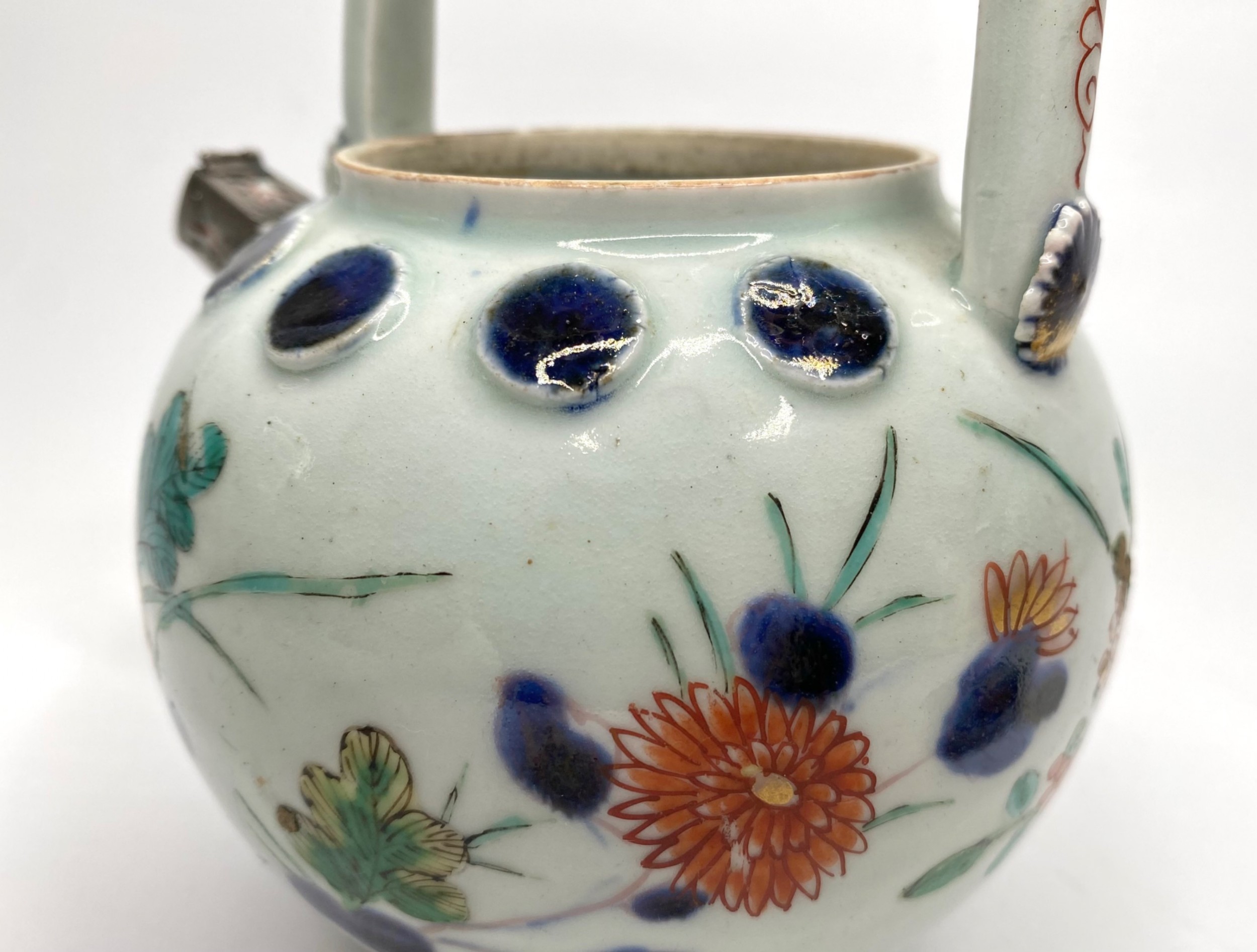
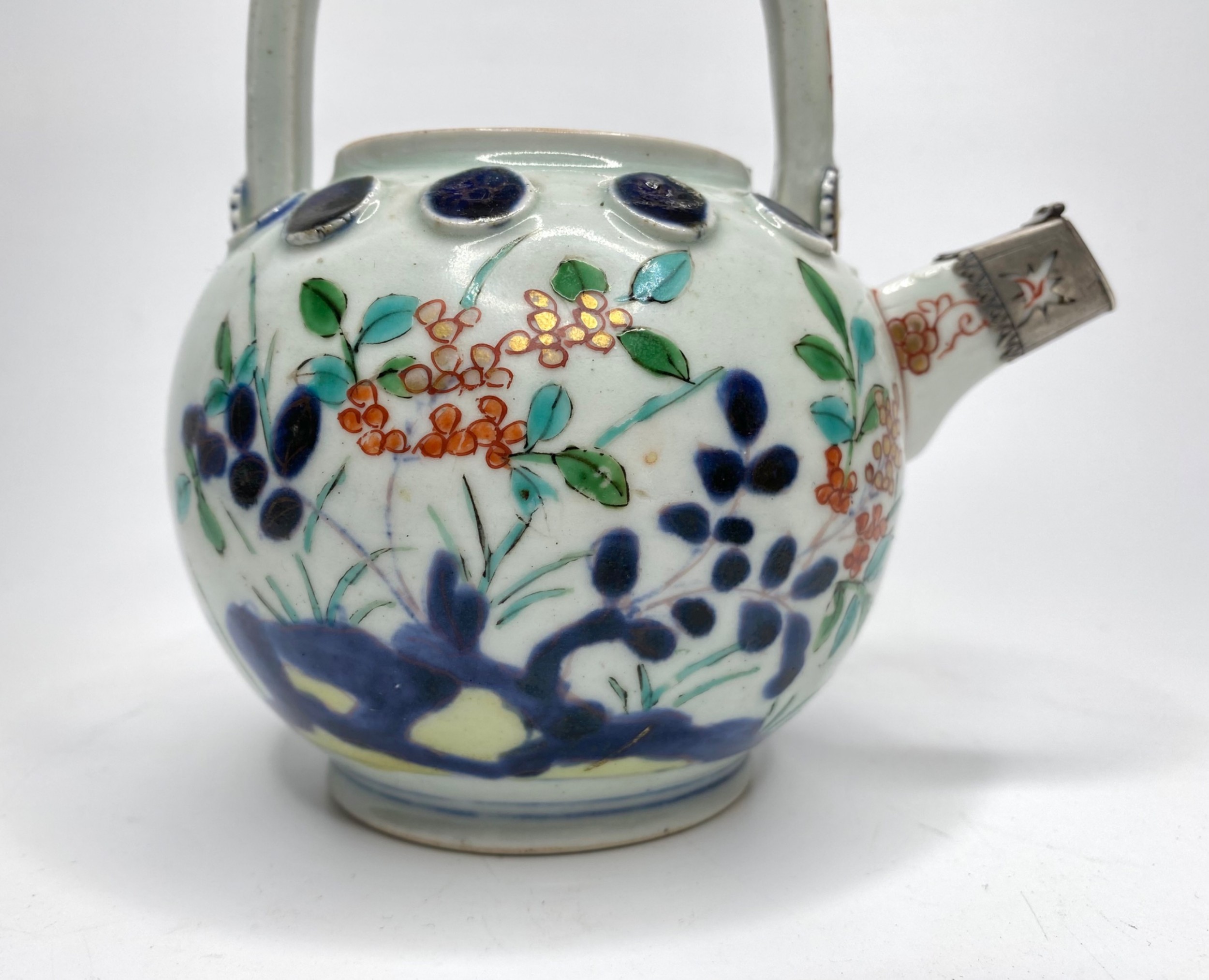
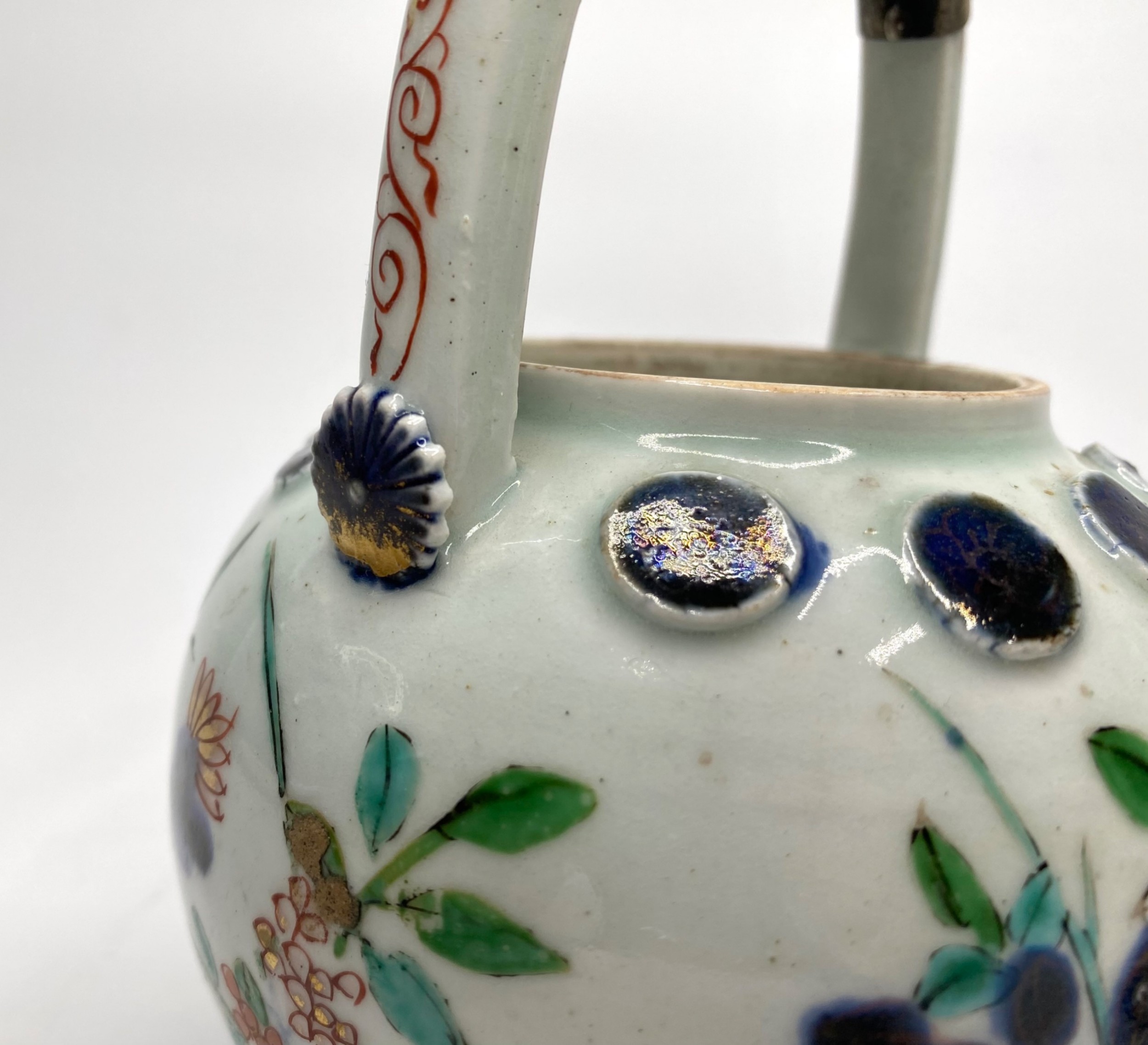
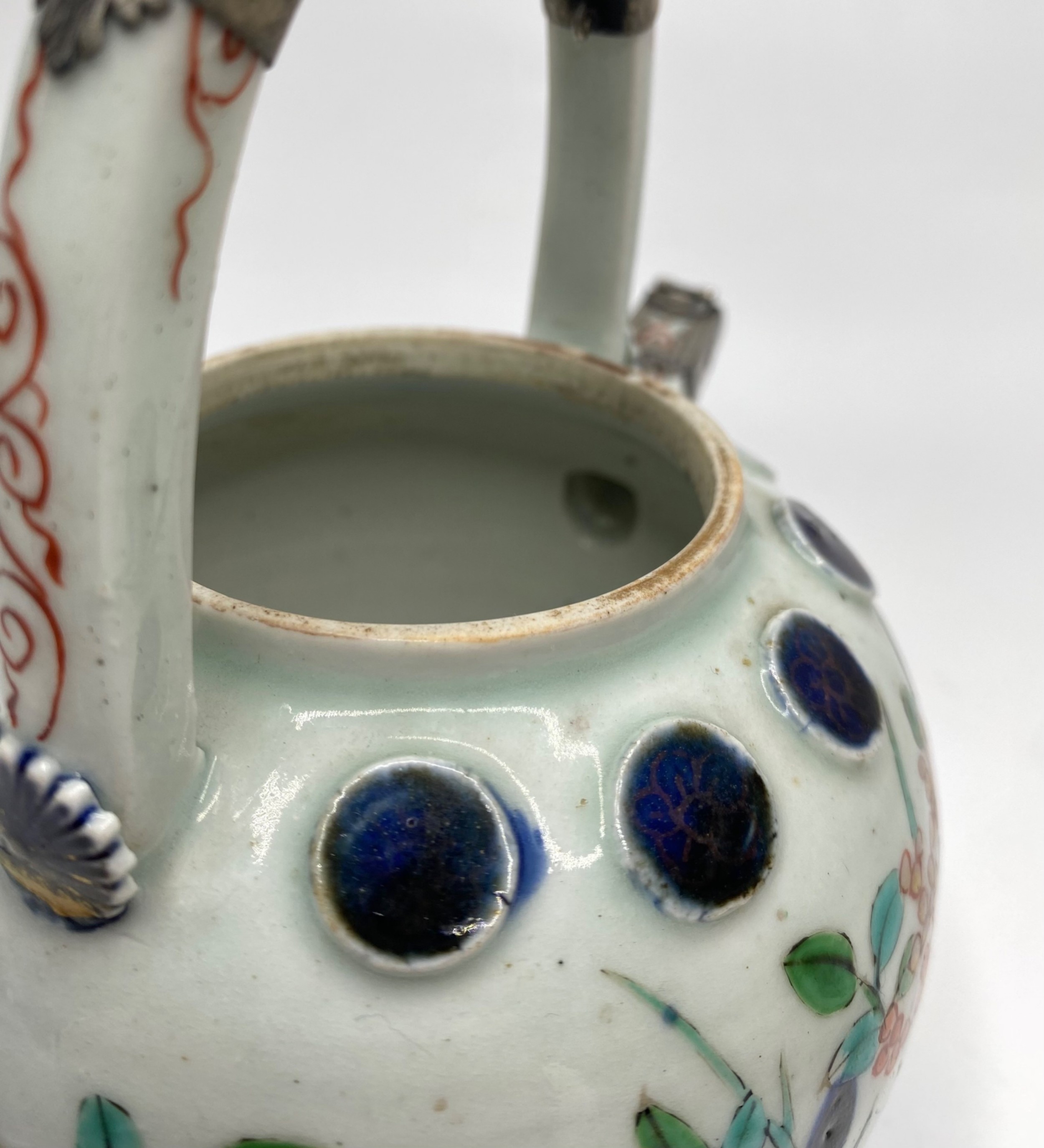
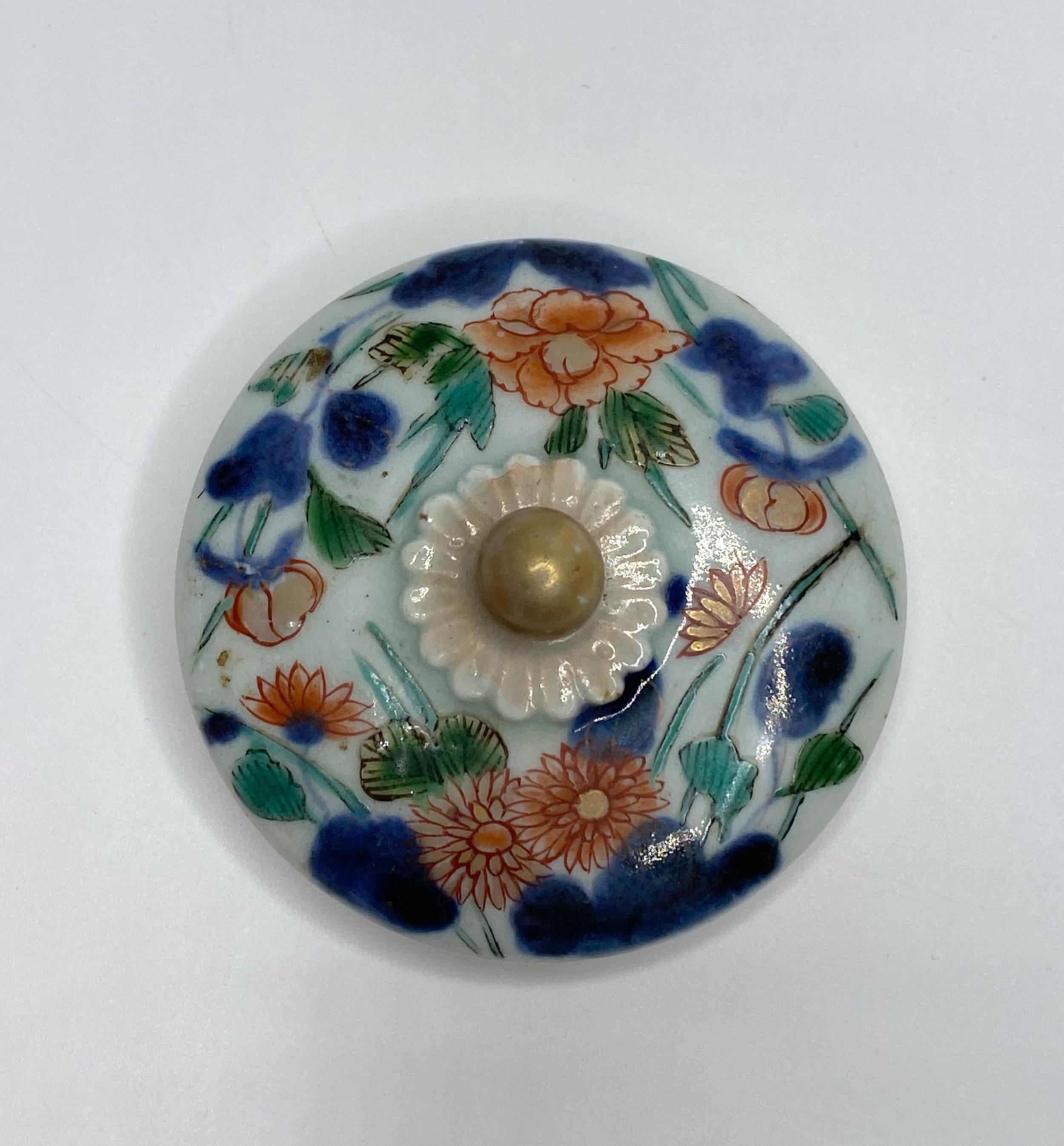
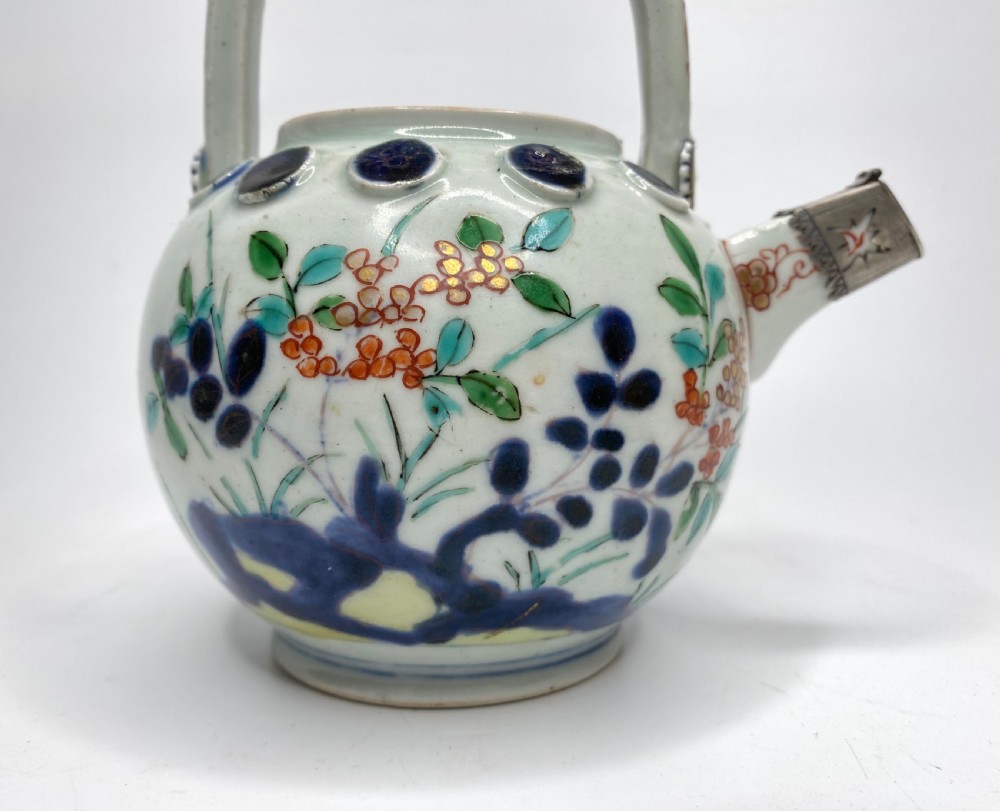
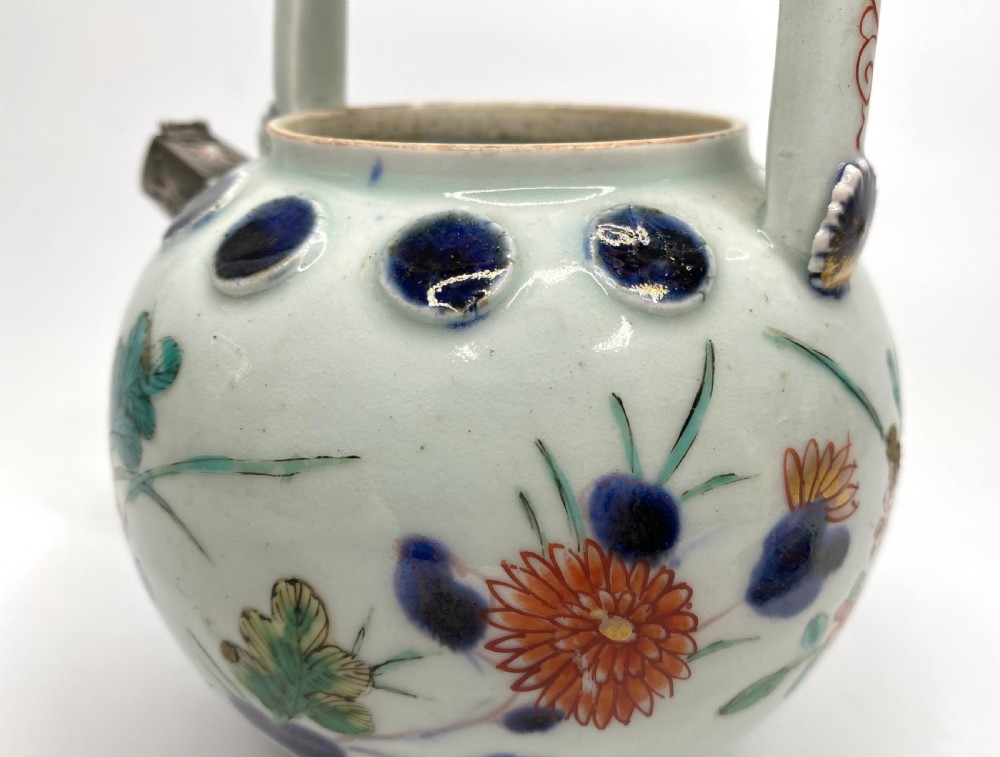
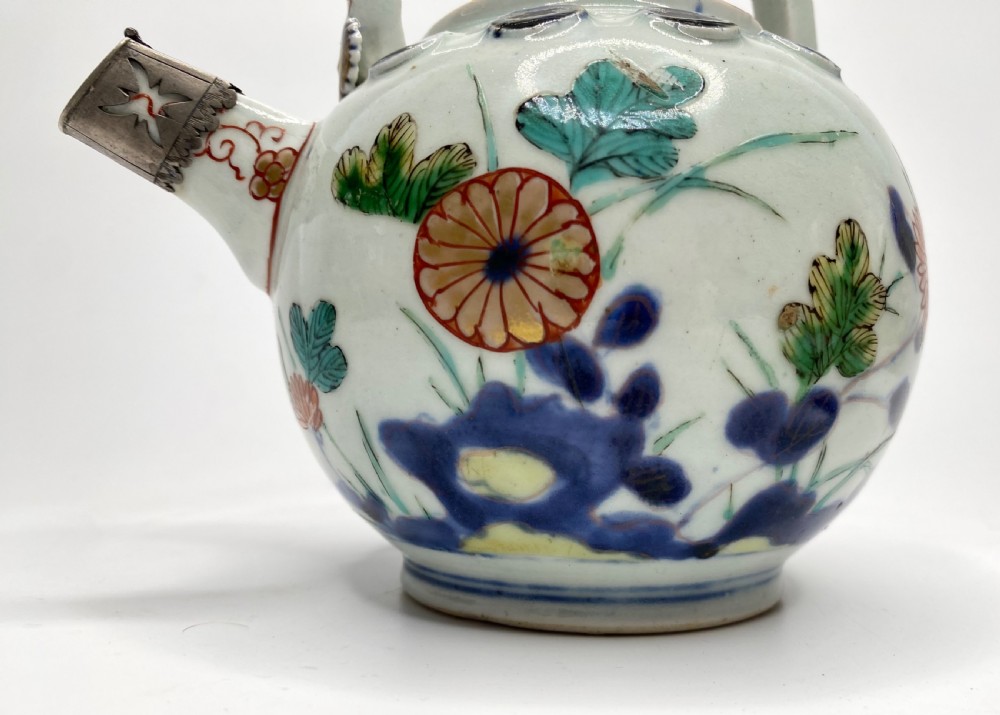
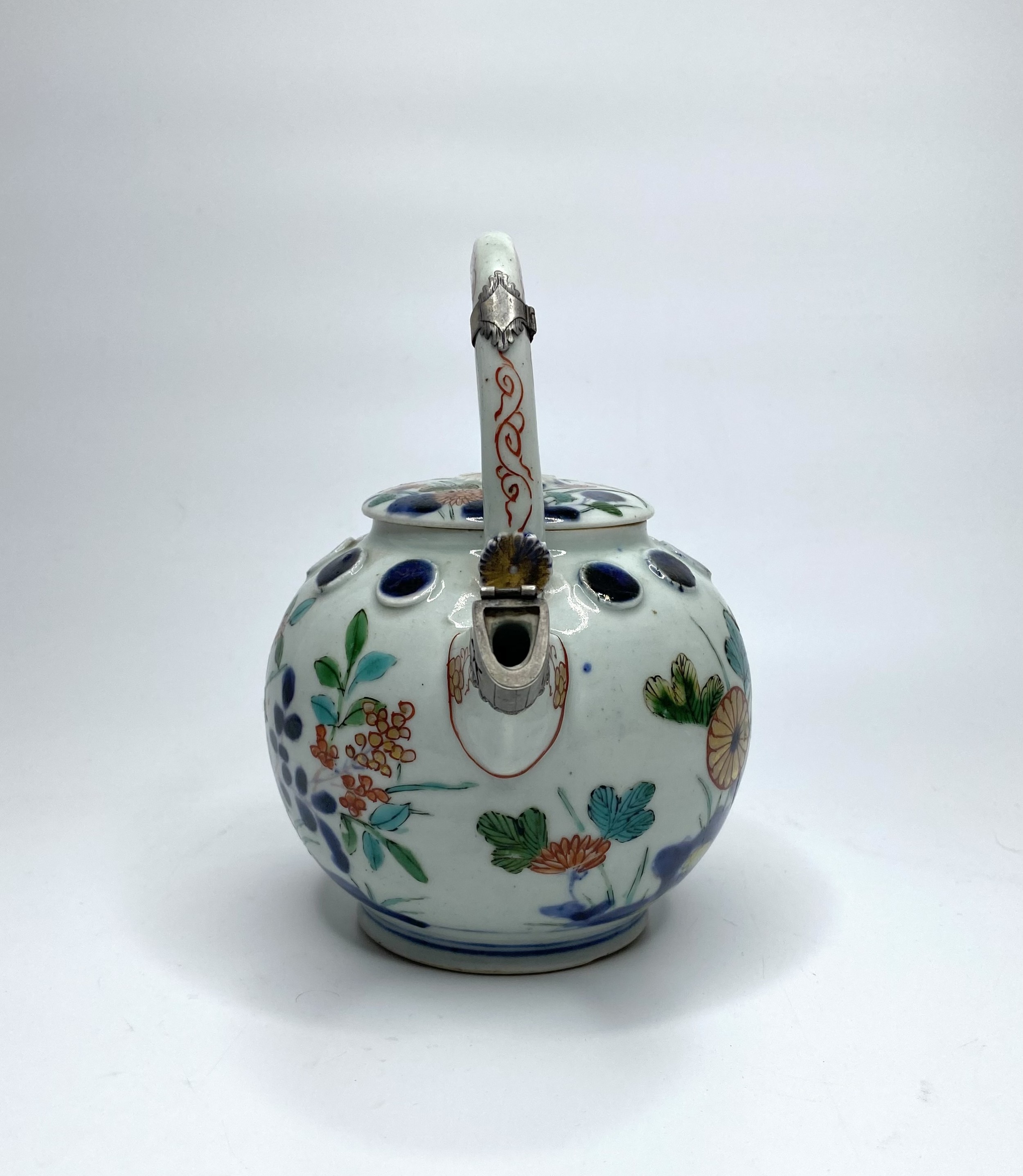
Imari sake ewer and cover, Arita, Japan, c. 1700, Edo Period. The globular ewer, with an unusual continuous band of circular moulded bosses, and vibrantly painted with flowering plants growing around rocks, in typical Imari style, with the addition of yellow enamel.

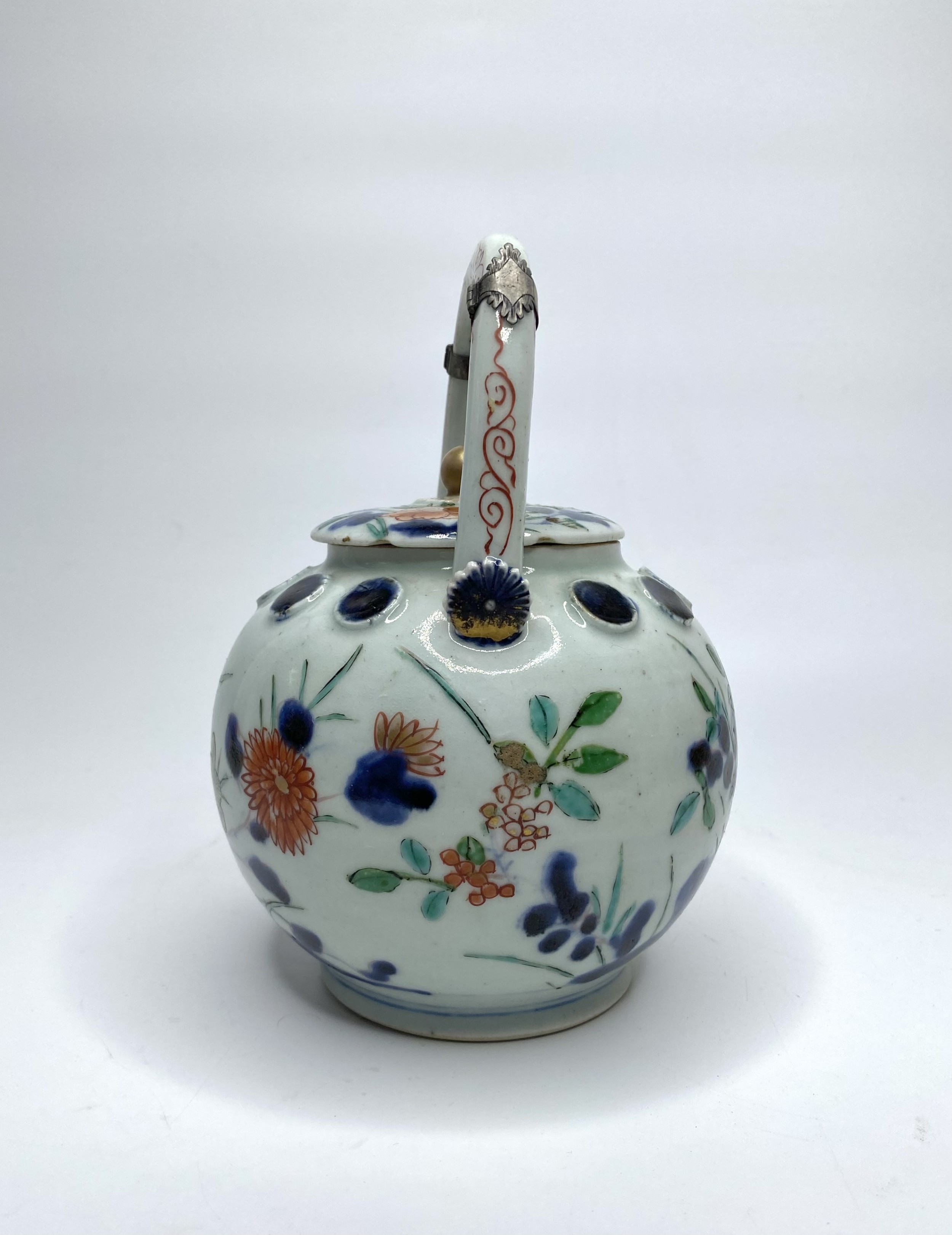
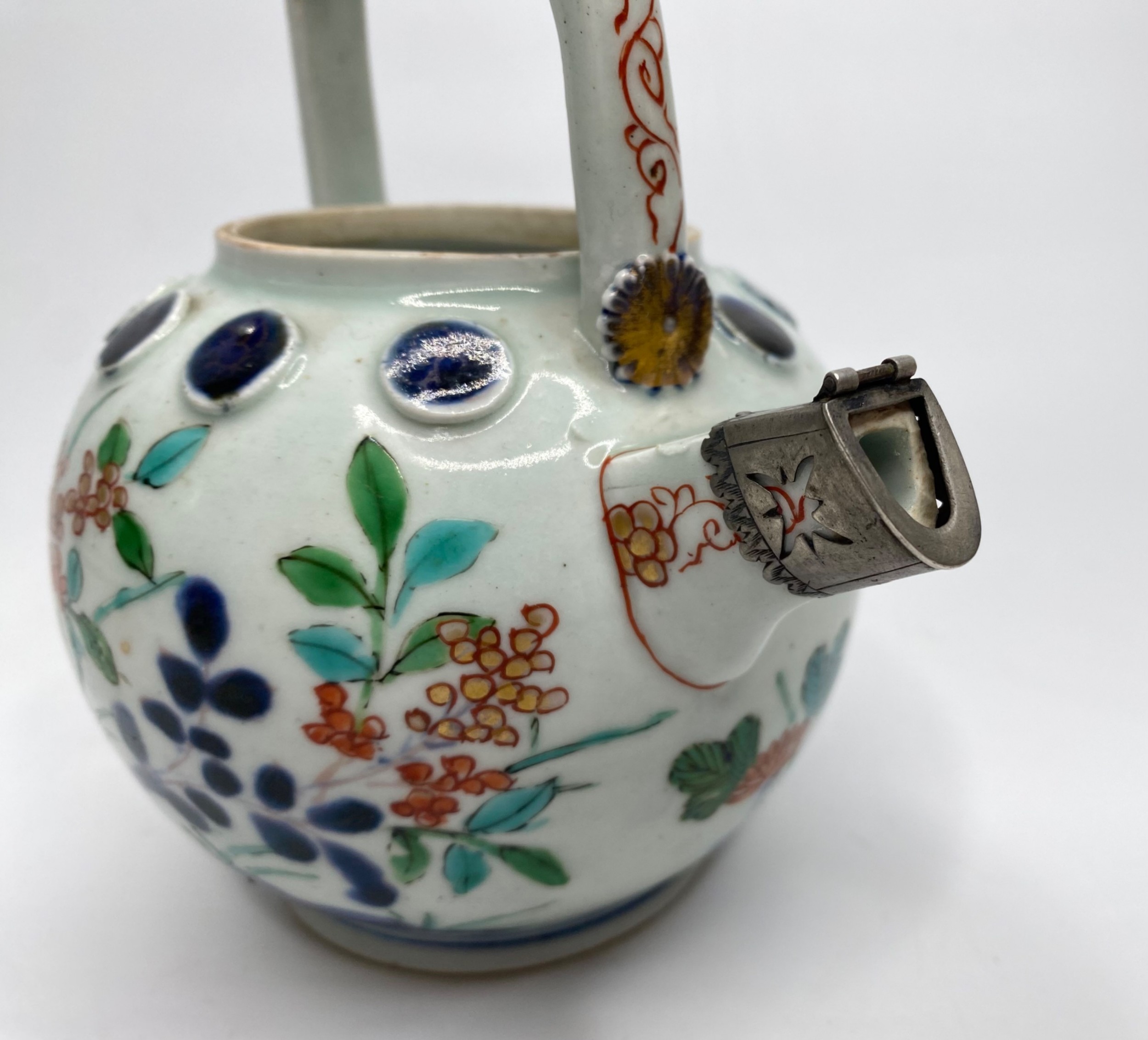
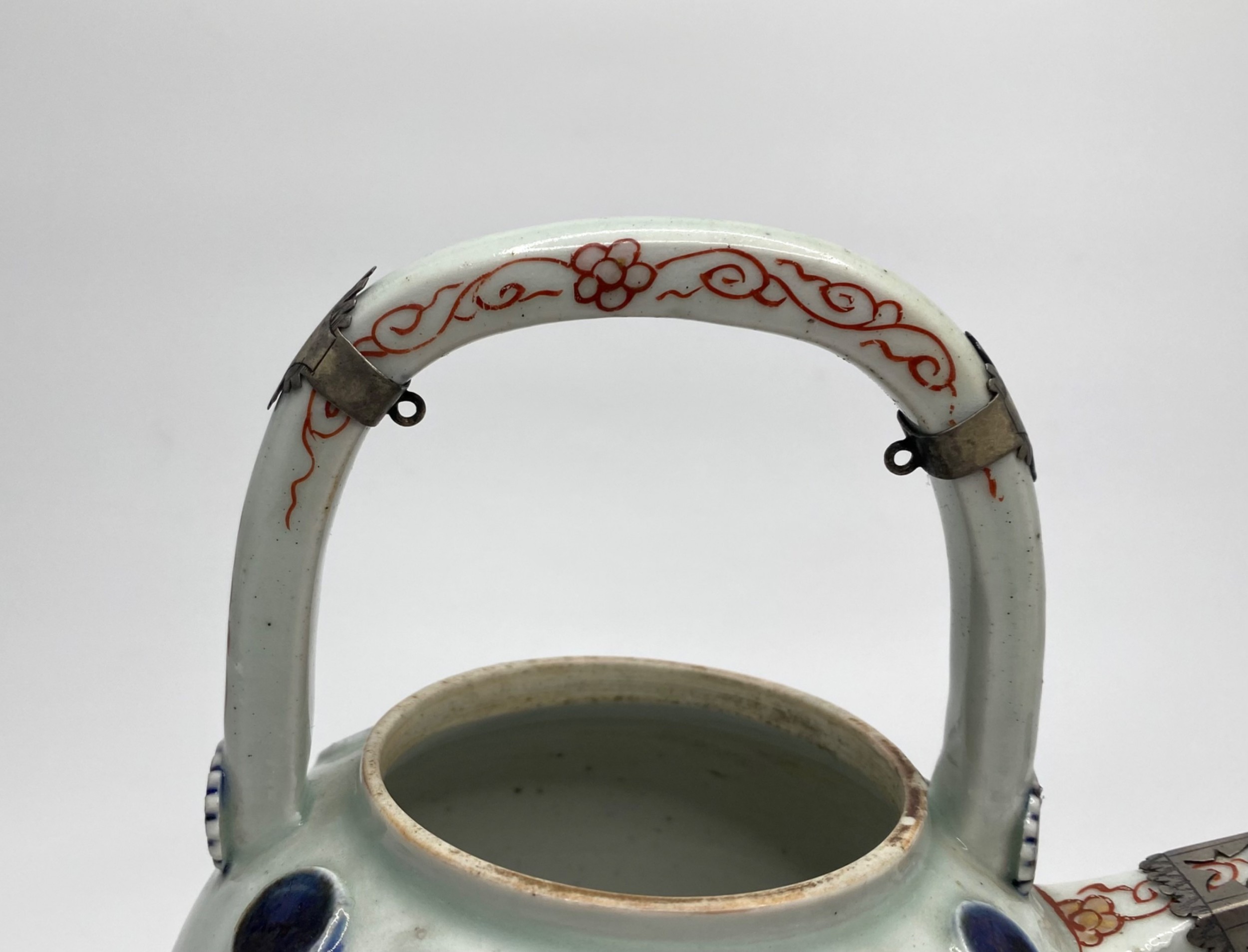
The stub spout, and overhead handle, painted with iron red stylised scroll, and gilt flower heads, attached at the body with applied chrysanthemum terminals, in underglaze cobalt blue.

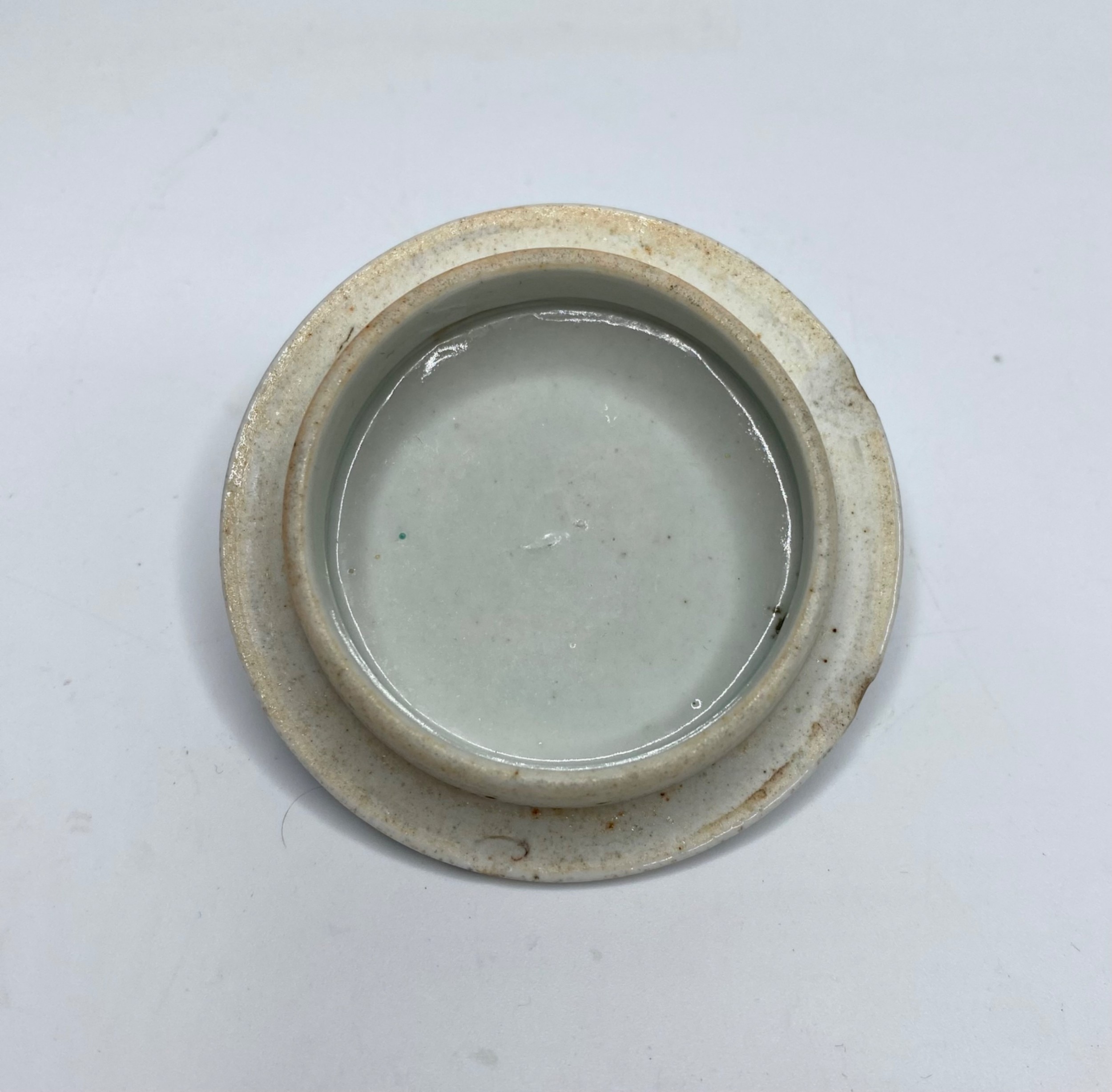
Having the original circular cover, similarly decorated, and having a gilt bud finial emerging above chrysanthemum moulding.

The spout, and handle having Dutch silver mounts, applied in the early 18th Century.

Height – 18 cm, 7 1/8”.

Width (Spout to body) – 15.5 cm, 6 1/8”.

Depth – 11.5 cm, 4 1/2”.

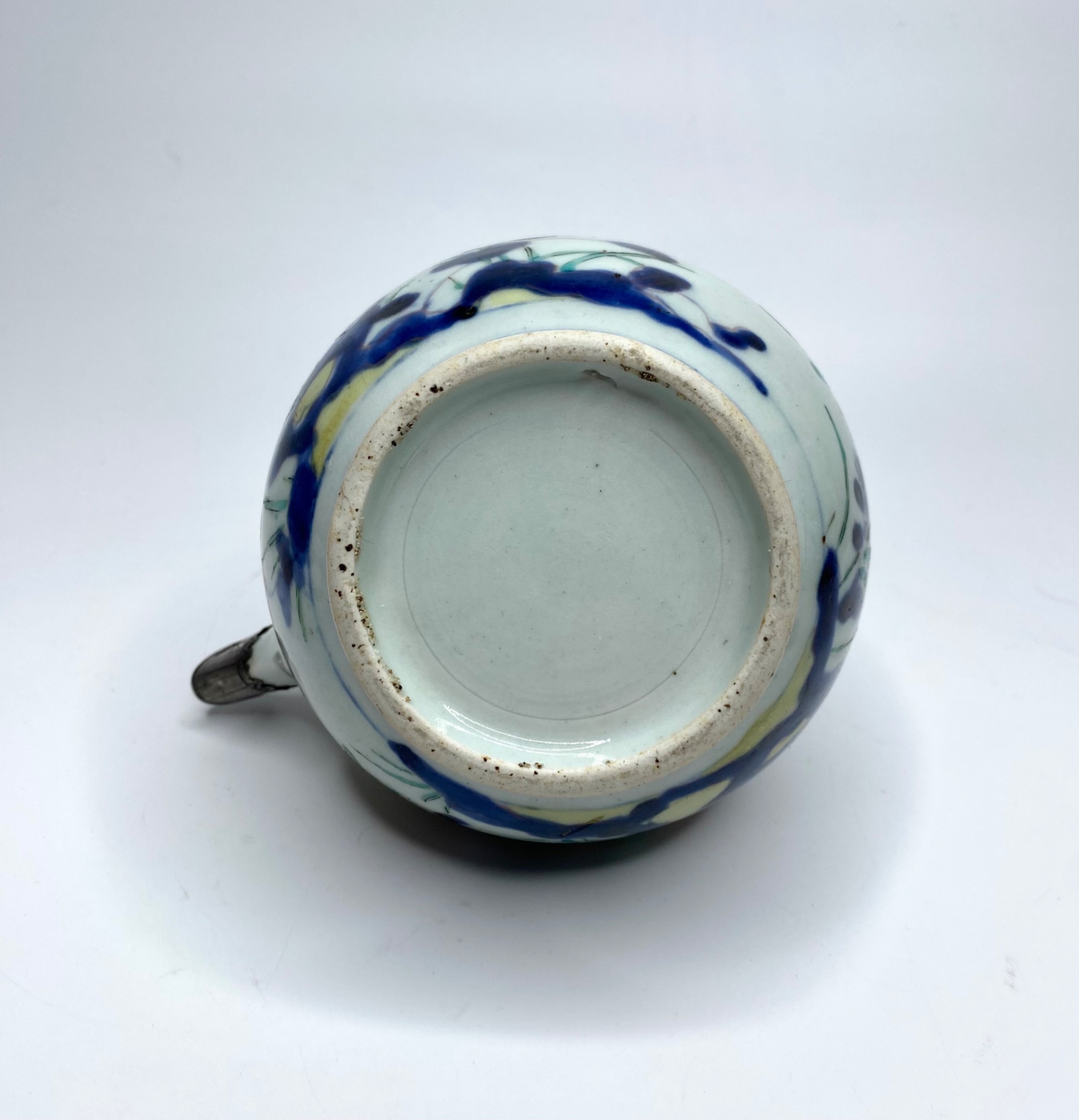
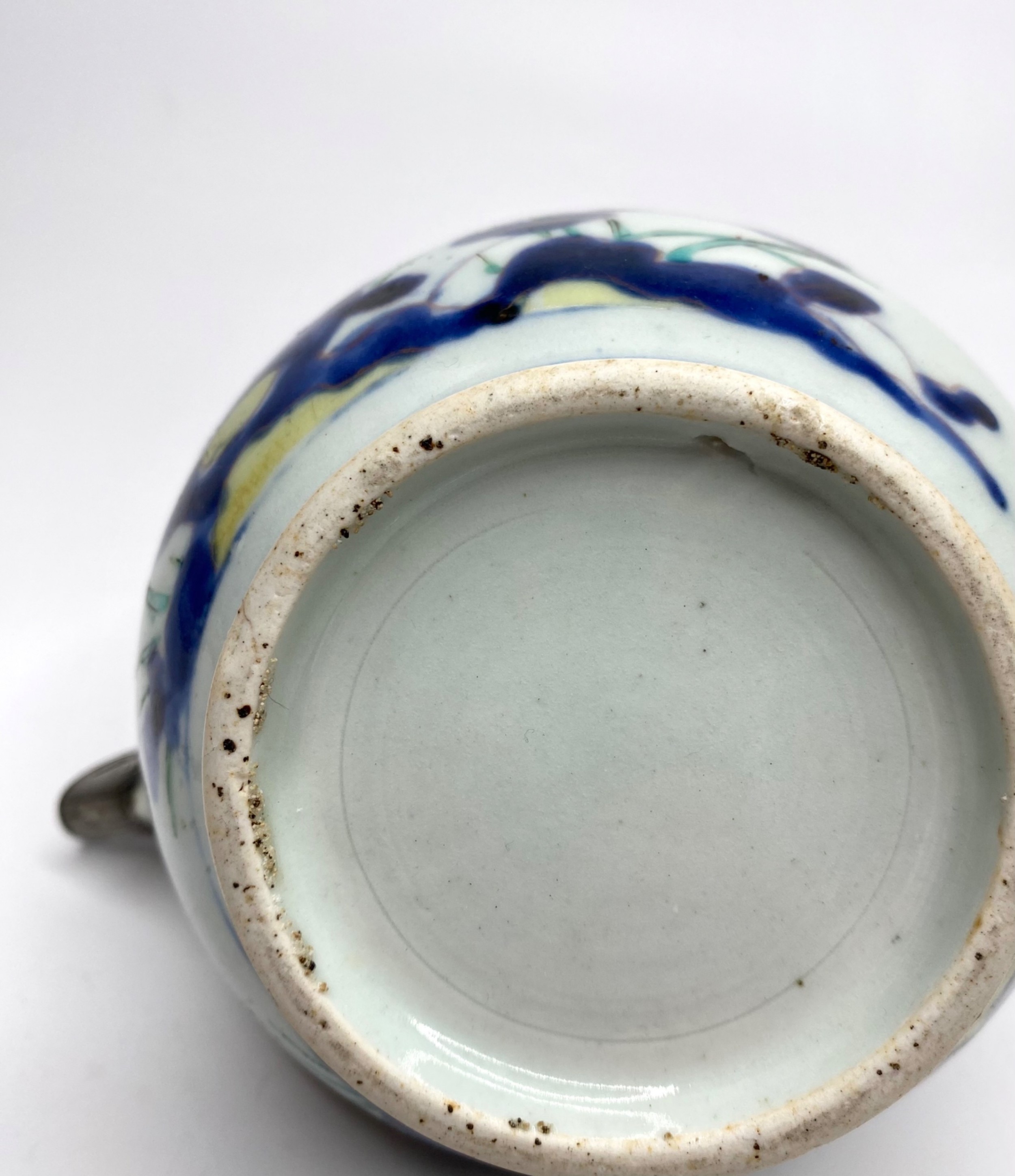
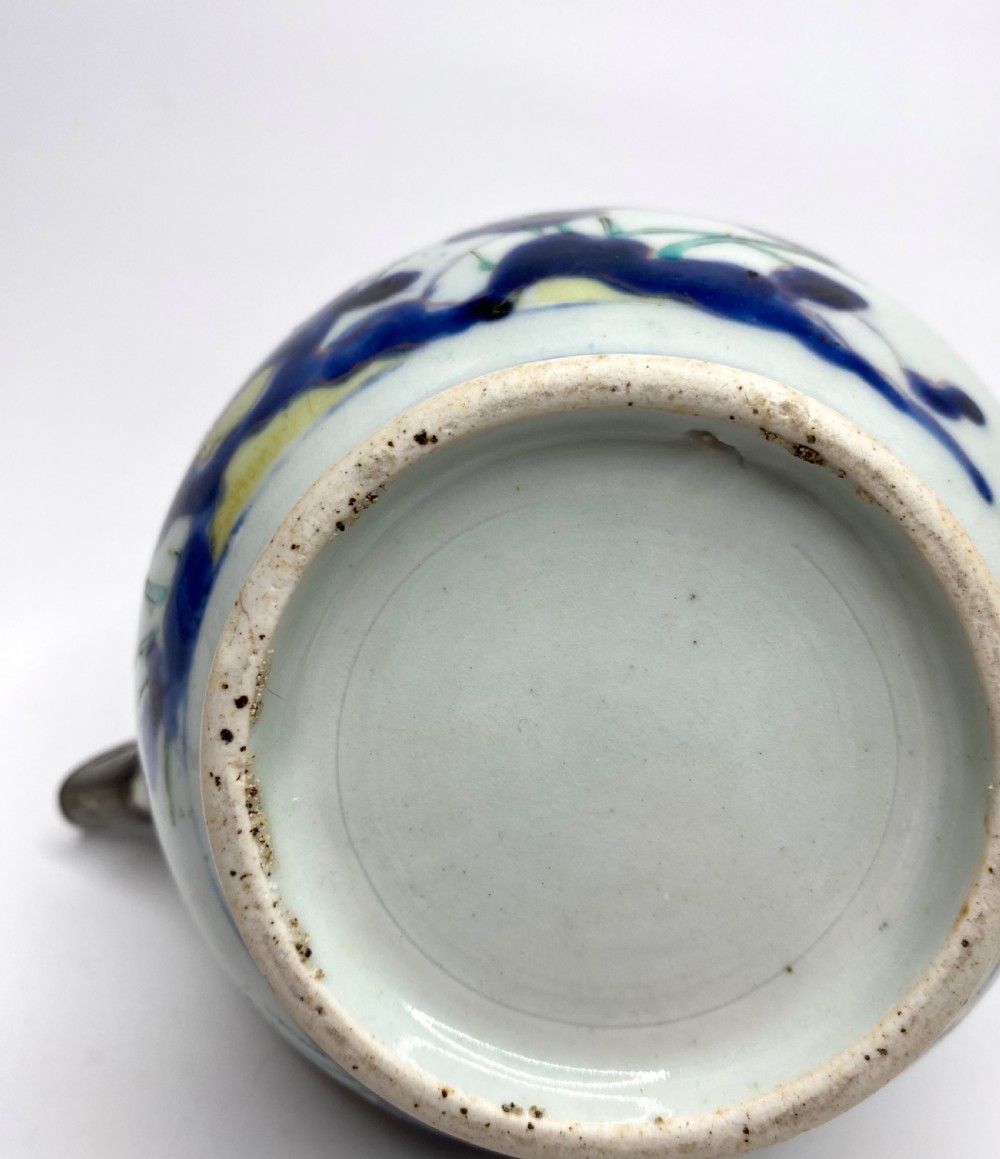
Condition – Chips to spout, hence the silver mount. Small flat chip to underside of the cover. Typical minor wear to the enamels. Please see images for detail.

No restoration.

Date of Manufacture

Philip Carrol Antiques has dated this Japanese Imari Sake Ewer to the 17th Century.

Independent Date Guide ID 08472801
Dealer's Item Date17th Century
Sellingantiques Date17th Century
Sellingantiques agingItem 305-350 years old
ResultsDates match
Why Sellingantiques dated this piece to THE 17TH CENTURY:
Unglazed foot rim with kiln grit: typical Arita firing methods of the period.
Bluish-tinted glaze with pinholes: typical of Edo-period porcelain paste.
Dutch silver spout mount: contemporary European fitting protecting the porcelain spout.
Iridescent underglaze cobalt bosses: natural mineral cobalt behavior under glaze.
Soft wear to the overglaze enamels: normal gentle handling over centuries.

This Independent Date Guide was compiled by Sellingantiques using its own proprietary system. It works only from the photographs shown on this page and is never told the date the dealer has declared. It is a guide, not a guarantee of age, and occasional errors can occur.
Physical Dimensions
Height
18cm (7.09")
Width
15.5cm (6.10")
Depth
11.5cm (4.53")
Reference Numbers
Sellingantiques Reference
SA1067543
Description
Imari sake ewer and cover, Arita, Japan, c. 1700, Edo Period. The globular ewer, with an unusual continuous band of circular moulded bosses, and vibrantly painted with flowering plants growing around rocks, in typical Imari style, with the addition of yellow enamel.
“
The stub spout, and overhead handle, painted with iron red stylised scroll, and gilt flower heads, attached at the body with applied chrysanthemum terminals, in underglaze cobalt blue.
Philip Carrol Antiques
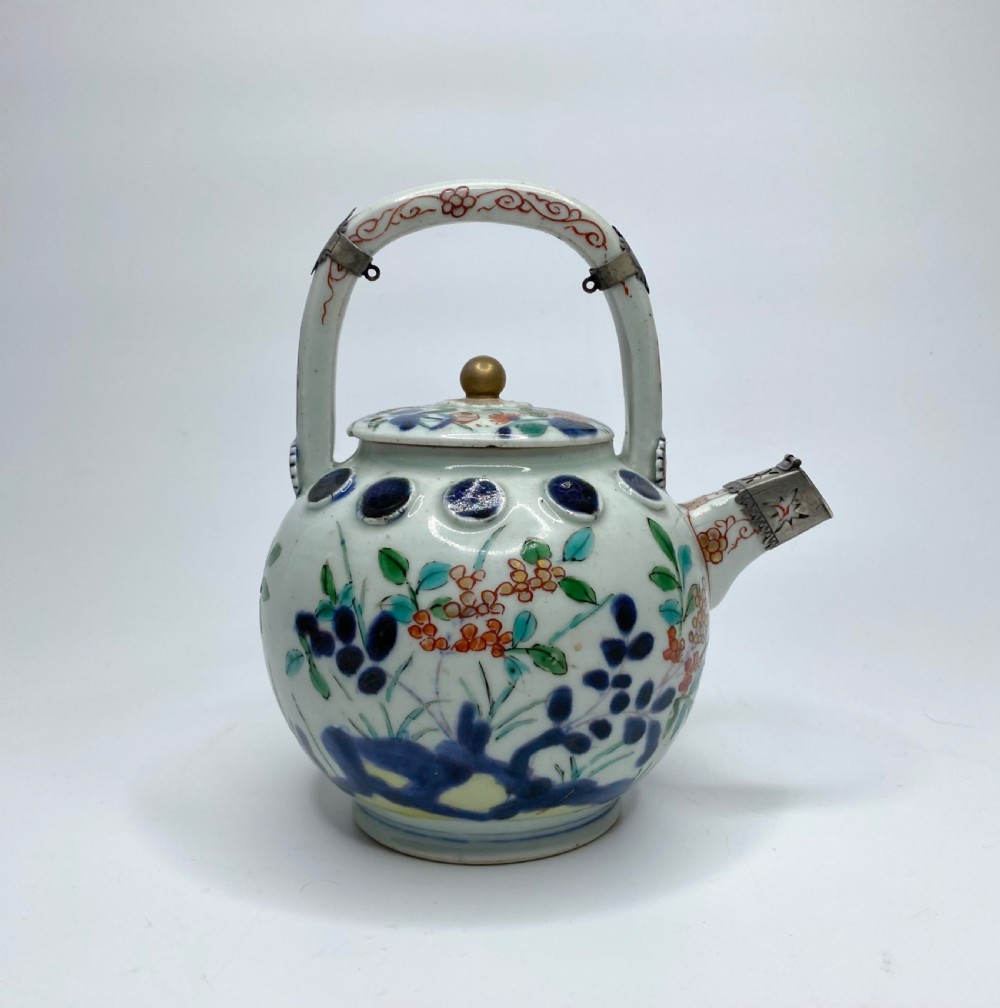
fig 1. An Edo-period Japanese Imari porcelain sake ewer featuring polychrome floral enamel patterns, an overhead handle, and metal mounts.
fig 1. Imari Sake Ewer, Arita, Japan, C. 1700.

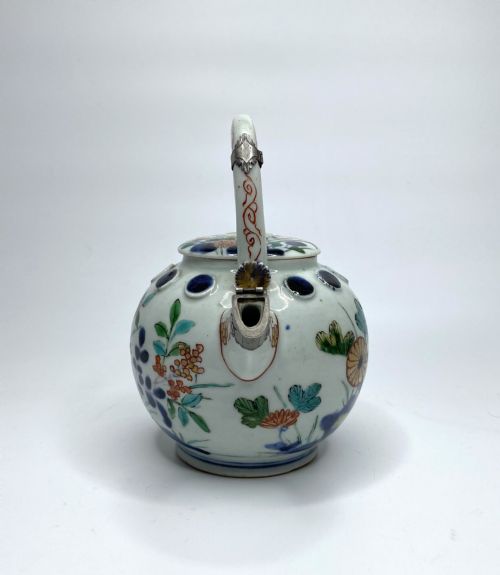
Having the original circular cover, similarly decorated, and having a gilt bud finial emerging above chrysanthemum moulding.

The spout, and handle having Dutch silver mounts, applied in the early 18th Century.
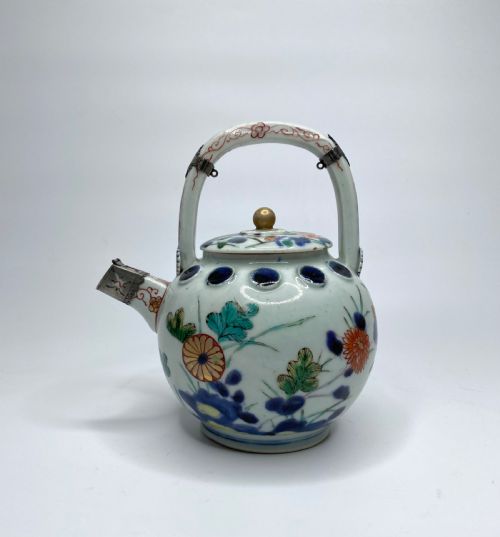
fig 2. An Edo-period Japanese Imari porcelain sake ewer featuring polychrome floral enamel patterns, an overhead handle, and metal mounts.
fig 2. Imari Sake Ewer, Arita, Japan, C. 1700.

Height – 18 cm, 7 1/8”.

Width (Spout to body) – 15.5 cm, 6 1/8”.

Depth – 11.5 cm, 4 1/2”.

Condition – Chips to spout, hence the silver mount. Small flat chip to underside of the cover. Typical minor wear to the enamels. Please see images for detail.

No restoration.

Date of Manufacture

Philip Carrol Antiques has dated this Japanese Imari Sake Ewer to the 17th Century.

Independent Date Report ID 08472801
Dealer's Item Date17th Century
Sellingantiques dating17th Century
Sellingantiques agingItem 305-350 years old
ResultsDates match
Why Sellingantiques dated this piece to the 17th Century:
Unglazed foot rim with kiln grit: typical Arita firing methods of the period.
Bluish-tinted glaze with pinholes: typical of Edo-period porcelain paste.
Dutch silver spout mount: contemporary European fitting protecting the porcelain spout.
Iridescent underglaze cobalt bosses: natural mineral cobalt behavior under glaze.
Soft wear to the overglaze enamels: normal gentle handling over centuries.

This is an independent date report produced by Sellingantiques using its own proprietary system. The process uses the photographs shown on this page. The system is never told the date the dealer has declared. This report shows that the two dates corroborate.

Height
18cm (7.09")
Width
15.5cm (6.10")
Depth
11.5cm (4.53")
Reference Numbers
Sellingantiques Ref
SA1067543
Philip Carrol Antiques
Sellingantiques verified Since Dec 2017

Philip carrol antiques was established in 1983

Dealer Profile

You can view the stock and full dealer information on the Philip Carrol Antiques Profile Page

Trade Associations

Philip Carrol Antiques is a registered member of BADA 
PDF SHARE
SAVE
An Edo-period Japanese Imari porcelain sake ewer featuring polychrome floral enamel patterns, an overhead handle, and metal mounts.
1 / 18
Archive I An Edo-period Japanese Imari porcelain sake ewer featuring polychrome floral enamel patterns, an overhead handle, and metal mounts.

Imari Sake Ewer, Arita, Japan, C. 1700.
Archive II An Edo-period Japanese Imari porcelain sake ewer featuring polychrome floral enamel patterns, an overhead handle, and metal mounts. View II
Archive III An Edo-period Japanese Imari porcelain sake ewer featuring polychrome floral enamel patterns, an overhead handle, and metal mounts. View III
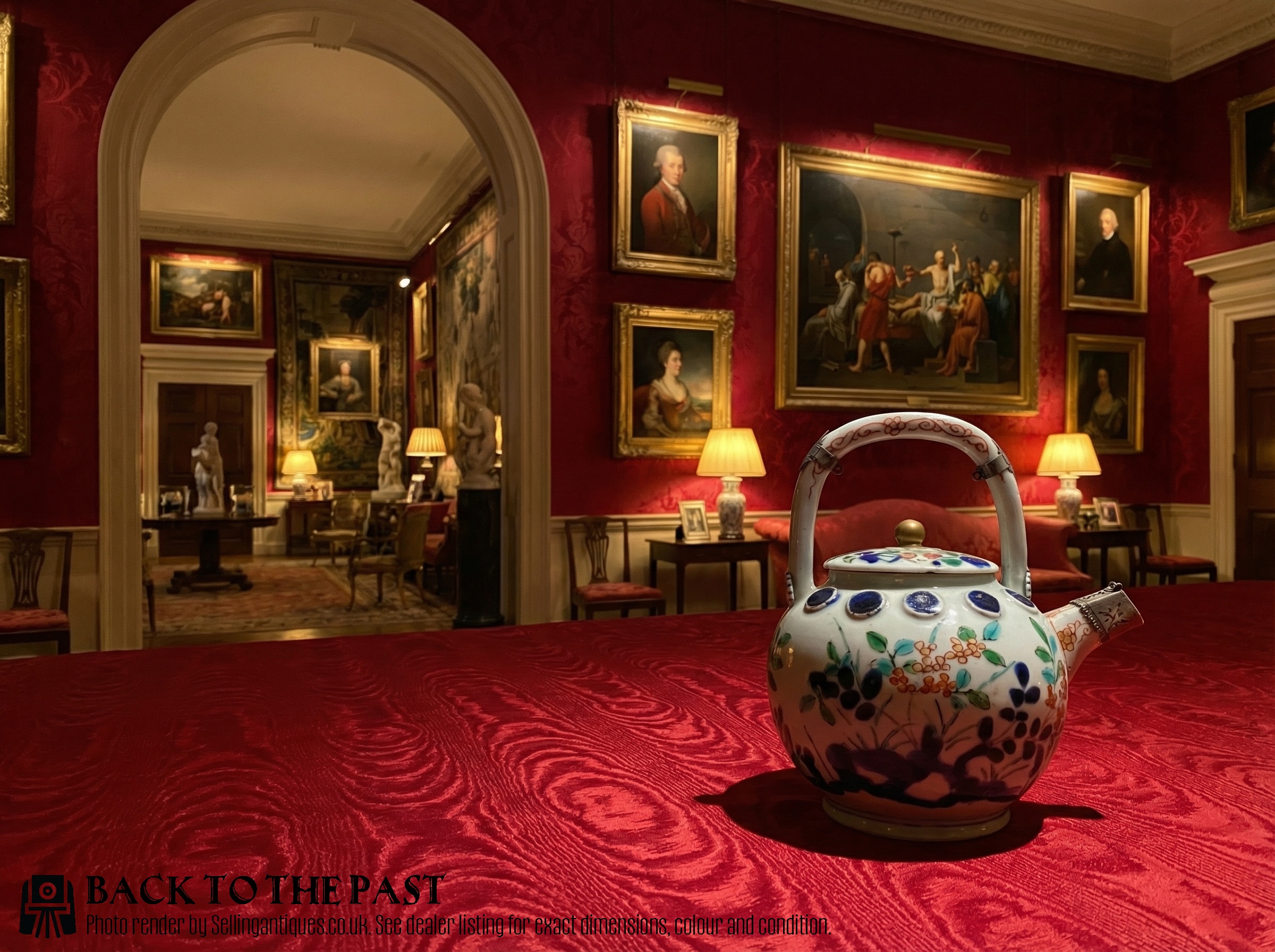
Archive IV Scale Reference for An Edo-period Japanese Imari porcelain sake ewer featuring polychrome floral enamel patterns, an overhead handle, and metal mounts.
Archive V An Edo-period Japanese Imari porcelain sake ewer featuring polychrome floral enamel patterns, an overhead handle, and metal mounts. View V
Archive VI An Edo-period Japanese Imari porcelain sake ewer featuring polychrome floral enamel patterns, an overhead handle, and metal mounts. View VI
Archive VII An Edo-period Japanese Imari porcelain sake ewer featuring polychrome floral enamel patterns, an overhead handle, and metal mounts. View VII
Archive VIII An Edo-period Japanese Imari porcelain sake ewer featuring polychrome floral enamel patterns, an overhead handle, and metal mounts. View VIII
Archive IX An Edo-period Japanese Imari porcelain sake ewer featuring polychrome floral enamel patterns, an overhead handle, and metal mounts. View IX
Archive X An Edo-period Japanese Imari porcelain sake ewer featuring polychrome floral enamel patterns, an overhead handle, and metal mounts. View X
Archive XI An Edo-period Japanese Imari porcelain sake ewer featuring polychrome floral enamel patterns, an overhead handle, and metal mounts. View XI
Archive XII An Edo-period Japanese Imari porcelain sake ewer featuring polychrome floral enamel patterns, an overhead handle, and metal mounts. View XII
Archive XIII An Edo-period Japanese Imari porcelain sake ewer featuring polychrome floral enamel patterns, an overhead handle, and metal mounts. View XIII
Archive XIV An Edo-period Japanese Imari porcelain sake ewer featuring polychrome floral enamel patterns, an overhead handle, and metal mounts. View XIV
Archive XV An Edo-period Japanese Imari porcelain sake ewer featuring polychrome floral enamel patterns, an overhead handle, and metal mounts. View XV
Archive XVI An Edo-period Japanese Imari porcelain sake ewer featuring polychrome floral enamel patterns, an overhead handle, and metal mounts. View XVI
Archive XVII An Edo-period Japanese Imari porcelain sake ewer featuring polychrome floral enamel patterns, an overhead handle, and metal mounts. View XVII
Archive XVIII An Edo-period Japanese Imari porcelain sake ewer featuring polychrome floral enamel patterns, an overhead handle, and metal mounts. View XVIII
Enlarged Archival View
Telephone 07860 525 579
Location
North Yorkshire
United Kingdom
Verified Since Dec 2017
Items For Sale 96
Items Sold 1,161
Philip Carrol Antiques
Verified Since Dec 2017
View Dealer Info
Location: North Yorkshire, United Kingdom
Verified
Dec 2017
For Sale
96
Sold
1,161
An Edo-period Japanese Imari porcelain sake ewer featuring polychrome floral enamel patterns, an overhead handle, and metal mounts.
Imari sake ewer, Arita, Japan, c. 1700.
Ref: SA1067543
An Edo-period Japanese Imari porcelain sake ewer featuring polychrome floral enamel patterns, an overhead handle, and metal mounts.
Detail View 1
Detail View 2
Detail View 3
Detail View 4
Detail View 5
Detail View 6
Detail View 7
Detail View 8
Detail View 9
Detail View 10
Detail View 11
Detail View 12
Detail View 13
Detail View 14
Detail View 15
Detail View 16
Scale Reference
Archival Detail
Every single antique dealer on our platform is individually approved by our internal team. We verify their professional trade history, ethical standards, and photographic quality to ensure a secure, high-standard buying environment. Upon joining, every dealer agrees to a strict 9-point code of conduct. While issues can occasionally arise, our dealers typically resolve them swiftly and directly with the buyer. In fact, since our founding in 2002, Sellingantiques has only had to step in to help resolve an issue on roughly five occasions—a true testament to the quality of our dealers and their dedication to your happiness.
Our dealers are highly experienced in packing and shipping fragile, high-value antiques. Because you are in direct contact with the dealer, you will be able to easily go through all available shipping and insurance options together to ensure your item arrives safely.
Antiques are the ultimate green purchase. By choosing historical pieces over newly manufactured goods, you completely eliminate the carbon footprint of modern mass production while preserving exceptional, timeless craftsmanship.
Written by Sellingantiques from the dealer’s photographs and listing
  • ObjectEwers & Pitchers
  • Period17th century
  • StyleEdo Period / Imari
  • MaterialPorcelain, Enamel, Metal
  • ColourWhite, Blue, Red
  • MotifsOverhead loop handle, Floral enamel decoration, Underglaze blue medallions, Metal spout mount
  • SizeH 18 cm (7 in) x W 15.5 cm (6 in) x D 11.5 cm (5 in)

This seventeenth-century Japanese Imari porcelain sake ewer originates from Arita and dates to around 1700 during the Edo Period. The globular white body displays an unusual continuous band of circular moulded bosses painted in underglaze cobalt blue, accompanied by vibrant floral enamel decoration in red, blue, yellow and green depicting plants growing around rocks. An overhead loop handle and a stub spout feature iron red stylised scroll work and gilt flower heads, complemented by early eighteenth-century Dutch silver mounts on the spout and handle junctions, alongside a circular cover topped with a gilt bud finial. The vessel measures 18 cm high, 15.5 cm wide and 11.5 cm deep. Positioned on a sideboard top, this piece serves as a striking decorative display item in a dining room, living area or hallway. It integrates easily into traditional or eclectic interior schemes as a standalone display object or part of an Asian porcelain collection. The compact proportions allow placement on narrow console tables, display shelves or within glass-fronted cabinets. Proper placement involves positioning the ewer away from high-traffic zones to protect the porcelain body, surface enamels and historic silver mounts.

Imari porcelain refers to Japanese export ware produced in the Arita area and shipped via the port of Imari, characterised by underglaze cobalt blue paired with overglaze enamels such as iron-red, green, and gold.

These vessels were crafted from fine kaolin porcelain clay, formed on a wheel, painted with underglaze cobalt blue, fired at high temperatures, and decorated with overglaze enamels before a secondary firing.

Authentic period pieces exhibit characteristic spur marks on the base, minor glaze irregularities, hand-painted variations in the cobalt and enamel work, and appropriate surface wear on unglazed foot rims.

Place the vessel on a minimalist sideboard, mantelpiece, or within a glass display cabinet where its polychrome decoration and distinct silhouette can serve as a central focus.

Clean gently using a soft, dry cloth or warm distilled water, avoiding chemical cleansers, abrasives, or prolonged immersion, as harsh treatments can damage delicate overglaze enamels and metal fittings.
items
Add keywords to the filter
Price
£100
£250000
Era
Period
Style
Material
Origin
Stock Location
Recently Added
Online Payments
Categories