


A 2026 Guide by Sellingantiques
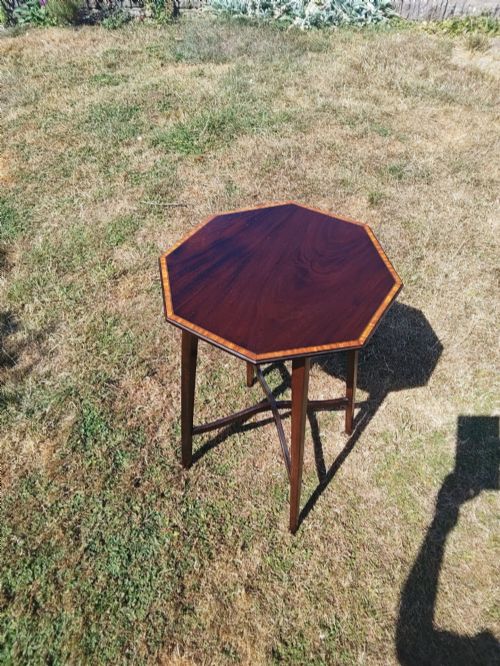
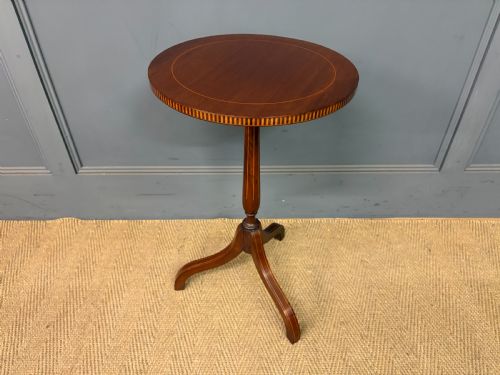
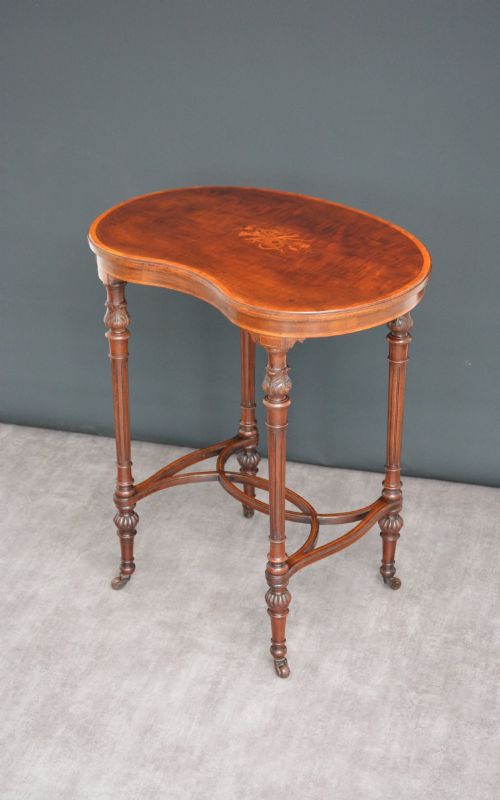
Inlaid Mahogany Sutherland Table, Edwardian
Priced at £445 from Andros Antiques
Antique inlaid tables emerged as a clear status symbol during the sixteenth century across Europe.
Heavy reliance on Italian craftsmen travelling north to work for wealthy patrons.
Look at how maritime trade routes expanded the variety of exotic materials available for these tabletops.
English cabinet-makers embraced complex floral marquetry following the Restoration in 1660.
André-Charles Boulle pioneered a technique combining brass and tortoiseshell in late seventeenth-century France.
Consider the workshop of Thomas Chippendale, which produced notable neoclassical examples with complex marquetry during the 1770s.
Regional craftsmen didn't always have exotic imports, copying metropolitan designs using native timbers instead.
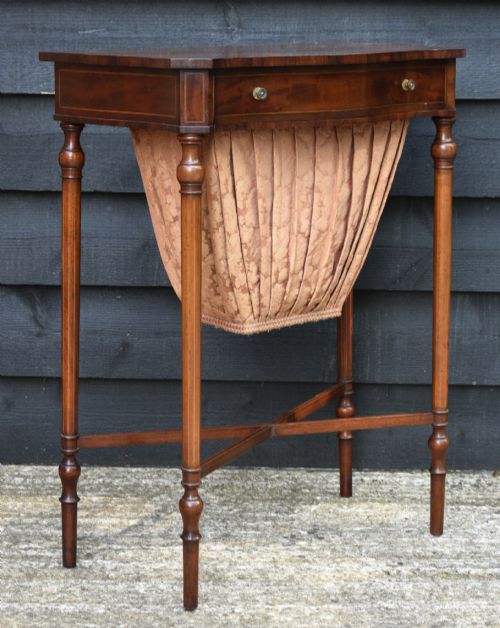
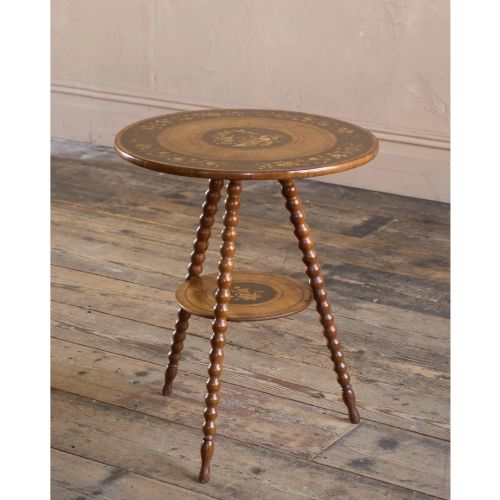
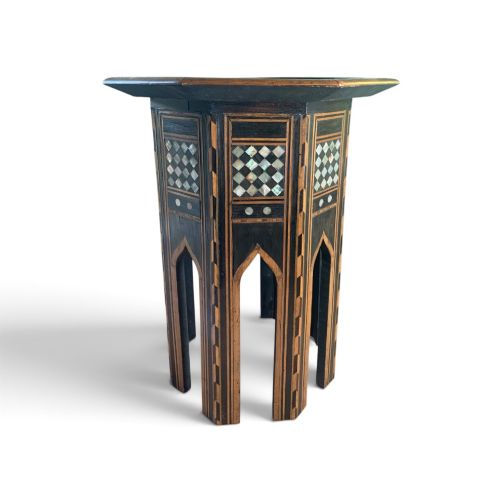
Very Pretty Inlaid Mahogany Work Table.
, 1800
Priced at £575 from Stalham Antique Gallery
The 2026 retail price guide for Antique Inlaid Tables is drawn from a proprietary archive of over 1.1 million retail prices indexed by Sellingantiques since 2003. This guide relies exclusively on their own internal data; no external sources or auction records are used.
Analysing nearly 25 years of UK antique market history alongside current retail values, the data indicates that typical UK retail prices for Antique Inlaid Tables range between £500 and £3,300. Entry-level prices generally fall under £500 and premium examples upwards of £3,300.
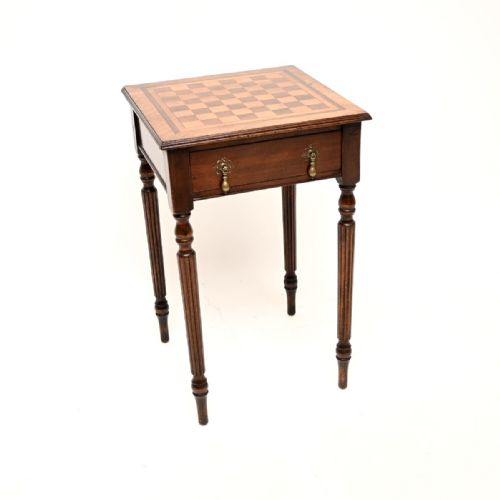
The main decorative focus rests on the flat horizontal surface.
Banding around the edges to frame the central motif and protect the vulnerable veneer ends.
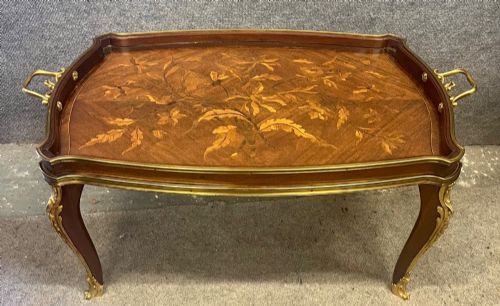
Notice the geometric or floral patterns forming the primary centrepiece.
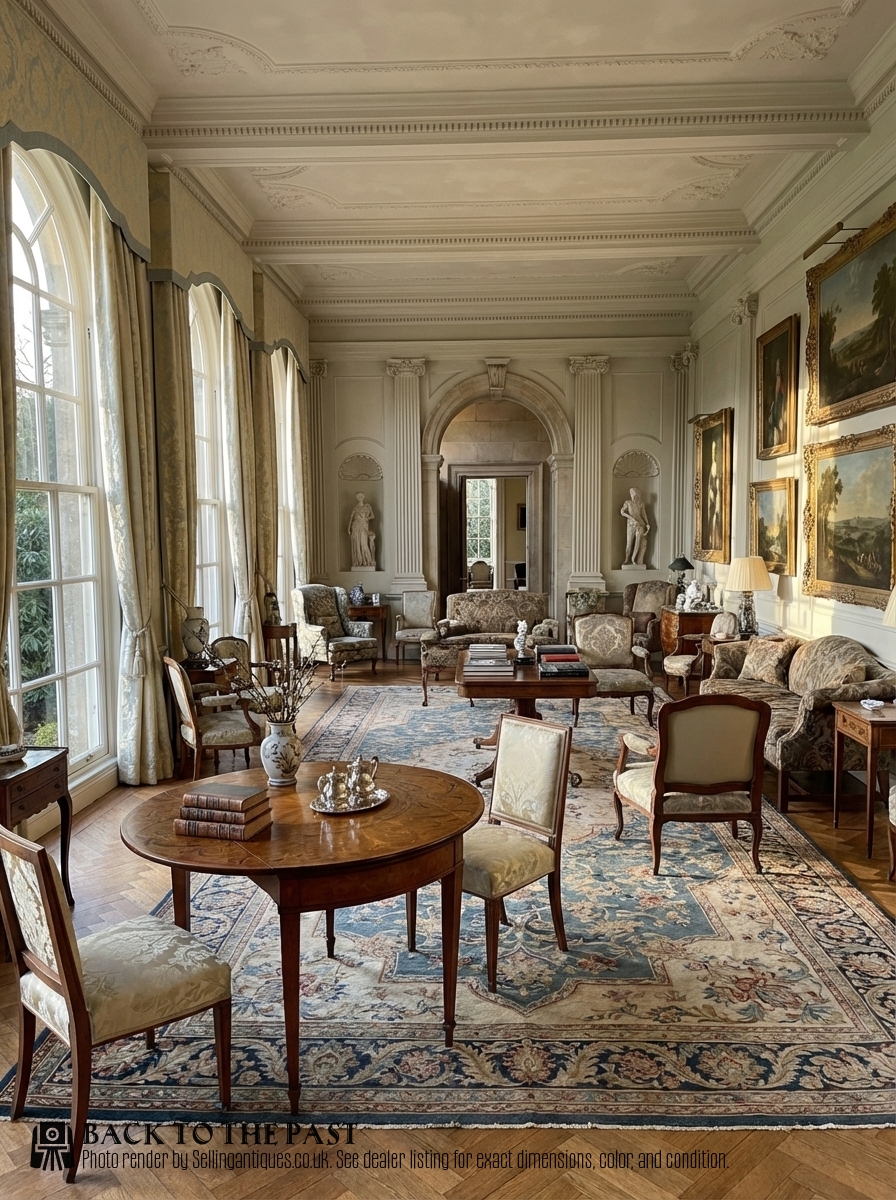
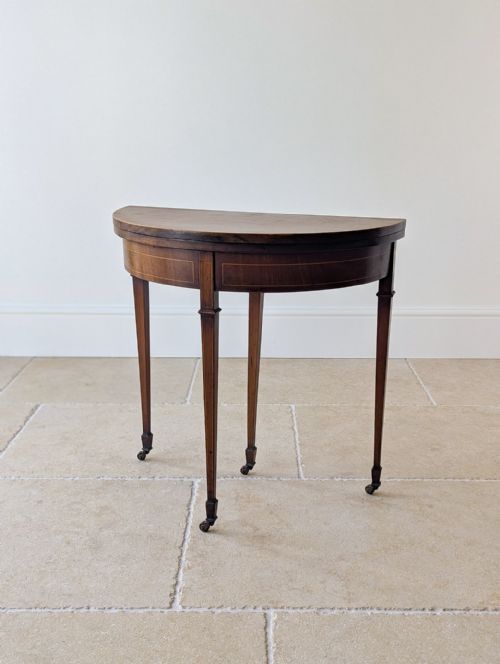
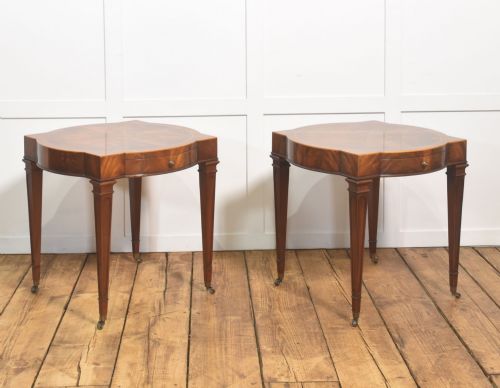
Fine Inlaid Mahogany Pembroke Table, 1900
Priced at £1,480 from Ropeworks Antiques
Early examples relied on chopping individual shapes into a solid ground using basic chisels.
The introduction of the marquetry donkey, a specialised cutting stool, allowing multiple layers of veneer to be cut simultaneously.
Observe the sand-shading technique where craftsmen dipped wooden pieces into hot sand to create a three-dimensional effect.
"Craftsmen often used oysters cut from small branches of walnut to create repeating circular patterns."
"Look closely at brass elements, which were sometimes finely engraved with details after being set into the wood."
"The use of green-dyed harewood, achieved by soaking sycamore in iron oxide and gall nuts."
Based on almost 25 years of Sellingantiques UK antique market data, Antique Inlaid Tables appeared 12408 times (out of 1,100,000 antiques) which gives it a rarity score of 8/100.
This score measures scarcity within the Sellingantiques archive only and is not a survey of the entire antiques market, so these statistics may not be indicative of the general availability of Antique Inlaid Tables elsewhere.
Dust the surface gently with a dry, soft cloth. Avoid spray polishes, which often contain silicones that build up and cloud the finish over time.
If the piece requires more attention, apply a thin coat of good quality beeswax once or twice a year. Buff it off quickly to prevent a sticky residue forming on the veneer.
Always rub in the direction of the underlying wood grain where possible.
Cabinet-makers regularly patch missing sections of veneer. A skilled restorer will cut a new piece of matching timber and colour it to blend with the surrounding area.
They use reversible animal hide glue, exactly as the original makers did. This ensures the repair moves naturally with the timber and does not damage the adjacent antique surfaces.
Changes in humidity cause the solid carcase beneath to expand and contract. The thin decorative layer cannot move, resulting in split lines.
These fine cracks show natural movement over several centuries.
Wood shrinks naturally over time as it loses moisture, but brass does not. This difference means the metal elements eventually sit slightly proud of the timber ground.
It happens on almost all pieces mixing metal and wood. Sanding the brass flat would ruin the finish, so it is better left alone.
Please note: This Antique Inlaid Tables guide and its associated pricing data are provided for general informational purposes only. It does not constitute formal financial, investment, or appraisal advice and should not be relied upon as the sole basis for any commercial activity, purchasing, or sales decisions. Sellingantiques.co.uk accepts no liability for any actions taken in reliance on this information. Always consult with a qualified professional or independent appraiser.
