




A 2026 Guide by Sellingantiques
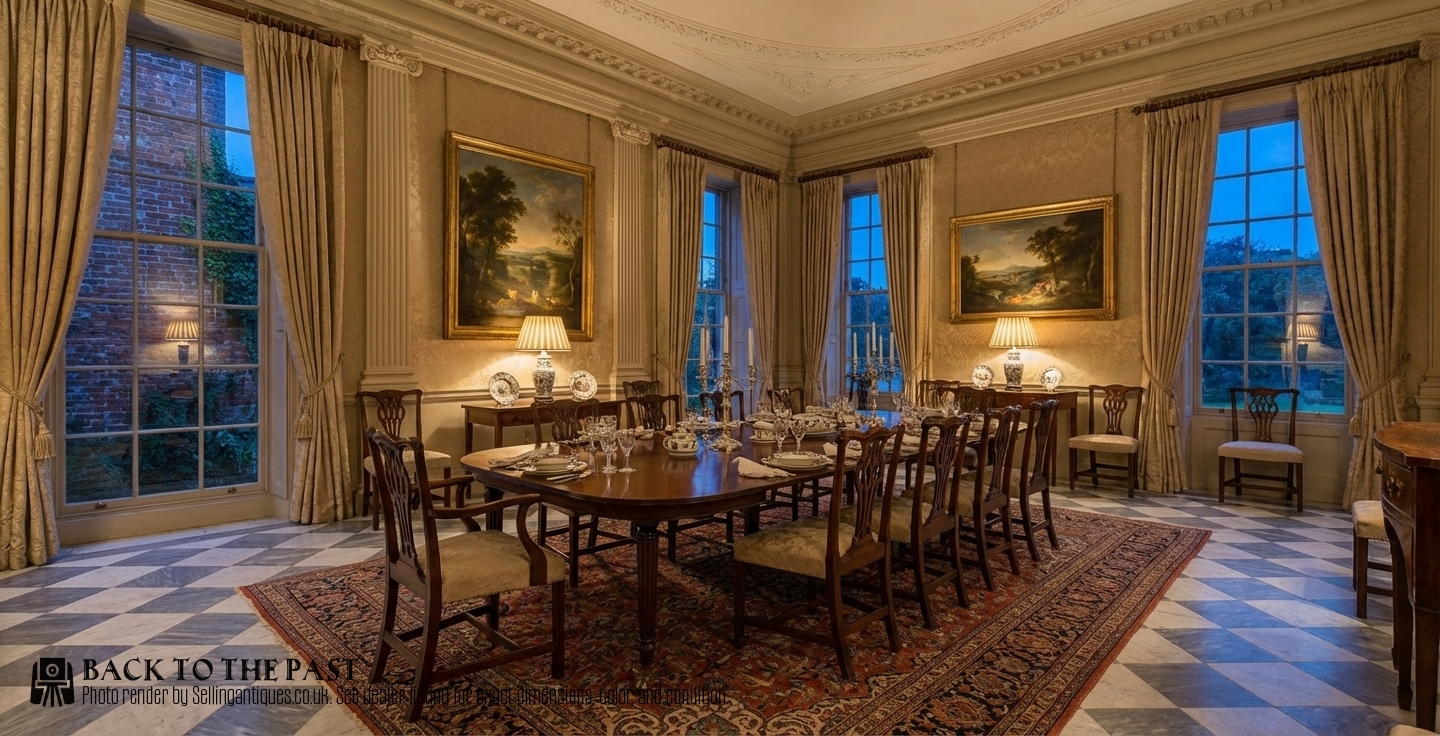
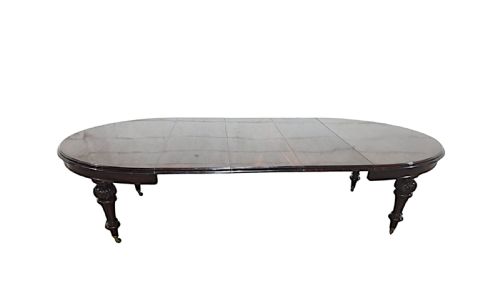
An ‘Imperial’ Action Mahogany Extending Dining Table Attributed to Gillows, 19th Century
Priced at £9,800 from Shackladys Antiques
Dining habits shifted in the late Georgian period, creating a need for flexible seating spaces. People started favouring a central table that stayed in the room instead of folding ones cleared away.
Antique extending tables solved the problem of tight dining rooms well. A modest circle for daily meals quickly became a long racetrack for dinner parties.
Look at the early patents from the 1800s. Engineers spent decades trying to perfect the sliding mechanism, resulting in several distinct mechanical approaches before the standard winding handle won out.
Joseph Fitter patented a successful screw mechanism in the nineteenth century. You often find his brass nameplate pinned directly to the winding gear under the top.
Gillows of Lancaster produced exceptional extending models from the late eighteenth century onwards. Their telescopic actions and precise cabinetwork set a standard the wider trade chased for decades.
Regional firms regularly bought in the metal mechanisms from specialists. They constructed the timber table around these bought-in parts, leaving their own stamps on the wood rather than the steel.
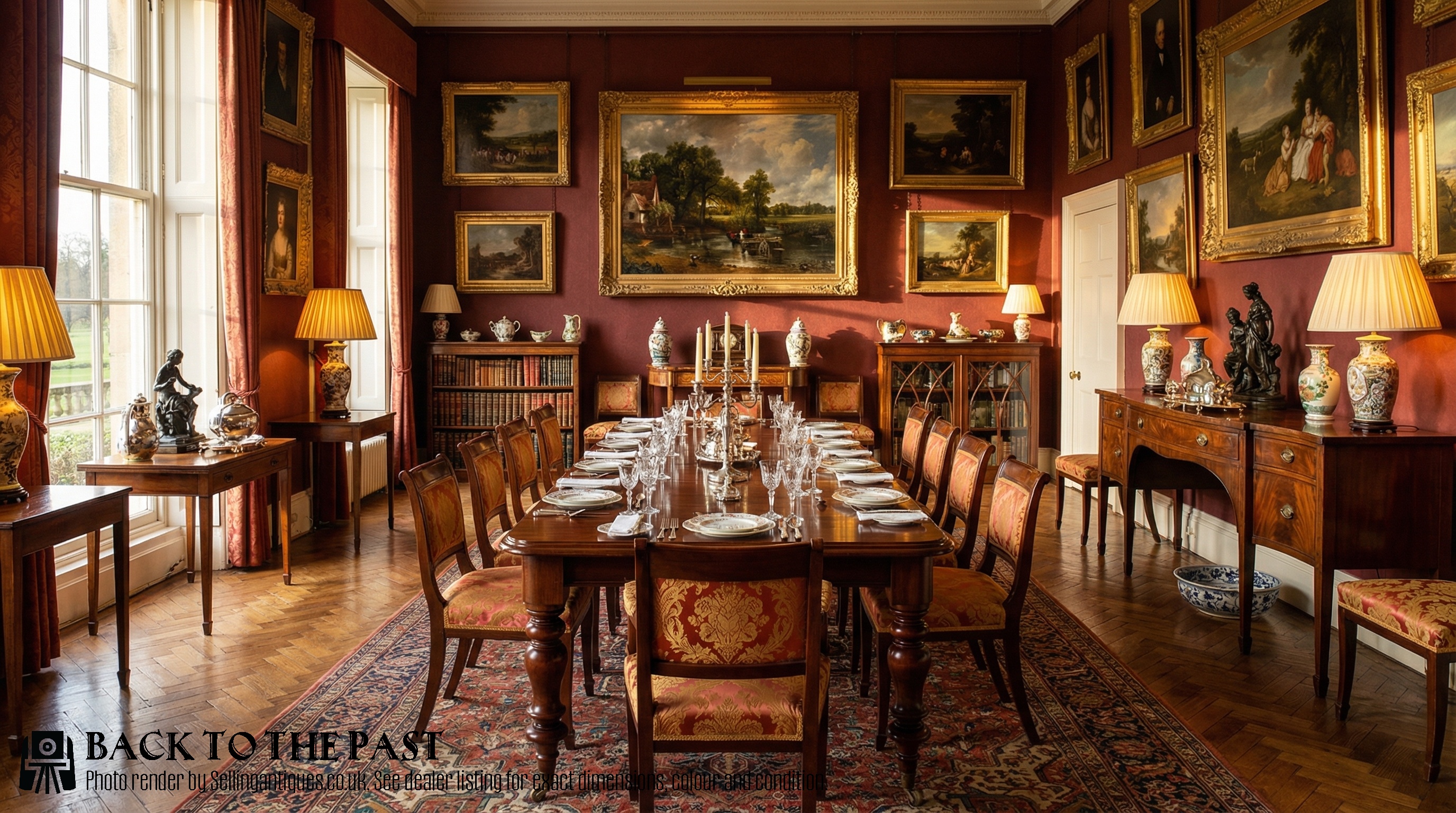
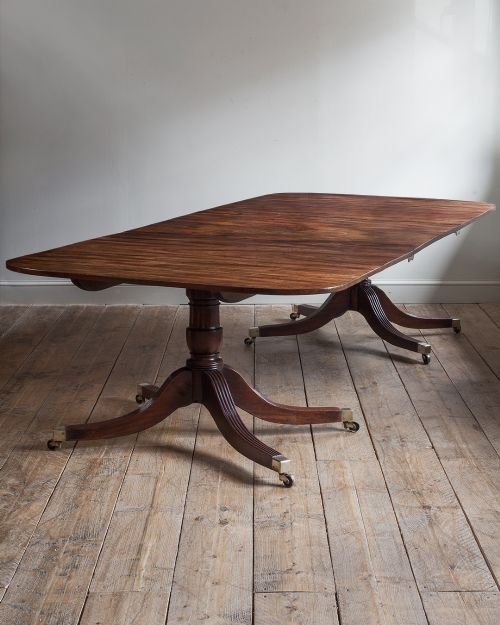
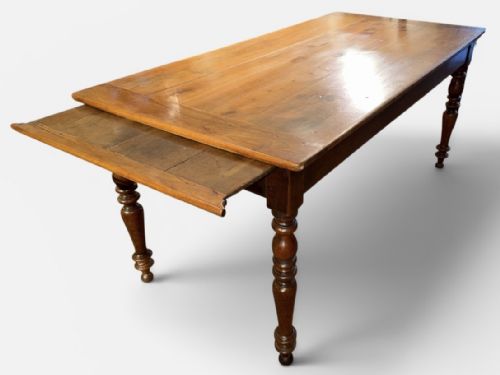
Victorian Mahogany 2 Leaf Extending Dining Table, 1860
Priced at £1,495 from Philip Hunt Antiques
The 2026 retail price guide for Antique Extending Tables is drawn from a proprietary archive of over 1.1 million retail prices indexed by Sellingantiques since 2003. This guide relies exclusively on their own internal data; no external sources or auction records are used.
Analysing nearly 25 years of UK antique market history alongside current retail values, the data indicates that typical UK retail prices for Antique Extending Tables range between £900 and £5,900. Entry-level prices generally fall under £900 and premium examples upwards of £5,900.
Removable leaves dictate the ultimate size of the surface. Most drop into place on locating dowels once the frame is pulled open.
Wind-out mechanisms operate via a crank handle inserted at one end. Turning this spins a long threaded steel rod that slowly pushes the table halves apart.
Centre legs sometimes drop down for support. When fully extended, the middle needs bracing to stop the whole structure bowing under the weight of plates and serving dishes.
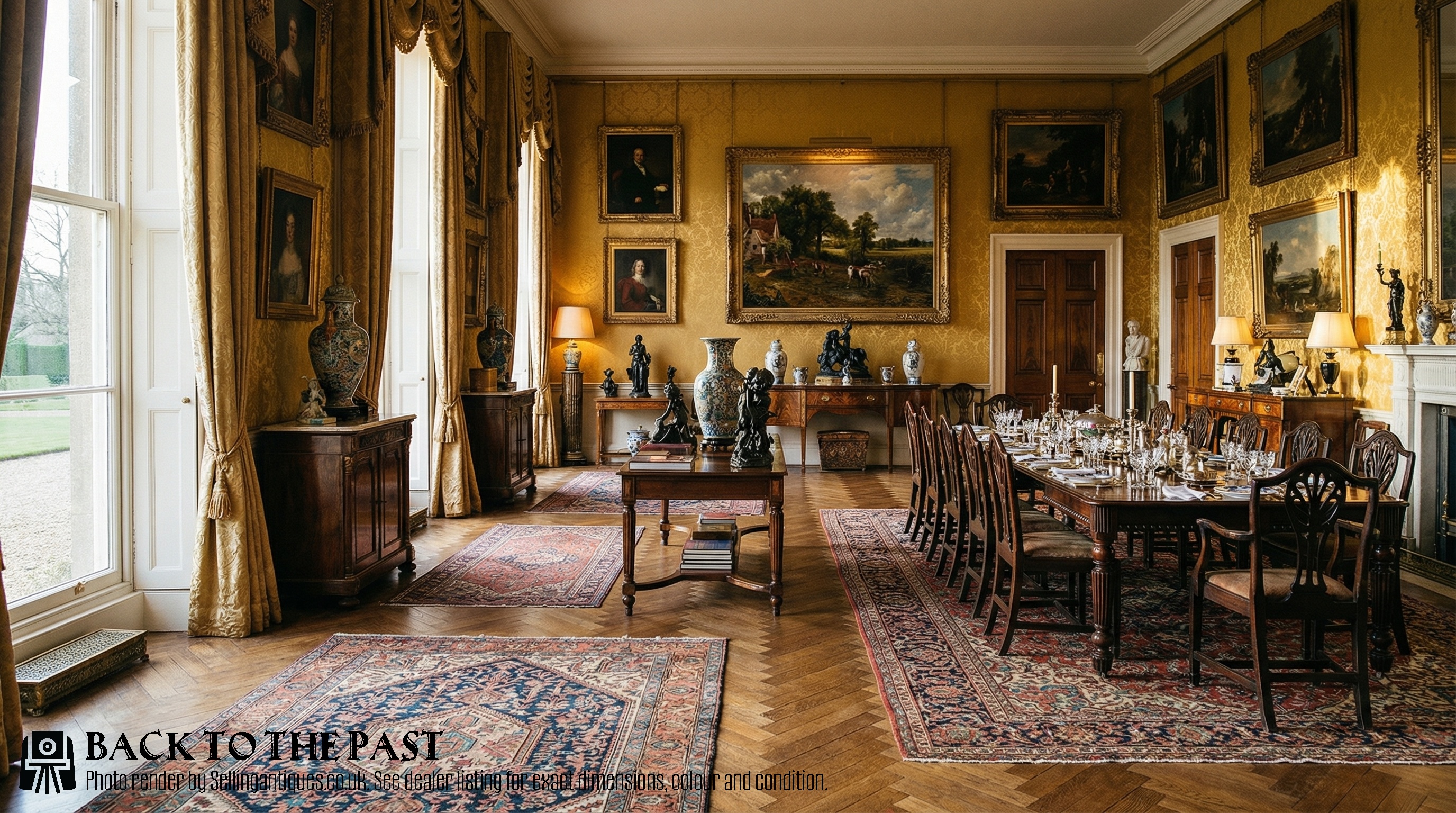
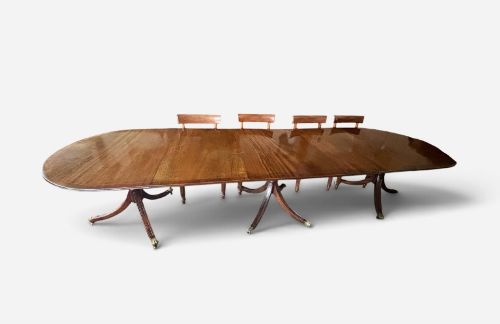
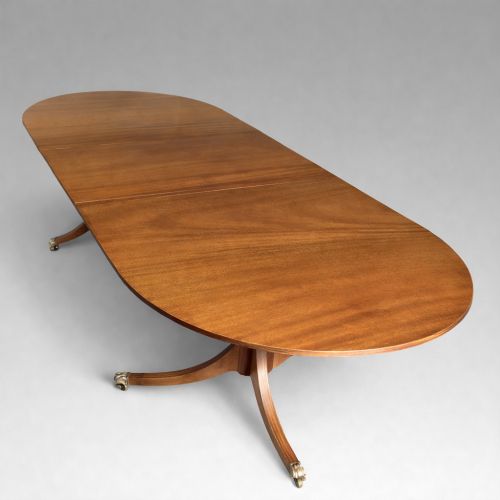
Late Regency Gillows Type Extending Dining Table 12 Ft, Regency
Priced at £2,800 from Country Homes Antiques Stirling
Early pull-out versions relied on friction-fit wooden runners. Joiners had to cut these tight enough to stay rigid but loose enough not to bind when the weather changed.
Notice the leg turning patterns on Victorian examples. Heavy baluster legs often feature deep fluting or reeding, giving a robust base to support heavy geared mechanisms.
Leaf storage was an ongoing puzzle. Cabinetmakers occasionally built internal racks to hide the spare boards, but mostly they were meant to be kept in a hallway or cupboard.
"Some mechanisms were engineered with a double-threaded screw. This clever gearing meant the table opened twice as fast with half the turns of the handle."
"Cabinetmakers sometimes matched the veneer patterns across the entire length. When fully assembled, the grain can flow seamlessly from one end right through the extra leaves."
"Original crank handles occasionally survive clipped underneath. Makers would build a custom bracket inside the frame so the winding key never got lost in a drawer."
Based on almost 25 years of Sellingantiques UK antique market data, Antique Extending Tables appeared 5551 times (out of 1,100,000 antiques) which gives it a rarity score of 33/100.
This score measures scarcity within the Sellingantiques archive only and is not a survey of the entire antiques market, so these statistics may not be indicative of the general availability of Antique Extending Tables elsewhere.
You usually have to find a spot elsewhere in the house. Some models have space under the main top, but most require the leaves to be kept in a cupboard or against a wall.
Keep them somewhere with a stable temperature. Putting them in a damp cellar or next to a hot radiator can warp the wood, making it hard to fit them back into the table later.
The threaded steel rod under the table might have gathered too much dust and old grease. Over the years, this mixture hardens in the grooves of the screw, acting like a brake.
Sometimes the wooden runners themselves have swollen due to changes in humidity. If the timber expands, it grips the sliding sections too tightly for the metal screw to push past.
Cleaning the old grease off the mechanism often solves it. A wire brush and some fresh lubricant will usually get things moving smoothly again.
It rarely works. The locating dowels and the width of the boards differ slightly from maker to maker.
Even if the physical fit is close, the timber grain and colour will clash. It is much better to have missing leaves custom made by a restorer to match your specific frame.
Gap issues usually stem from a winding mechanism that has reached the end of its travel or locating pins that are slightly out of alignment. If the pins are bent, they prevent the boards from sitting flush.
You can use small brass table forks to help pull recalcitrant leaves together. These are simple metal clips that screw into the underside of the leaf edges, hooking across the join to physically hold the gap shut.
Please note: This Antique Extending Tables guide and its associated pricing data are provided for general informational purposes only. It does not constitute formal financial, investment, or appraisal advice and should not be relied upon as the sole basis for any commercial activity, purchasing, or sales decisions. Sellingantiques.co.uk accepts no liability for any actions taken in reliance on this information. Always consult with a qualified professional or independent appraiser.
