



A 2026 Guide by Sellingantiques

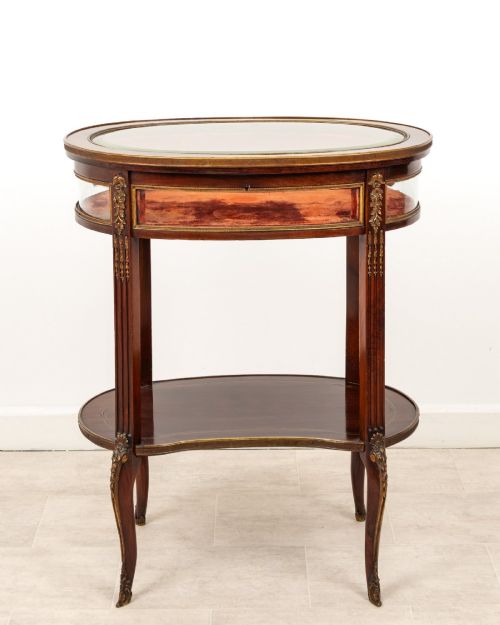
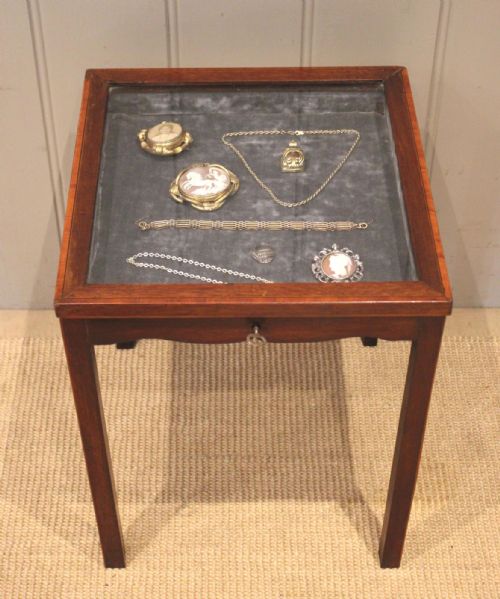
Antique 19th Century French Quality Brass Inlaid Mahogany Bijouterie Cabinet, 1880
Priced at £1,485 from London City Antiques
The earliest English examples emerged late in the eighteenth century. They were built for wealthy collectors needing a secure place to show off imported porcelain.
Look for a massive surge in production during the Edwardian period. The middle classes started collecting silver trinkets, creating vast demand for antique bijouterie tables.
French cabinetmakers called them vitrines. Their versions often featured heavy ormolu mounts alongside complex marquetry, distinct from the plainer British styles.
Edwards & Roberts supplied many antique bijouterie tables in late Victorian London. Their stamped pieces usually feature neat proportions and sharp inlay work.
The Parisian firm of François Linke made highly elaborate examples around the turn of the twentieth century. These rely on thick kingwood veneers and cast gilt-bronze mounts.
Provincial cabinetmakers produced thousands of unsigned tables. Without a trade label or stamp on the lock plate, most remain anonymous.

Mahogany Framed Bijouterie Table, 1900
Priced at £1,295 from Shackladys Antiques
The 2026 retail price guide for Antique Bijouterie Tables is drawn from a proprietary archive of over 1.1 million retail prices indexed by Sellingantiques since 2003. This guide relies exclusively on their own internal data; no external sources or auction records are used.
Analysing nearly 25 years of UK antique market history alongside current retail values, the data indicates that typical UK retail prices for Antique Bijouterie Tables range between £700 and £2,500. Entry-level prices generally fall under £700 and premium examples upwards of £2,500.
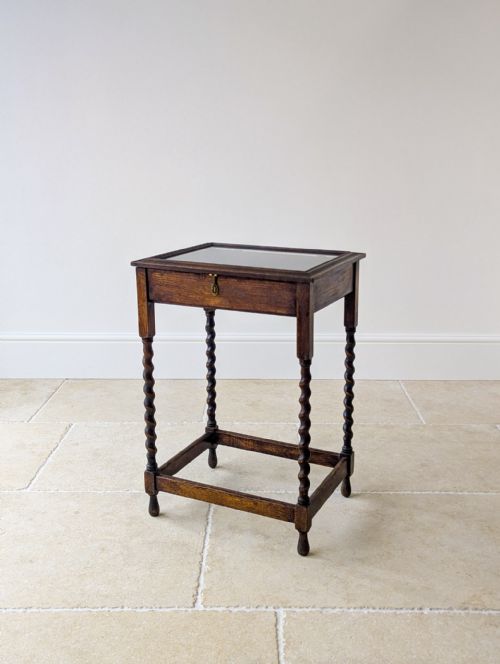
A hinged, glazed lid forms the top of every antique bijouterie table. You usually find a working brass lock to keep hands off the contents.
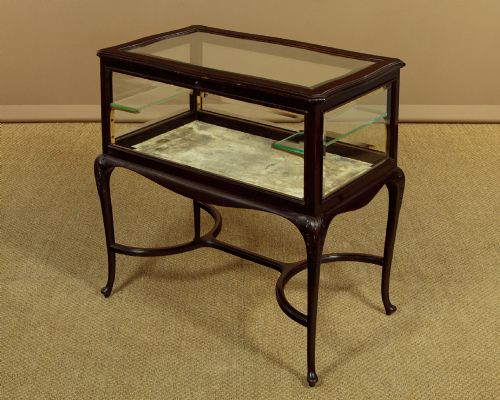
Glass panels form the sides on many models. This allows daylight into the display area from multiple angles to avoid dark shadows.
Check the legs. They often feature an undershelf or cross-stretcher to stop the tall, slender frame from wobbling under the weight of the glass top.
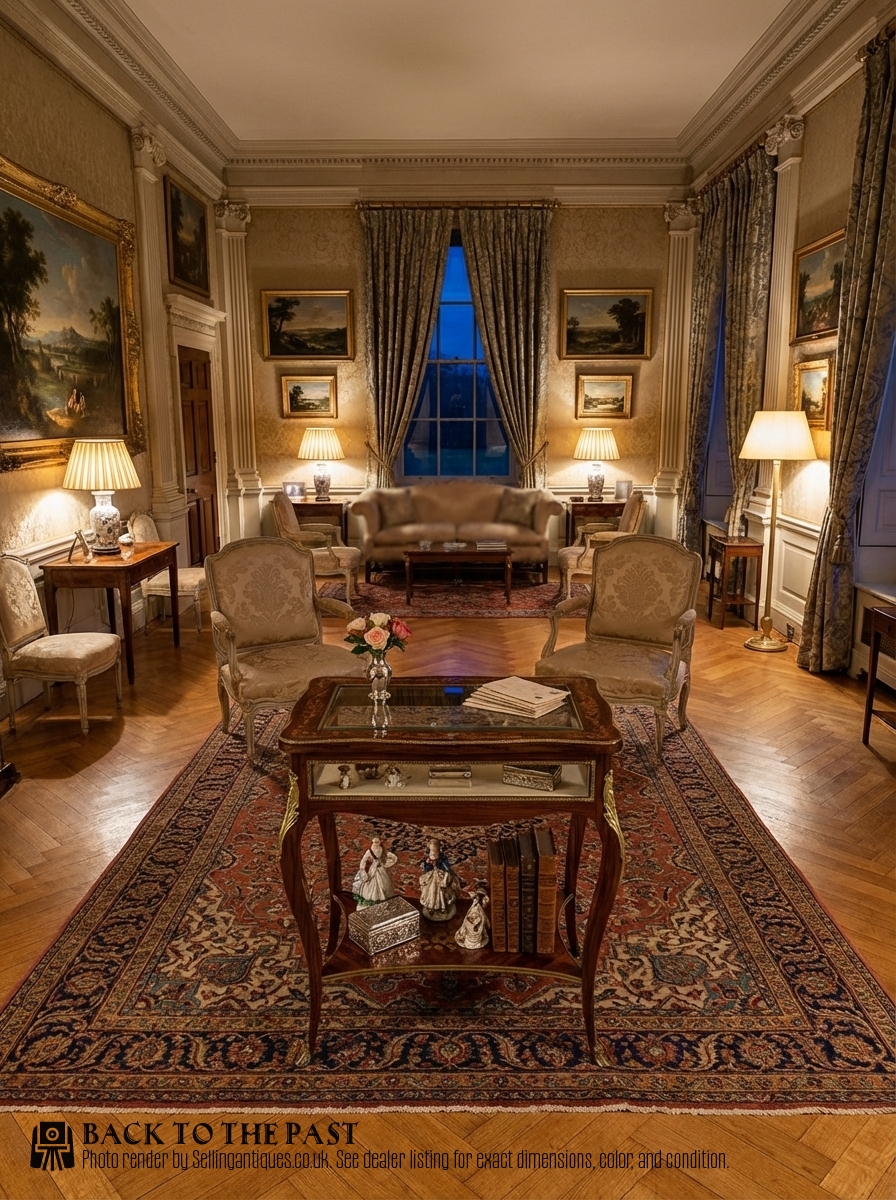
19th Century French Rosewood and Ormolu Bijouterie Show Case., 1890
Priced at £950 from James R Millington Antiques
Georgian tables rely on solid timber joints to support the heavy glass. Cabinetmakers used tight mortise and tenon joints to keep the slender frames rigid.
Notice how later mass-produced examples simplify the joinery. Victorian workshops often glued glass directly into rebated slots rather than fitting individual timber beads.
French-polished finishes became standard in the nineteenth century. The shellac sealed the veneer pores and gave these display tables a uniform gloss.
"Some designs feature a cleverly concealed side drawer. This pulled out from beneath the display well to hold cleaning cloths or a small key."
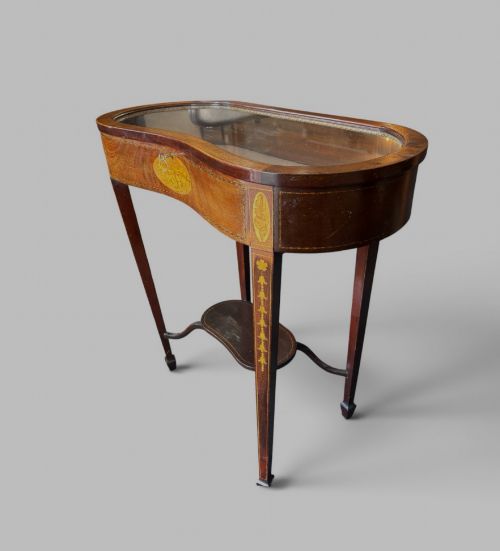
"The shape of the tables often dictated the shape of the room. Oval or kidney-shaped examples sat freely in the centre of a floor, meant to be walked around."
"Bevelled glass was an expensive upgrade. The angled cut around the perimeter of the top pane catches the light and frames the display area like a picture."
Based on almost 25 years of Sellingantiques UK antique market data, Antique Bijouterie Tables appeared 909 times (out of 1,100,000 antiques) which gives it a rarity score of 83/100.
This score measures scarcity within the Sellingantiques archive only and is not a survey of the entire antiques market, so these statistics may not be indicative of the general availability of Antique Bijouterie Tables elsewhere.
You need to go gently. A soft bristle brush helps lift loose dust out of the velvet corners. Follow this with a low-power vacuum attachment held an inch above the fabric.
Avoid liquid cleaners or damp cloths. Old silk velvet marks easily and the water can dissolve the early animal hide glue holding the fabric to the baseboard.
Replacing the interior is a standard upholstery job. The original lining sits on a thin card or a pine board tacked into the well. You pry this board up gently to release it.
Cutting the new fabric requires care. The new velvet must be glued tight to the board and folded flat at the edges so the panel drops cleanly back into the carcase.
Most people leave original faded linings alone. The pale colour shows the age of the piece.
Yes, but the process takes time. Curved panels require a glazier to slump modern glass over a custom mould inside a kiln to match the radius of your table.
Flat side glass is a fast, standard replacement. Curved glass is a specialist job.
The tall legs on these tables are prone to movement on thick carpets. They were originally designed for flat wooden floors or tight rugs where the small feet could sit square.
The open lid shifts the centre of gravity backwards. You counter this by making sure the back legs sit slightly lower than the front legs. A firm pad under the front feet levels the frame and stops the tilt.
Please note: This Antique Bijouterie Tables guide and its associated pricing data are provided for general informational purposes only. It does not constitute formal financial, investment, or appraisal advice and should not be relied upon as the sole basis for any commercial activity, purchasing, or sales decisions. Sellingantiques.co.uk accepts no liability for any actions taken in reliance on this information. Always consult with a qualified professional or independent appraiser.
