
A 2026 Guide by Sellingantiques
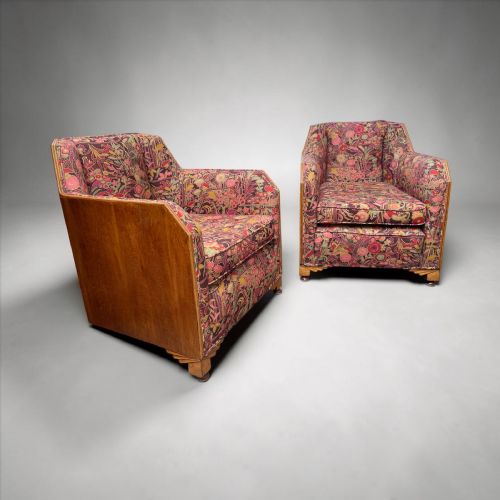
Victorian Button-back Upholstered Tub Armchair, Victorian
Priced at £650 from Quiet Street Antiques of Bath
Early examples were scarce. Most households only had one, kept specifically for the master of the house to show status.
During the seventeenth century, seating became slightly more democratic. Sets of dining chairs began to feature two antique armchairs for the ends of the table.
Look at eighteenth-century portraits. You will often see the sitter positioned in a low-backed armchair designed to hold wide, structured clothing.
Victorian furniture makers expanded the form into heavy, upholstered shapes. Coil springs changed how seats were constructed.
Regional variations exist across the country. Vernacular spindle-backed designs remained popular in rural areas long after urban tastes moved on.
Thomas Chippendale supplied high-quality seating to aristocratic houses. His published pattern book heavily influenced armchair designs throughout the provincial trade.
Gillows of Lancaster stamped a portion of their output. They produced distinct mahogany library chairs with caned seats and backs during the early nineteenth century.
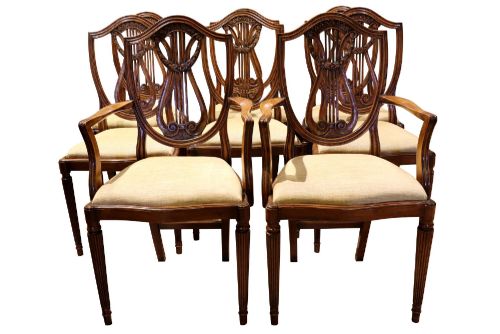
George Hepplewhite is associated with shield-back designs. Though few documented pieces survive from his own workshop, his published guides dictated seating fashions for decades.

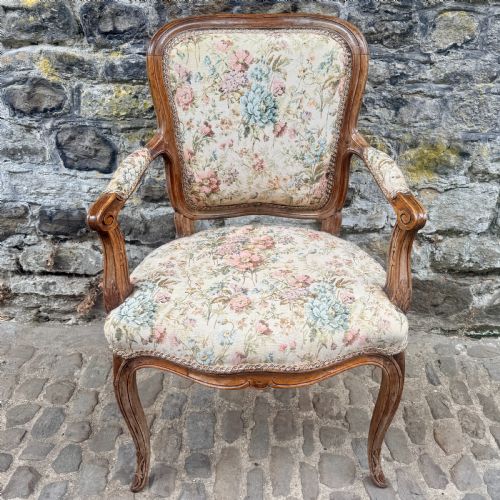
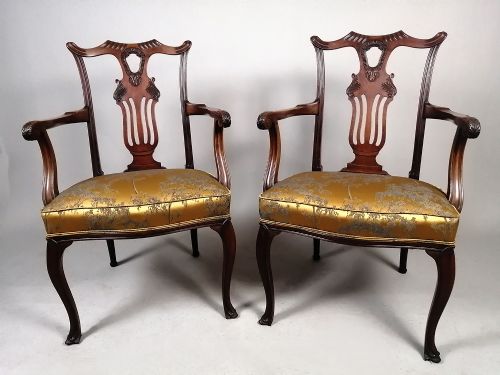
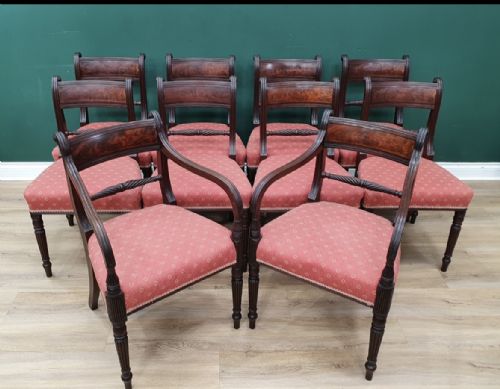
Pair of Ladder Back Armchairs, 1900
Priced at £395 from Brookside Antiques
The 2026 retail price guide for Antique Armchairs is drawn from a proprietary archive of over 1.1 million retail prices indexed by Sellingantiques since 2003. This guide relies exclusively on their own internal data; no external sources or auction records are used.
Analysing nearly 25 years of UK antique market history alongside current retail values, the data indicates that typical UK retail prices for Antique Armchairs range between £500 and £2,800. Entry-level prices generally fall under £500 and premium examples upwards of £2,800.
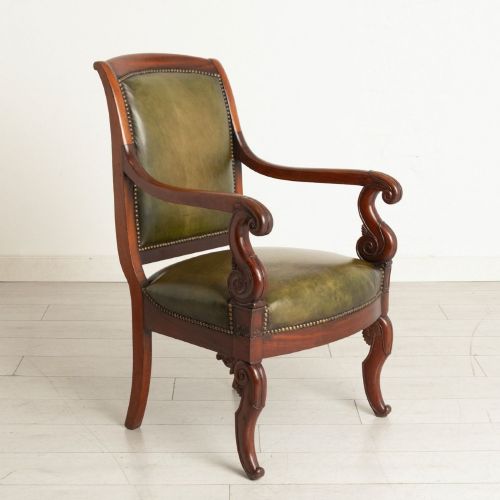
The arms themselves are the defining trait. They often terminate in scrolled knuckles, sometimes carved with animal motifs like eagle heads.
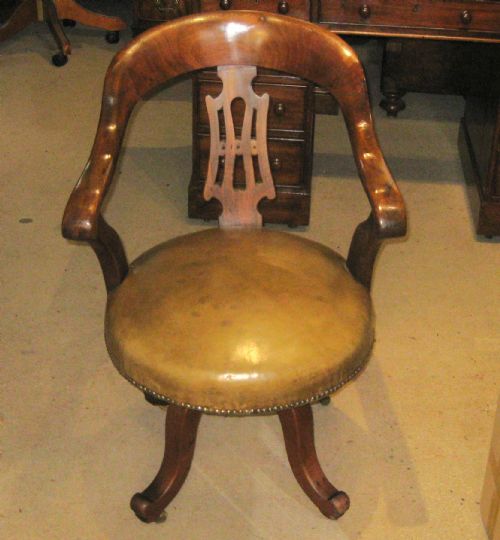
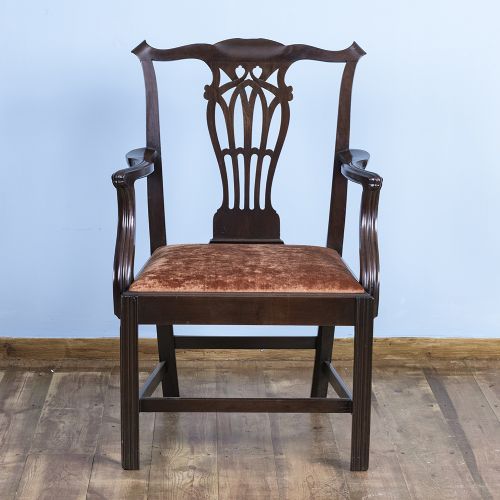
Vertical splats running down the middle of the back. These are either left as solid vase shapes or pierced with complex interlacing patterns.
Legs range from straight square sections with stretchers to curved cabriole forms ending in carved wooden feet.
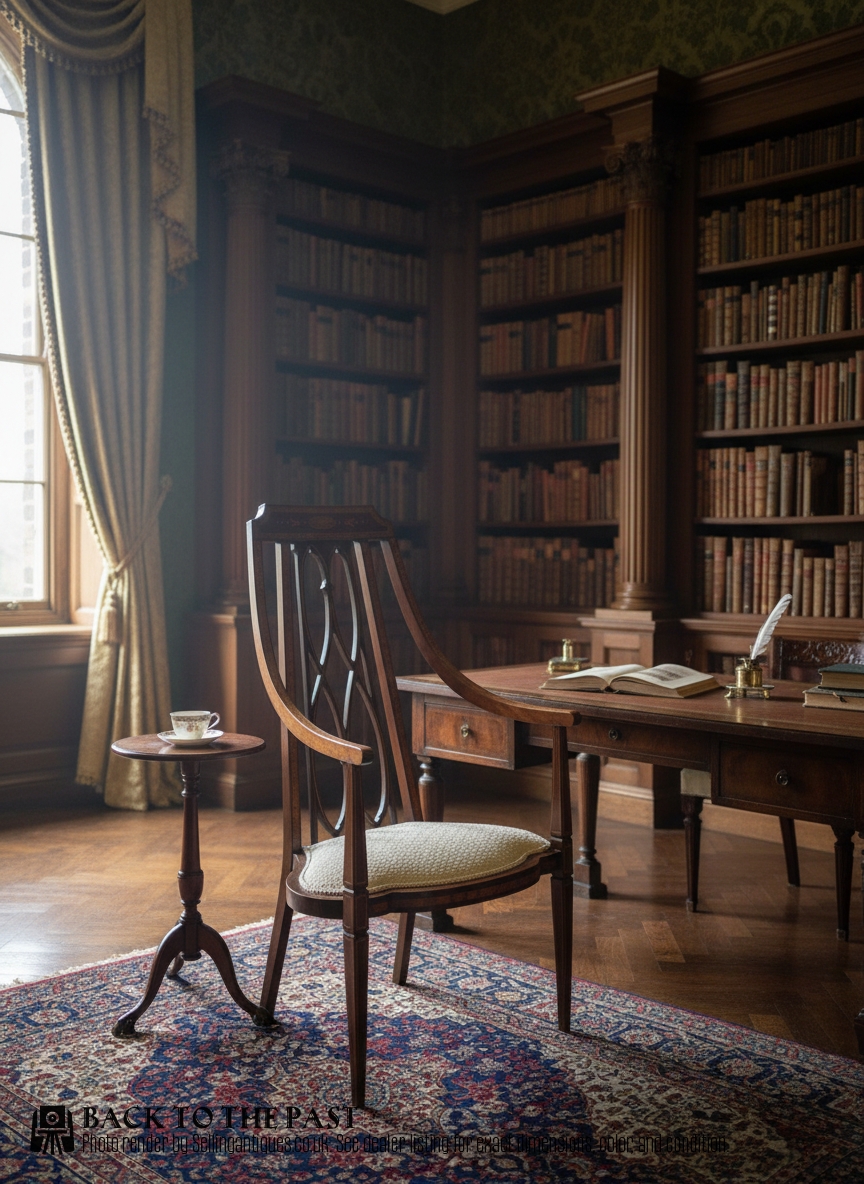
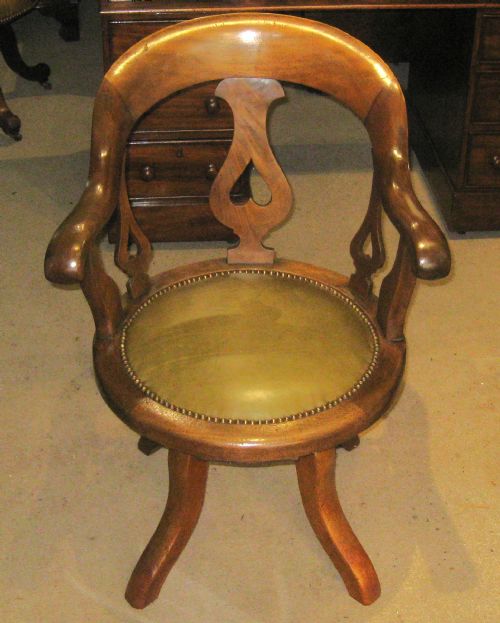
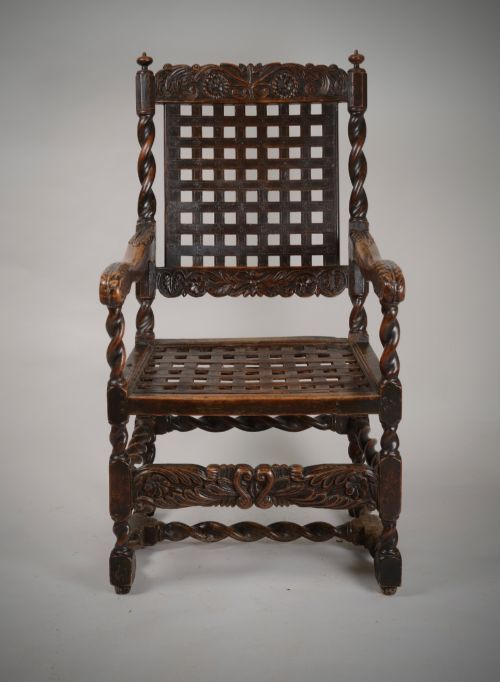
Unusual Antique Victorian Inlaid Mahogany Armchair, 1890
Priced at £1,285 from London City Antiques
Mortise and tenon joints hold the primary frame together. Wooden pegs were driven through the joints on earlier oak examples to lock them tight.
Curved elements like armrests were shaped from single thick blocks of timber. Steam bending became a common technique later for lighter vernacular chairs.
Upholstery techniques evolved over time. Early seats were stuffed flat over webbing, while nineteenth-century makers lashed steel coil springs to the frames to create deep domed seats.
"Upholsterers often left their original webbing intact beneath later covers. Finding undisturbed eighteenth-century tacks on the inner rails is a great bonus."
"The angle of the backrest was carefully calculated. Cabinet makers adjusted the rake depending on whether the chair was for dining, reading or sleeping."
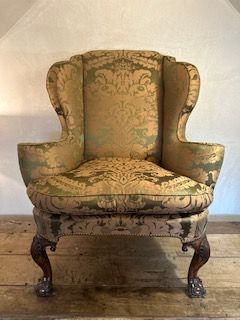
"Some large wingback chairs were fitted with wooden castors. This allowed servants to easily pull them closer to the hearth on cold evenings."
Based on almost 25 years of Sellingantiques UK antique market data, Antique Armchairs appeared 28271 times (out of 1,100,000 antiques) which gives it a rarity score of 1/100.
This score measures scarcity within the Sellingantiques archive only and is not a survey of the entire antiques market, so these statistics may not be indicative of the general availability of Antique Armchairs elsewhere.
Take a tape measure and run it from the floor to the top centre of the seat cushion.
If the armchair has a soft upholstered seat, press down slightly on the padding. You need to know the compressed height, as that dictates where your legs will sit when in use.
Antique seating often sits lower than modern equivalents. People were generally shorter, and sitting postures were different.
Nursing chairs in particular were built low to the ground. This allowed the user to lean forward easily and tend to young children or a fire.
It is also common for the bottom of the legs to have been trimmed down. Castors break or rot sets into the feet, so past owners sometimes sawed an inch off to level the chair.
A drop-in seat is an independent wooden frame covered with webbing and upholstery.
It rests on supports fitted to the inside of the chair's main seat rails. You can lift the whole padded section out from above. This made it much easier for upholsterers to recover the seat without moving the heavy wooden carcase.
Loose joints can be repaired without harming the piece. A restorer will carefully knock the joint apart, clean out the old animal glue, and re-glue it.
Old hide glue is water-soluble. This means a professional can soften the old adhesive with warm water or steam without scraping away the original timber.
Please note: This Antique Armchairs guide and its associated pricing data are provided for general informational purposes only. It does not constitute formal financial, investment, or appraisal advice and should not be relied upon as the sole basis for any commercial activity, purchasing, or sales decisions. Sellingantiques.co.uk accepts no liability for any actions taken in reliance on this information. Always consult with a qualified professional or independent appraiser.
