


A 2026 Guide by Sellingantiques
Early examples arrived in Europe from China alongside the leaves themselves. Small sizes reflect how scarce the commodity was at first.
Drinking habits shifted during the late eighteenth century. Vessels grew larger as taxation dropped and domestic consumption expanded across different social classes.
Check the shape of Georgian silver pots. They often feature flat bottoms for sitting directly on spirit stands.
Earthenware versions became common in rural homes. These simpler antique tea pots held enough liquid for an entire family at breakfast.
Paul Storr produced substantial silver examples in London during the early nineteenth century. His work often features heavy casting and classical borders.
Josiah Wedgwood made jasperware and basalt pots in Staffordshire. These dry-bodied stonewares required no glaze to hold liquid.
Hester Bateman managed a successful silver workshop. Her late eighteenth-century antique tea pots show bright-cut engraving and elegant neoclassical profiles.
The 2026 retail price guide for Antique Tea Pot is drawn from a proprietary archive of over 1.1 million retail prices indexed by Sellingantiques since 2003. This guide relies exclusively on their own internal data; no external sources or auction records are used.
Analysing nearly 25 years of UK antique market history alongside current retail values, the data indicates that typical UK retail prices for Antique Tea Pot range between £200 and £1,500. Entry-level prices generally fall under £200 and premium examples upwards of £1,500.
A well-designed spout pours without dripping. The lip sits level with or slightly above the rim of the main body to prevent overflows.
Handles are positioned for balance. Metal ones need heat breaks, while ceramic loops are moulded directly into the carcase.
Lids either drop in or hinge. Finials provide a grip and can be carved wood, cast silver or moulded clay.
Silversmiths raised early pots from a single flat sheet. Hammering the metal over an anvil takes time but creates a seamless form.
Later nineteenth-century ceramic versions used slip casting. Liquid clay poured into plaster moulds allowed factories to repeat complex relief patterns.
Seams on metal bodies indicate fabrication from rolled sheet. The joints are silver-soldered and filed flush before polishing.
"Some eighteenth-century examples have tiny holes in the finial. This allows steam to escape safely during brewing."
"Many early silver forms were originally sold with matching stands. These wooden bases protected polished tables from heat rings."
"A bullet teapot is exactly what it sounds like. The spherical shape became popular in Scotland during the Georgian period."
Based on almost 25 years of Sellingantiques UK antique market data, Antique Tea Pot appeared 551 times (out of 1,100,000 antiques) which gives it a rarity score of 90/100.
This score measures scarcity within the Sellingantiques archive only and is not a survey of the entire antiques market, so these statistics may not be indicative of the general availability of Antique Tea Pot elsewhere.
Tannin builds up on ceramics over time. A mild soak in warm water with bicarbonate of soda usually lifts dark marks without scrubbing.
Don't use abrasive pads or harsh chemical bleach. These strip the interior glaze and leave the surface porous, which makes future staining worse.
That grey layer is standard tarnish. The white powder is dried polish residue trapped in the crevices from previous cleaning sessions.
Wash the whole thing in warm soapy water first. Use a soft brush to tease the old powder out of the handle joints.
Dry it thoroughly before applying any new silver polish. Use a gentle liquid polish rather than abrasive wadding, and apply sparingly.
Early eighteenth-century examples held very little liquid. The dry leaves were heavily taxed imports, so families brewed small, strong amounts.
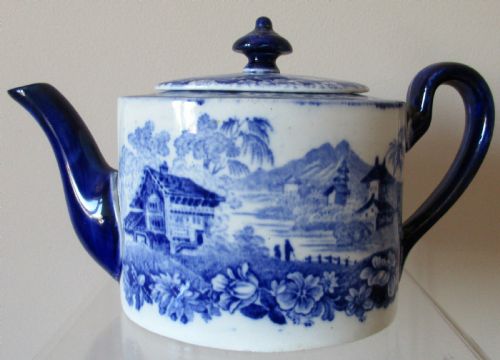
Factories rarely fitted chains to ceramic lids. This isn't a factory feature, but a later domestic addition to stop the lid falling and breaking during pouring.
Owners often asked local jewellers or silversmiths to add a simple silver collar and chain. You'll see this most often on late Victorian examples.
Please note: This Antique Tea Pot guide and its associated pricing data are provided for general informational purposes only. It does not constitute formal financial, investment, or appraisal advice and should not be relied upon as the sole basis for any commercial activity, purchasing, or sales decisions. Sellingantiques.co.uk accepts no liability for any actions taken in reliance on this information. Always consult with a qualified professional or independent appraiser.
