


A 2026 Guide by Sellingantiques
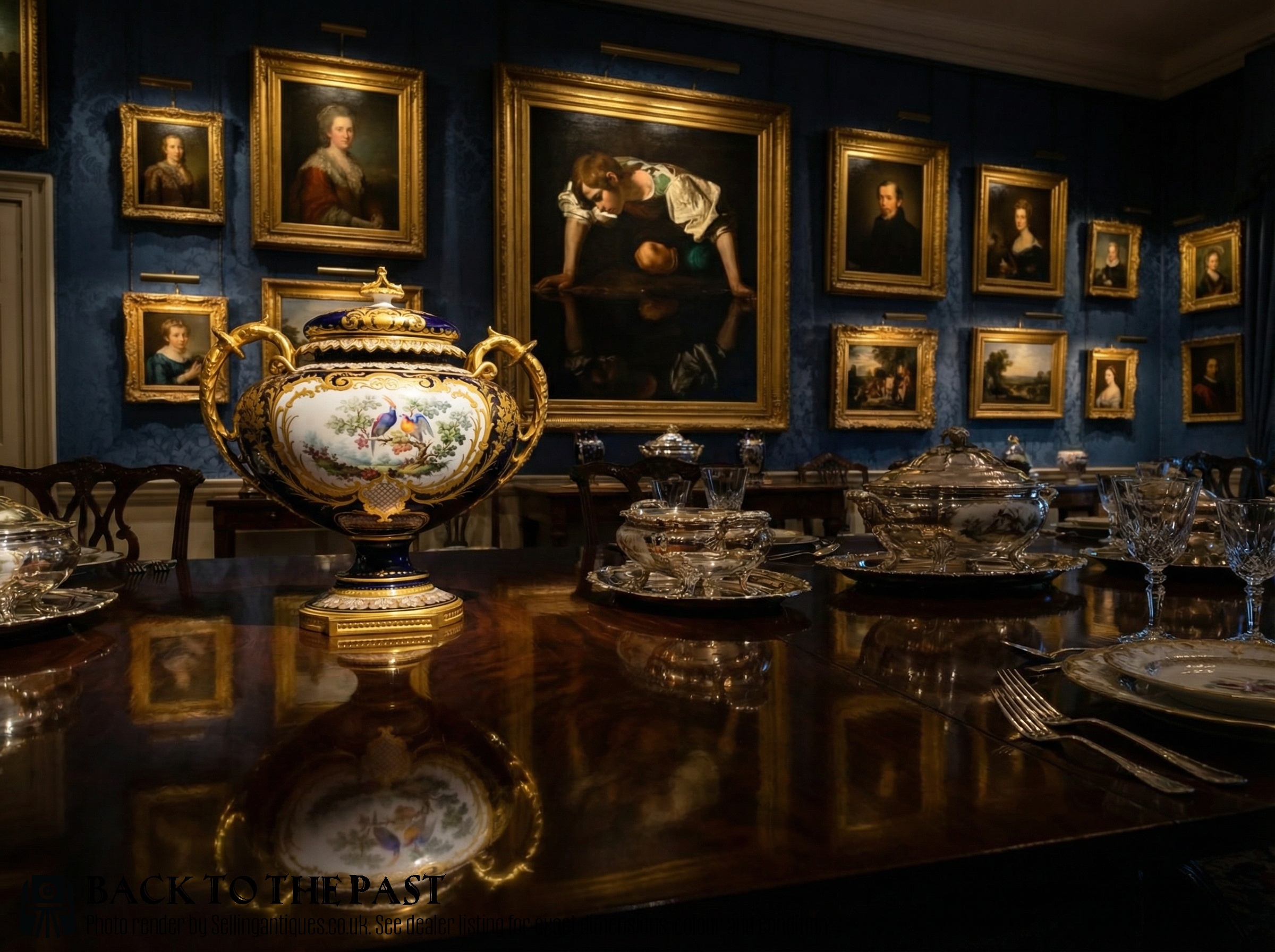
Royal Crown Derby Centrepiece Signed Darlington, 1920
Priced at £3,950 from Valerie Main Ltd
Early production in Derby under Andrew Planche and William Duesbury around 1750.
King George III granted the right to incorporate the royal crown into the backstamp in 1775.
Look for the transition to the Osmaston Road factory in the late nineteenth century.
Queen Victoria appointed them Manufacturers of Porcelain to Her Majesty in 1890.
William Billingsley painted naturalistic roses on early Derby porcelain during the late eighteenth century.
Desire Leroy brought Sevres-style raised gilding and floral painting to the factory in the 1890s.
Focus on the signatures sometimes hidden within the decoration by prominent ceramic artists.
The 2026 retail price guide for Antique Royal Crown Derby is drawn from a proprietary archive of over 1.1 million retail prices indexed by Sellingantiques since 2003. This guide relies exclusively on their own internal data; no external sources or auction records are used.
Analysing nearly 25 years of UK antique market history alongside current retail values, the data indicates that typical UK retail prices for Antique Royal Crown Derby range between £100 and £1,600. Entry-level prices generally fall under £100 and premium examples upwards of £1,600.
Cobalt blue, iron red and gold dominate the traditional Imari decoration.
Check the base for factory marks tracking the precise year.
Intricate fluting shaping the edges of plates and saucers.
Early figures were pressed into plaster moulds in sections before assembly with liquid slip.
Transfer printing gradually replaced freehand outlines for standard dinner services.
Burnishers polished the dull fired gold using agate stones to bring up the shine.
"Many patterns remained in continuous production for over a century due to enduring popularity."
"The famous pattern number 1128 dates back to 1882."
"Workers often identified their own gilding or painting through tiny secondary marks near the main backstamp."
Based on almost 25 years of Sellingantiques UK antique market data, Antique Royal Crown Derby appeared 396 times (out of 1,100,000 antiques) which gives it a rarity score of 92/100.
This score measures scarcity within the Sellingantiques archive only and is not a survey of the entire antiques market, so these statistics may not be indicative of the general availability of Antique Royal Crown Derby elsewhere.
The cypher is a date code. Factory marks changed slightly from year to year, using specific letters or symbols to track when a piece left the kiln.
You can look up these codes in reference books. They pinpoint the exact year of manufacture.
Keep old porcelain well away from the dishwasher. The harsh detergents and high temperatures strip away the gold decoration and dull the glaze very quickly.
Wash them by hand in warm soapy water. Lay a towel in the bottom of the sink to prevent chipping.
Serving food is fine. The ceramic handles normal dining temperatures well.
Avoid microwaves. Sudden extremes of heat risk cracking the glaze.
That rough patch is standard. Kiln furniture holds the piece during firing to stop it sticking to the shelf. The points of contact leave unglazed spots called stilt marks.
They occur on almost all flatware and large hollowware from the period. It shows how the factory operated.
Please note: This Antique Royal Crown Derby guide and its associated pricing data are provided for general informational purposes only. It does not constitute formal financial, investment, or appraisal advice and should not be relied upon as the sole basis for any commercial activity, purchasing, or sales decisions. Sellingantiques.co.uk accepts no liability for any actions taken in reliance on this information. Always consult with a qualified professional or independent appraiser.
