


A 2026 Guide by Sellingantiques
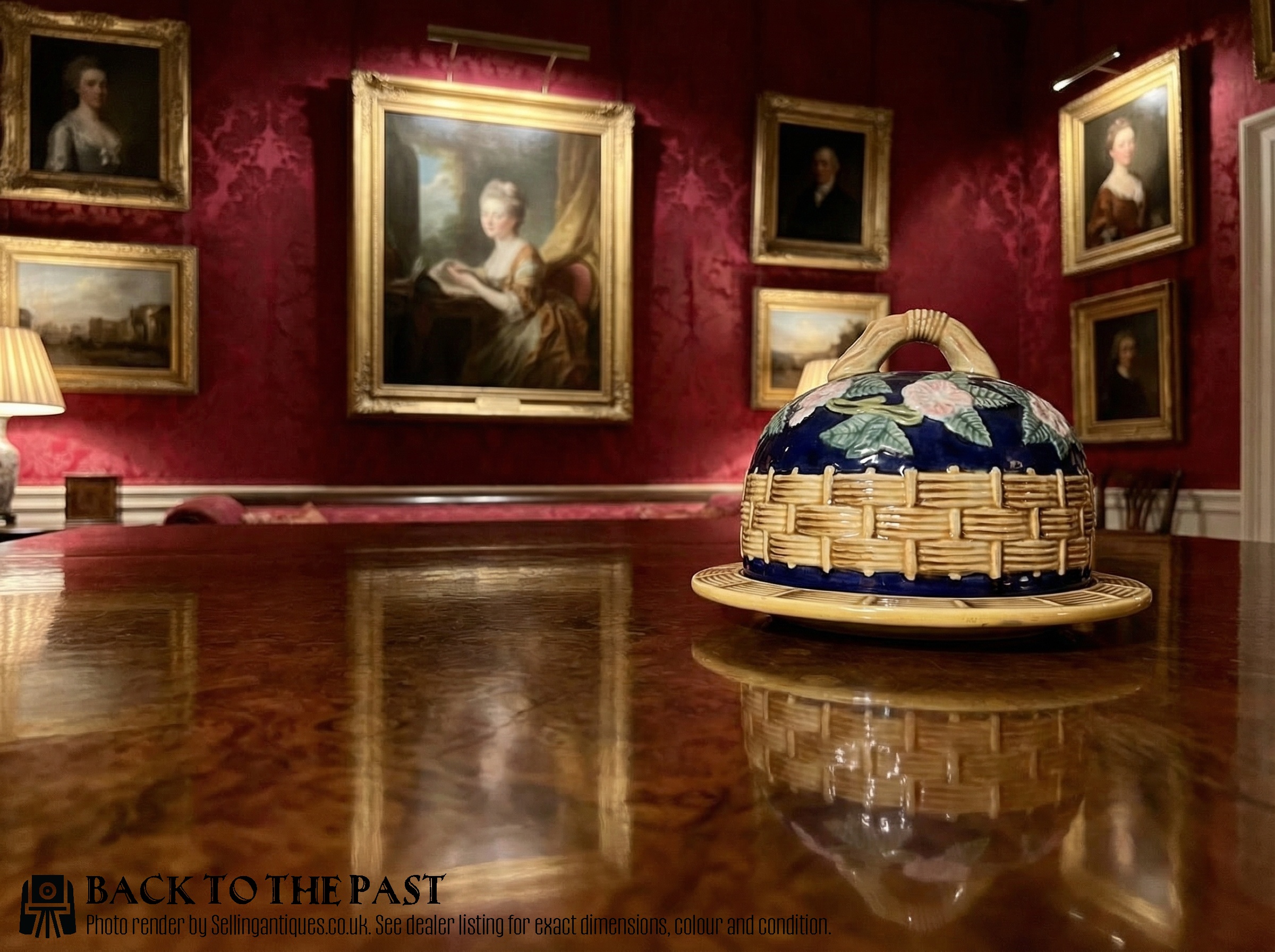
Lovely Antique Victorian Quality Majolica Cheese Dish, 1880
Priced at £395 from Unique Antiques by Emma Jade
Introduced to the public at the 1851 Great Exhibition. Minton called their new lead-glazed pottery Palissy ware before the majolica name stuck.
Look closely at the Victorian timeline. Demand for these vivid pieces exploded as households sought cheerful conservatory ornaments and tableware.
Fashions changed around the turn of the twentieth century when tastes shifted towards lighter and simpler designs.
Not to be confused with Renaissance tin-glazed maiolica. The nineteenth-century British trade adapted the concept using distinct clay and factory methods.
Minton remains the most prominent factory. Their early output set the technical standard for complex sculptural shapes and vibrant tones.
George Jones started making antique majolica in the late 1860s. Collectors often look for his distinct impressed monogram on the underside.
Wedgwood entered the market shortly after Minton. They relied heavily on naturalistic plate patterns based on cabbage leaves and marine life.

Austrian Majolica Pottery Depicting Birds and Sunflowers, C1890, 1890
Priced at £495 from Robert Belcher Antiques
The 2026 retail price guide for Antique Majolica is drawn from a proprietary archive of over 1.1 million retail prices indexed by Sellingantiques since 2003. This guide relies exclusively on their own internal data; no external sources or auction records are used.
Analysing nearly 25 years of UK antique market history alongside current retail values, the data indicates that typical UK retail prices for Antique Majolica range between £200 and £1,300. Entry-level prices generally fall under £200 and premium examples upwards of £1,300.
Deep relief moulding defines the style. Leaves and animal motifs stand out from the surface to hold the pooling colours.
A glossy finish is standard. The thick lead coating pools in the crevices of the design to create natural shading.
Turn the piece over. You'll frequently find a mottled or tortoiseshell effect painted across the flat base.
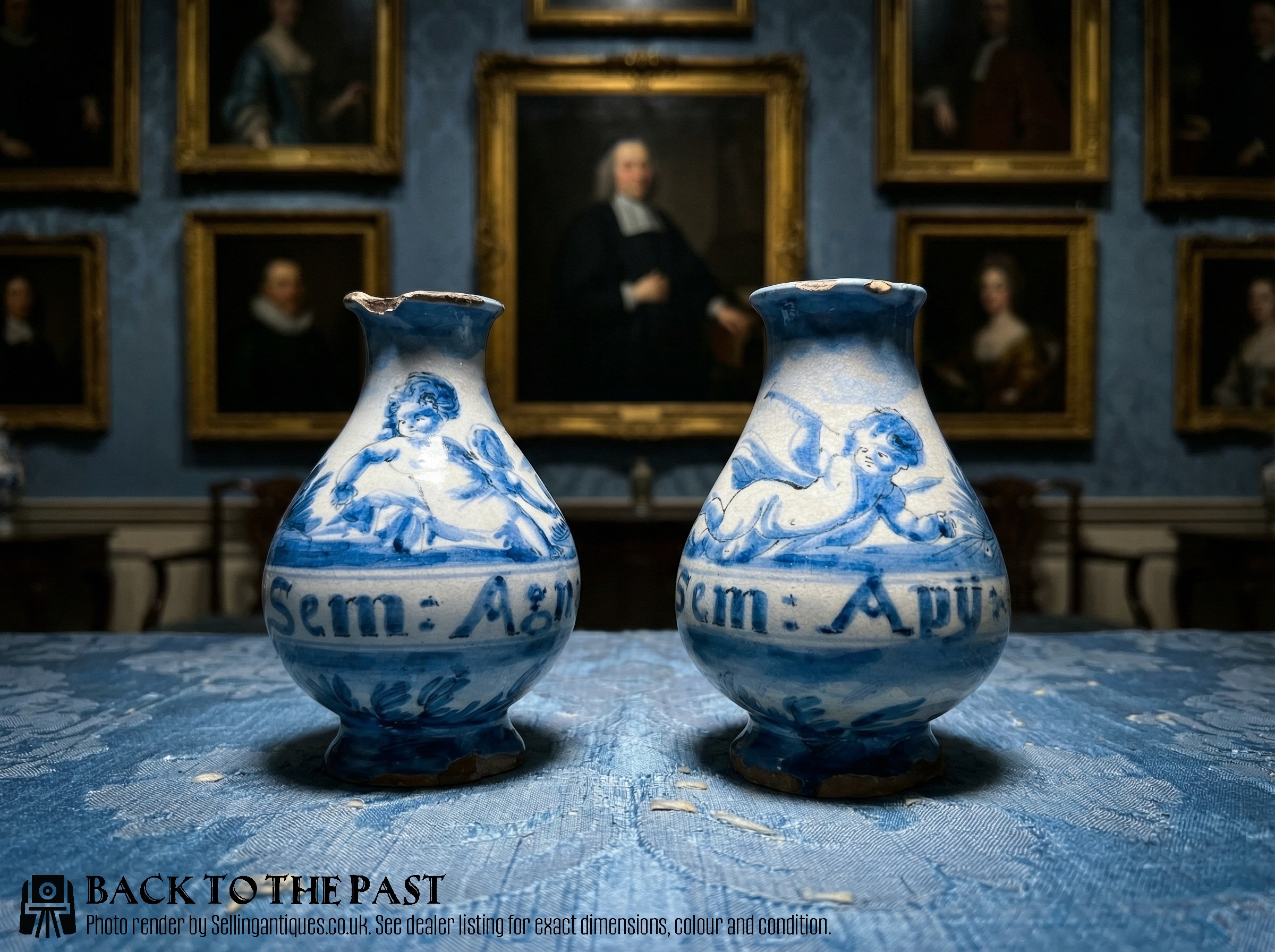
Rare Pair 17thc Italian Savona Majolica Albarello Drug Pharmacy Jar Bottles, 17th Century
Priced at £690 from Artsonline
Most domestic pieces were press-moulded rather than thrown on a wheel. This allowed factories to mass-produce identical asymmetrical shapes.
Complex items needed separate moulds. Workers joined the handles and decorative sprigs to the main body using liquid clay slip.
Painting the oxides demanded speed. The porous biscuit absorbed the colours instantly, leaving no room to correct mistakes before firing.
"Early designs accurately copied botanical specimens. Modellers used real ferns and leaves pressed into plaster to create their initial moulds."
"Some large exhibition pieces stood as high as a dining table. Factories proved their skill by firing massive garden seats."
"Pattern books from the era show an astonishing variety of specific tableware. There were dedicated servers for everything from asparagus to sardines."
Based on almost 25 years of Sellingantiques UK antique market data, Antique Majolica appeared 923 times (out of 1,100,000 antiques) which gives it a rarity score of 83/100.
This score measures scarcity within the Sellingantiques archive only and is not a survey of the entire antiques market, so these statistics may not be indicative of the general availability of Antique Majolica elsewhere.
Wash them by hand using warm water and a mild detergent. The soft earthenware body absorbs moisture quickly if submerged for too long.
Don't put them in a dishwasher. The harsh environment and sudden heat will expand the crazing and ruin the glossy finish.
That mottled finish is standard practice for the period. Decorators wiped excess oxides onto the underside of plates and dishes to seal the porous clay.
Dealers call this a tortoiseshell back. It saved the factories money on clear glazes while providing a functional waterproof base.
Many factories left standard production runs unmarked. They relied on pattern numbers or simply the distinct style of their moulding.
It isn't safe. You'll want to use them strictly for display.
Nineteenth-century recipes relied heavily on lead to achieve that characteristic bright gloss. As the surface crazes over time, acidic foods can leach those historical compounds out of the pottery.
Bleach is too aggressive for old porous pottery. It might temporarily lighten the mark, but harsh chemicals will ultimately break down the fragile earthenware structure.
Staining happens when tea or grease seeps through microscopic cracks in the glassy surface. It's a natural part of the ageing process. Accept the discolouration as part of the object's history rather than trying to force it out chemically.
Please note: This Antique Majolica guide and its associated pricing data are provided for general informational purposes only. It does not constitute formal financial, investment, or appraisal advice and should not be relied upon as the sole basis for any commercial activity, purchasing, or sales decisions. Sellingantiques.co.uk accepts no liability for any actions taken in reliance on this information. Always consult with a qualified professional or independent appraiser.
