

A 2026 Guide by Sellingantiques
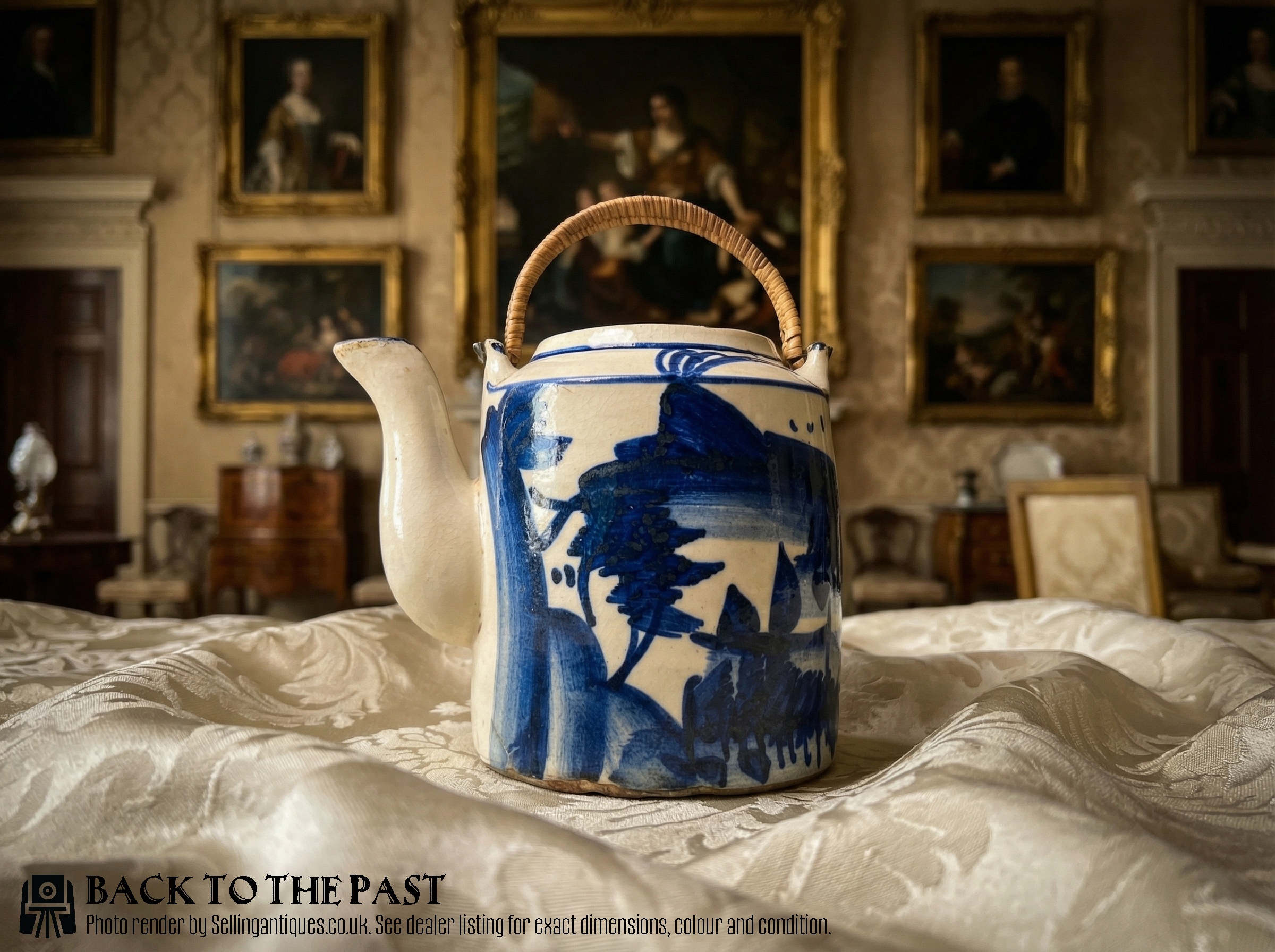
A 16th-century Style Chinese / Vietnamese Blue & White Ceramic Teapot, 19th Century
Priced at £390 from Artsonline
Chinese kilns perfected the underglaze cobalt technique during the Yuan dynasty. It dominated export markets for centuries.
European potters spent fortunes trying to copy the imported porcelain. They eventually developed tin-glazed earthenwares like Delft to mimic the look.
British factories cracked the mass market by the late eighteenth century. Transfer printing allowed them to churn out decorated dinner services at scale.
Look for shifting tastes across different periods. Early European pieces copy Asian landscapes, while later Victorian wares often show romantic ruins or botanical scenes.
Spode introduced the iconic Willow pattern in the late eighteenth century. They mastered the underglaze tissue transfer process.
Worcester produced high-quality soft-paste porcelain from the 1750s. Their early painted wares often feature small crescent marks on the base.
Jingdezhen kilns supplied the bulk of Chinese export ceramics. Millions of pieces shipped to Europe through the East India Companies.
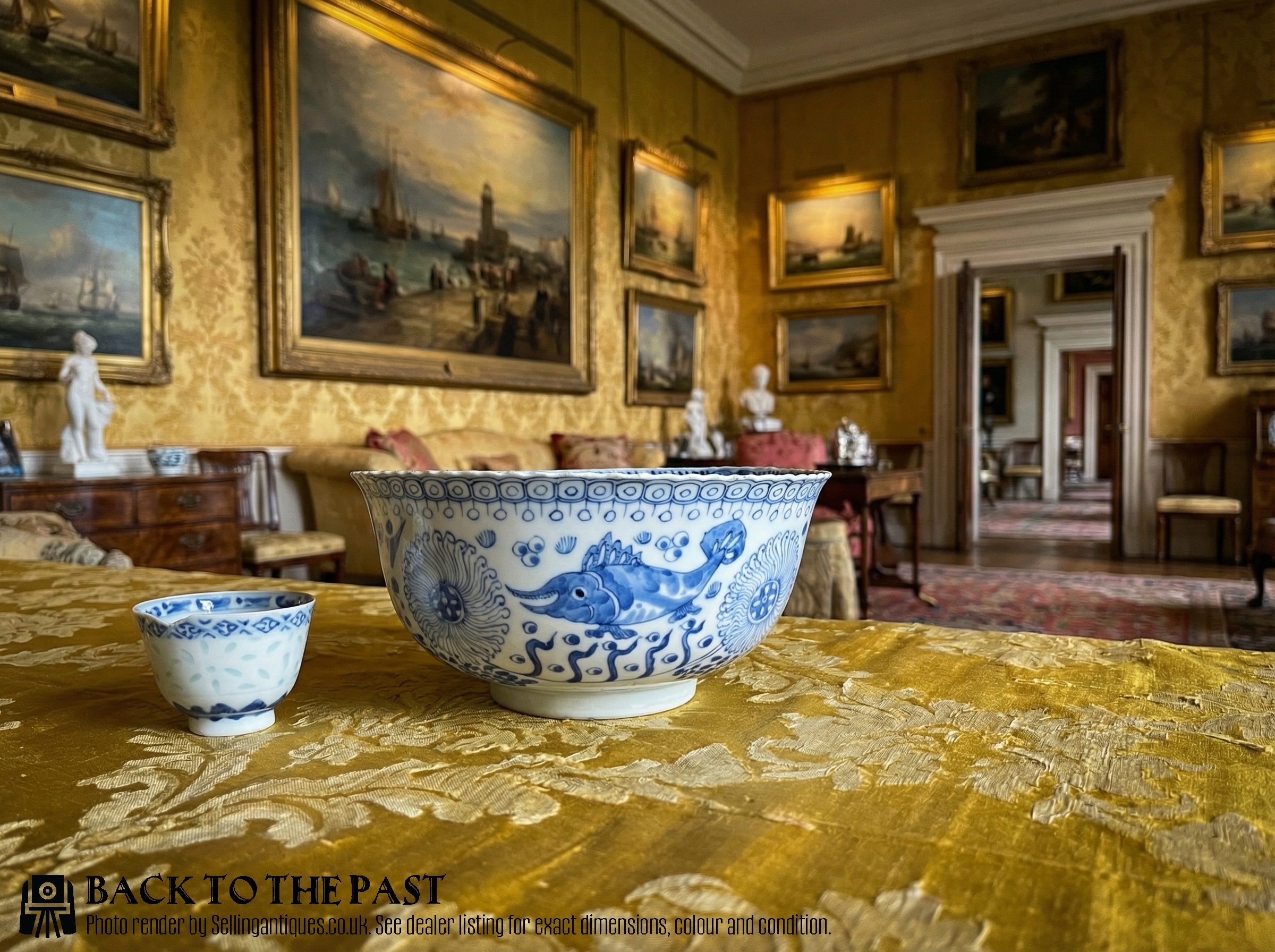
2 Signed Chinese Bowls Signed for Restoration, 19th Century
Priced at £275 from Abersoch Antiques
The 2026 retail price guide for Antique Blue And White is drawn from a proprietary archive of over 1.1 million retail prices indexed by Sellingantiques since 2003. This guide relies exclusively on their own internal data; no external sources or auction records are used.
Analysing nearly 25 years of UK antique market history alongside current retail values, the data indicates that typical UK retail prices for Antique Blue And White range between £200 and £1,900. Entry-level prices generally fall under £200 and premium examples upwards of £1,900.
Central cartouches usually frame a landscape or floral spray. These act as the focal point on flatwares like plates and platters.
Check the rim borders. They frequently feature intricate repeating geometric bands or overlapping leaves framing the main design.
Glaze pooling often occurs around foot rims or handles. The clear overglaze gathers in crevices and shows a faint bluish tint.
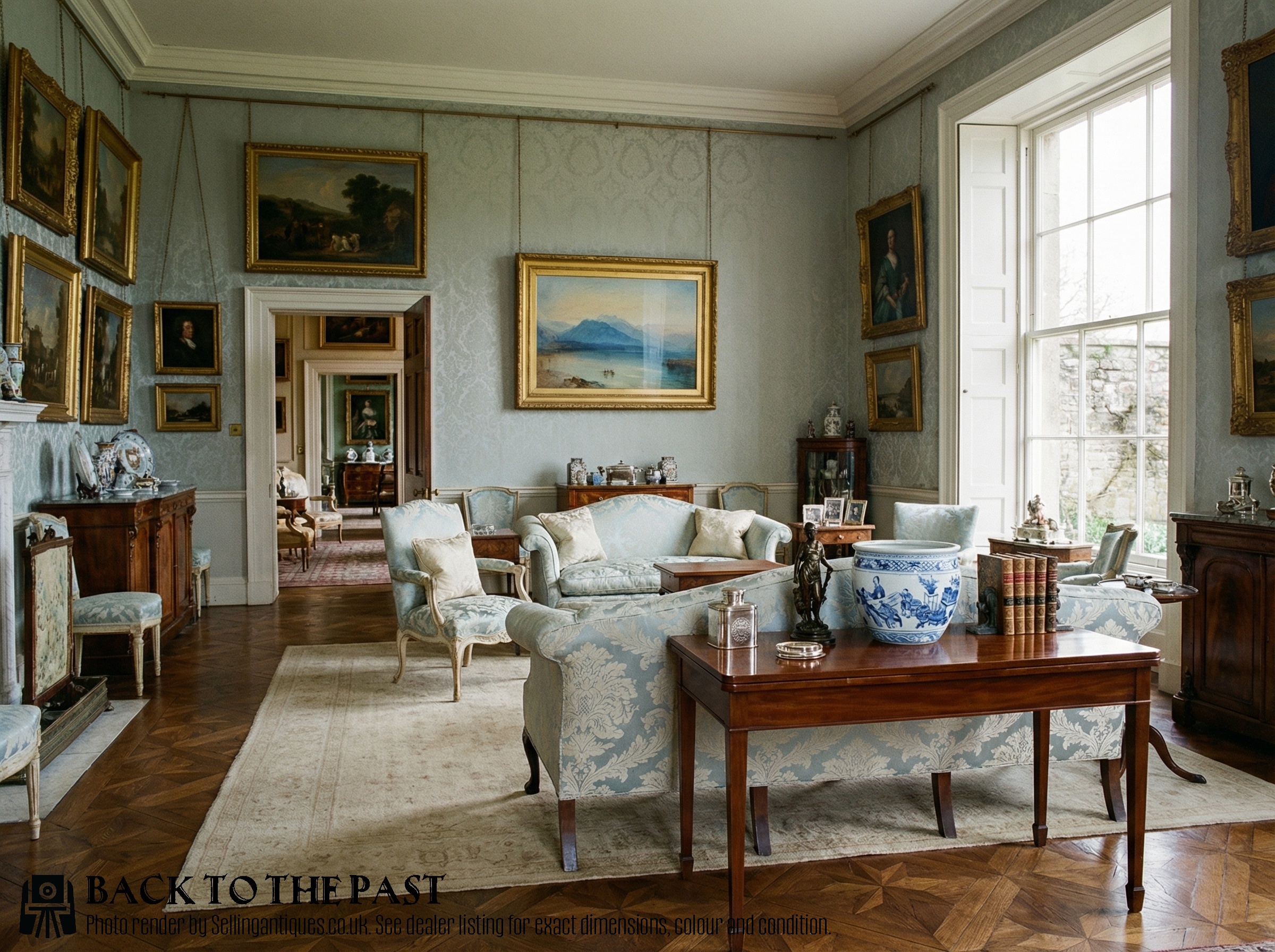
19th Century Chinese Blue & White Fish Bowl or Jardiniere, 1880
Priced at £1,200 from Mark Jones Antiques
Hand painting demands rapid brushwork because the unfired clay absorbs the wet cobalt immediately. There is no room for correction.
Copper plate engraving changed the industry. Artisans etched designs into metal, allowing complex scenes to be reproduced identically on hundreds of plates.
Line engraving eventually gave way to stipple engraving. This allowed factories to create softer shading and tonal depth in the prints.
"The cobalt pigment was highly valuable and ground in dedicated mills. Some factories kept it locked away under strict supervision."
"Blue works better than any other colour for underglaze printing. It spreads evenly and rarely burns away during the final high-temperature firing."
"Tissue paper used for transfers came from specialised mills. It had to be strong enough to hold wet ink but thin enough to rub onto clay."
Based on almost 25 years of Sellingantiques UK antique market data, Antique Blue And White appeared 4321 times (out of 1,100,000 antiques) which gives it a rarity score of 42/100.
This score measures scarcity within the Sellingantiques archive only and is not a survey of the entire antiques market, so these statistics may not be indicative of the general availability of Antique Blue And White elsewhere.
Keep them out of the dishwasher entirely. Harsh detergents and rapid heat changes will strip the glaze.
Wash by hand in warm soapy water. A soft cloth is all you need.
That tint comes from the glaze formulation. Many factories added a tiny amount of cobalt to the clear overglaze to make the white background appear brighter and mask any yellow tones in the clay.
You see this often on pearlware from the late eighteenth century. When the glaze pools in the crevices around the foot rim, the blue colour becomes much more obvious.
Brown staining happens when fats and oils seep into the crazed glaze over decades. It's stubborn but can sometimes be drawn out.
Some restorers soak the piece in a diluted hydrogen peroxide solution. It takes time and should be done carefully to avoid damaging the ceramic body.
Not at all. Transfer printing a flat tissue paper design onto a curved bowl is difficult work. The workers had to cut the paper and overlap the edges to make it fit the shape.
Slight mismatches at the seams are standard for early printed wares. They were produced quickly for a mass market, so the transferrers worked at speed rather than aiming for precision.
Please note: This Antique Blue And White guide and its associated pricing data are provided for general informational purposes only. It does not constitute formal financial, investment, or appraisal advice and should not be relied upon as the sole basis for any commercial activity, purchasing, or sales decisions. Sellingantiques.co.uk accepts no liability for any actions taken in reliance on this information. Always consult with a qualified professional or independent appraiser.
