Kendall House Antiques Ltd. has dated this piece to the 1930s.
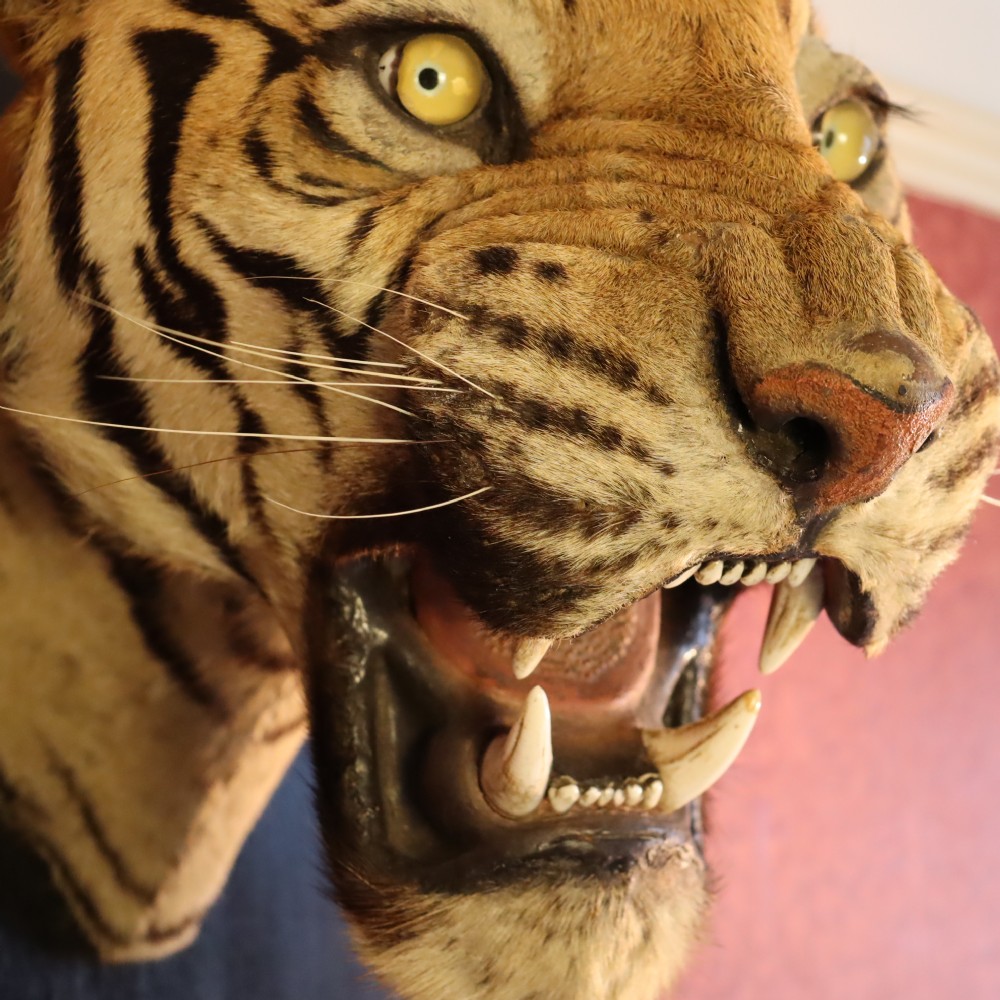
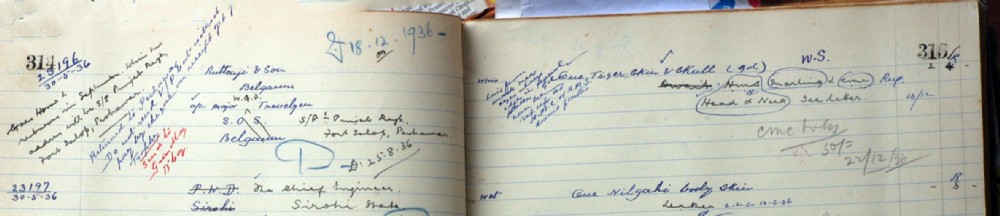
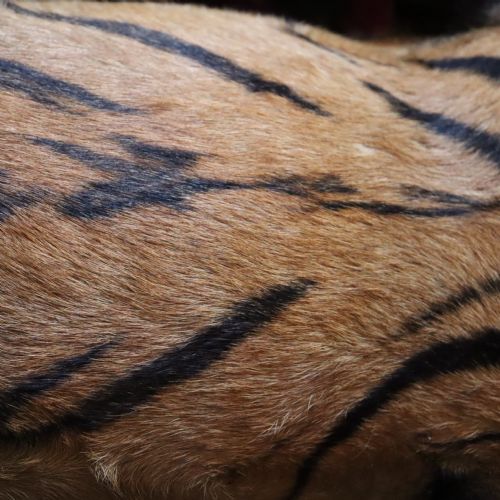
One tiger skin with skull to be set up WS (with snarl). A small note refers to the whiskers, which presumably means they were present when the skin arrived, the rest of the note is hard to read as the writing is so small.
The sender’s address seems to be based at something like Ruttaji and son, the customer being major W.G.F. Trevelyan at Belgaum (? Maybe name of a tea estate or similar). It was dispatched on 25 August 1936, presumably to the amended Peshawar address (Salop/Shropshire Regiment) a small note on the left-hand page in blue mentions payment by cheque and says that it seems to have returned from that address, but another note says customer away etc. There was evidently a letter, presumably giving various instructions, but there are no copies in the correspondence files. It finally left the factory on 18 December 1936.
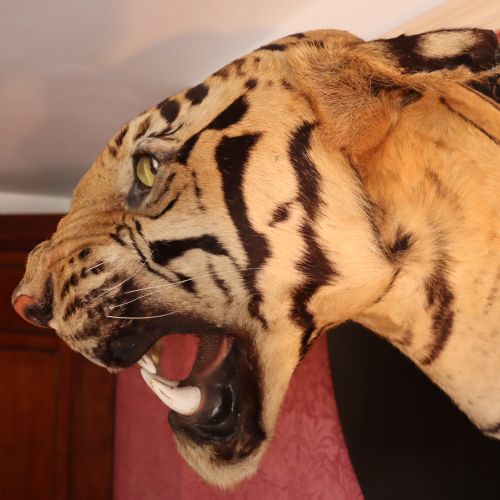
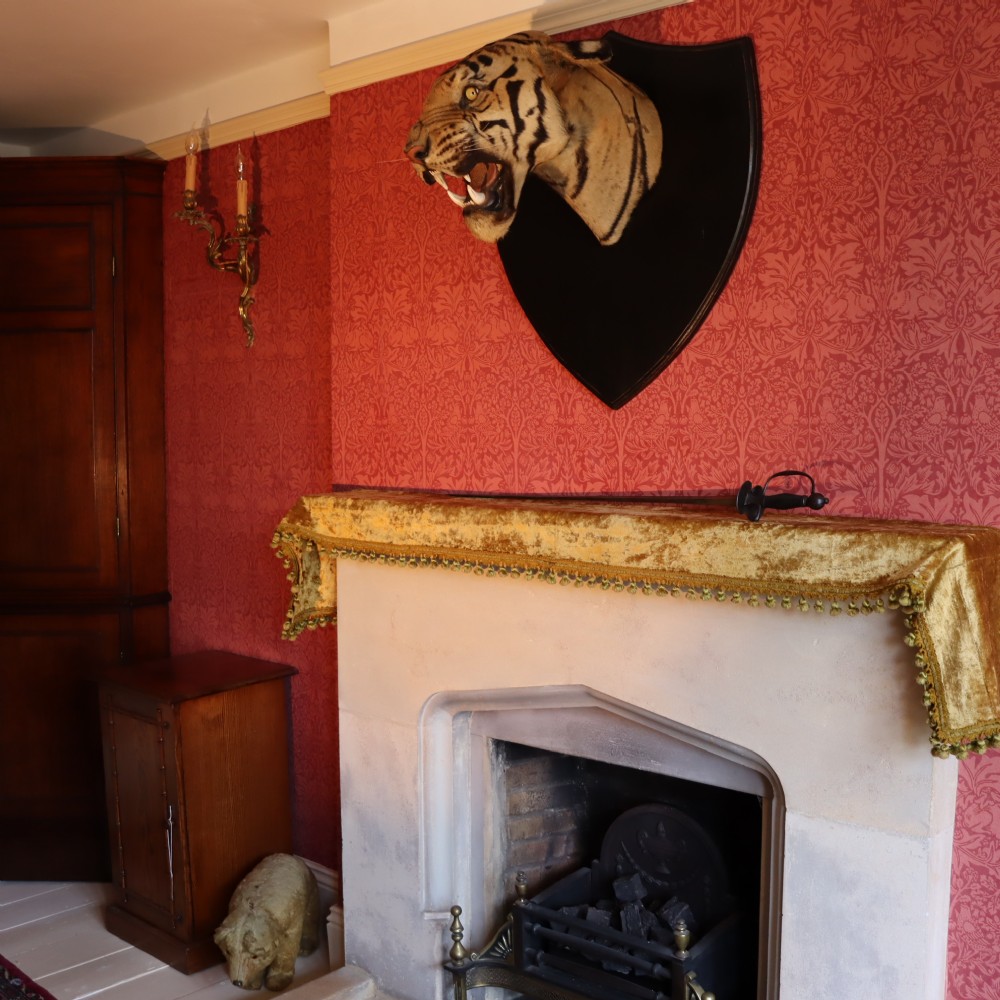
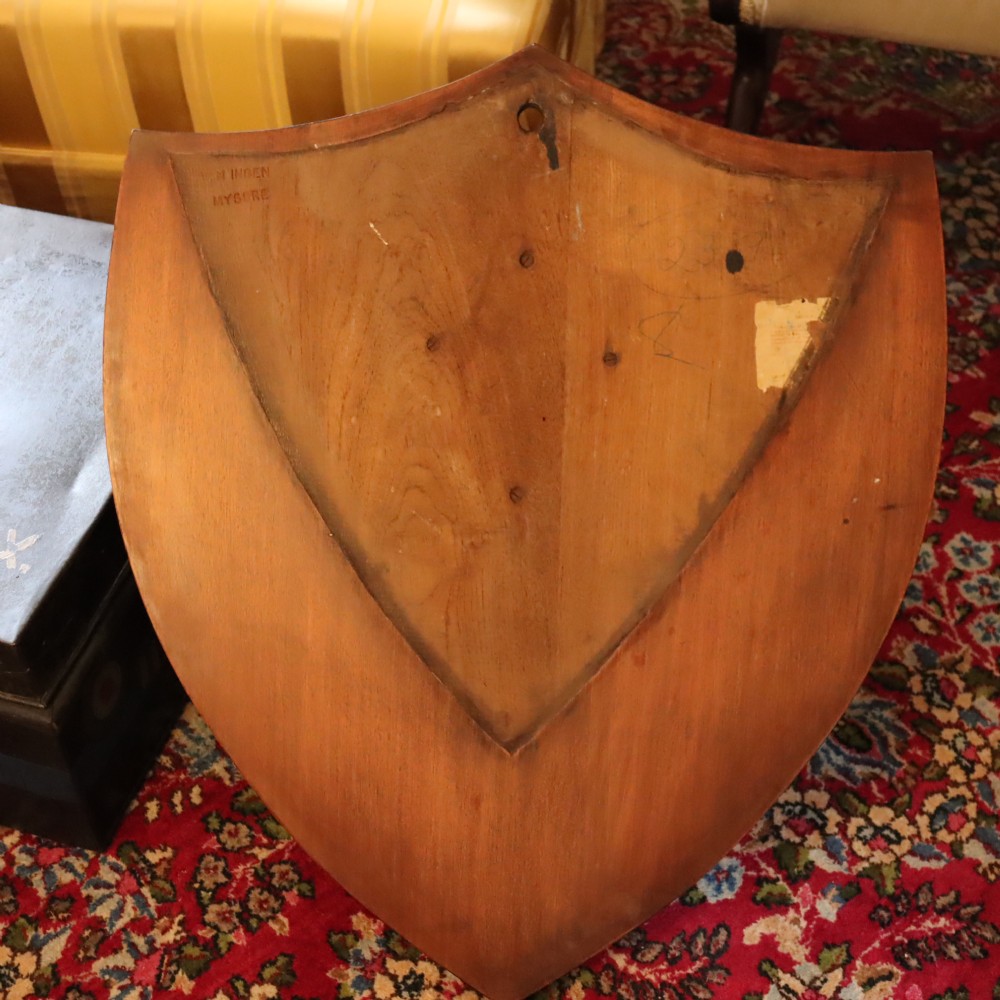
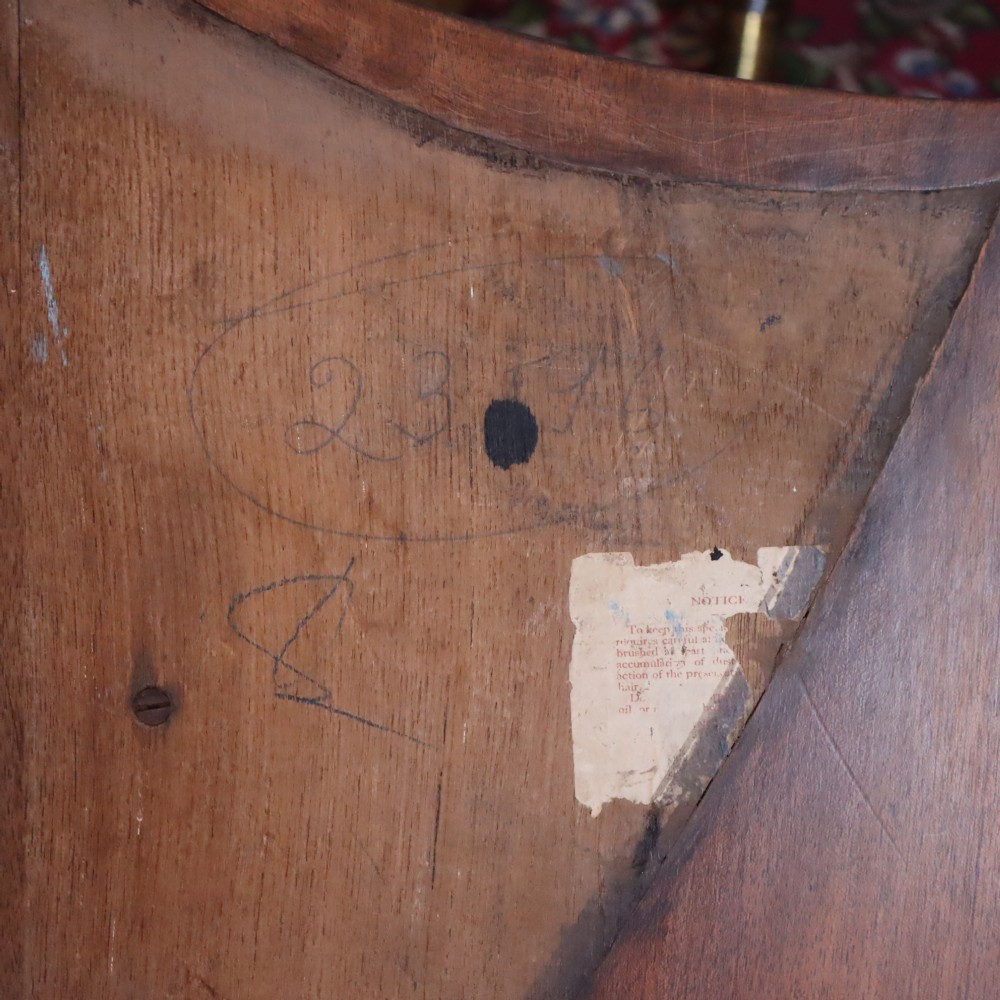
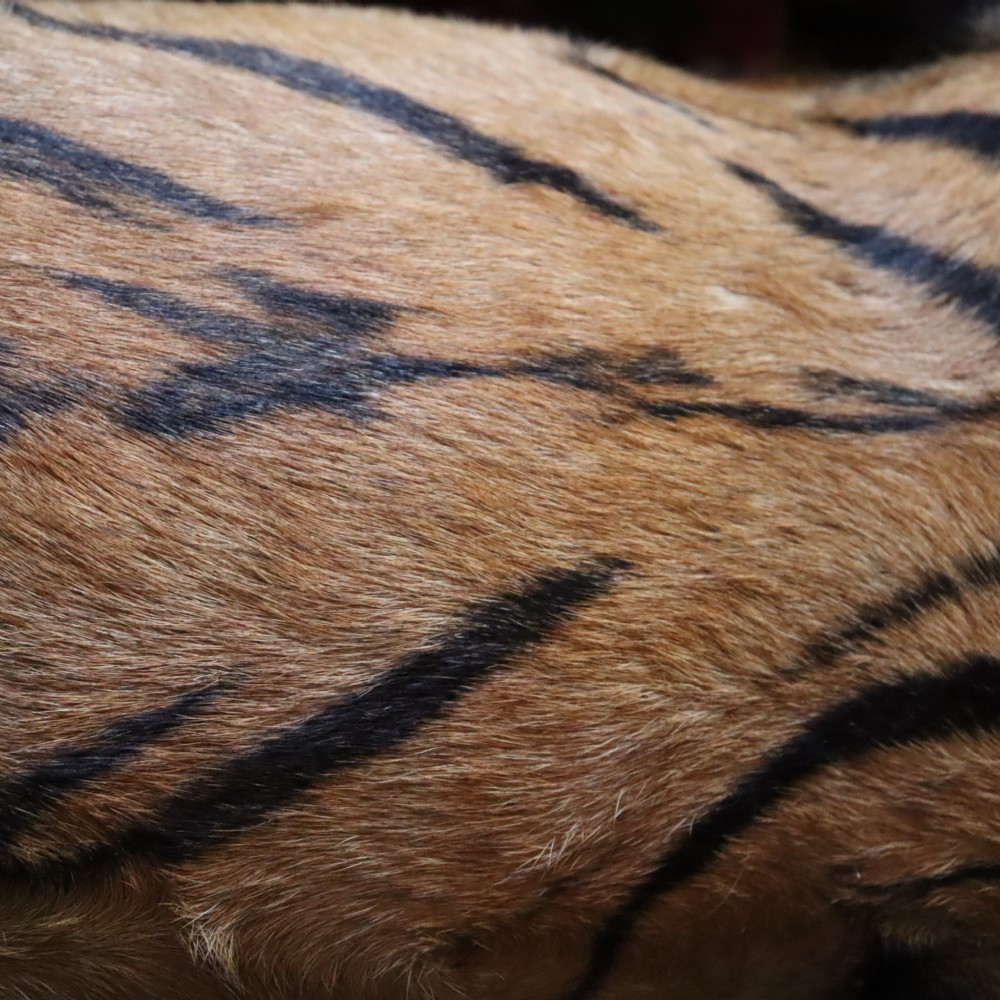
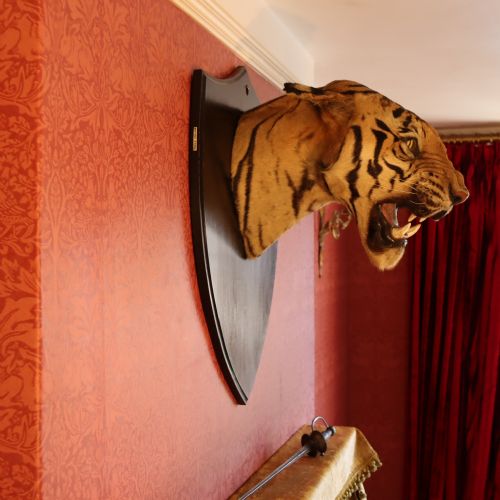
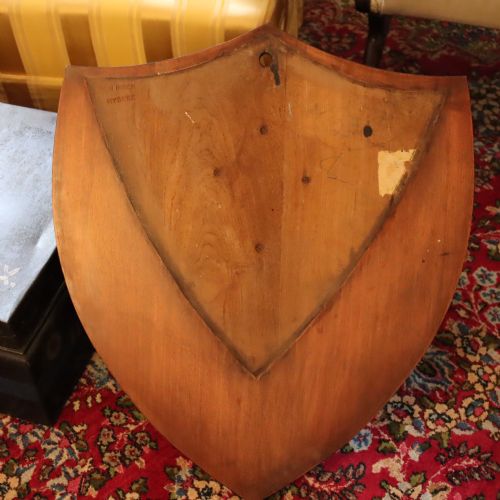
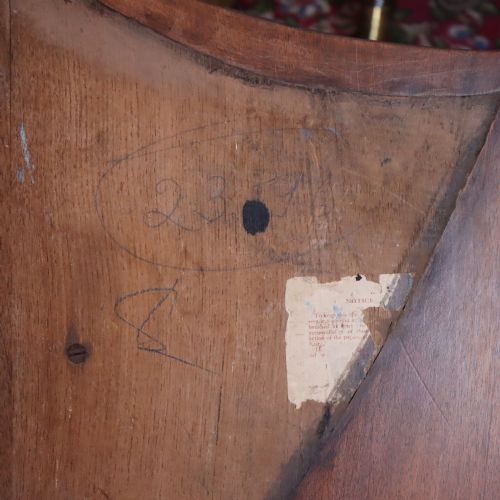
Note: the shield on this Tiger although original, has at some point in the past been reduced in size, however we have had the shield restored to its full size by a professional antique restorer using old Indian hard wood to match the existing. This work can be clearly seen to the rear of the shield (only) where no attempt has been made to hide it, an honest repair. The Tigers ears show some signs of splitting and wear.
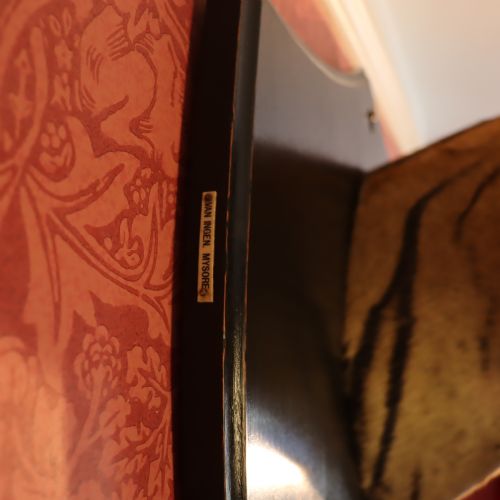
Provenance: Entered into auction directly from the family’s decedents and purchased by ourselves. Apparently, there was an old Black & White image but which can’t currently be found.
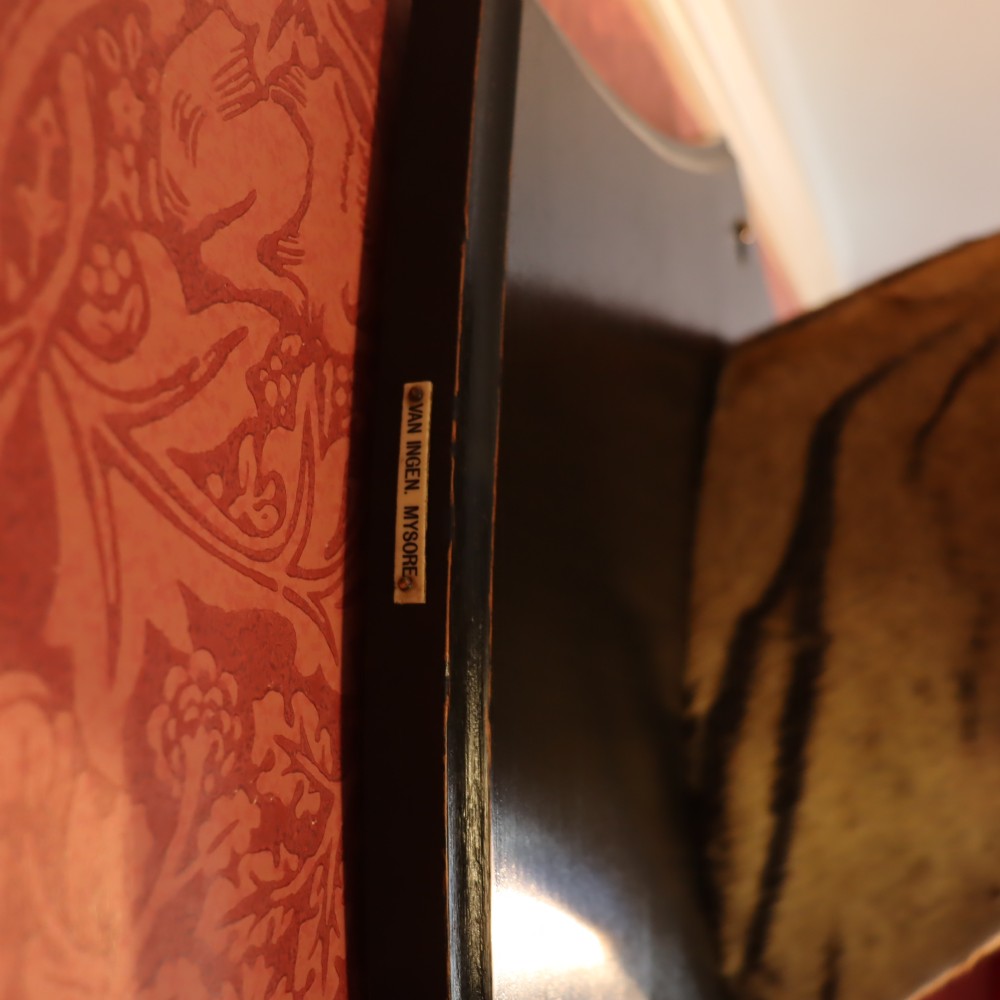
Notes on Van Ingen of Mysore: Taxidermists located in South India, best known for their tiger and leopard taxidermy trophy mounts. Established by Eugene Van Ingen in the 1890s. His sons later ran the business until it closed in 1999.
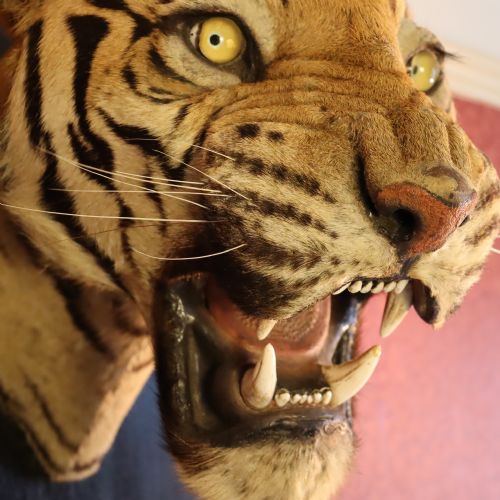
Van Ingen & Van Ingen served the highest in international nobility as well as the Maharajas of India, preserving their "shikar" hunting trophies in the most lifelike poses and in the utmost beauty, with attention to detail like no other in their time of operation.
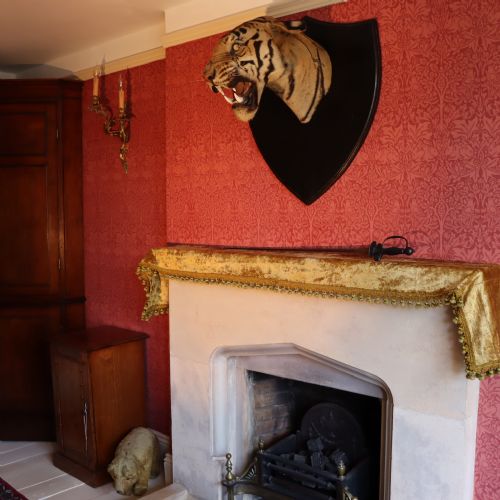
The "snarling" open mouth expression of finished big cat mounts was one of the Van Ingen's trademark qualities, a feature rigorously studied and made possible only by special head moulds which had specific built grooves on the nose area. The glass eyes were imported from Germany, hand painted individually by a factory workman each pair painted specifically for each individual taxidermy mount.
In its heyday, Van Ingen & Van Ingen was one of the biggest taxidermy businesses in the world. Film stars, viceroys and senior military men were numbered among their customers, but at least a third of the taxidermy was done for the Indian nobility. The firm employed over 150 workers in its heyday, with work beginning to decline in the late 1960s, following the banning of hunting in India.
Today the Van Ingen factory in Mysore, India lies derelict overgrown by the local jungle. The last member of the Van Ingen family Edwin Joubert Van Ingen (born 27 July 1912) died on 12 Mar 2013 in his Mysore residence. He was 101 years old.
For more information see the remarkable Van Ingen & Van Ingen - Artists in Taxidermy by Pat Morris published 2006 which outlines the quality, complexity and history of what once was one of the world's largest taxidermy firms.
Kendall House Antiques Ltd. has dated this piece to the 1930s.
Kendall house antiques a traditional shop in the north cotswold’s market town of chipping campden.
You can view the stock and full dealer information on the Kendall House Antiques Ltd. Profile Page

Taxidermy - Van Ingen Snarling Tiger Trophy Dated 1936