It was listed by Jason Clarke Antiques. Sold pieces stay on Sellingantiques as a record of what has passed through, and the next one is rarely far away.
Jason Clarke Antiques has dated this piece to the 1750s.
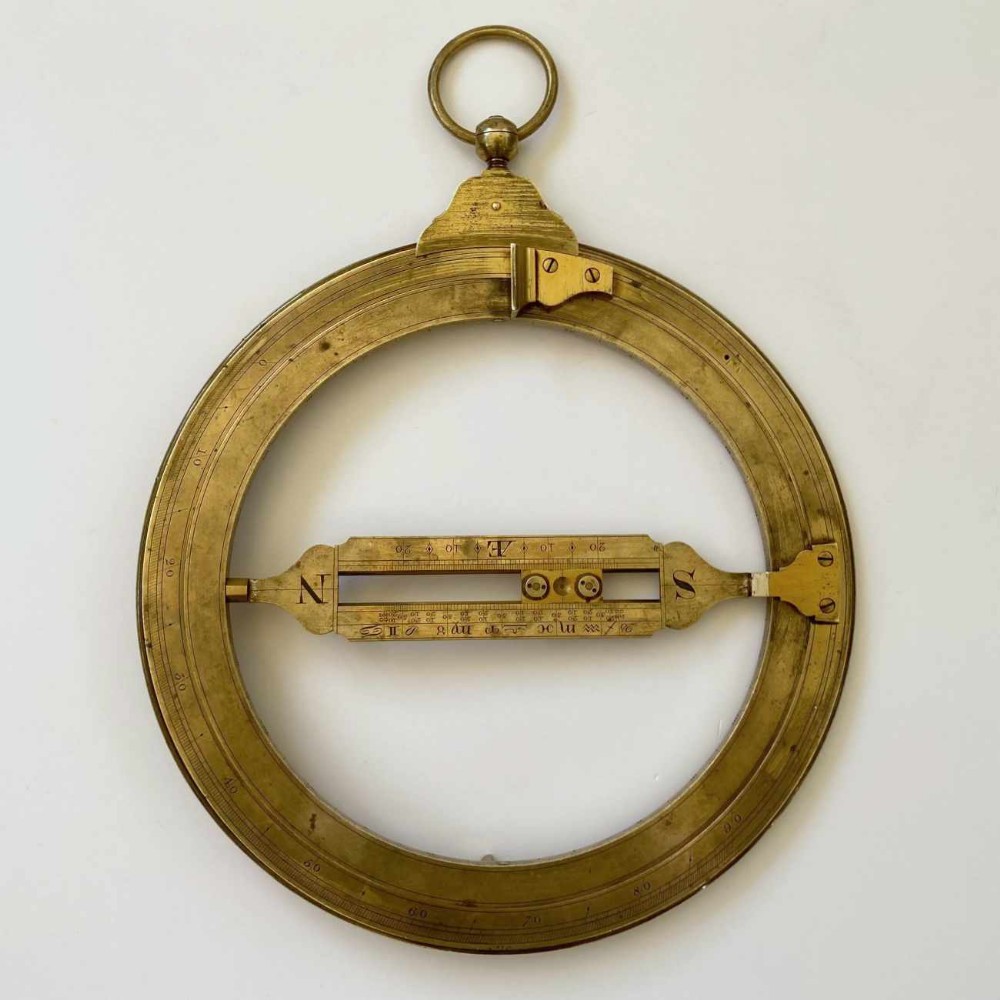
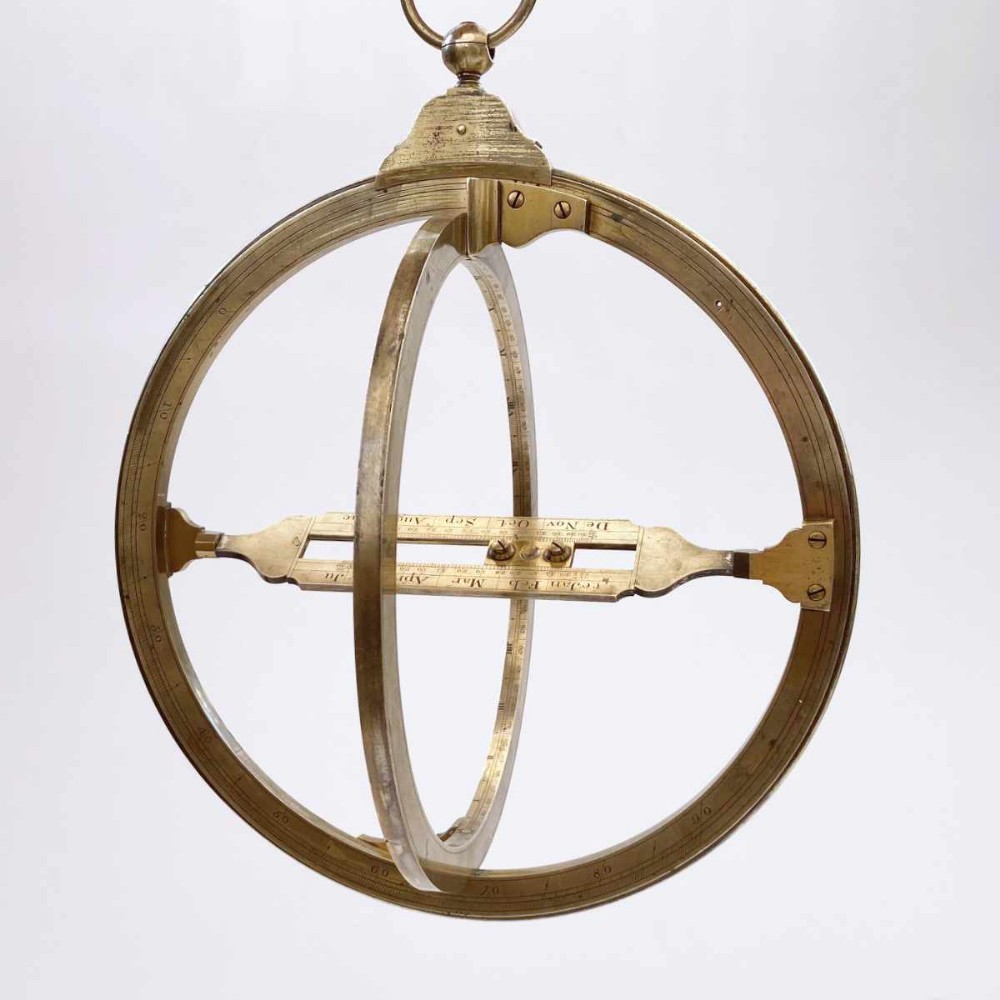
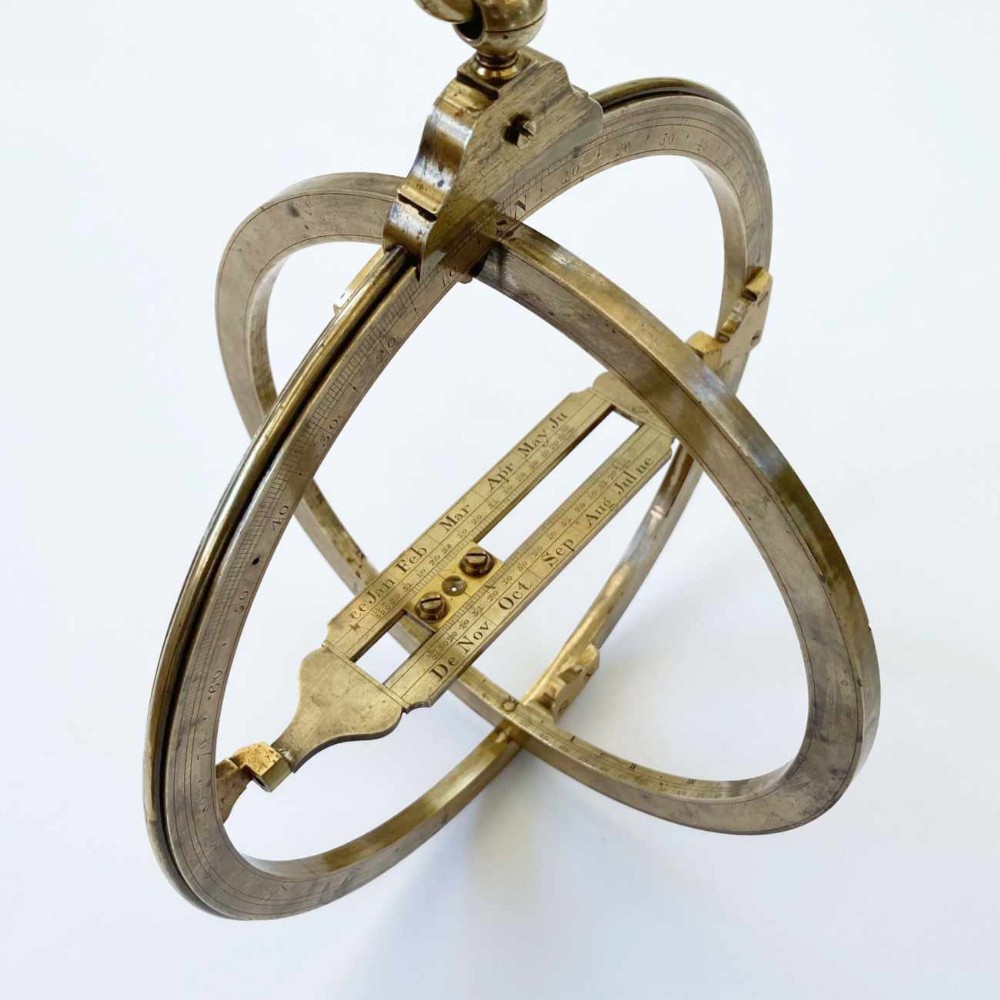
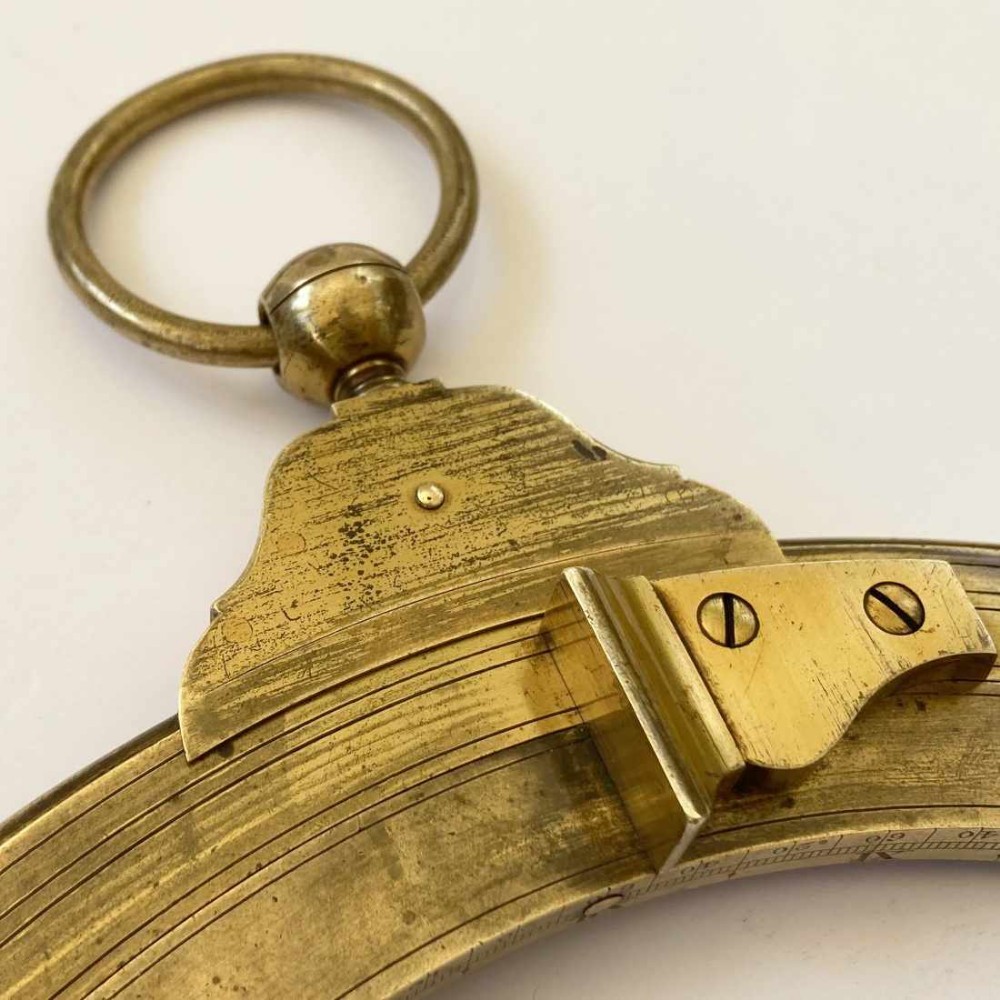
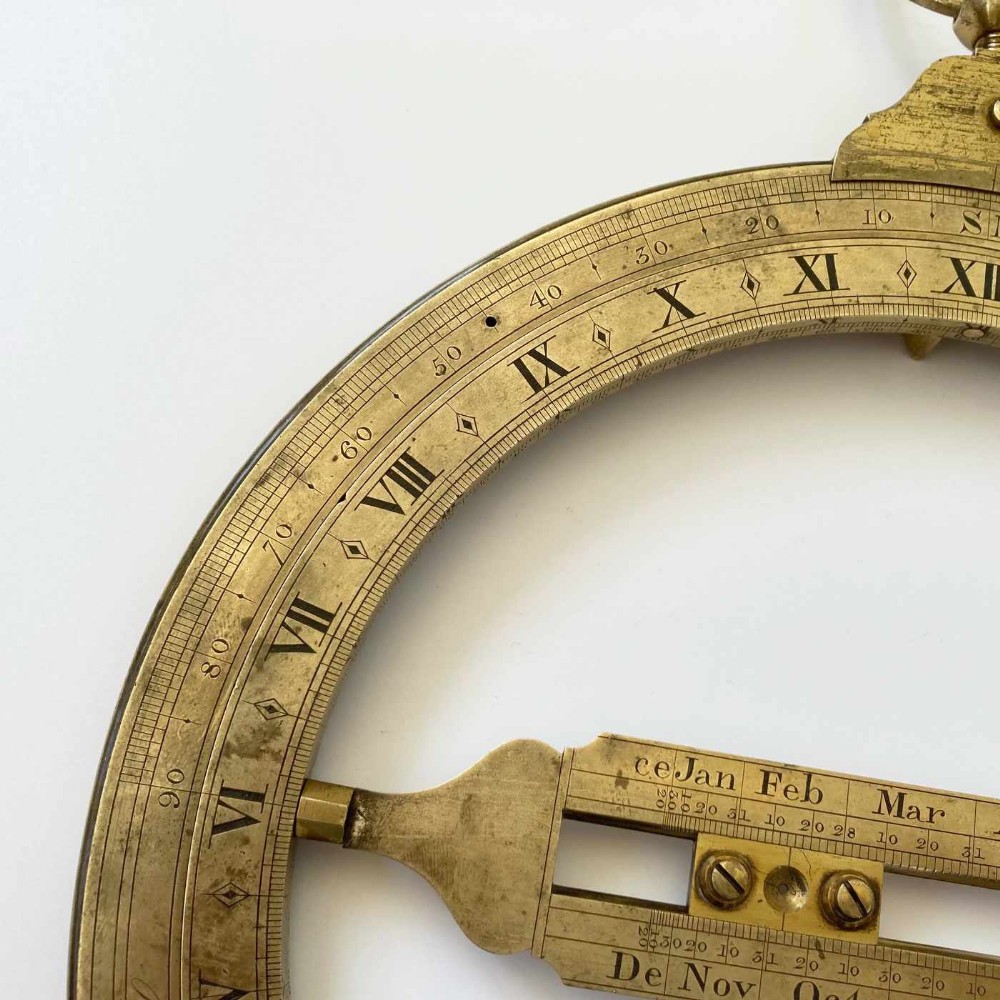
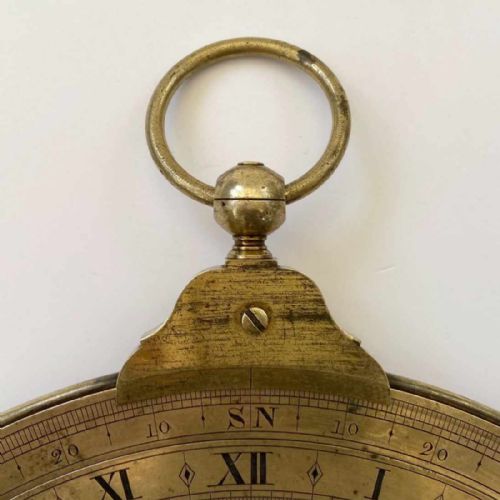
A brass bar is set across the centre of the inner ring which contains a sliding gnomon and onto the outer ring is fitted a sliding hanging loop.
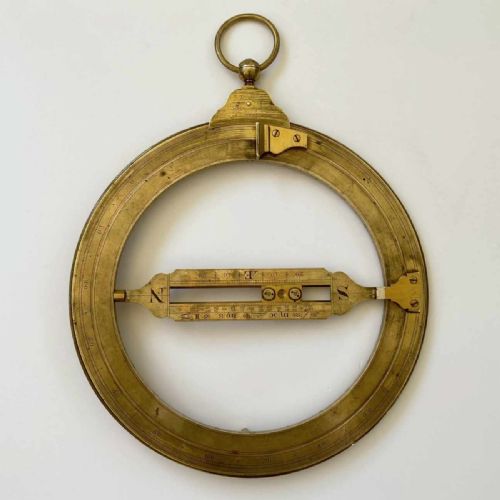
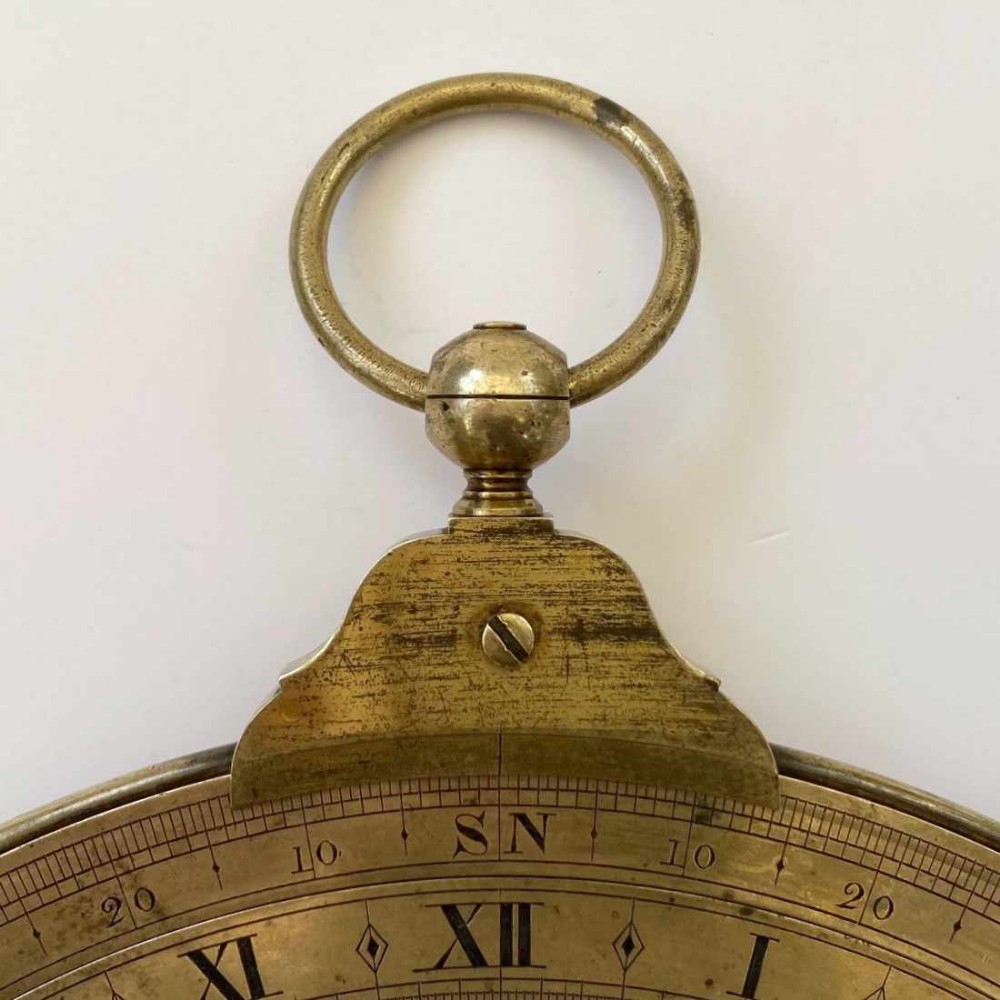
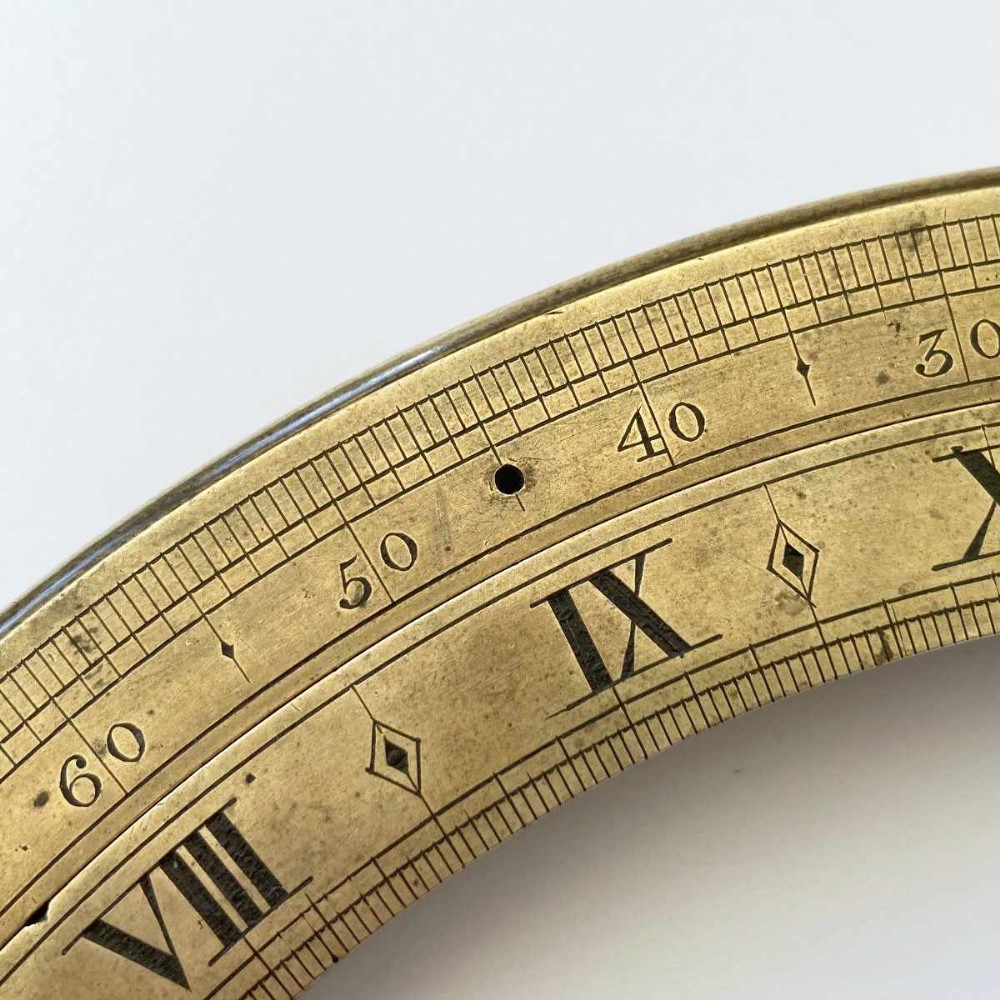
To operate this fine instrument, the latitude of the observer must first be set by using the scale on the outer ring of the dial. This example is truly universal, meaning that it may be operated in both the Northern and the Southern hemisphere as indicated by the presence of a 0 to 90 degree scale running left and right. The engraved centre point of the hanging loop must first be brought to rest at the appropriate point of latitude.
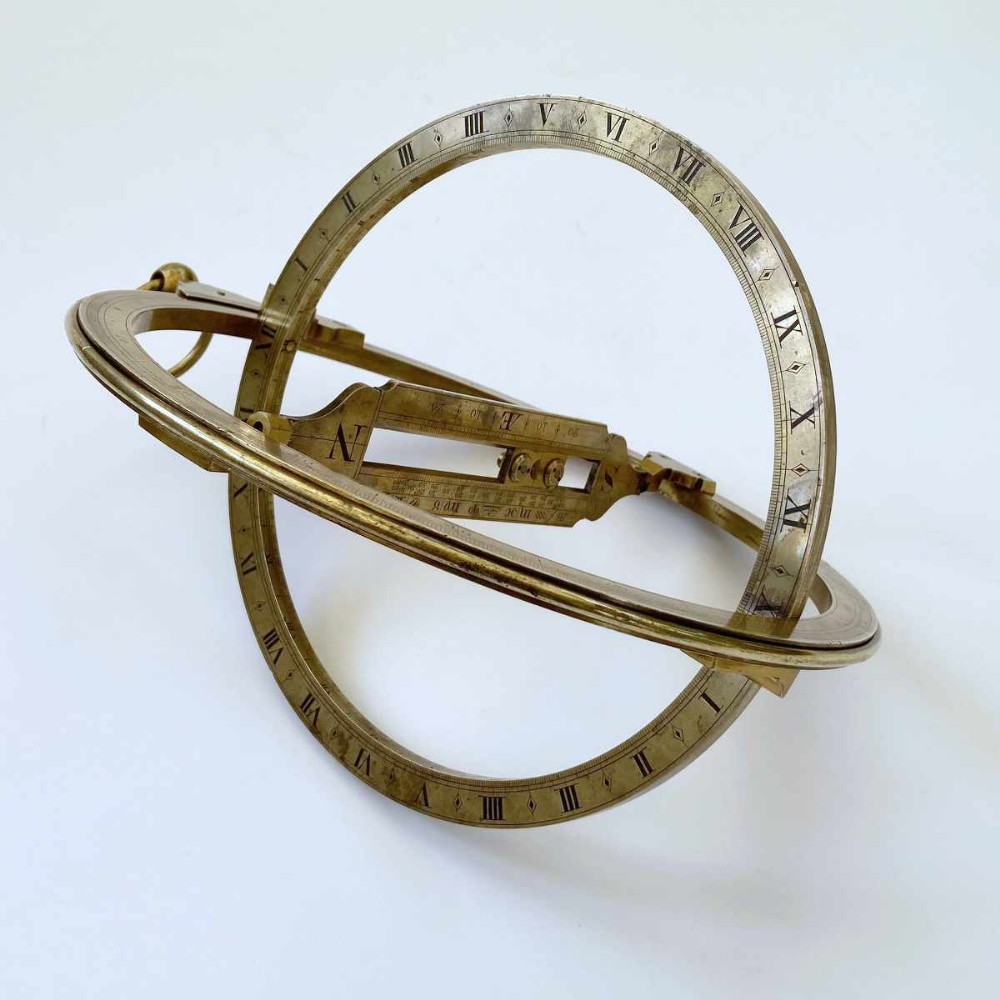
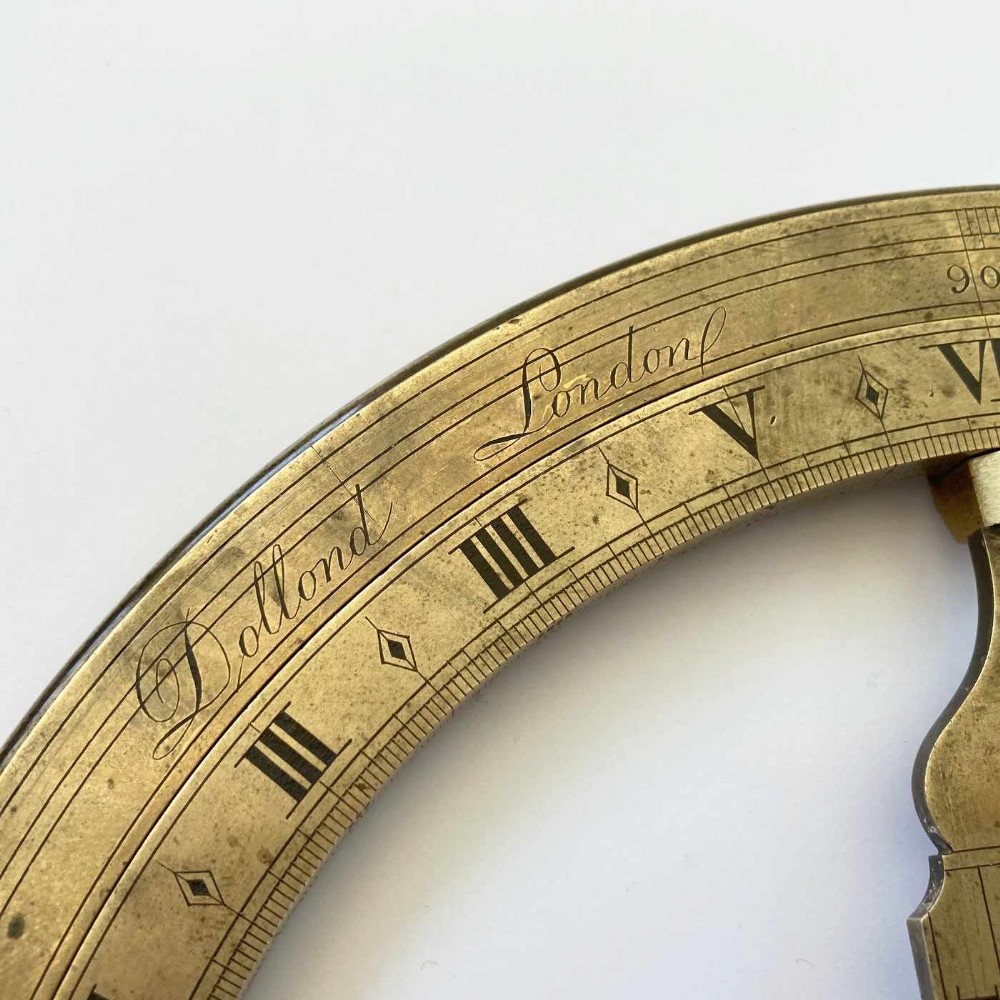
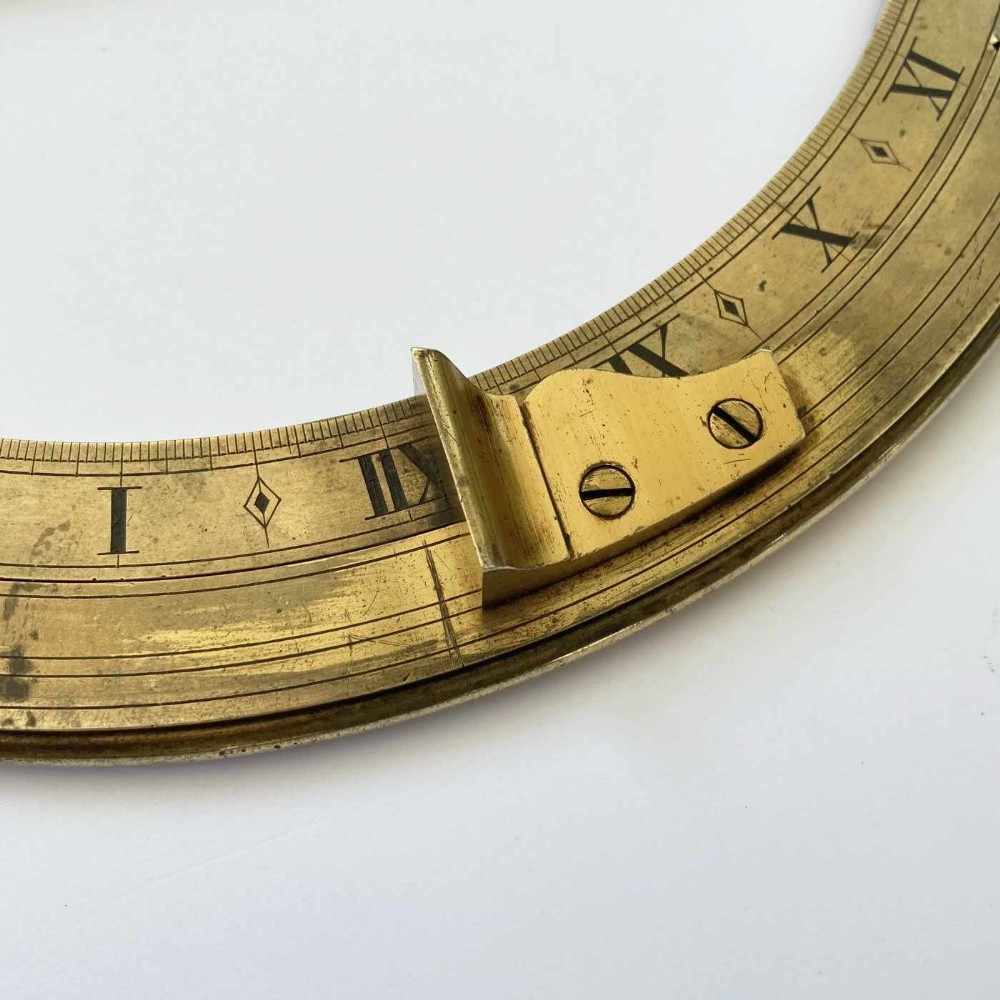
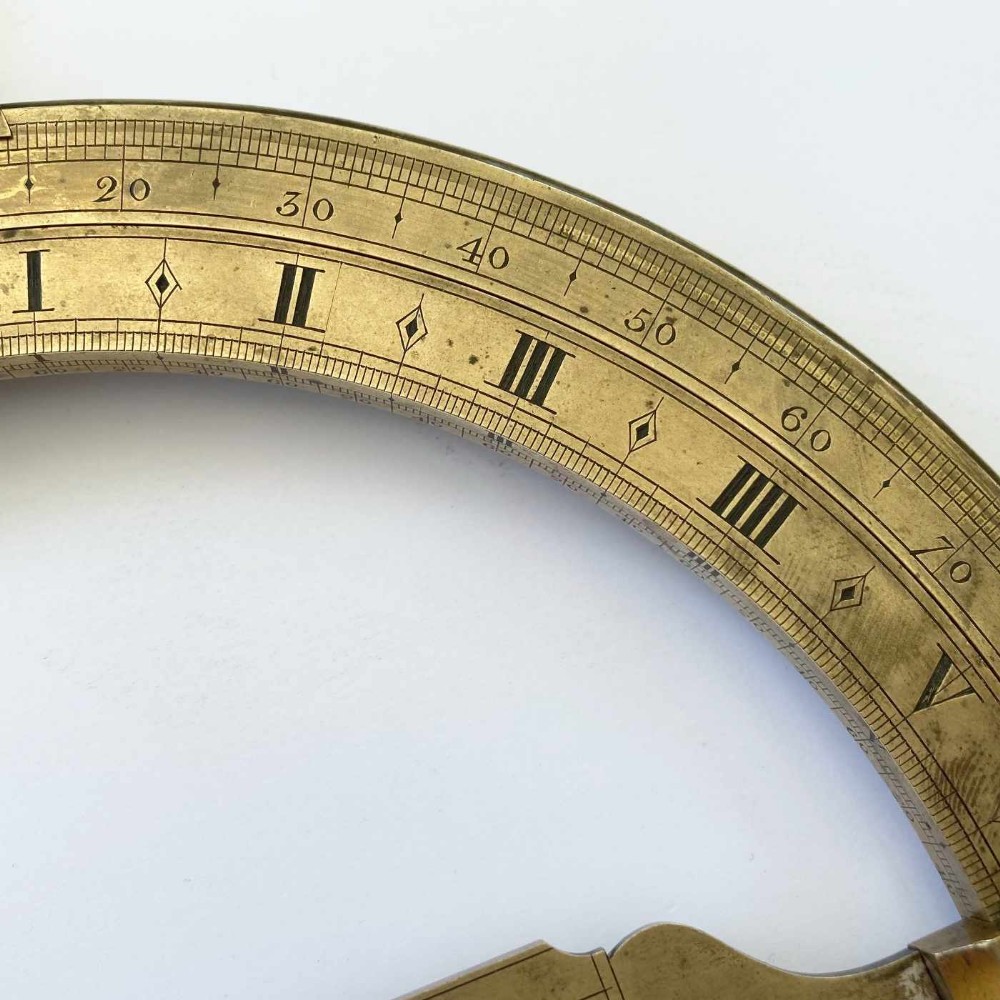
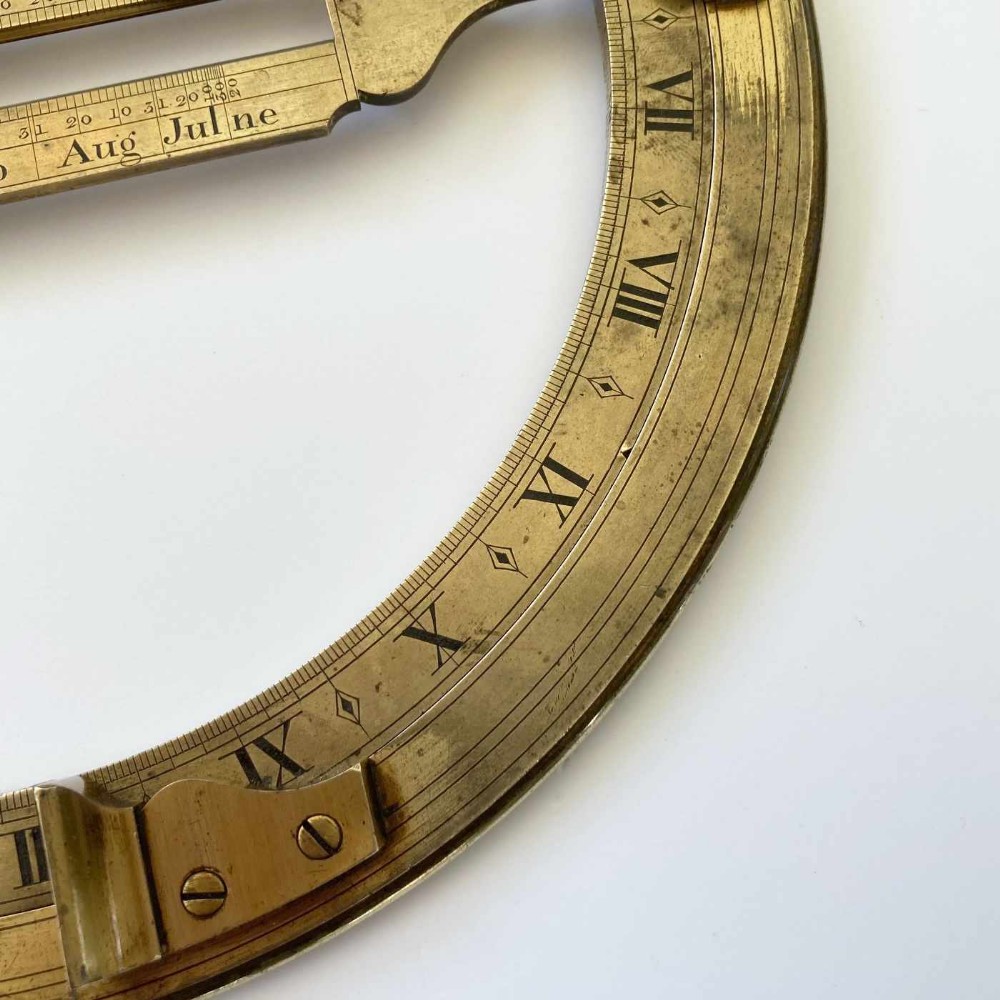
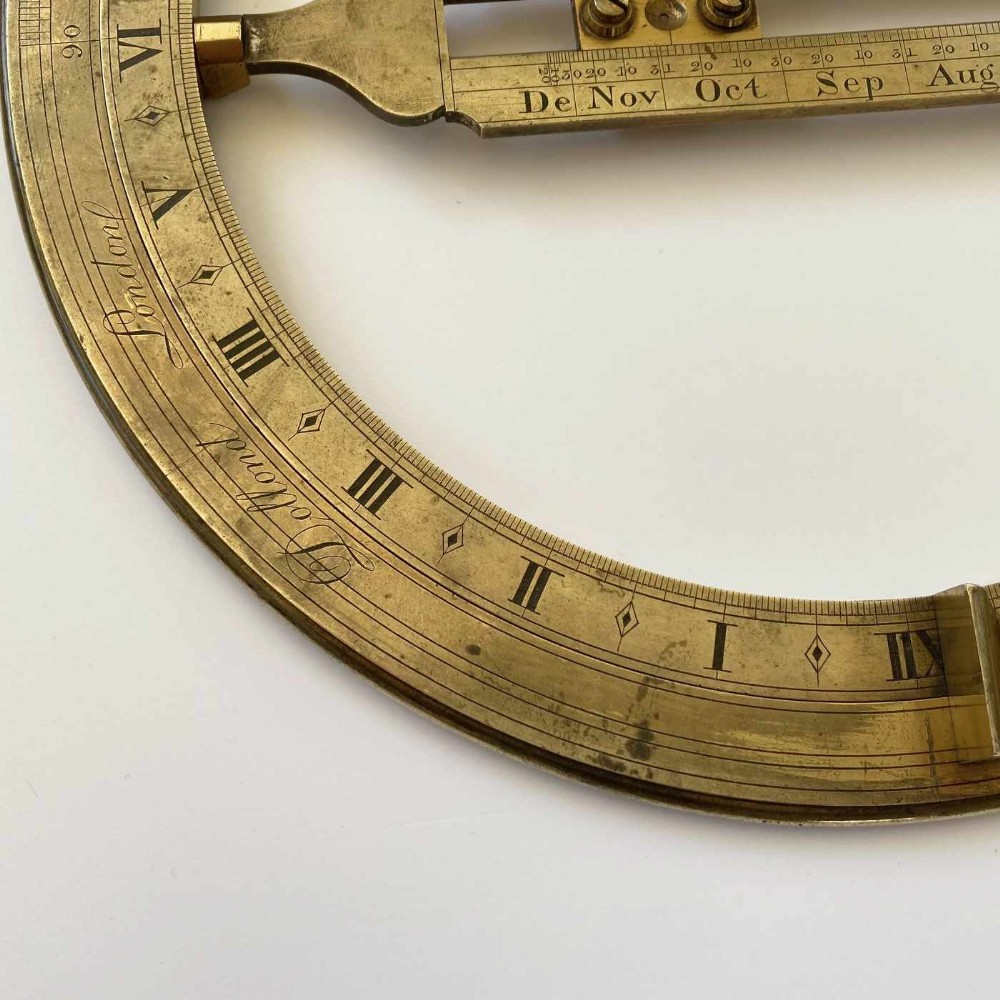
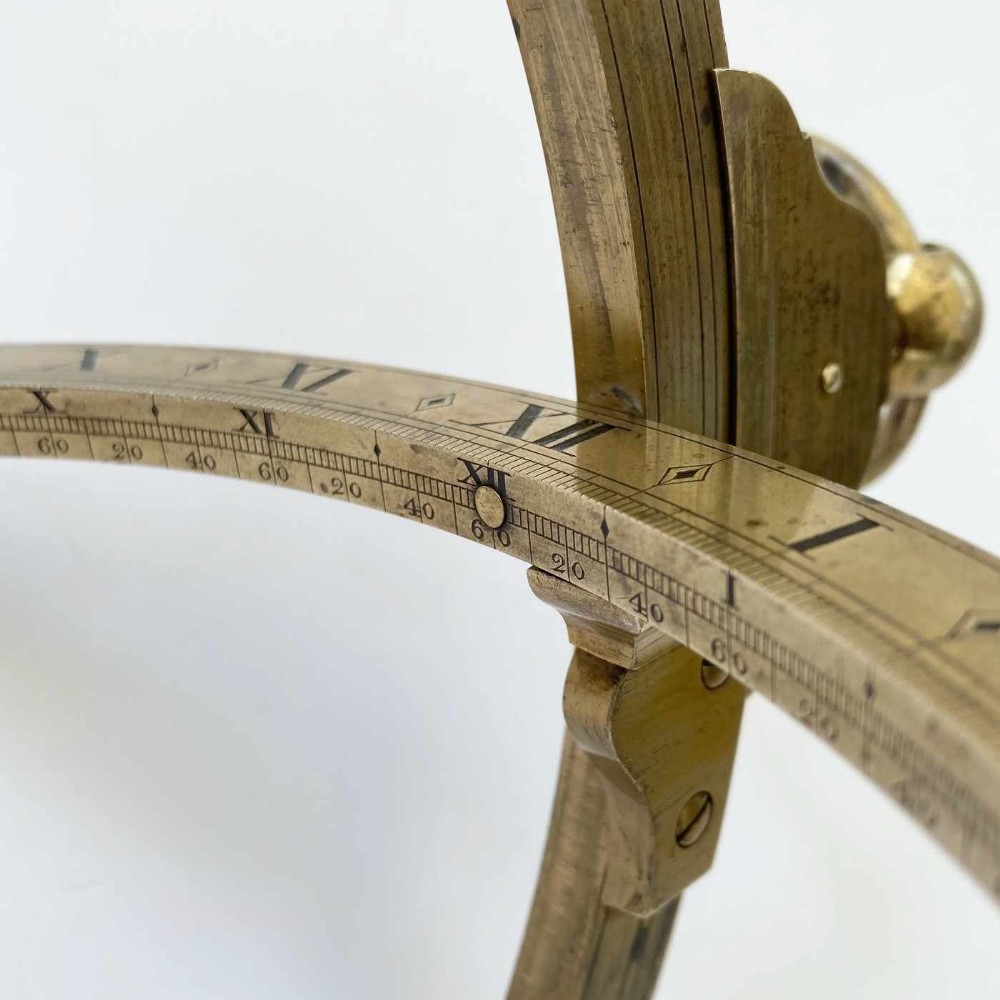
In similarity, the inner ring is beautifully engraved with roman numeral hours from I to XII on both sides and should be extended out to sit at 90 degrees to the outer ring. The inner edge of the ring is also finely engraved with hours and associated twenty minute intervals.
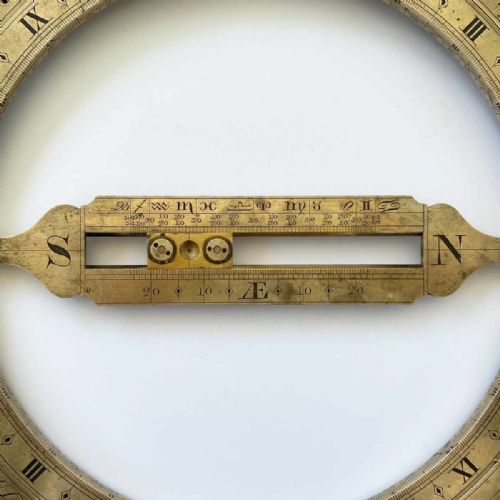
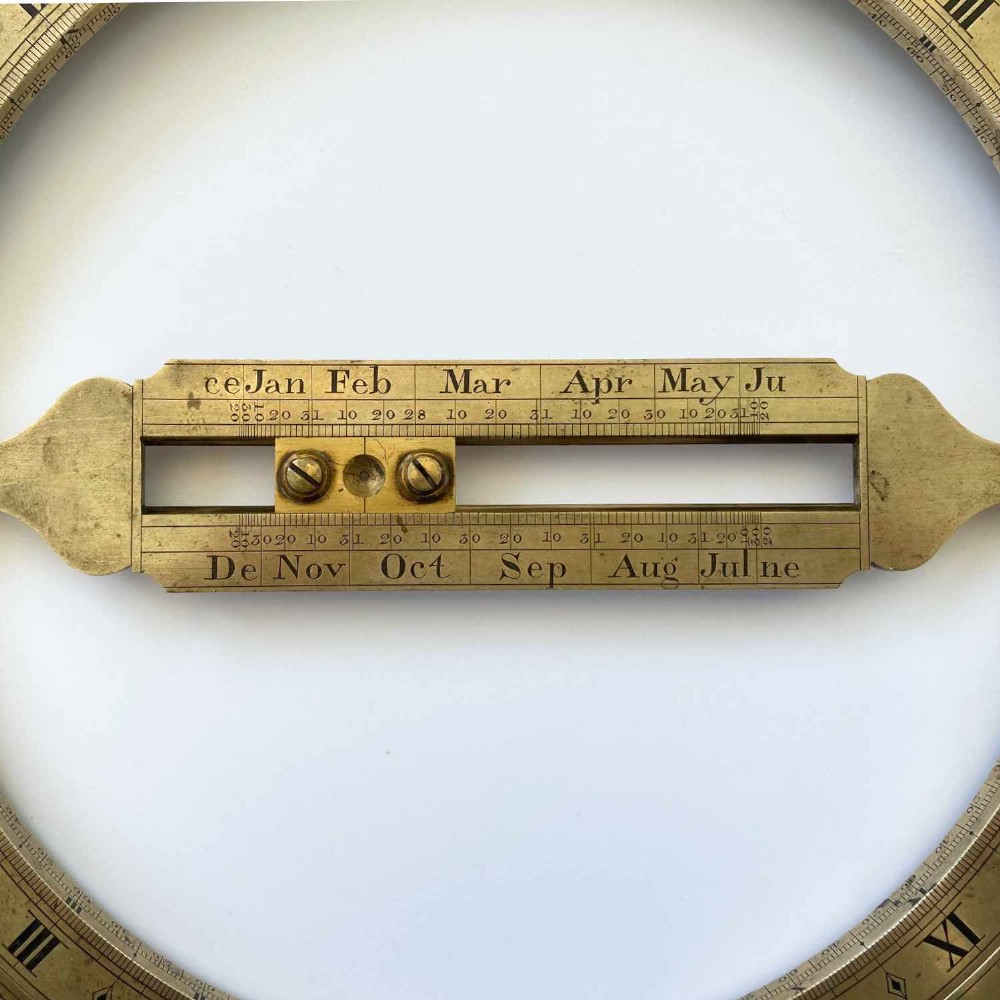
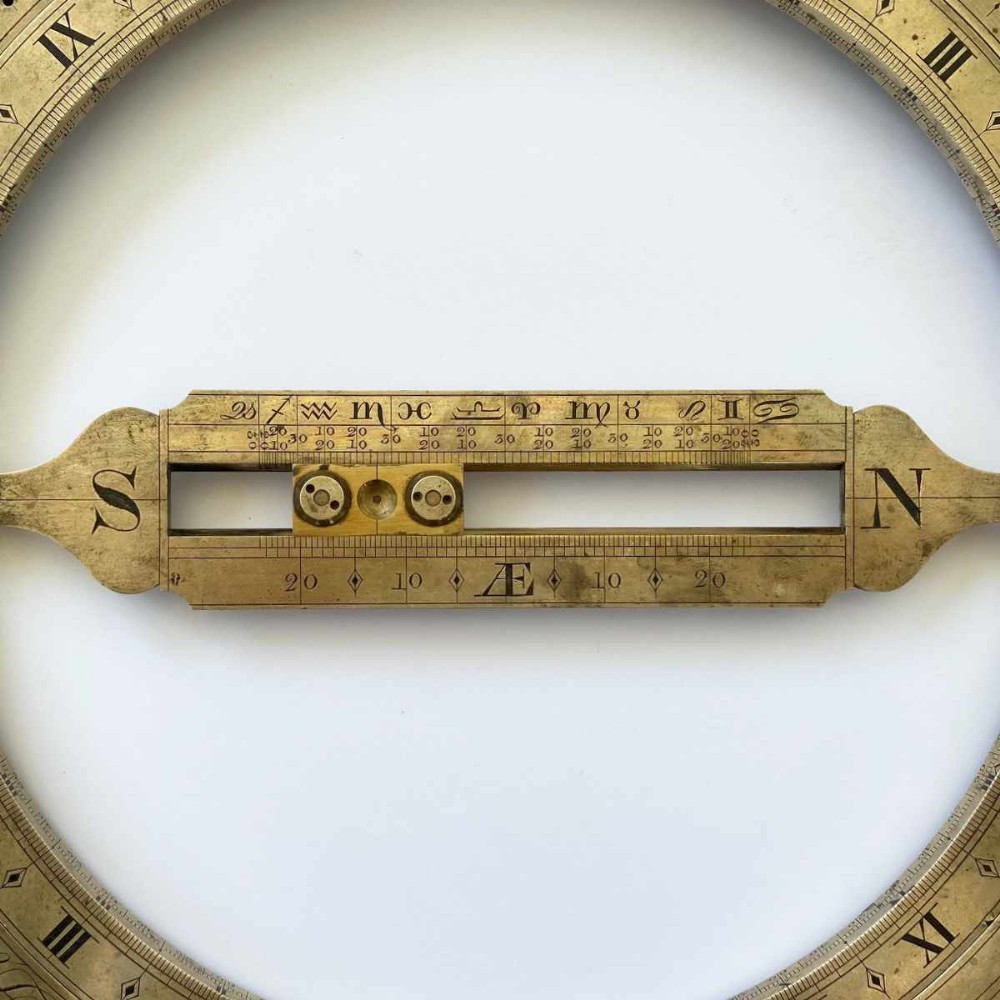
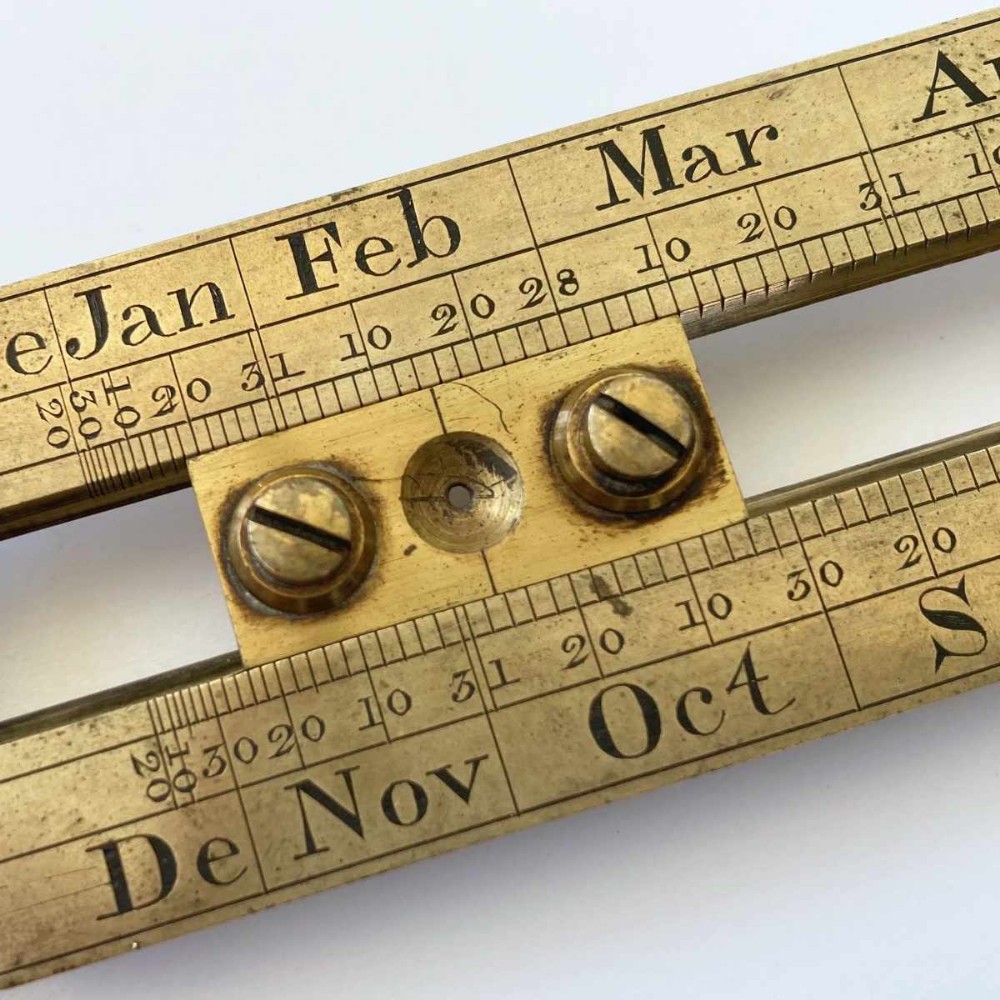
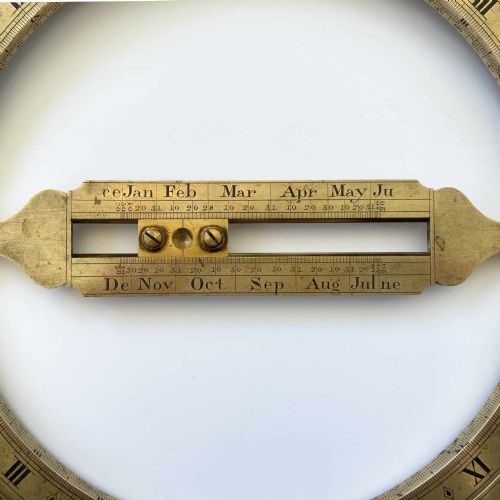
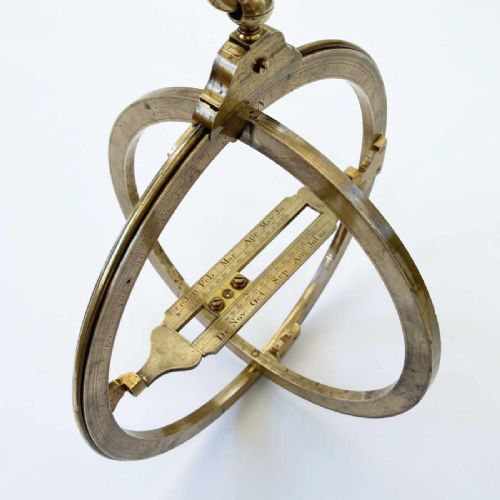
The central bridge which is intended to mimic the earth’s axis in relation to the latitude is engraved with North & South poles at each end, and with scales on each side to allow the observer to locate the pinhole gnomon in the correct position according to the time of year. The first side is engraved with a zodiac scale and another showing the sun’s angular declination. The reverse representing the days and the months of the year, any of which could be used according to preference.
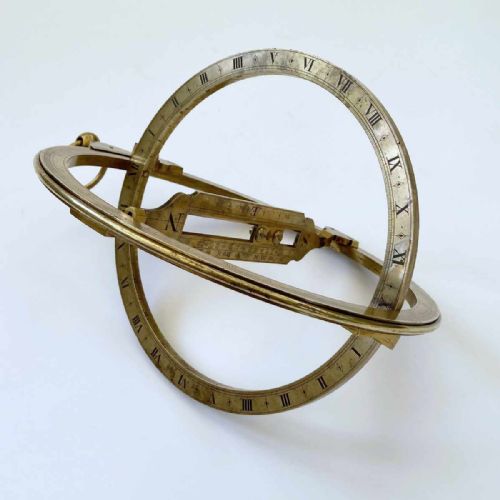
Once adjusted, the dial would be held aloft and the bridge rotated until the sun’s rays were transferred through the gnomon onto the inner ring, thus producing a time reading.
An additional feature provided on this example is the inclusion of a nautical quadrant showing a 0-to-90-degree scale on the reverse of the outer chapter ring. Ring dials were an important means for discerning time for navigation purposes and latitude would have been calculated by introducing a pin into the small hole just noticeable in the 2 o clock position of image 2.
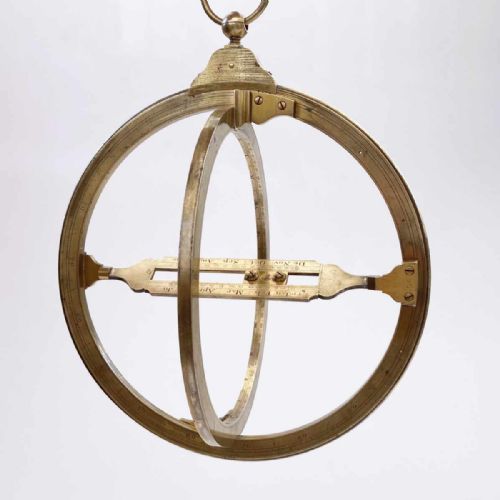
When held aloft, the pin’s shadow would provide a latitude reading on the quadrant scale for the mariner to be able to set the hanging loop at the correct position prior to the time observation, a feature alongside its universal latitude scale which gives good indication of its historic use. The size of the dial is also an important factor, most existing examples are of four-inch diameter, but accuracy of reading is improved as size is increased, therefore the nine inch diameter of this instrument would have been of significant benefit in more trying circumstances.
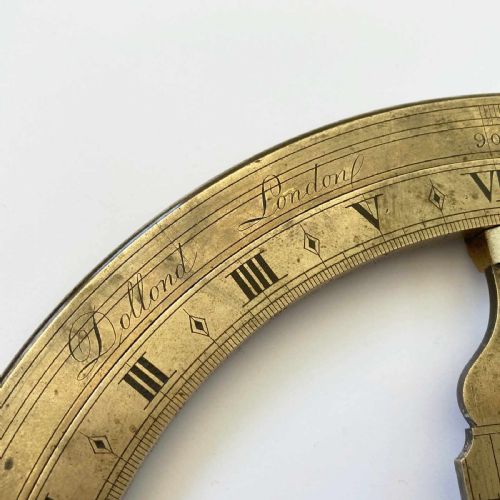
The dial is of course completed with the iconic engraving for the Dollond company of London which was set up in Hatton Garden in 1750 by Peter Dollond with his father John joining him shortly after. John Dollond’s invention of the achromatic lens (although bitterly disputed) led to his award of the Copley Medal by The Royal Society in 1758 and following this success, Dollond moved to The Strand where the company was appointed optician to George III and the Duke of York in 1761. John Dollond Senior died in the same year, however the business was continued by the brothers Peter and John Dollond (P&J Dollond)
Following the death of his brother John in 1804, Peter Dollond took his nephew George Huggins into partnership and after a change in surname, the company continued under a refreshed Dollond partnership until Peter’s death in 1820, the same year that they were jointly made opticians to George IV.
The company continued its association with royalty and went on to win a Great Exhibition Medal in 1851, a year before George’s death. His nephew (also George) succeeded in the ownership until his death in 1866
Jason Clarke Antiques has dated this piece to the 1750s.
You can view the stock and full dealer information on the Jason Clarke Antiques Profile Page
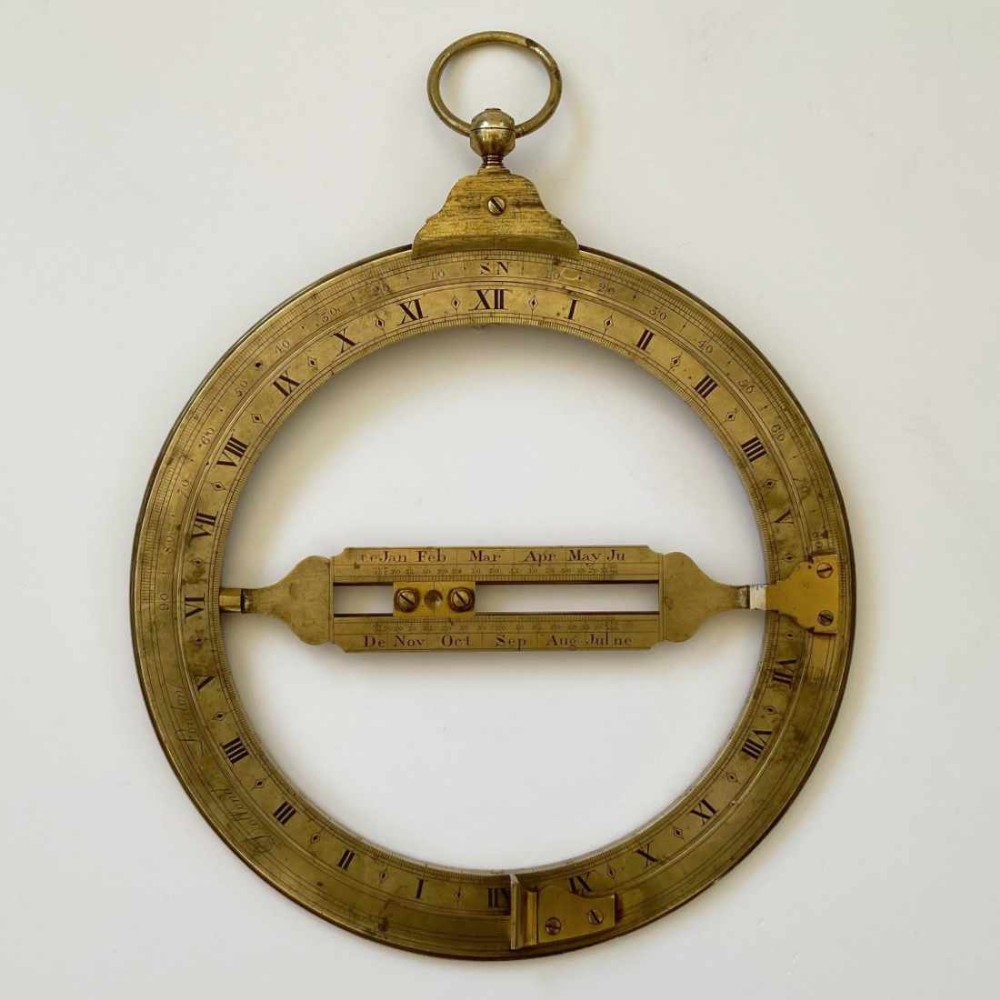
Large Eighteenth Century Universal Equinoctial Ring Dial by Dollond London