17,033  PAGES BROWSED TODAY PAGES TODAY 89 ANTIQUES UPLOADED TODAYNEW ARRIVALS
89 ITEMS ADDED TODAY
Sort Order
Items Per Page
Browse Categories
Sort order
Items per page
ID #SA958199
FOR SALE
£175
Email Buy
Save
Regency Double Turn Folding Gold Balance by Stephen Houghton & Son of Ormskirk
Jason Clarke Antiques
for sale €205     $222
£175
Jason Clarke Antiques

Jason Clarke Antiques

Sellingantiques Verified Since Jul 2015
View Dealers Stock Page
Id #SA958199
PDF SHARE
SAVE

Regency Double Turn Folding Gold Balance by Stephen Houghton & Son of Ormskirk

19th century
Description

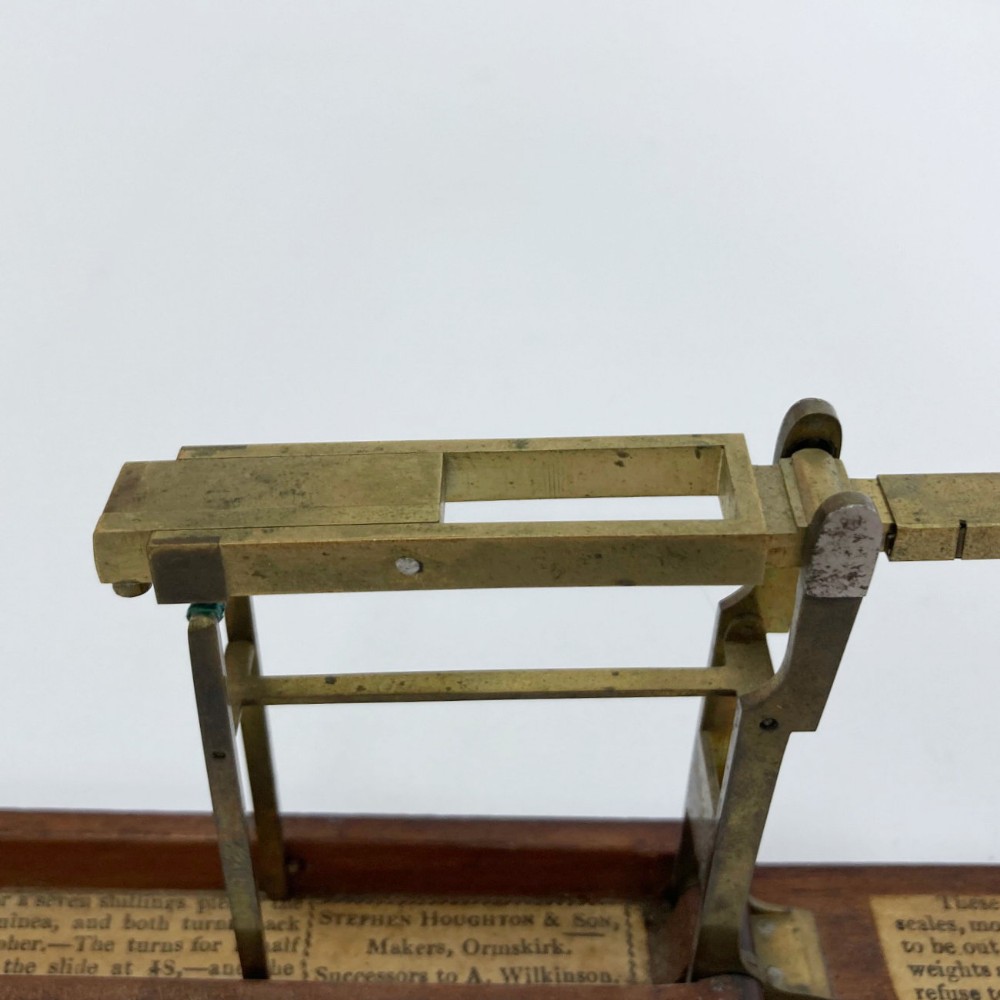
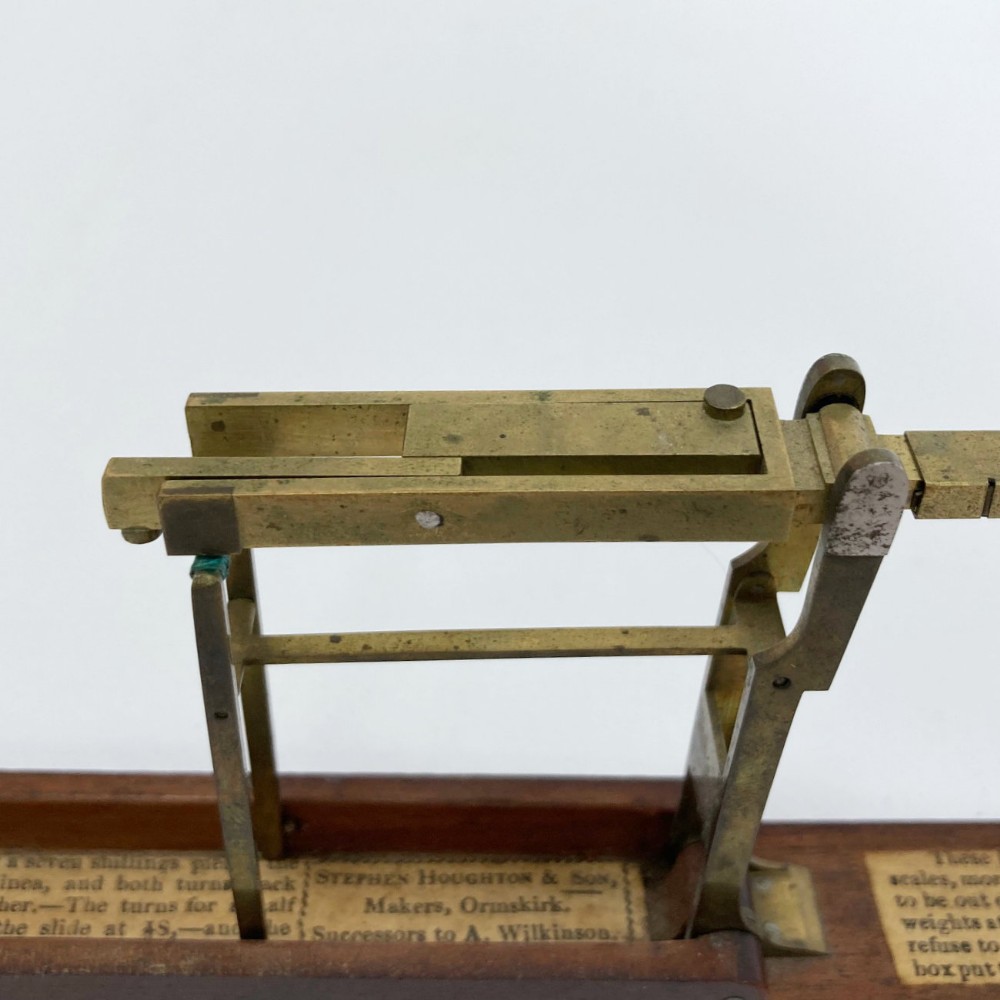
For sale a Regency Period double turn folding gold balance by Stephen Houghton & Son of Ormskirk (Successors to A. Wilkinson)

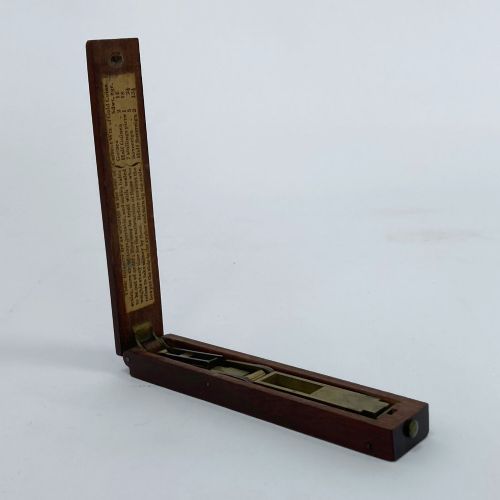
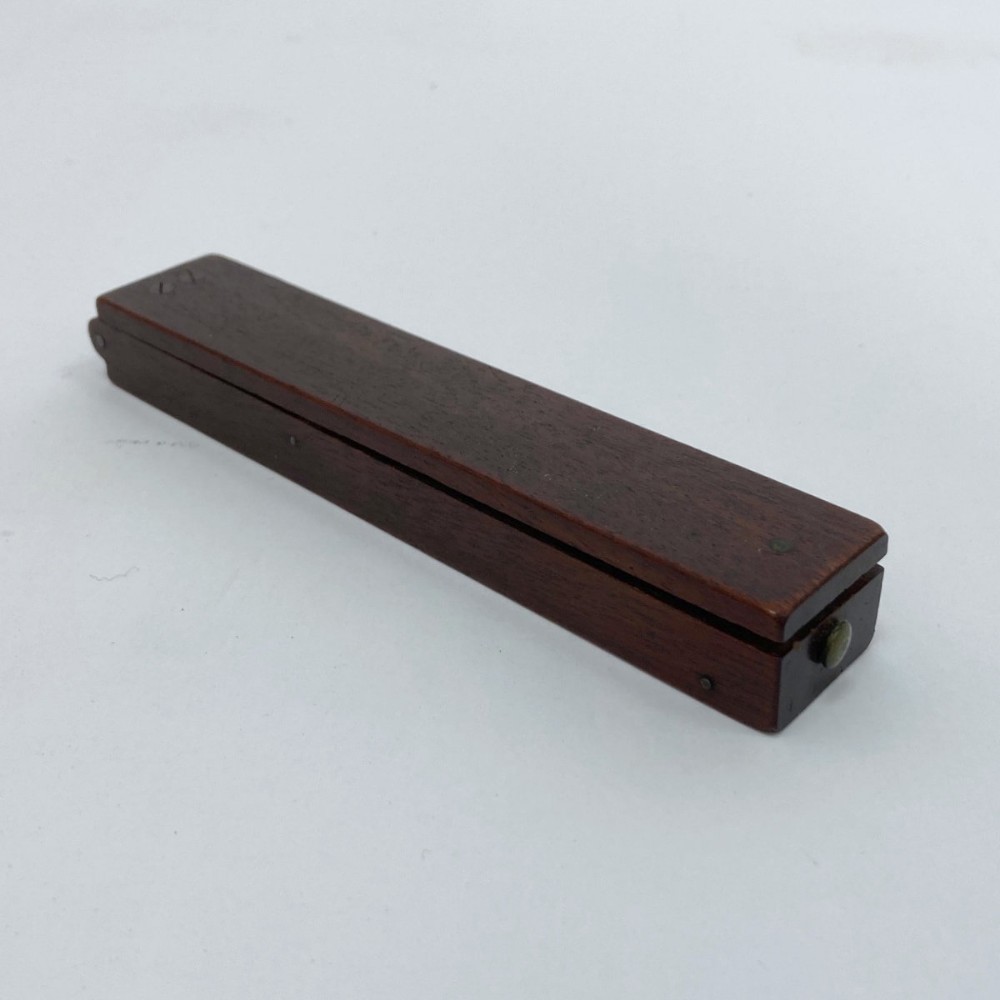
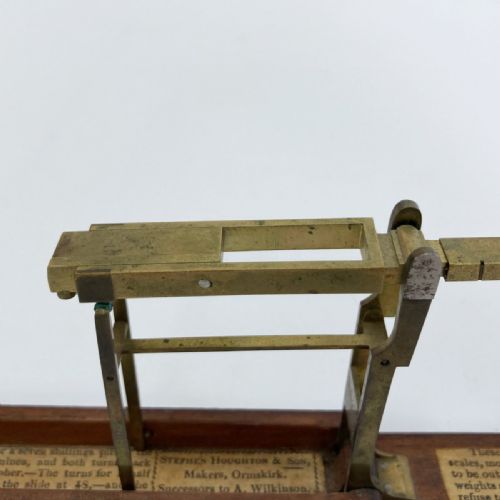
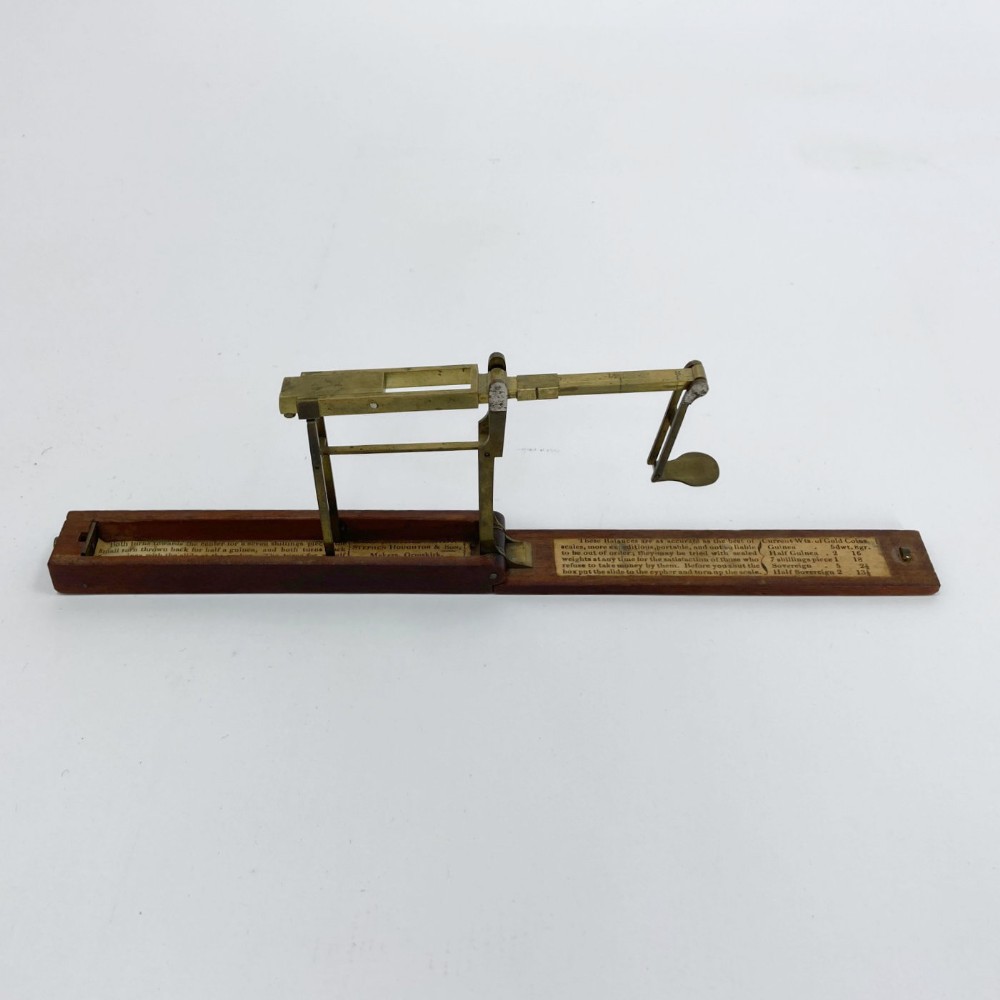
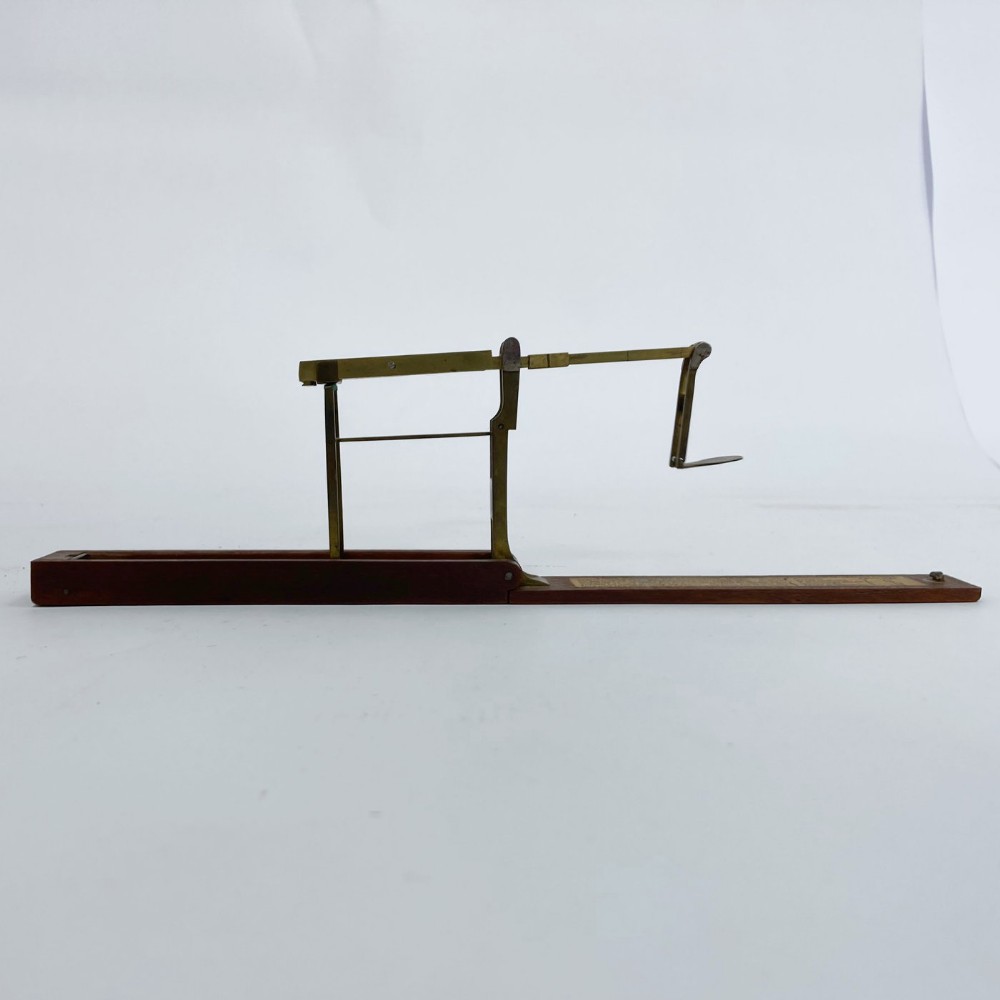
Comprised of a two-part narrow mahogany case with hinge at one side and push catch at the other. The lifting of the lid automatically raises a brass balance beam by means of two hinged supporting columns, and then a coin plate folded flat to the top is manually turned out for operation.
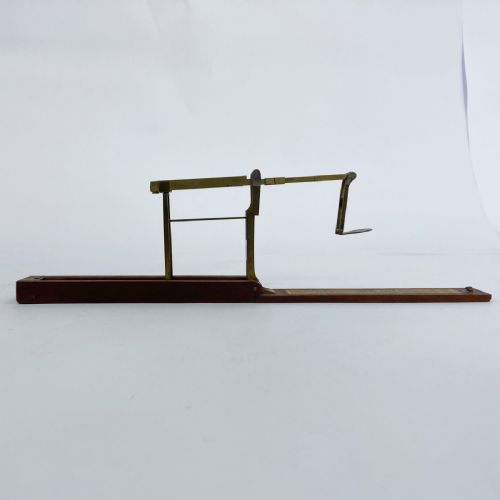
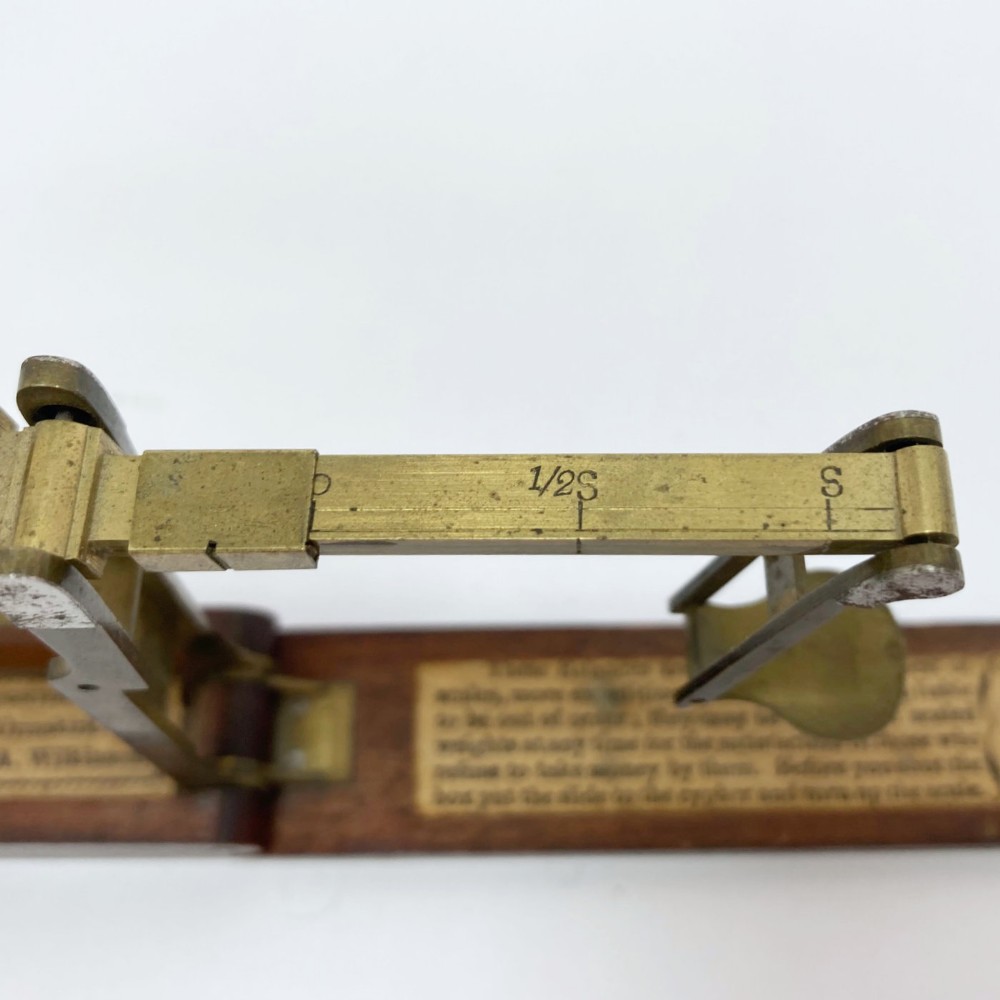
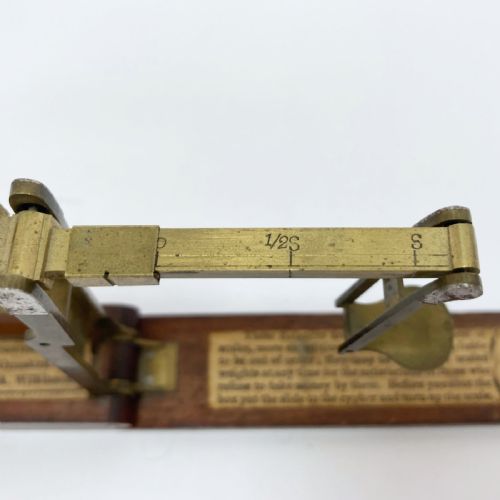
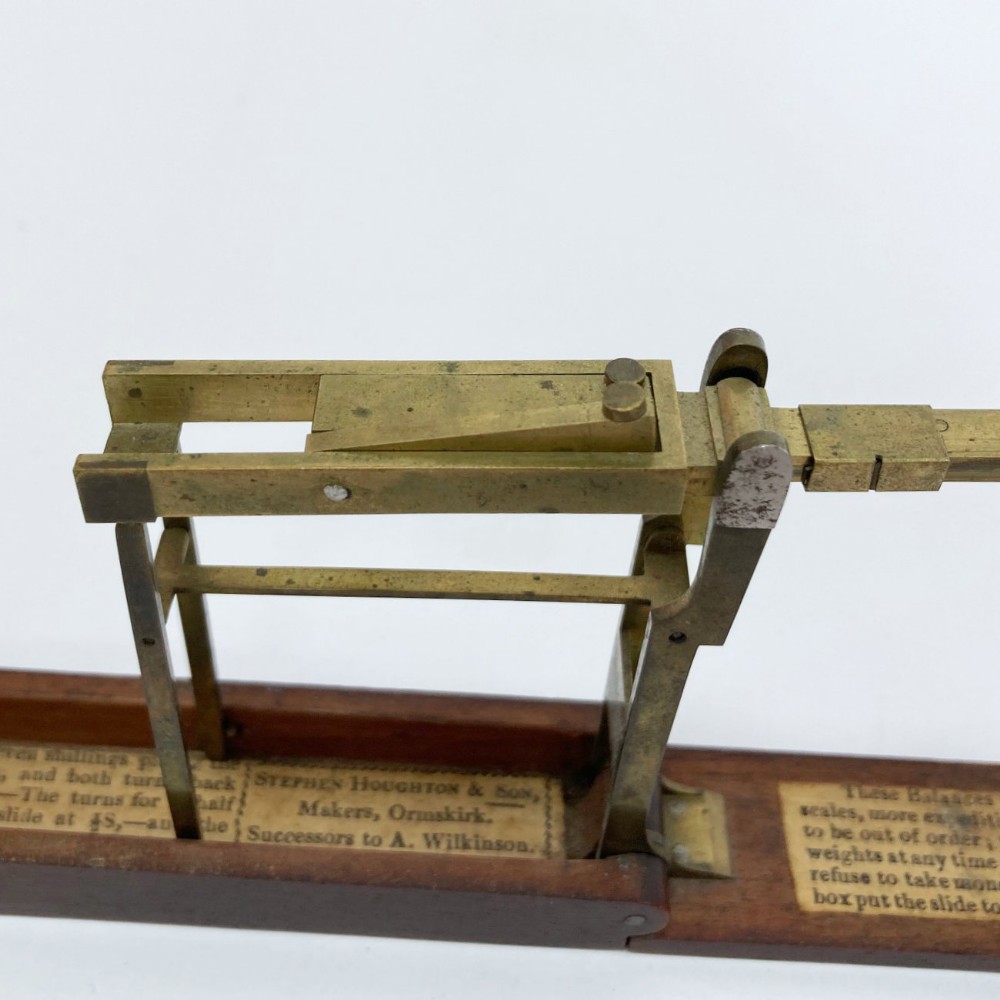
The beam end supports two additional hinged weights called “turns” which may be adjusted in accordance with the case instructions and the type of coinage. The balance arm also sports an engraved scale and slider which would be used to calculate subtle variations from the published standard weight. It is perhaps obvious to reference but the popularity of these ingenious scales was born out of the fact that gold was subject to both wear and tear and nefarious practices, meaning that the difference in the amount of gold contained in the same coin could be vastly different from one to the next. If you wished to ensure the real value of a transaction, a scale of some sort was an absolute necessity during the period.
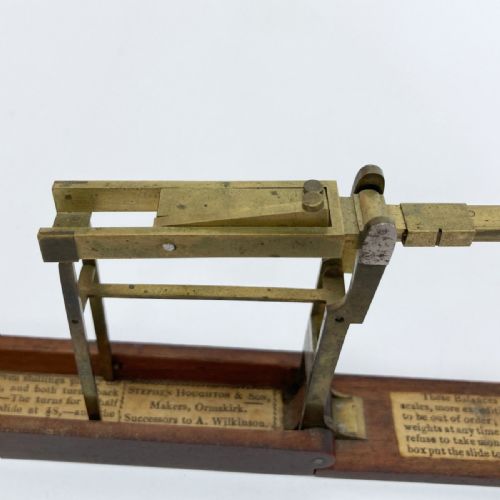
Unlike most conventional scales, the method for determining the true weight of a coin was by placing the coin on the plate after making associated adjustments to the turns. If a coin was of full weight, then the beam would tilt to its fullest extent allowing the coin plate to rest and remain on lid of the case. If the coin was considered to be underweight, then the slide on the beam could be adjusted to determine the exact discrepancy.
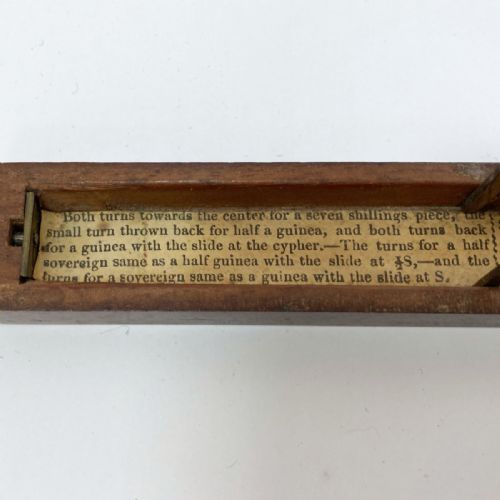
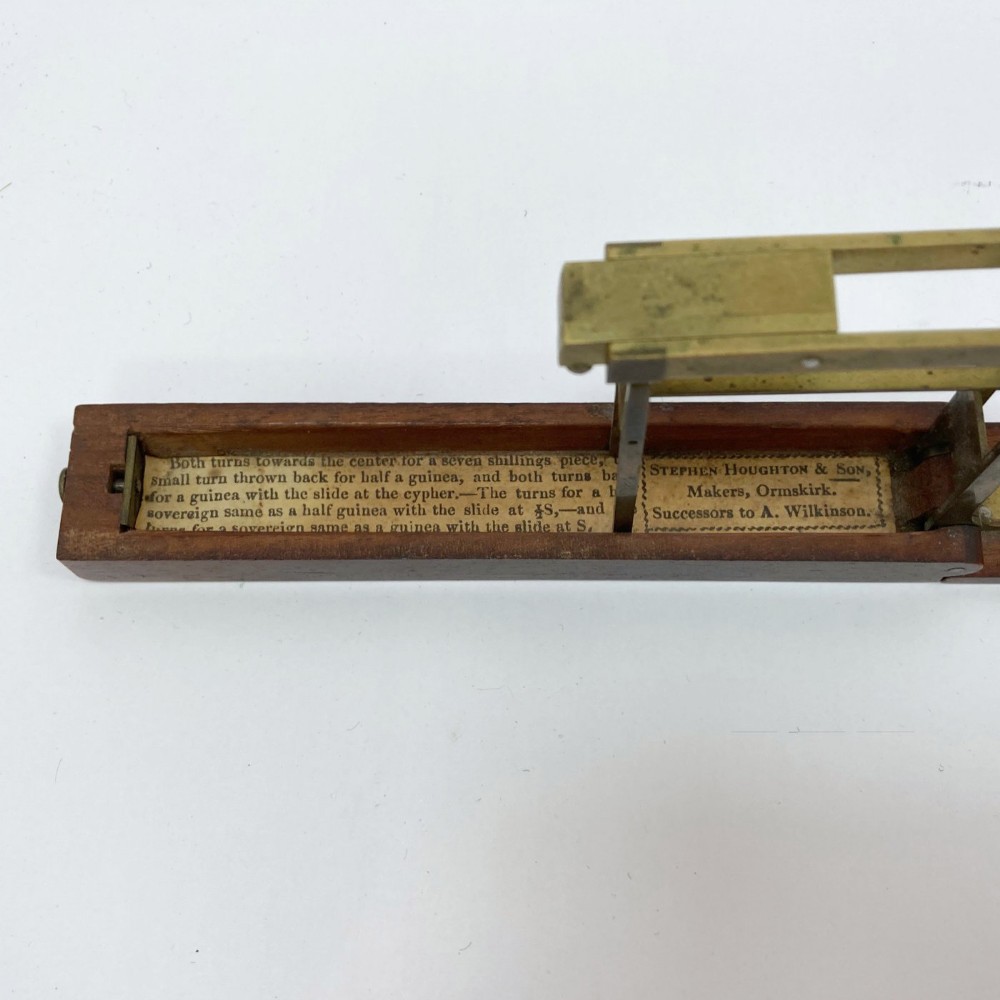
This example retains both of its internal paper labels which read as follows:

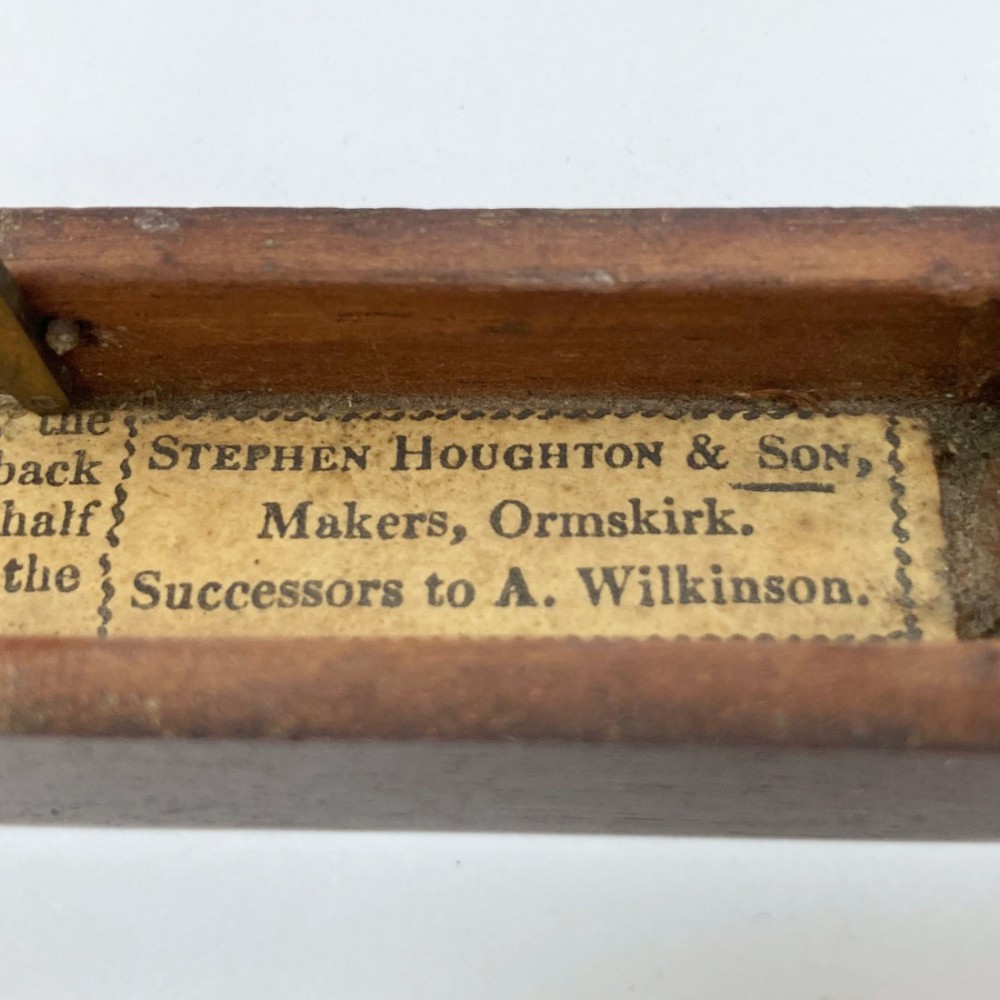
“Stephen Houghton & Son, Makers, Ormskirk.

Successors to A. Wilkinson

Both turns towards the centre for a seven-shilling piece, small turn thrown back for half a guinea, and both turns back for a guinea with the slide at the cypher. The turns for a half sovereign same as a half guinea with the slide at 1/2S and the turns for a sovereign same as a guinea with the slide at S.
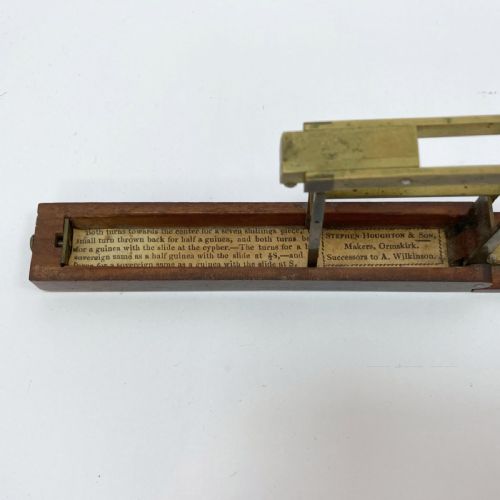
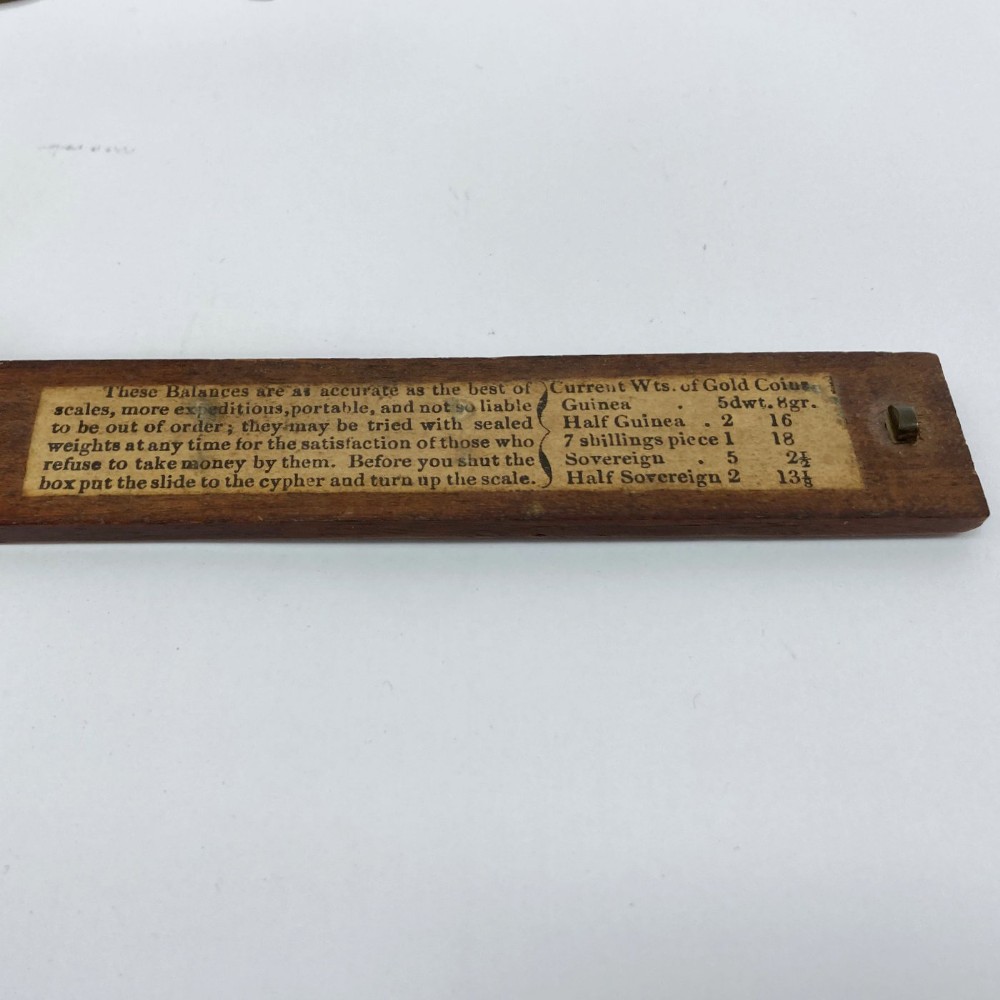
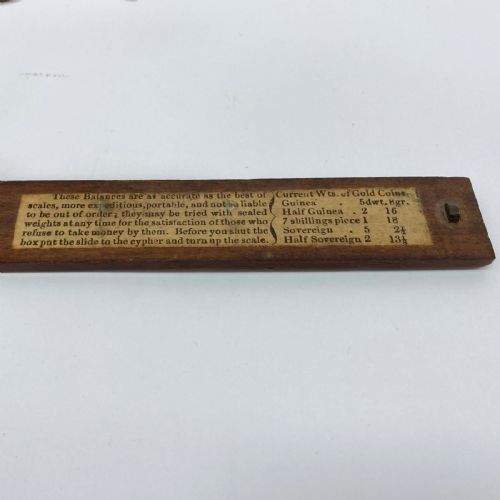
These balances are as accurate as the best of scales, more expeditious, portable, and not so liable to be out of order; they may be tried with sealed weights at any time for the satisfaction of those who refuse to take money by them. Before you shut the box put the slide to the cypher and turn up the scale.”
The company of Stephen Houghton & Son was formed in 1801 upon the death of Anthony Wilkinson, the original inventor of the folding balance. Houghton is listed as a tenant in one of Wilkinson’s Ormskirk properties from 1790 so whilst presenting himself as a watchmaker, it is likely that he had a prior working relationship with Wilkinson.

In early 1798, Wilkinson invented the double turn folding balance in order to incorporate weight measurements for the new seven-shilling piece (or third guinea) which was introduced in November of 1797, and it is this design that the Houghton business produced albeit with some later modifications to allow for the sovereign and half sovereign which followed after the Napoleonic wars in 1817.
Houghton & Son continued to advertising themselves as both watchmakers and gold balance makers until 1828 where after sheer demand probably led to a singular focus on scale making. It is documented that Houghton produced scales for resale to the likes of W&T Avery and De Grave as well as retailers across the country, which gives us some sense of the size of the business.
Stephen Houghton died in 1839 whereupon his son James inherited the business. It continued to prosper and later moved to Liverpool in 1853 where it traded until the late 1860’s.

Using coinage evidence, it is clear that with the inclusion of the sovereign on the paper label that this example was produced after 1817 and it is perhaps testament to the regard with which Wilkinson was held that the Houghton’s’ con

Physical Dimensions
Height
1.5cm (0.59")
Width
13.5cm (5.31")
Depth
2.5cm (0.98")
Declaration

Jason Clarke Antiques has dated this Antique Folding Gold Balance to the 1800s.

Reference Numbers
Sellingantiques Reference
SA958199
Description
For sale a Regency Period double turn folding gold balance by Stephen Houghton & Son of Ormskirk (Successors to A. Wilkinson)

Comprised of a two-part narrow mahogany case with hinge at one side and push catch at the other.

The lifting of the lid automatically raises a brass balance beam by means of two hinged supporting columns, and then a coin plate folded flat to the top is manually turned out for operation.
Jason Clarke Antiques
fig 1. A Regency brass double turn folding gold balance instrument displayed extended from its fitted mahogany case.
fig 1. Regency Double Turn Folding Gold Balance by Stephen Houghton & Son of Ormskirk

The beam end supports two additional hinged weights called “turns” which may be adjusted in accordance with the case instructions and the type of coinage. The balance arm also sports an engraved scale and slider which would be used to calculate subtle variations from the published standard weight. It is perhaps obvious to reference but the popularity of these ingenious scales was born out of the fact that gold was subject to both wear and tear and nefarious practices, meaning that the difference in the amount of gold contained in the same coin could be vastly different from one to the next. If you wished to ensure the real value of a transaction, a scale of some sort was an absolute necessity during the period.

fig 2. A Regency brass double turn folding gold balance instrument displayed extended from its fitted mahogany case.
fig 2. Regency Double Turn Folding Gold Balance by Stephen Houghton & Son of Ormskirk

Unlike most conventional scales, the method for determining the true weight of a coin was by placing the coin on the plate after making associated adjustments to the turns. If a coin was of full weight, then the beam would tilt to its fullest extent allowing the coin plate to rest and remain on lid of the case. If the coin was considered to be underweight, then the slide on the beam could be adjusted to determine the exact discrepancy.

fig 3. A Regency brass double turn folding gold balance instrument displayed extended from its fitted mahogany case.
fig 3. Regency Double Turn Folding Gold Balance by Stephen Houghton & Son of Ormskirk

This example retains both of its internal paper labels which read as follows:

“Stephen Houghton & Son, Makers, Ormskirk.

Successors to A. Wilkinson

Both turns towards the centre for a seven-shilling piece, small turn thrown back for half a guinea, and both turns back for a guinea with the slide at the cypher. The turns for a half sovereign same as a half guinea with the slide at 1/2S and the turns for a sovereign same as a guinea with the slide at S.

fig 4. A Regency brass double turn folding gold balance instrument displayed extended from its fitted mahogany case.
fig 4. Regency Double Turn Folding Gold Balance by Stephen Houghton & Son of Ormskirk

These balances are as accurate as the best of scales, more expeditious, portable, and not so liable to be out of order; they may be tried with sealed weights at any time for the satisfaction of those who refuse to take money by them. Before you shut the box put the slide to the cypher and turn up the scale.”

fig 5. A Regency brass double turn folding gold balance instrument displayed extended from its fitted mahogany case.
fig 5. Regency Double Turn Folding Gold Balance by Stephen Houghton & Son of Ormskirk

The company of Stephen Houghton & Son was formed in 1801 upon the death of Anthony Wilkinson, the original inventor of the folding balance. Houghton is listed as a tenant in one of Wilkinson’s Ormskirk properties from 1790 so whilst presenting himself as a watchmaker, it is likely that he had a prior working relationship with Wilkinson.

fig 6. A Regency brass double turn folding gold balance instrument displayed extended from its fitted mahogany case.
fig 6. Regency Double Turn Folding Gold Balance by Stephen Houghton & Son of Ormskirk

In early 1798, Wilkinson invented the double turn folding balance in order to incorporate weight measurements for the new seven-shilling piece (or third guinea) which was introduced in November of 1797, and it is this design that the Houghton business produced albeit with some later modifications to allow for the sovereign and half sovereign which followed after the Napoleonic wars in 1817.

fig 7. A Regency brass double turn folding gold balance instrument displayed extended from its fitted mahogany case.
fig 7. Regency Double Turn Folding Gold Balance by Stephen Houghton & Son of Ormskirk

Houghton & Son continued to advertising themselves as both watchmakers and gold balance makers until 1828 where after sheer demand probably led to a singular focus on scale making. It is documented that Houghton produced scales for resale to the likes of W&T Avery and De Grave as well as retailers across the country, which gives us some sense of the size of the business.

fig 8. A Regency brass double turn folding gold balance instrument displayed extended from its fitted mahogany case.
fig 8. Regency Double Turn Folding Gold Balance by Stephen Houghton & Son of Ormskirk

Stephen Houghton died in 1839 whereupon his son James inherited the business. It continued to prosper and later moved to Liverpool in 1853 where it traded until the late 1860’s.

Using coinage evidence, it is clear that with the inclusion of the sovereign on the paper label that this example was produced after 1817 and it is perhaps testament to the regard with which Wilkinson was held that the Houghton’s’ con

Height
1.5cm (0.59")
Width
13.5cm (5.31")
Depth
2.5cm (0.98")
Date of Manufacture

Jason Clarke Antiques has dated this Antique Folding Gold Balance to the 1800s.

Reference Numbers
Sellingantiques Ref
SA958199
Jason Clarke Antiques
Sellingantiques verified Since Jul 2015
Dealer Profile

You can view the stock and full dealer information on the Jason Clarke Antiques Profile Page
PDF SHARE
SAVE
A Regency brass double turn folding gold balance instrument displayed extended from its fitted mahogany case.
1 / 12
Archive I A Regency brass double turn folding gold balance instrument displayed extended from its fitted mahogany case.

Regency Double Turn Folding Gold Balance by Stephen Houghton & Son of Ormskirk
Archive II A Regency brass double turn folding gold balance instrument displayed extended from its fitted mahogany case. View II
Archive III A Regency brass double turn folding gold balance instrument displayed extended from its fitted mahogany case. View III
Archive IV A Regency brass double turn folding gold balance instrument displayed extended from its fitted mahogany case. View IV
Archive V A Regency brass double turn folding gold balance instrument displayed extended from its fitted mahogany case. View V
Archive VI A Regency brass double turn folding gold balance instrument displayed extended from its fitted mahogany case. View VI
Archive VII A Regency brass double turn folding gold balance instrument displayed extended from its fitted mahogany case. View VII
Archive VIII A Regency brass double turn folding gold balance instrument displayed extended from its fitted mahogany case. View VIII
Archive IX A Regency brass double turn folding gold balance instrument displayed extended from its fitted mahogany case. View IX
Archive X A Regency brass double turn folding gold balance instrument displayed extended from its fitted mahogany case. View X
Archive XI A Regency brass double turn folding gold balance instrument displayed extended from its fitted mahogany case. View XI
Archive XII A Regency brass double turn folding gold balance instrument displayed extended from its fitted mahogany case. View XII
Enlarged Archival View
Telephone 07815 046645
Location
Newbury
Berkshire
United Kingdom
Verified Since Jul 2015
Items For Sale 81
Items Sold 606
Jason Clarke Antiques
Verified Since Jul 2015
View Dealer Info
Location: Newbury, Berkshire, United Kingdom
Verified
Jul 2015
For Sale
81
Sold
606
A Regency brass double turn folding gold balance instrument displayed extended from its fitted mahogany case.
Regency Double Turn Folding Gold Balance by Stephen Houghton & Son of Ormskirk
Ref: SA958199
A Regency brass double turn folding gold balance instrument displayed extended from its fitted mahogany case.
Detail View 1
Detail View 2
Detail View 3
Detail View 4
Detail View 5
Detail View 6
Detail View 7
Detail View 8
Detail View 9
Detail View 10
Detail View 11
Archival Detail
Every single antique dealer on our platform is individually approved by our internal team. We verify their professional trade history, ethical standards, and photographic quality to ensure a secure, high-standard buying environment. Upon joining, every dealer agrees to a strict 9-point code of conduct. While issues can occasionally arise, our dealers typically resolve them swiftly and directly with the buyer. In fact, since our founding in 2002, Sellingantiques has only had to step in to help resolve an issue on roughly five occasions—a true testament to the quality of our dealers and their dedication to your happiness.
Our dealers are highly experienced in packing and shipping fragile, high-value antiques. Because you are in direct contact with the dealer, you will be able to easily go through all available shipping and insurance options together to ensure your item arrives safely.
Antiques are the ultimate green purchase. By choosing historical pieces over newly manufactured goods, you completely eliminate the carbon footprint of modern mass production while preserving exceptional, timeless craftsmanship.

A double turn folding gold balance is a compact, portable weighing instrument developed in the late eighteenth and early nineteenth centuries to verify the weight and purity of gold coins, such as sovereigns and guineas.

These instruments were typically constructed from cast brass for the balance mechanism and beam, mounted inside a custom mahogany or oak casing lined with printed paper tables of weights.

Authentic Regency balances often feature makers marks or paper trade labels pasted inside the wooden case, detailing coin weights and operating instructions alongside turn-of-the-century brass construction.

An antique gold balance can be styled open on a writing desk, displayed within a curated glass cabinet, or arranged on a bookshelf alongside leather-bound volumes.

Dust gently with a soft dry cloth and keep the item away from direct sunlight or high humidity to preserve the original patina of the brass and the condition of paper labels inside.
items
Add keywords to the filter
Price
£100
£250000
Era
Movements
Material
Origin
Stock Location
Freshness
Online Payments
Categories