45,757  PAGES BROWSED TODAY PAGES TODAY 117 ANTIQUES UPLOADED TODAYNEW ARRIVALS
117 ITEMS ADDED TODAY
Sort Order
Items Per Page
Browse Categories
Sort order
Items per page
ID #SA956559
SOLD
Email
Save
Late Victorian Robinson-beckley Anemometer by J Hicks of Hatton Garden
Jason Clarke Antiques
sold SA956559
Sorry, but this item has been sold.
Jason Clarke Antiques

Jason Clarke Antiques

Sellingantiques Verified Since Jul 2015
View Dealers Stock Page
Id #SA956559
PDF SHARE
SAVE

Late Victorian Robinson-beckley Anemometer by J Hicks of Hatton Garden

19th century
Description

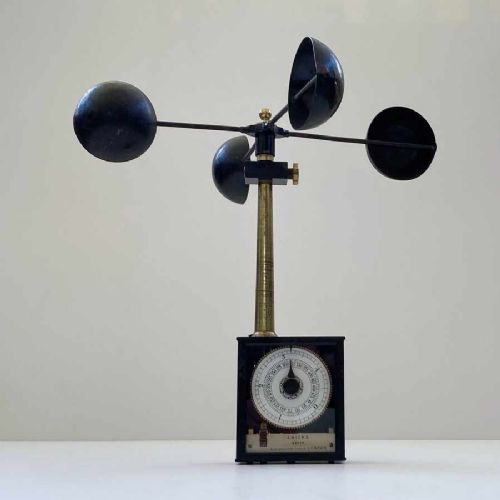
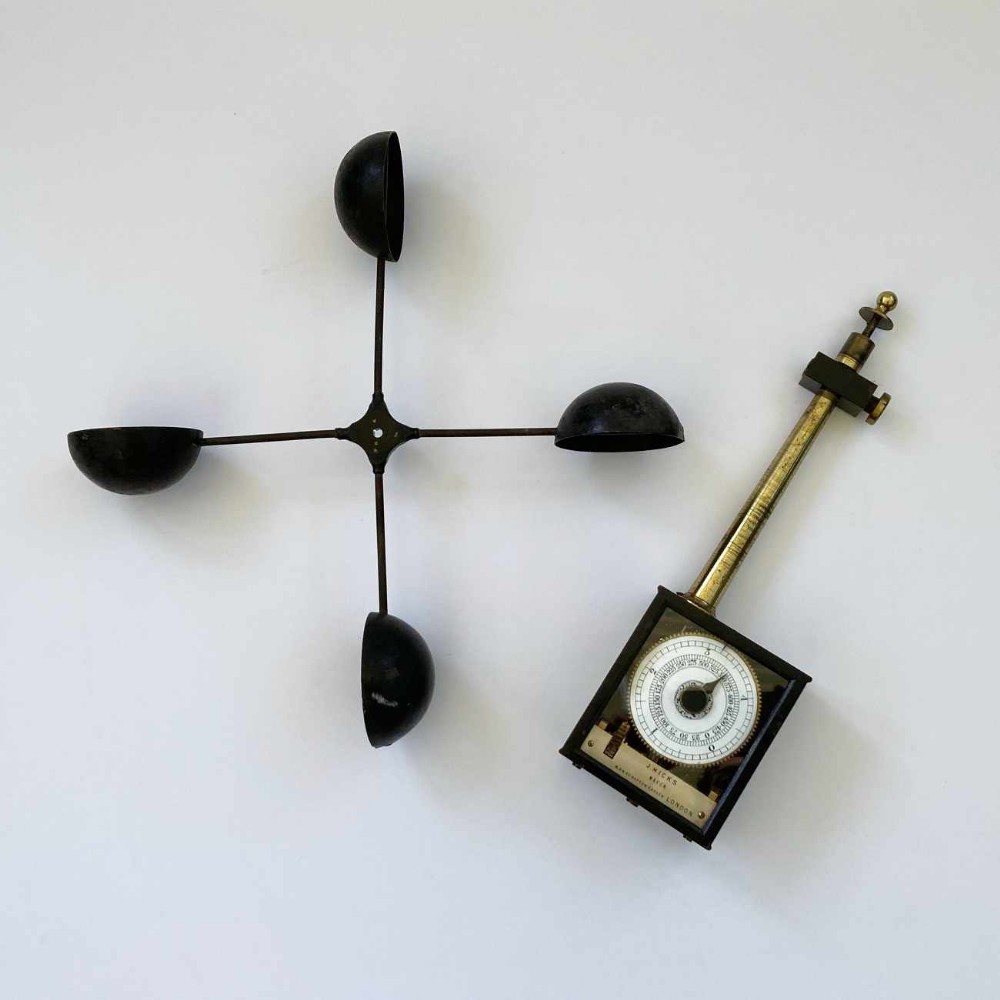
For sale, a rare Late Victorian Robinson - Beckley’s Anemometer by J Hicks of Hatton Garden, London.

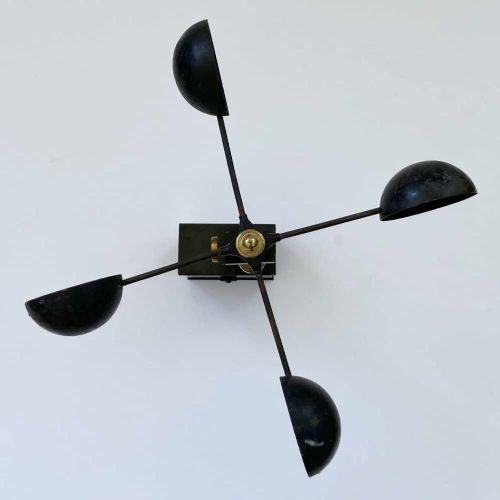
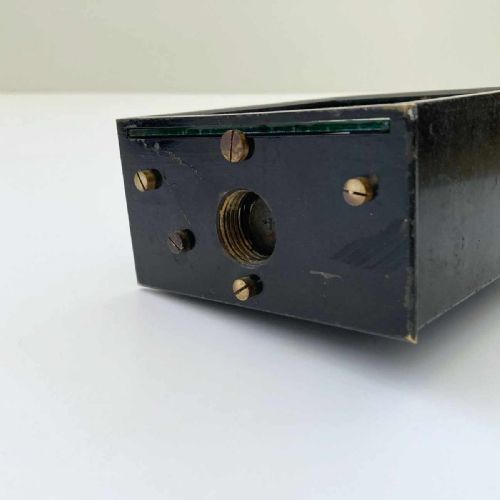
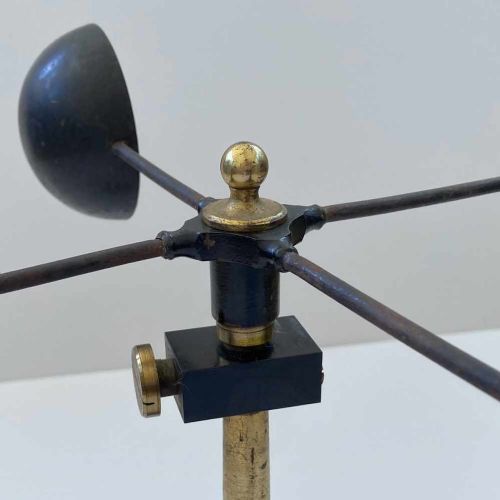
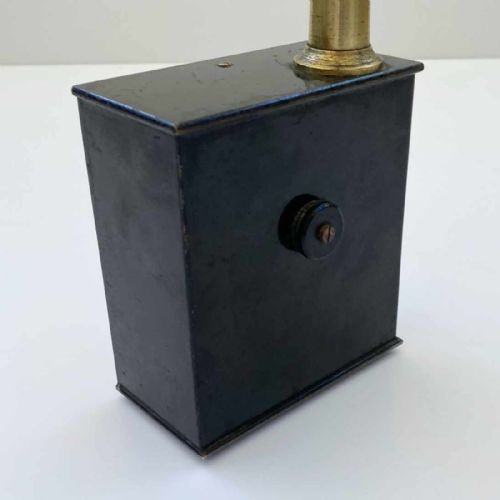
Comprised of four copper hemispherical cups attached by arms to a brass vertical rod and secured at the top by means of a brass screw. The axis is attached to a case with glazed front containing the geared mechanism for recording the revolutions of the cups when exposed to the wind.

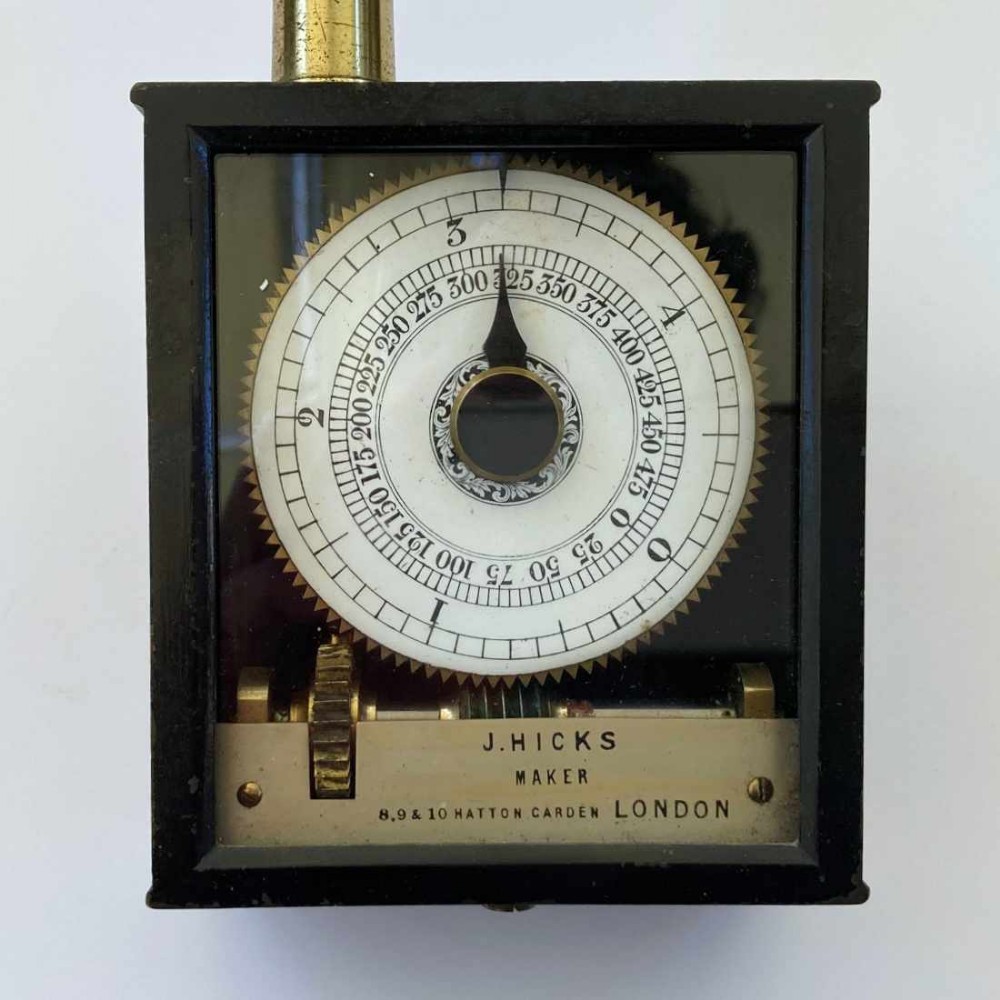
A ceramic scale plate with fixed and hand operated indicators is provided at the front and below is a silvered plaque with the maker details engraved, “J Hicks Maker. 8,9 & 10 Hatton Gardens, London”

Commonly described singularly as a Robinson’s cup anemometer, this simpler form was in fact produced in conjunction with Robert Beckley who was the Mechanical Assistant at Kew Observatory from 1853 – 1872 and was Grandfather to Robert Whipple, founder of The Whipple Museum in Cambridge. It is in effect a simpler and more portable version of Dr Thomas Romney Robinson’s famous invention which he produced in 1850 and which had numerous concentric scales for longer term measurement periods. It is described in Casella’s catalogues as follows:
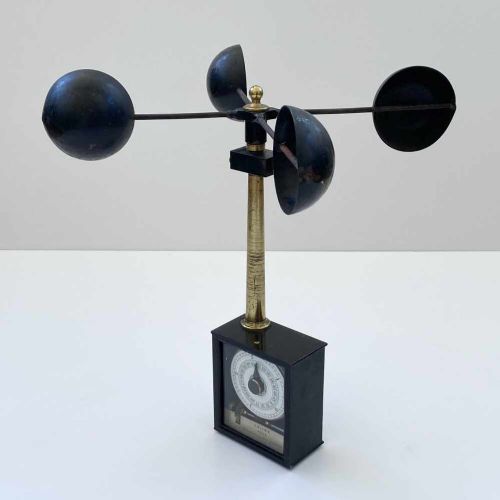
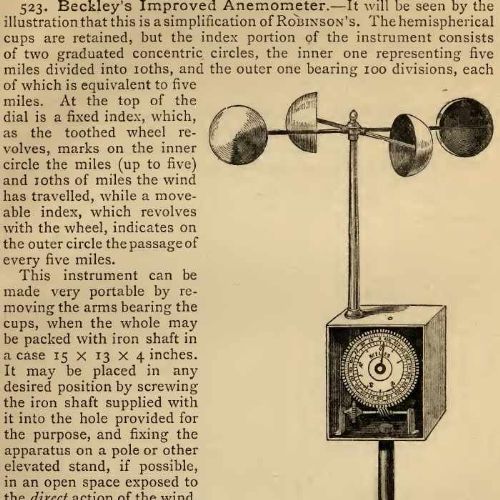
“Beckley’s Improved Anemometer – It will be seen by the illustrations that this is a simplification of Robinson’s. The hemispherical cups are retained, but the index portion of the instrument consists of two graduated concentric circles, the inner one representing five miles divided into 10ths and the outer one bearing 100 divisions, each of which is equivalent to five miles. At the top of the dial is a fixed index, which, as the toothed wheel revolved, marks on the inner circle the miles (up to five) and 10ths of miles the wind has travelled, while a moveable index, which revolves with the wheel, indicates on the outer circle the passage of every five miles.
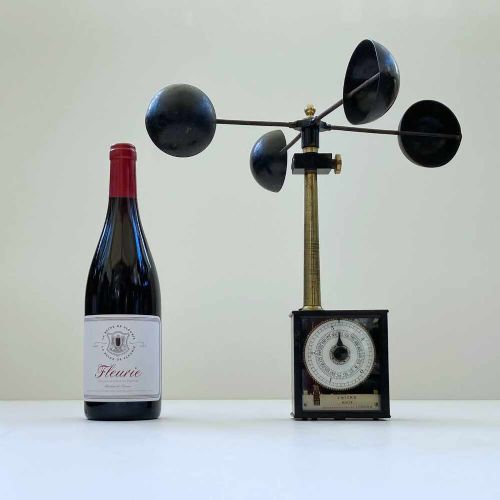
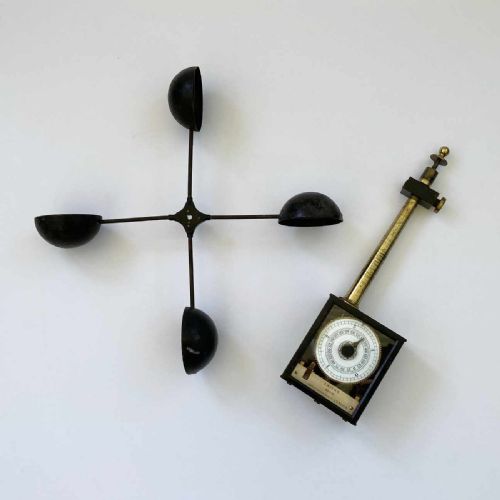
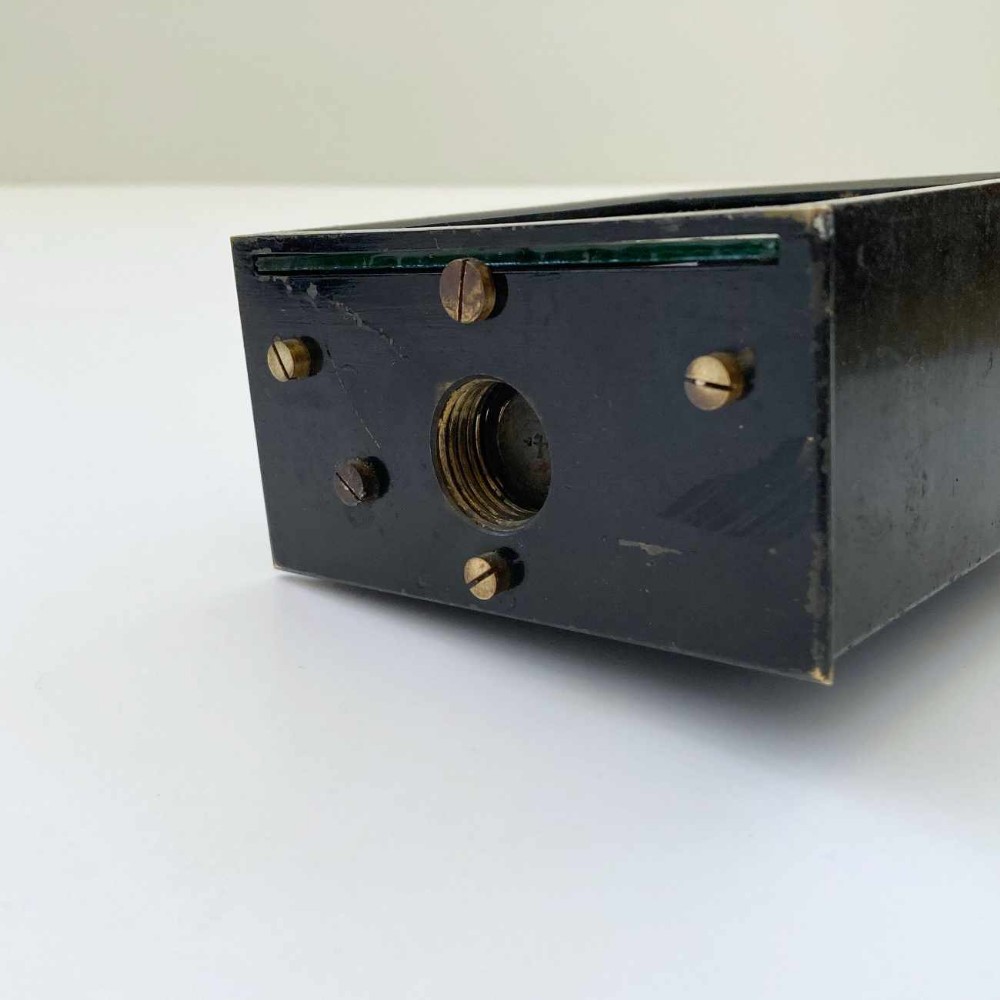
This instrument can be made very portable by removing the arms bearing the cups, when the whole may be packed with iron shaft in a case 15x13x4 inches. It may be placed in any desired position by screwing the iron shaft supplied with it into the hole provided for the purpose and fixing the apparatus on a pole or other elevated stand, if possible, in an open space exposed to the direct action of the wind.
If, when placing the instrument, the hands stand at 0, the next reading will of course show the number of miles the wind has traversed; but should they stand otherwise, the reading may be noted and deducted from the second reading, thus:
Suppose the fixed index points to 2.5 and the moveable index to 125, the reading after 12 hours may be 200 on the outer circle and 3.0 on the inner circle; these added together yield 203. By deducting the previous reading, 127.5, we have the true reading – viz. 75.5 miles as the distance traversed by the wind.”
The maker, James Joseph Hicks was born in Cork, Ireland in 1837 to a poor farming family and was sent to London for schooling. He was apprenticed to the famous Louis P Casella where he remained until 1861. In that short time he had already risen to become Casella’s foreman, showing just how able the young Hicks was. He began to trade in his own right in around 1861-1862 at 8 Hatton Gardens, London and was respected enough by 1864 to have been granted membership to The British Meteorological Society.
Highly skilled in the development and the improvement of scientific instruments, Hick’s business was large enough by 1880 to have over 300 employees on the books. A shrewd marketer, he was present at eight Royal Society Exhibitions during the period, 1876 – 1913 and extended his reach overseas by attending numerous world trade fairs. He won a gold medal at the 1900 Paris exhibition.
In 1910 at the age of 73, he successfully negotiated a merger between his company and the equally famous WF Stanley and remained a director of the company that retained his name until his death in 1916.

During his

Physical Dimensions
Height
36cm (14.17")
Width
36cm (14.17")
Depth
36cm (14.17")
Declaration

Jason Clarke Antiques has dated this piece to the 1880s.

Reference Numbers
Sellingantiques Reference
SA956559
Description
For sale, a rare Late Victorian Robinson - Beckley’s Anemometer by J Hicks of Hatton Garden, London.
Comprised of four copper hemispherical cups attached by arms to a brass vertical rod and secured at the top by means of a brass screw.
Jason Clarke Antiques

The axis is attached to a case with glazed front containing the geared mechanism for recording the revolutions of the cups when exposed to the wind.

fig 1. Late Victorian Robinson-Beckley Anemometer by J Hicks of Hatton Garden
fig 1. Late Victorian Robinson-beckley Anemometer by J Hicks of Hatton Garden

A ceramic scale plate with fixed and hand operated indicators is provided at the front and below is a silvered plaque with the maker details engraved, “J Hicks Maker. 8,9 & 10 Hatton Gardens, London”

Commonly described singularly as a Robinson’s cup anemometer, this simpler form was in fact produced in conjunction with Robert Beckley who was the Mechanical Assistant at Kew Observatory from 1853 – 1872 and was Grandfather to Robert Whipple, founder of The Whipple Museum in Cambridge. It is in effect a simpler and more portable version of Dr Thomas Romney Robinson’s famous invention which he produced in 1850 and which had numerous concentric scales for longer term measurement periods. It is described in Casella’s catalogues as follows:

fig 2. Late Victorian Robinson-Beckley Anemometer by J Hicks of Hatton Garden
fig 2. Late Victorian Robinson-beckley Anemometer by J Hicks of Hatton Garden

“Beckley’s Improved Anemometer – It will be seen by the illustrations that this is a simplification of Robinson’s. The hemispherical cups are retained, but the index portion of the instrument consists of two graduated concentric circles, the inner one representing five miles divided into 10ths and the outer one bearing 100 divisions, each of which is equivalent to five miles. At the top of the dial is a fixed index, which, as the toothed wheel revolved, marks on the inner circle the miles (up to five) and 10ths of miles the wind has travelled, while a moveable index, which revolves with the wheel, indicates on the outer circle the passage of every five miles.

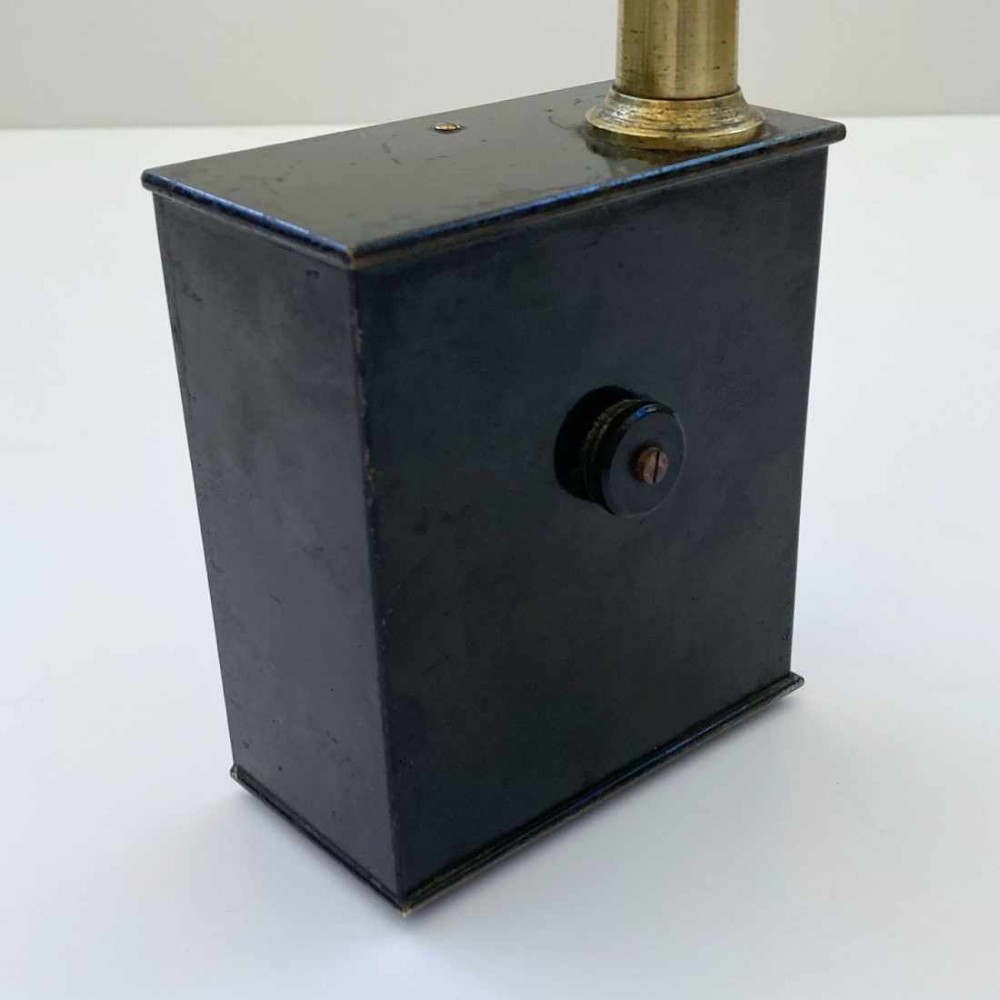
fig 3. Late Victorian Robinson-Beckley Anemometer by J Hicks of Hatton Garden
fig 3. Late Victorian Robinson-beckley Anemometer by J Hicks of Hatton Garden

This instrument can be made very portable by removing the arms bearing the cups, when the whole may be packed with iron shaft in a case 15x13x4 inches. It may be placed in any desired position by screwing the iron shaft supplied with it into the hole provided for the purpose and fixing the apparatus on a pole or other elevated stand, if possible, in an open space exposed to the direct action of the wind.

fig 4. Late Victorian Robinson-Beckley Anemometer by J Hicks of Hatton Garden
fig 4. Late Victorian Robinson-beckley Anemometer by J Hicks of Hatton Garden

If, when placing the instrument, the hands stand at 0, the next reading will of course show the number of miles the wind has traversed; but should they stand otherwise, the reading may be noted and deducted from the second reading, thus:

fig 5. Late Victorian Robinson-Beckley Anemometer by J Hicks of Hatton Garden
fig 5. Late Victorian Robinson-beckley Anemometer by J Hicks of Hatton Garden

Suppose the fixed index points to 2.5 and the moveable index to 125, the reading after 12 hours may be 200 on the outer circle and 3.0 on the inner circle; these added together yield 203. By deducting the previous reading, 127.5, we have the true reading – viz. 75.5 miles as the distance traversed by the wind.”

fig 6. Late Victorian Robinson-Beckley Anemometer by J Hicks of Hatton Garden
fig 6. Late Victorian Robinson-beckley Anemometer by J Hicks of Hatton Garden

The maker, James Joseph Hicks was born in Cork, Ireland in 1837 to a poor farming family and was sent to London for schooling. He was apprenticed to the famous Louis P Casella where he remained until 1861. In that short time he had already risen to become Casella’s foreman, showing just how able the young Hicks was. He began to trade in his own right in around 1861-1862 at 8 Hatton Gardens, London and was respected enough by 1864 to have been granted membership to The British Meteorological Society.

fig 7. Late Victorian Robinson-Beckley Anemometer by J Hicks of Hatton Garden
fig 7. Late Victorian Robinson-beckley Anemometer by J Hicks of Hatton Garden

Highly skilled in the development and the improvement of scientific instruments, Hick’s business was large enough by 1880 to have over 300 employees on the books. A shrewd marketer, he was present at eight Royal Society Exhibitions during the period, 1876 – 1913 and extended his reach overseas by attending numerous world trade fairs. He won a gold medal at the 1900 Paris exhibition.

fig 8. Late Victorian Robinson-Beckley Anemometer by J Hicks of Hatton Garden
fig 8. Late Victorian Robinson-beckley Anemometer by J Hicks of Hatton Garden

In 1910 at the age of 73, he successfully negotiated a merger between his company and the equally famous WF Stanley and remained a director of the company that retained his name until his death in 1916.

During his

Height
36cm (14.17")
Width
36cm (14.17")
Depth
36cm (14.17")
Date of Manufacture

Jason Clarke Antiques has dated this piece to the 1880s.

Reference Numbers
Sellingantiques Ref
SA956559
Jason Clarke Antiques
Sellingantiques verified Since Jul 2015
Dealer Profile

You can view the stock and full dealer information on the Jason Clarke Antiques Profile Page
PDF SHARE
SAVE
Late Victorian Robinson-Beckley Anemometer by J Hicks of Hatton Garden
1 / 11
Archive I Late Victorian Robinson-Beckley Anemometer by J Hicks of Hatton Garden
Late Victorian Robinson-beckley Anemometer by J Hicks of Hatton Garden
Archive II Late Victorian Robinson-Beckley Anemometer by J Hicks of Hatton Garden View II
Archive III Late Victorian Robinson-Beckley Anemometer by J Hicks of Hatton Garden View III
Archive IV Late Victorian Robinson-Beckley Anemometer by J Hicks of Hatton Garden View IV
Archive V Late Victorian Robinson-Beckley Anemometer by J Hicks of Hatton Garden View V
Archive VI Late Victorian Robinson-Beckley Anemometer by J Hicks of Hatton Garden View VI
Archive VII Late Victorian Robinson-Beckley Anemometer by J Hicks of Hatton Garden View VII
Archive VIII Late Victorian Robinson-Beckley Anemometer by J Hicks of Hatton Garden View VIII
Archive IX Late Victorian Robinson-Beckley Anemometer by J Hicks of Hatton Garden View IX
Archive X Late Victorian Robinson-Beckley Anemometer by J Hicks of Hatton Garden View X
Archive XI Late Victorian Robinson-Beckley Anemometer by J Hicks of Hatton Garden View XI
Enlarged Archival View
Telephone 07815 046645
Location
Newbury
Berkshire
United Kingdom
Verified Since Jul 2015
Items For Sale 81
Items Sold 606
Jason Clarke Antiques
Verified Since Jul 2015
View Dealer Info
Location: Newbury, Berkshire, United Kingdom
Verified
Jul 2015
For Sale
81
Sold
606
Late Victorian Robinson-Beckley Anemometer by J Hicks of Hatton Garden
Ref: SA956559
Late Victorian Robinson-Beckley Anemometer by J Hicks of Hatton Garden
Detail View 1
Detail View 2
Detail View 3
Detail View 4
Detail View 5
Detail View 6
Detail View 7
Detail View 8
Detail View 9
Detail View 10
Archival Detail
Every single antique dealer on our platform is individually approved by our internal team. We verify their professional trade history, ethical standards, and photographic quality to ensure a secure, high-standard buying environment. Upon joining, every dealer agrees to a strict 9-point code of conduct. While issues can occasionally arise, our dealers typically resolve them swiftly and directly with the buyer. In fact, since our founding in 2002, Sellingantiques has only had to step in to help resolve an issue on roughly five occasions—a true testament to the quality of our dealers and their dedication to your happiness.
Our dealers are highly experienced in packing and shipping fragile, high-value antiques. Because you are in direct contact with the dealer, you will be able to easily go through all available shipping and insurance options together to ensure your item arrives safely.
Antiques are the ultimate green purchase. By choosing historical pieces over newly manufactured goods, you completely eliminate the carbon footprint of modern mass production while preserving exceptional, timeless craftsmanship.
items
Add keywords to the filter
Price
£100
£250000
Era
Movements
Material
Origin
Stock Location
Freshness
Online Payments
Categories