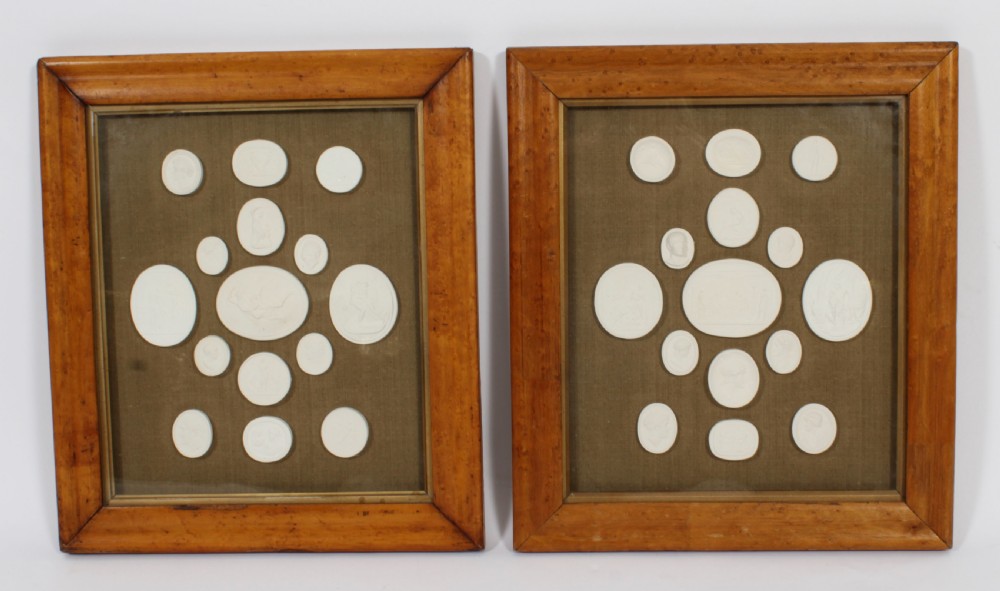
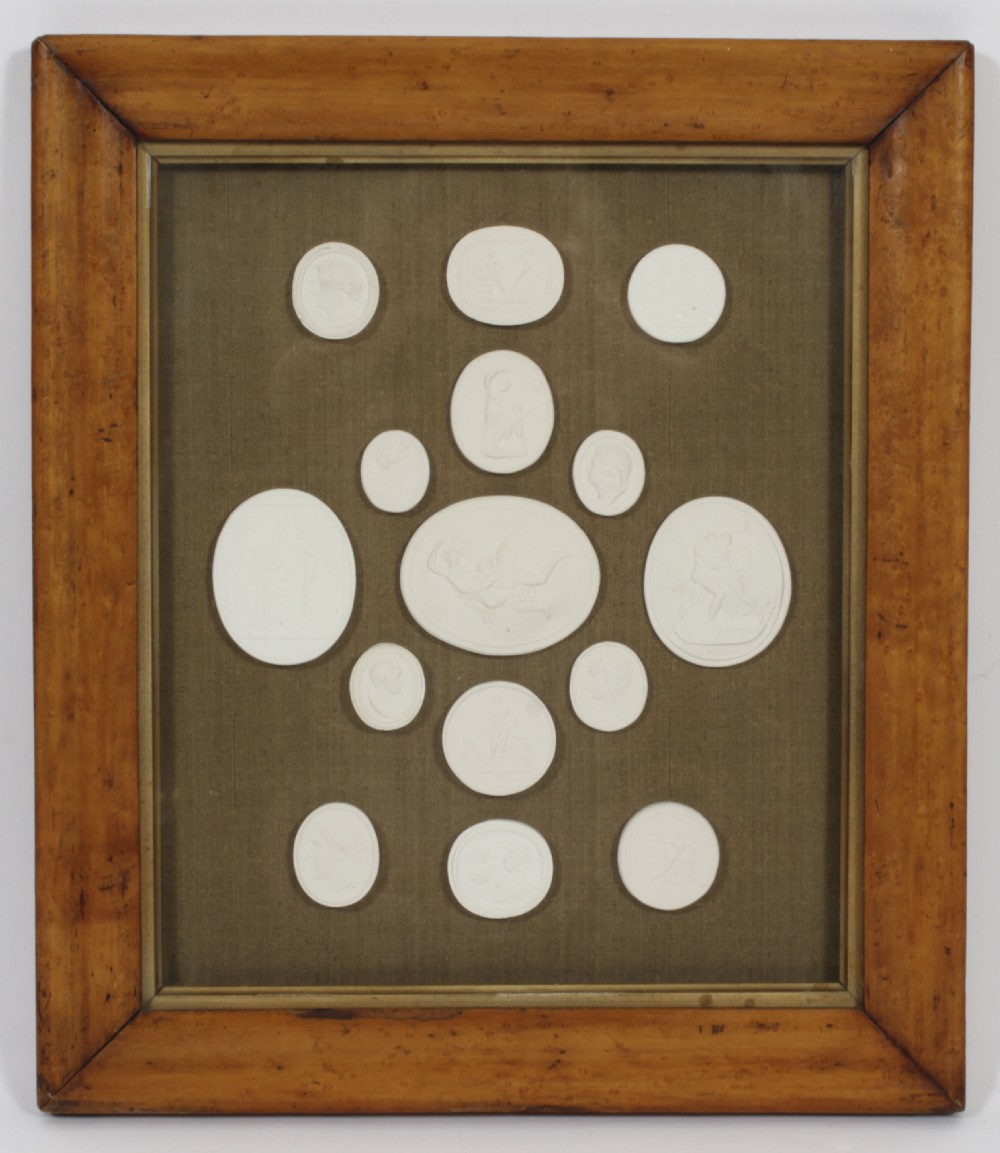
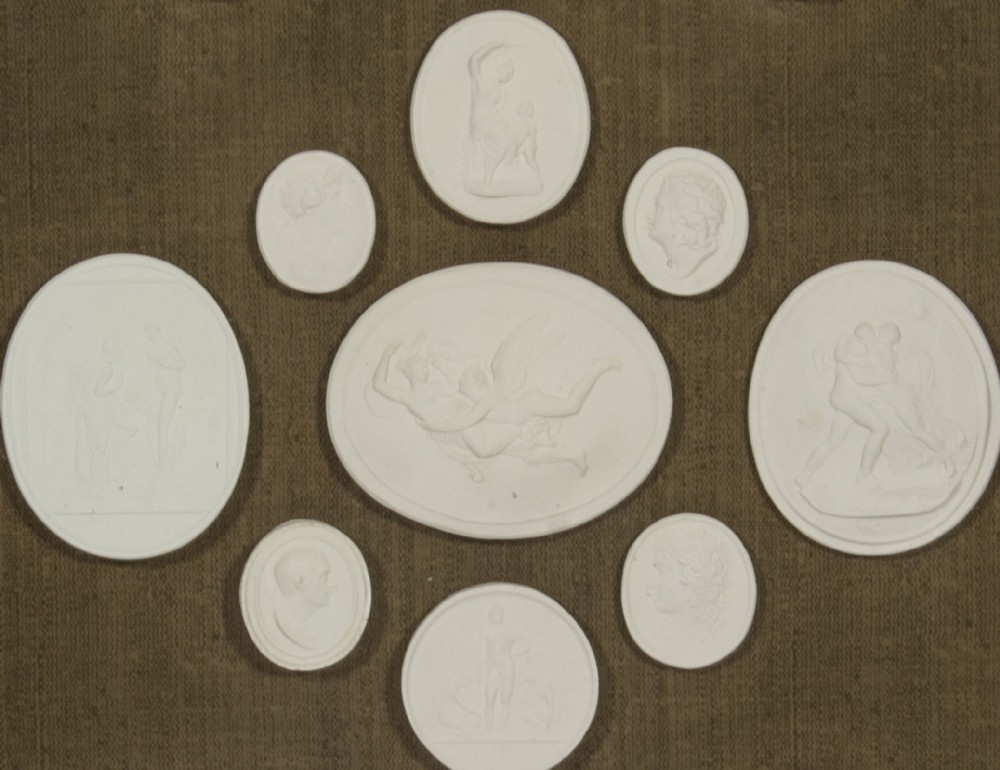
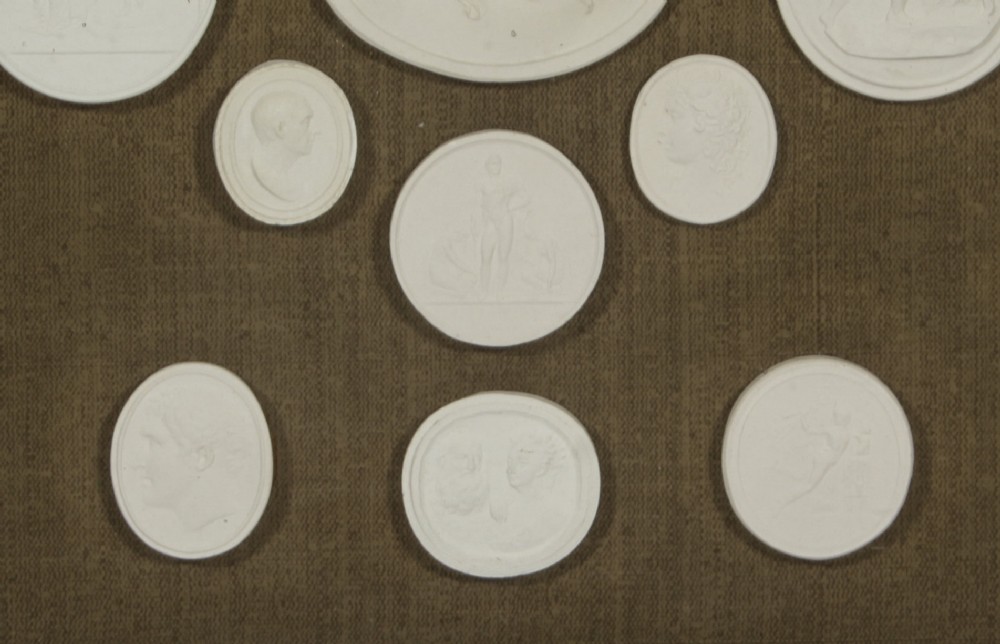
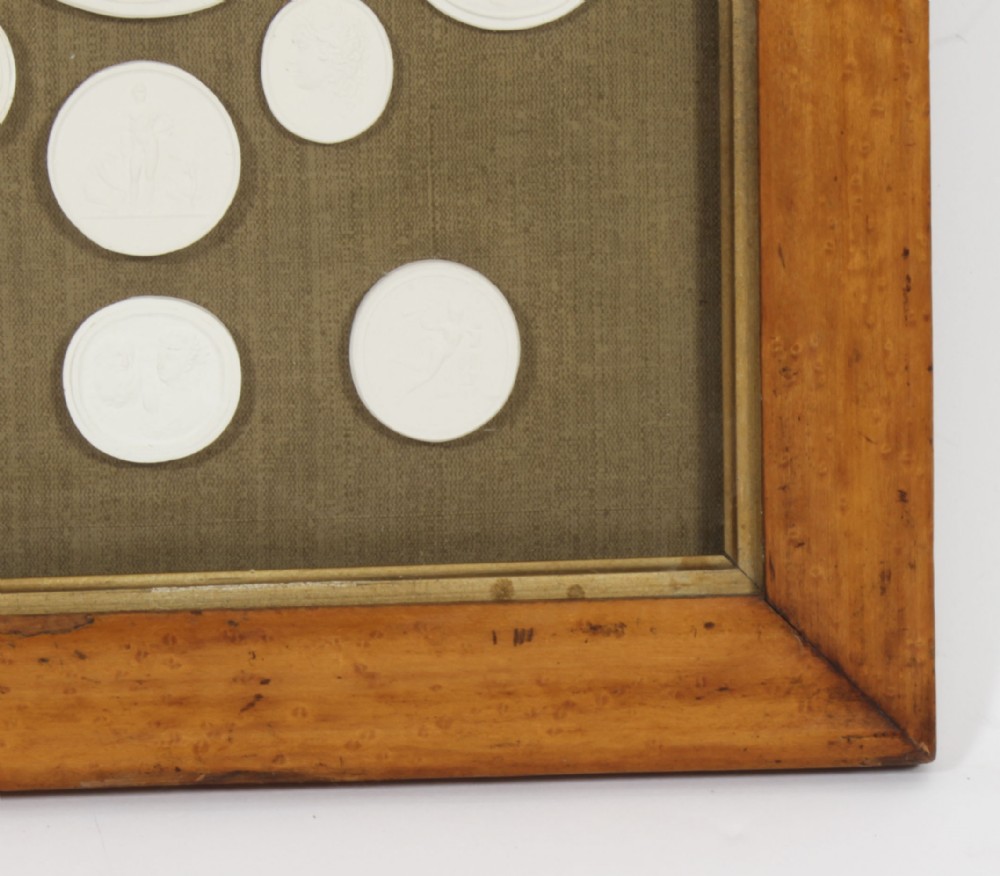
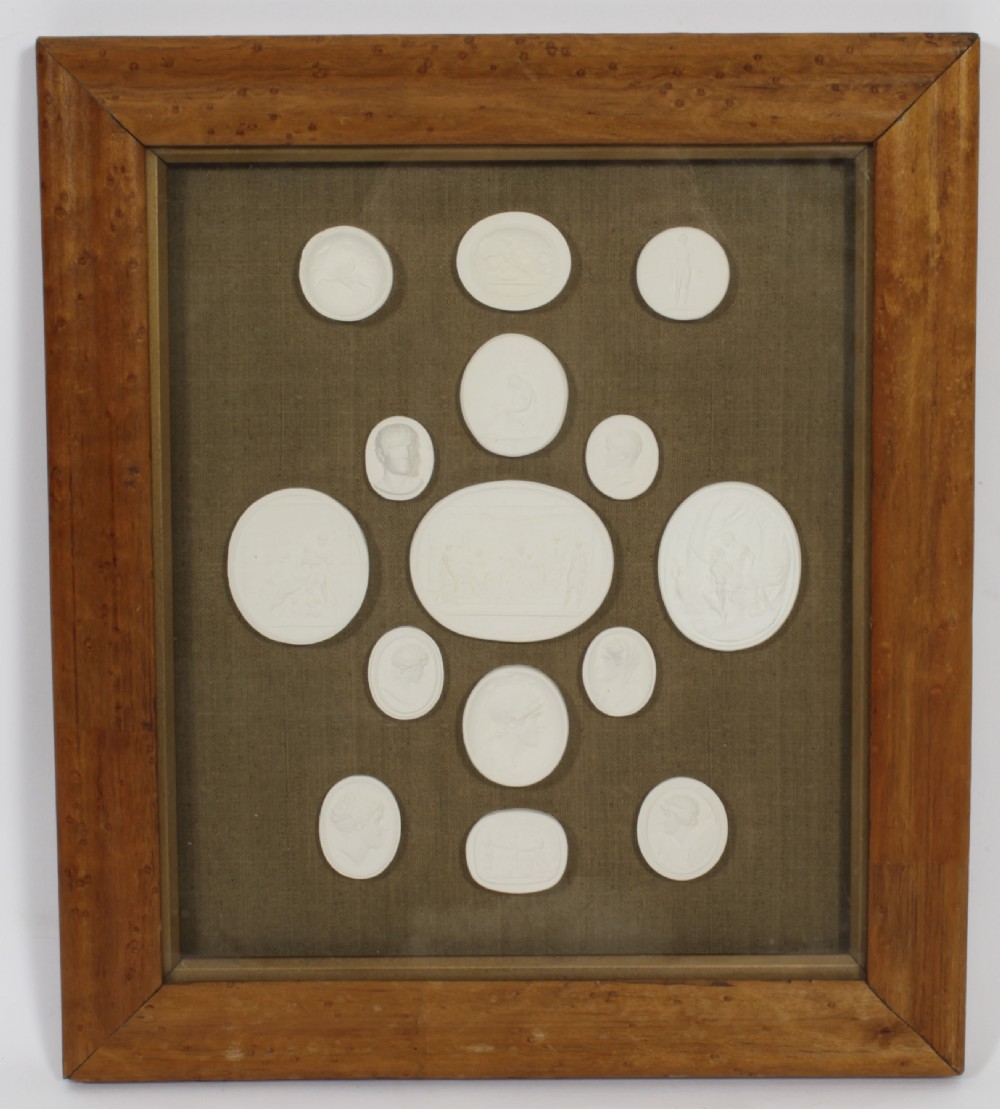
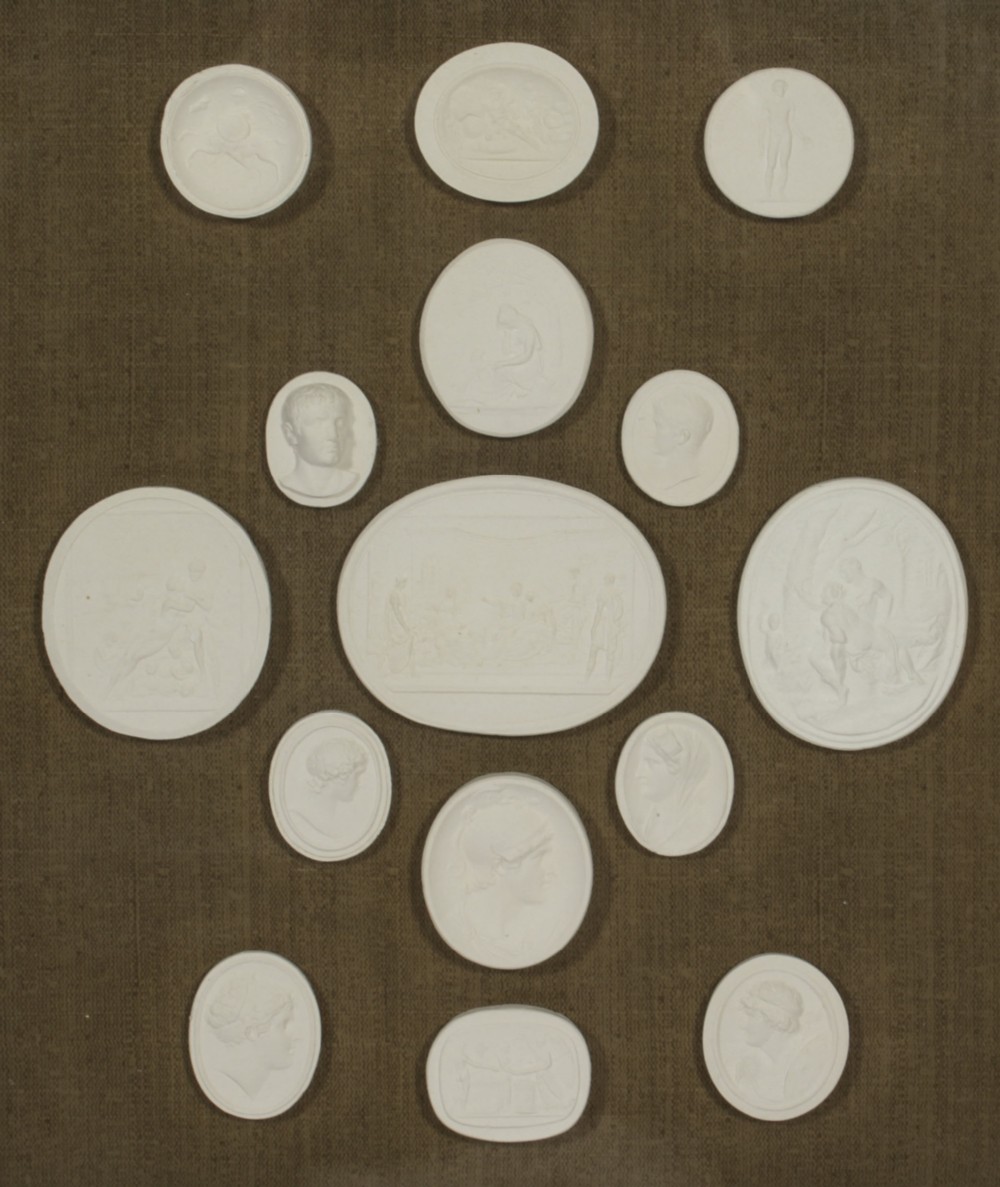
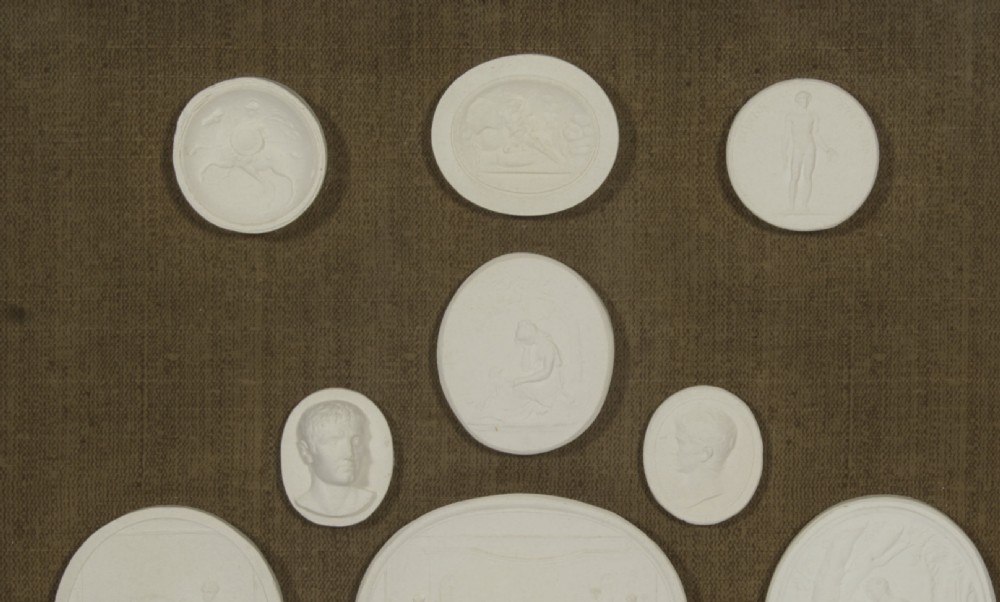
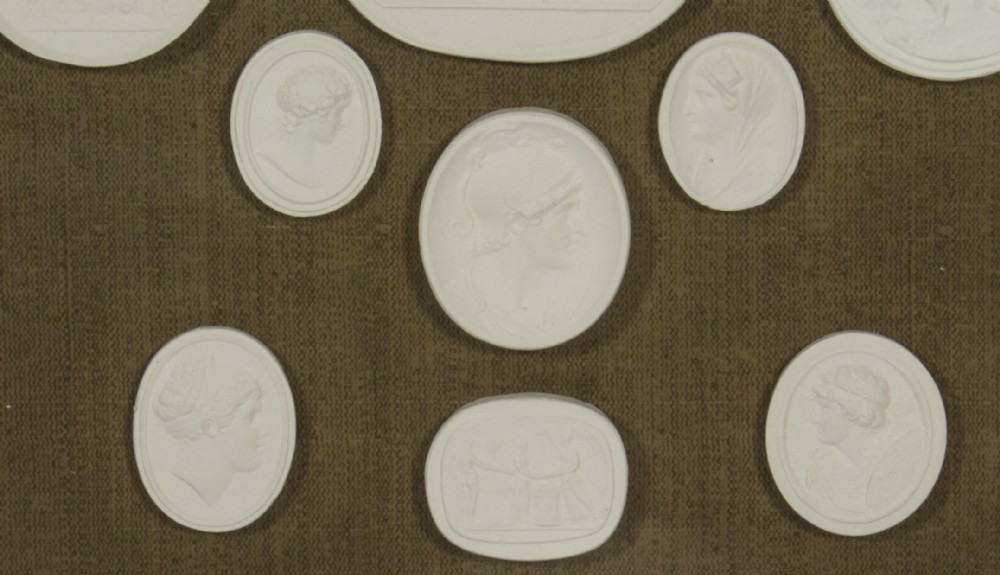
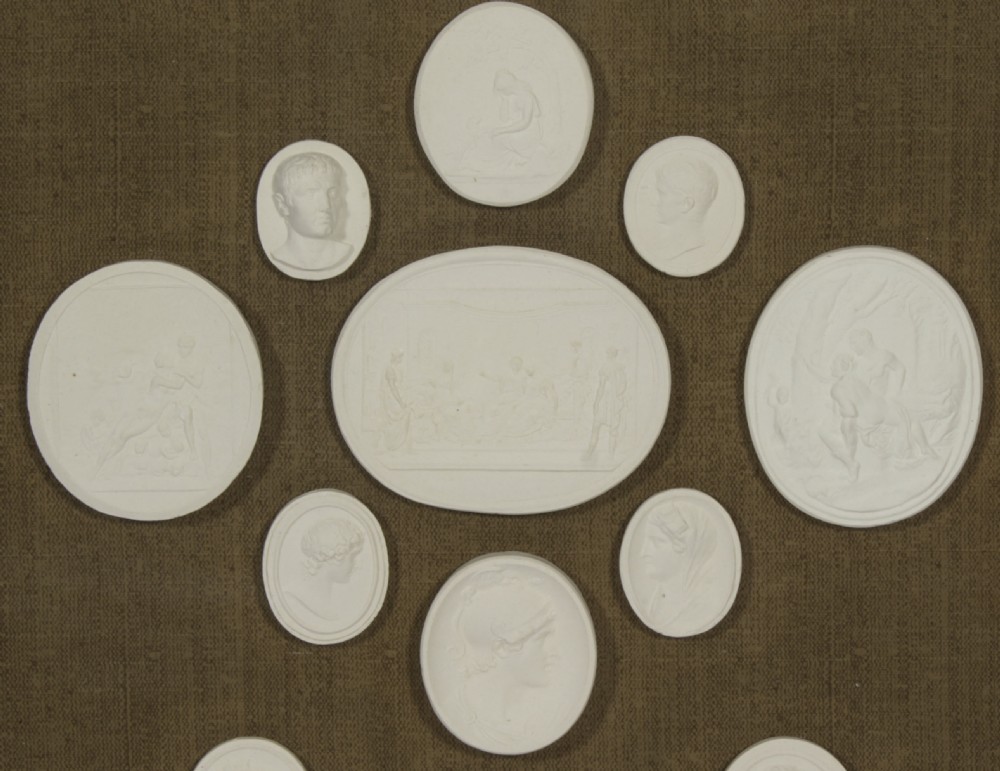
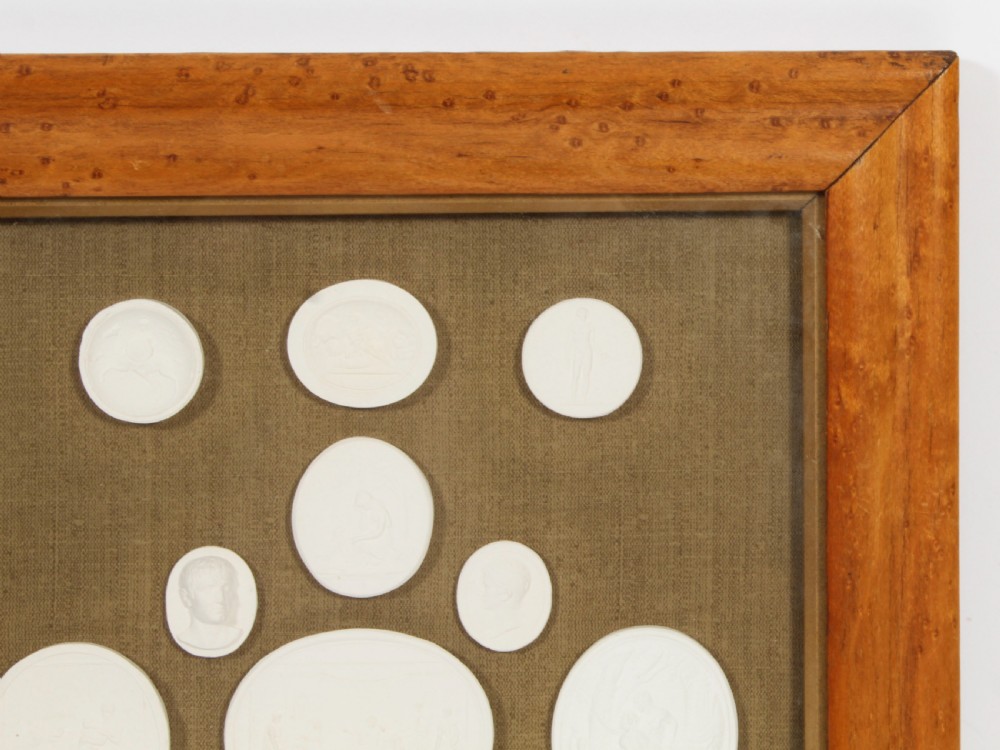
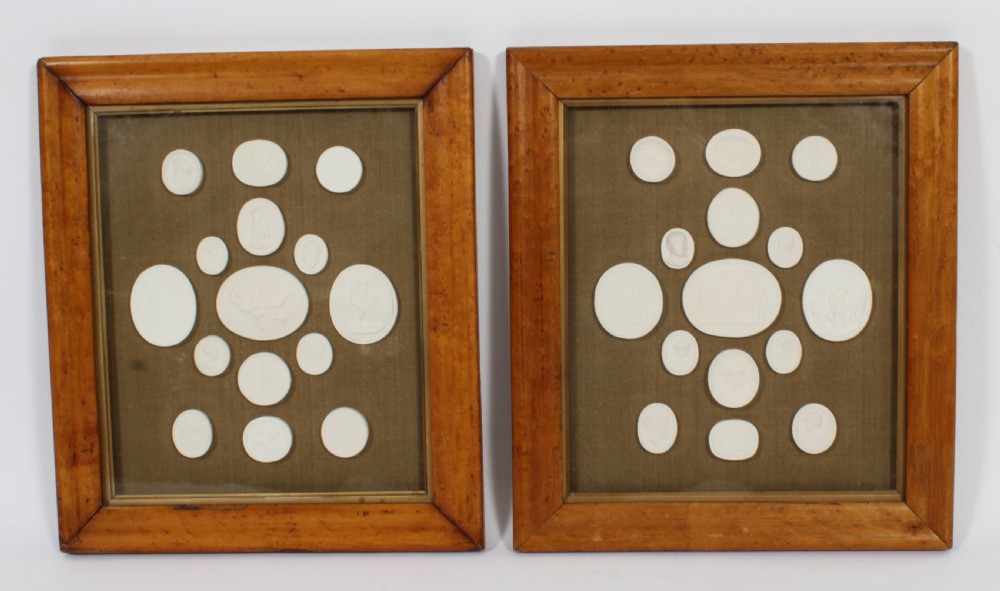
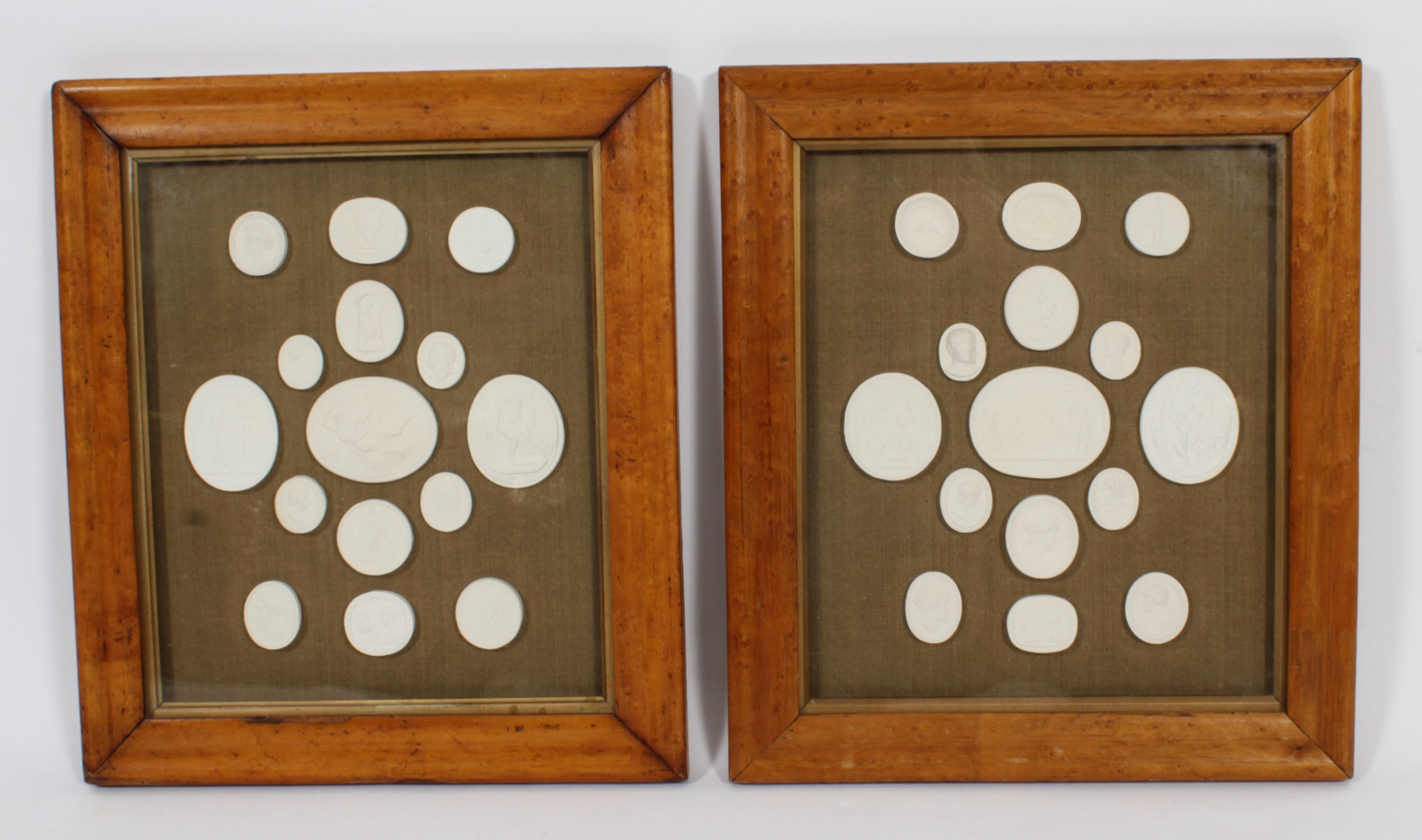
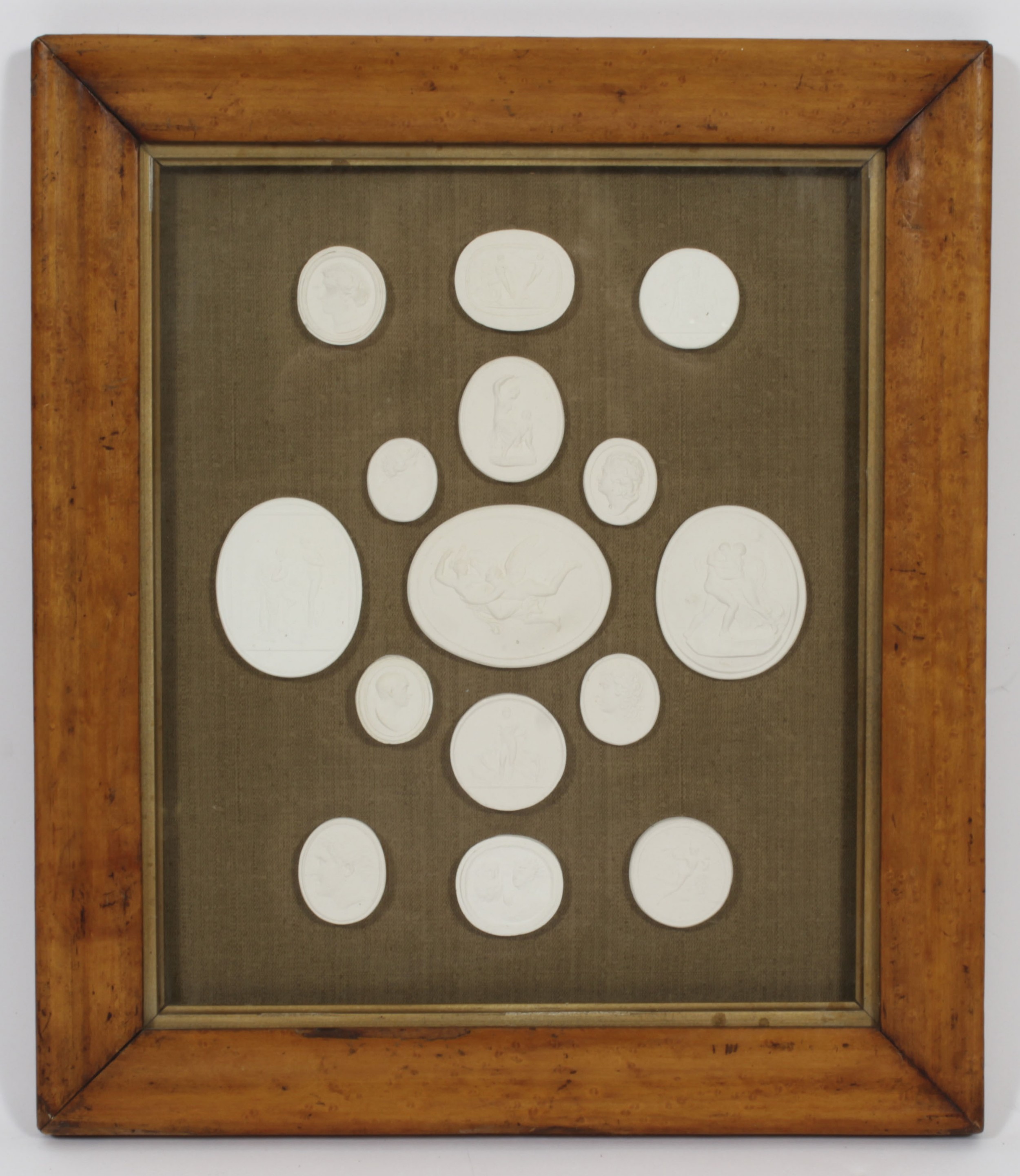
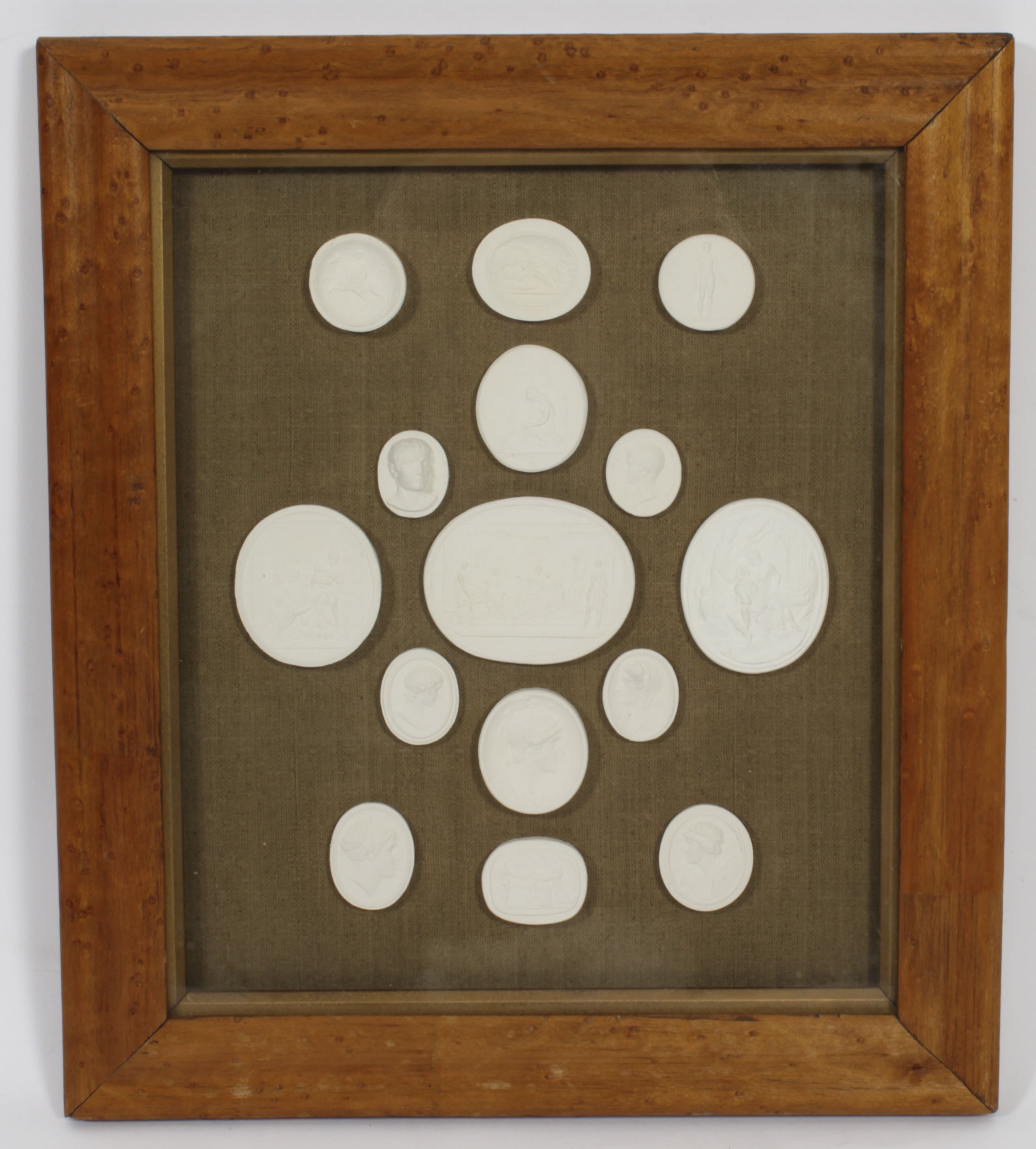
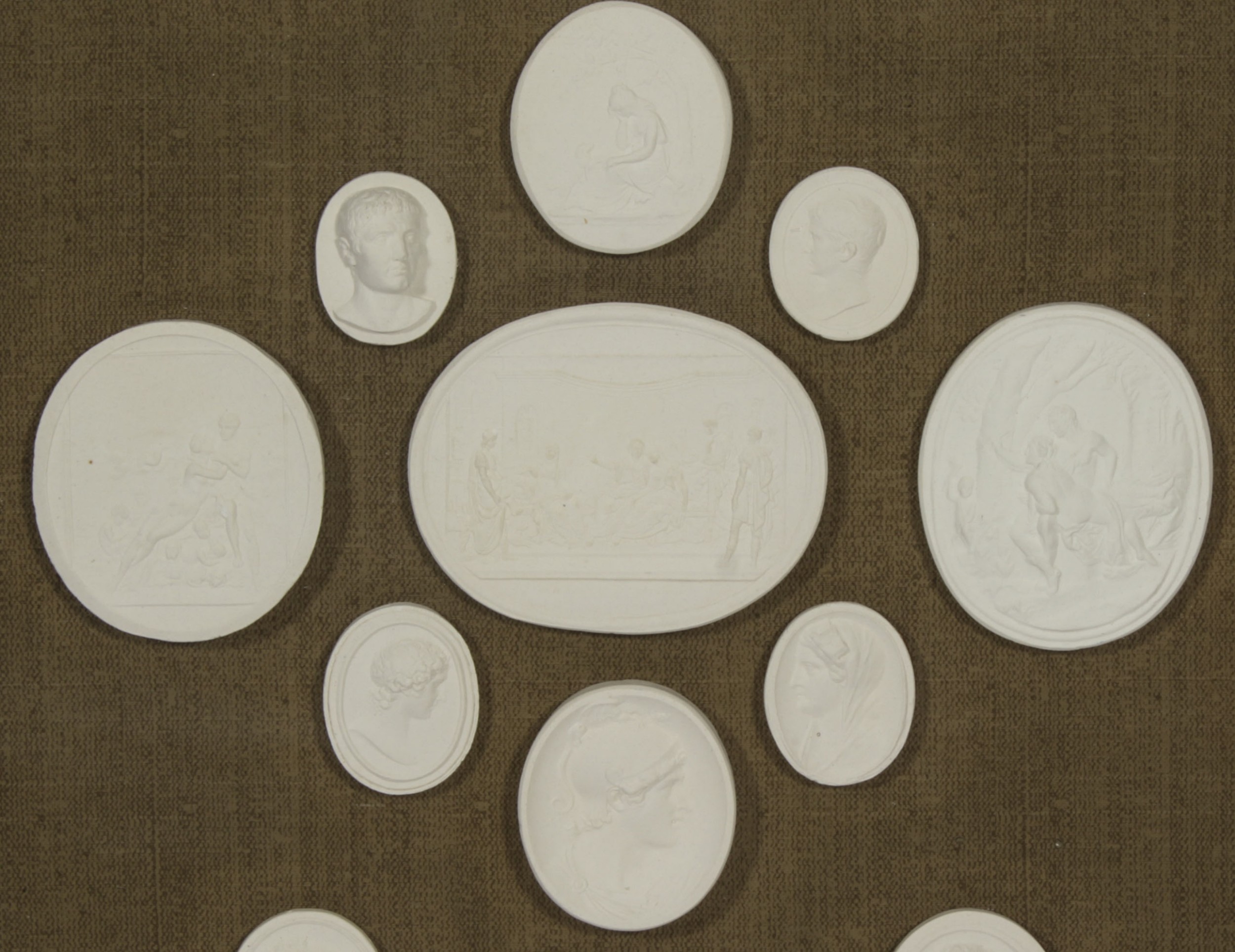
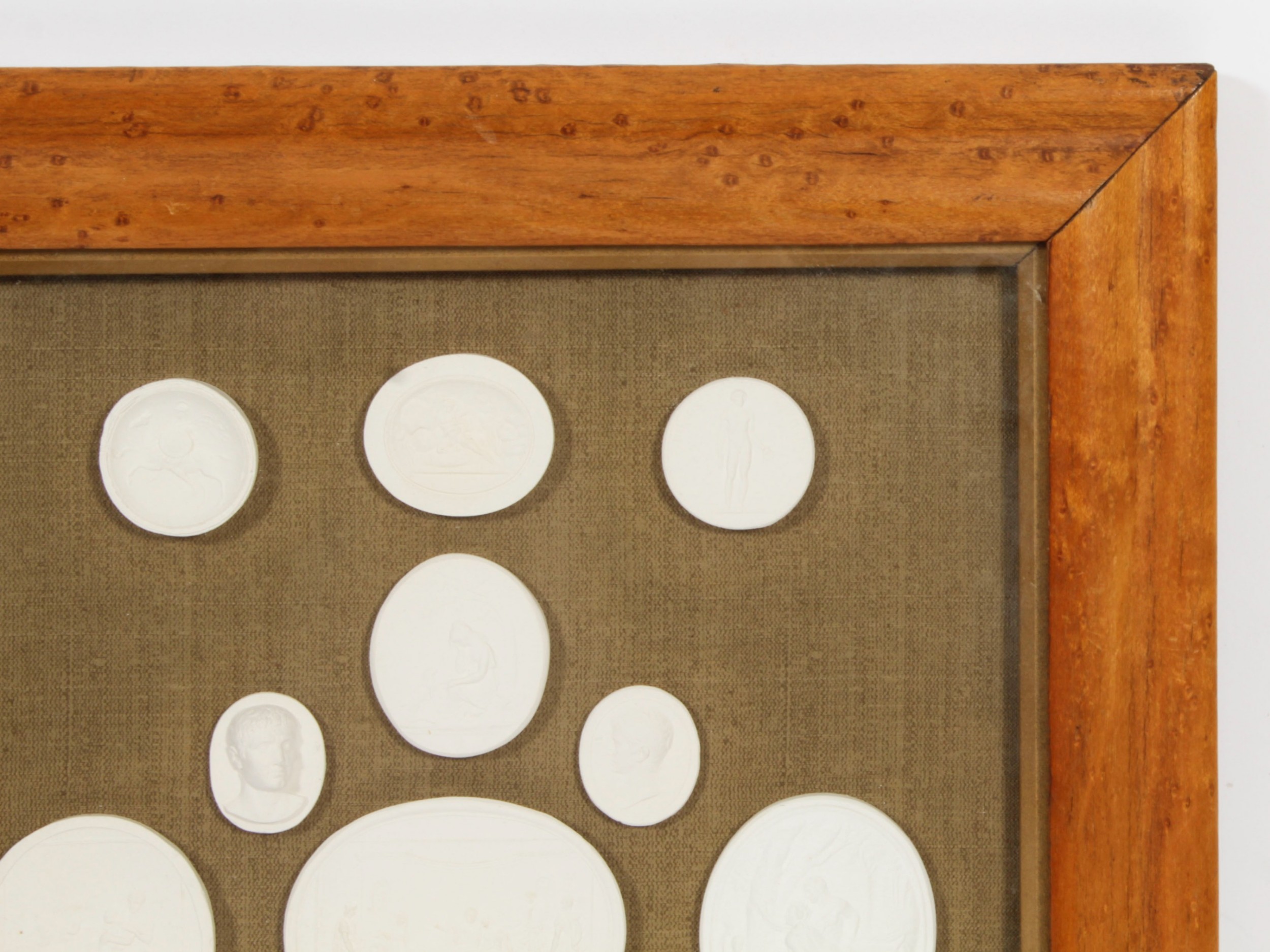
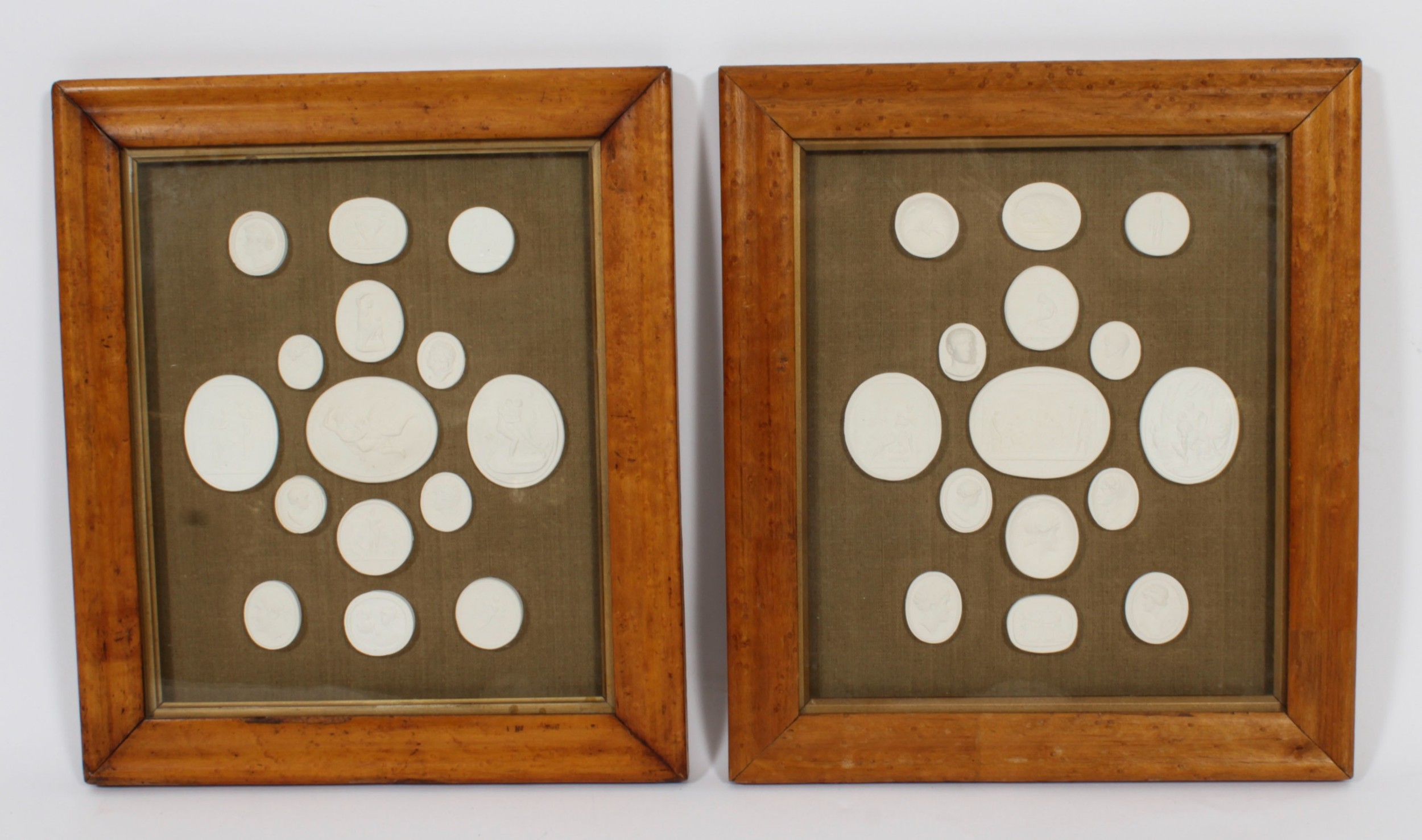
A decorative group consisting of thirty plaster Grand Tour intaglios of various sizes, mounted in two maple frames dating from Circa 1840.
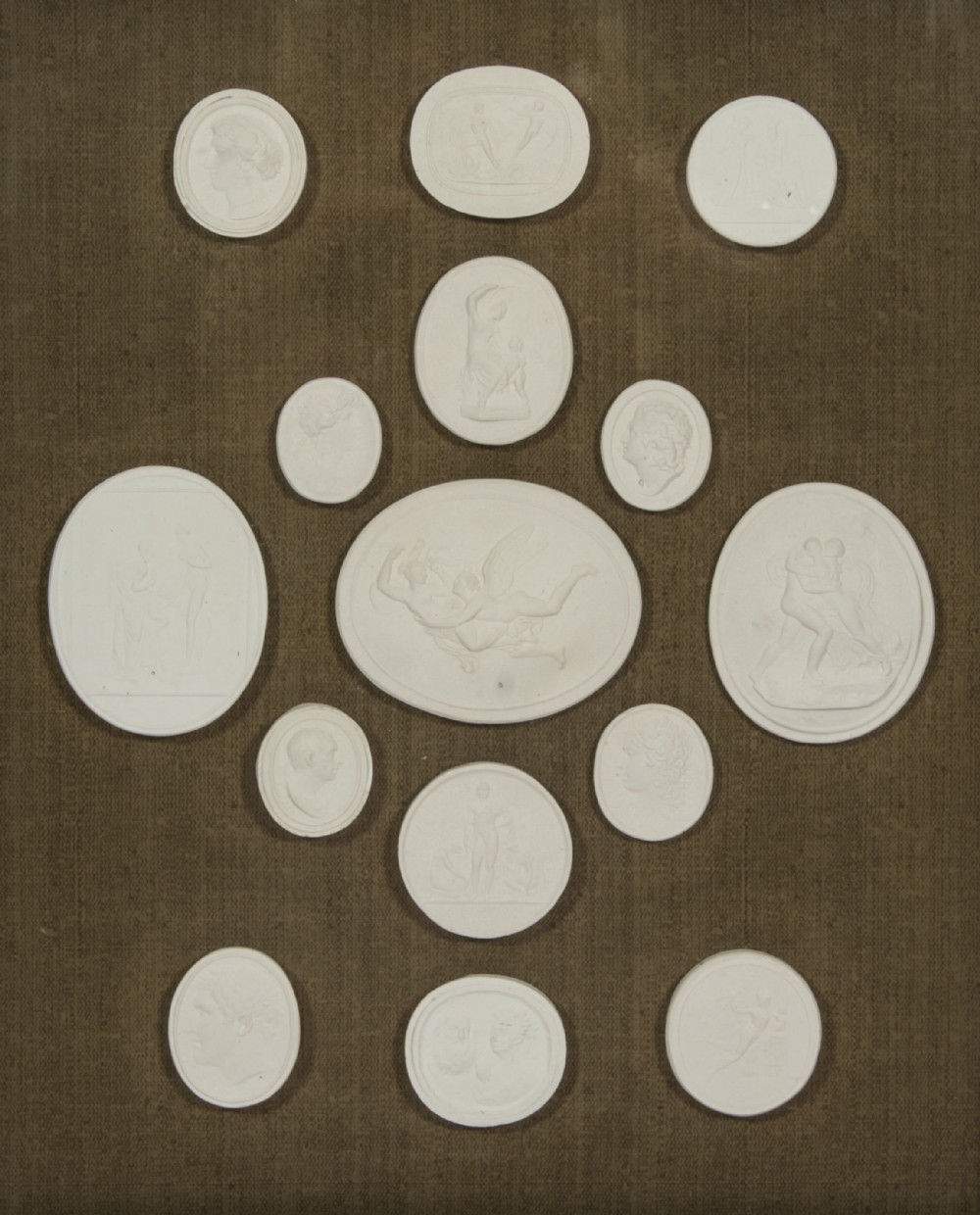
The intaglios are beautifully mounted on a goldy-green linen ground in a pair of rectangular, maple, glazed box frames.
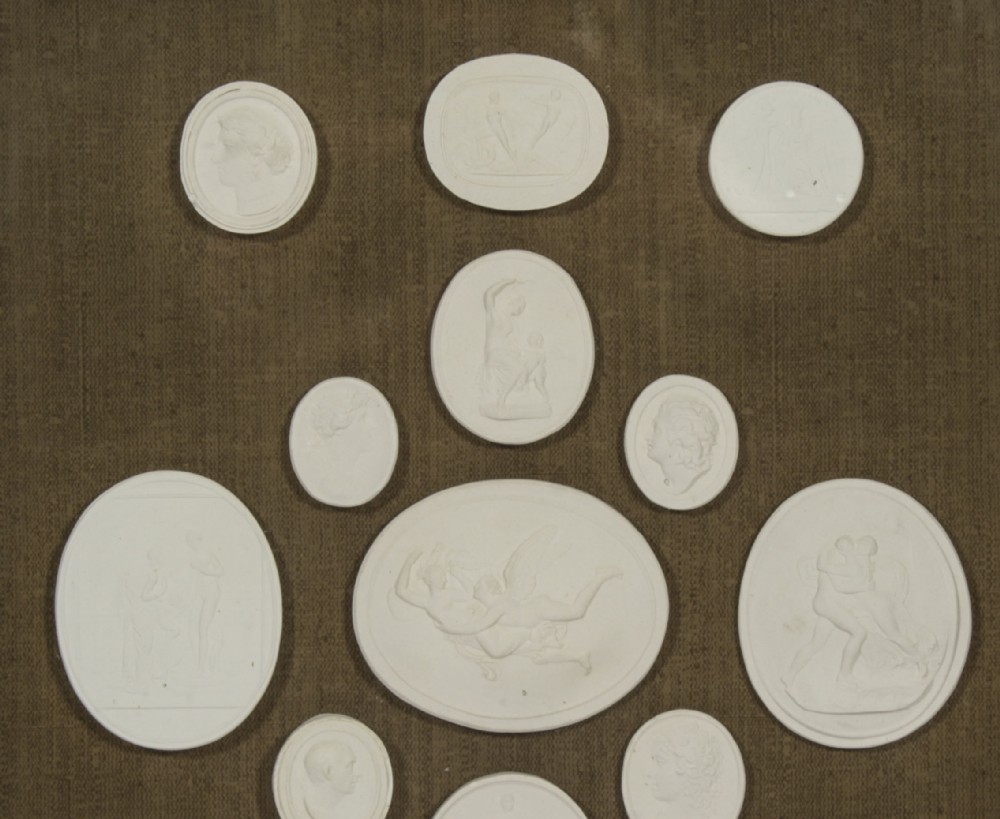
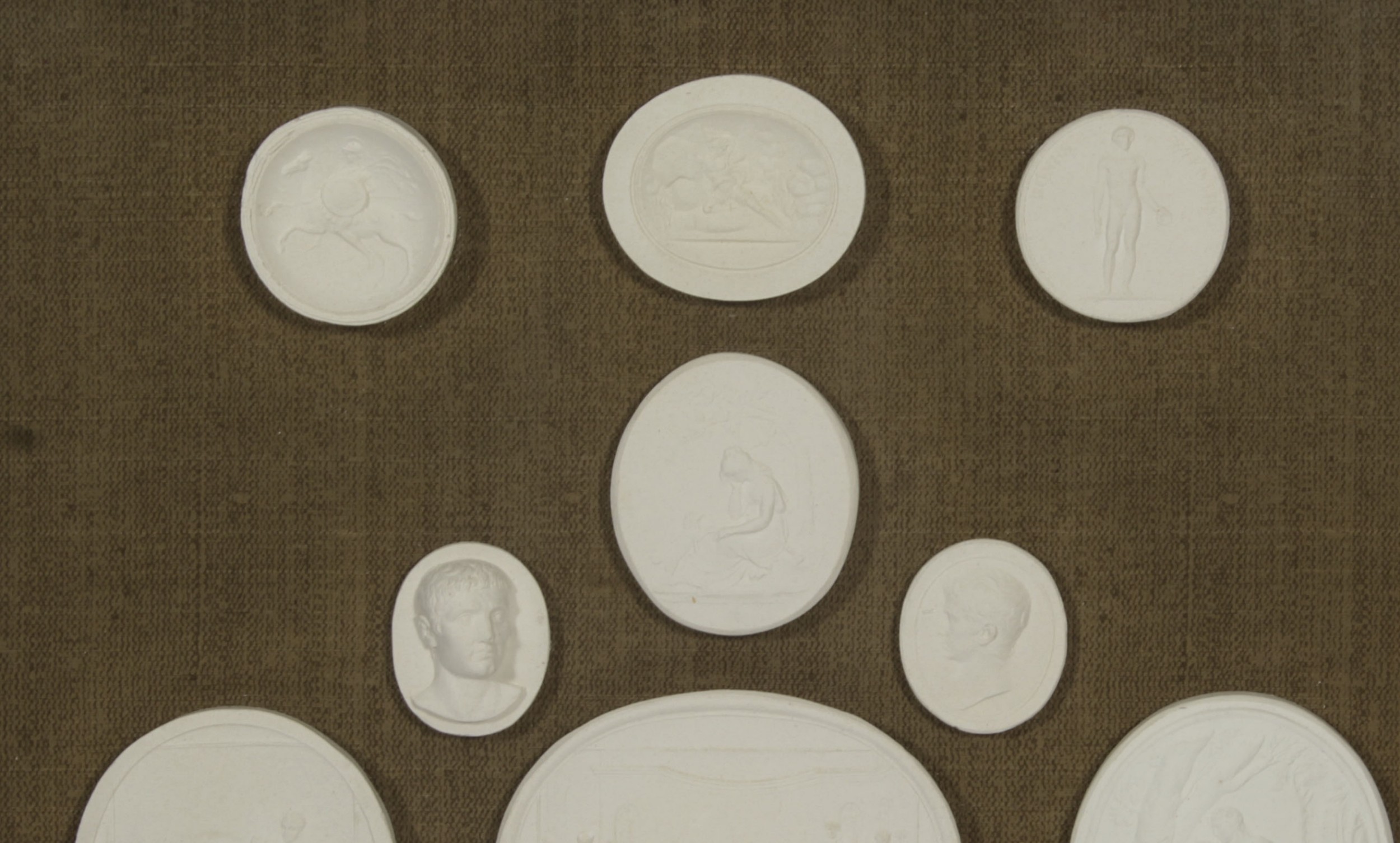
They consist of a total of thirty shaped plaster intaglios of varying sizes depicting a variety of classical figures and motifs.
Provenance: Contents of Carlton Manor, Scottland
Condition:
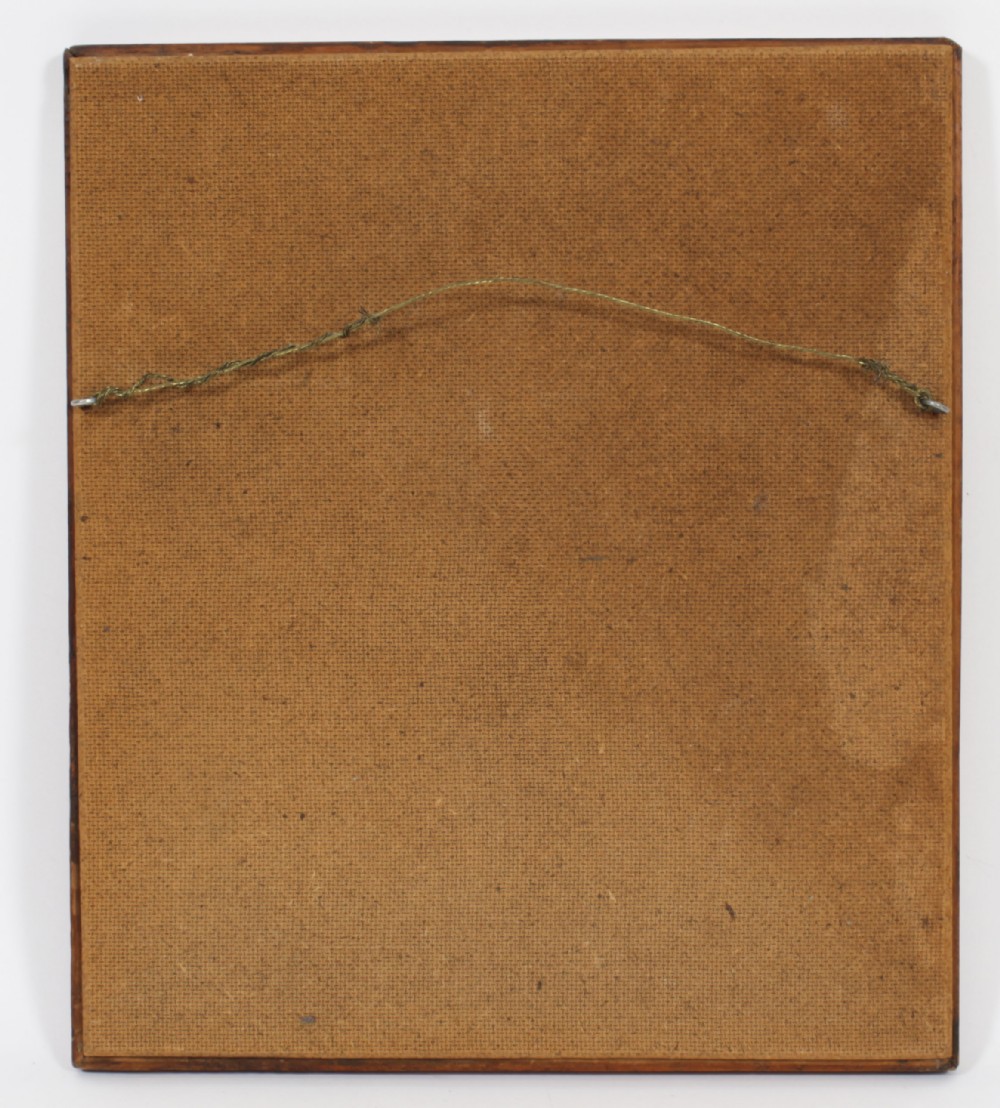
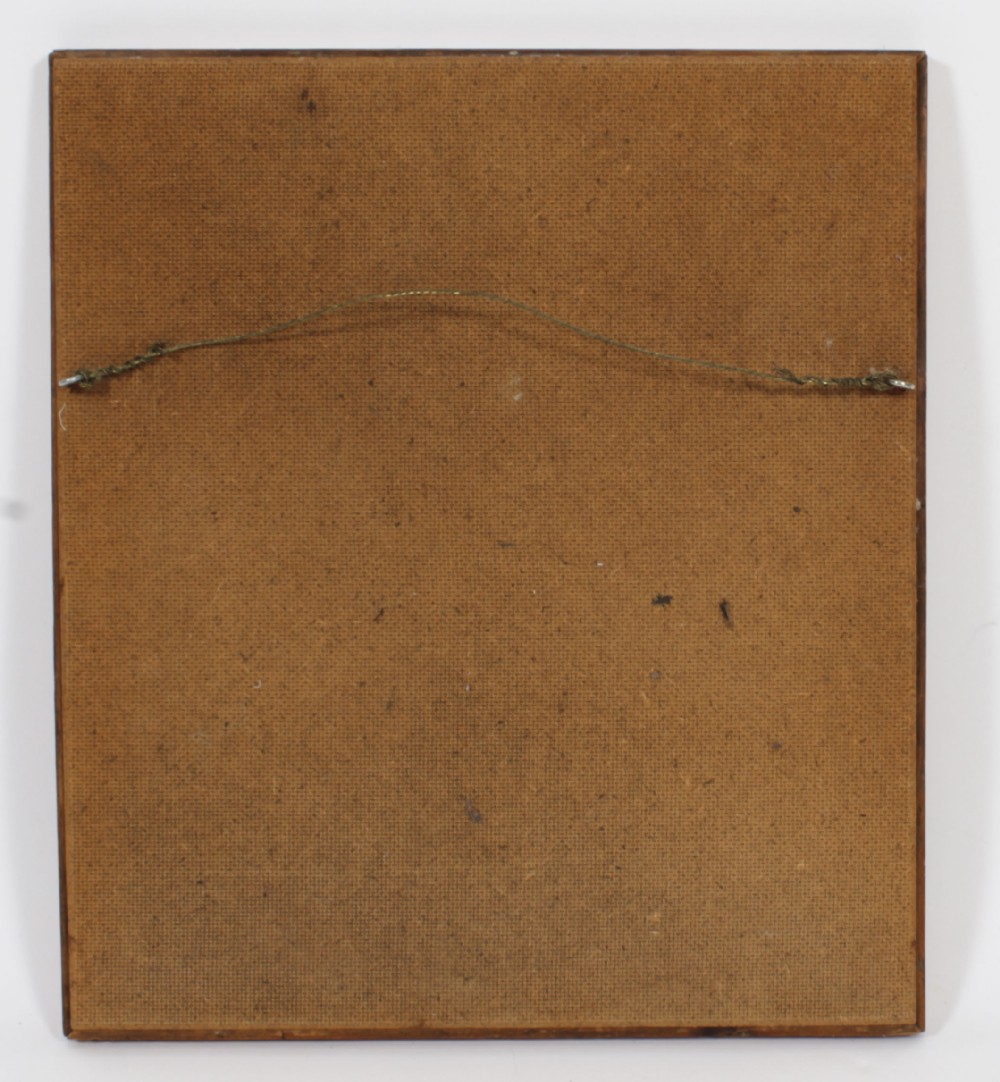
In excellent condition, please see photos for confirmation.
Dimensions in cm:
Height 38 x Width 32 x Depth 2.5
Dimensions in inches:
Height 1 foot, 3 inches x Width 1 foot, 1 inch x Depth 1 inch
The Grand Tour
was the traditional trip around Europe, often lasting three to four years, undertaken by the wealthy upper-class English during the 16th and 17th century. Their prime interest was to visit cities that were considered major centres of culture; Paris, Rome, Venice, Florence and Naples were popular destinations.
During the 18th and 19th century, the opportunity to take the “Grand Tour” spread from the aristocracy to the new industrial and professional elites, tourist destinations such as Rome shifted their attention from the privileged class to meeting the travel needs of the monied middle-class, including a healthy souvenir trade.
Souvenir engravings of tourist attractions began to appear everywhere. In addition to albums of engraved views, “the Grand Tour offered another very popular type of travel souvenir, the now nearly forgotten cameos. The taste for these engraved antique gems was revived as part of the classical revival and later reproduced as miniature plaster casts. Mounted in faux book bindings, these plaster cameos provided a minutely detailed cabinet of neoclassical knowledge and art.
Intaglios - were originally used as seals, these carvings or cuttings are moulded out of white plaster, marble dust or wax. The original 19th century intaglios were also made from wood or stone. The depressed designs depicting ancient scenes from Greece, Italy, etc were also used as markers of the land. They were also collected as souvenirs from European Grand Tours in 1830.
Our reference: A3019