Donnelly Antiques Ltd has dated this piece to the 19th Century.
He is remembered in the Church of England's calendar of saints with a Lesser Festival on 13 August.
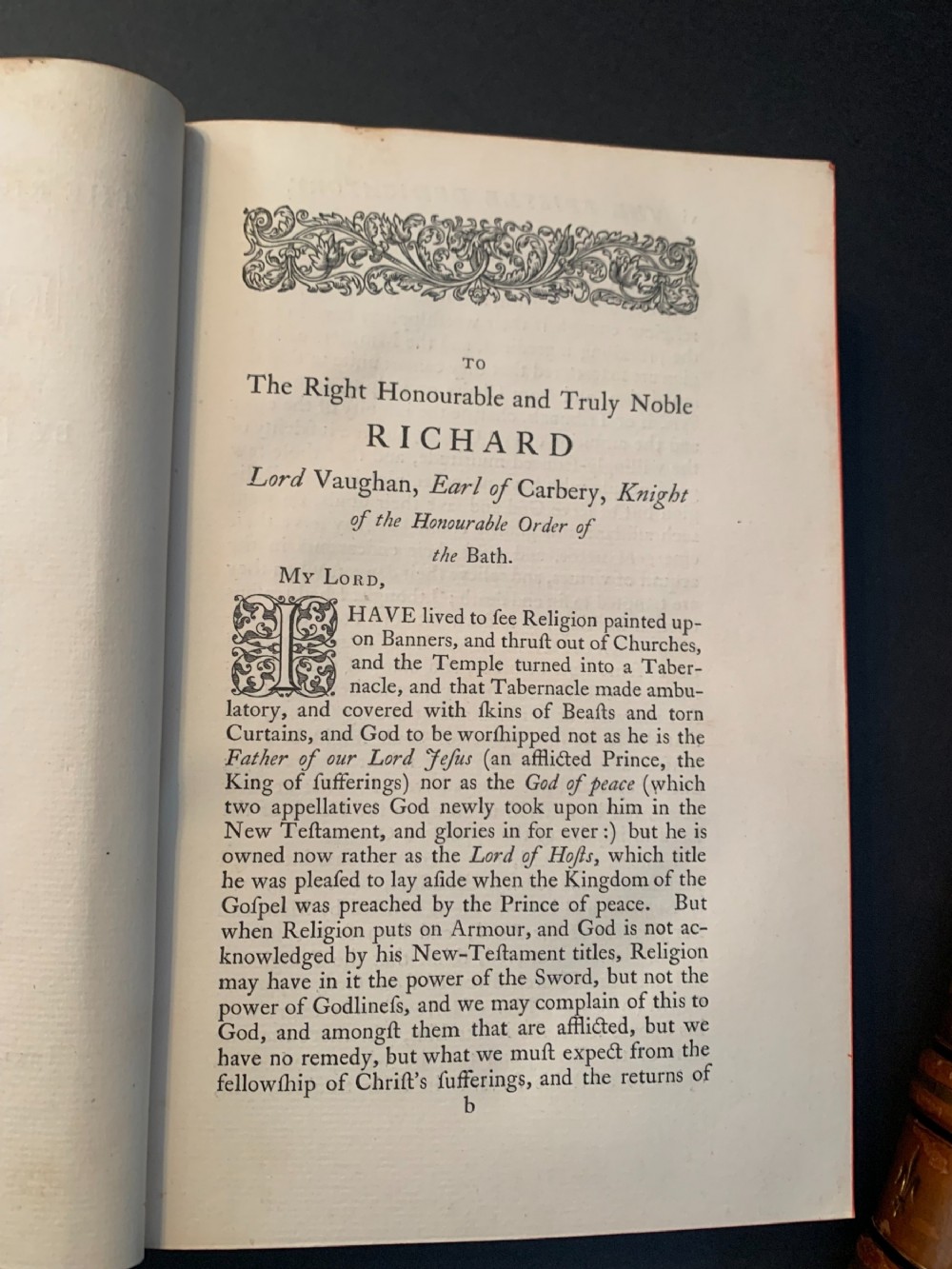
Taylor was under the patronage of William Laud, Archbishop of Canterbury and as a result went on to become chaplain in ordinary to King Charles I. This made him politically suspect when Laud was tried for treason and executed by the Puritan Parliament during the English Civil War. After the Parliamentary victory over the King, Taylor was briefly imprisoned several times. Eventually, he was allowed to live quietly in Wales, where he became the private chaplain of the Earl of Carbery. After the Restoration, he was made Bishop of Down and Connor in Ireland and he became vice-chancellor of the University of Dublin.
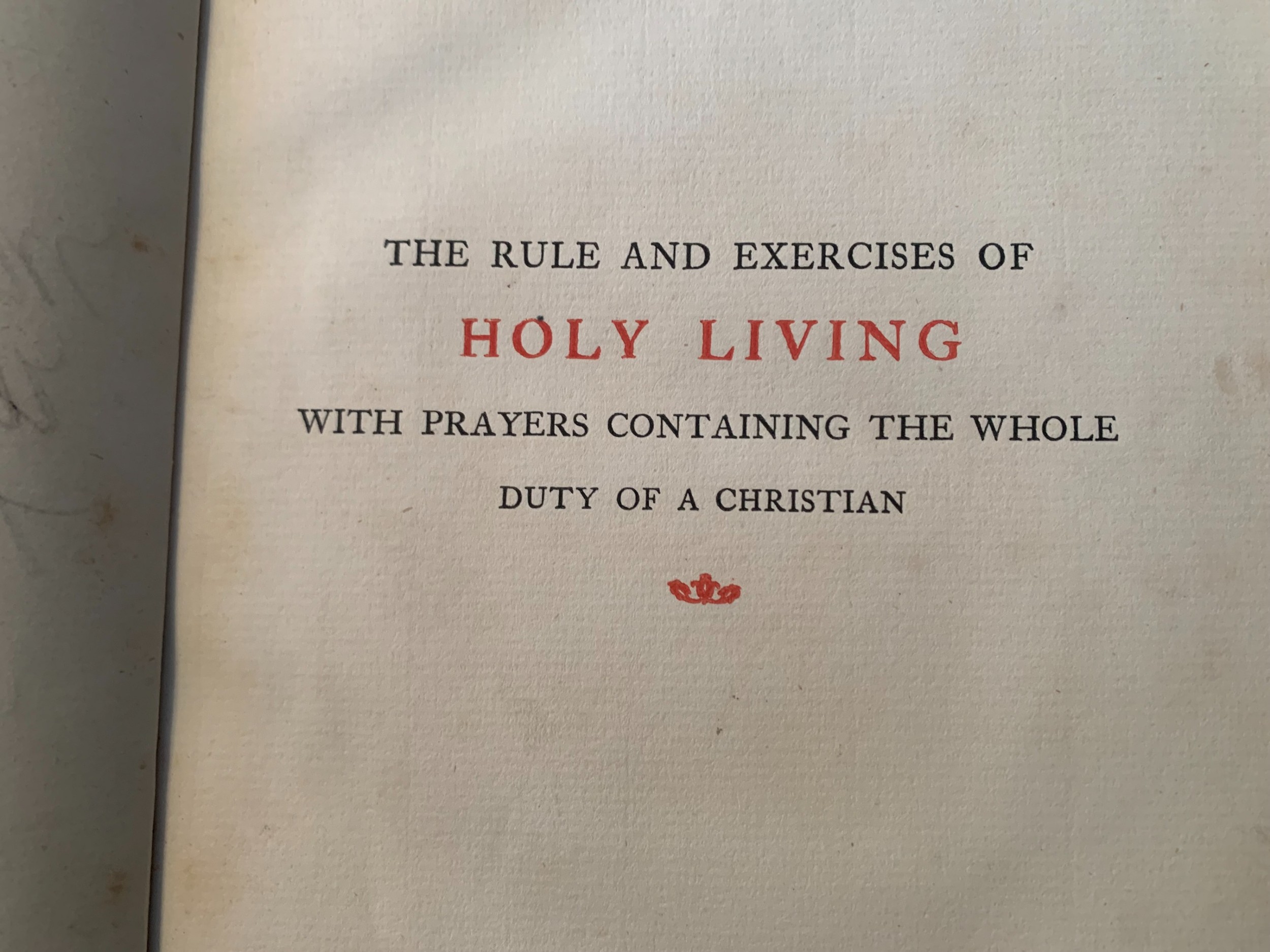
The Rule and Exercises of Holy Living, published in 1650, provided a manual of Christian practice, which has retained its place with devout readers. It deals with the means and instruments of obtaining every virtue, and the remedies against every vice, and considerations serving to the resisting all temptations, together with prayers containing the whole Duty of a Christian. Holy Dying, published in 1651, was perhaps even more popular. (Wikipedia).
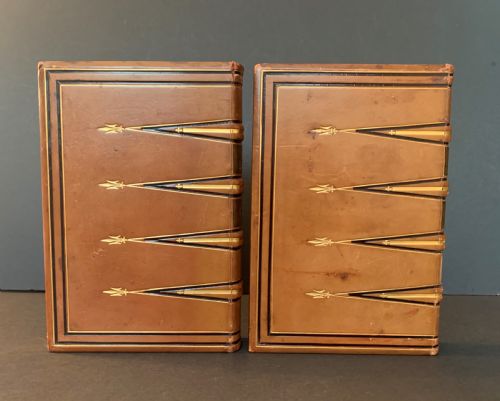
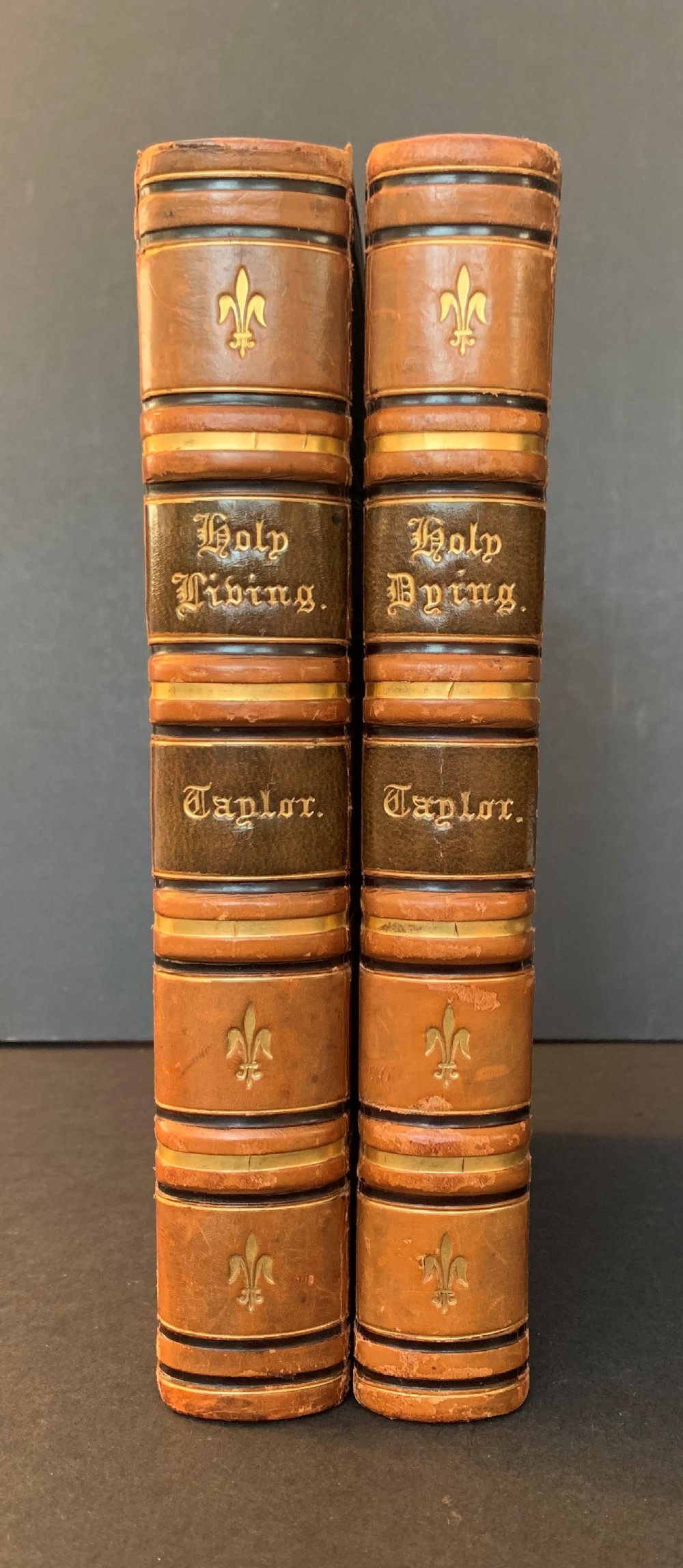
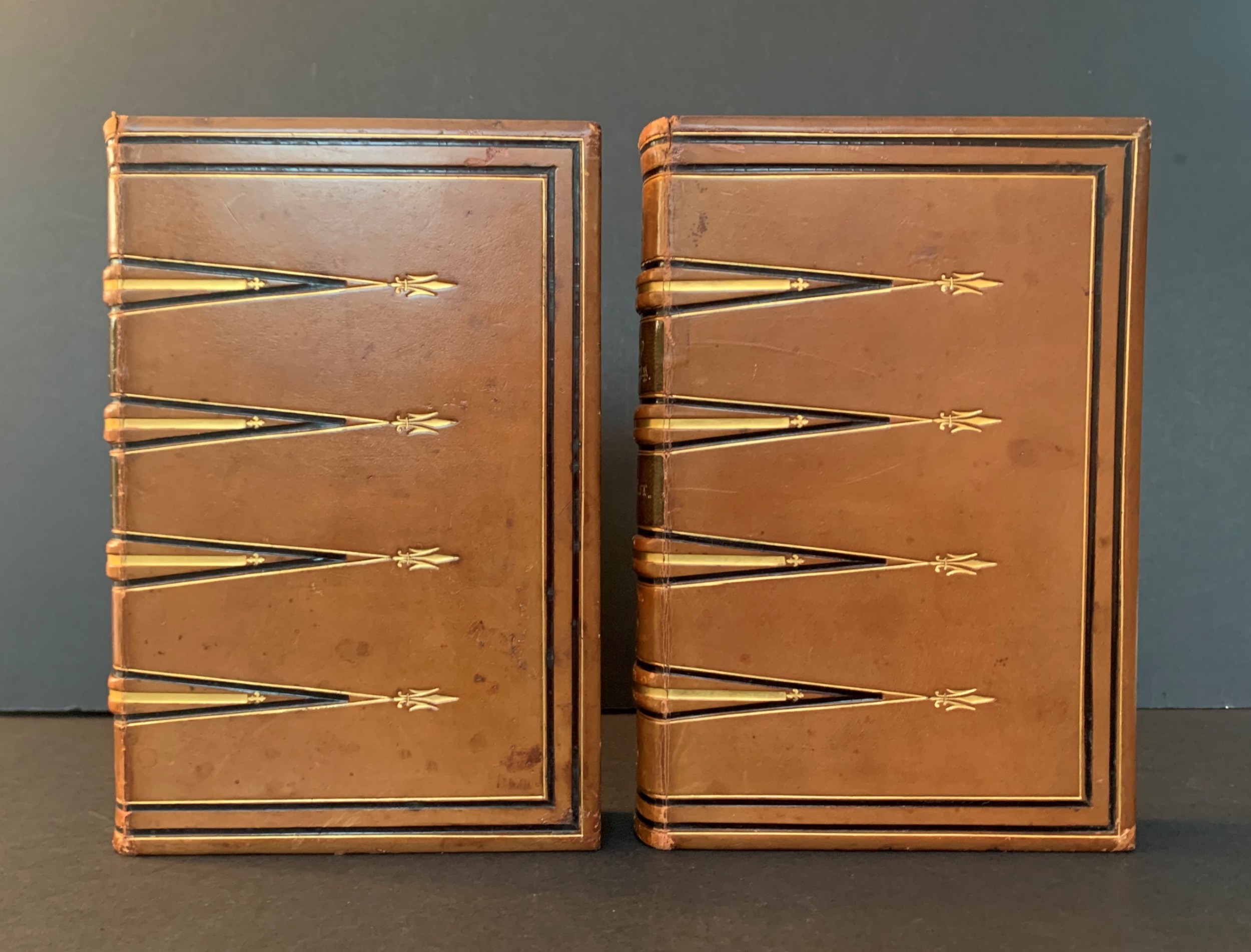
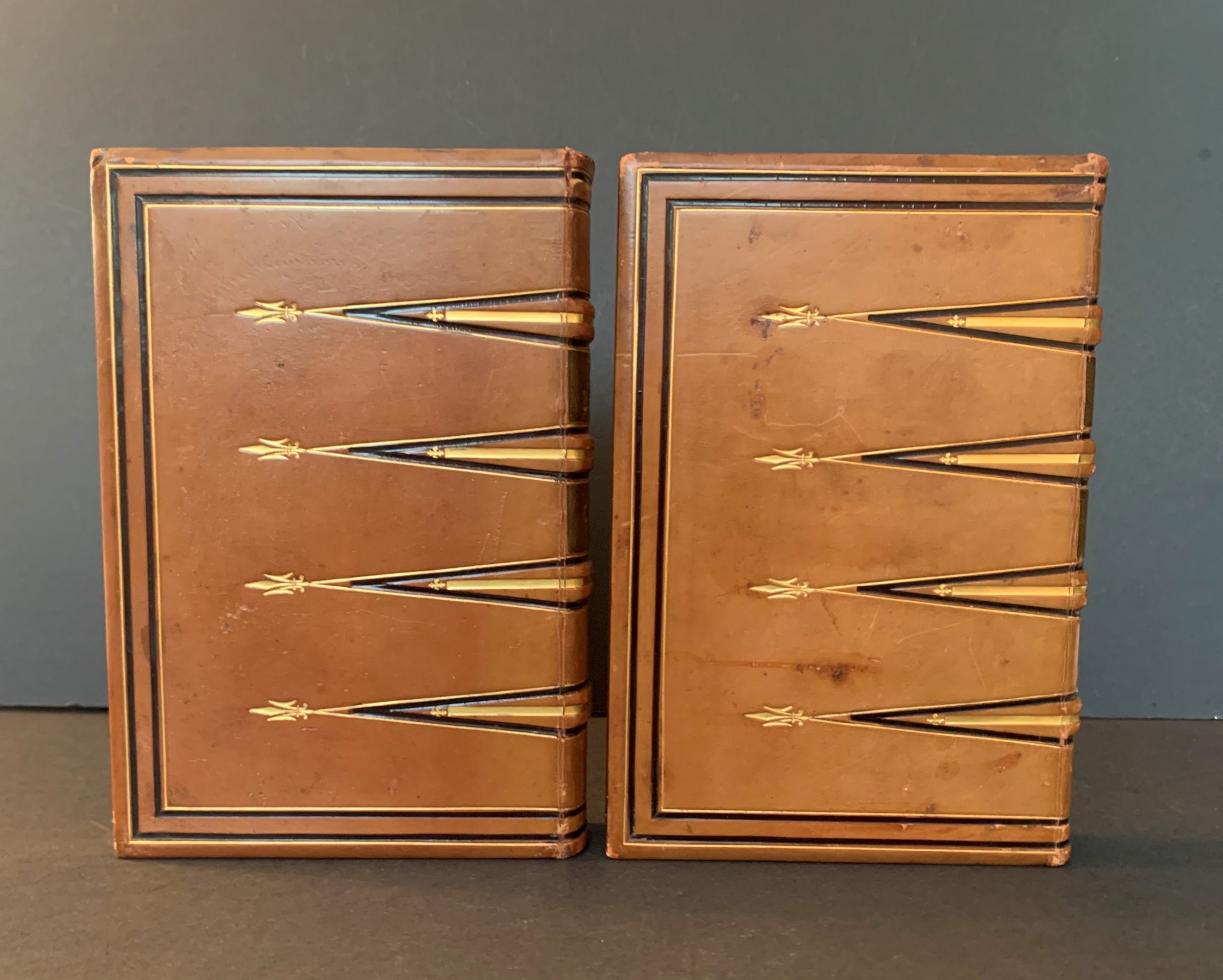
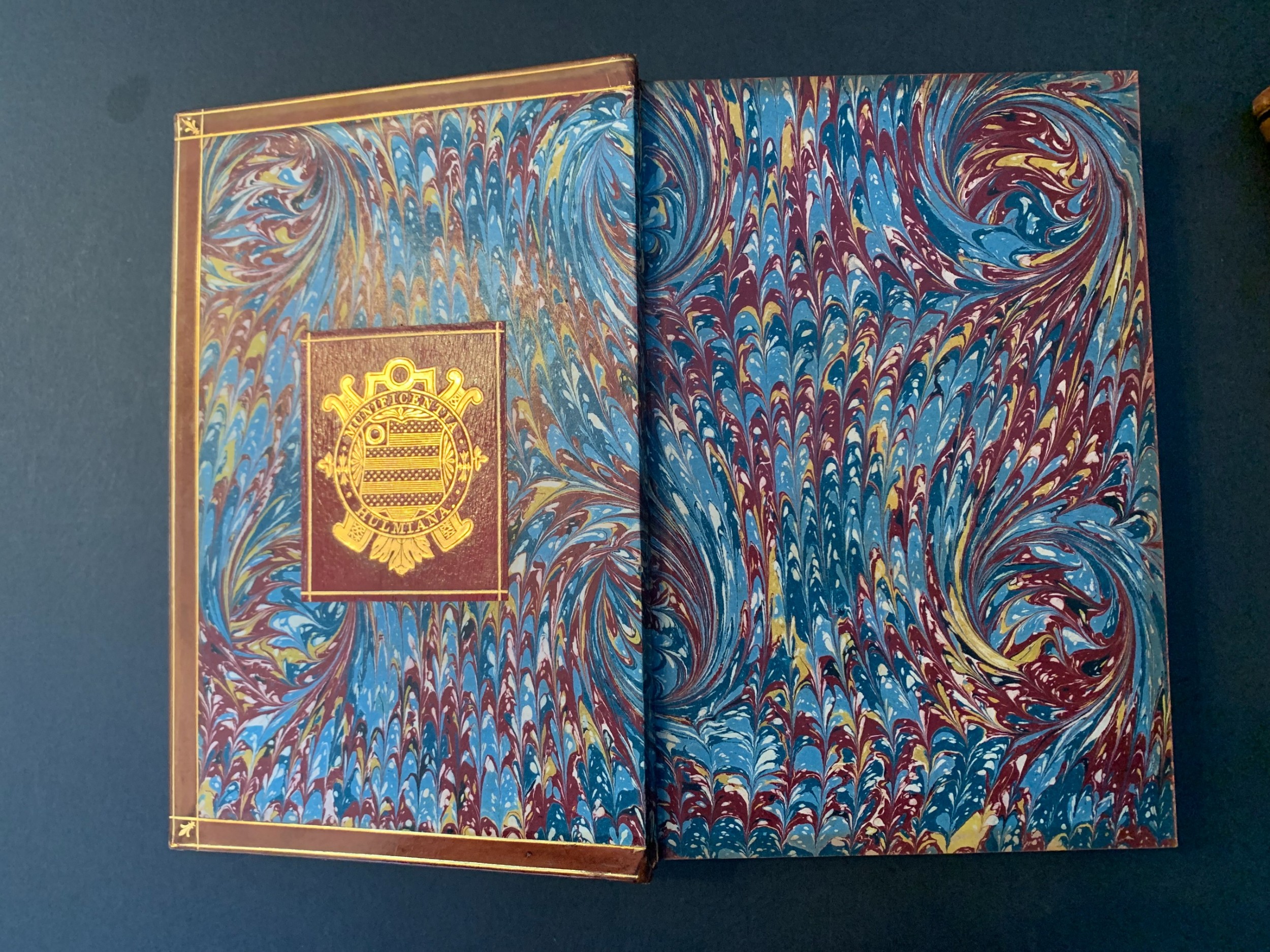
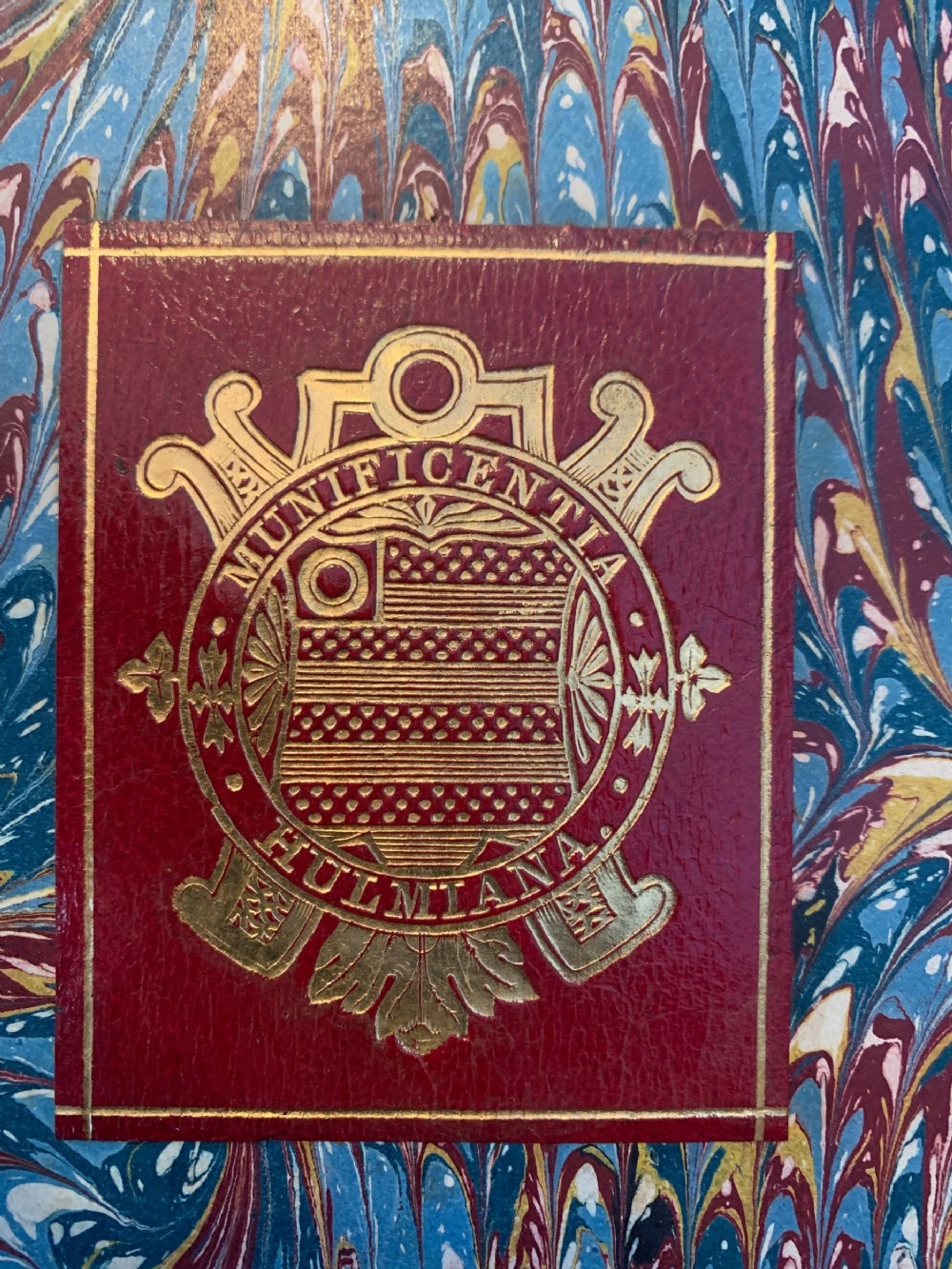
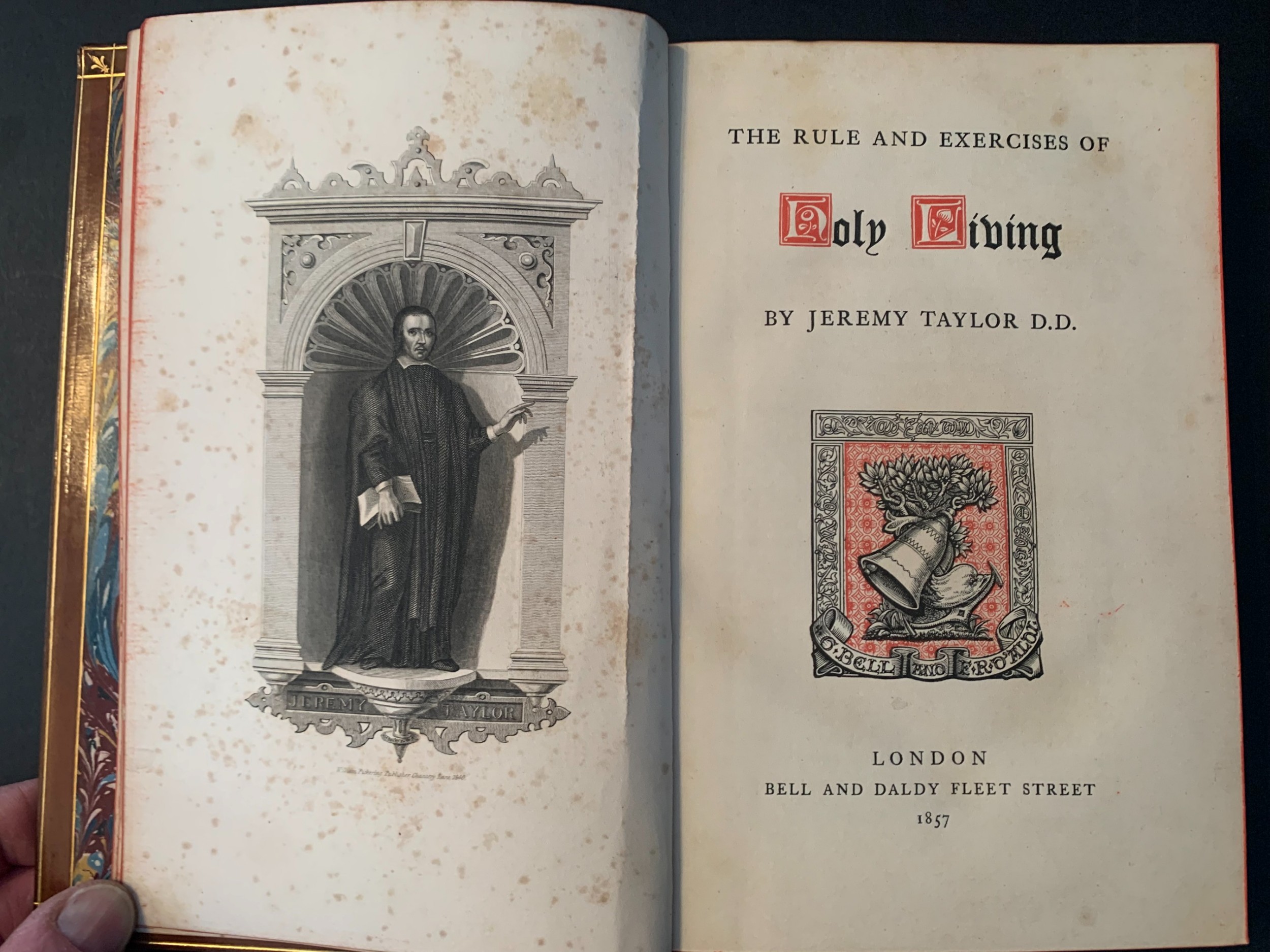
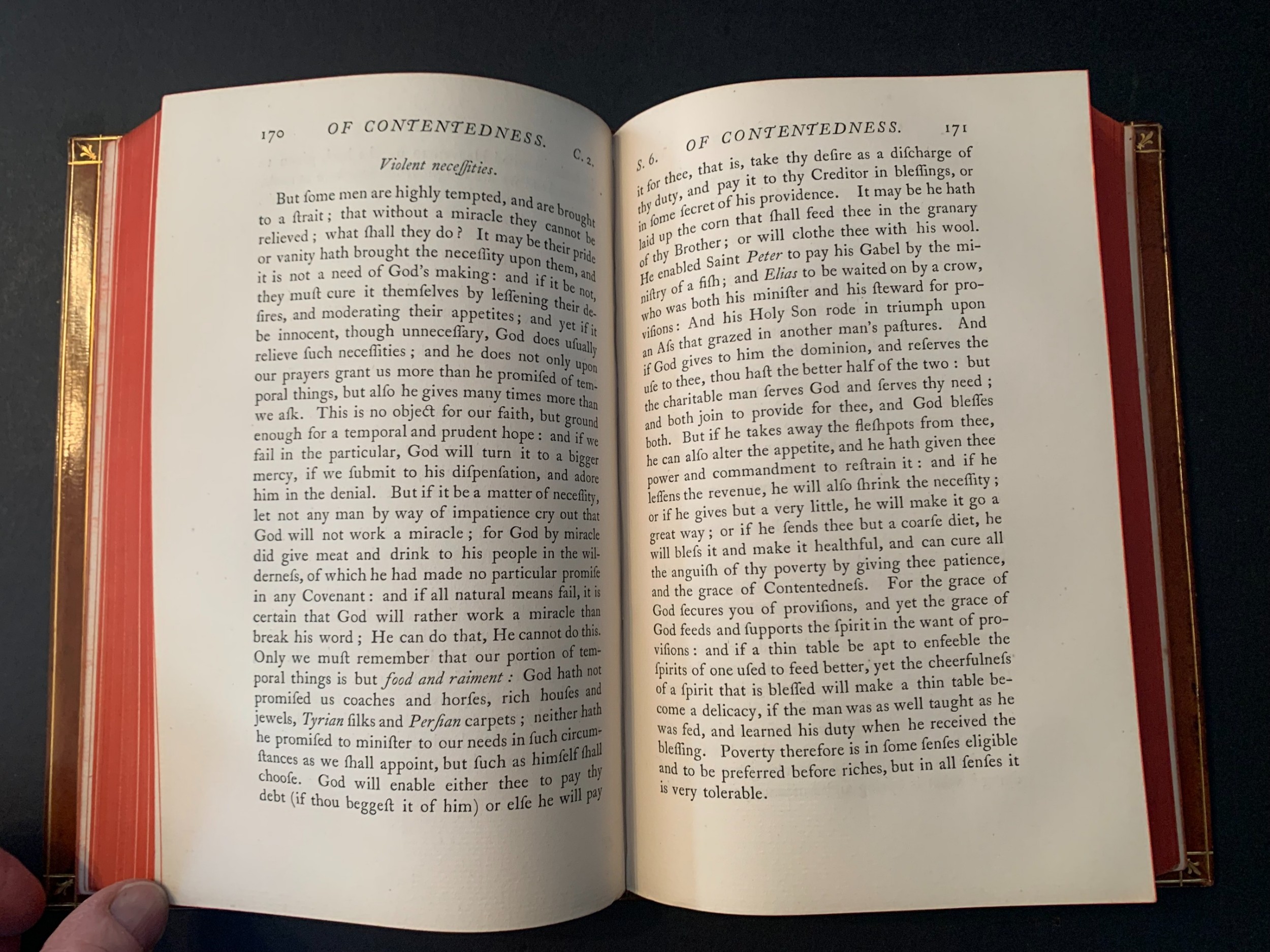
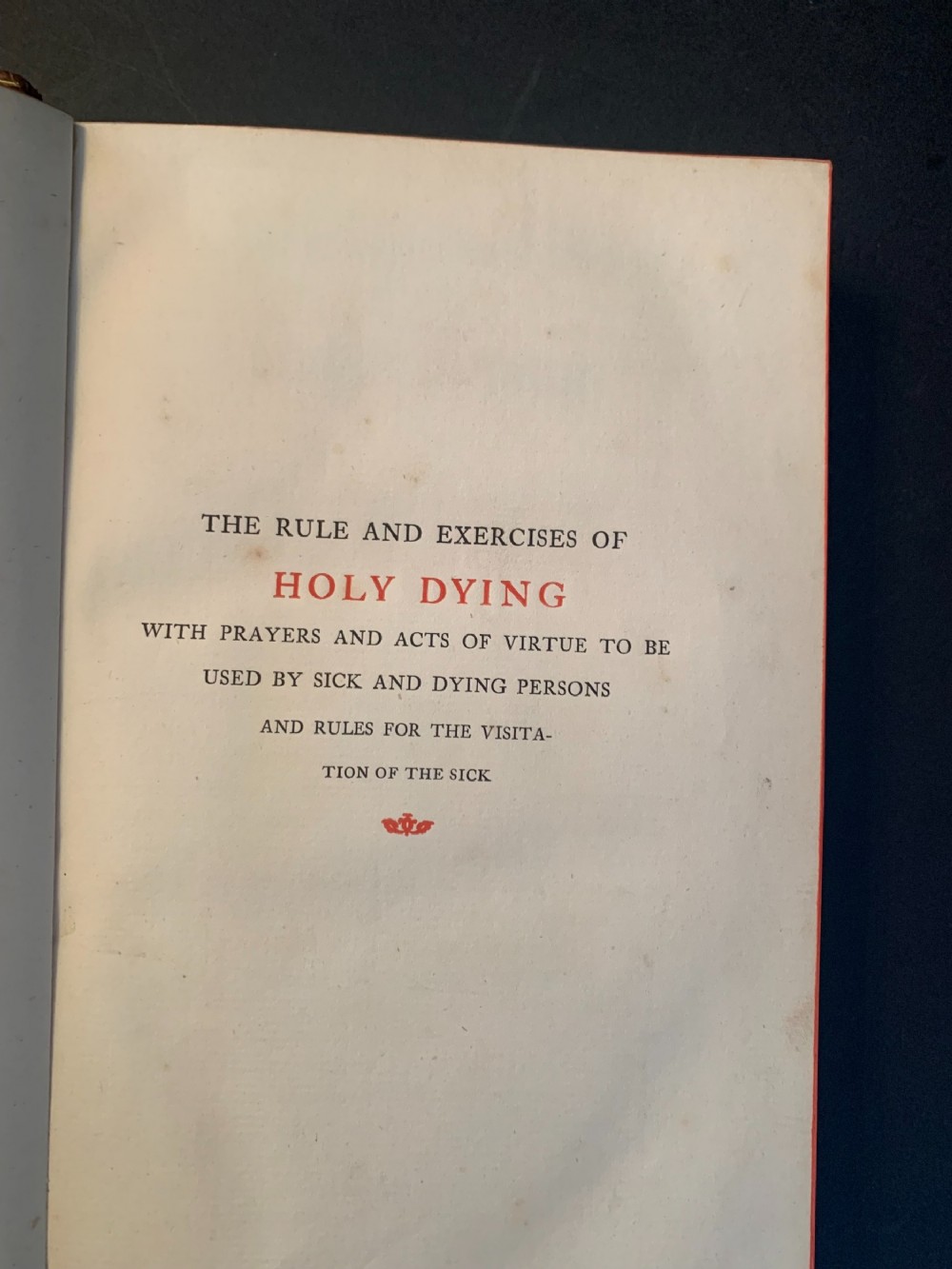
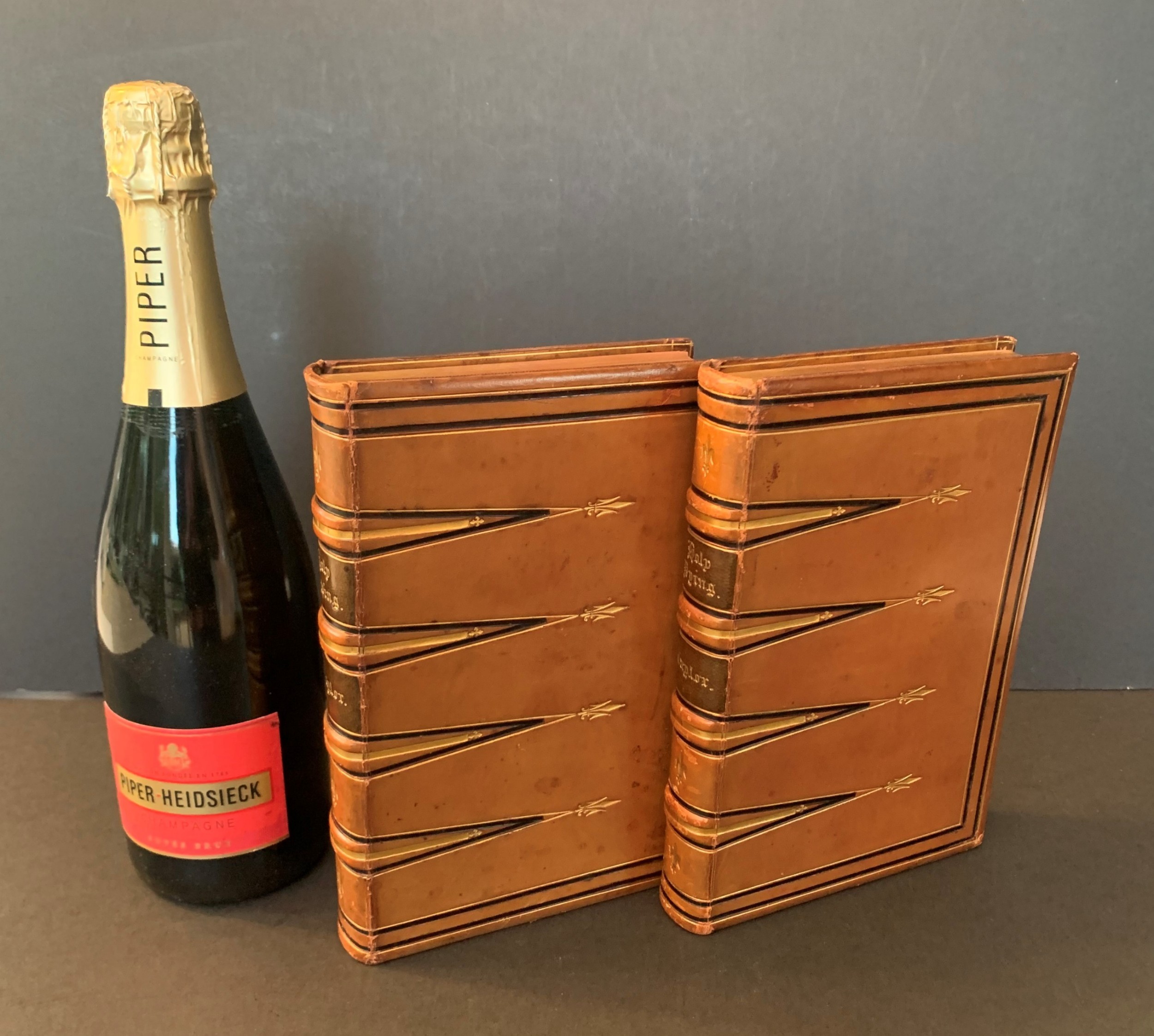
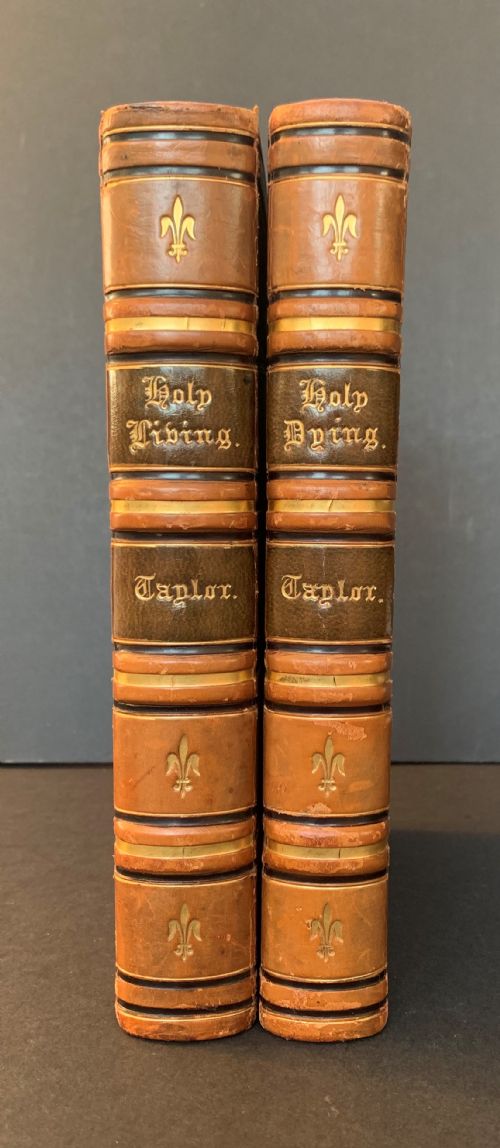
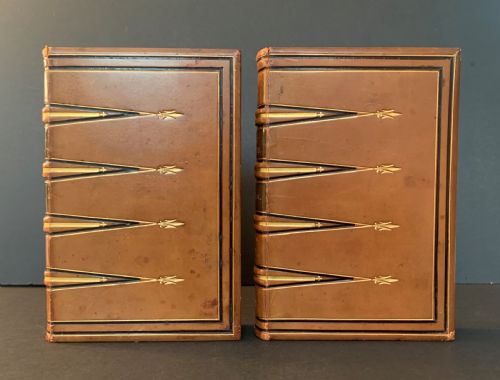
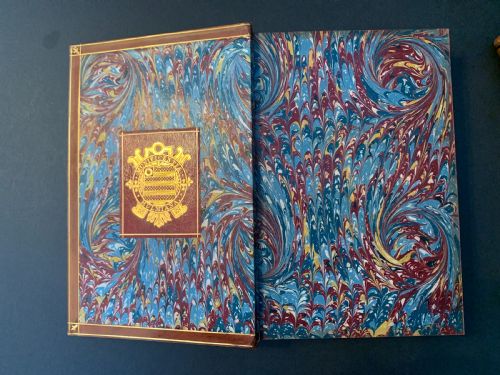
Handsomely bound in full tan calf with black and gilt decoration, gilt page edges, marbled boards and title pages printed in red and black. The front marbled end paper of each volume bears the armorial crest of the Hulme Bequest (Munificentia Hulmiana) in gilt on red morocco. Both volumes published in 1857 by Bell & Daldy of Fleet Street.
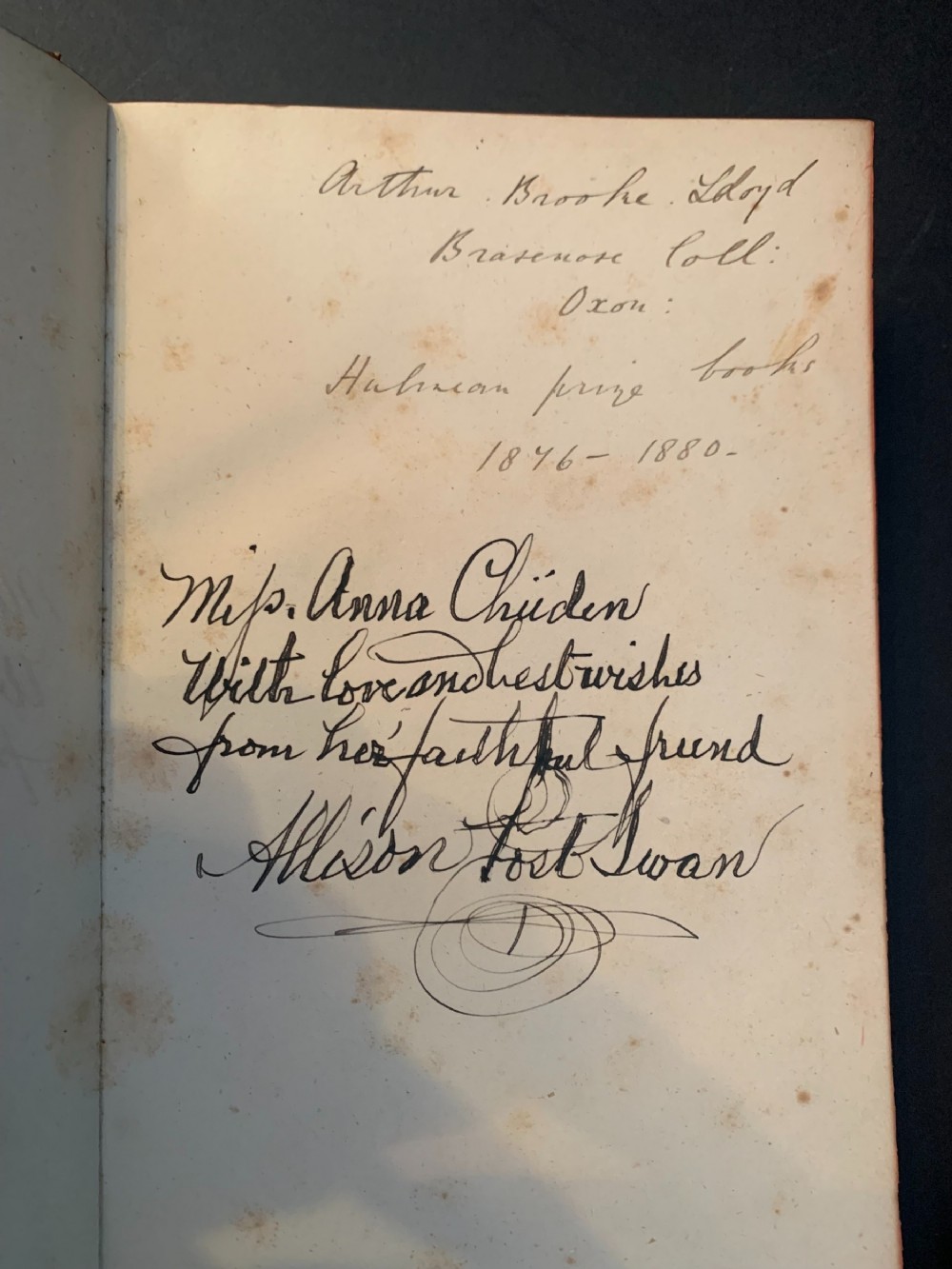
Externally there is a little cracking to the very top of the hinges, there are marks and some rubbing and minor bumping to corners. Internally tightly bound and clean and bright save for light foxing and marks to the preliminary and terminal pages although the foxing is more pronounced to the frontispiece full length illustration of the author which only appears in Holy Living and which also has a vertical crease to its right-hand side. There are hand-written inscriptions to the front free end paper of both volumes.
Donnelly Antiques Ltd has dated this piece to the 19th Century.
You can view the stock and full dealer information on the Donnelly Antiques Ltd Profile Page
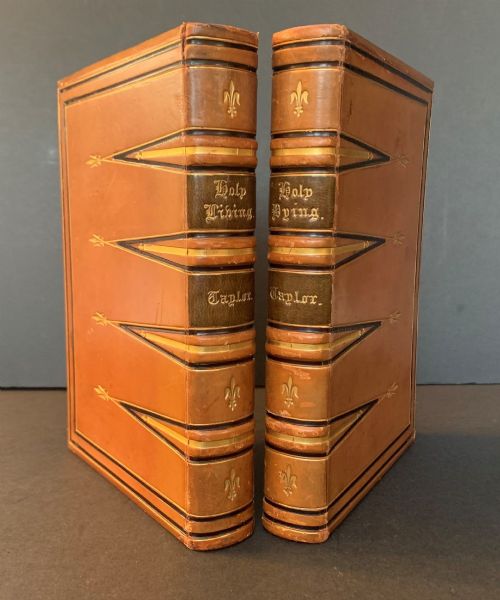
Beautifully Bound 2 Book Set of Taylor's the Rule and Exercise of Holy Living and Holy Dying Dated 1857