6,523  PAGES BROWSED TODAY PAGES TODAY 17 ANTIQUES UPLOADED TODAYNEW ARRIVALS
17 ITEMS ADDED TODAY
Sort Order
Items Per Page
Browse Categories
Sort order
Items per page
ID #SA888309
SOLD
Email Phone
Save
Stunning Japanese Silk Textile Horses by Nishimura
Sold by Steve Sly Japanese Works of Art
sold SA888309
Sorry, but this item has been sold.
Steve Sly Japanese Works of Art

Steve Sly Japanese Works of Art

Sellingantiques Verified Since Jan 2012
Browse dealers 29 items
  • About Us
    Specialists in japanese works of art from the meiji period 1868-1912
  • Trade Associations
    Steve Sly Japanese Works of Art is a registered member of BADA 
Id #SA888309
PDF SHARE
SAVE

Stunning Japanese Silk Textile Horses by Nishimura

19th century
Description

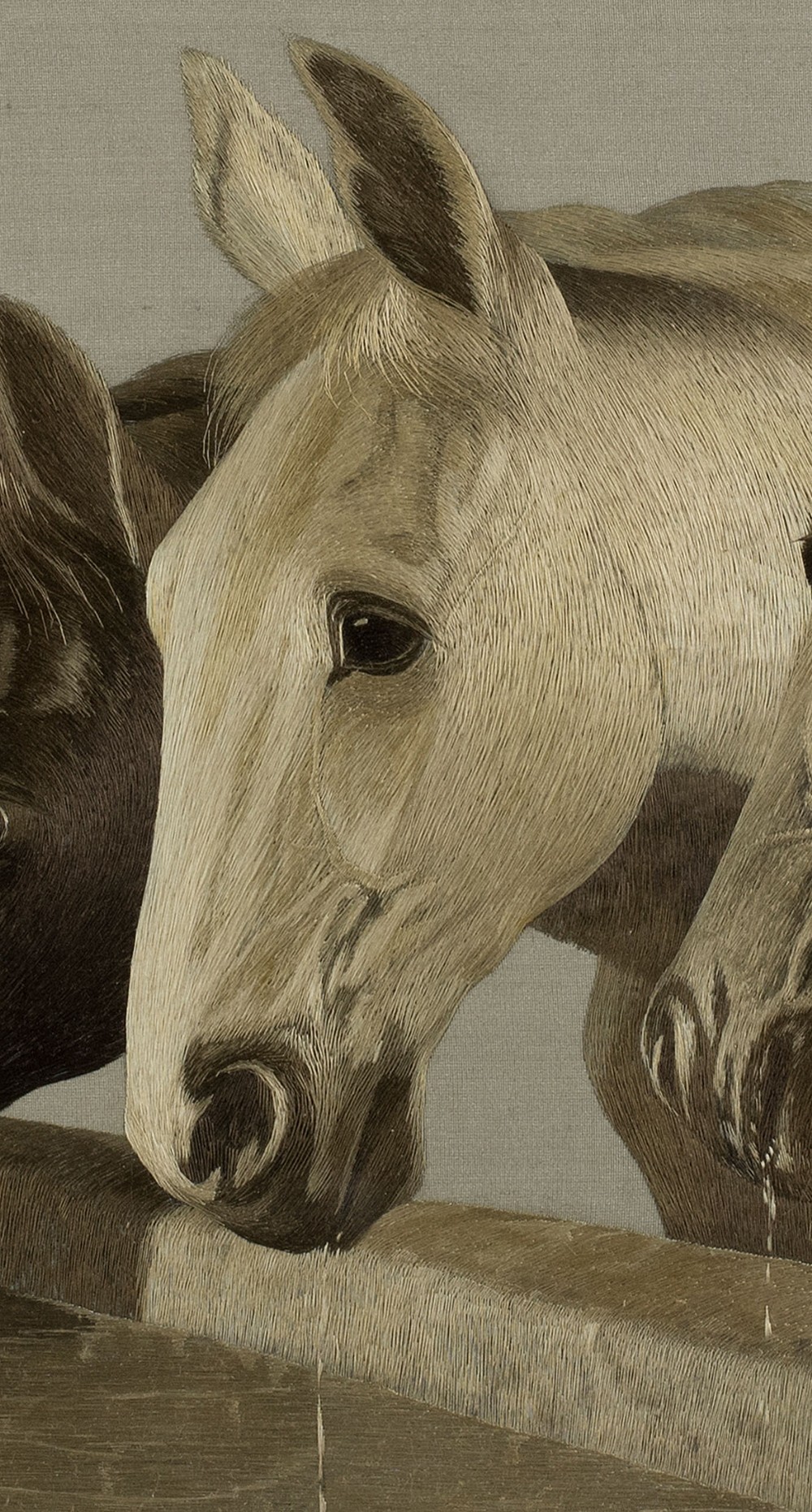
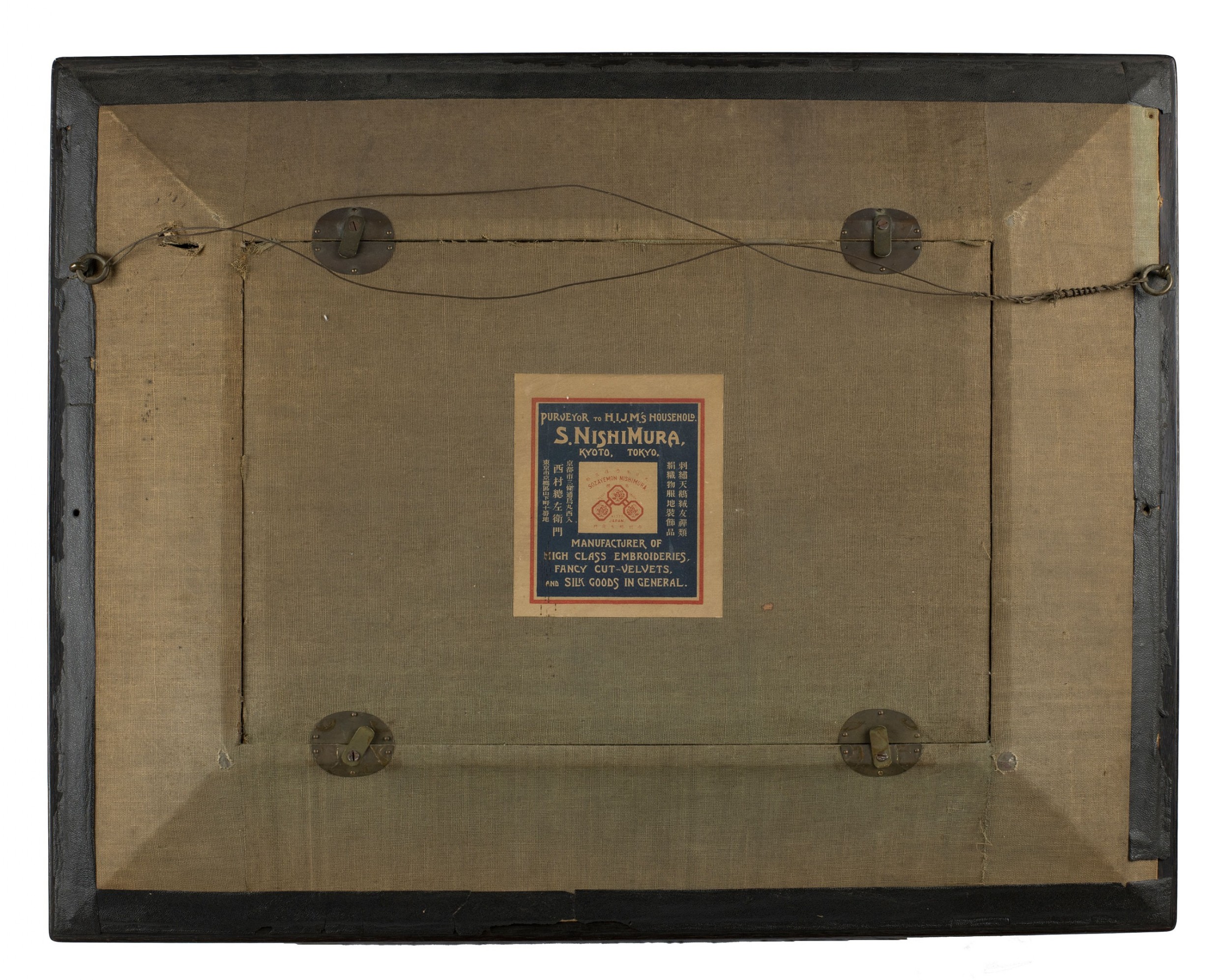
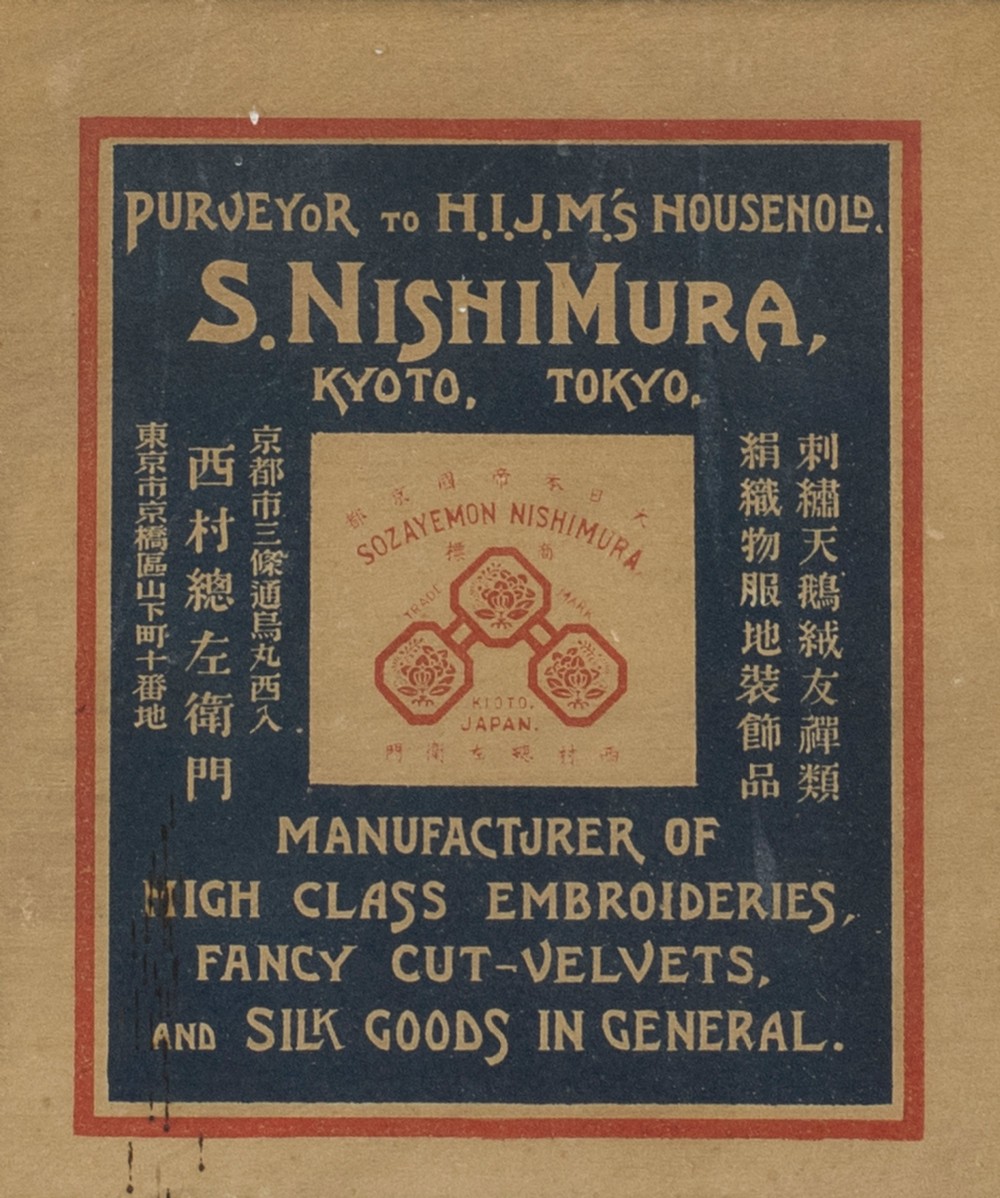
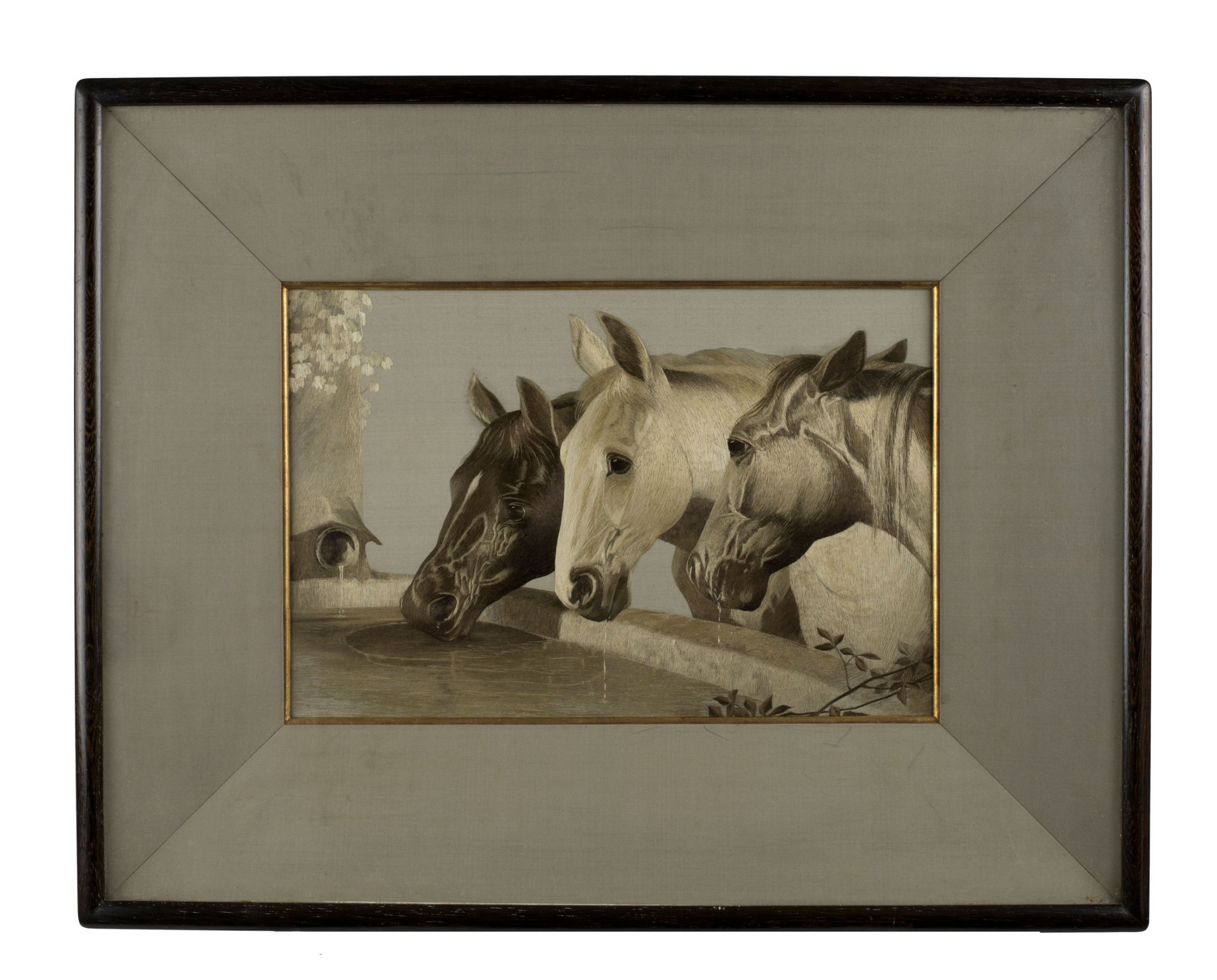
As part of our Japanese works of art collection we are delighted to offer this most charming Meiji Period 1868-1912 silk textile, finely rendered as three horses drinking at a trough, the textile housed within its original hardwood glazed frame and backed in with its original Nishimura company label, the artist has captured a quite majestic pose of three thoroughbred horses taking on water from a trough, the finest stitching imaginable brings these creatures to life, even down to the water trickling back into the trough, a most fascinating study by arguably the finest textile manufacturers of the period, a work of art that has been preserved for over 120 years and now available for your enjoyment.

Literature :

There is little doubt that a major part of the phenomenon of Japanese works of art exploding onto the worldwide stage leading up to and during the Meiji period was bought about by the textile manufacturers of Kyoto, the most recognized of which will undoubtedly be the Nishimura company , founded in Kyoto in 1670 as textile traders,

It was the 12th generation manager Nishimura Sozayemon (1855-1935) aged just 17 and remarkably adopted into the family as the son of a Chinese scholar who took the company to its dizzy heights. As early as 1873 just one year into his tenure the company were exhibiting at expositions and even during that early period the company picked up significant awards and medals with recognition both nationally and overseas , particularly in Paris in 1878 , thereafter the factory moved to new premises in Kyoto , presumably having outgrown their original site , this move coincided with the building of the new Imperial palace in Tokyo where Nishimura were commissioned to provide 64 embroidered wall panels . the highest accolade had surely now been achieved as “suppliers to the Imperial household” this was the ultimate marketing tool which was now used widely in the sales campaigns and specifically on the product labels , during the 1890's the company continued to innovate and execute new techniques , they employed the finest artists and embroiderers taking the company from strength to strength , multiple gold medals and notable awards were achieved at various national and international Expositions , there is little doubt that the appetite for Nishimura products were insatiable, particularly in America and Paris where know traders were buying and or commissioning multiple items for their clients collections, and indeed their own gallery's , make no mistake some of these incredible works of art would have been expensive items at the time , with the finest pieces commissioned for the clients of wealthy merchant traders and Imperial household members .

It seemed as if Sozayemon coupled with his accolade of supplier to the Imperial household had cornered this highly lucrative market, this was the case certainly until the 1890's when the company faced stiff competition from the new kid on the block ,Iida Takashima , a company founded in 1831 by Iida Shinshich I (1803-1874) as a small retailer of non silk drapery products , this modest shop called Takashima would through successive generations of the Iida family quickly rise to prominence as a major player on the worlds stage , Imperial household suppliers and ultimately stiff competition for the long established Nishimura company . Having only gained a licence for the manufacture and sale of silk products as late as 1855 the new generation led by Iida Shinshichi II began to make inroads into the Kyoto retail market supplying mostly clothing rugs and its speciality Fukusa,  to the emerging middle classes , in 1877 Iida first exhibited  nationally winning numerous awards.

Following the untimely death of Shinshichi II in 1878 the company passed into the hands of the remaining siblings headed up at this point by the daughter in law of the founder Iida

Physical Dimensions
Height
41cm (16.14")
Width
52cm (20.47")
Declaration

Steve Sly Japanese Works of Art has dated this piece to the 1890s.

Reference Numbers
Sellingantiques Reference
SA888309
Dealers Notes

Available during usual business hours 7 days a week by prior appointment only.

Available out of hours for general enquiries : sales@stagsheadantiques.com or steve@steveslyjapaneseart.com

Tel 07774-635918

Description
As part of our Japanese works of art collection we are delighted to offer this most charming Meiji Period 1868-1912 silk textile, finely rendered as three horses drinking at a trough, the textile housed within its original hardwood glazed frame and backed in with its original Nishimura company label, the artist has captured a quite majestic pose of three thoroughbred horses taking on water from a trough, the finest stitching imaginable brings these creatures to life, even down to the water trickling back into the trough, a most fascinating study by arguably the finest textile manufacturers of the period, a work of art that has been preserved for over 120 years and now available for your enjoyment.
fig 1. Stunning Japanese Silk Textile Horses By Nishimura
fig 1. Stunning Japanese Silk Textile Horses by Nishimura

Literature :

There is little doubt that a major part of the phenomenon of Japanese works of art exploding onto the worldwide stage leading up to and during the Meiji period was bought about by the textile manufacturers of Kyoto, the most recognized of which will undoubtedly be the Nishimura company , founded in Kyoto in 1670 as textile traders,

It was the 12th generation manager Nishimura Sozayemon (1855-1935) aged just 17 and remarkably adopted into the family as the son of a Chinese scholar who took the company to its dizzy heights.
Steve Sly Japanese Works of Art

As early as 1873 just one year into his tenure the company were exhibiting at expositions and even during that early period the company picked up significant awards and medals with recognition both nationally and overseas , particularly in Paris in 1878 , thereafter the factory moved to new premises in Kyoto , presumably having outgrown their original site , this move coincided with the building of the new Imperial palace in Tokyo where Nishimura were commissioned to provide 64 embroidered wall panels . the highest accolade had surely now been achieved as “suppliers to the Imperial household” this was the ultimate marketing tool which was now used widely in the sales campaigns and specifically on the product labels , during the 1890's the company continued to innovate and execute new techniques , they employed the finest artists and embroiderers taking the company from strength to strength , multiple gold medals and notable awards were achieved at various national and international Expositions , there is little doubt that the appetite for Nishimura products were insatiable, particularly in America and Paris where know traders were buying and or commissioning multiple items for their clients collections, and indeed their own gallery's , make no mistake some of these incredible works of art would have been expensive items at the time , with the finest pieces commissioned for the clients of wealthy merchant traders and Imperial household members .

fig 2. Stunning Japanese Silk Textile Horses By Nishimura
fig 2. Stunning Japanese Silk Textile Horses by Nishimura

It seemed as if Sozayemon coupled with his accolade of supplier to the Imperial household had cornered this highly lucrative market, this was the case certainly until the 1890's when the company faced stiff competition from the new kid on the block ,Iida Takashima , a company founded in 1831 by Iida Shinshich I (1803-1874) as a small retailer of non silk drapery products , this modest shop called Takashima would through successive generations of the Iida family quickly rise to prominence as a major player on the worlds stage , Imperial household suppliers and ultimately stiff competition for the long established Nishimura company . Having only gained a licence for the manufacture and sale of silk products as late as 1855 the new generation led by Iida Shinshichi II began to make inroads into the Kyoto retail market supplying mostly clothing rugs and its speciality Fukusa,  to the emerging middle classes , in 1877 Iida first exhibited  nationally winning numerous awards.

Following the untimely death of Shinshichi II in 1878 the company passed into the hands of the remaining siblings headed up at this point by the daughter in law of the founder Iida

Height
41cm (16.14")
Width
52cm (20.47")
Date of Manufacture

Steve Sly Japanese Works of Art has dated this piece to the 1890s.

Reference Numbers
Sellingantiques Ref
SA888309
Steve Sly Japanese Works of Art
Sellingantiques verified Since Jan 2012

Specialists in japanese works of art from the meiji period 1868-1912

Dealer Profile

You can view the stock and full dealer information on the Steve Sly Japanese Works of Art Profile Page

Trade Associations

Steve Sly Japanese Works of Art is a registered member of BADA 

PDF SHARE
SAVE
Stunning Japanese Silk Textile Horses By Nishimura SOLD6+ MONTHS AGO
1 / 5
Archive I Stunning Japanese Silk Textile Horses By Nishimura SOLD6+ MONTHS AGO

Stunning Japanese Silk Textile Horses by Nishimura
Archive II Stunning Japanese Silk Textile Horses By Nishimura View II
Archive III Stunning Japanese Silk Textile Horses By Nishimura View III
Archive IV Stunning Japanese Silk Textile Horses By Nishimura View IV
Archive V Stunning Japanese Silk Textile Horses By Nishimura View V
Enlarged Archival View
Telephone 07774 635918
Location
Stags Head Antiques Ltd
Bournemouth
Dorset
United Kingdom
Verified Since Jan 2012
Items For Sale 29
Items Sold 1,666
Steve Sly Japanese Works of Art
Verified Since Jan 2012
View Dealer Info
Location: Stags Head Antiques Ltd, Bournemouth , Dorset, United Kingdom
Verified
Jan 2012
For Sale
29
Sold
1,666
Stunning Japanese Silk Textile Horses By Nishimura
Ref: SA888309
Stunning Japanese Silk Textile Horses By Nishimura
Detail View 1
Detail View 2
Detail View 3
Detail View 4
Archival Detail
Every single antique dealer on our platform is individually approved by our internal team. We verify their professional trade history, ethical standards, and photographic quality to ensure a secure, high-standard buying environment. Upon joining, every dealer agrees to a strict 9-point code of conduct. While issues can occasionally arise, our dealers typically resolve them swiftly and directly with the buyer. In fact, since our founding in 2002, Sellingantiques has only had to step in to help resolve an issue on roughly five occasions—a true testament to the quality of our dealers and their dedication to your happiness.
Our dealers are highly experienced in packing and shipping fragile, high-value antiques. Because you are in direct contact with the dealer, you will be able to easily go through all available shipping and insurance options together to ensure your item arrives safely.
Antiques are the ultimate green purchase. By choosing historical pieces over newly manufactured goods, you completely eliminate the carbon footprint of modern mass production while preserving exceptional, timeless craftsmanship.
Written by Sellingantiques from the dealer’s photographs and listing
  • Period19th century
  • SizeH 41 cm (16 in) x W 52 cm (20 in)
items
Add keywords to the filter
Price
£100
£250000
Era
Movements
Material
Origin
Stock Location
Freshness
Online Payments
Categories