It was listed by Jason Clarke Antiques. Sold pieces stay on Sellingantiques as a record of what has passed through, and the next one is rarely far away.
Jason Clarke Antiques has dated this piece to the 1880s.
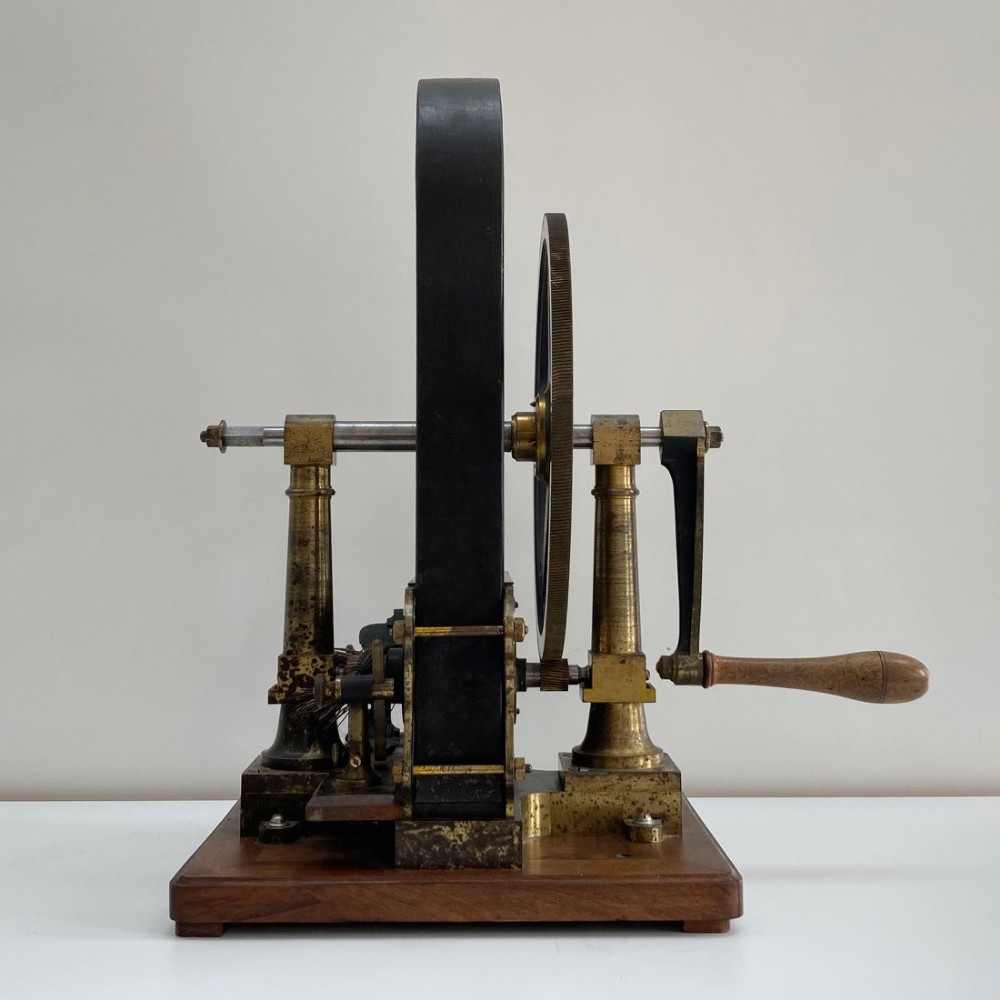
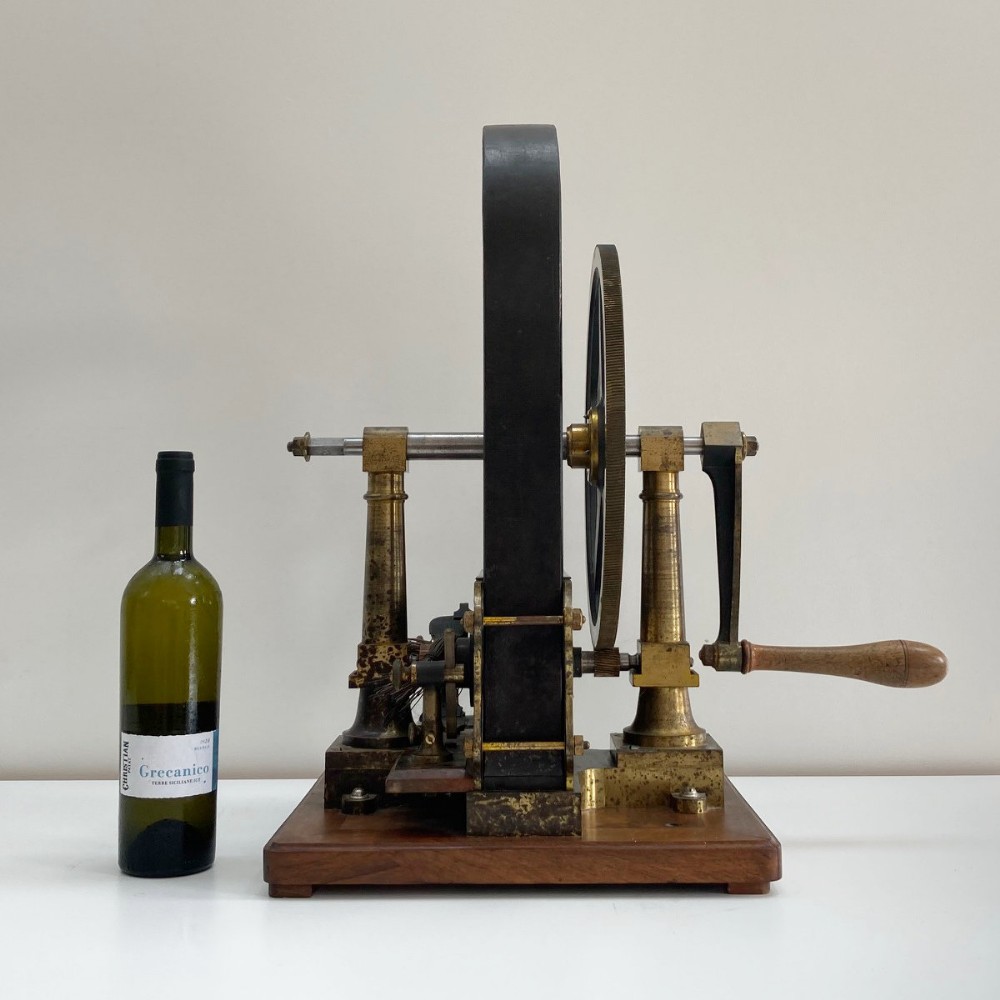
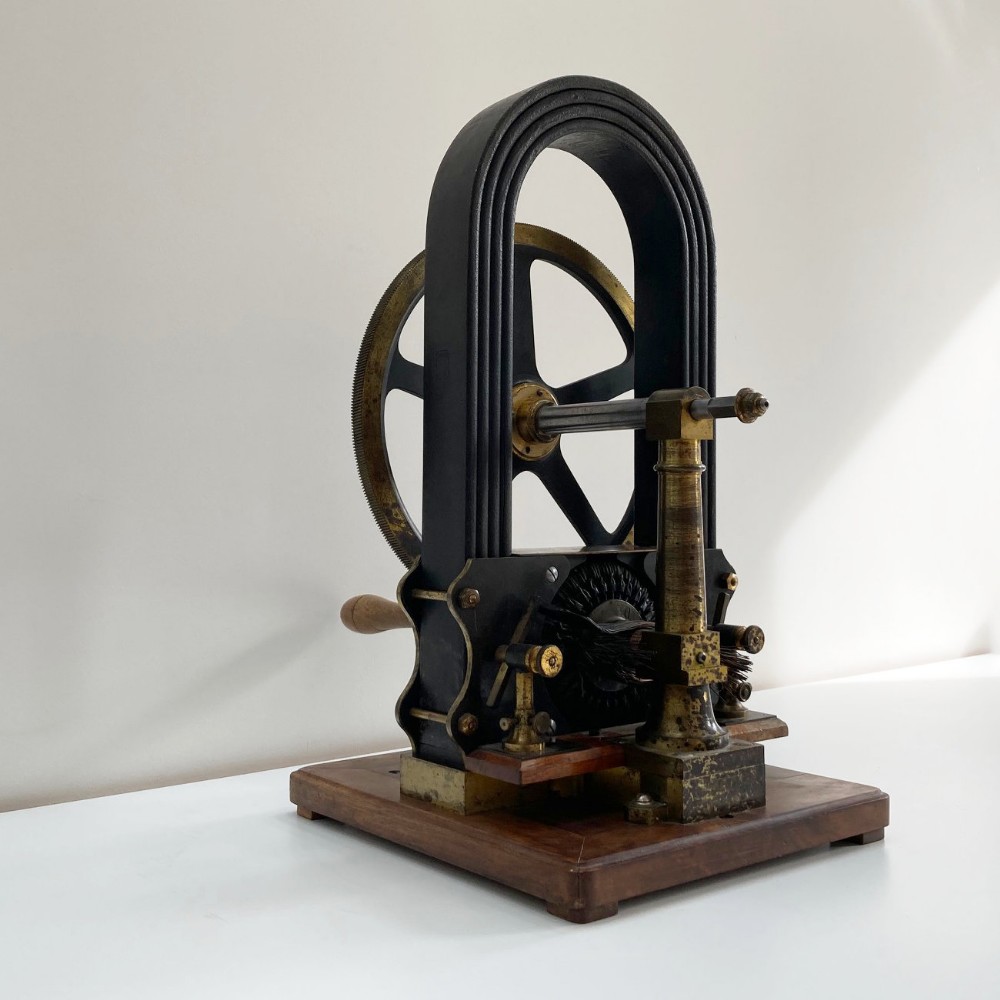
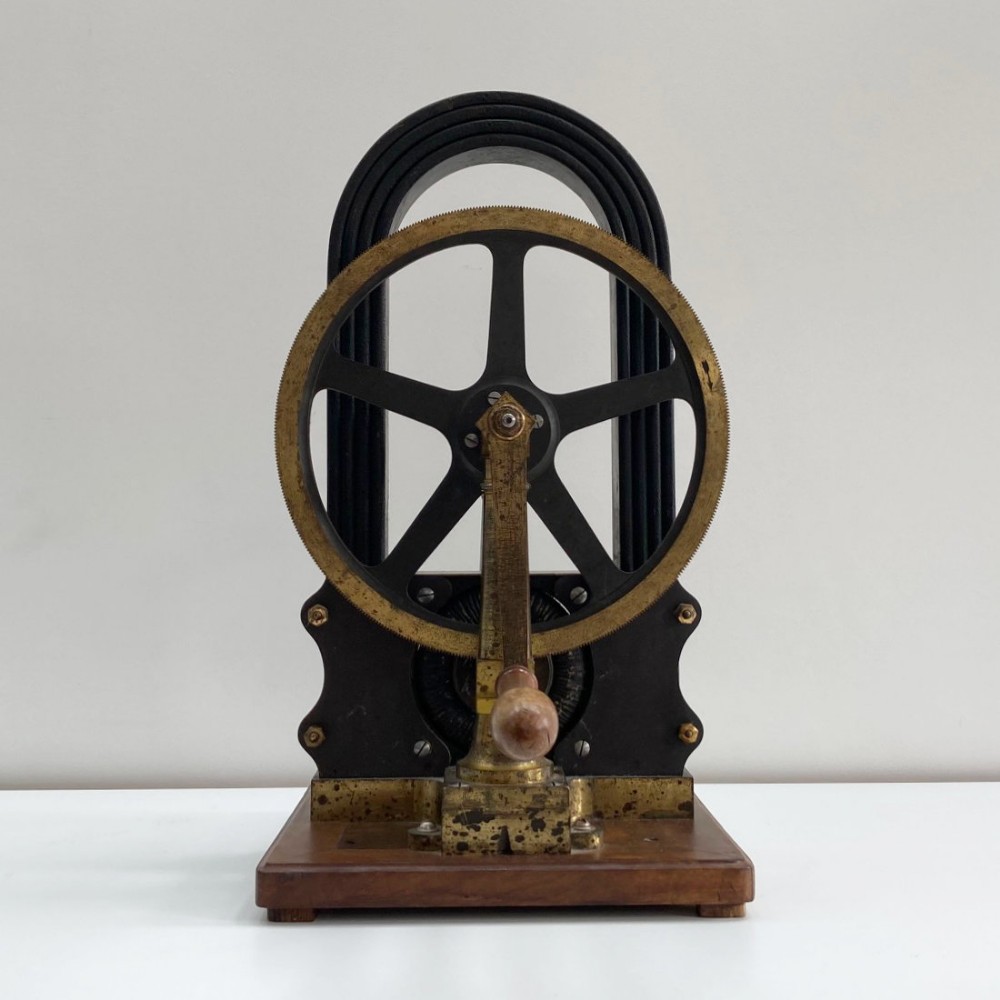
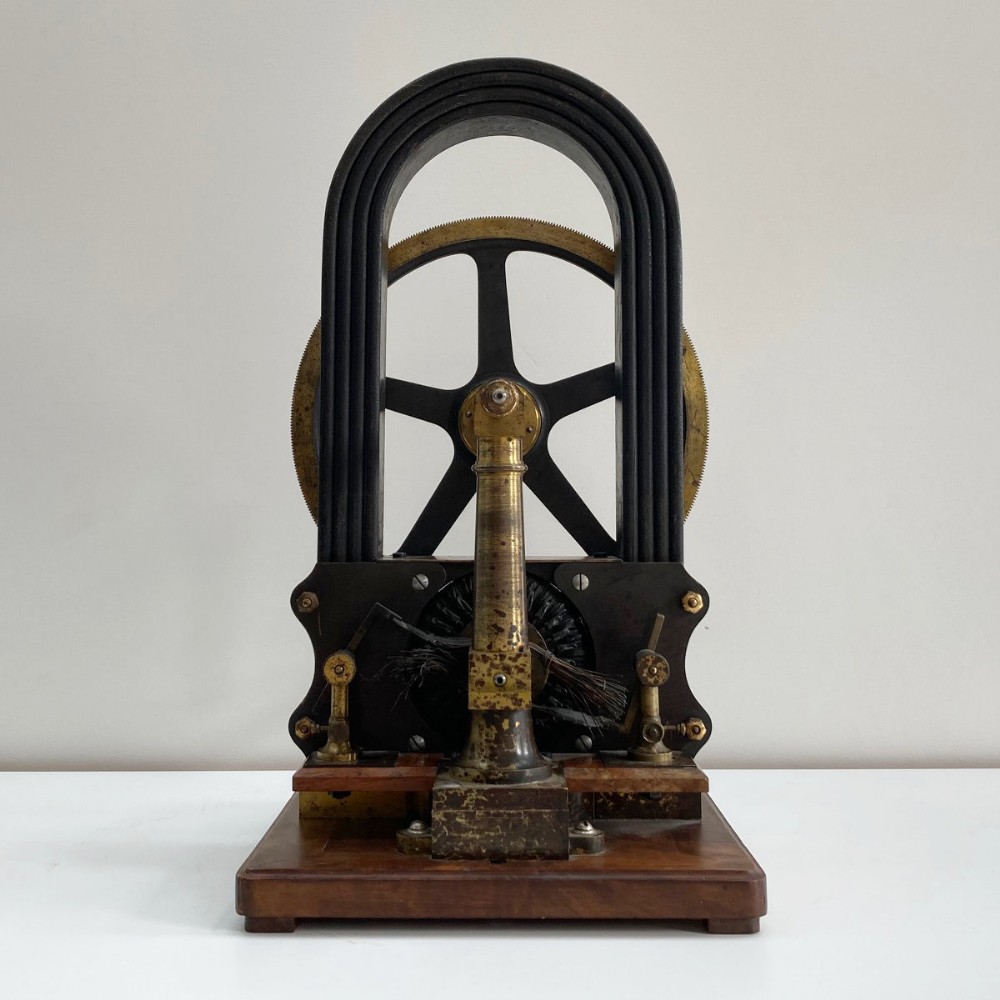
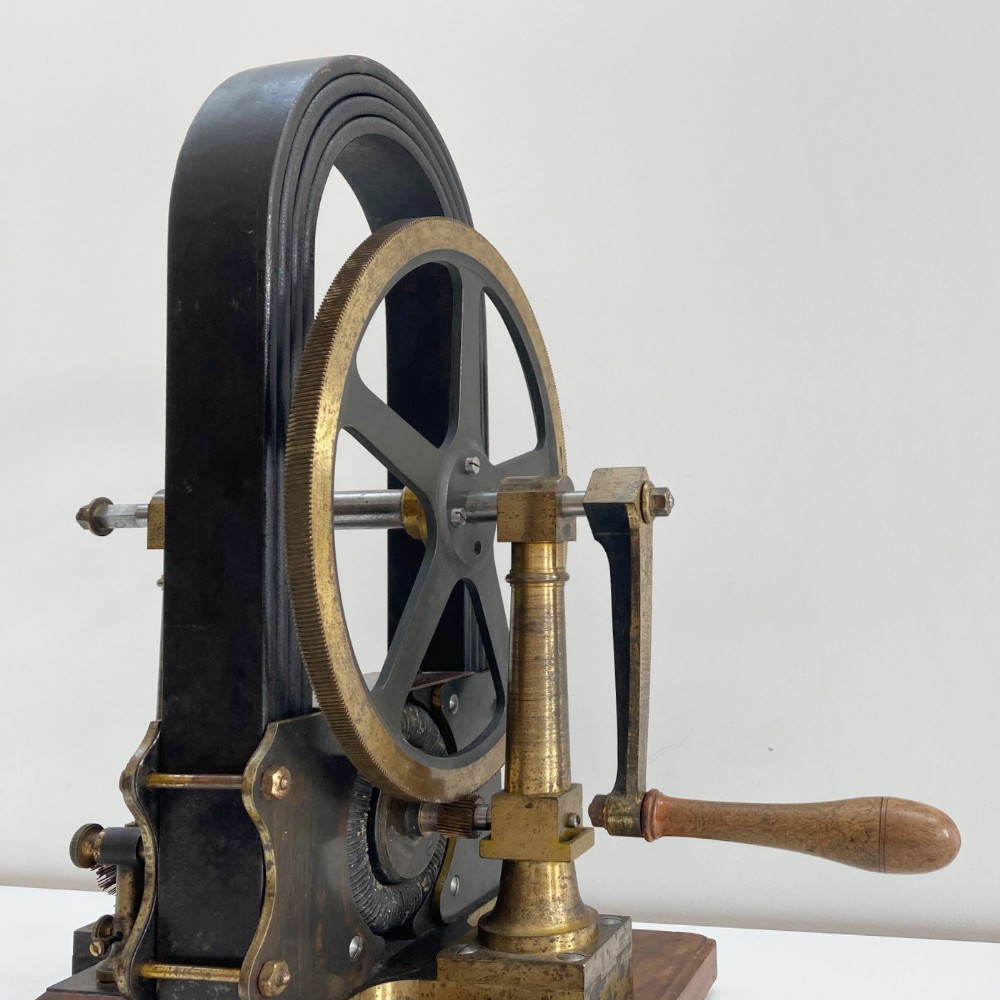
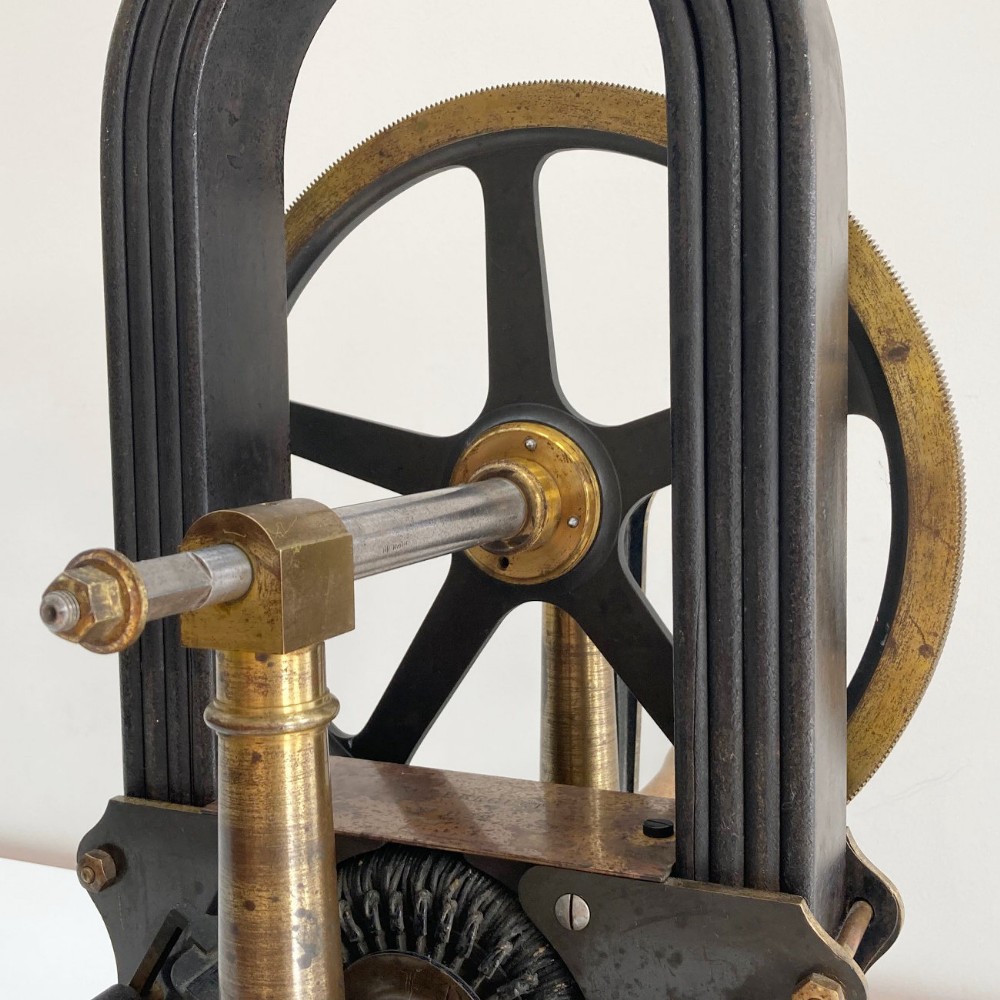
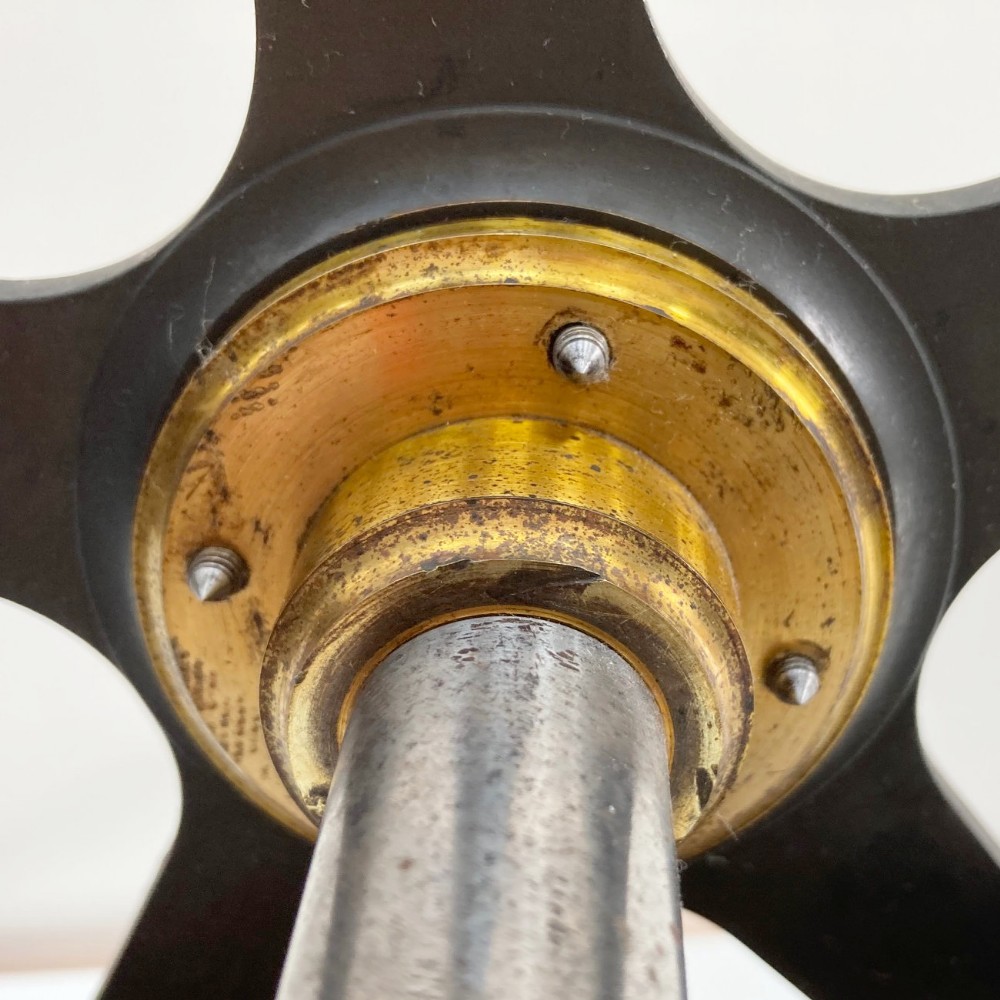
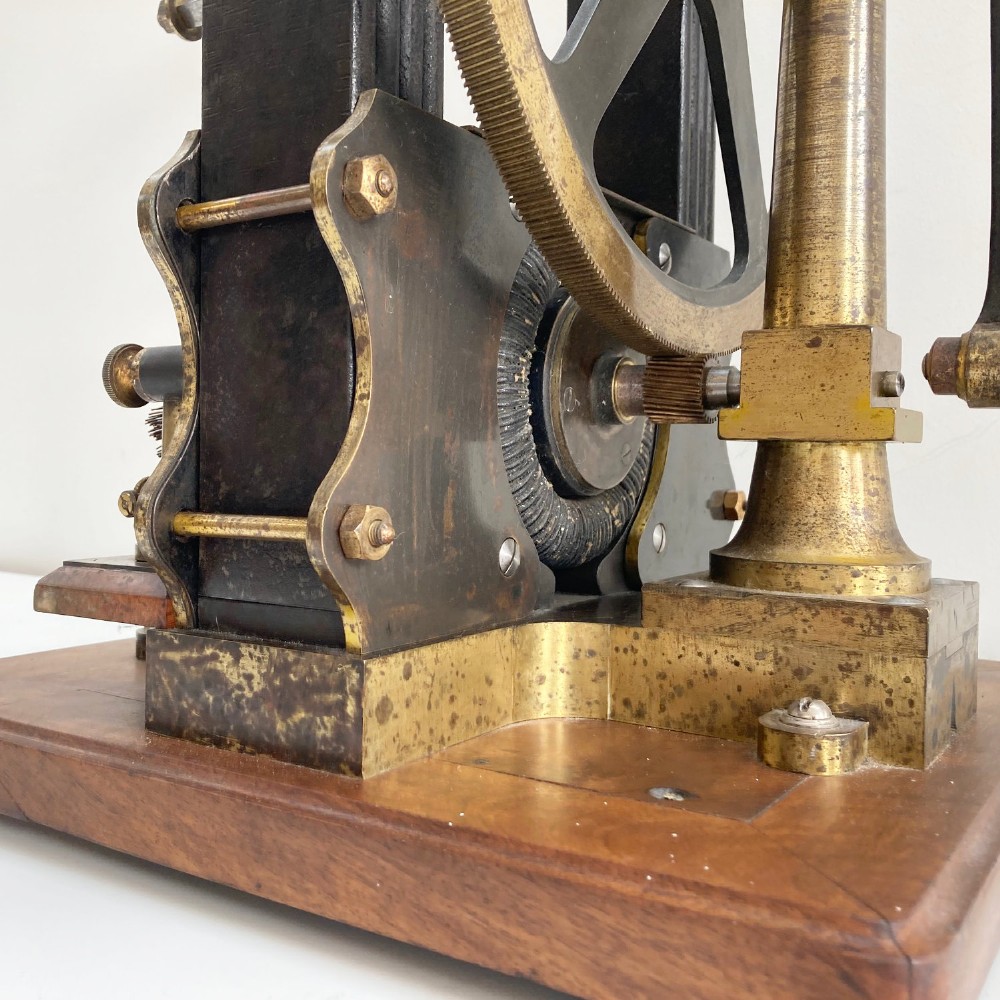
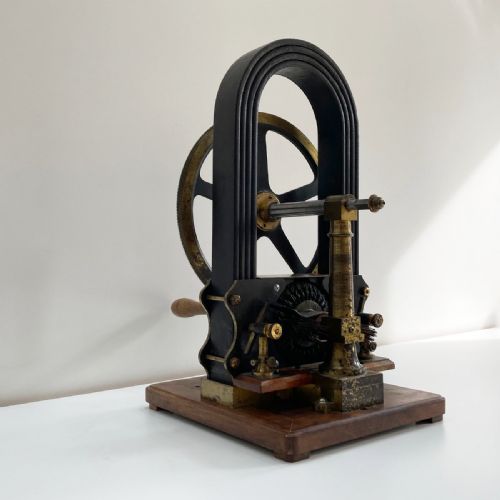
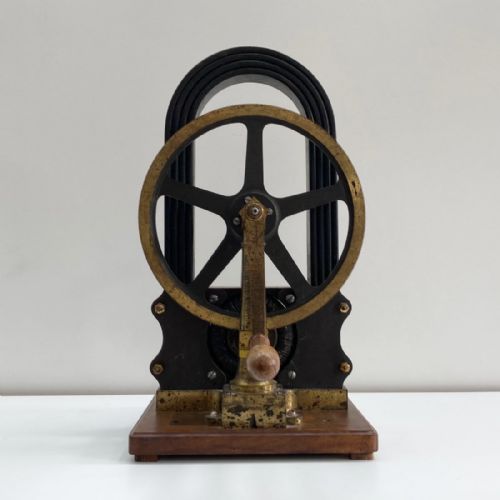
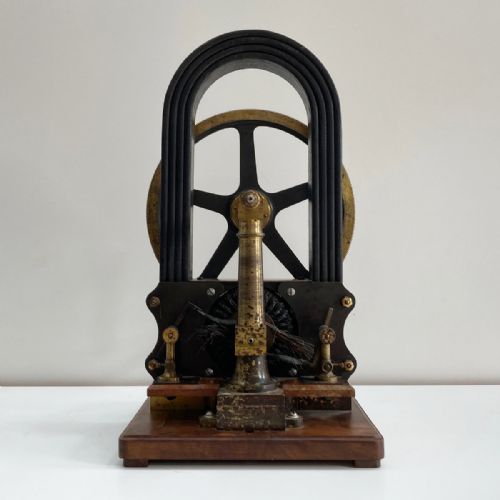
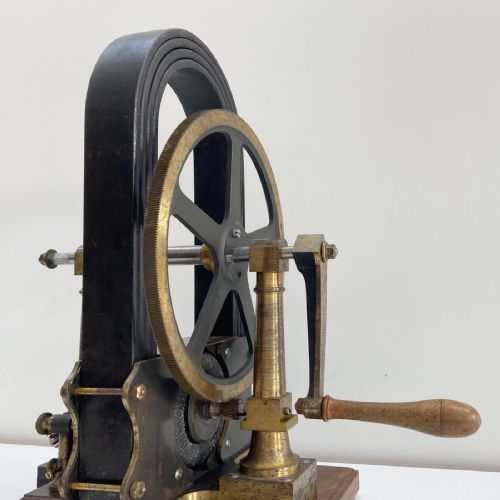
The machine is comprised of four inverted horse-shoe magnets held upright by a brass central casing.
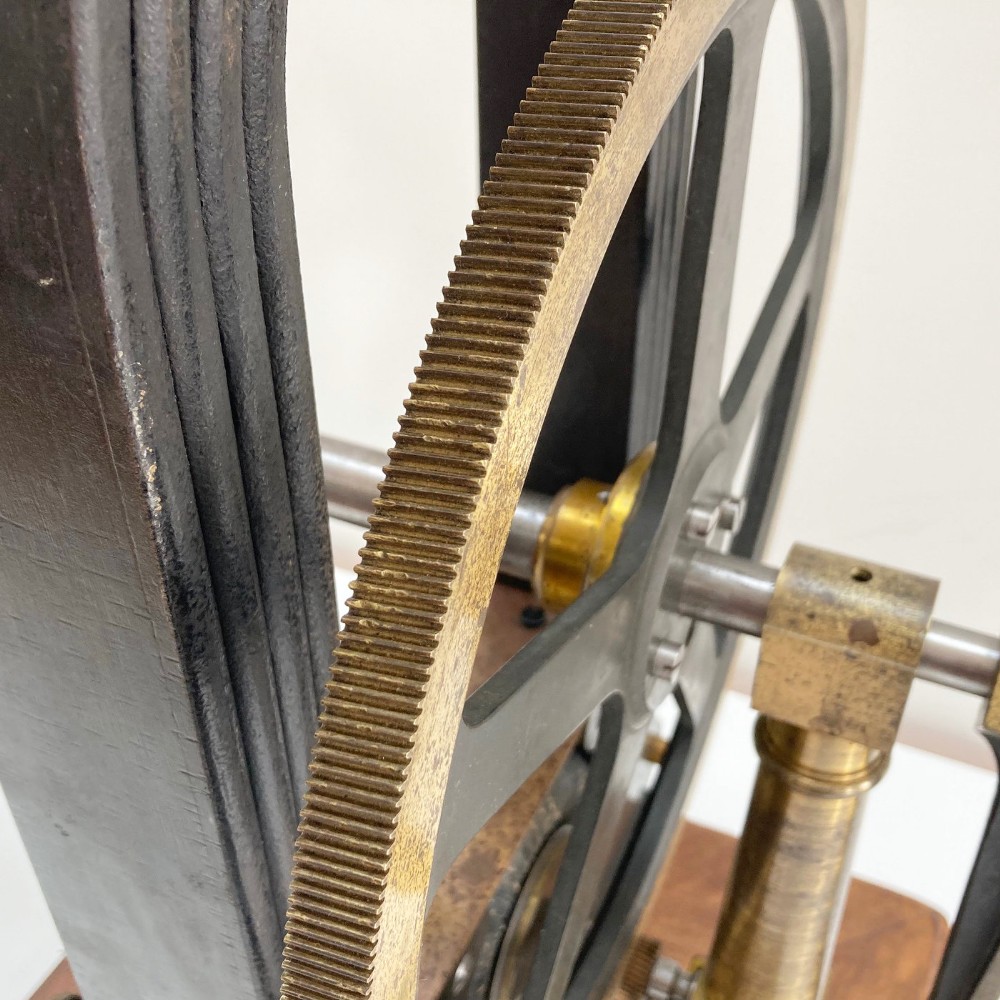
A toothed gear wheel held on the spindle is contacted by a much larger 13.5” brass gear wheel on its own spindle supported by beautifully turned brass columns either side. The machine can be hand operated via a brass arm with a turned wooden handle which may be applied to either side for ease of use.
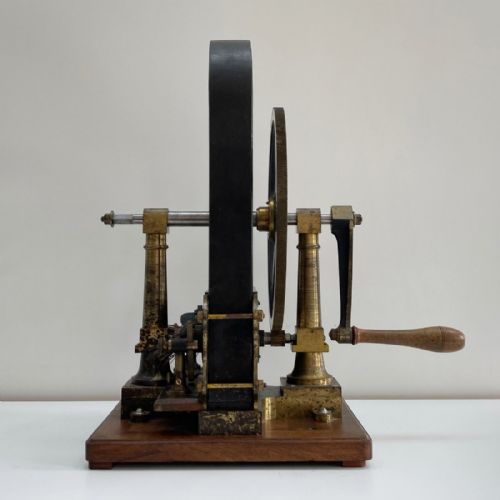
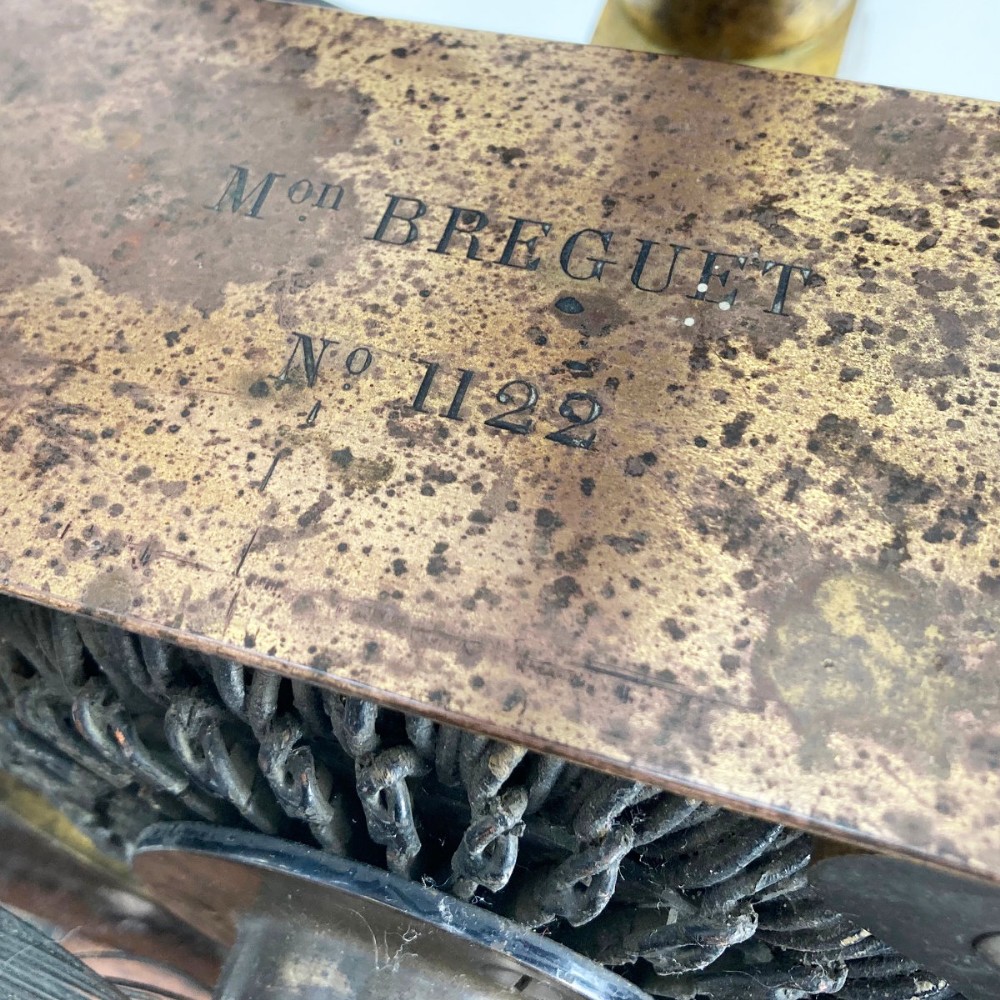
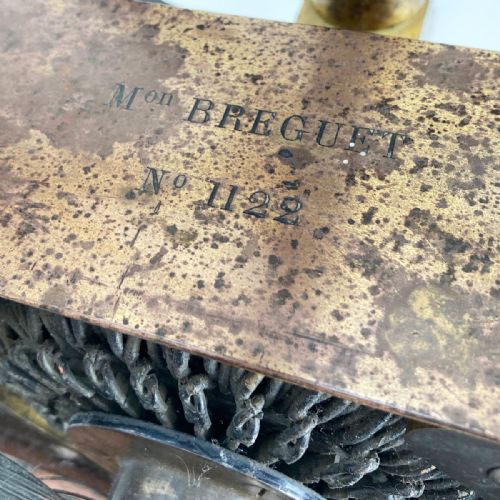
The brass top plate applied to the casing is further engraved with the name, Mon’ Breguet and the serial number 1122.
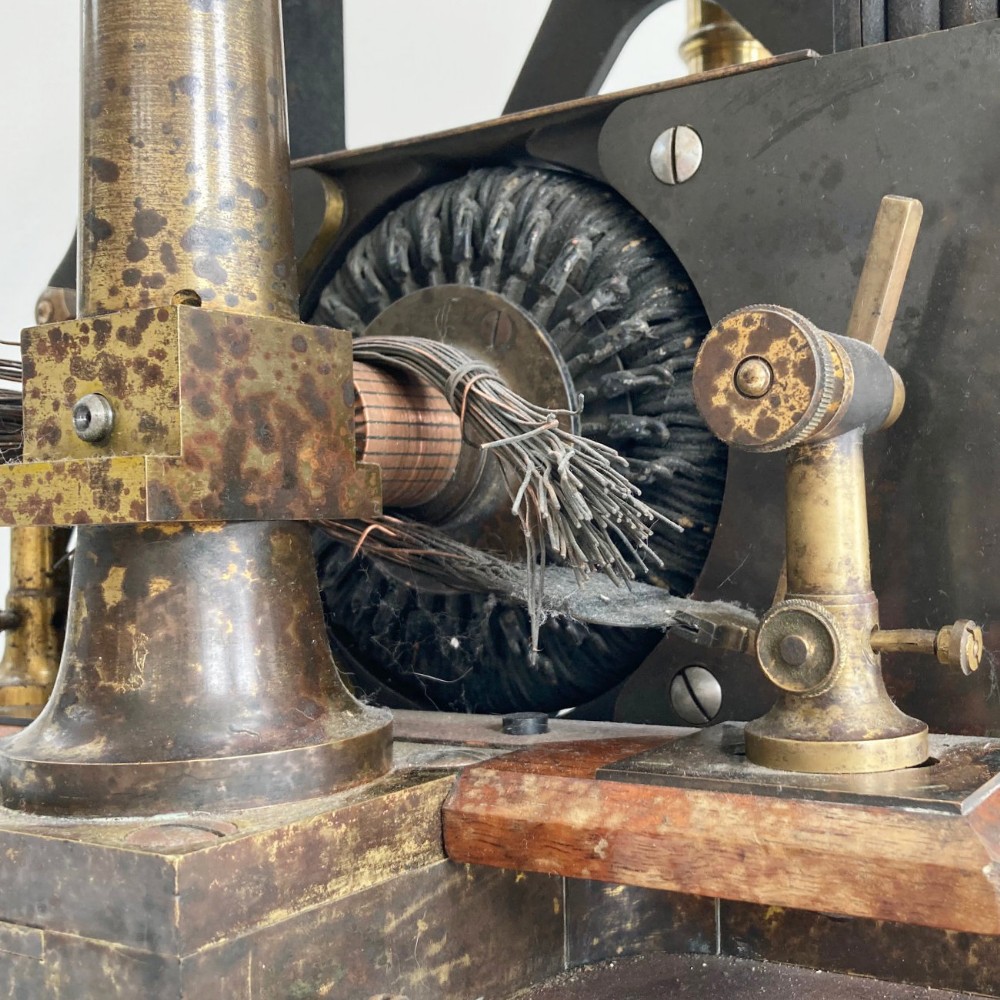
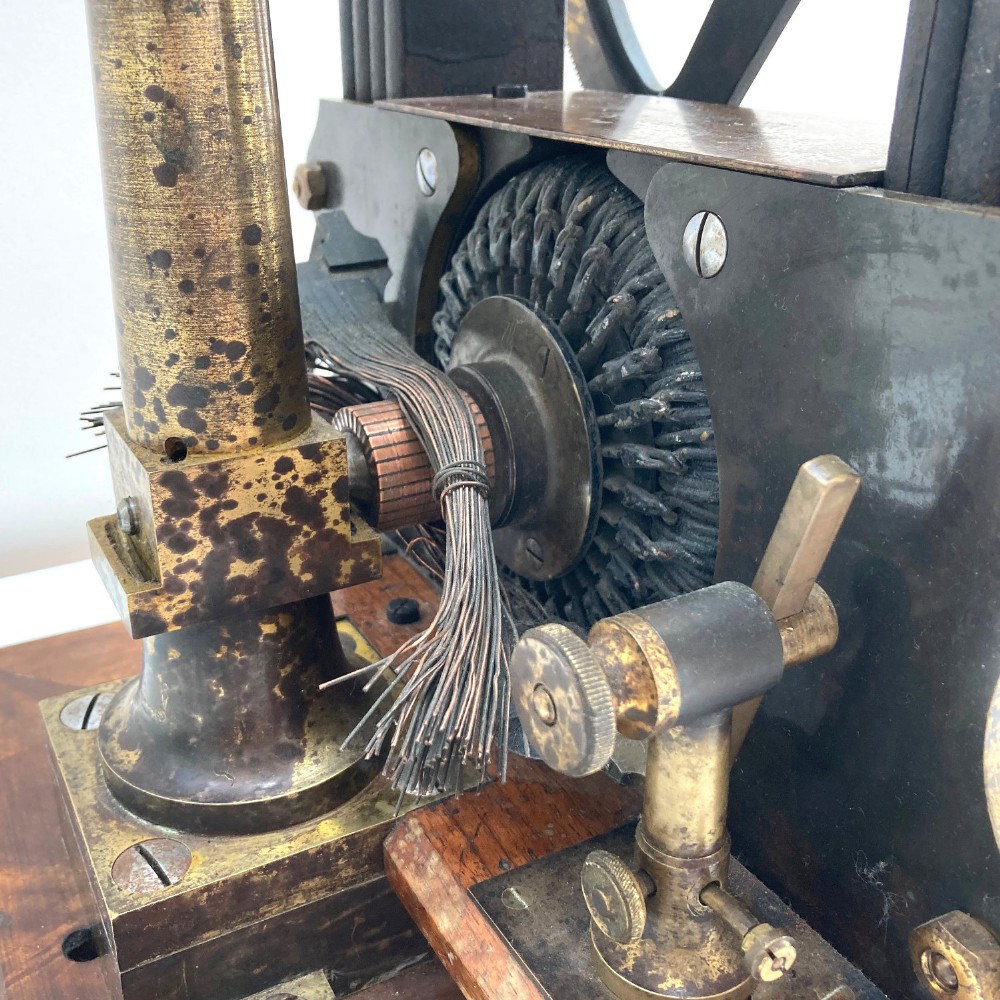
Able to produce direct current, Zenobe Gramme’s machine was the first to produce power on an industrial scale (rather than simply for philosophical demonstrations) and is considered a critical milestone in the development of the modern motor. Although designed as a hand cranked dynamo, Gramme and his assistant stumbled by chance onto the fact that it would also act as DC electric motor if supplied with a constant voltage.
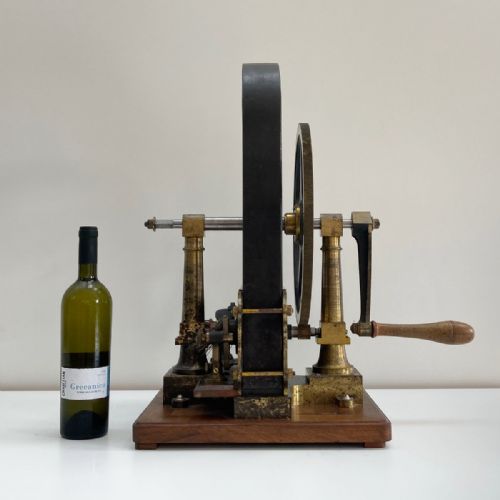
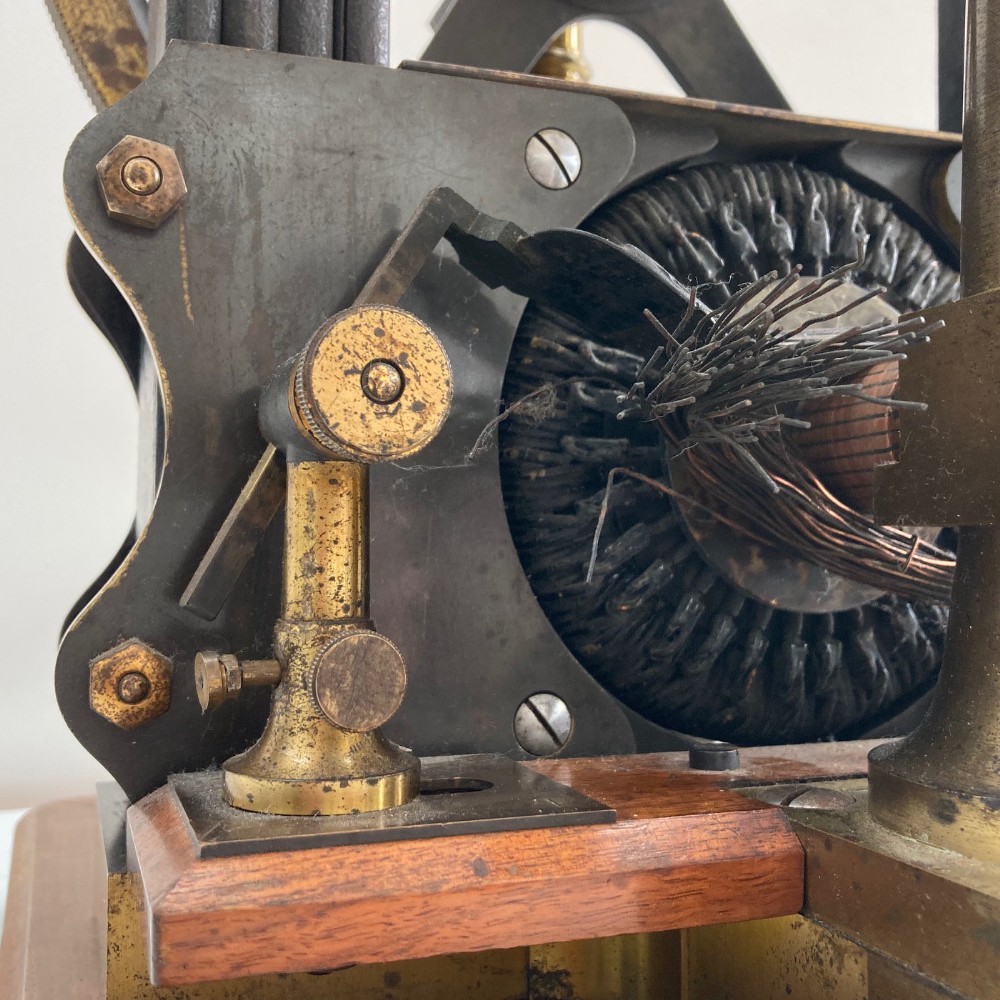
This example was his mark III design and is probably his most well-known. The success lay in the wire wrapped ring (Gramme ring) which substantially improved on other existing motors and whose principle would become the blueprint for every motor today.
The Belgian inventor Zenobe Gramme (1826 – 1901) was an unlikely candidate for such a ground-breaking development, he was largely uneducated although his practical joinery skills attained him work in Brussels, Marseilles and eventually Paris where he took a job as a model maker for Alliance, an electrical construction company.
Whilst working at Alliance, his interest in electrical science grew and he developed and patented several improvements for the production of arc lamps. His abilities were obviously recognised and he later took up a position with the famous, Heinrich Ruhmkorff with whom the Breguet family also had a working relationship.
By 1867, Gramme had lodged a further patent for improvements to alternating current machine (induction coils) and building on the work of the Italian physicist, Antonio Pacinotti, in 1868 the first Gramme machine was produced. After further refinement and the obvious delays caused by the Franco-Prussian War, Gramme’s machine was finally presented in 1871 to the physicist Jules Jamin at The Academy of Sciences in Paris. In the same year it was also patented and Gramme entered into partnership with the electrical engineer, Hippolyte Fontaine to form the Gramme Magnetoelectric Machine Company. The machine was a leap forward, the power it generated opened the possibility for the use of electric motors in industry and its fame spread internationally after its presentation at the Universal Exhibition of Vienna in 1876.
In 1875, Gramme also agreed a manufacturing deal with Antoine Breguet for the production of the Gramme Machine. It is unclear why he didn’t maintain this in-house but I suspect the financial burden of manufacture and an offer from this most famous of French firms was an appealing prospect. In the same year, the young Nikolai Tesla was also present at a lecture and demonstration of the Gramme Machine at the Graz University of Technology and this moment is now considered the catalyst for his ideas and later works.
For his efforts, Gramme was presented with the Legion d’Honneur in 1877 as was his partner Hippolyte Fontaine in 1881. The former was also awarded the Volta prize in 1888.
The Breguet business which produced the Gramme Machine was somewhat different to the historic watchmaking firm that Antoine Breguet’s ancestors became worldly acclaimed for. He was of course, the Great Grandson of Abraham Breguet the founder who created the company in 1775
Jason Clarke Antiques has dated this piece to the 1880s.
You can view the stock and full dealer information on the Jason Clarke Antiques Profile Page
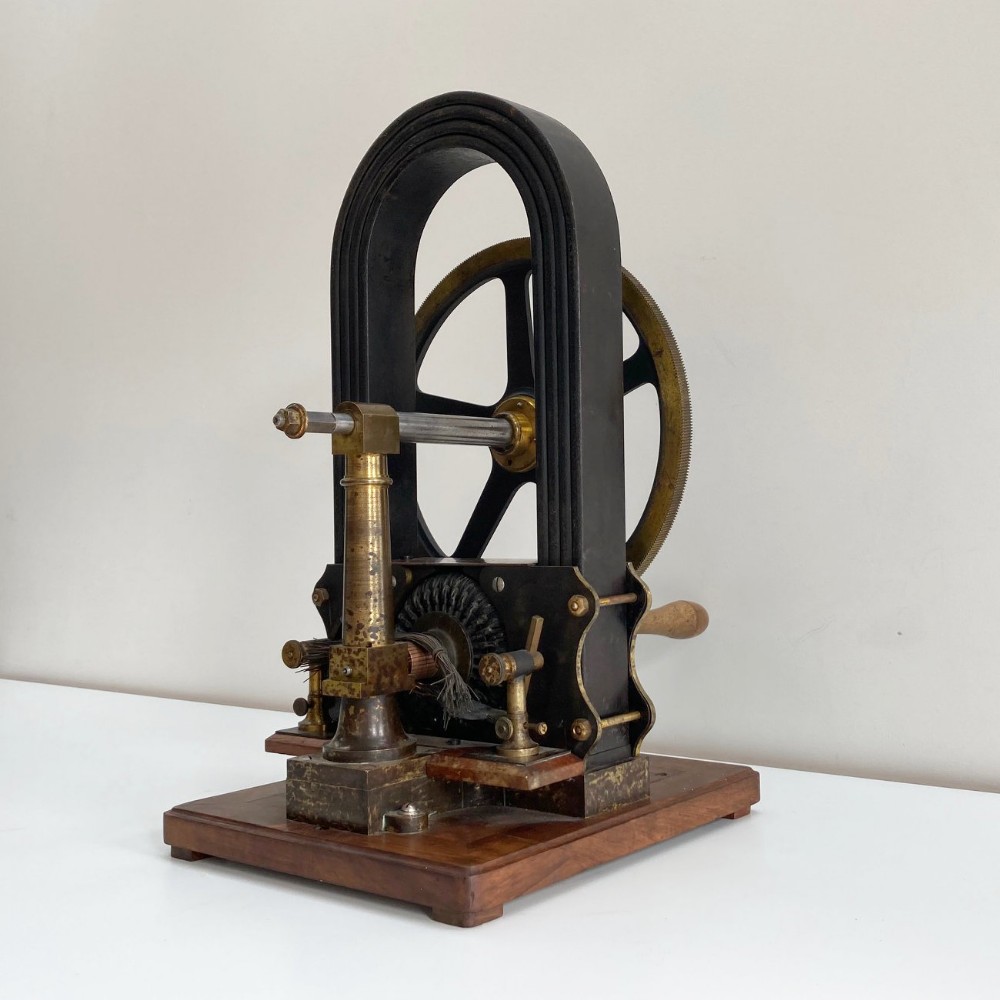
Mid Victorian Mark III Gramme Dynamo & Motor No.1122 by Breguet of Paris