5,438  PAGES BROWSED TODAY PAGES TODAY 0 ANTIQUES UPLOADED TODAYNEW ARRIVALS
LATEST STOCK
Sort Order
Items Per Page
Browse Categories
Sort order
Items per page
ID #SA856543
SOLD
Email
Save
Late Victorian Rnli Officer of the Watch Telescope by Ross of London
Jason Clarke Antiques
sold SA856543
Sorry, but this item has been sold.
Jason Clarke Antiques

Jason Clarke Antiques

Sellingantiques Verified Since Jul 2015
View Dealers Stock Page
Id #SA856543
PDF SHARE
SAVE

Late Victorian Rnli Officer of the Watch Telescope by Ross of London

1900 - 1920
Description

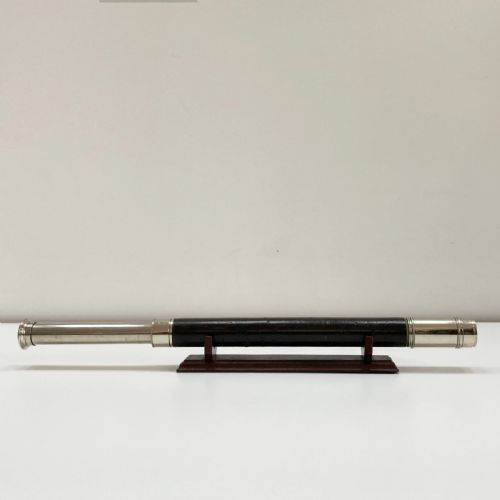
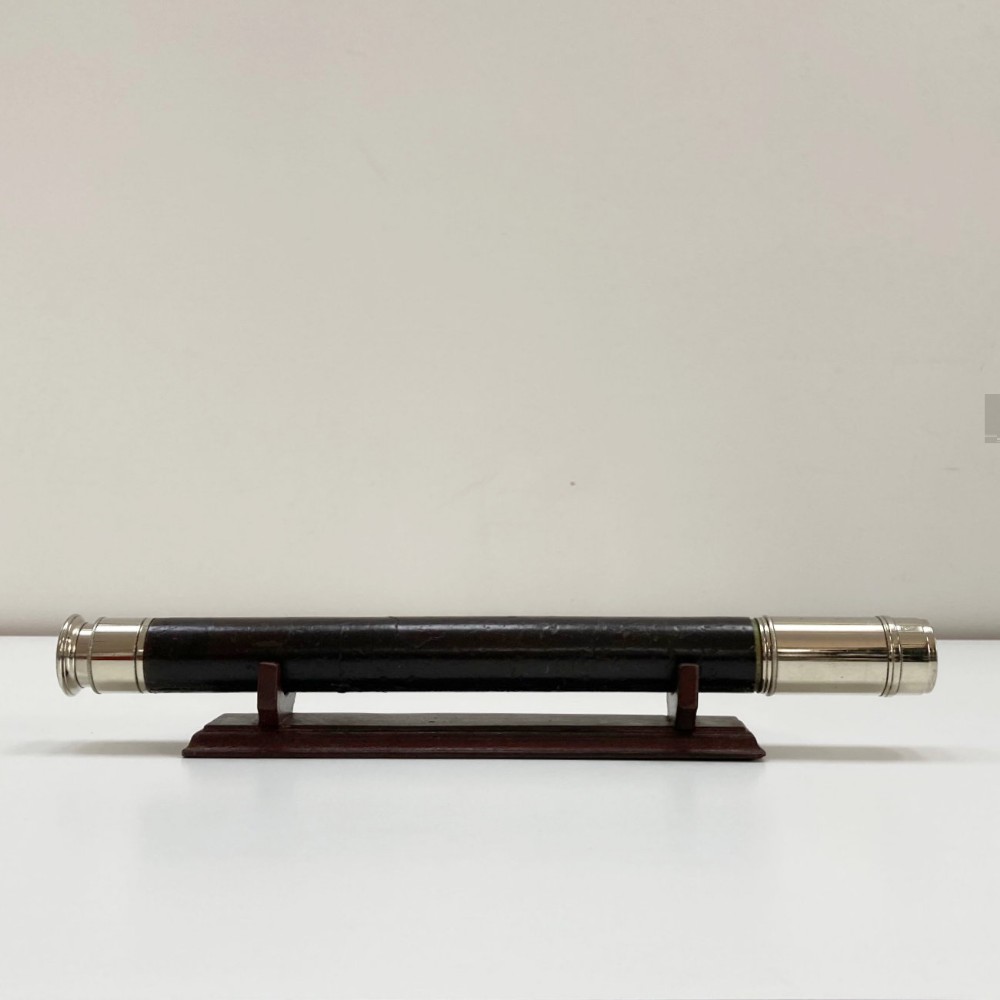
For sale a Late Victorian Single Draw Officer of The Watch RNLI Telescope by Ross of London.

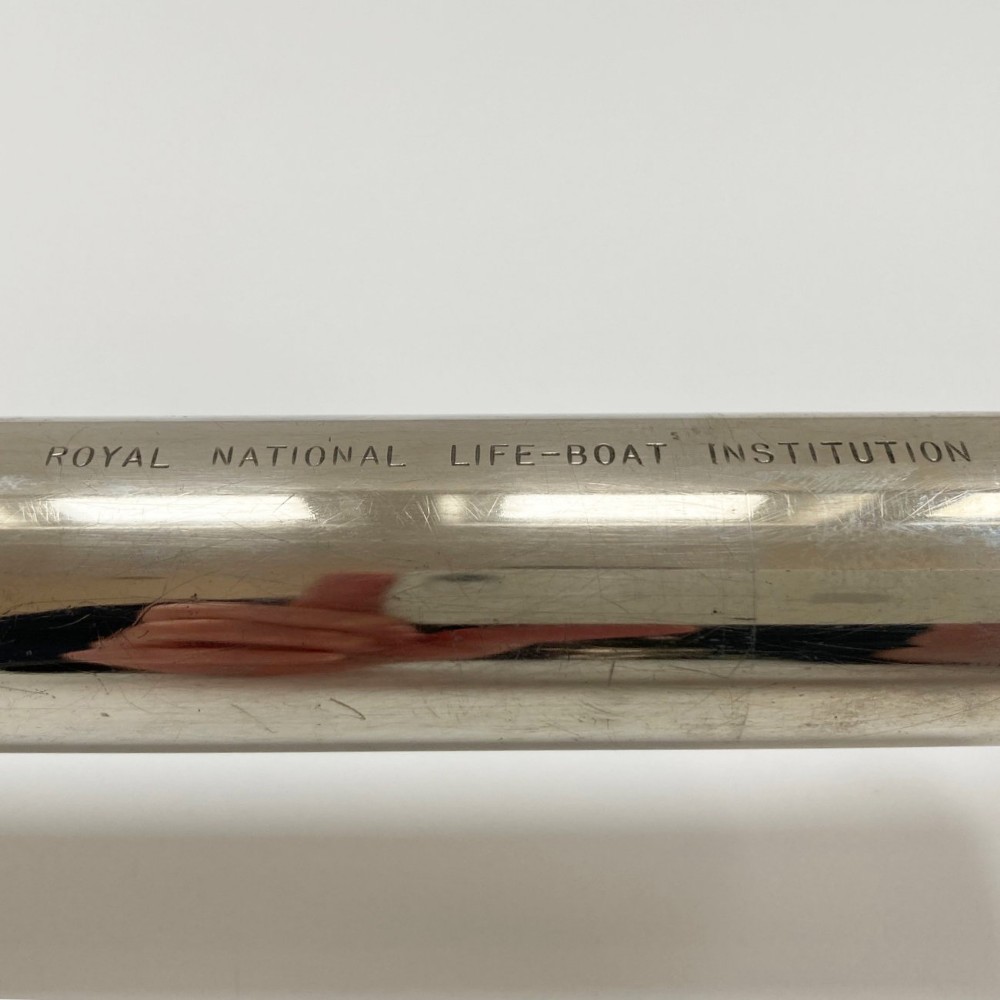
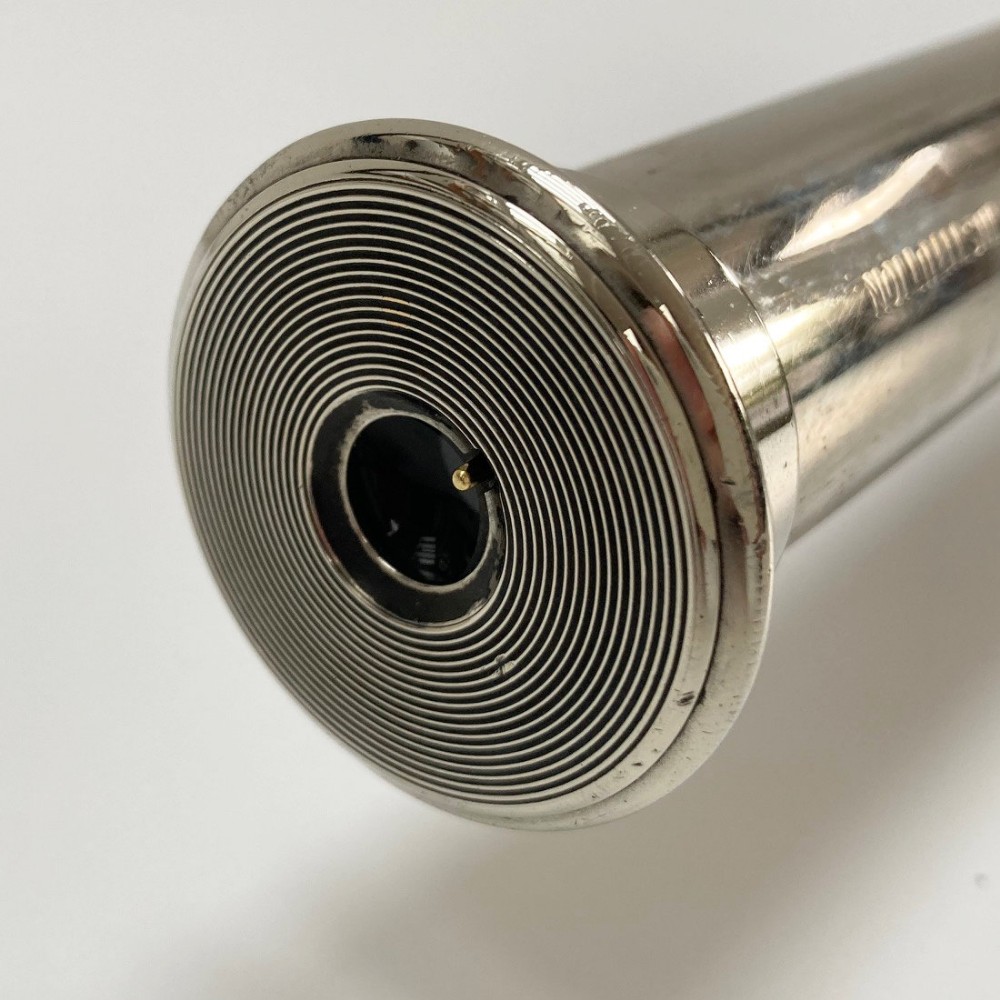
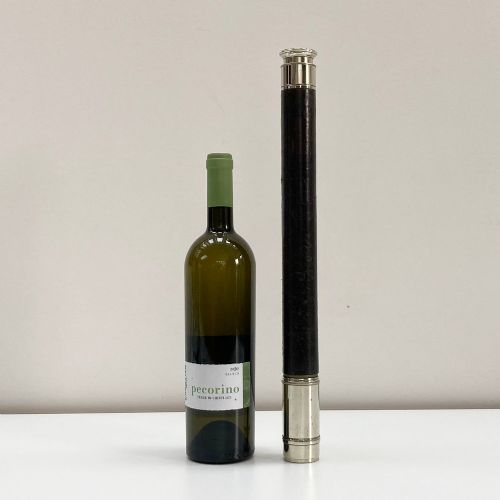
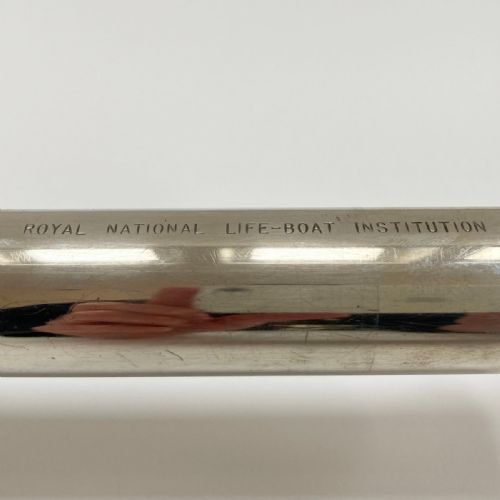
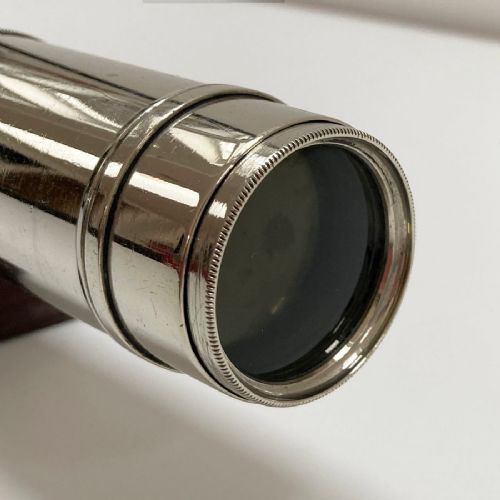
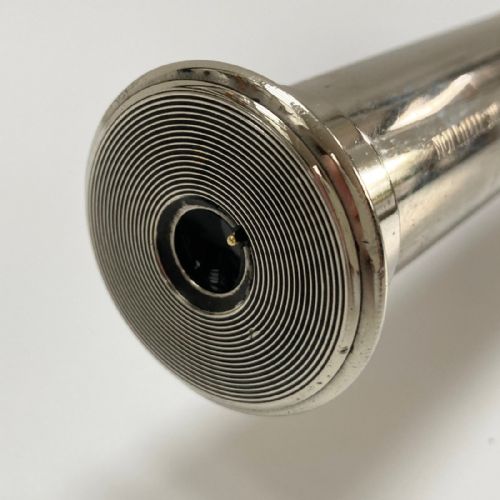
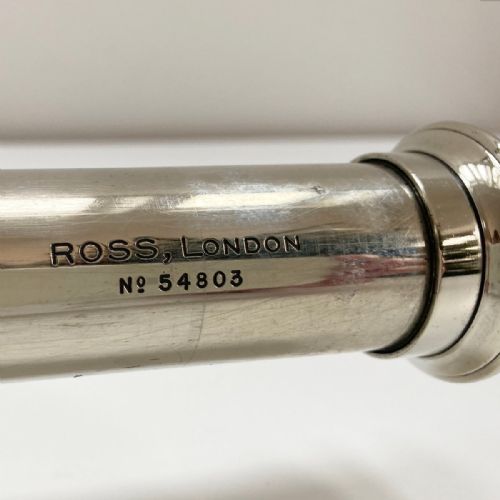
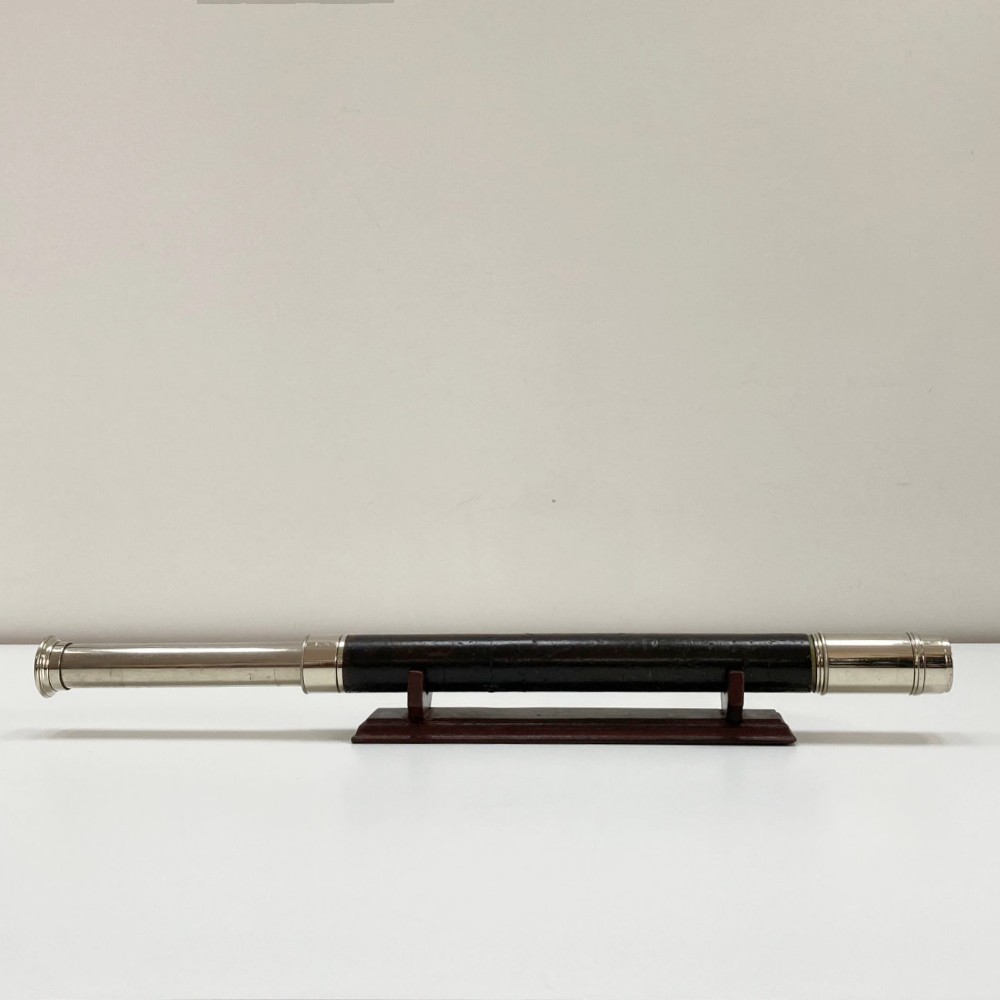
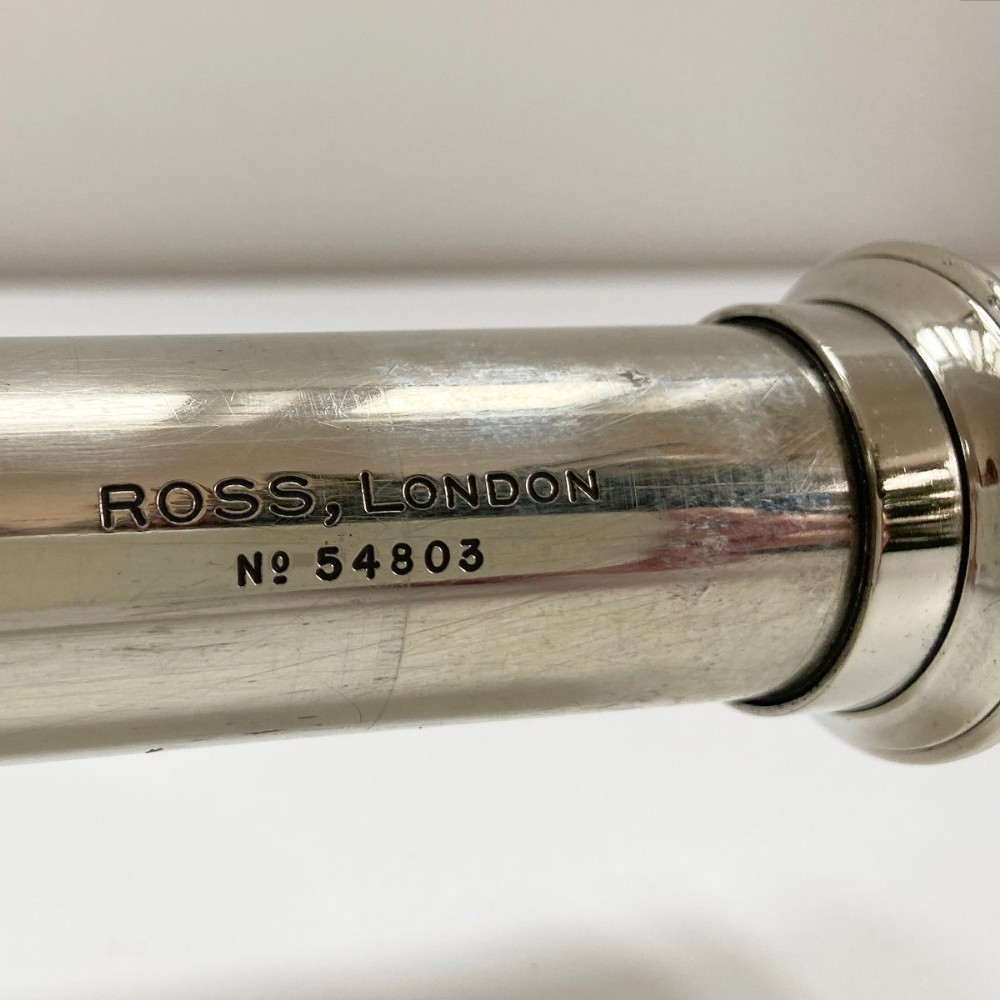
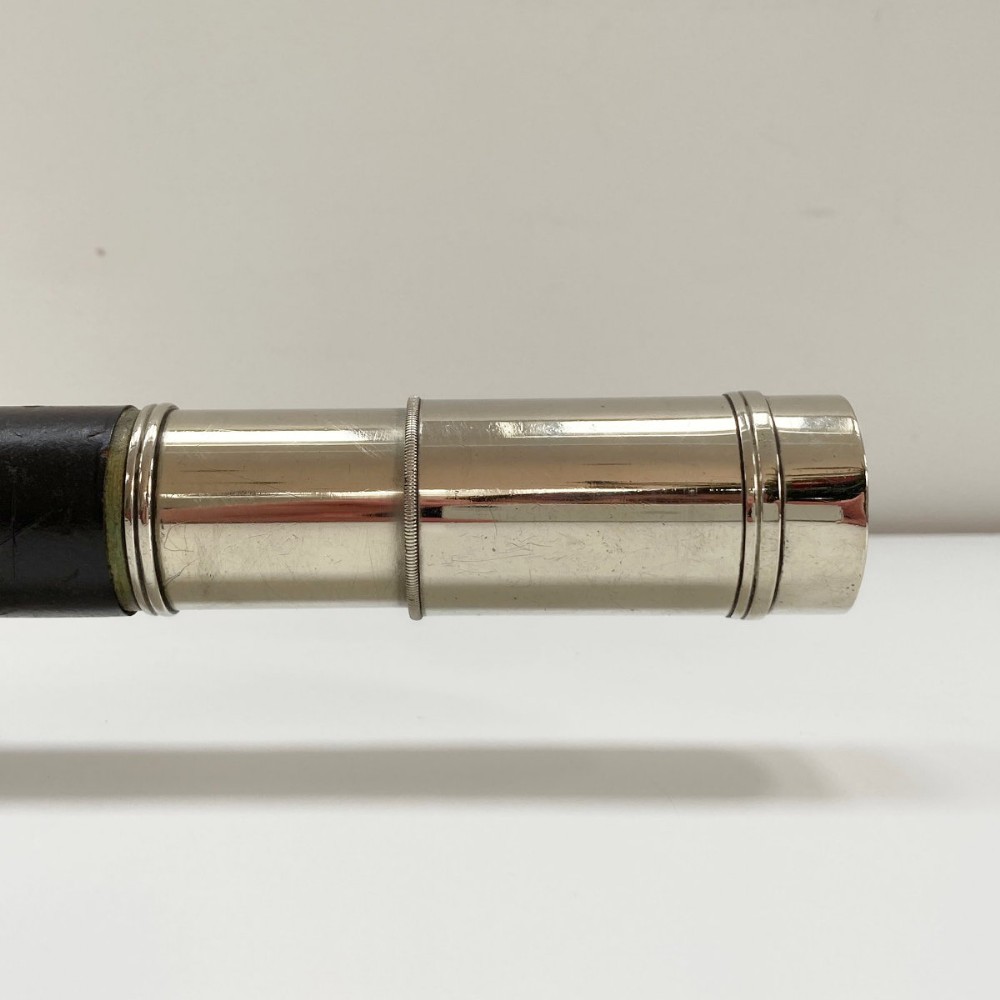
This nickel plated telescope has its original leather sleeve to the barrel, pull out objective sun shade and dust slide to the eyetube. It measures 62.5cms fully extended, 43cms closed and has an inch and a quarter diameter objective lens. The single draw is marked to “Ross London” with a serial no: 54803 below and is engraved to the “Royal National Life-Boat Institution” to the opposing side.
An interesting example showing that alongside Negretti & Zambra and Dollond who both supplied barometers to the RNLI, Ross was also commissioned to provide optical devices for the service. Given Ross’s fine reputation for optical instruments, it is perhaps unsurprising that the company would be chosen for this important contribution to the RNLI. The Officer of the Watch remains an important position on board ship, not only keeping watch at the bridge, the officer is fully responsible for the safe and smooth navigation of the vessel. It was therefore important given the difficult tasks of the RNLI that the equipment employed should be of the highest quality.
The maker, Andrew Ross was born in 1798. His Father John was a staymaker based in Fleet Street but given the proliferation of top flight scientific instrument makers surrounding him during his upbringing, it is perhaps unsurprising that he graduated towards the industry and was apprenticed in 1813 to the London maker John Corless for the obligatory seven year period. As an interesting aside Corless had business associations with a Michael Dancer who was a relation to the latterly famous maker John Benjamin Dancer, both he and Ross were later to make their respective names in the field of microscopy.
Ross left Corless in 1820 and spent three years working for a mechanical engineer before taking up a position with the famous firm of W&T Gilbert. He eventually set up his business from 5 Albermarle St in Clerkenwell in 1830. Often considered a “jobbing” lens maker (albeit a very adept one) until the latter part of the decade, the Transactions of The Society of Arts would suggest differently whereupon in 1831 he was awarded The Golden Isis medal for his dividing engine. Perhaps unsurprising given his experience under the Gilbert business. He is also known to have made his first signed microscope in 1832 for the botanist, W. Valentine, the same design being presented again to the Society of Art in 1832.
The developments in microscopy were trail blazed during this period by Ross, Hugh Powell (of Powell & Lealand) and Joseph Smith (ex Tulley and later of Smith & Beck or Smith, Beck & Beck) and Ross’s skills as a philosophical instrument maker are largely overlooked in preference to his involvement in this discipline. Instruments with Ross’s early address are also seldom seen but were certainly manufactured as it is unlikely that he would have survived on the sale of microscopes alone.
In 1839, Ross moved to a new address at 33 Regent’s Circus and the business was renamed shortly after to Andrew Ross & Co owing to his involvement with the wine merchant and amateur scientist , Joseph Jackson Lister who designed lenses to cancel out chromatic aberration in microscope lenses just as the Dollond’s had done in the Eighteenth Century for telescopes. In 1841, Ross also received another award from The Society of Arts for his invention of the Sphereometer.
The relationship with Lister lasted only until 1842 whereupon Ross moved to 21 Featherstone Buildings in Holborn and continued (under his own name again) to develop improvements in microscopes whilst also maintaining a reasonable trade across all scientific disciplines.

By 1847, the company had moved to 2 Featherstone Buildings and it was from this address that Ross presented his microscopes at The Great Exhibition of 1851 subsequently

Physical Dimensions
Height
62.5cm (24.61")
Width
4cm (1.57")
Depth
4cm (1.57")
Declaration

Jason Clarke Antiques has dated this piece to the 1900s.

Reference Numbers
Sellingantiques Reference
SA856543
Description
For sale a Late Victorian Single Draw Officer of The Watch RNLI Telescope by Ross of London.
This nickel plated telescope has its original leather sleeve to the barrel, pull out objective sun shade and dust slide to the eyetube.
Jason Clarke Antiques

It measures 62.5cms fully extended, 43cms closed and has an inch and a quarter diameter objective lens. The single draw is marked to “Ross London” with a serial no: 54803 below and is engraved to the “Royal National Life-Boat Institution” to the opposing side.

fig 1. Late Victorian RNLI Officer of The Watch Telescope by Ross of London
fig 1. Late Victorian Rnli Officer of the Watch Telescope by Ross of London

An interesting example showing that alongside Negretti & Zambra and Dollond who both supplied barometers to the RNLI, Ross was also commissioned to provide optical devices for the service. Given Ross’s fine reputation for optical instruments, it is perhaps unsurprising that the company would be chosen for this important contribution to the RNLI. The Officer of the Watch remains an important position on board ship, not only keeping watch at the bridge, the officer is fully responsible for the safe and smooth navigation of the vessel. It was therefore important given the difficult tasks of the RNLI that the equipment employed should be of the highest quality.

fig 2. Late Victorian RNLI Officer of The Watch Telescope by Ross of London
fig 2. Late Victorian Rnli Officer of the Watch Telescope by Ross of London

The maker, Andrew Ross was born in 1798. His Father John was a staymaker based in Fleet Street but given the proliferation of top flight scientific instrument makers surrounding him during his upbringing, it is perhaps unsurprising that he graduated towards the industry and was apprenticed in 1813 to the London maker John Corless for the obligatory seven year period. As an interesting aside Corless had business associations with a Michael Dancer who was a relation to the latterly famous maker John Benjamin Dancer, both he and Ross were later to make their respective names in the field of microscopy.

fig 3. Late Victorian RNLI Officer of The Watch Telescope by Ross of London
fig 3. Late Victorian Rnli Officer of the Watch Telescope by Ross of London

Ross left Corless in 1820 and spent three years working for a mechanical engineer before taking up a position with the famous firm of W&T Gilbert. He eventually set up his business from 5 Albermarle St in Clerkenwell in 1830. Often considered a “jobbing” lens maker (albeit a very adept one) until the latter part of the decade, the Transactions of The Society of Arts would suggest differently whereupon in 1831 he was awarded The Golden Isis medal for his dividing engine. Perhaps unsurprising given his experience under the Gilbert business. He is also known to have made his first signed microscope in 1832 for the botanist, W. Valentine, the same design being presented again to the Society of Art in 1832.

fig 4. Late Victorian RNLI Officer of The Watch Telescope by Ross of London
fig 4. Late Victorian Rnli Officer of the Watch Telescope by Ross of London

The developments in microscopy were trail blazed during this period by Ross, Hugh Powell (of Powell & Lealand) and Joseph Smith (ex Tulley and later of Smith & Beck or Smith, Beck & Beck) and Ross’s skills as a philosophical instrument maker are largely overlooked in preference to his involvement in this discipline. Instruments with Ross’s early address are also seldom seen but were certainly manufactured as it is unlikely that he would have survived on the sale of microscopes alone.

fig 5. Late Victorian RNLI Officer of The Watch Telescope by Ross of London
fig 5. Late Victorian Rnli Officer of the Watch Telescope by Ross of London

In 1839, Ross moved to a new address at 33 Regent’s Circus and the business was renamed shortly after to Andrew Ross & Co owing to his involvement with the wine merchant and amateur scientist , Joseph Jackson Lister who designed lenses to cancel out chromatic aberration in microscope lenses just as the Dollond’s had done in the Eighteenth Century for telescopes. In 1841, Ross also received another award from The Society of Arts for his invention of the Sphereometer.

fig 6. Late Victorian RNLI Officer of The Watch Telescope by Ross of London
fig 6. Late Victorian Rnli Officer of the Watch Telescope by Ross of London

The relationship with Lister lasted only until 1842 whereupon Ross moved to 21 Featherstone Buildings in Holborn and continued (under his own name again) to develop improvements in microscopes whilst also maintaining a reasonable trade across all scientific disciplines.

By 1847, the company had moved to 2 Featherstone Buildings and it was from this address that Ross presented his microscopes at The Great Exhibition of 1851 subsequently

Height
62.5cm (24.61")
Width
4cm (1.57")
Depth
4cm (1.57")
Date of Manufacture

Jason Clarke Antiques has dated this piece to the 1900s.

Reference Numbers
Sellingantiques Ref
SA856543
Jason Clarke Antiques
Sellingantiques verified Since Jul 2015
Dealer Profile

You can view the stock and full dealer information on the Jason Clarke Antiques Profile Page
PDF SHARE
SAVE
Late Victorian RNLI Officer of The Watch Telescope by Ross of London
1 / 8
Archive I Late Victorian RNLI Officer of The Watch Telescope by Ross of London

Late Victorian Rnli Officer of the Watch Telescope by Ross of London
Archive II Late Victorian RNLI Officer of The Watch Telescope by Ross of London View II
Archive III Late Victorian RNLI Officer of The Watch Telescope by Ross of London View III
Archive IV Late Victorian RNLI Officer of The Watch Telescope by Ross of London View IV
Archive V Late Victorian RNLI Officer of The Watch Telescope by Ross of London View V
Archive VI Late Victorian RNLI Officer of The Watch Telescope by Ross of London View VI
Archive VII Late Victorian RNLI Officer of The Watch Telescope by Ross of London View VII
Archive VIII Late Victorian RNLI Officer of The Watch Telescope by Ross of London View VIII
Enlarged Archival View
Telephone 07815 046645
Location
Newbury
Berkshire
United Kingdom
Verified Since Jul 2015
Items For Sale 80
Items Sold 607
Jason Clarke Antiques
Verified Since Jul 2015
View Dealer Info
Location: Newbury, Berkshire, United Kingdom
Verified
Jul 2015
For Sale
80
Sold
607
Late Victorian RNLI Officer of The Watch Telescope by Ross of London
Ref: SA856543
Late Victorian RNLI Officer of The Watch Telescope by Ross of London
Detail View 1
Detail View 2
Detail View 3
Detail View 4
Detail View 5
Detail View 6
Detail View 7
Archival Detail
Every single antique dealer on our platform is individually approved by our internal team. We verify their professional trade history, ethical standards, and photographic quality to ensure a secure, high-standard buying environment. Upon joining, every dealer agrees to a strict 9-point code of conduct. While issues can occasionally arise, our dealers typically resolve them swiftly and directly with the buyer. In fact, since our founding in 2002, Sellingantiques has only had to step in to help resolve an issue on roughly five occasions—a true testament to the quality of our dealers and their dedication to your happiness.
Our dealers are highly experienced in packing and shipping fragile, high-value antiques. Because you are in direct contact with the dealer, you will be able to easily go through all available shipping and insurance options together to ensure your item arrives safely.
Antiques are the ultimate green purchase. By choosing historical pieces over newly manufactured goods, you completely eliminate the carbon footprint of modern mass production while preserving exceptional, timeless craftsmanship.
items
Add keywords to the filter
Price
£100
£250000
Era
Movements
Material
Origin
Stock Location
Freshness
Online Payments
Categories