It was listed by Jason Clarke Antiques. Sold pieces stay on Sellingantiques as a record of what has passed through, and the next one is rarely far away.
Jason Clarke Antiques has dated this piece to the 1850s.
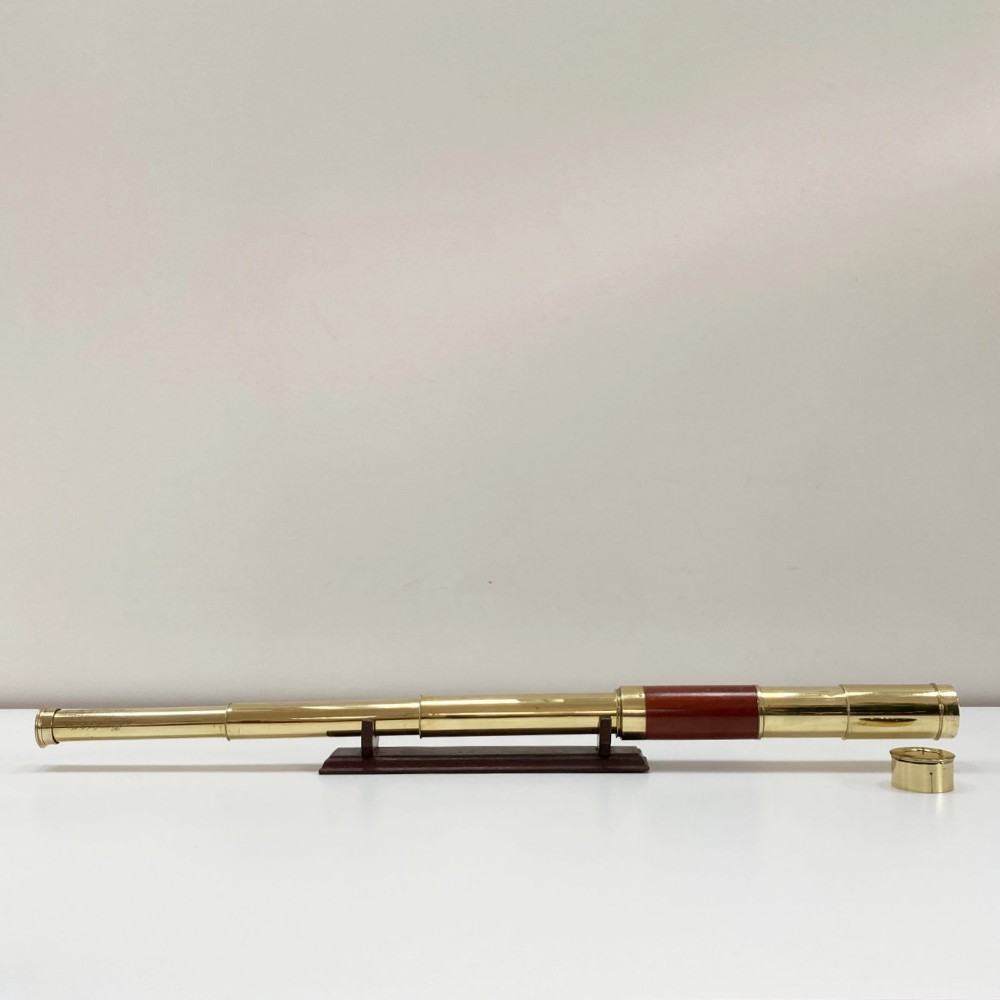
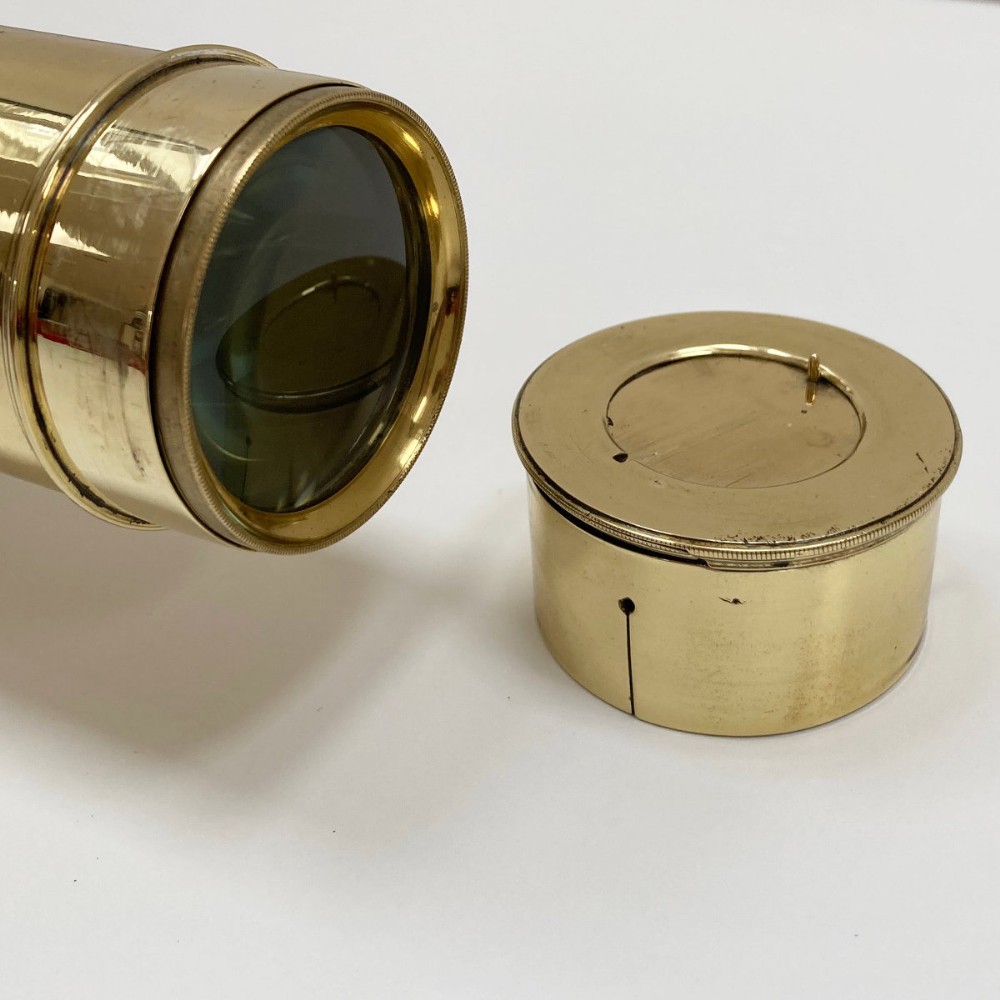
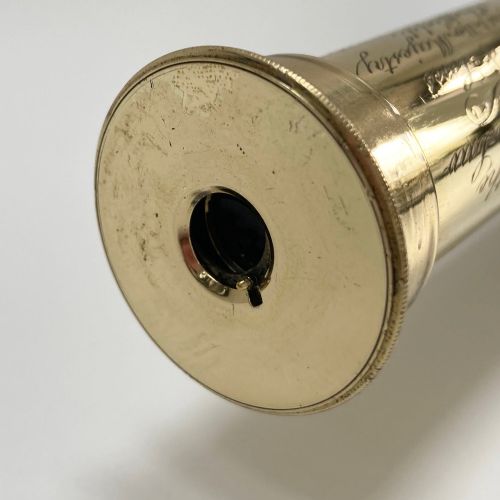
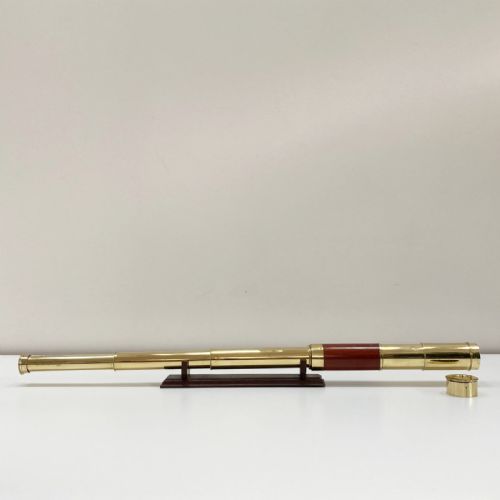
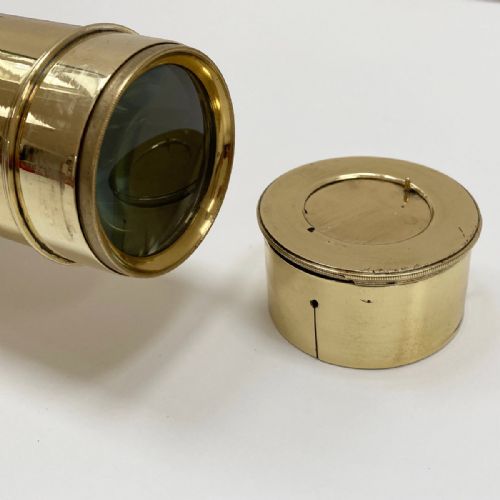
The telescope measures, 78.5cms fully extended, 25cms closed and has an objective lens with a one and a half inch diameter.
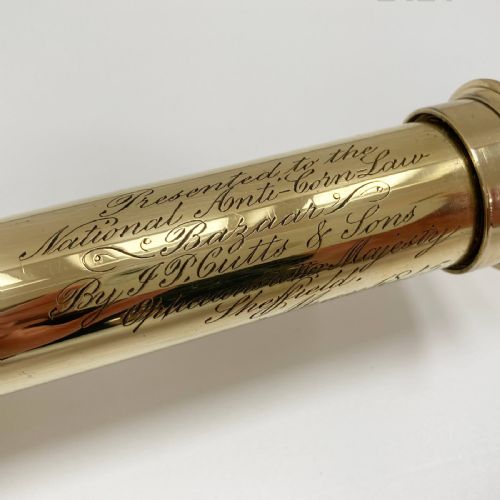
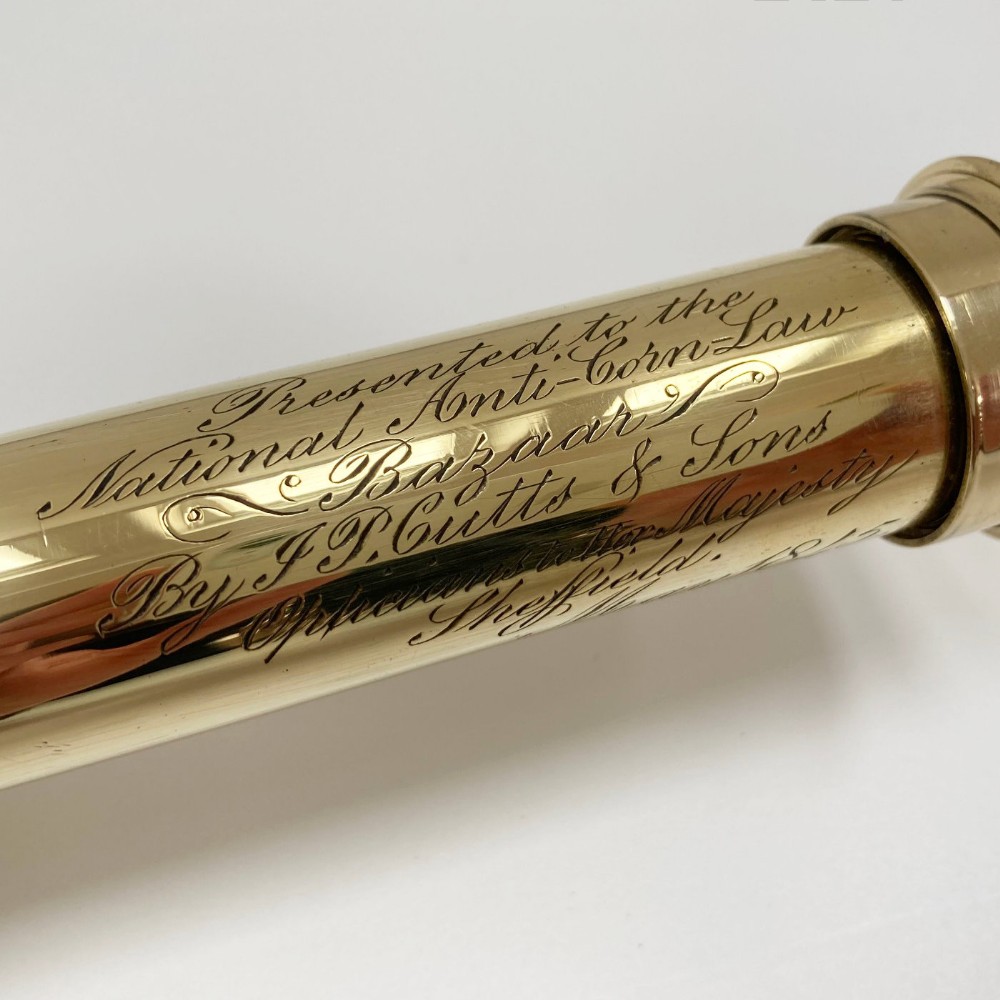
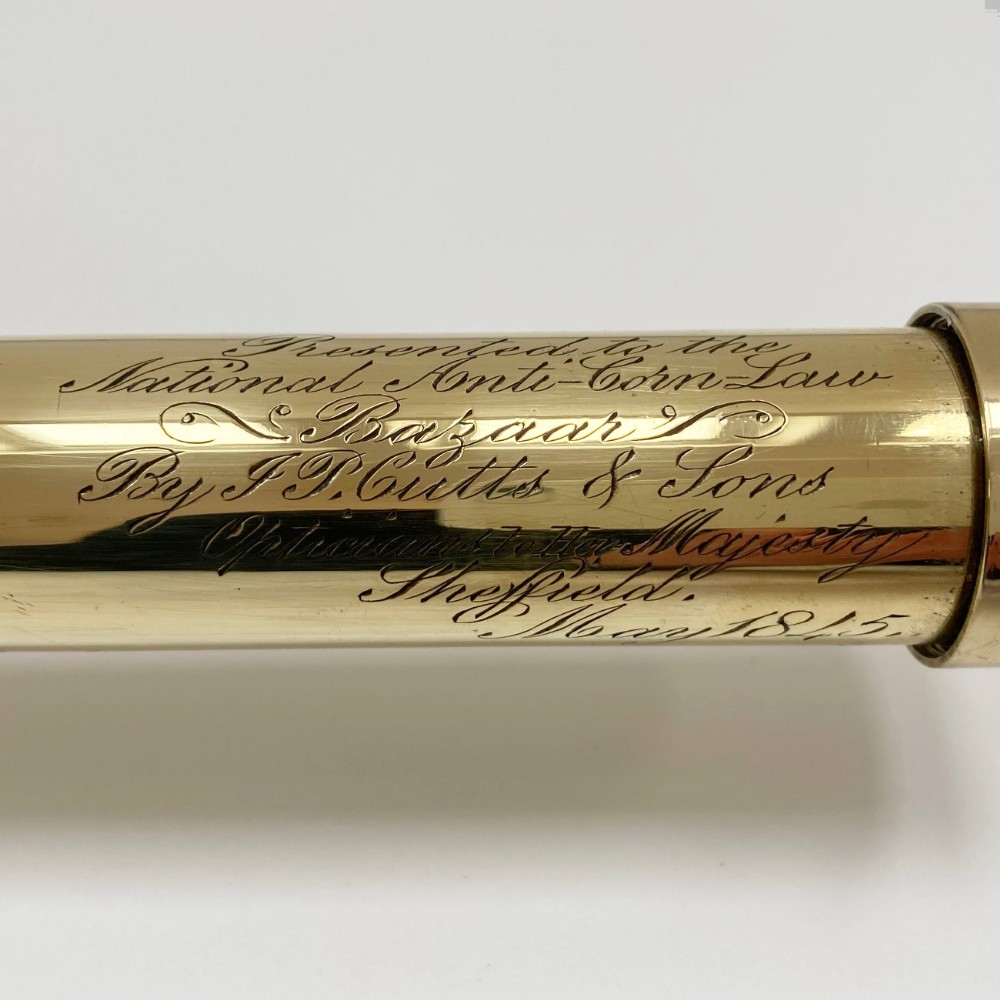
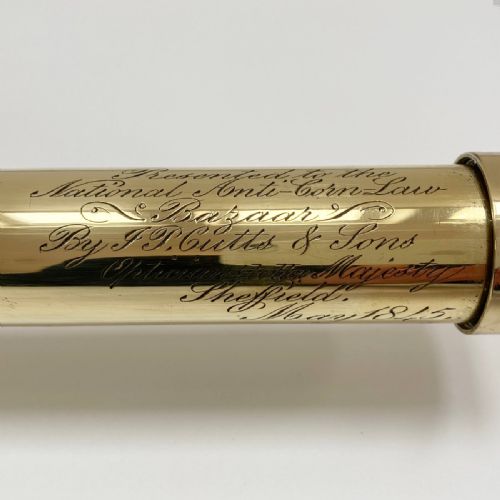
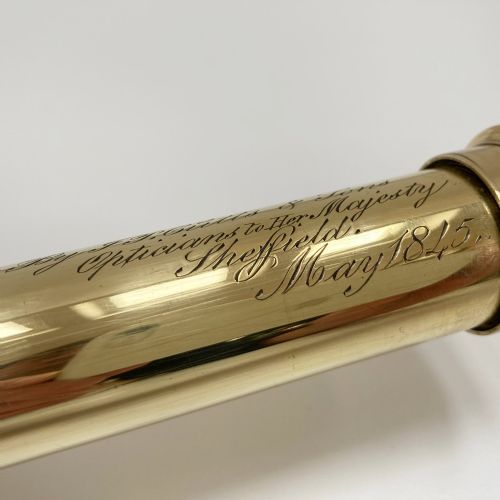
The first draw is engraved with the following:
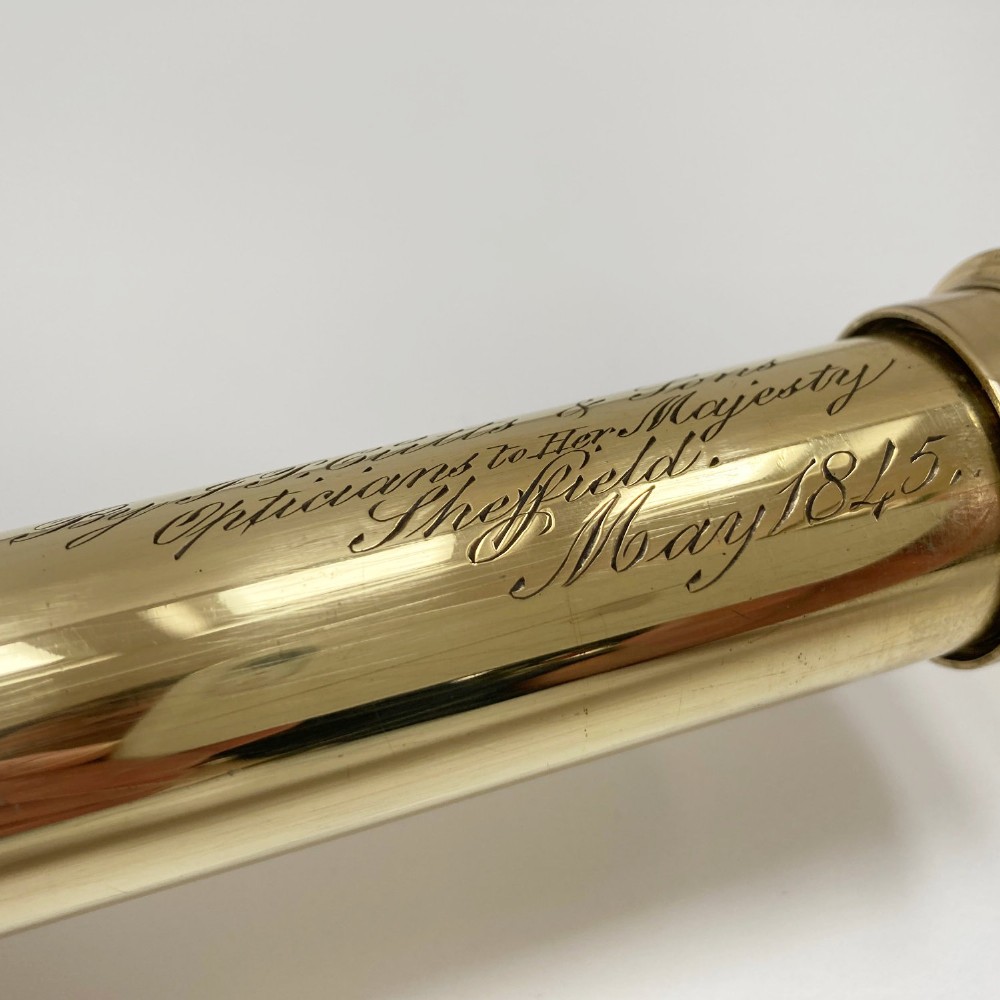
“Presented to the National Anti Corn Law Bazaar by JP Cutts & Sons, Opticians to Her Majesty. Sheffield – May 1845.”
A highly unusual inscription for a telescope, the Anti Corn Law league was founded in 1839 as a result of The British Government’s decision to set up a sliding scale of duties on foreign wheat. Known as the Corn Law of 1828, it was introduced at a time of high unemployment which was also coupled with poor harvests in the UK. This protectionist policy resulted in wildly fluctuating food prices and was seen by many of the population as a means of protecting large and wealthy landowners.
The result was a wave of civil unrest in the lower classes and the Anti-Corn Law League was formed to professionally organise this protest and put pressure on the UK Government. This explanation does not quite provide the reason why a prosperous company such as JP Cutts would support this newly formed organisation but the backlash for this rash decision also led to other countries levying similar taxes and duties on UK exports. This resulting factor would certainly have had adverse affects on a wider community of business owners outside of the agricultural sectors who were competing to sell their products to a large overseas market.
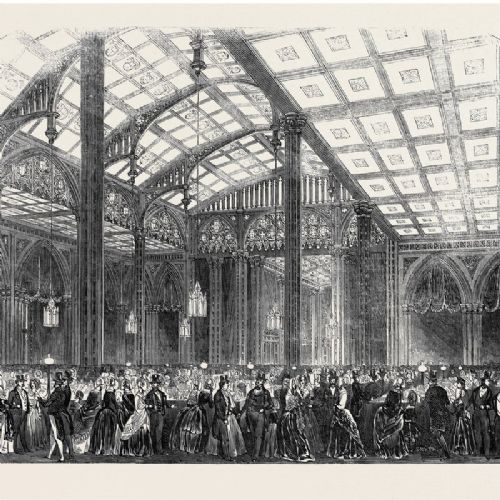
The league were a highly organised movement using strikes and large scale public meetings to add weight to their cause, with bases in London and the important industrial city of Manchester, support grew to such an extent that there were no buildings large enough to house all of those that wished to attend and in 1842, the league organised the first of two grand “free trade” bazaars intended to raise funds, create mass publicity and also to cement support through industry. The initial success of the Manchester event led to the organisation of a similar but larger event at The Covent Garden Theatre, London in 1845. This exhibition was by no means on the scale of the Great Exhibition of 1851 but it is now sited as the precursor for what would later become one of the most recognisable events of the Victorian era, itself sparking numerous industrial exhibitions across the globe. Prince Albert is also known to have donated a sketch for presentation and sale at the Bazaar, a somewhat subversive gesture for a member of The Royal Family but shows that he was paying more than a passing interest at the event’s success.

The League’s newspapers of this period are peppered with letters published from contributing companies and individuals to the bazaar and a wide range of products were seemingly flooding in for presentation and sale at the event. From reading these articles it is clear that the bazaars were not comprised of individual exhibitors but instead, contributor’s products were represented by the League’s members. The “presented to” wording on the telescope inscription therefore becomes clear.
One such contributor of its products writes its reasons for contributing:
In the earnest hope that commerce will be speedily freed from the unjust (and therefore, unwise) restrictions that a selfish and shortsighted policy has imposed.”
The London bazaar opened in early May of 1845 and it was widely publicised through newspapers of the period. A long article from The Weekly Chronicle provides some insight from an observer.
“On Thursday at 12 o clock, the Great League Bazaar held in Covent Garden Theatre, threw open its doors for the first time, and we, in common with many thou
Jason Clarke Antiques has dated this piece to the 1850s.
You can view the stock and full dealer information on the Jason Clarke Antiques Profile Page

Victorian Anti Corn Law Bazaar Telescope by Jp Cutts & Son of Sheffield