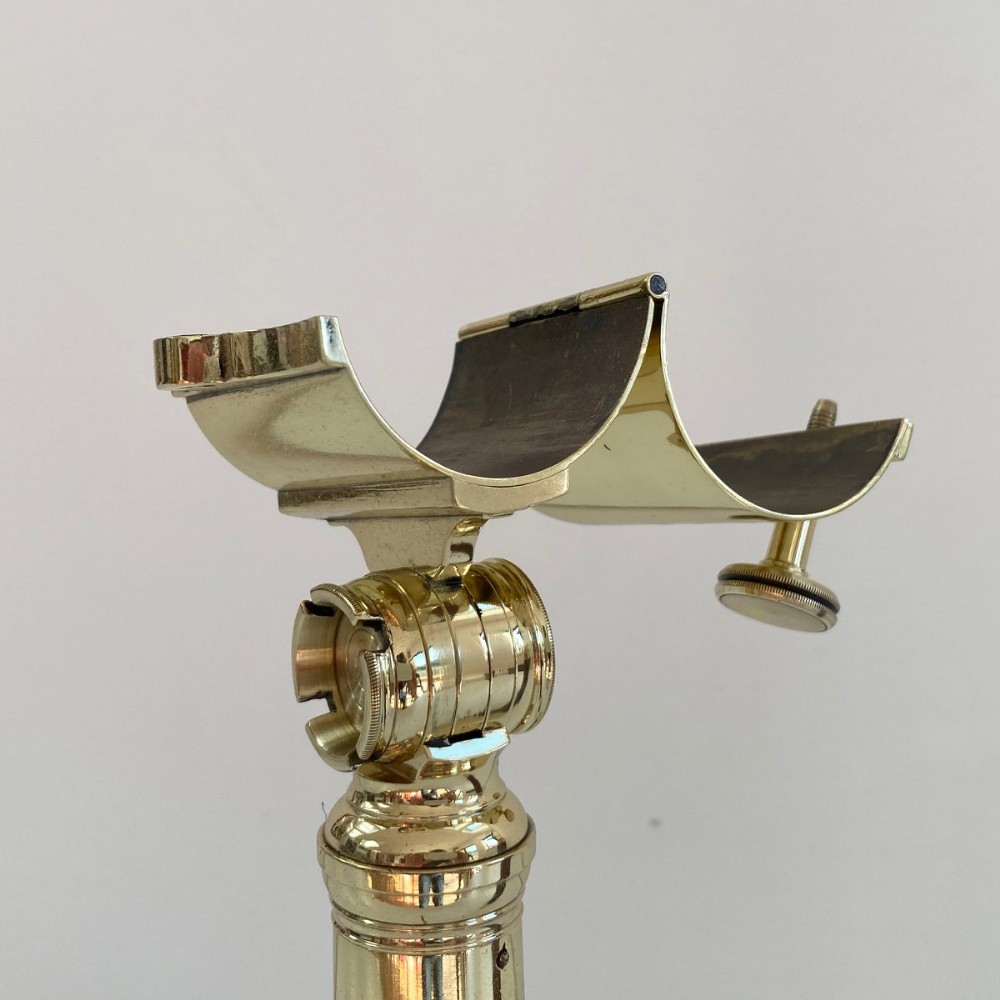
It was listed by Jason Clarke Antiques. Sold pieces stay on Sellingantiques as a record of what has passed through, and the next one is rarely far away.
Jason Clarke Antiques has dated this piece to the 1800s.
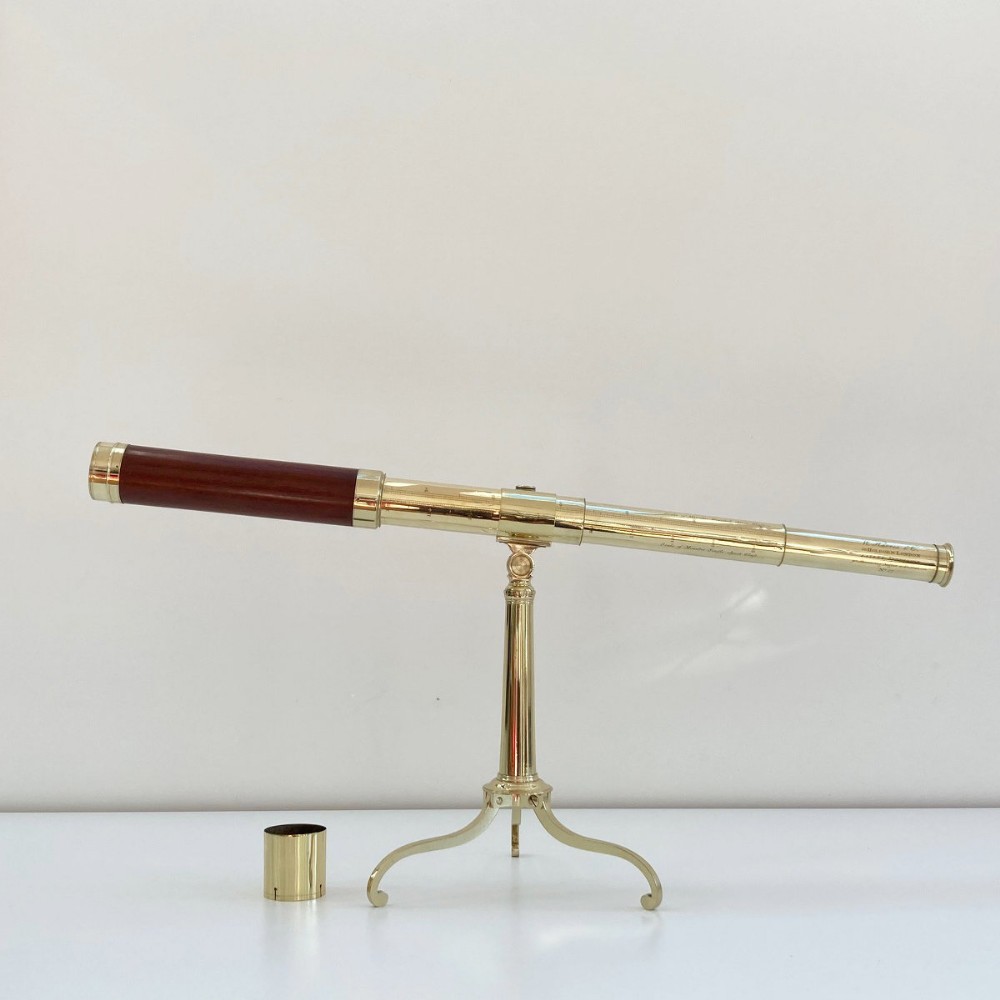
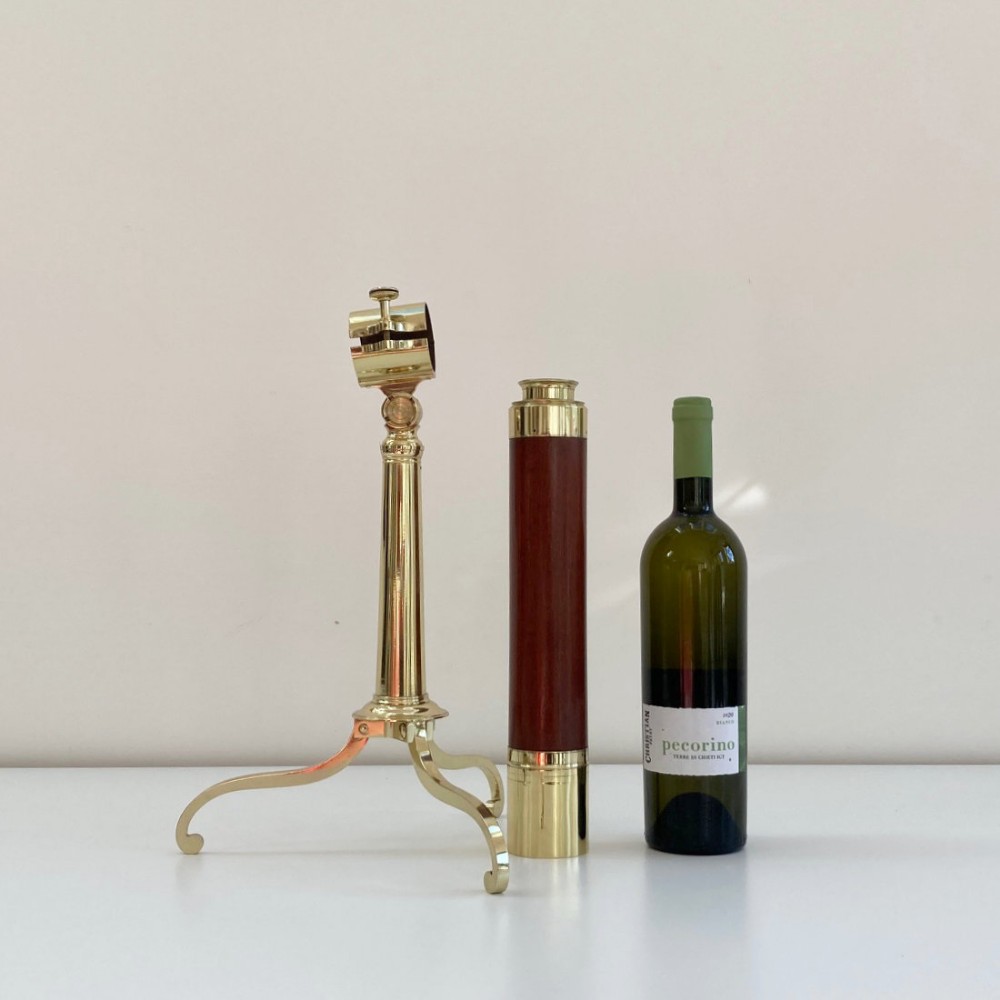
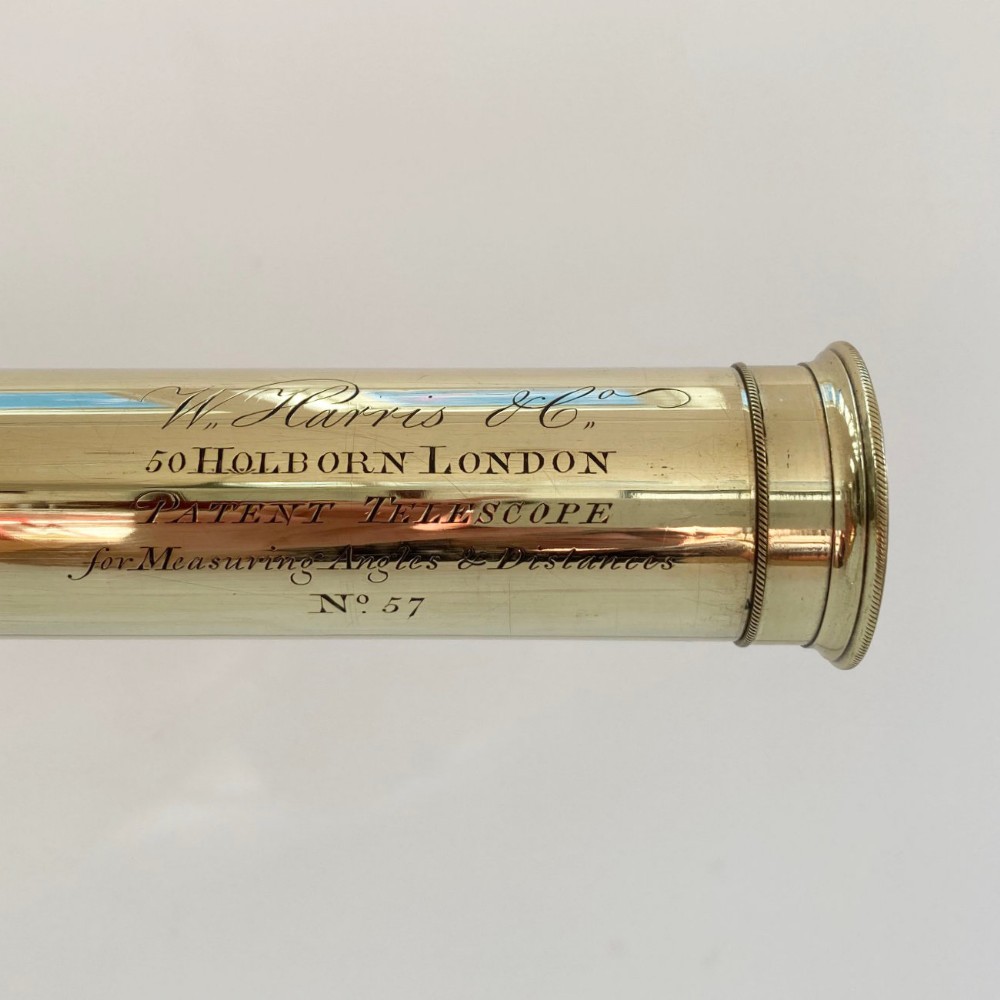
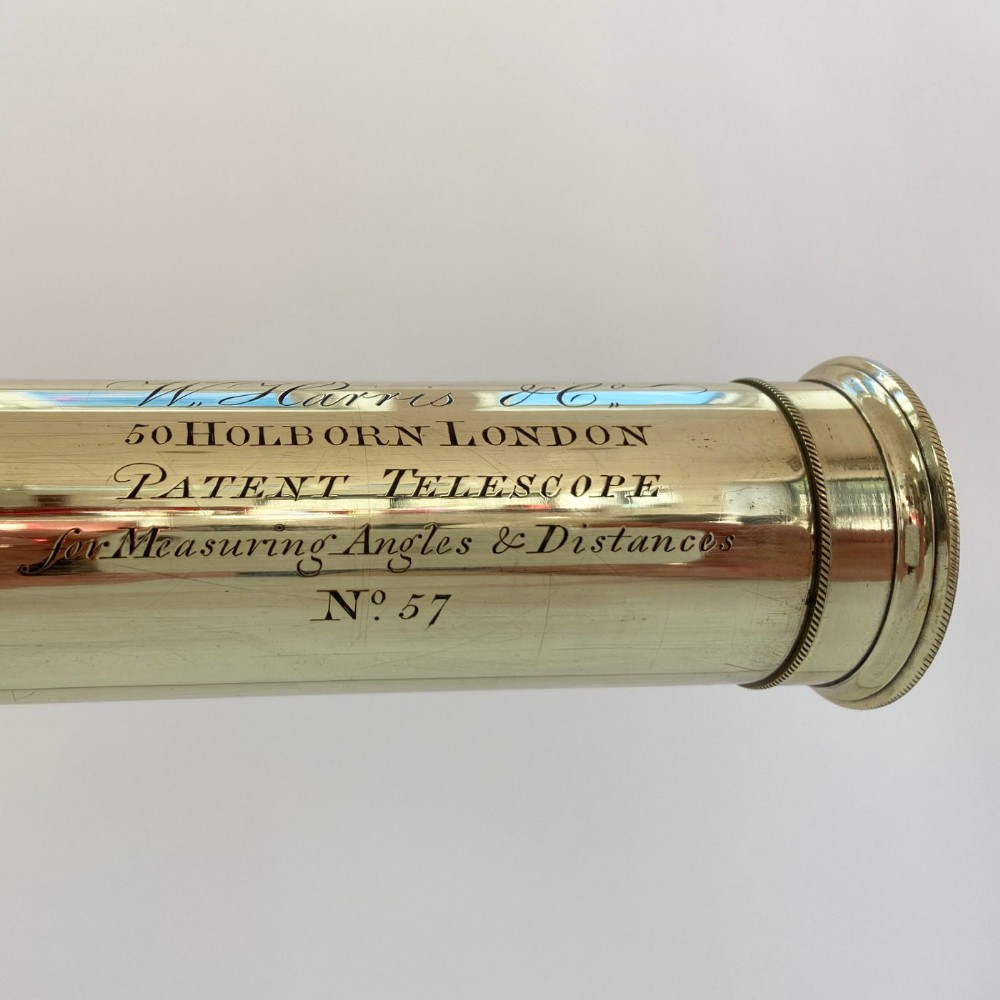
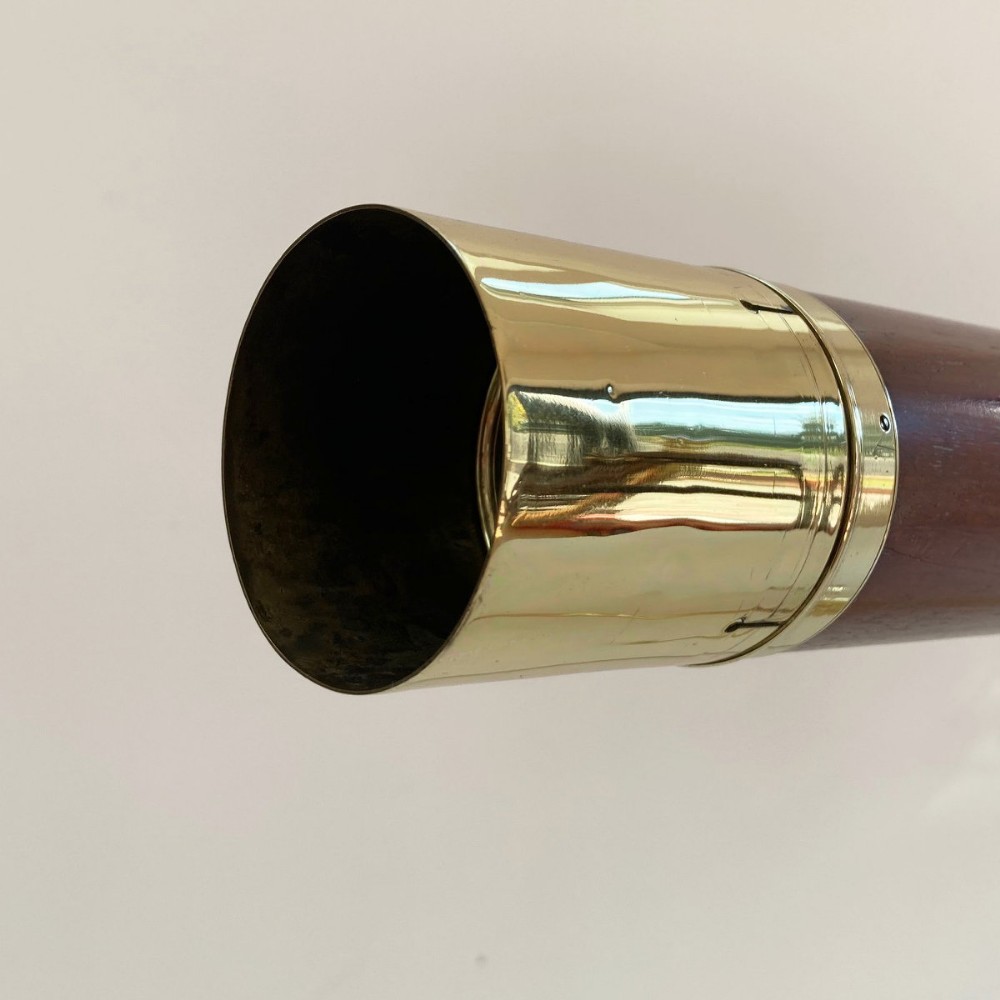
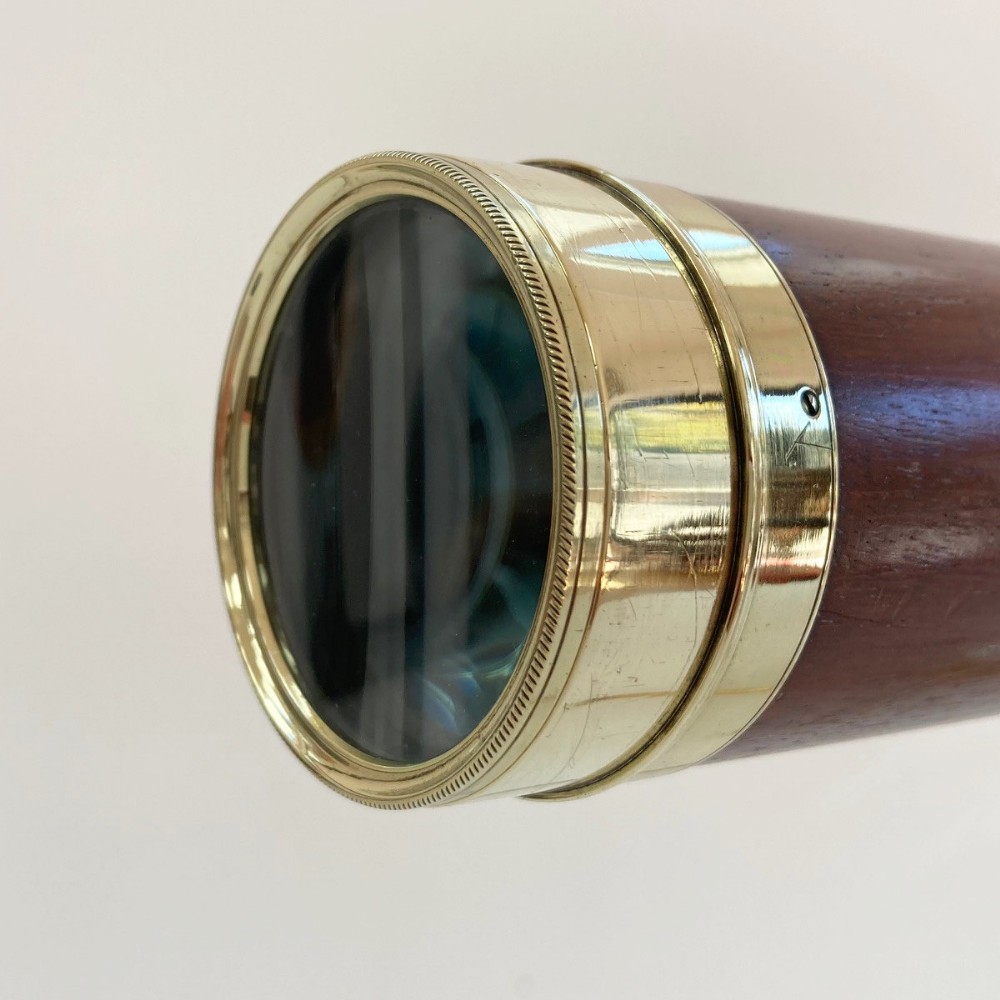
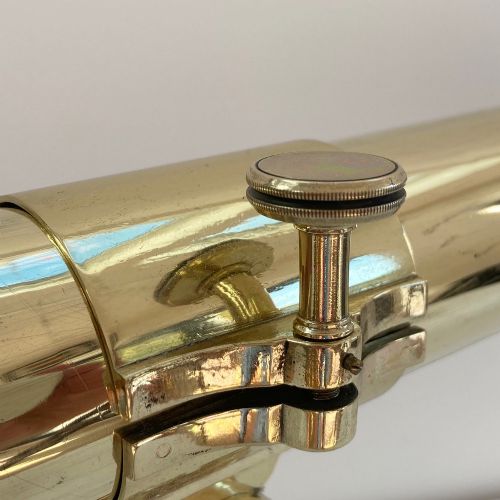
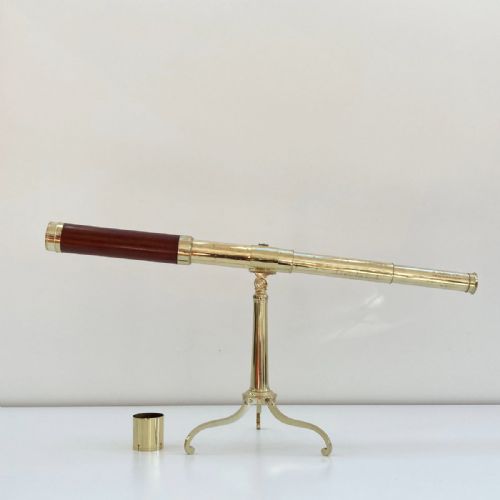
5 without) and 33cms fully retracted (28.5 without sunshade). It has a two inch objective lens and a deep reddish mahogany barrel. It is engraved on the first draw to, “W. Harris & Co. 50 Holborn, London” and is further engraved with “Patent Telescope for Measuring Angles & Distances, No 57”.
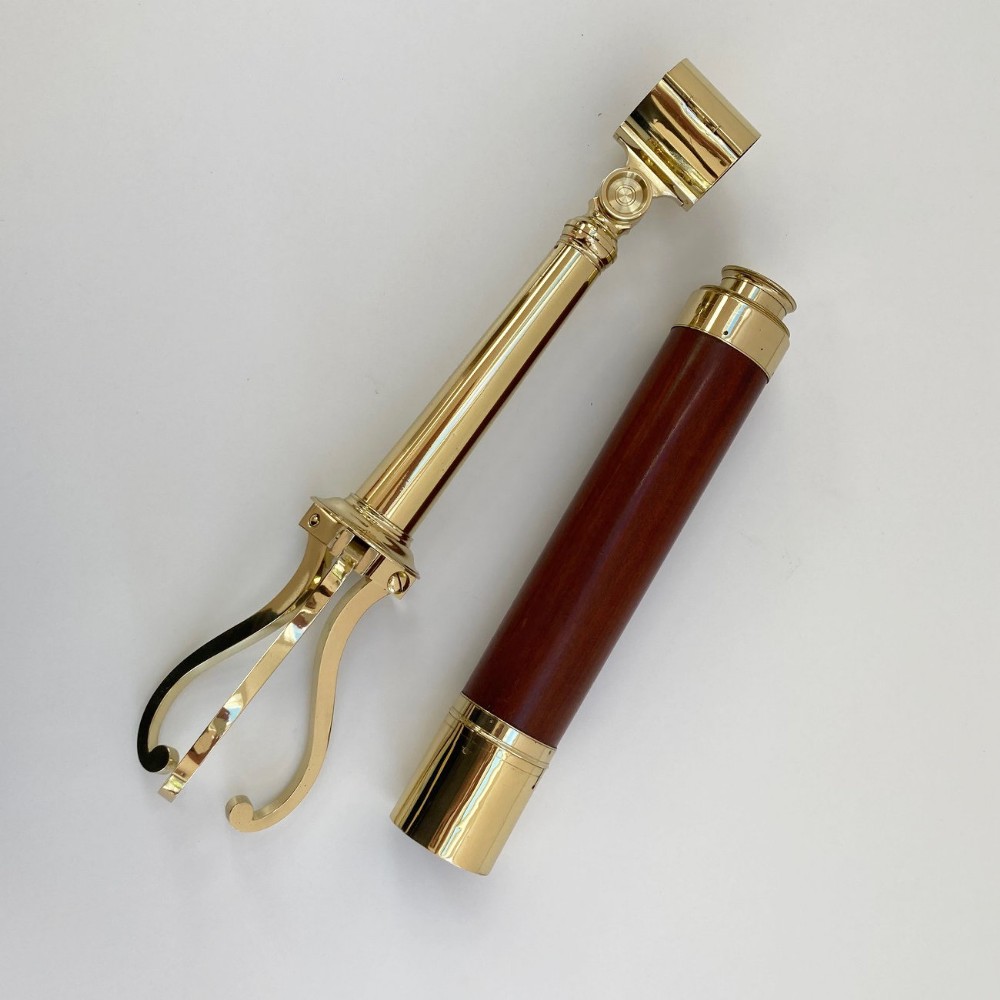
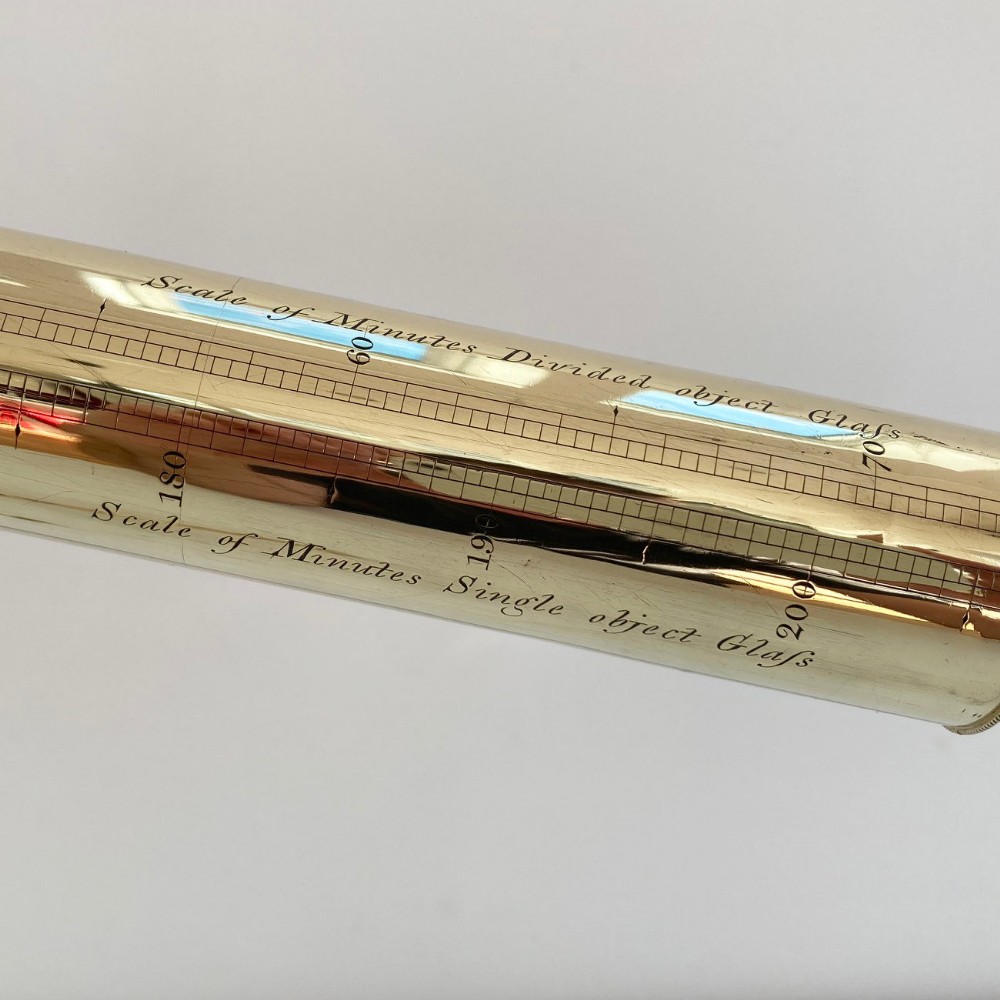
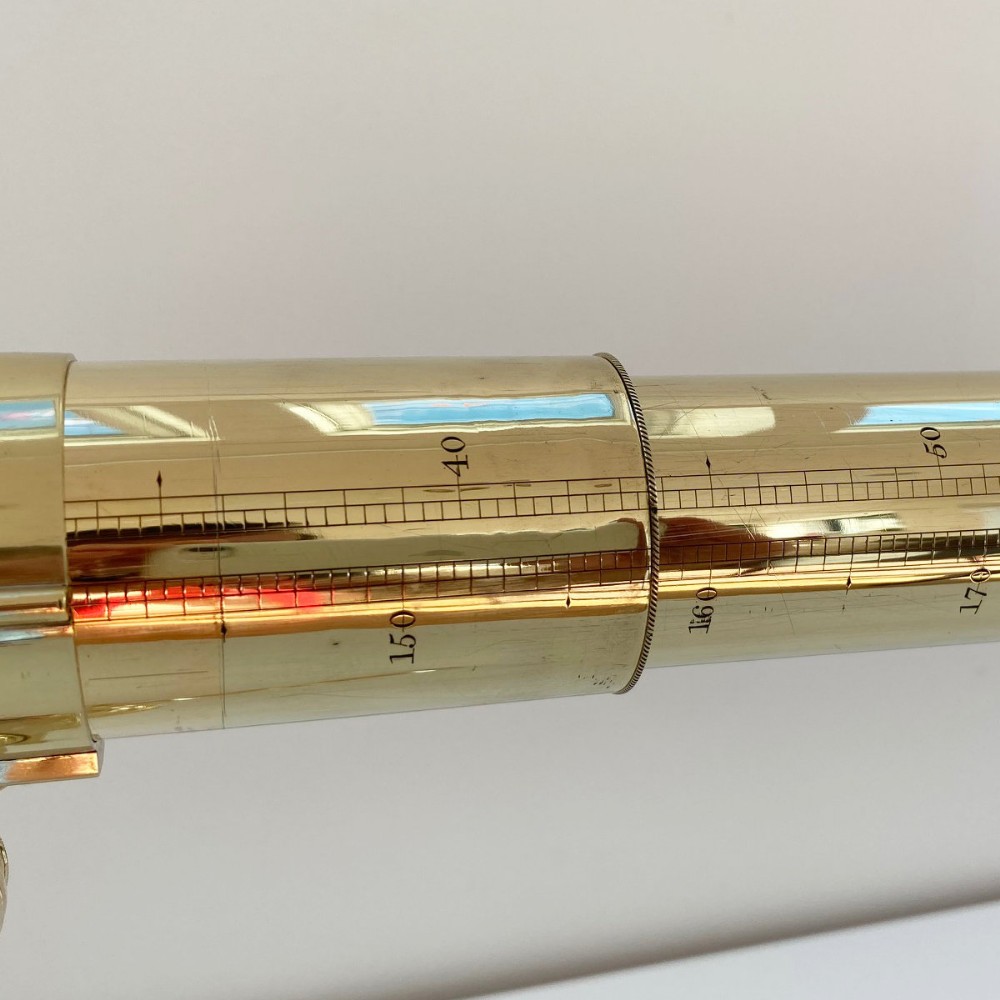
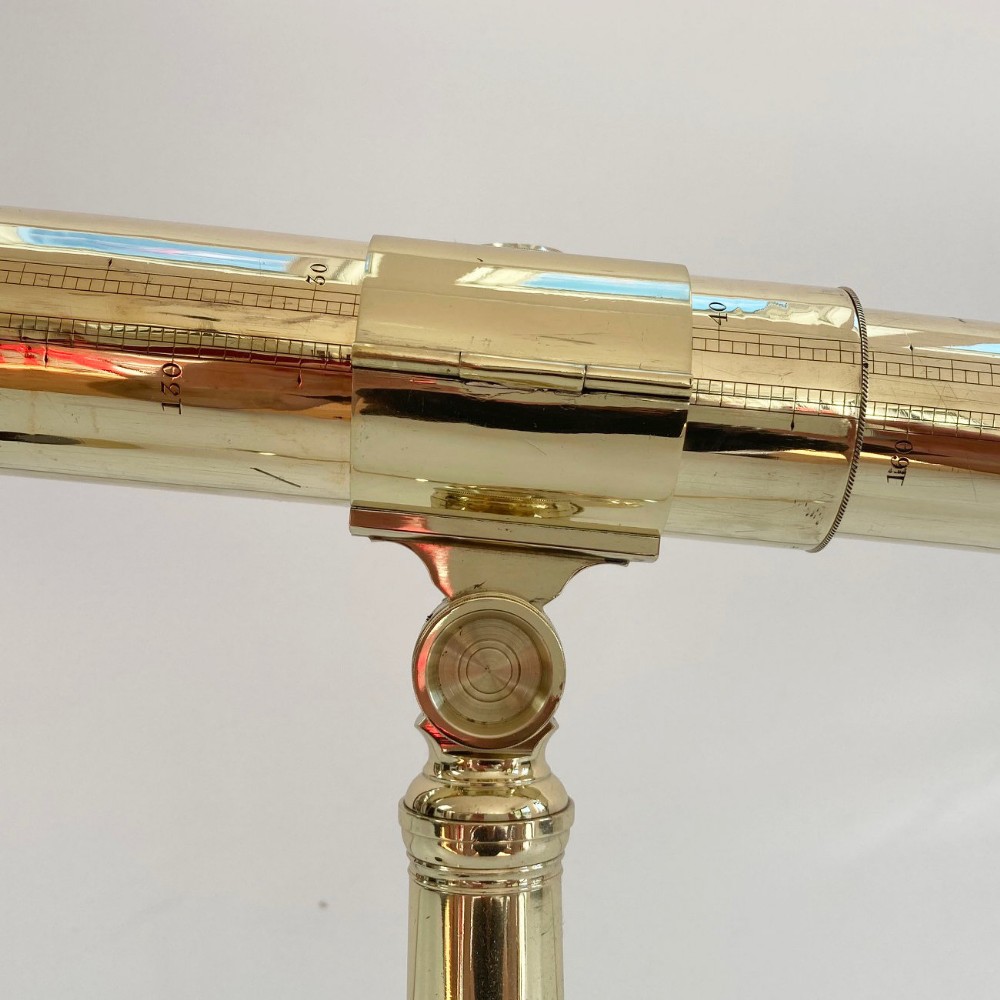
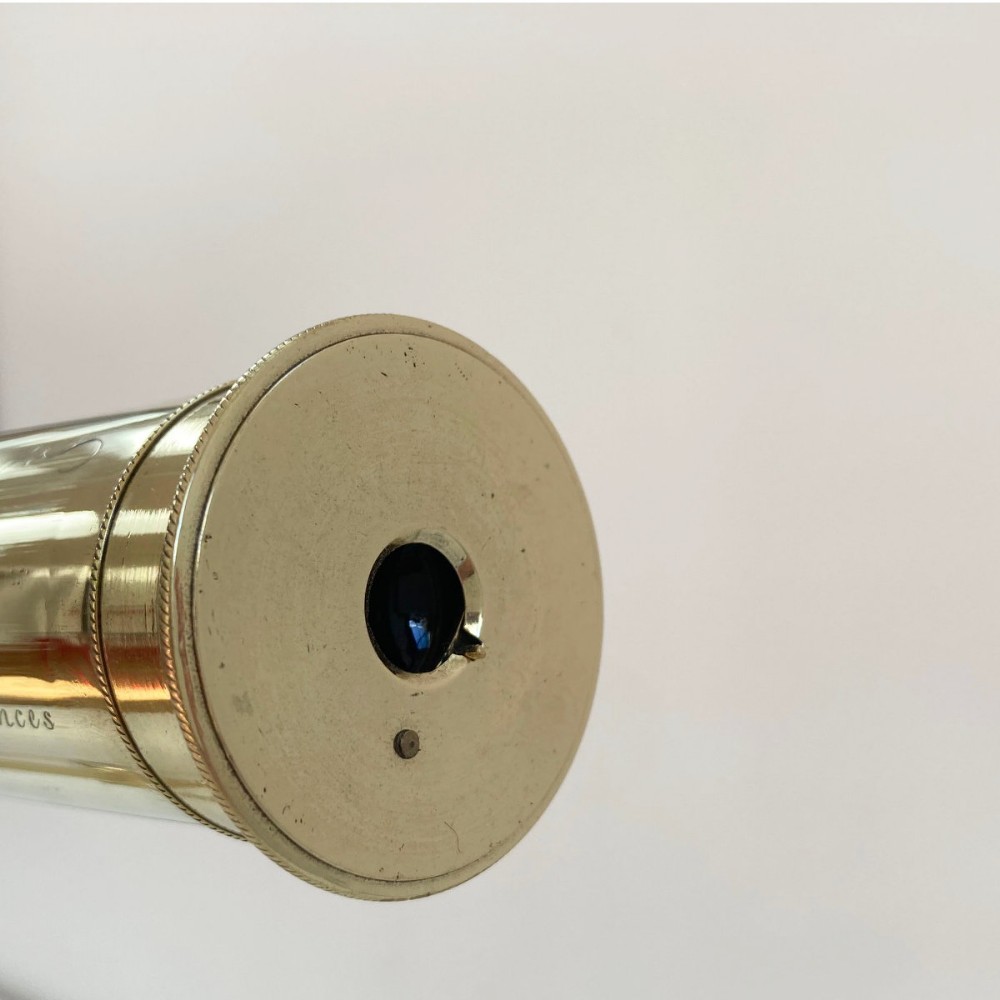
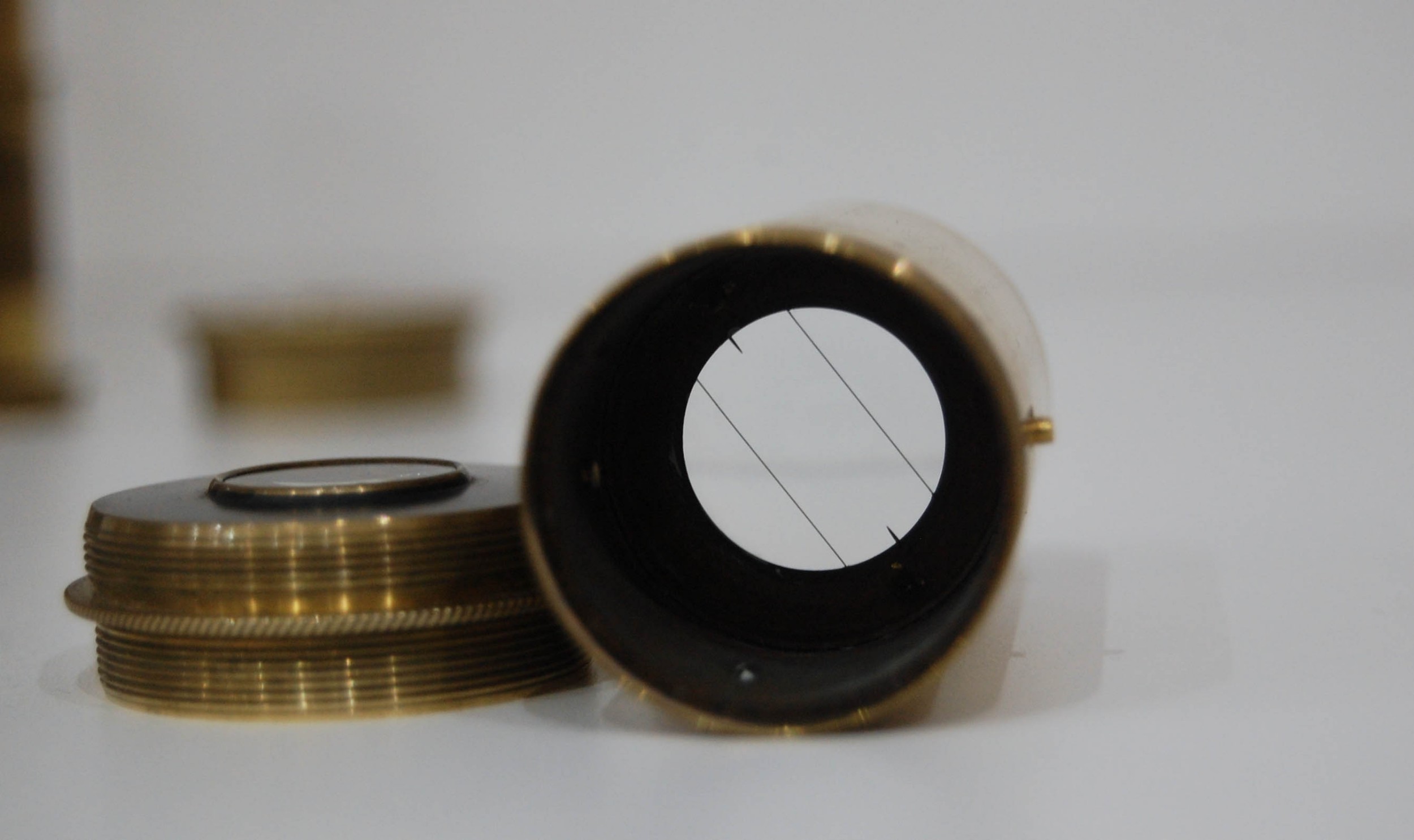
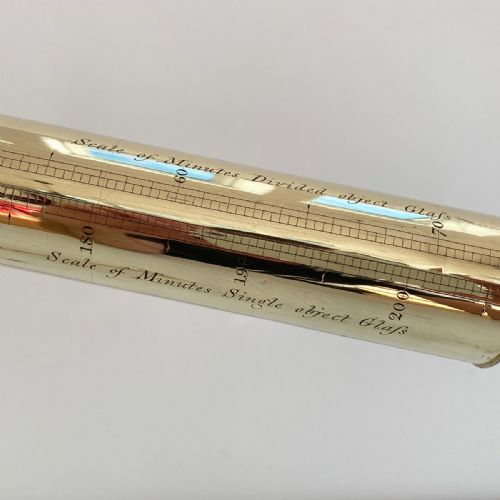
The patent gives some sense of its individuality but the telescope distinguishes itself from all others of the period by virtue of an engraved scale to the second and third barrels with further engraved writing stating the following on each side of the scale, “scale of minutes divided object glass” and “scale of minutes single object glass”. The reference to single and divided object glass can be understood by taking the telescope apart where you will notice that the second draw tube unusually contains a second, one and a quarter inch object glass. This second object glass is considered divided from its partner when the telescope becomes extended and thus the meaning of the scale is apparent. When viewing through the eyepiece, you will also notice the inclusion of, “two delicate steel points projecting into the field of view and a pair of parallel fibres, all of which are firmly fixed in their respective positions”.
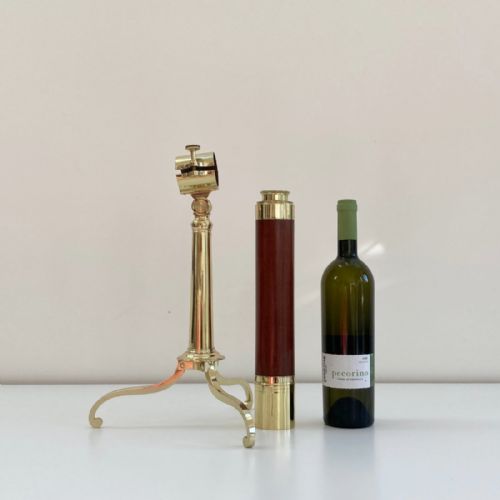
The final quote in reference to the eyepiece comes from Brewster’s first ever scientific publication in 1813, written two years after the patent was granted, “A Treatise on New Philosophical Instruments for Various Purposes in the Art and Sciences with Experiments on Light and Colours”. In it, he describes a number of instruments which were created and based upon the principals in his book. This extraordinarily rare instrument is one such example and is explained in some detail in Book III, Chapter One.
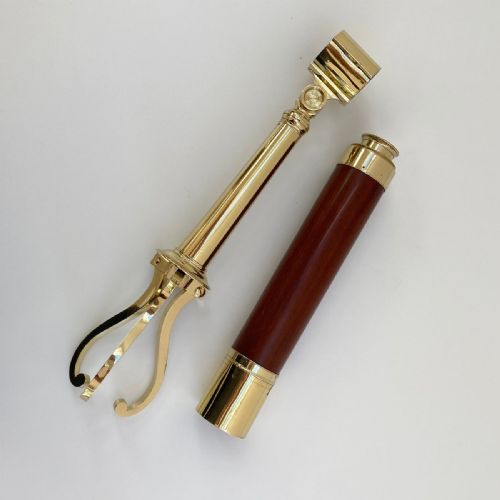
To copy the entire text in detail would be too extensive to include in this explanation but the main principles are included below:
“The micrometrical telescope will be found of very great utility to travellers, and to officers of the army and navy, who require an instrument that is portable, and not easily injured, while it can be employed with facility, and without the trouble of tedious calculations.
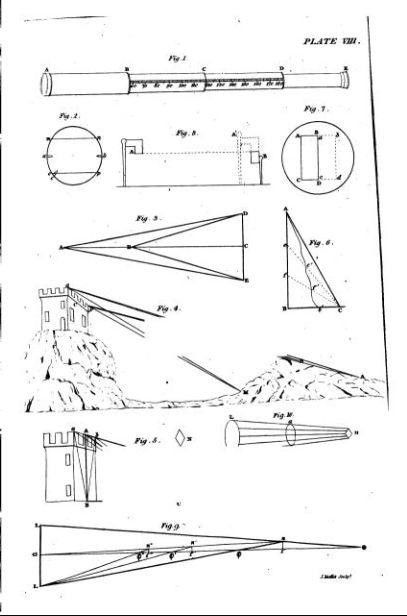
The micrometrical telescope is represented in its most general form in Plate VIII Fig. 1 (see image included), where AB, BC, CD, DE are the tubes of which it is composed. The principle object glass is placed at A; the second or moveable object glass is situated a little to the left of C, at the end of tube DC; and the eyepiece is contained in the tube DE. When the tubes BC, CD are into the outer tube AB, the moveable object glass at A; and in this situation distinct vision may be procured by pulling out the eyepiece DE. The magnifying power of the instrument is now at a minimum. By pulling out the tube CD, the moveable object glass near C is separated from the principal object glass, distinct vision may again be procured by pushing in the eye-tube DE, and the magnifying power of the telescope will be greater than before. In like manner, by pulling out the tube CB, and producing distinct vision by a new adjustment of the eyepiece, the distance of the two object glasses, and likewise the magnifying power of the instrument will increase till the place of the moveable lens coincides with the principal focus of the object glass, when the magnifying power of the telescope will be at a maximum”.
The above explains the principles of achieving the maximum and minimum focal lengt
Jason Clarke Antiques has dated this piece to the 1800s.
You can view the stock and full dealer information on the Jason Clarke Antiques Profile Page
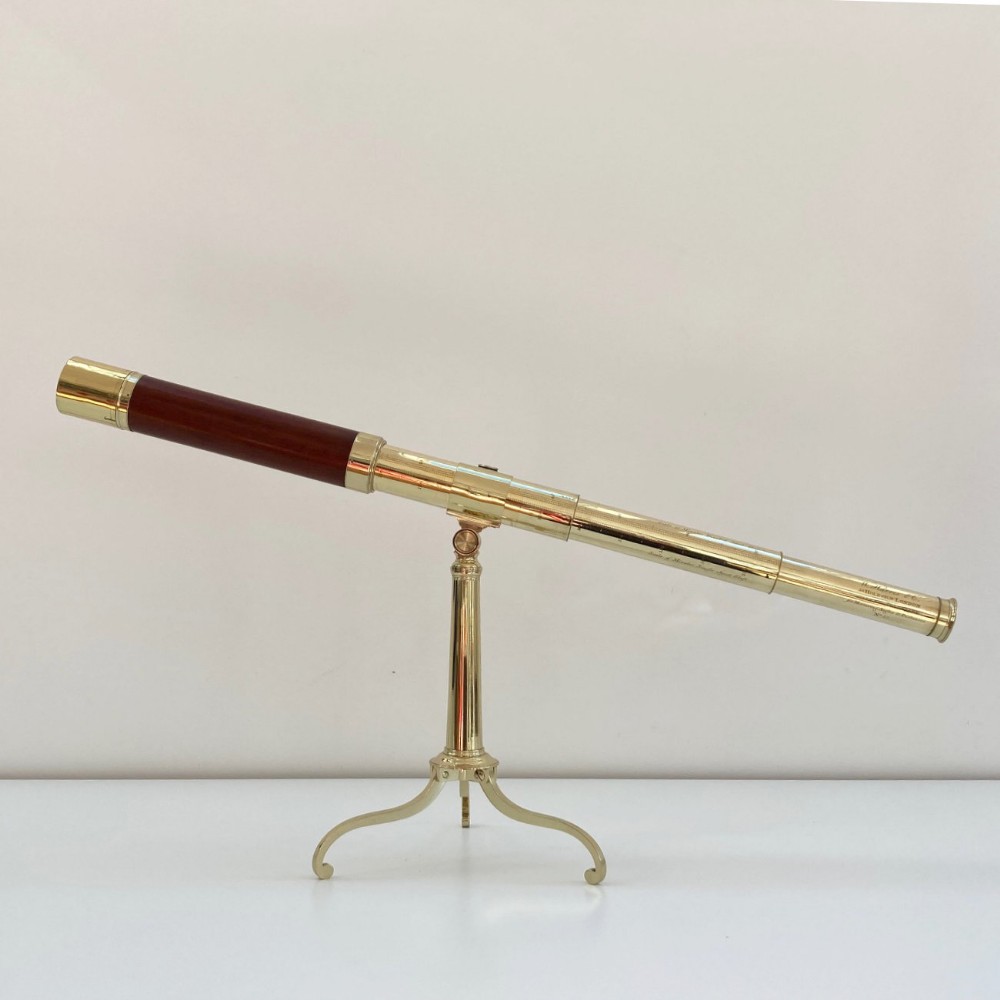
Sir David Brewster Patent Telescope for Measuring Distances & Angles by William Harris & Co London