It was listed by Regent Antiques. Sold pieces stay on Sellingantiques as a record of what has passed through, and the next one is rarely far away.
Regent Antiques has dated this piece to the 19th Century.

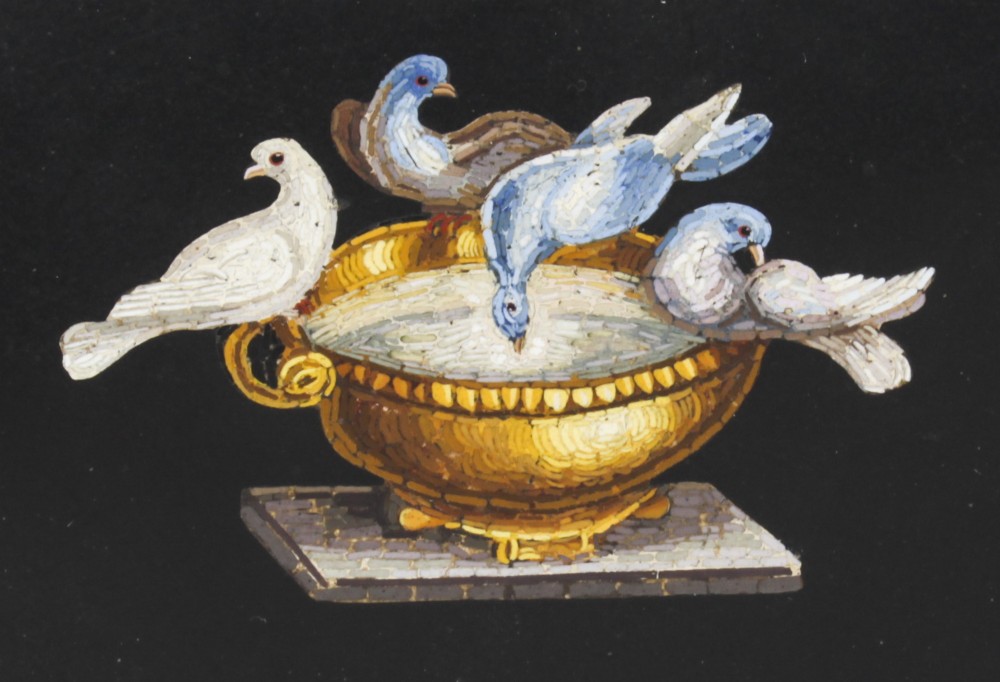
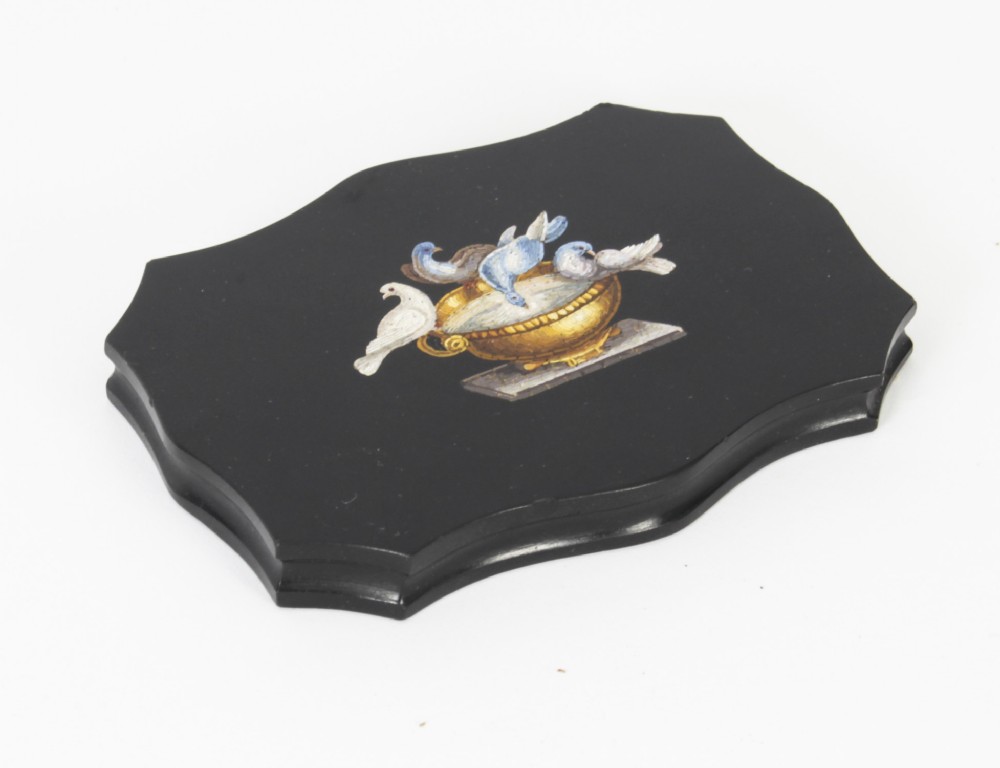
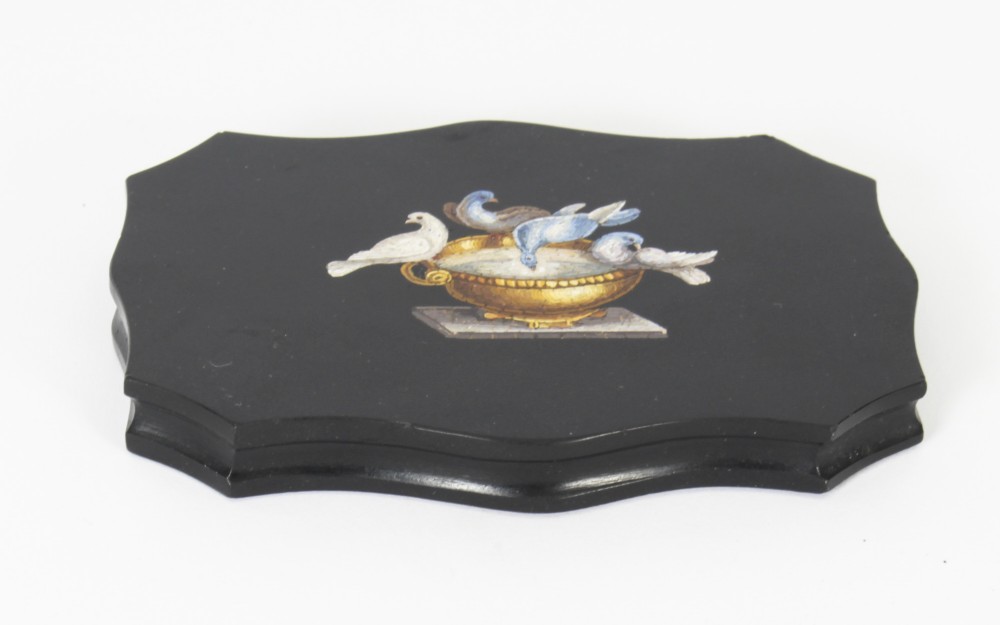
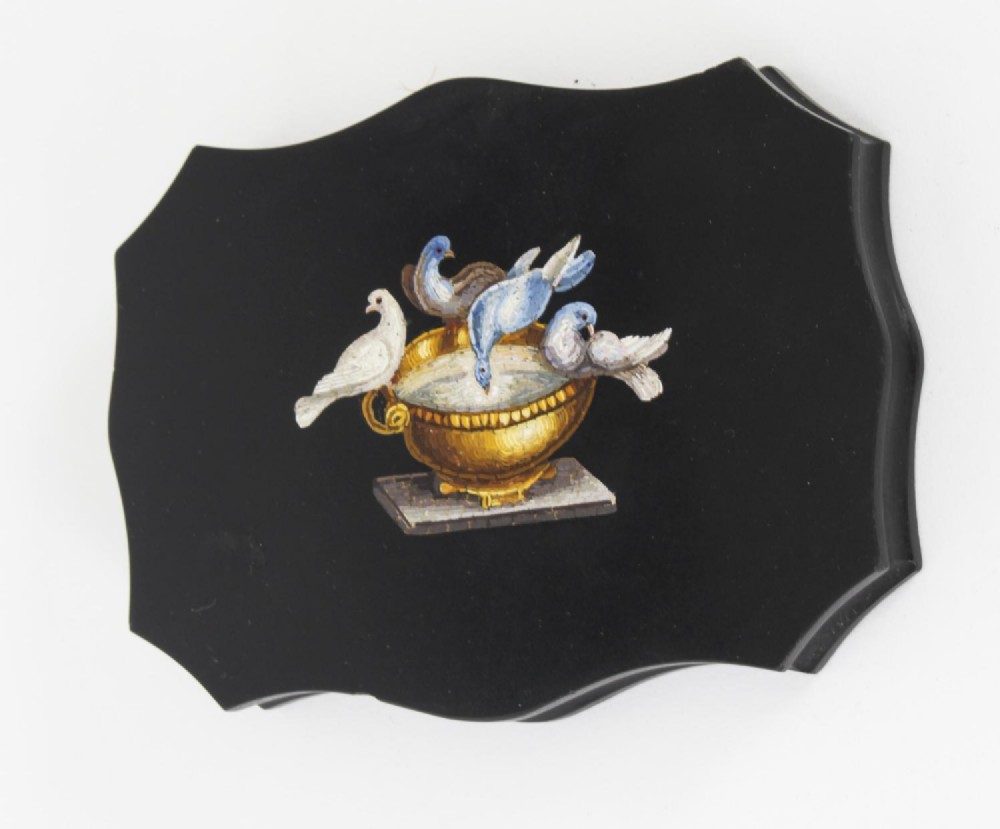
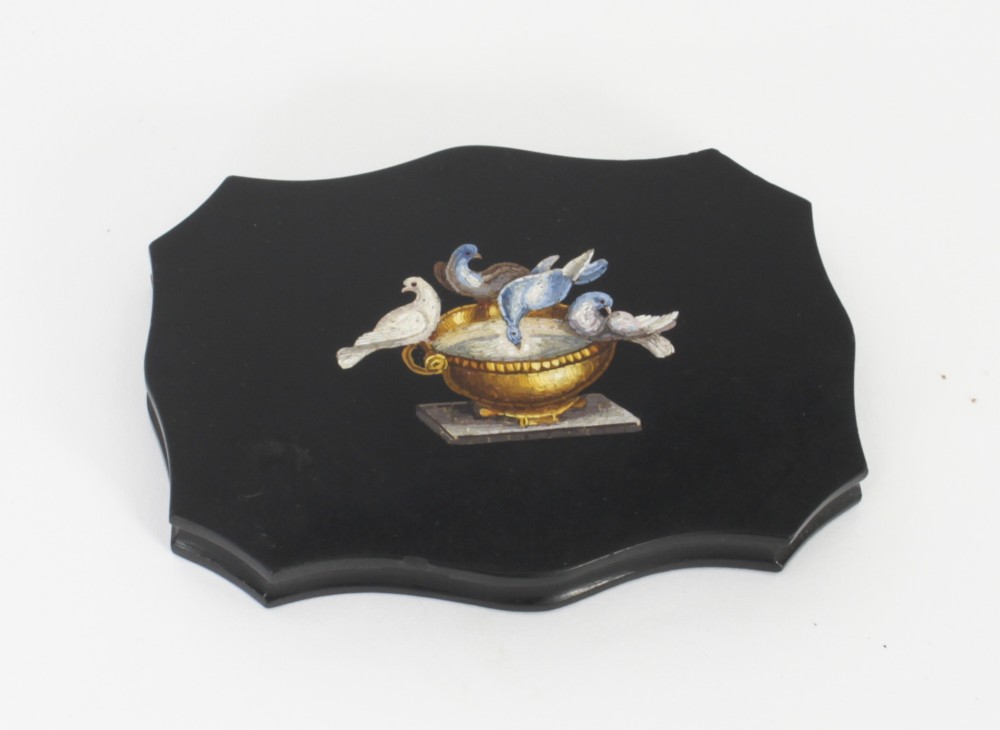
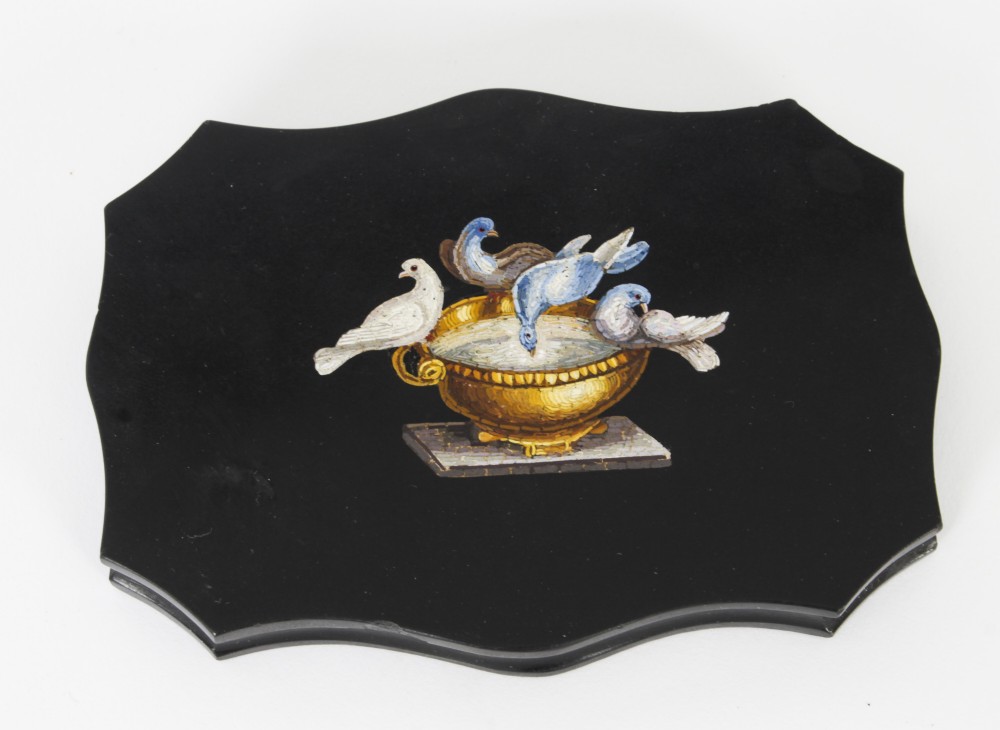
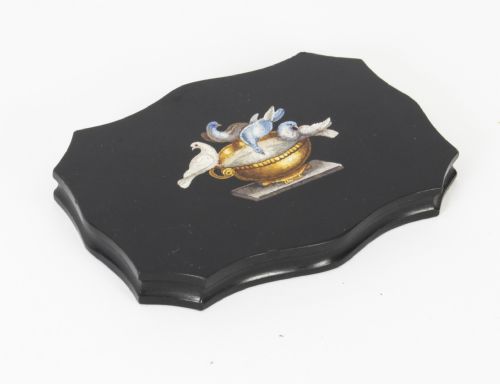
The design of the mosaic is Classical and is based on an ancient floor mosaic found in the villa of the Roman Emperor Hadrian (2nd Century AD). Called The Doves of Pliny, a description of the mosaic appears in the Roman historian Pliny the Elder's Natural History, completed in 77 AD.
Condition:
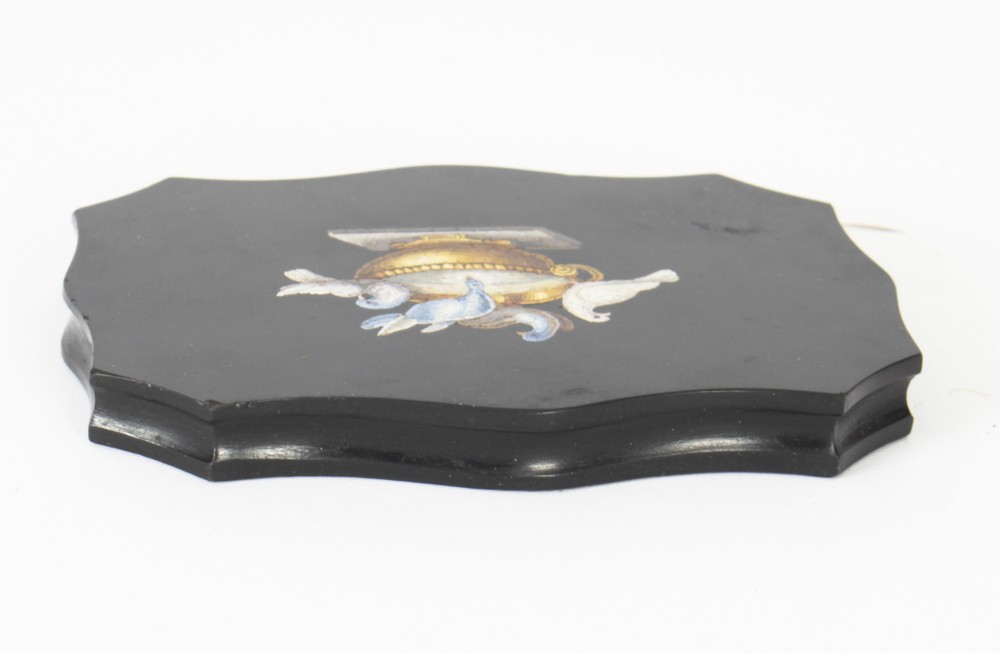
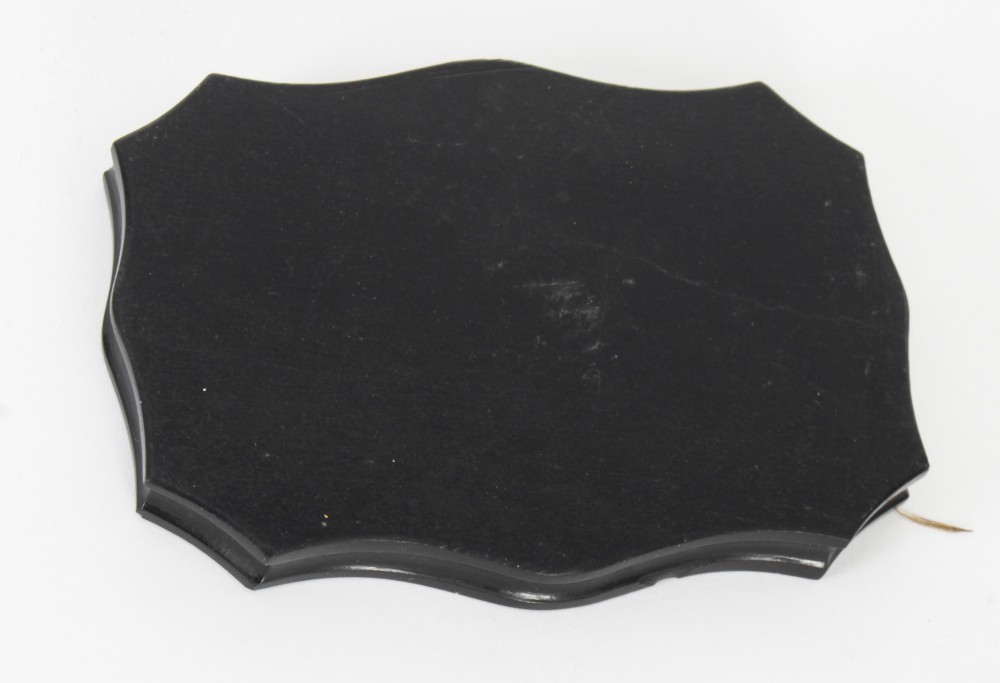
In really excellent condition, please see photos for confirmation.
Dimensions in cm:
Width 11 x Depth 8
Dimensions in inches:
Width 4 inches x Depth 3 inches
Micro-Mosaic
From the Renaissance micro-mosaics began to be made in Italy, reaching the height of their popularity in the mid 19th century, when Rome was the centre of production; there was a Vatican Mosaic Studio from 1576, set up to create mosaic replicas of the altarpieces in St Peter's Basilica, which were being damaged by the humid conditions of the vast and crowded interior. They were popular purchases by visitors on the Grand Tour, easily portable, and often taken home to set into an object there. Typical scenes were landscapes of Roman views, rarely of any artistic originality, and the micromosaics were small panels used to inset into furniture or onto snuffboxes and similar objects, or for jewellery.
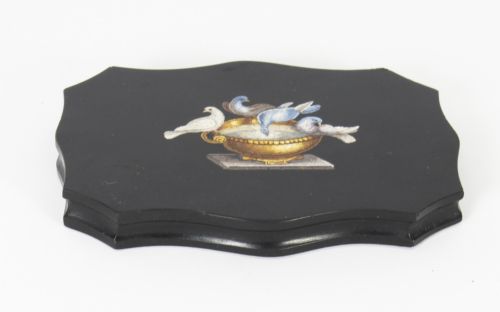
A distinctive feature of micromosaics is that the tesserae are usually oblong rather than square.The best work can achieve 3,000 to 5,000 tesserae per square inch. The best collections are in the Hermitage Museum and the Gilbert Collection in London.
Our reference: A2235
Regent Antiques has dated this piece to the 19th Century.
We specialise in english and continental furniture, silver, porcelain and decorative items.
You can view the stock and full dealer information on the Regent Antiques Profile Page
Regent Antiques is a registered member of LAPADA CINOA
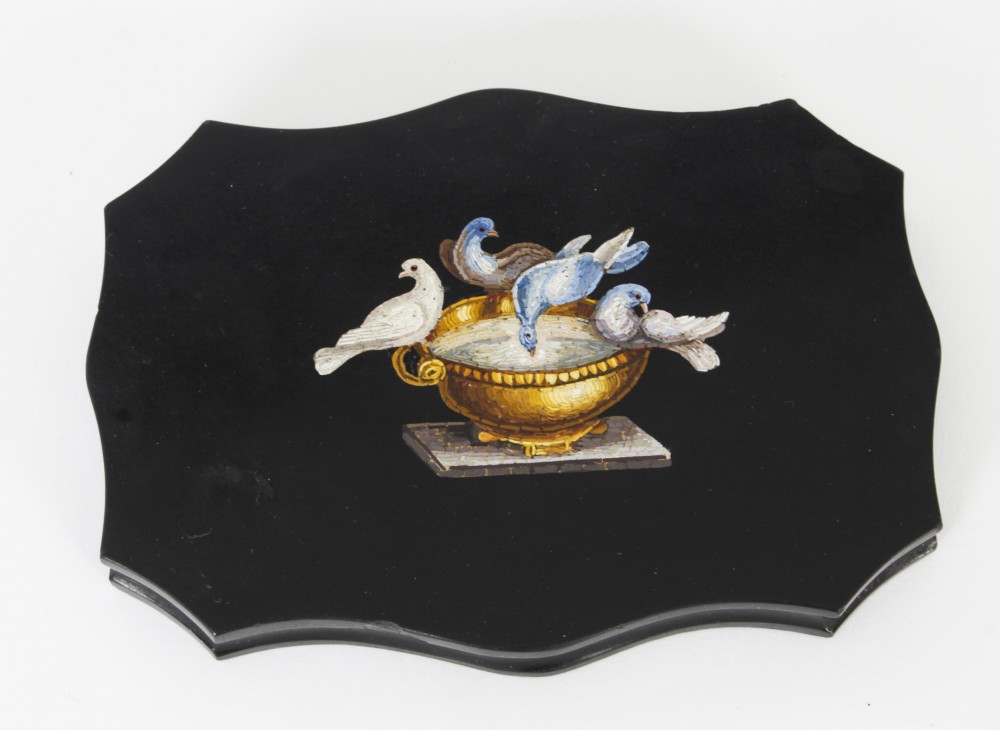
Antique Grand Tour Micro-mosaic Marble Desk Weight Doves Pliny 19th Century