It was listed by Jason Clarke Antiques. Sold pieces stay on Sellingantiques as a record of what has passed through, and the next one is rarely far away.
Jason Clarke Antiques has dated this piece to the 1900s.
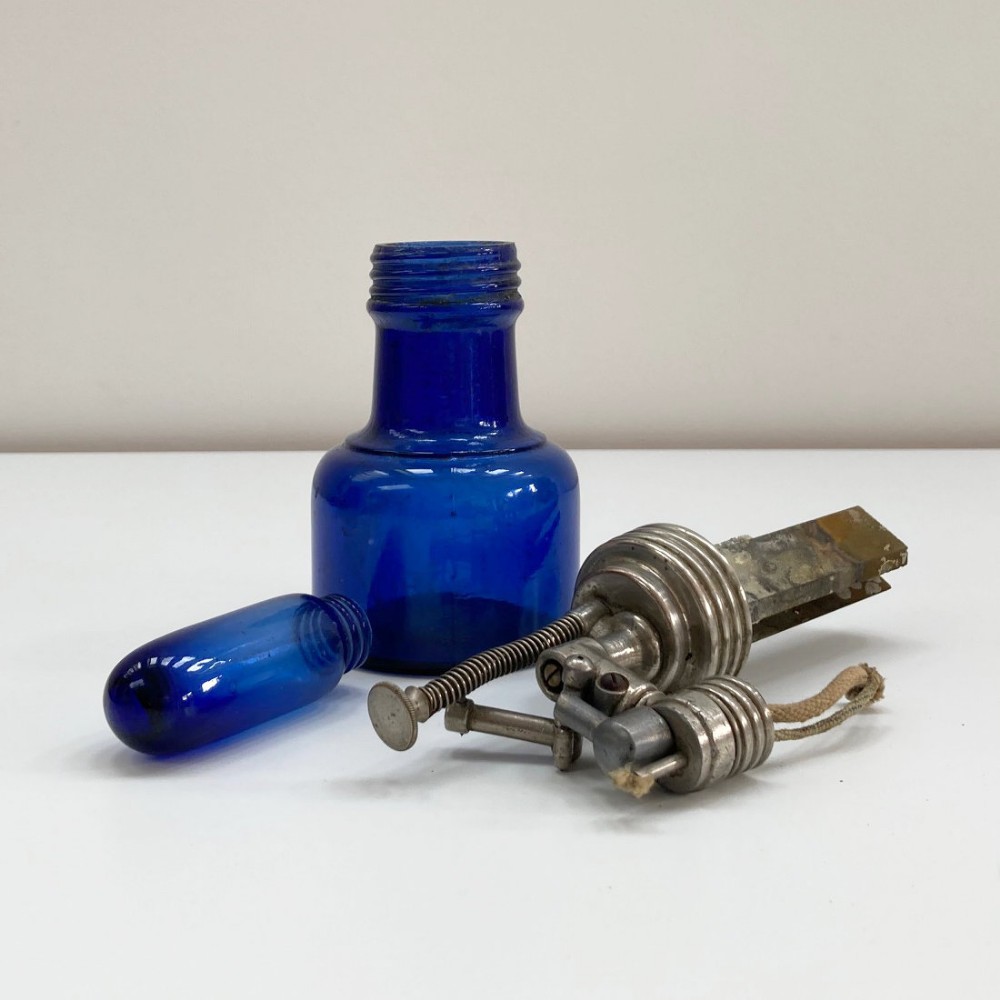
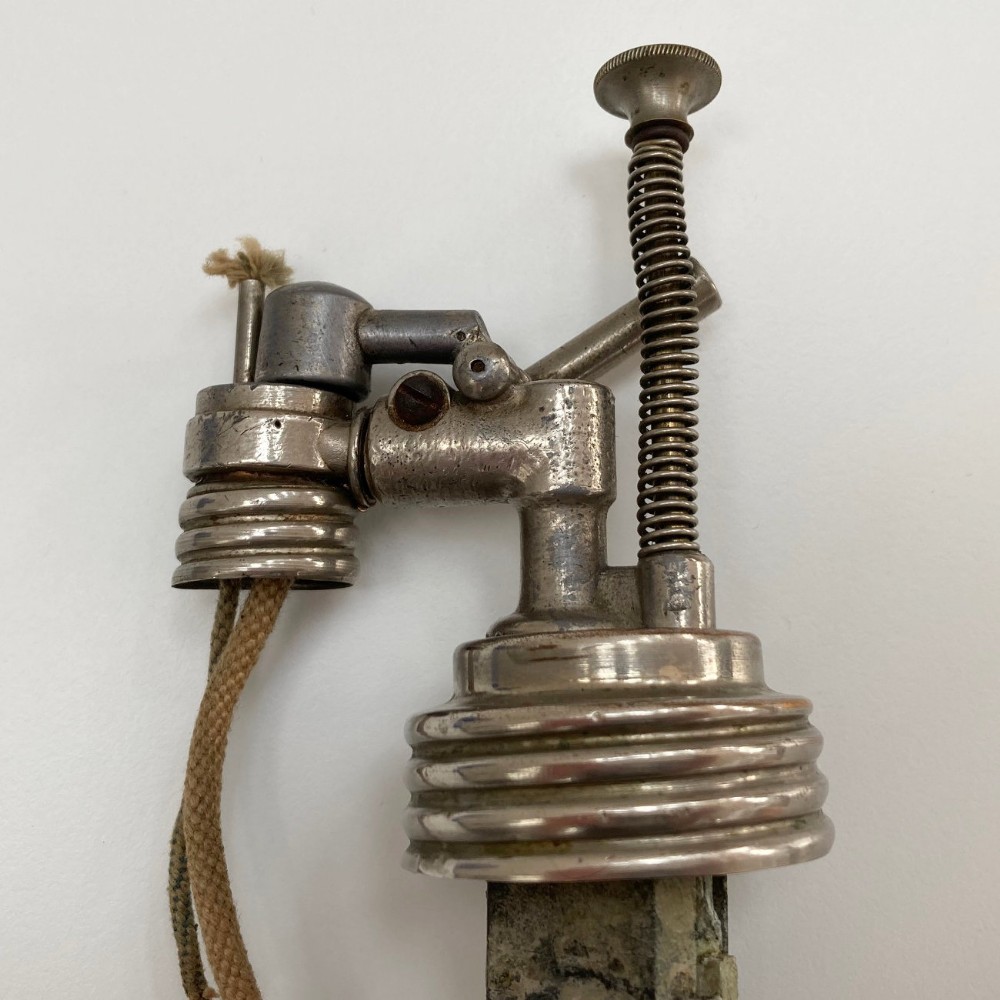
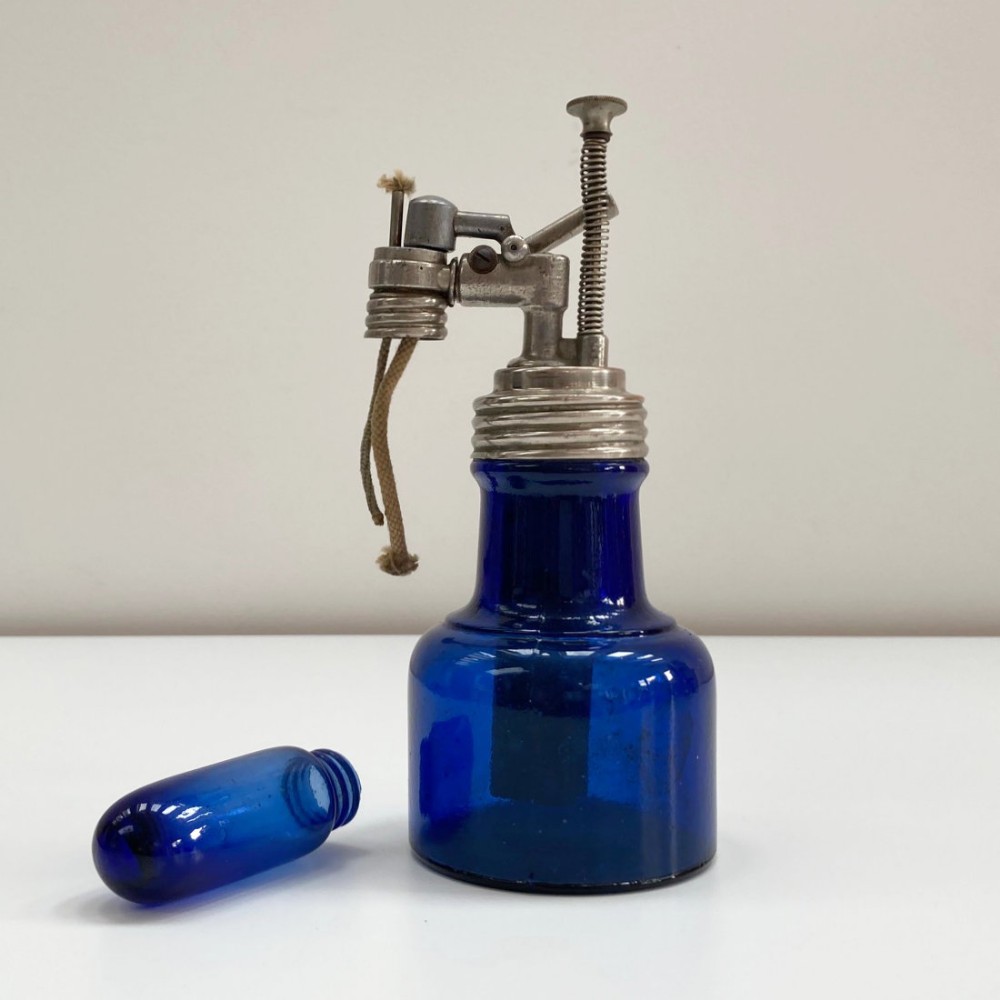
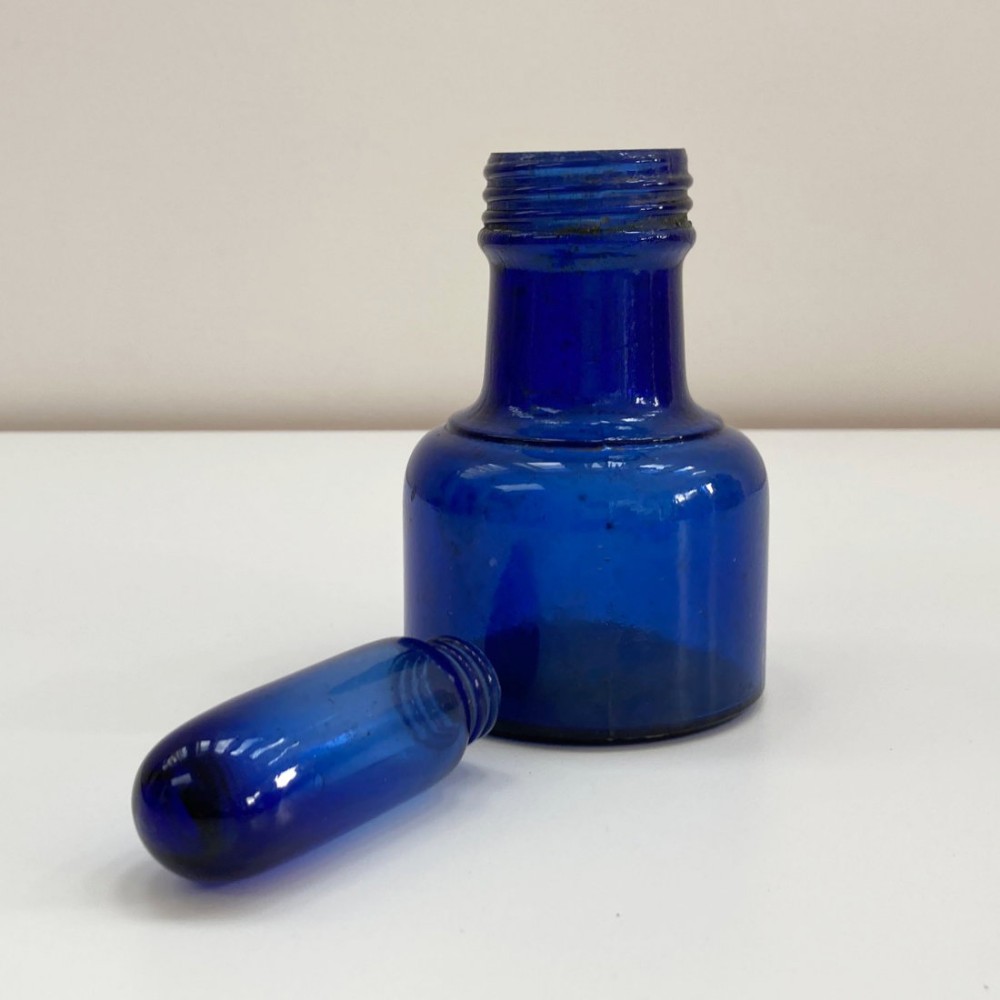
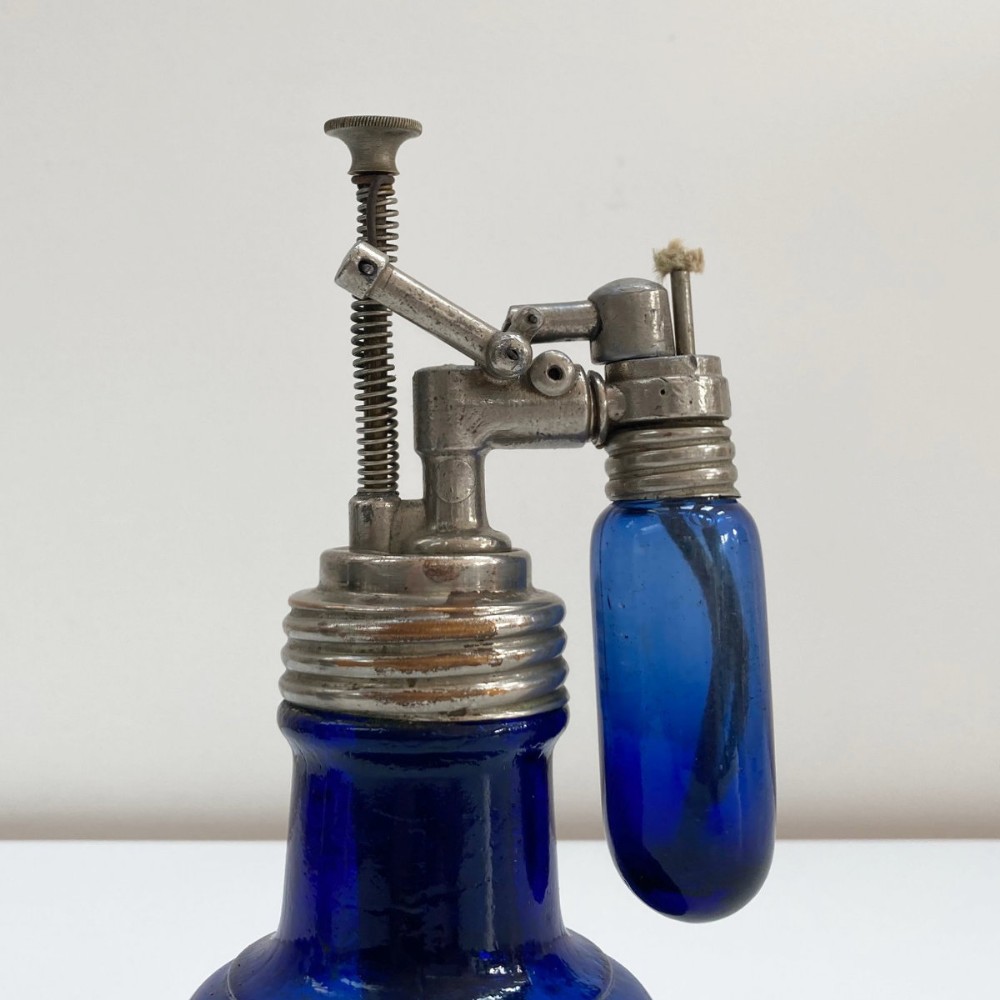
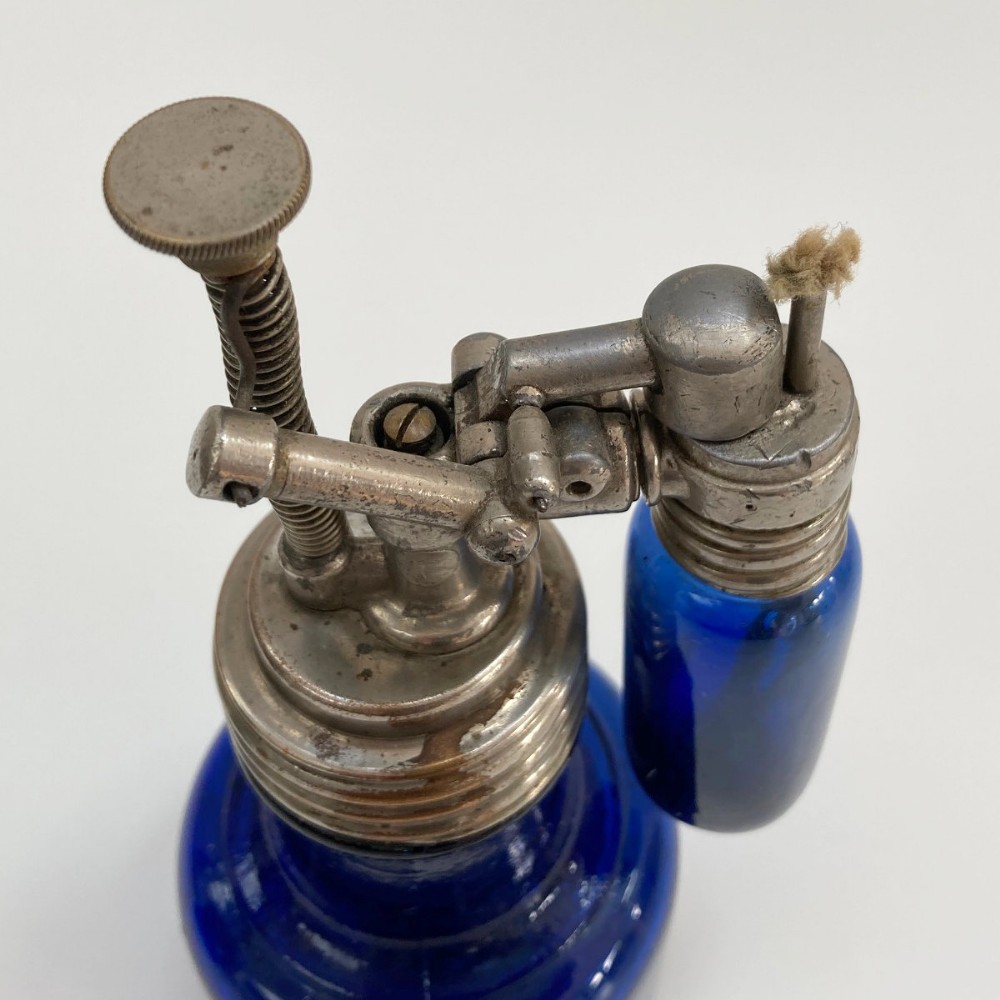
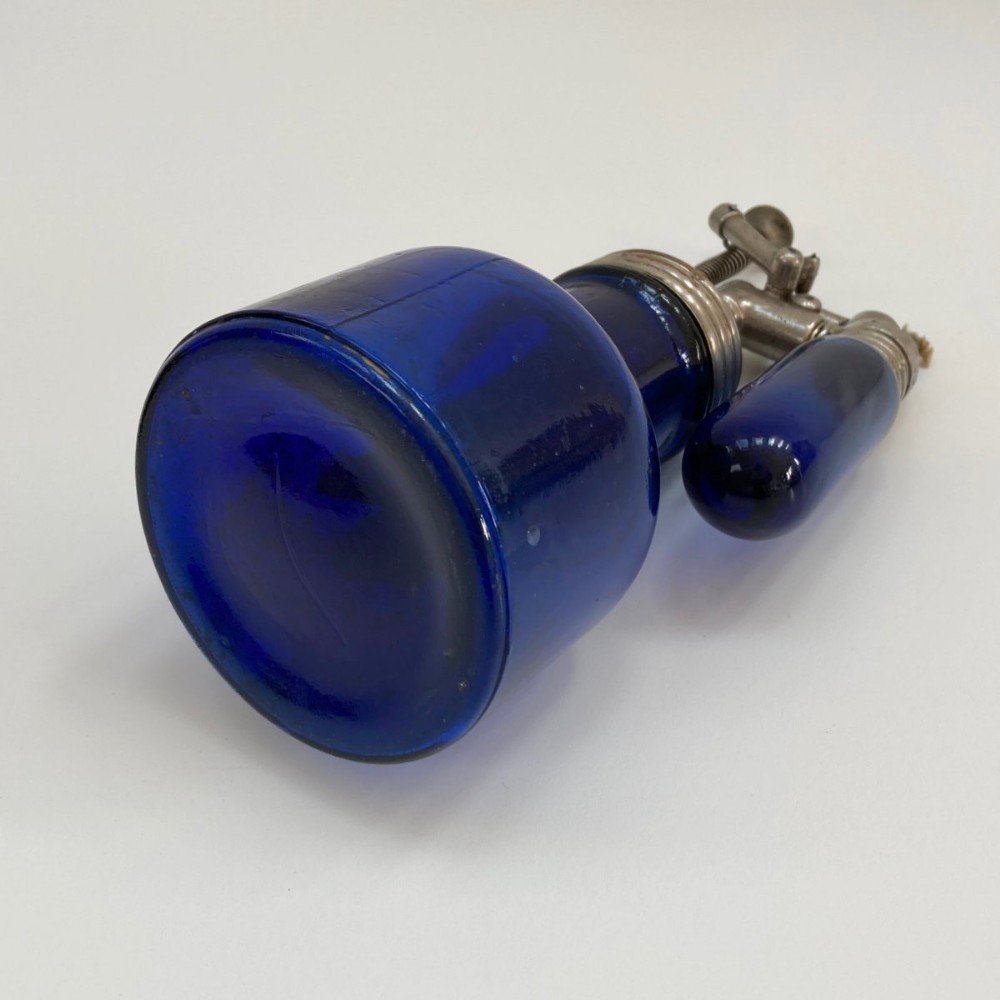
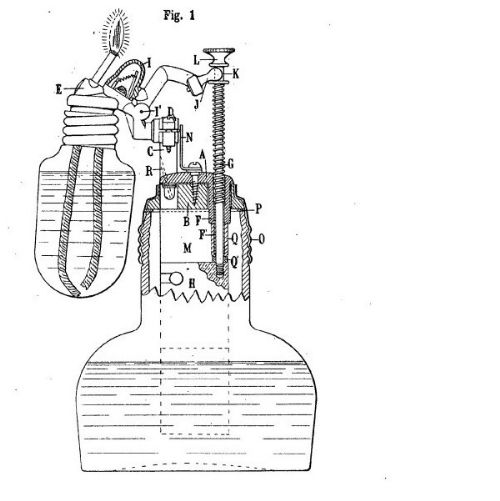
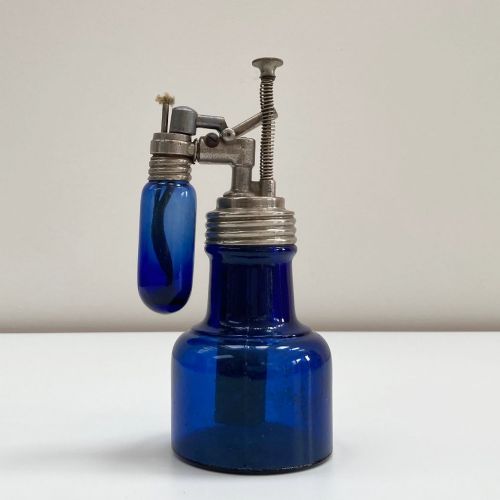
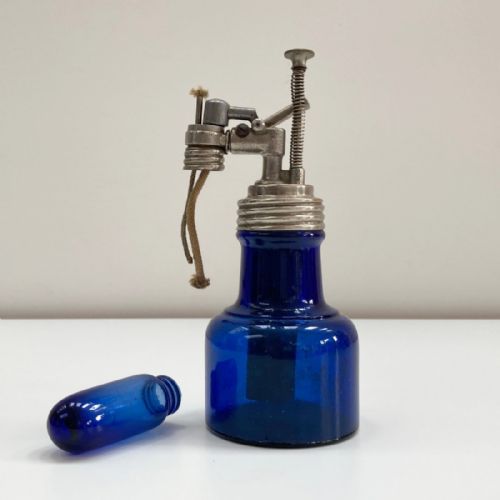
Onto the glass thread is screwed the mechanism which is composed of a long plunger with a spring to ensure that it remains extended and an L shaped aperture.
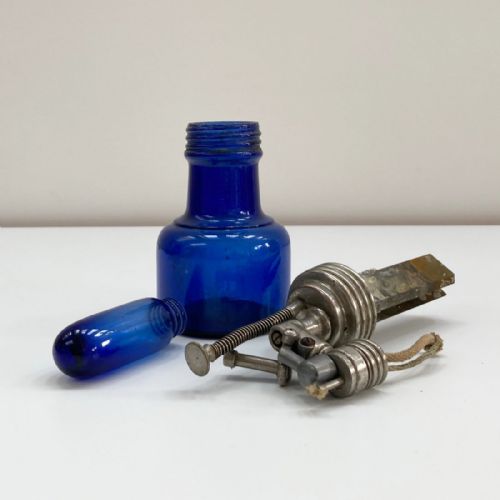
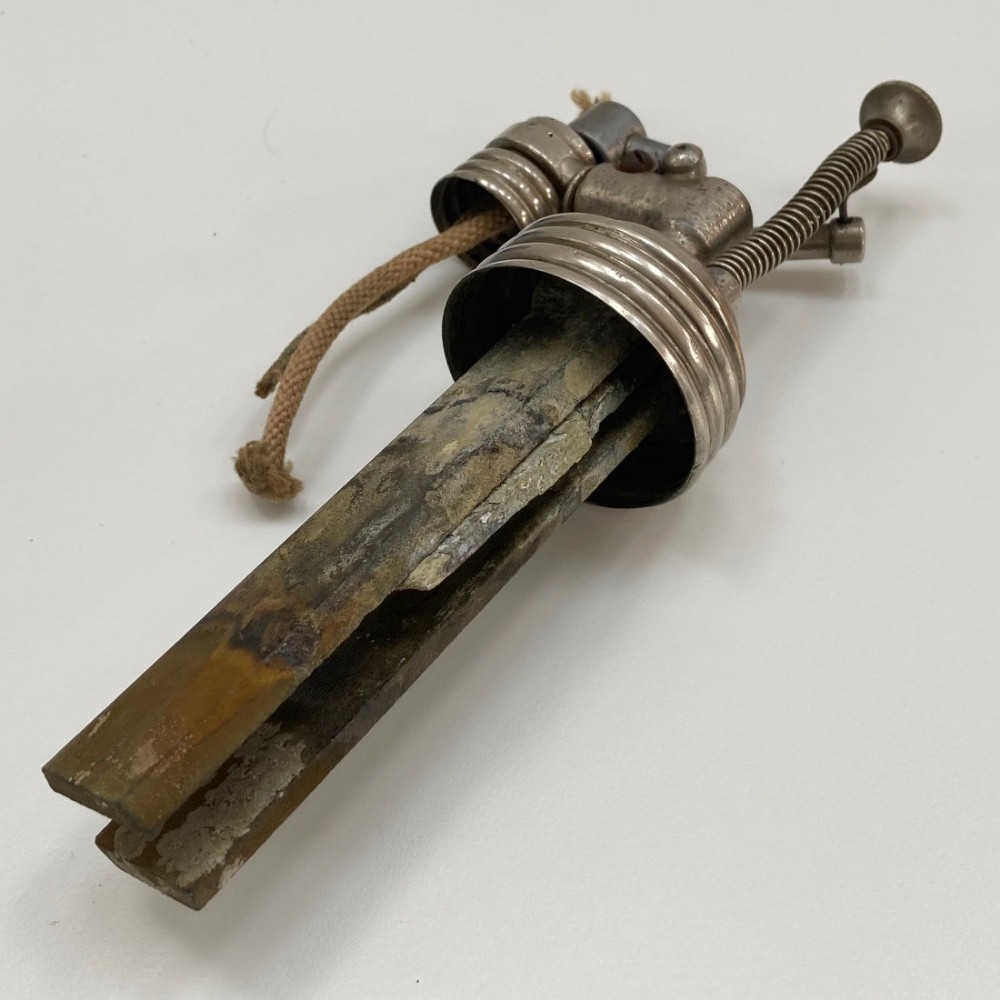
On the underside of the lid of the mechanism is extended two carbon rods and a smaller flat rod of zinc which is manoeuvred up and down with the plunger. The combination of the carbon and zinc coupled with a mix of weak sulphuric acid and potassium bichromate effectively creates a Grenet wet cell battery converting chemical energy into electrical energy.
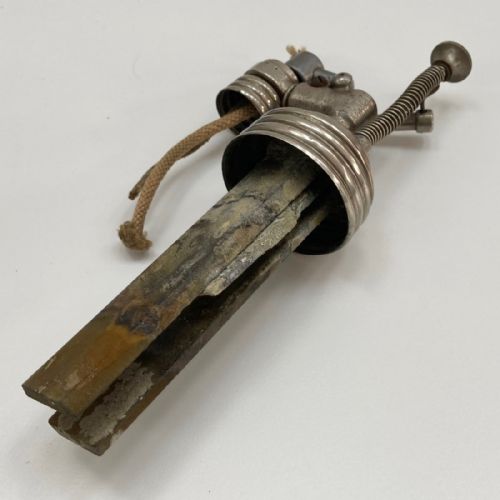
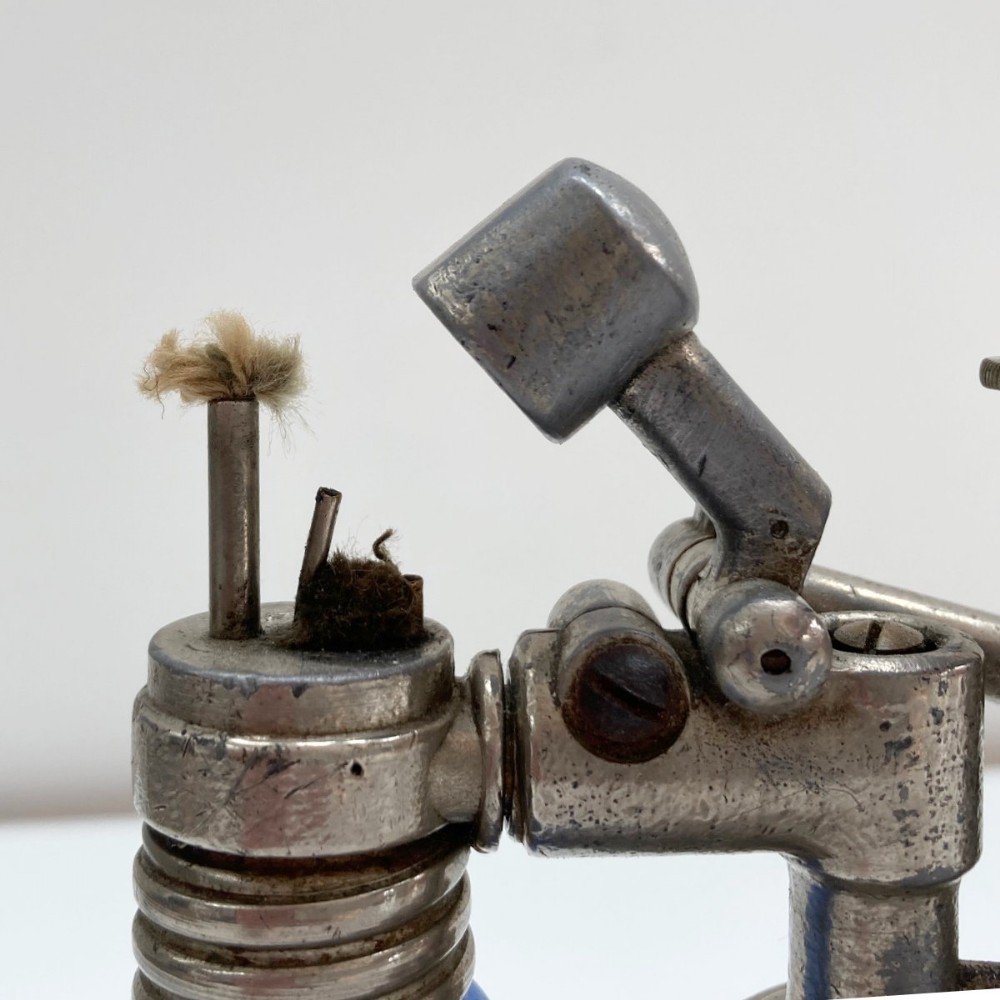
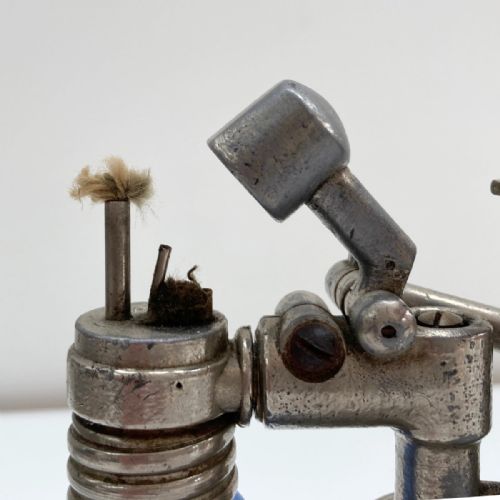
The reaction would be enabled by plunging the zinc rod into the solution and allowing a charge to flow through the mechanism and up through the L shaped aperture. The plunger action also raises a hinged lid on the lid of the secondary blue glass attachment revealing a platinum sponge and small pilot wick head beside it.
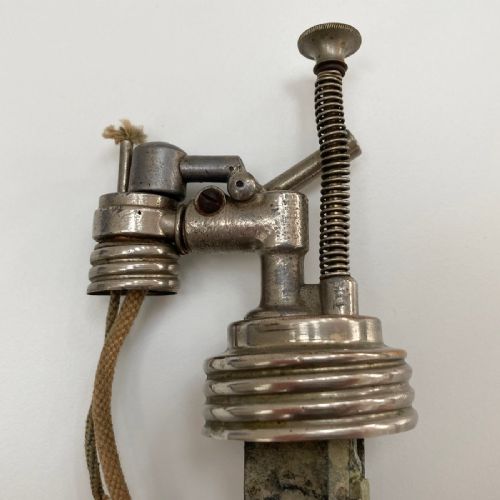
The blue glass bottle would have contained petrol and fed both the small and large wick heads and with the release of the current against the platinum sponge, enough heat would be provided to light the pilot wick which in turn would feed the larger one to the far end. This larger wick is not covered by the hinged lid so it would remain lit for as long as required once the plunger was released. The latter action has the effect of cutting off the current and extinguishing the pilot flame at the same time.
A simple and very practical development bearing mainly similarities to the original Dobereiner lamp which were often provided with a receptacle so that the user could light a small piece of wood from the flame.
The design was originally patented and manufactured by the French inventor, Bernard-Alexandre Carrier in 1900 and was displayed at the Exposition Universelle in Paris where it won a gold medal. The Luminus lighter as it was dubbed, was produced for some time and further developments were patented in 1905 and 1906 although the basic premise remained the same.
Little more is known of the original inventor but it remains a super example of the diverse uses that the Grenet wet cell battery provided. Eugene Grenet’s developments in the late 1850’s produced a reliable and surprisingly high voltage battery and it was utilised by Thomas Edison for his experiments. It was eventually superseded due to its fragility (glass) and the constant requirement to refill the acid solution but it was hugely successful for some years and modern batteries continue to utilise the zinc-carbon combination today.
An interesting scientific instrument which had a very simple and practical domestic use.
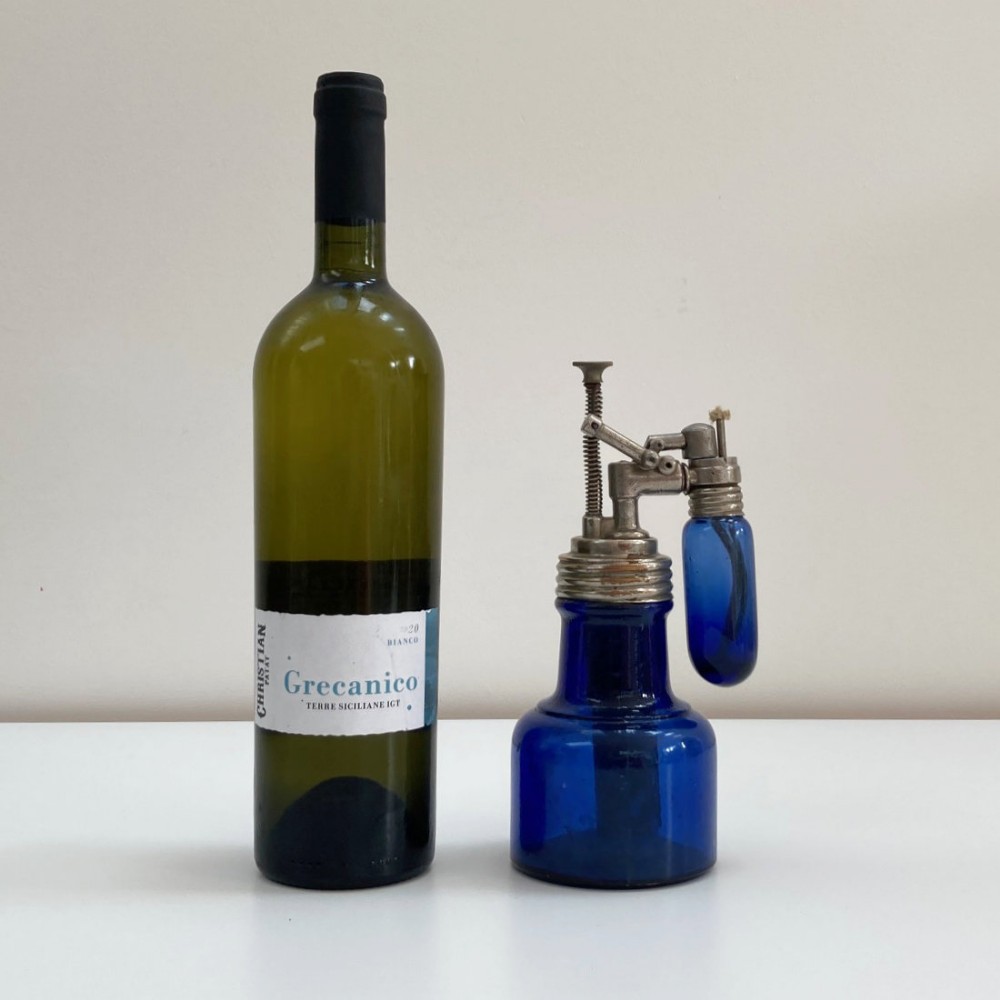
It measures 21cms in height and 10cms in width.
Circa 1905
Jason Clarke Antiques has dated this piece to the 1900s.
You can view the stock and full dealer information on the Jason Clarke Antiques Profile Page
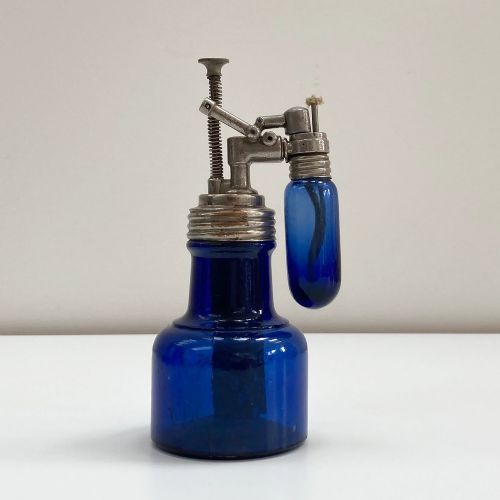
French Edwardian Luminus Potassium Bichromate Table Lighter