7,797  PAGES BROWSED TODAY PAGES TODAY 0 ANTIQUES UPLOADED TODAYNEW ARRIVALS
LATEST STOCK
Sort Order
Items Per Page
Browse Categories
Sort order
Items per page
ID #SA829446
SOLD
Email
Save
Early Wollaston Type Camera Lucida by Thomas Rubergall London
Jason Clarke Antiques
sold SA829446
Sorry, but this item has been sold.
Jason Clarke Antiques

Jason Clarke Antiques

Sellingantiques Verified Since Jul 2015
View Dealers Stock Page
Id #SA829446
PDF SHARE
SAVE

Early Wollaston Type Camera Lucida by Thomas Rubergall London

19th century
Description

For sale a cased Regency period Wollaston type camera lucida by Thomas Rubergall, London.

First produced by the eminent scientist William Hyde Wollaston in 1804 and patented in December 1806 (Patent No: 2993), the camera lucida was essentially a scientific solution to Wollaston’s inability to draw during a picturesque journey through The Lake District.
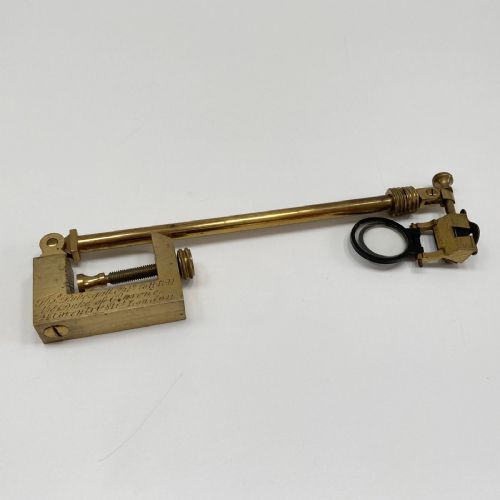
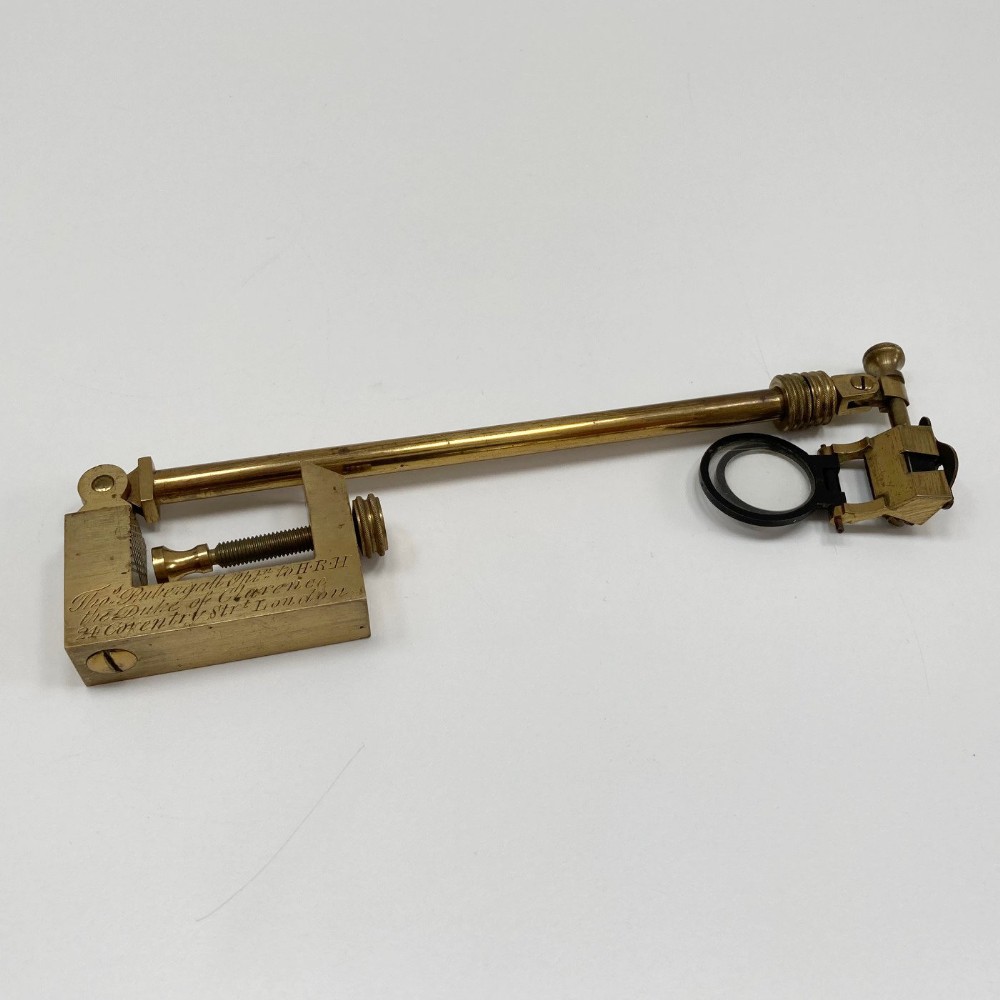
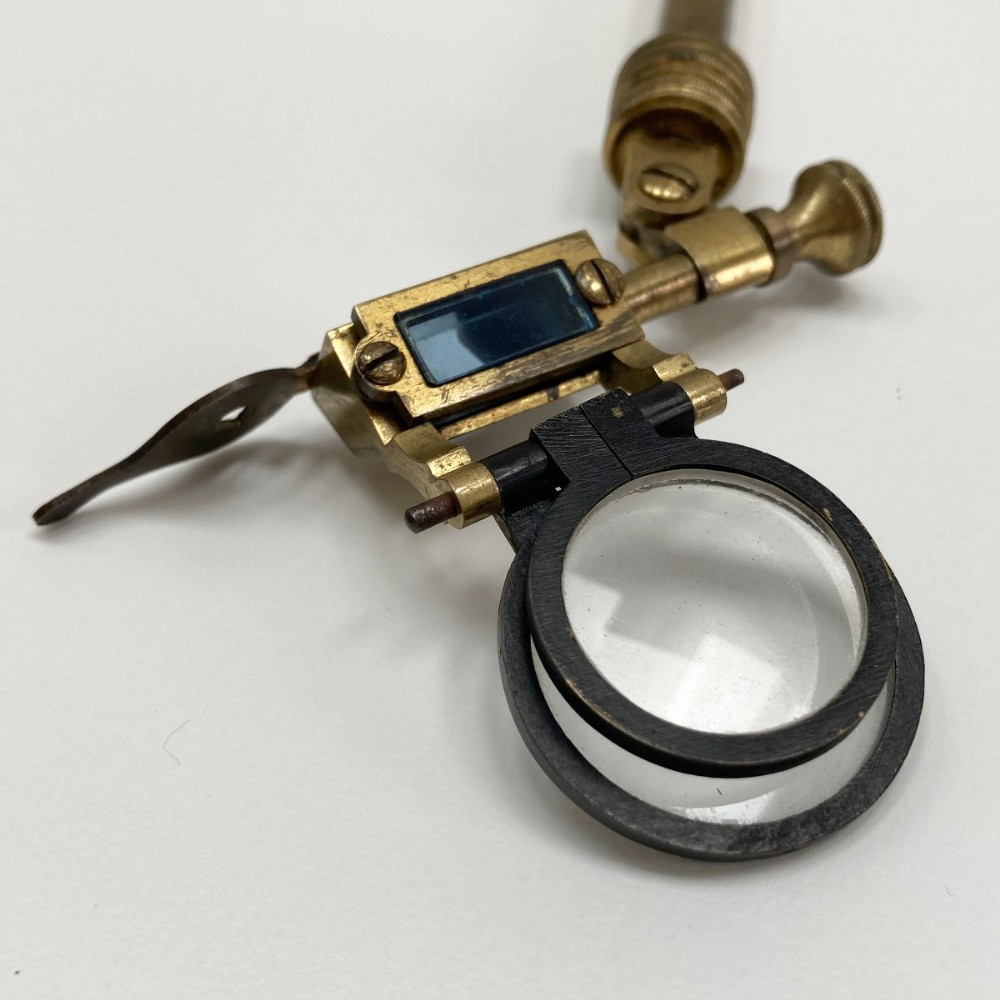
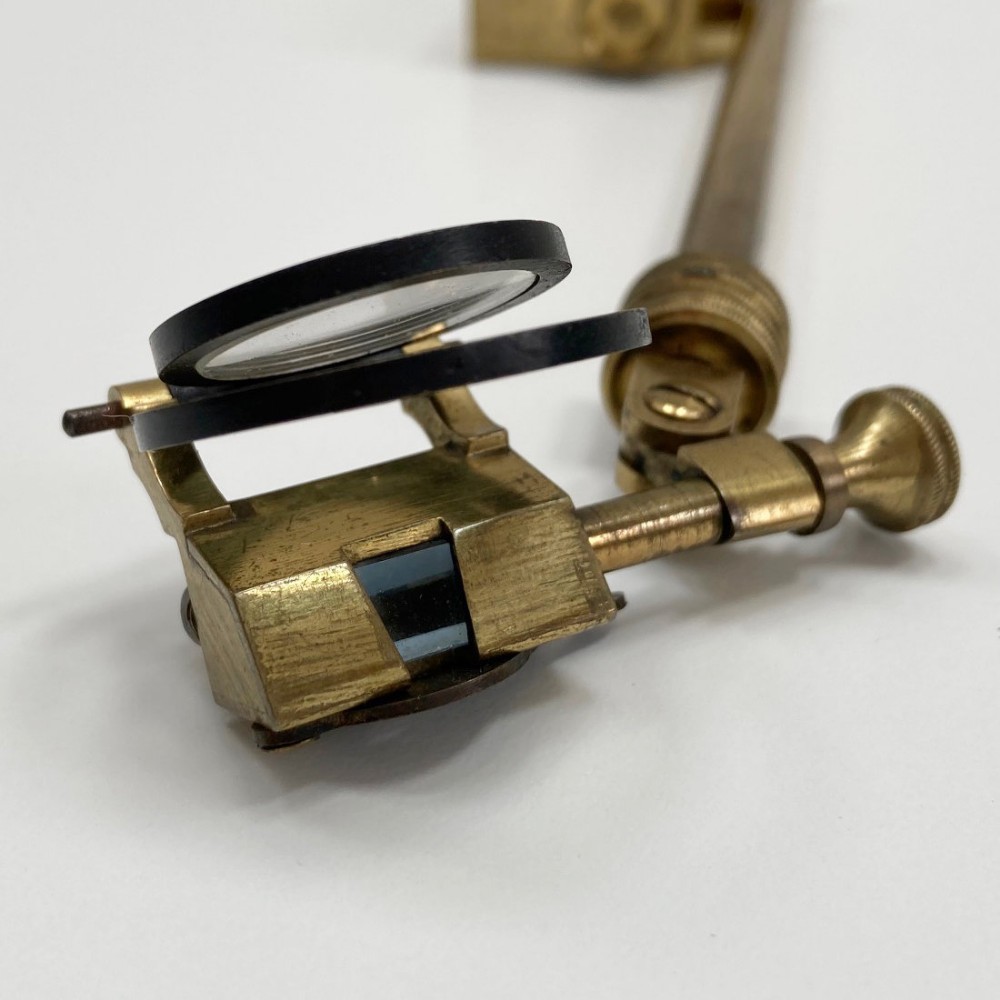
In operation, the instrument was fixed by the clamp to a surface with a sheet of plain paper below it, the effects of the lucida were produced by reflection of a distant object with the use of a four sided prism. The reflection was then viewed from above at the back edge of the prism and the image provided to the eye would then be traced on to the paper in an effective form of dual vision allowing the user to see both their hand and also the distant image in the same field.

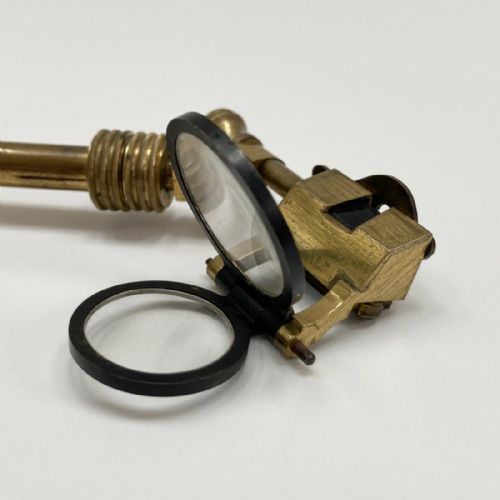
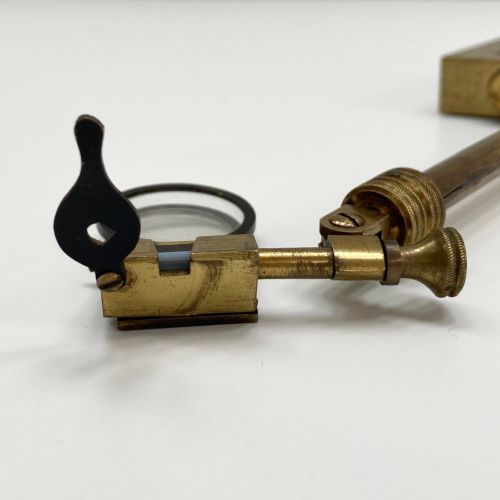
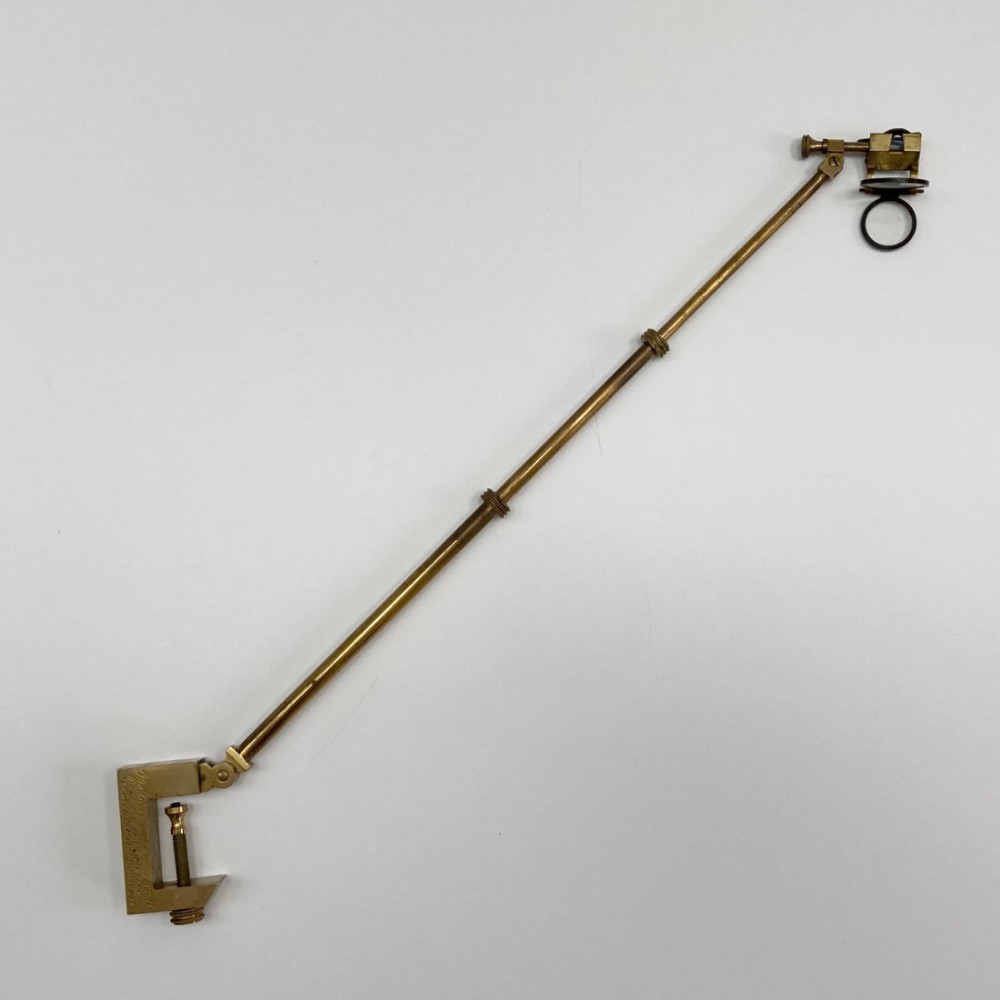
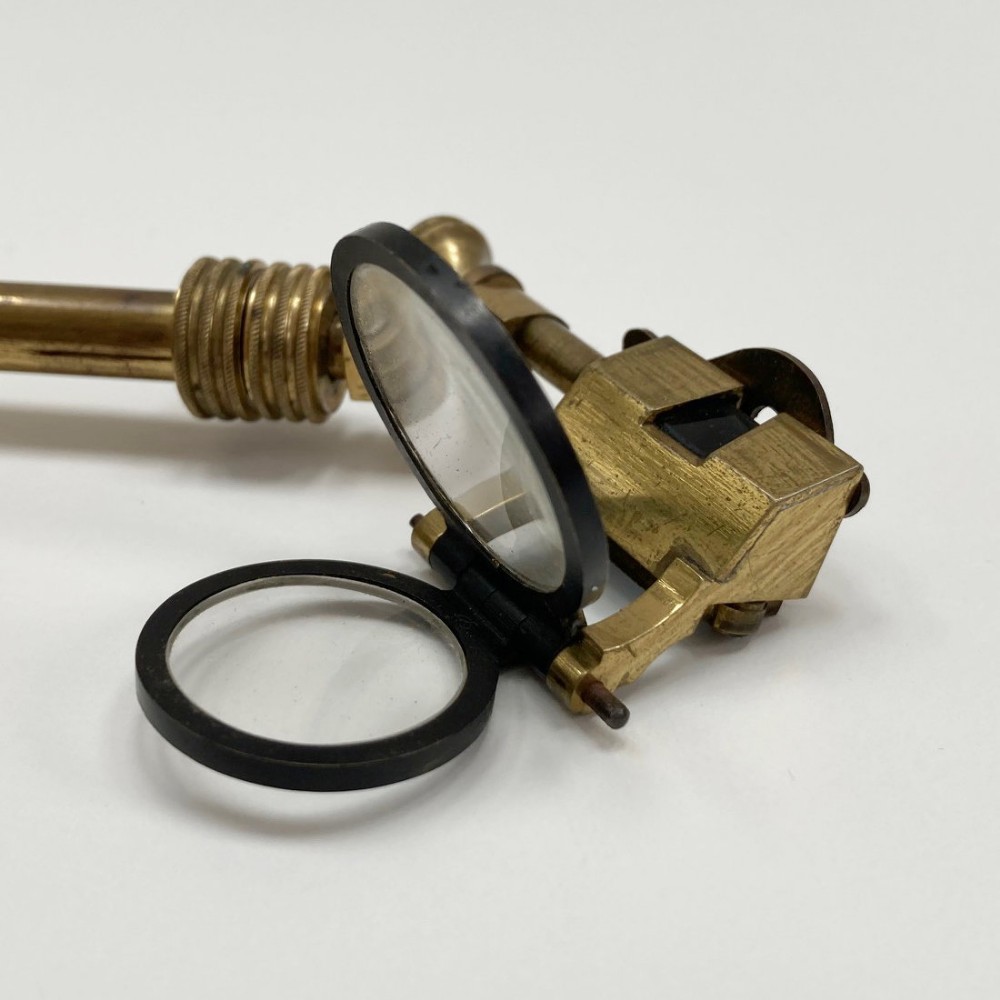
Wollaston also included both a double concave and double convex lens to his new invention to assist both short and long sighted users. The convex would rotated to a horizontal position underneath the prism whilst the concave would be elevated to stand vertically to the front as required. It also helped with the copying near and distant objects as did the telescopic arm on which the prism was attached. Adjustment of the height would increase or decrease the size of the object on the paper according to a scale that was produced on the instrument’s arm.
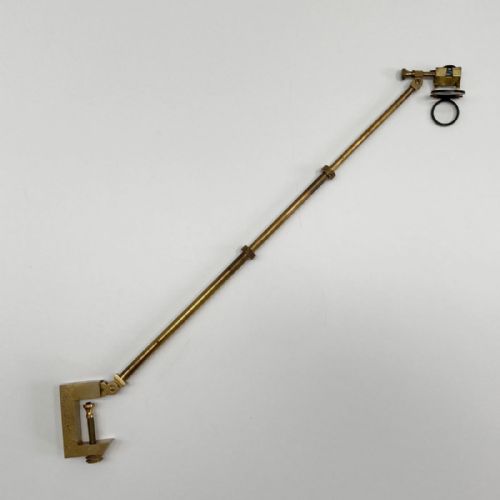
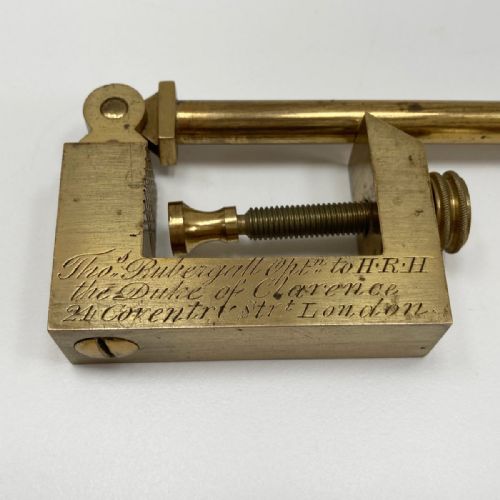
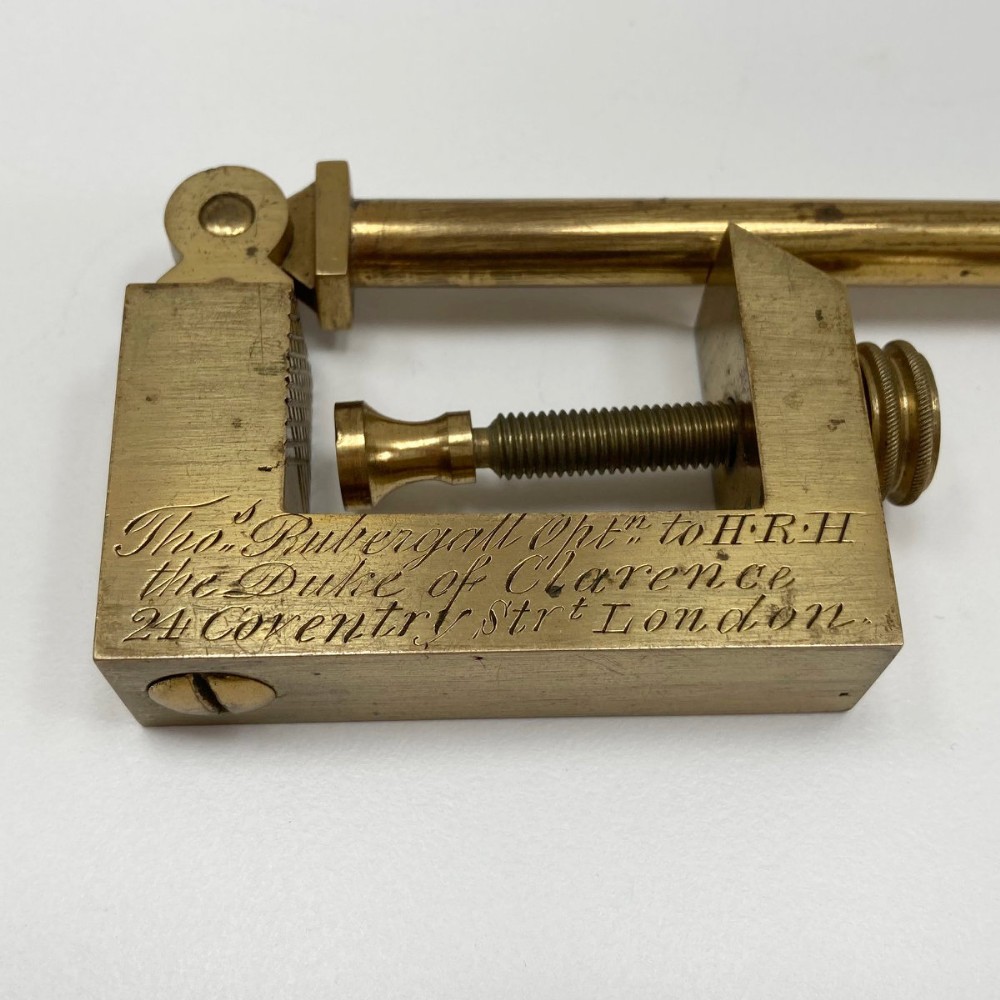
This fine and early example is equipped with all of the above associated features and aligns exactly to Wollaston’s invention down to the engraved scale on the smallest telescopic draw. As with all of Thomas Rubergall’s output the brasswork is beautifully conceived and beautifully engraved with the maker’s details. “Thomas Rubergall Optician to HRH The Duke of Clarence, 24 Coventry Street, London.”
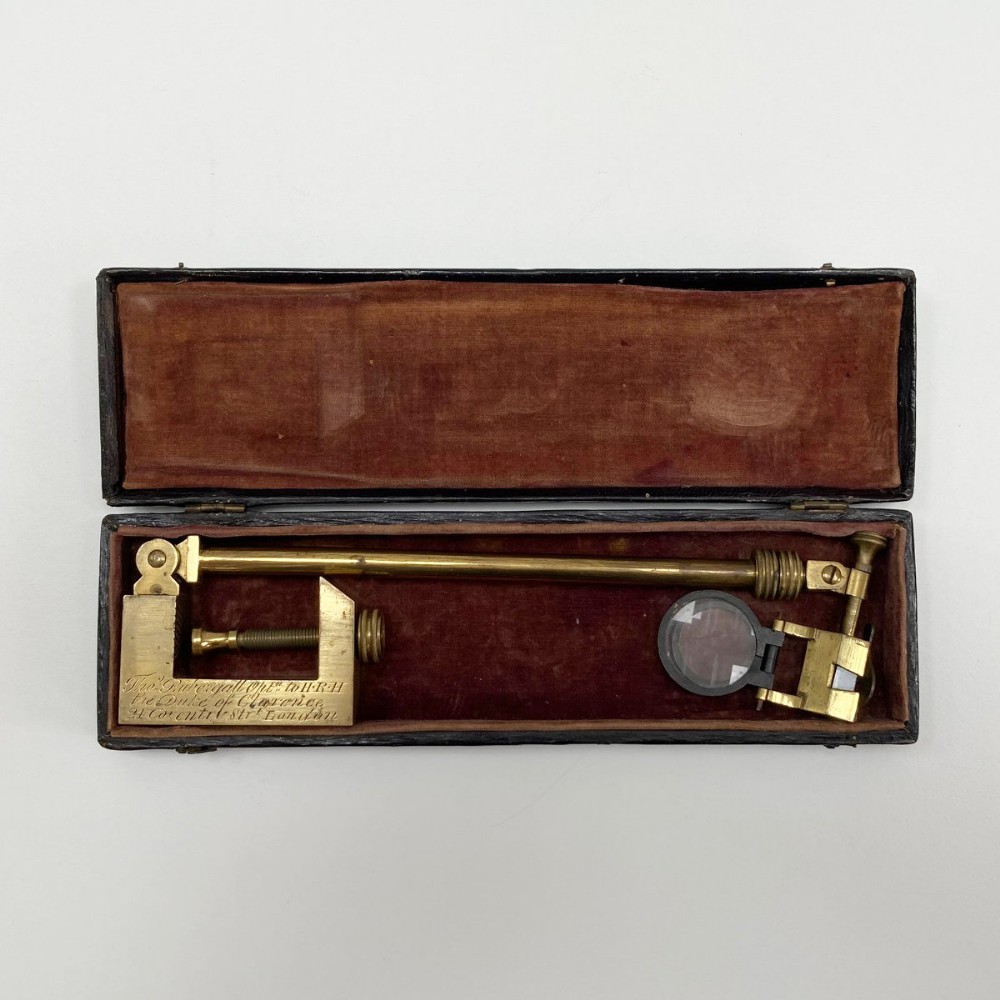
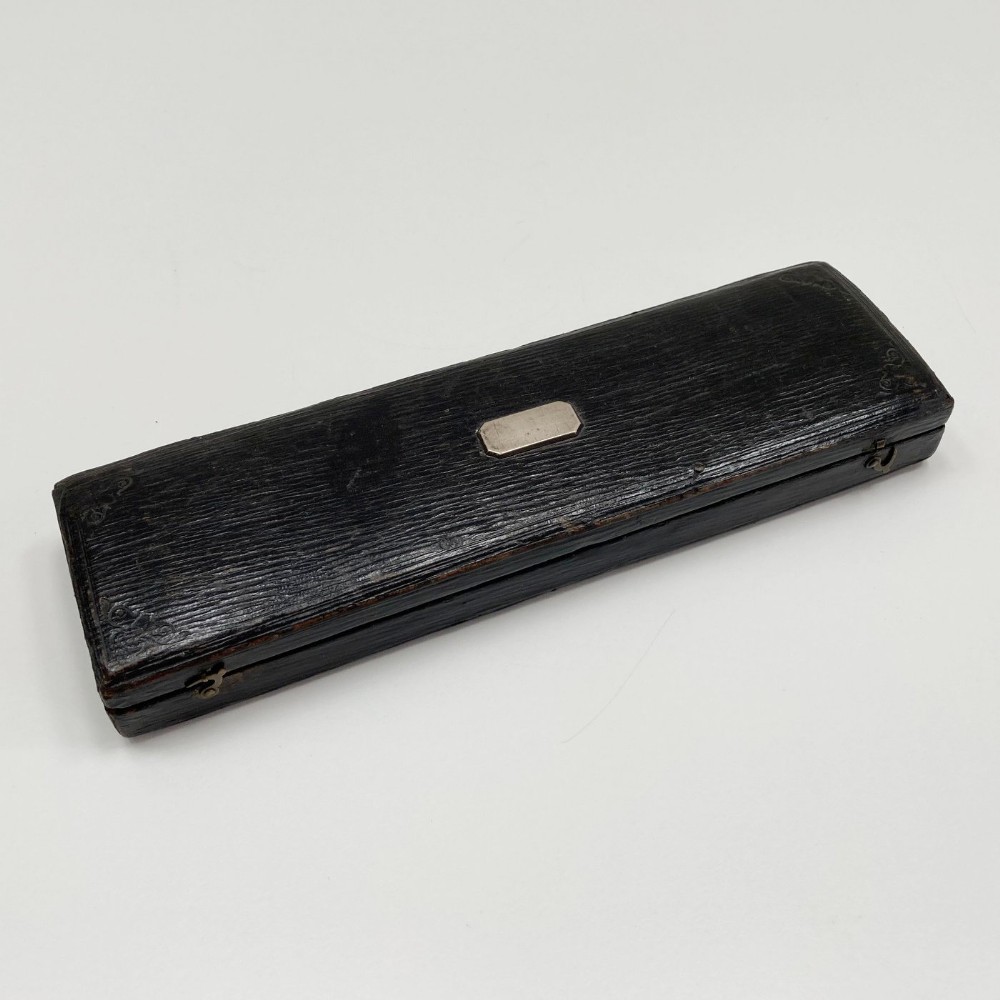
The case is equally well preserved, consisting of a hinged black leather case with silvered and vacant cartouche to the lid and hook and eye locking catches. The interior retains its original silk velvet lined padded coverings.
Thomas Rubergall was active from 1802 until 1854 in London and traded from three different addresses throughout those 52 years. Princes St, Soho from 1802 to 1805, 27 Coventry Street, London from 1805 to 1823 and then from thereafter to number 24 Coventry Street. Rubergall seems to have been from Huguenot French descent and may be related to earlier well known Chelsea market gardeners of the eighteenth century with the same name. He was renowned enough to have been appointed optician to George III and mathematical instrument maker and optician to the Duke of Clarence (later William IV) and to Queen Victoria.
The site of the Rubergall’s shop was situated between Piccadilly and Leicester Square.

A superbly executed instrument from one of the most prominent scientific instrument retailers of the first half of the nineteenth century. The dating of this instrument can be reduced to a seven year period between 1823 & 1830. The time between Rubergall’s move to 24 Coventry Street and the point at which the Duke of Clarence became King William IV. Thereafter, the engraved dedication would have become defunct.

If we assume that Wollaston’s patent extended for a fourteen year period, this example could have been produced just three short years after the expiry in 1820.

Physical Dimensions
Height
3cm (1.18")
Width
22.5cm (8.86")
Depth
7cm (2.76")
Declaration

Jason Clarke Antiques has dated this piece to the 1800s.

Reference Numbers
Sellingantiques Reference
SA829446
Description
For sale a cased Regency period Wollaston type camera lucida by Thomas Rubergall, London.

First produced by the eminent scientist William Hyde Wollaston in 1804 and patented in December 1806 (Patent No: 2993), the camera lucida was essentially a scientific solution to Wollaston’s inability to draw during a picturesque journey through The Lake District.

fig 1. Early Wollaston Type Camera Lucida by Thomas Rubergall London

In operation, the instrument was fixed by the clamp to a surface with a sheet of plain paper below it, the effects of the lucida were produced by reflection of a distant object with the use of a four sided prism. The reflection was then viewed from above at the back edge of the prism and the image provided to the eye would then be traced on to the paper in an effective form of dual vision allowing the user to see both their hand and also the distant image in the same field.

Wollaston also included both a double concave and double convex lens to his new invention to assist both short and long sighted users.
Jason Clarke Antiques

The convex would rotated to a horizontal position underneath the prism whilst the concave would be elevated to stand vertically to the front as required. It also helped with the copying near and distant objects as did the telescopic arm on which the prism was attached. Adjustment of the height would increase or decrease the size of the object on the paper according to a scale that was produced on the instrument’s arm.

fig 2. Early Wollaston Type Camera Lucida by Thomas Rubergall London

This fine and early example is equipped with all of the above associated features and aligns exactly to Wollaston’s invention down to the engraved scale on the smallest telescopic draw. As with all of Thomas Rubergall’s output the brasswork is beautifully conceived and beautifully engraved with the maker’s details. “Thomas Rubergall Optician to HRH The Duke of Clarence, 24 Coventry Street, London.”

fig 3. Early Wollaston Type Camera Lucida by Thomas Rubergall London

The case is equally well preserved, consisting of a hinged black leather case with silvered and vacant cartouche to the lid and hook and eye locking catches. The interior retains its original silk velvet lined padded coverings.

fig 4. Early Wollaston Type Camera Lucida by Thomas Rubergall London

Thomas Rubergall was active from 1802 until 1854 in London and traded from three different addresses throughout those 52 years. Princes St, Soho from 1802 to 1805, 27 Coventry Street, London from 1805 to 1823 and then from thereafter to number 24 Coventry Street. Rubergall seems to have been from Huguenot French descent and may be related to earlier well known Chelsea market gardeners of the eighteenth century with the same name. He was renowned enough to have been appointed optician to George III and mathematical instrument maker and optician to the Duke of Clarence (later William IV) and to Queen Victoria.

fig 5. Early Wollaston Type Camera Lucida by Thomas Rubergall London

The site of the Rubergall’s shop was situated between Piccadilly and Leicester Square.

A superbly executed instrument from one of the most prominent scientific instrument retailers of the first half of the nineteenth century. The dating of this instrument can be reduced to a seven year period between 1823 & 1830. The time between Rubergall’s move to 24 Coventry Street and the point at which the Duke of Clarence became King William IV. Thereafter, the engraved dedication would have become defunct.

If we assume that Wollaston’s patent extended for a fourteen year period, this example could have been produced just three short years after the expiry in 1820.

Height
3cm (1.18")
Width
22.5cm (8.86")
Depth
7cm (2.76")
Date of Manufacture

Jason Clarke Antiques has dated this piece to the 1800s.

Reference Numbers
Sellingantiques Ref
SA829446
Jason Clarke Antiques
Sellingantiques verified Since Jul 2015
Dealer Profile

You can view the stock and full dealer information on the Jason Clarke Antiques Profile Page
PDF SHARE
SAVE
Early Wollaston Type Camera Lucida by Thomas Rubergall London
1 / 9
Archive I Early Wollaston Type Camera Lucida by Thomas Rubergall London
Early Wollaston Type Camera Lucida by Thomas Rubergall London
Archive II Early Wollaston Type Camera Lucida by Thomas Rubergall London View II
Archive III Early Wollaston Type Camera Lucida by Thomas Rubergall London View III
Archive IV Early Wollaston Type Camera Lucida by Thomas Rubergall London View IV
Archive V Early Wollaston Type Camera Lucida by Thomas Rubergall London View V
Archive VI Early Wollaston Type Camera Lucida by Thomas Rubergall London View VI
Archive VII Early Wollaston Type Camera Lucida by Thomas Rubergall London View VII
Archive VIII Early Wollaston Type Camera Lucida by Thomas Rubergall London View VIII
Archive IX Early Wollaston Type Camera Lucida by Thomas Rubergall London View IX
Enlarged Archival View
Telephone 07815 046645
Location
Newbury
Berkshire
United Kingdom
Verified Since Jul 2015
Items For Sale 80
Items Sold 607
Jason Clarke Antiques
Verified Since Jul 2015
View Dealer Info
Location: Newbury, Berkshire, United Kingdom
Verified
Jul 2015
For Sale
80
Sold
607
Early Wollaston Type Camera Lucida by Thomas Rubergall London
Ref: SA829446
Early Wollaston Type Camera Lucida by Thomas Rubergall London
Detail View 1
Detail View 2
Detail View 3
Detail View 4
Detail View 5
Detail View 6
Detail View 7
Detail View 8
Archival Detail
Every single antique dealer on our platform is individually approved by our internal team. We verify their professional trade history, ethical standards, and photographic quality to ensure a secure, high-standard buying environment. Upon joining, every dealer agrees to a strict 9-point code of conduct. While issues can occasionally arise, our dealers typically resolve them swiftly and directly with the buyer. In fact, since our founding in 2002, Sellingantiques has only had to step in to help resolve an issue on roughly five occasions—a true testament to the quality of our dealers and their dedication to your happiness.
Our dealers are highly experienced in packing and shipping fragile, high-value antiques. Because you are in direct contact with the dealer, you will be able to easily go through all available shipping and insurance options together to ensure your item arrives safely.
Antiques are the ultimate green purchase. By choosing historical pieces over newly manufactured goods, you completely eliminate the carbon footprint of modern mass production while preserving exceptional, timeless craftsmanship.
items
Add keywords to the filter
Price
£100
£250000
Era
Movements
Material
Origin
Stock Location
Freshness
Online Payments
Categories