10,703  PAGES BROWSED TODAY PAGES TODAY 51 ANTIQUES UPLOADED TODAYNEW ARRIVALS
51 ITEMS ADDED TODAY
Sort Order
Items Per Page
Browse Categories
Sort order
Items per page
ID #SA776372
SOLD
Email
Save
Eighteenth Century Cased Surveyors Level Attributed to Benjamin Martin
Jason Clarke Antiques
sold SA776372
Sorry, but this item has been sold.
Jason Clarke Antiques

Jason Clarke Antiques

Sellingantiques Verified Since Jul 2015
View Dealers Stock Page
Id #SA776372
PDF SHARE
SAVE

Eighteenth Century Cased Surveyors Level Attributed to Benjamin Martin

18th century
Description

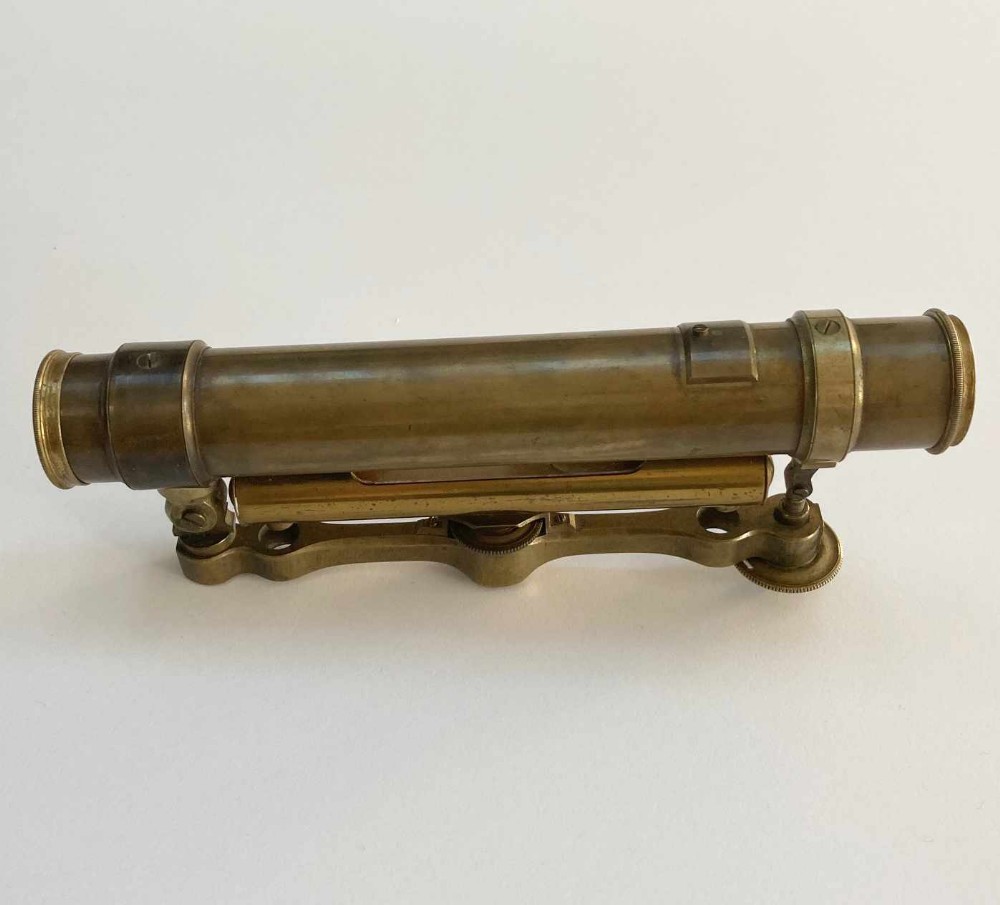
For sale, an Eighteenth Century Surveyors Level attributed to Benjamin Martin of Fleet Street, London.

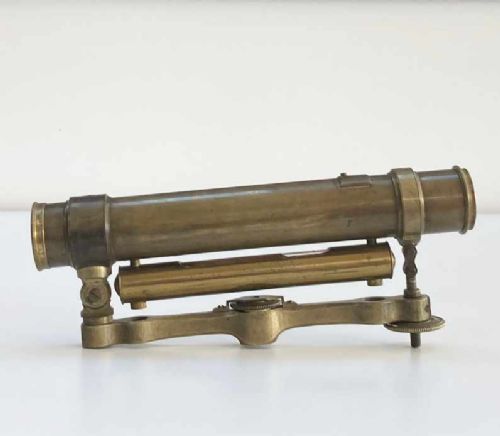
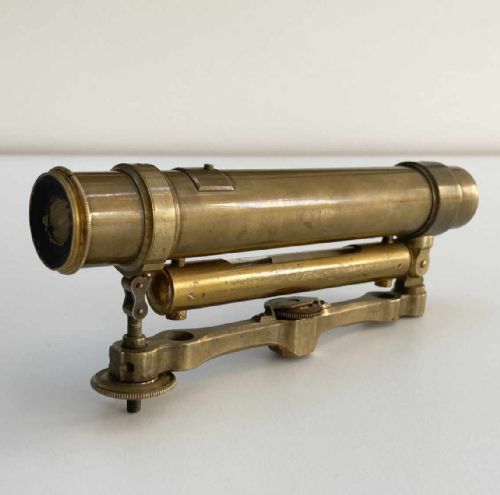
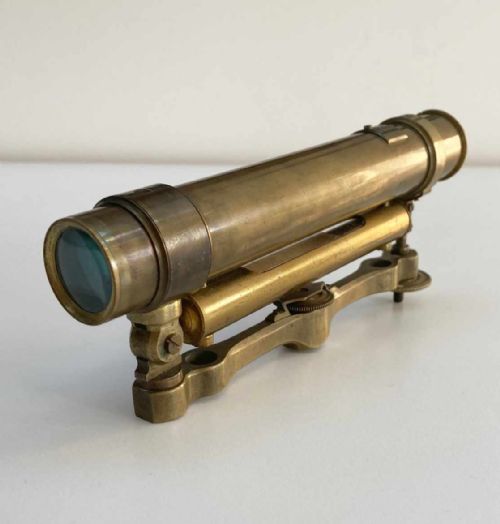
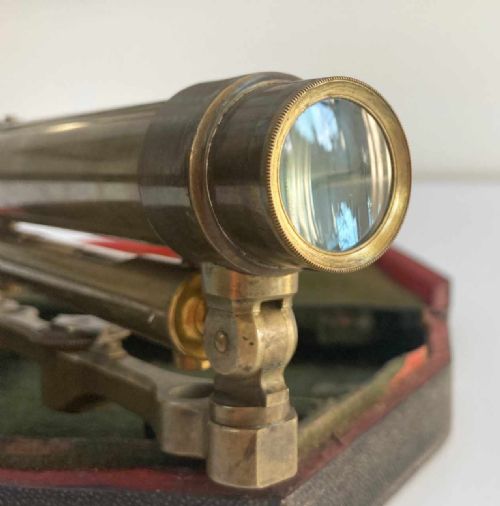
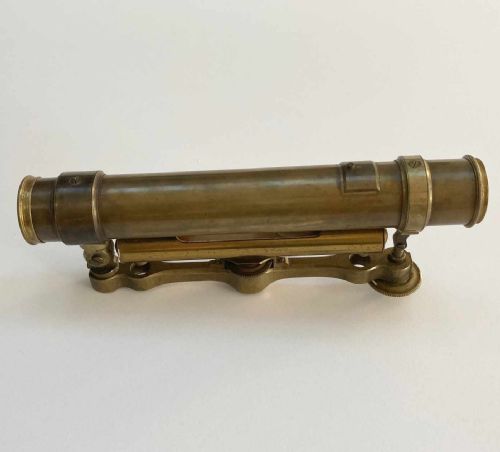
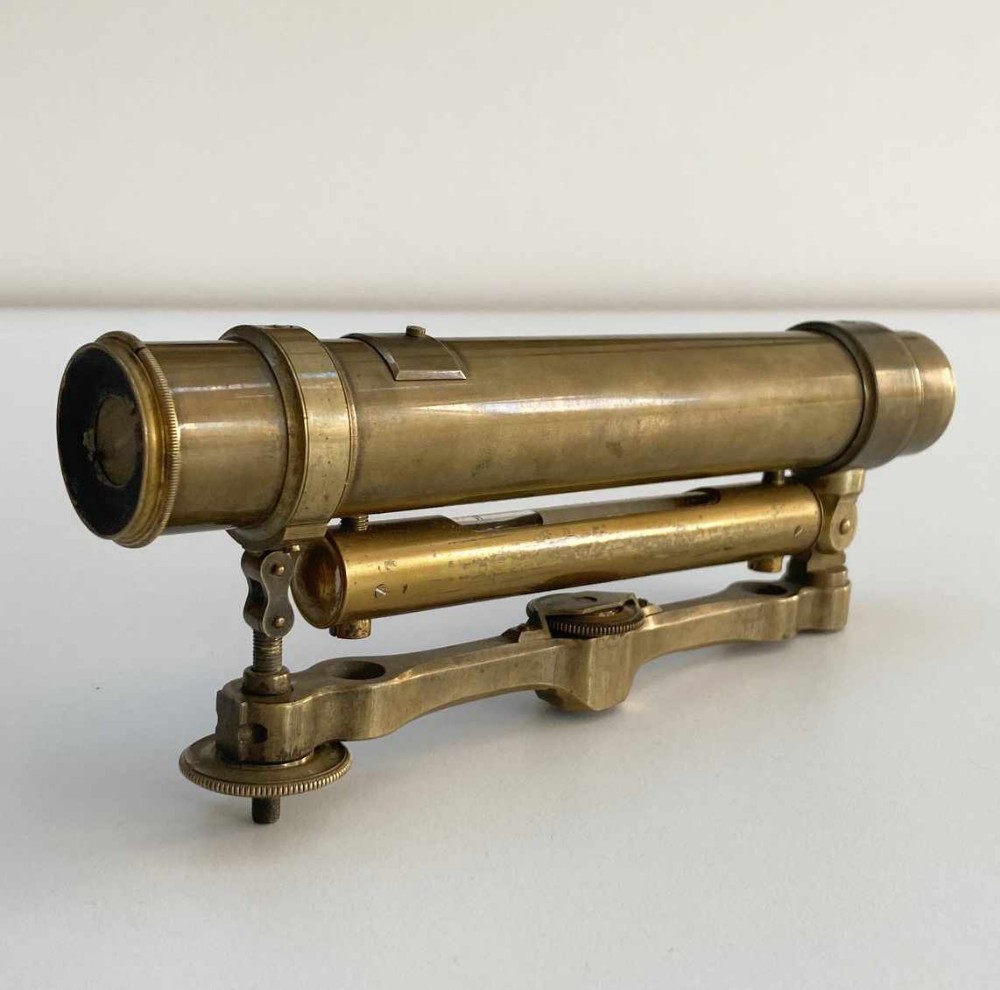
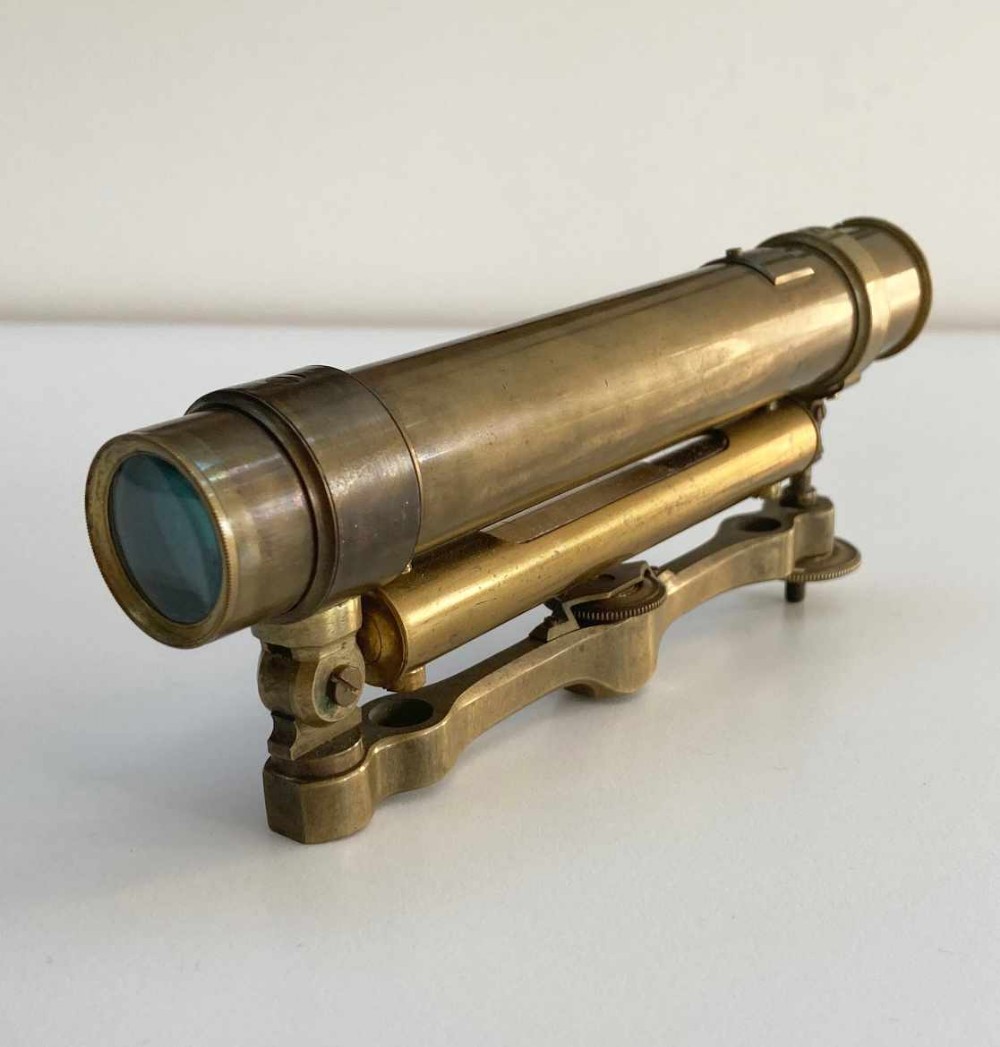
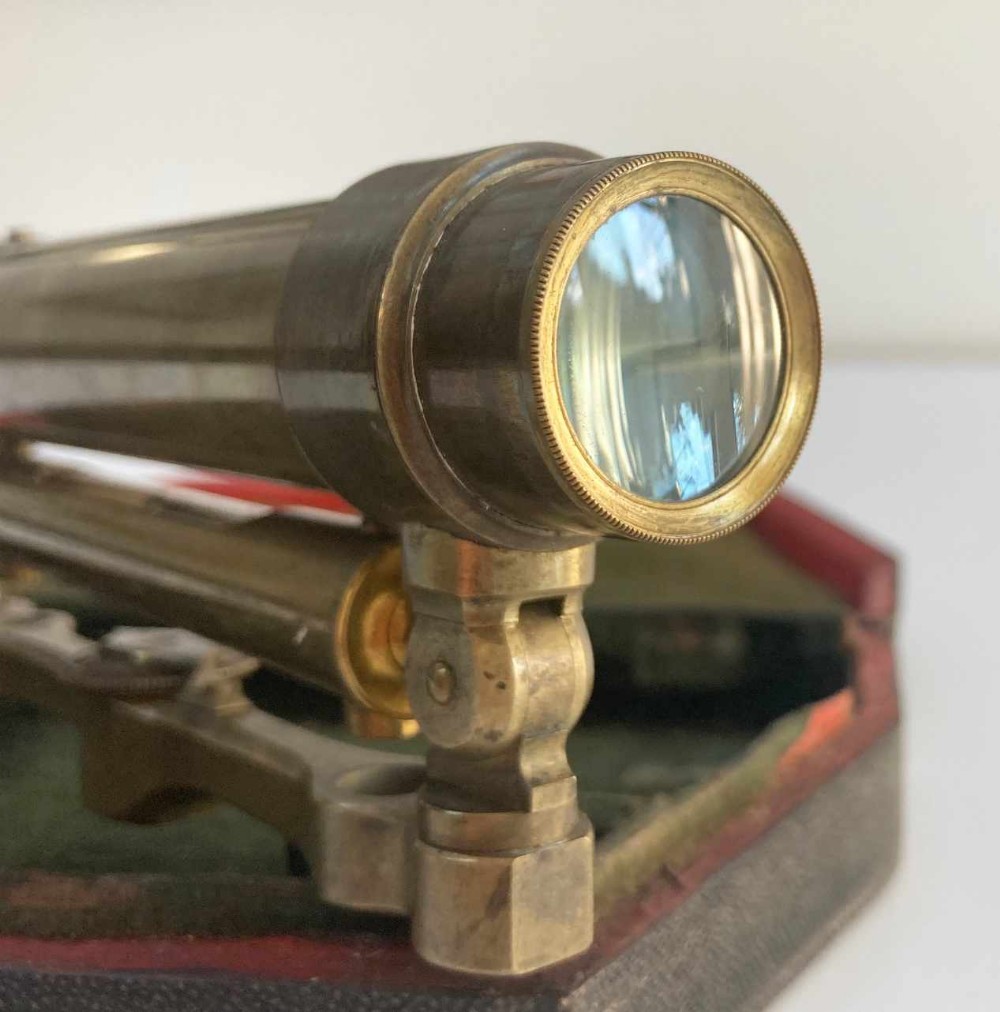
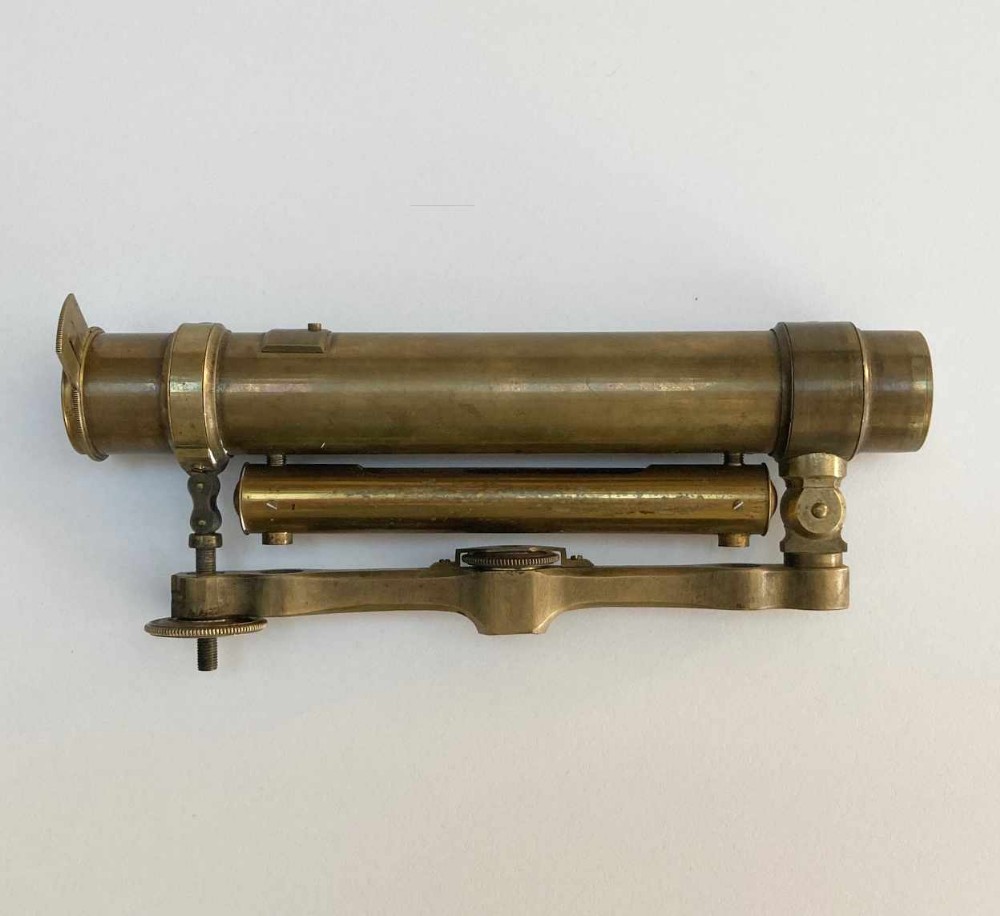
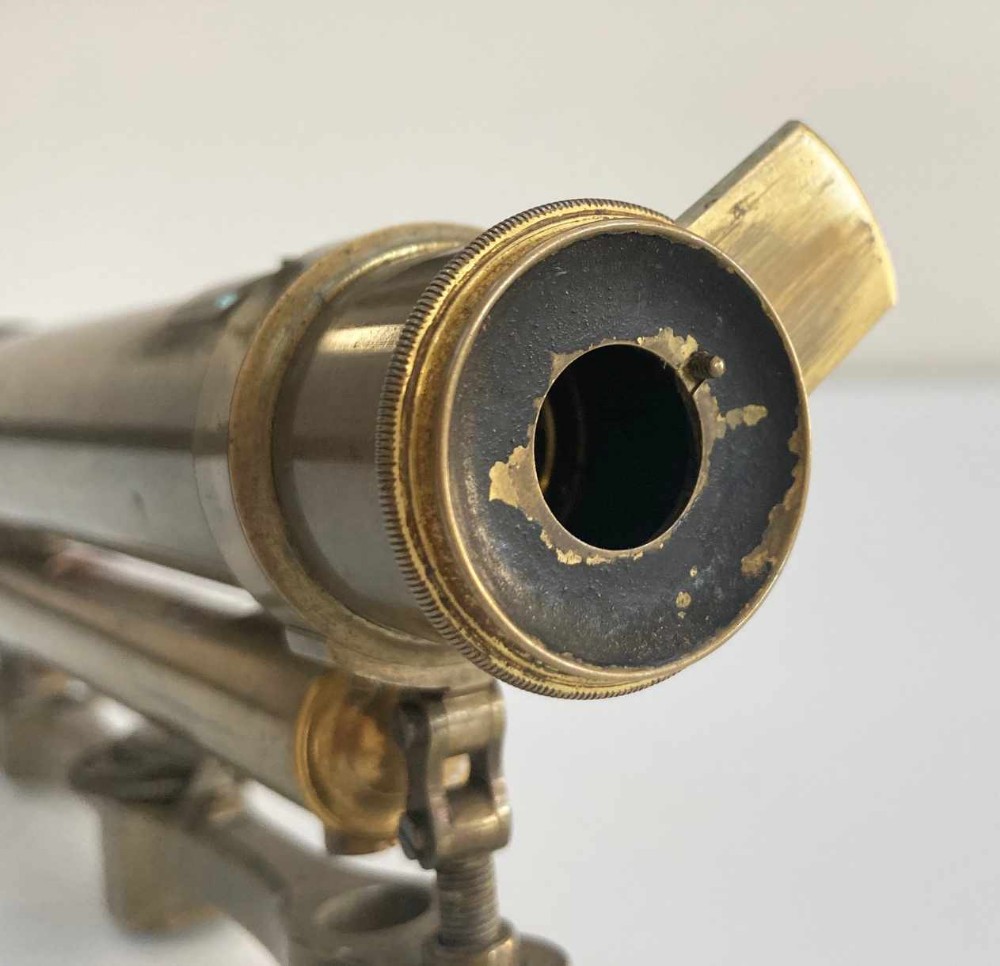
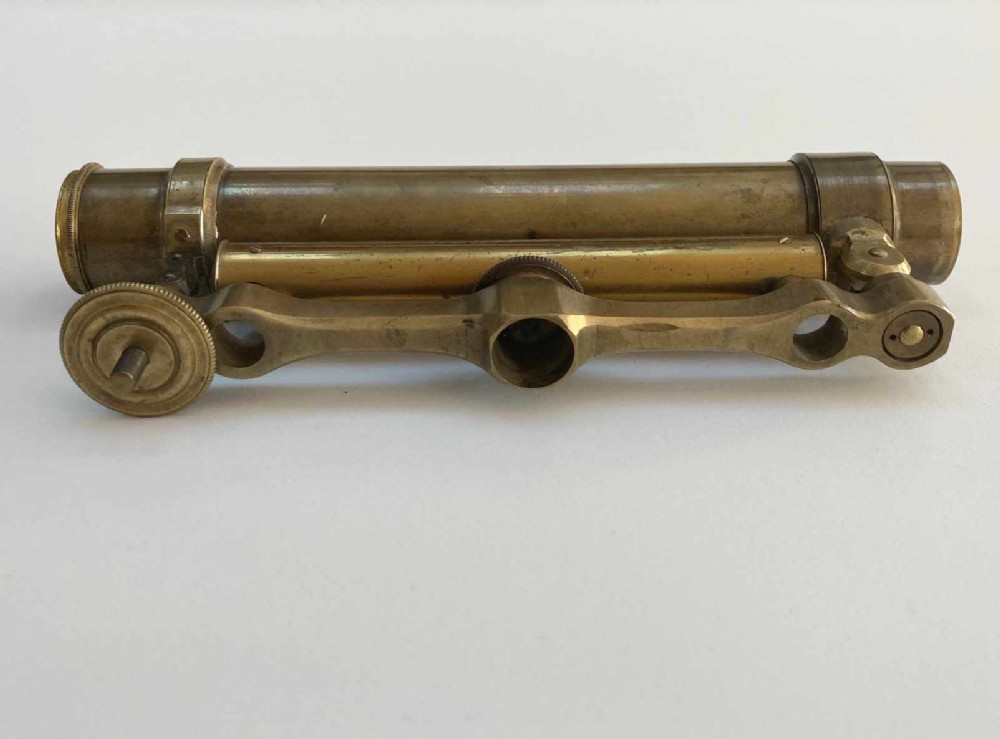
The instrument is comprised of a brass base plate with central socket and adjustment screw for mounting. A telescope with a three quarter inch objective is mounted on two upright pillars with levelling screw provided adjacent to the eyepiece and a bubble level is suspended neatly below the telescope barrel. It also retains it original objective dust cap.
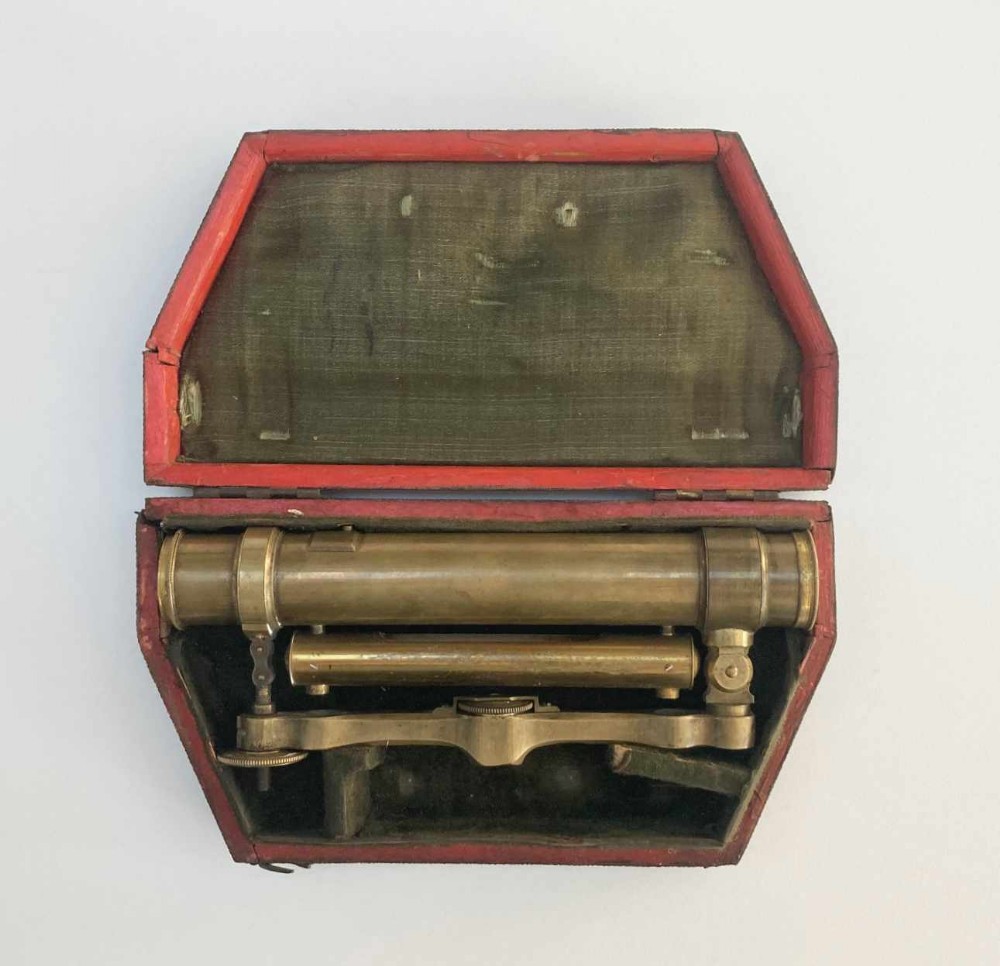
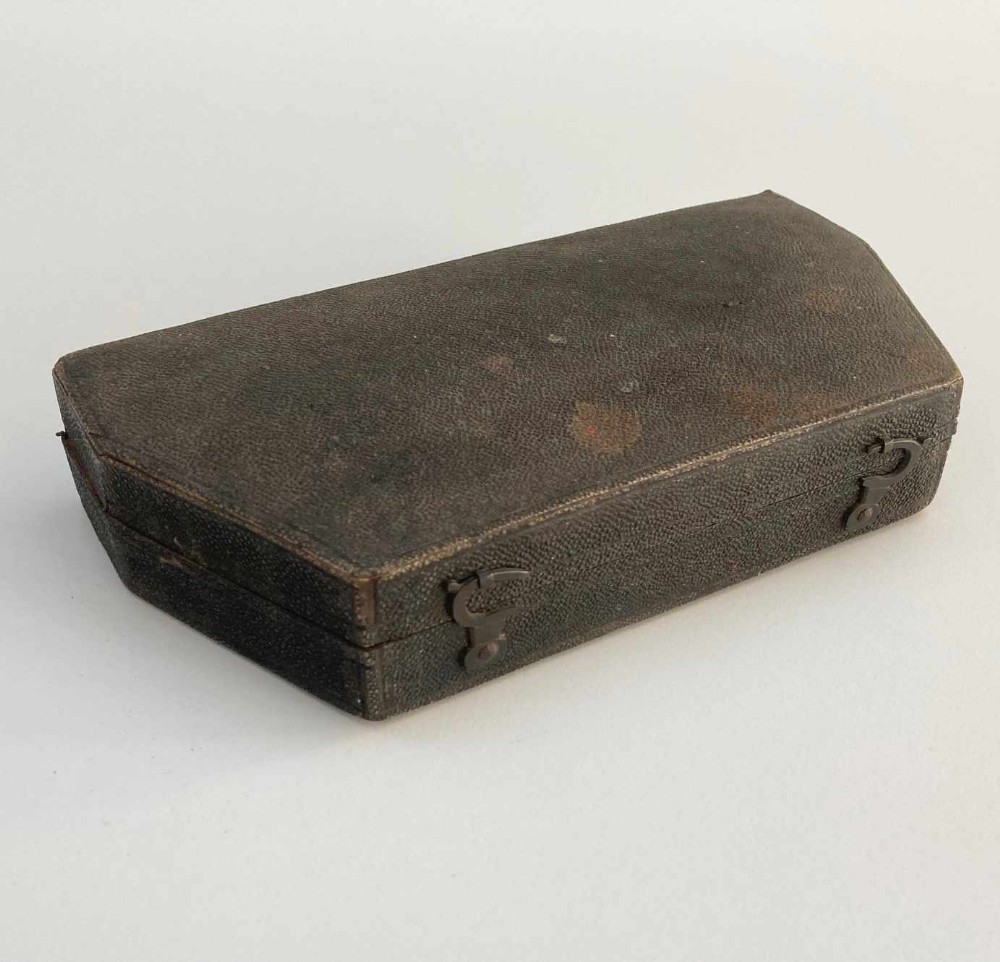
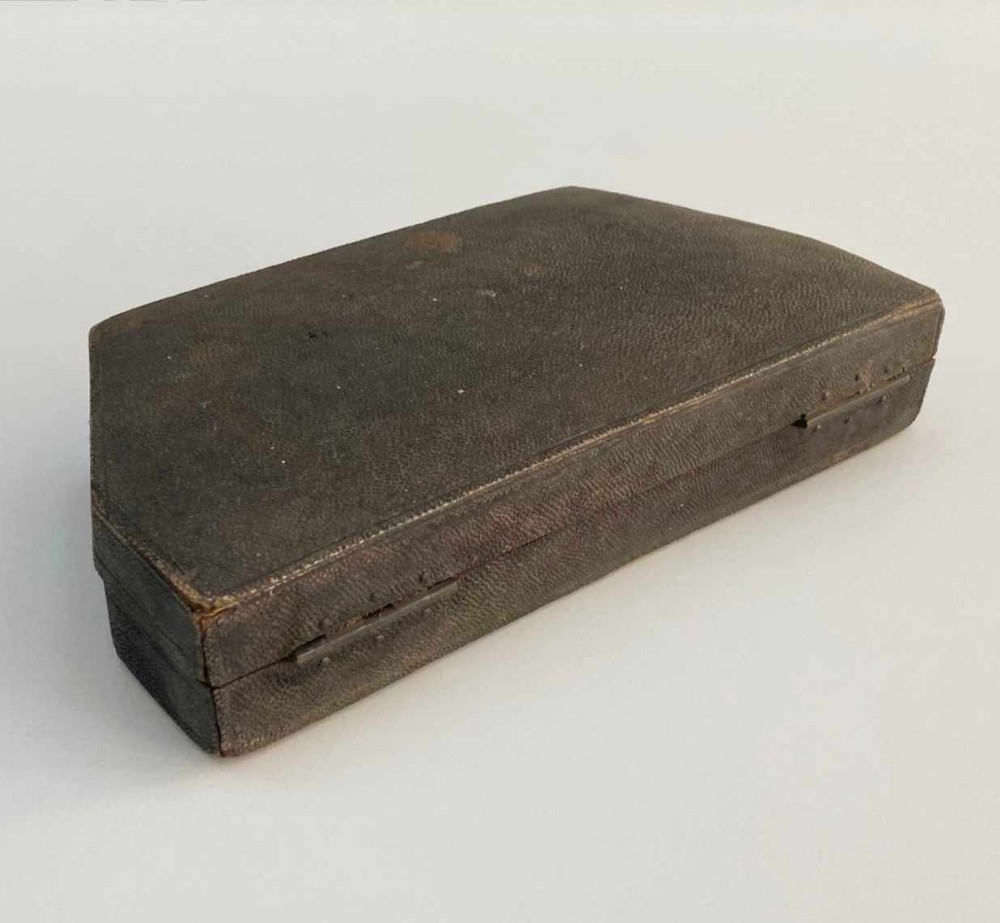
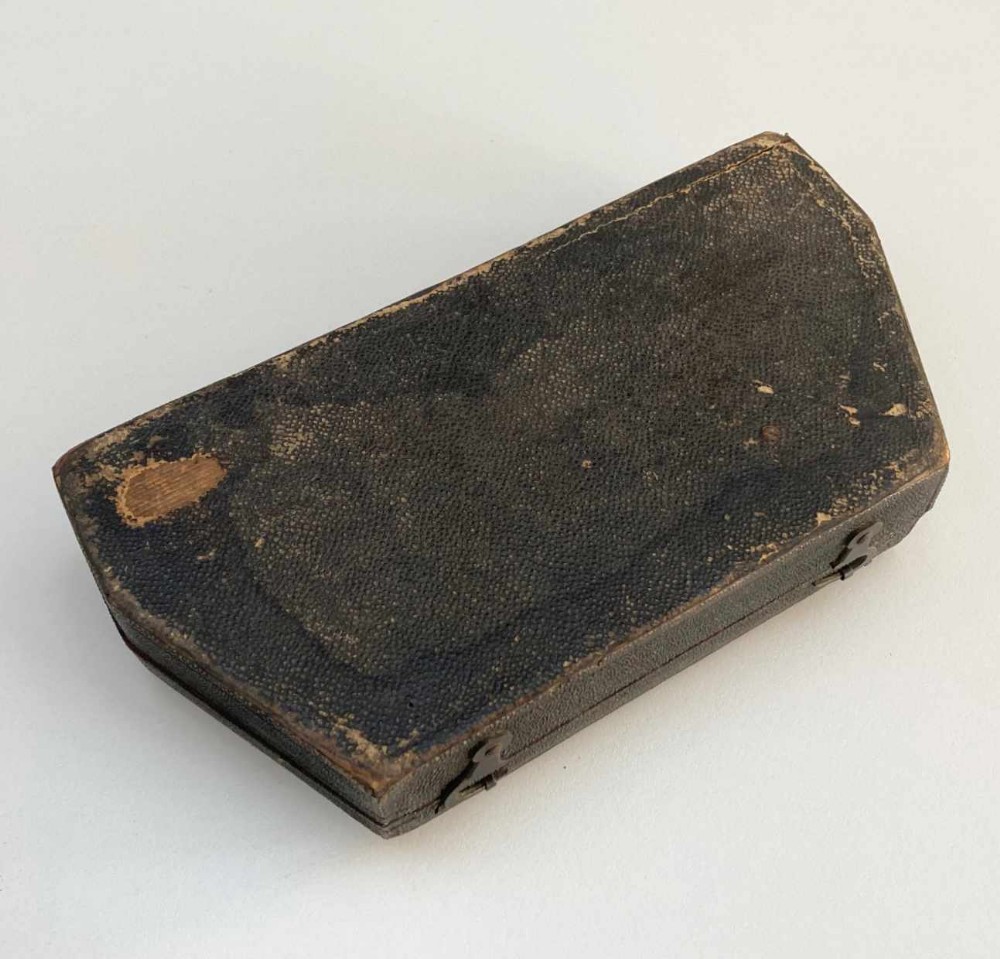
The level is contained within its original black fish skin covered deal case with green silk and velvet lined fitted interior finished with distinctive red painted edges.

The style of the case is key to the attribution of this instrument and although this unsigned piece is stated as Benjamin Martin it could well have been manufactured by John Cuff. Both instrument makers worked next door to one another on Fleet Street and Martin’s enthusiastic competition is considered to have been partly responsible for Cuff’s demise. Cuff had been trading on Fleet Street for twenty years prior to Martin’s arrival but Martin’s strength in marketing created difficulties for some of the more established makers. The publishing of catalogues with prices was a new phenomena and although Cuff was a serious maker who executed all of his own work, the competition is likely to have contributed to his financial issues. In the early 1750’s Cuff avoided the bankruptcy of his business but he lasted only until about 1760 after which time he is suspected to have undertaken piece work on behalf of other makers. Given the above, it is interesting that these close neighbours were the only ones to produce such distinctive cases. It is likely that the use of the same method of presentation was another competitive master stroke by the younger maker. The instrument is attributed to Martin because he was by far the most prolific across a range of instruments and Cuff largely specialised in microscopes. Without an engraving and other extant examples it is impossible to tell so this seems a sensible position.
Benjamin Martin was born in 1705 in a village called Worplesdon, near Guildford in Surrrey. Martin did not follow the path of apprentice like most respected instrument makers of the period, his Father’s prosperous background allowed Benjamin to become a merchant by the age of 24 but he largely worked in Chichester as a schoolmaster during the 1730’s up until his departure in 1742. To give a flavour of this enterprising man, he had by this time published eight books, invented a new form of microsope which he described in his “The Description and Use of a New Invented Pocket Reflecting Microscope” and lecturing widely on philosophy.
Martin lectured extensively across Southern England during this 1740’s and was responsible for numerous educational publications on science, mathematics and English grammar but in 1750’s, he established premises in Fleet Street, London, setting himself up as a scientific instrument maker whereafter his advertisements are recorded in London newspapers of the period.
His inventory grew throughout the 1760’s to include optics, globes, electrostatic machines and all types of philosophical instruments. His enthusiasm unbounded, he also tackled horology and planetariums in the early 1770’s while also producing his famous steelyard coin balance. Business continued to flourish until 1782 when Benjamin Martin committed suicide owing to an impending bankruptcy. There is nothing recorded to suggest that the business was in turmoil but it is likely that his old age and increasing reliance on others was largely to blame.
It is perhaps a little ironic that Martin’s demise was based upon a bankruptcy, perhaps his memories of Cuff’s experiences and his death in the 1770’s remained fresh in his mind.

An interesting, rare and early example, circa 1760

Physical Dimensions
Height
4.5cm (1.77")
Width
20cm (7.87")
Depth
10cm (3.94")
Declaration

Jason Clarke Antiques has dated this piece to the 1750s.

Reference Numbers
Sellingantiques Reference
SA776372
Description
For sale, an Eighteenth Century Surveyors Level attributed to Benjamin Martin of Fleet Street, London.
The instrument is comprised of a brass base plate with central socket and adjustment screw for mounting.
Jason Clarke Antiques

A telescope with a three quarter inch objective is mounted on two upright pillars with levelling screw provided adjacent to the eyepiece and a bubble level is suspended neatly below the telescope barrel. It also retains it original objective dust cap.

fig 1. Eighteenth Century Cased Surveyors Level Attributed to Benjamin Martin

The level is contained within its original black fish skin covered deal case with green silk and velvet lined fitted interior finished with distinctive red painted edges.

The style of the case is key to the attribution of this instrument and although this unsigned piece is stated as Benjamin Martin it could well have been manufactured by John Cuff. Both instrument makers worked next door to one another on Fleet Street and Martin’s enthusiastic competition is considered to have been partly responsible for Cuff’s demise. Cuff had been trading on Fleet Street for twenty years prior to Martin’s arrival but Martin’s strength in marketing created difficulties for some of the more established makers. The publishing of catalogues with prices was a new phenomena and although Cuff was a serious maker who executed all of his own work, the competition is likely to have contributed to his financial issues. In the early 1750’s Cuff avoided the bankruptcy of his business but he lasted only until about 1760 after which time he is suspected to have undertaken piece work on behalf of other makers. Given the above, it is interesting that these close neighbours were the only ones to produce such distinctive cases. It is likely that the use of the same method of presentation was another competitive master stroke by the younger maker. The instrument is attributed to Martin because he was by far the most prolific across a range of instruments and Cuff largely specialised in microscopes. Without an engraving and other extant examples it is impossible to tell so this seems a sensible position.

fig 2. Eighteenth Century Cased Surveyors Level Attributed to Benjamin Martin

Benjamin Martin was born in 1705 in a village called Worplesdon, near Guildford in Surrrey. Martin did not follow the path of apprentice like most respected instrument makers of the period, his Father’s prosperous background allowed Benjamin to become a merchant by the age of 24 but he largely worked in Chichester as a schoolmaster during the 1730’s up until his departure in 1742. To give a flavour of this enterprising man, he had by this time published eight books, invented a new form of microsope which he described in his “The Description and Use of a New Invented Pocket Reflecting Microscope” and lecturing widely on philosophy.

fig 3. Eighteenth Century Cased Surveyors Level Attributed to Benjamin Martin

Martin lectured extensively across Southern England during this 1740’s and was responsible for numerous educational publications on science, mathematics and English grammar but in 1750’s, he established premises in Fleet Street, London, setting himself up as a scientific instrument maker whereafter his advertisements are recorded in London newspapers of the period.

fig 4. Eighteenth Century Cased Surveyors Level Attributed to Benjamin Martin

His inventory grew throughout the 1760’s to include optics, globes, electrostatic machines and all types of philosophical instruments. His enthusiasm unbounded, he also tackled horology and planetariums in the early 1770’s while also producing his famous steelyard coin balance. Business continued to flourish until 1782 when Benjamin Martin committed suicide owing to an impending bankruptcy. There is nothing recorded to suggest that the business was in turmoil but it is likely that his old age and increasing reliance on others was largely to blame.

fig 5. Eighteenth Century Cased Surveyors Level Attributed to Benjamin Martin

It is perhaps a little ironic that Martin’s demise was based upon a bankruptcy, perhaps his memories of Cuff’s experiences and his death in the 1770’s remained fresh in his mind.

An interesting, rare and early example, circa 1760

Height
4.5cm (1.77")
Width
20cm (7.87")
Depth
10cm (3.94")
Date of Manufacture

Jason Clarke Antiques has dated this piece to the 1750s.

Reference Numbers
Sellingantiques Ref
SA776372
Jason Clarke Antiques
Sellingantiques verified Since Jul 2015
Dealer Profile

You can view the stock and full dealer information on the Jason Clarke Antiques Profile Page
PDF SHARE
SAVE
Eighteenth Century Cased Surveyors Level Attributed to Benjamin Martin
1 / 12
Archive I Eighteenth Century Cased Surveyors Level Attributed to Benjamin Martin
Eighteenth Century Cased Surveyors Level Attributed to Benjamin Martin
Archive II Eighteenth Century Cased Surveyors Level Attributed to Benjamin Martin View II
Archive III Eighteenth Century Cased Surveyors Level Attributed to Benjamin Martin View III
Archive IV Eighteenth Century Cased Surveyors Level Attributed to Benjamin Martin View IV
Archive V Eighteenth Century Cased Surveyors Level Attributed to Benjamin Martin View V
Archive VI Eighteenth Century Cased Surveyors Level Attributed to Benjamin Martin View VI
Archive VII Eighteenth Century Cased Surveyors Level Attributed to Benjamin Martin View VII
Archive VIII Eighteenth Century Cased Surveyors Level Attributed to Benjamin Martin View VIII
Archive IX Eighteenth Century Cased Surveyors Level Attributed to Benjamin Martin View IX
Archive X Eighteenth Century Cased Surveyors Level Attributed to Benjamin Martin View X
Archive XI Eighteenth Century Cased Surveyors Level Attributed to Benjamin Martin View XI
Archive XII Eighteenth Century Cased Surveyors Level Attributed to Benjamin Martin View XII
Enlarged Archival View
Telephone 07815 046645
Location
Newbury
Berkshire
United Kingdom
Verified Since Jul 2015
Items For Sale 80
Items Sold 607
Jason Clarke Antiques
Verified Since Jul 2015
View Dealer Info
Location: Newbury, Berkshire, United Kingdom
Verified
Jul 2015
For Sale
80
Sold
607
Eighteenth Century Cased Surveyors Level Attributed to Benjamin Martin
Ref: SA776372
Eighteenth Century Cased Surveyors Level Attributed to Benjamin Martin
Detail View 1
Detail View 2
Detail View 3
Detail View 4
Detail View 5
Detail View 6
Detail View 7
Detail View 8
Detail View 9
Detail View 10
Detail View 11
Archival Detail
Every single antique dealer on our platform is individually approved by our internal team. We verify their professional trade history, ethical standards, and photographic quality to ensure a secure, high-standard buying environment. Upon joining, every dealer agrees to a strict 9-point code of conduct. While issues can occasionally arise, our dealers typically resolve them swiftly and directly with the buyer. In fact, since our founding in 2002, Sellingantiques has only had to step in to help resolve an issue on roughly five occasions—a true testament to the quality of our dealers and their dedication to your happiness.
Our dealers are highly experienced in packing and shipping fragile, high-value antiques. Because you are in direct contact with the dealer, you will be able to easily go through all available shipping and insurance options together to ensure your item arrives safely.
Antiques are the ultimate green purchase. By choosing historical pieces over newly manufactured goods, you completely eliminate the carbon footprint of modern mass production while preserving exceptional, timeless craftsmanship.
items
Add keywords to the filter
Price
£100
£250000
Era
Movements
Material
Origin
Stock Location
Freshness
Online Payments
Categories