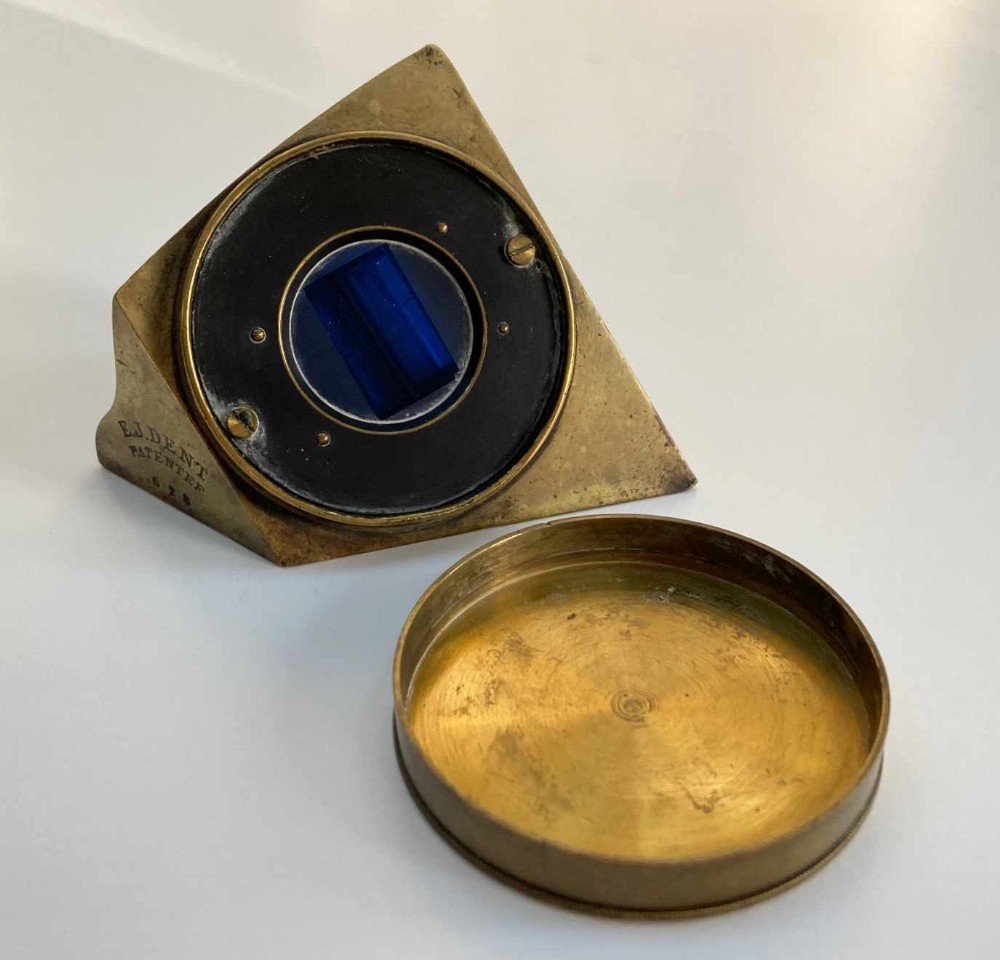
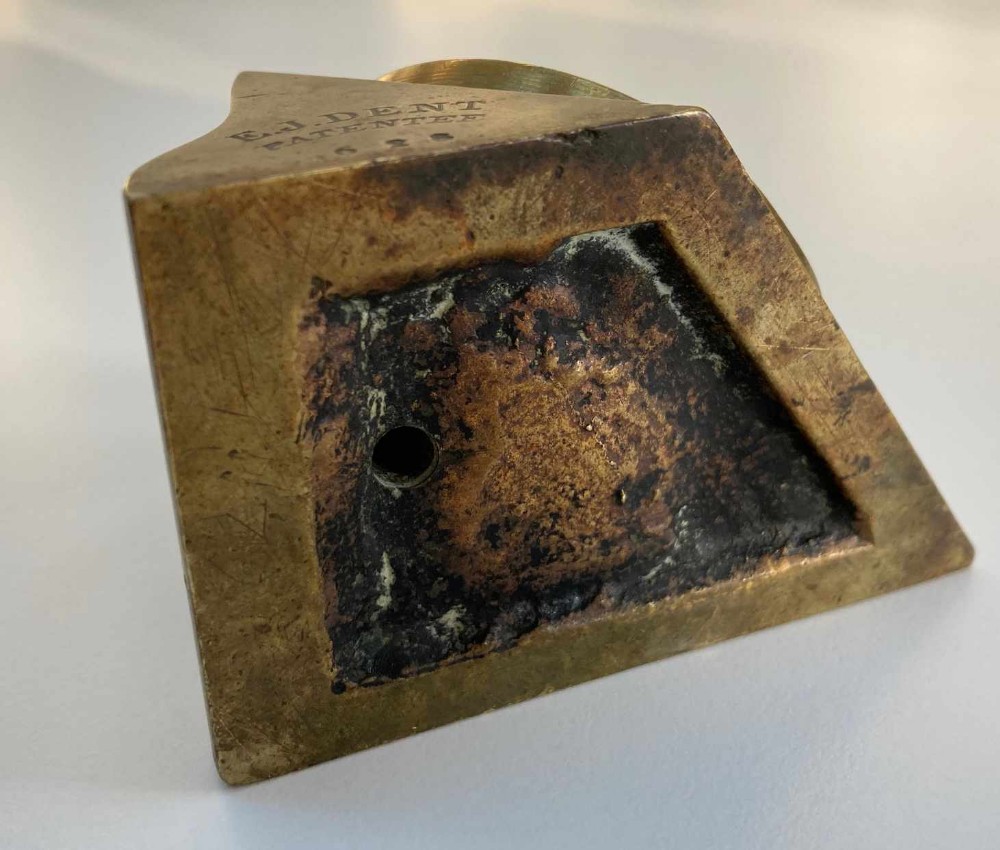
It was listed by Jason Clarke Antiques. Sold pieces stay on Sellingantiques as a record of what has passed through, and the next one is rarely far away.
Jason Clarke Antiques has dated this piece to the 1850s.
As noon is reached, the shadows of the sun close upon one another and three measurements are recorded. The first observation is the initial contact of the the two sun reflections in the dipeidoscope, the second when they exactly coincide and then the final observation is taken when the edges of the two images part from one another. The mean average of all of these events should allow the user to correct their timepieces to true noon.
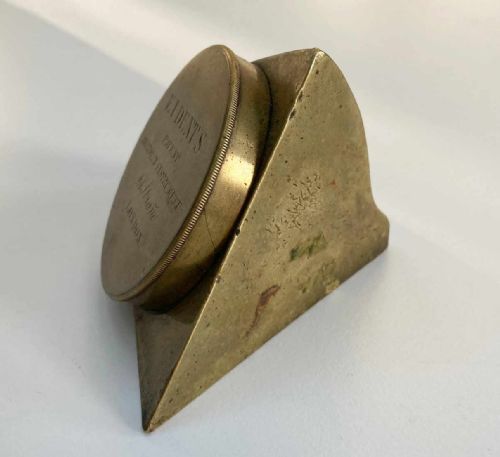
The concen with accurate timekeeping had been a headache for generations before this device gained any promincence and to a celebrated chronometer maker of Dent’s pedigree it would surely have been an issue worth solving. A simple means to gaining precision time keeping using a domestic instrument would have been highly valuable. Dent confidently suggests that, “it is not saying too much to affirm, that a dipleidoscope should be placed in all country Parsonages as well as in Railway Stations, and Government Establishments, both at home and abroad.” Given the scarcity of these instruments, it seems unlikely to have taken off given the complexity of its set up but nevertheless it certainly gained a good level of popularity.
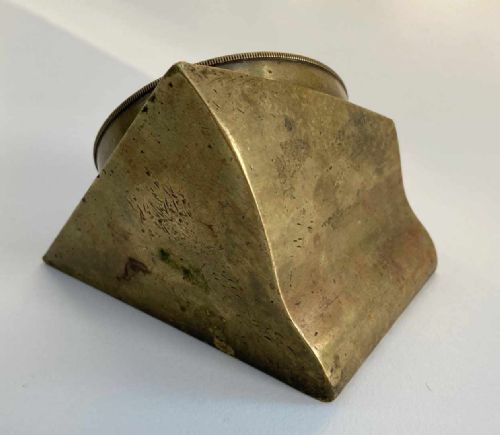
The principles of this curious looking instrument can be read in full by searching for the lightly titled, “The Dipleidoscope or Double Reflecting Meridian and Altitude Instrument; with plain instruction for the method of using it in the correction of timekeepers” by Edward J Dent, and it is interesting to note Dent’s reflections on the invention as besides his inate skills, his early success was certainly assisted by an acumen for recognising and exploiting other peoples’ inventions:
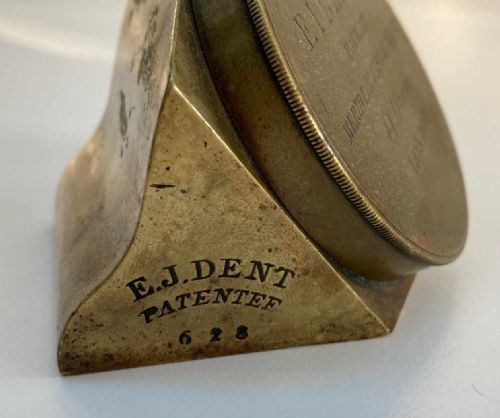
“The origin of the dipleidoscope resulted from the following circumstances. The writer had long felt persuaded that the interests of horology would be promoted if the public were more generally possessed of a cheap, simple and correct transit instrument, requiring little or no scientific knowledge for its right use, and not readily susceptible of injury or derangement. To this end he had devoted much time and thought; and in 1840, he considered that he had succeeded in inventing an apparatus which, by means of shadows, would produce the desired result. This idea he communicated to JM Bloxham Esq, who thereupon informed him that his own attention had been for some years devoted to the same object, and that he had contrived an optical arrangement, which, by the agency of a single and double reflection, determined the sun’s passageover the meridian with great exactness. When the optical instrument, although complicate in its then form, was shown to the writer, he was immediately struck with the superiority of the contrivance over that which had suggested itself too him: his own method afforded three observations, but it was attended with the defects and inconvenience which result from the uncertainty of shadows.
Convinced that the reflecting planes would effectually accomplish the desired end, he entered into an arrangement with Mr Bloxham to undertake their manufacture; and, after nearly two years’ attention on the part of that gentleman, and at great labour and expense on the part of the proposer, they are now respectfully presented to the public in the present simple, but most accurate form. The writer, to secure his property in the instrument, as well as to insure its future perfect manufacture, solicited the favour of Mr Bloxam to take out a patent in his own name, at the expense of the manufacturer, and, for a certain consideration, to transfer all interest in the invention to him. This request was kindly acceded to, and accordingly the Di
Jason Clarke Antiques has dated this piece to the 1850s.
You can view the stock and full dealer information on the Jason Clarke Antiques Profile Page
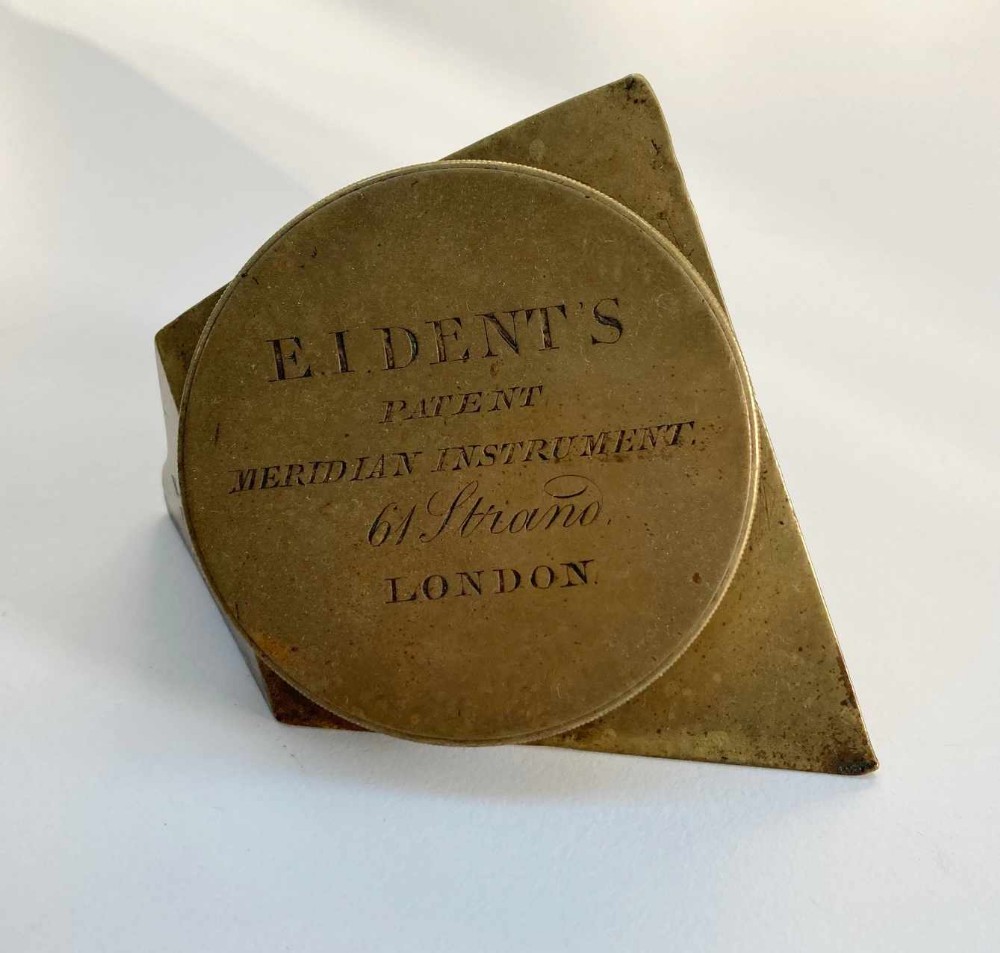
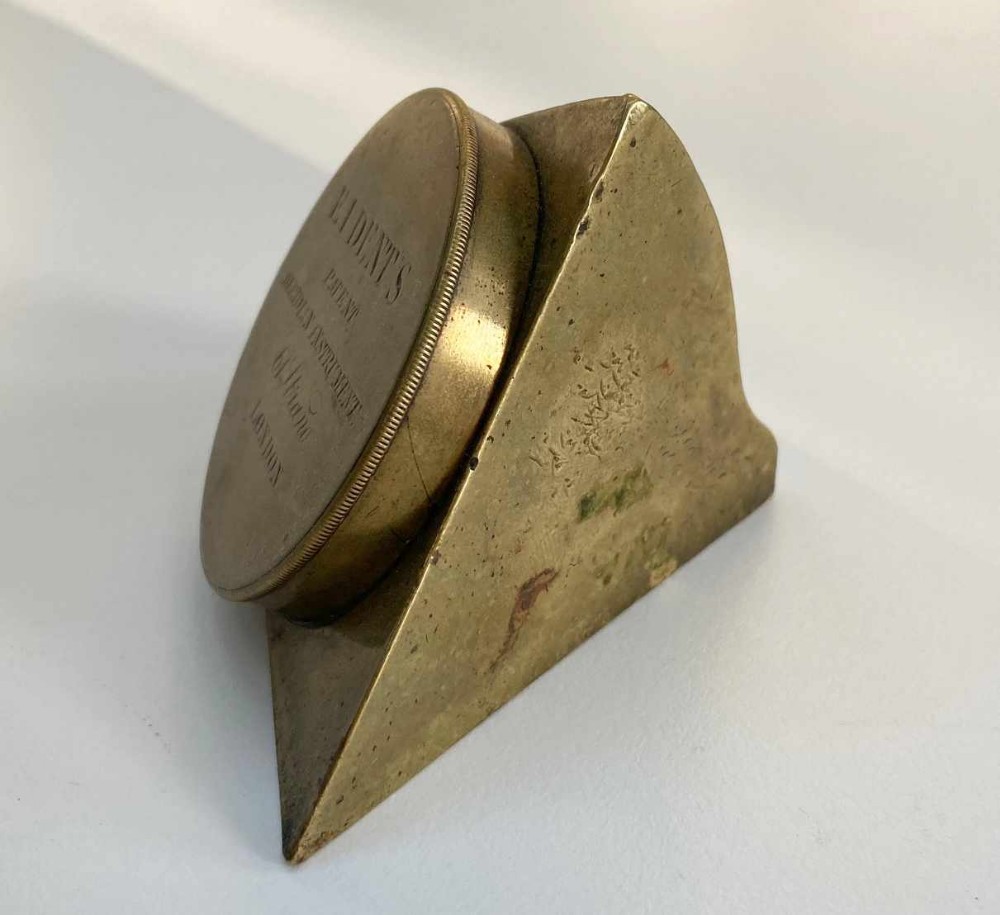
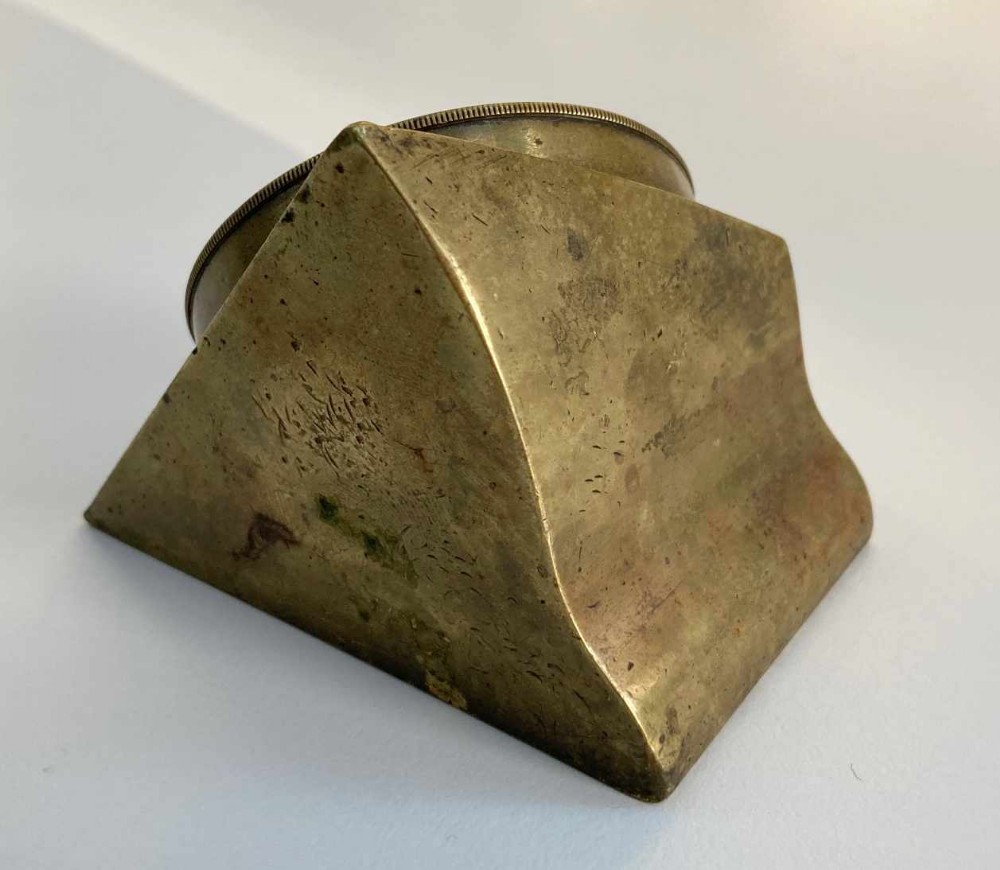
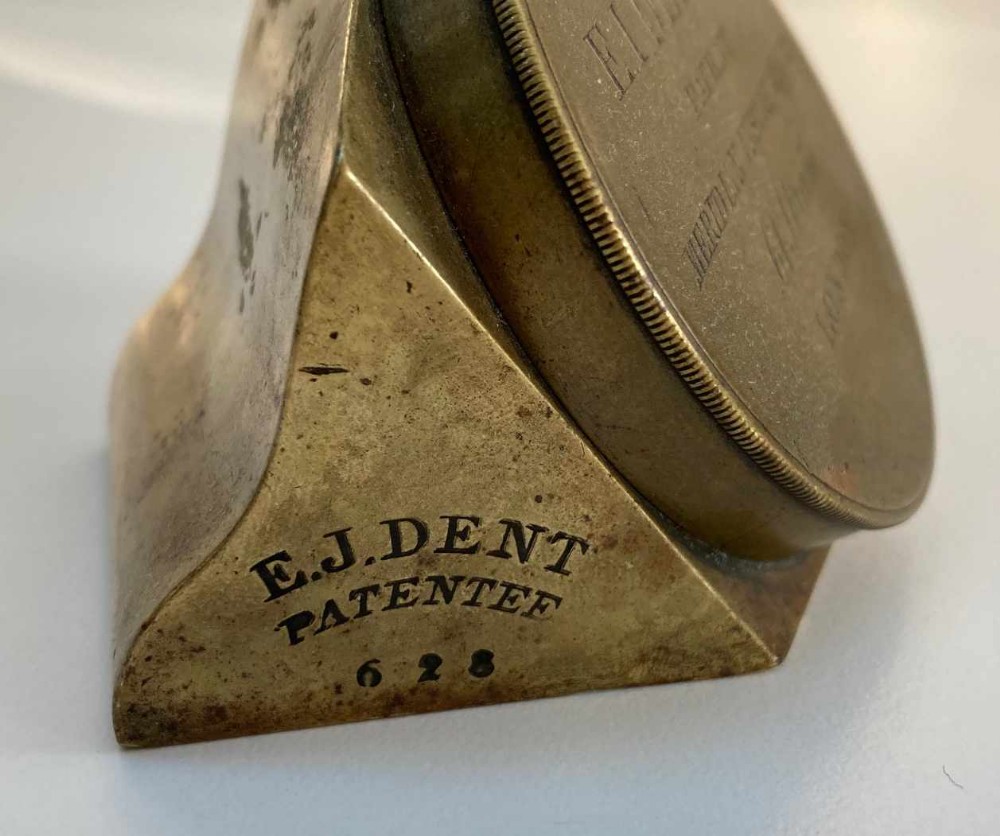
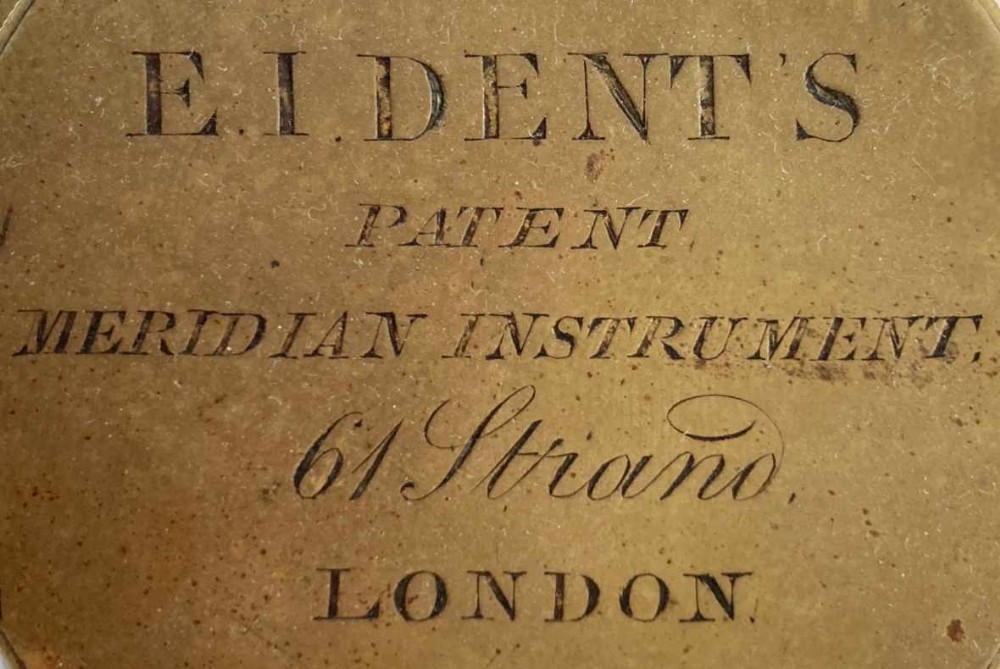
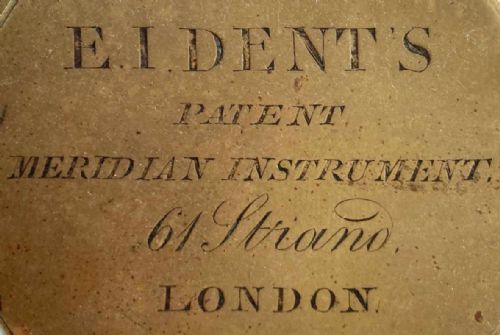
Early Victorian Dipleidoscope by Ej Dent of 61 the Strand London