30,824  PAGES BROWSED TODAY PAGES TODAY • 145 ANTIQUES UPLOADED TODAYNEW ARRIVALS
GIFTS
145 ITEMS ADDED TODAY
Sort Order
Items Per Page
Antiques dealer?
Join as a Seller
Browse Categories
Sort order
Items per page
sold SA767548
Sorry, but this item has been sold.
Regent Antiques

Regent Antiques

Sellingantiques Verified Since Sep 2016
Browse dealers 639 items
  • About Us
    We specialise in english and continental furniture, silver, porcelain and decorative items.
  • Trade Associations
    Regent Antiques is a registered member of LAPADA  CINOA
Id #SA767548
SHARE
SAVE

Antique French Ormolu & Mirrored Surtout De Table Plateau Circa 1870

19th century
Sold 5 May 2021 · Regent Antiques
This “Antique French Ormolu & Mirrored Surtout De Table Plateau Circa 1870 ” found a buyer.

It was listed by Regent Antiques. Sold pieces stay on Sellingantiques as a record of what has passed through, and the next one is rarely far away.

Description

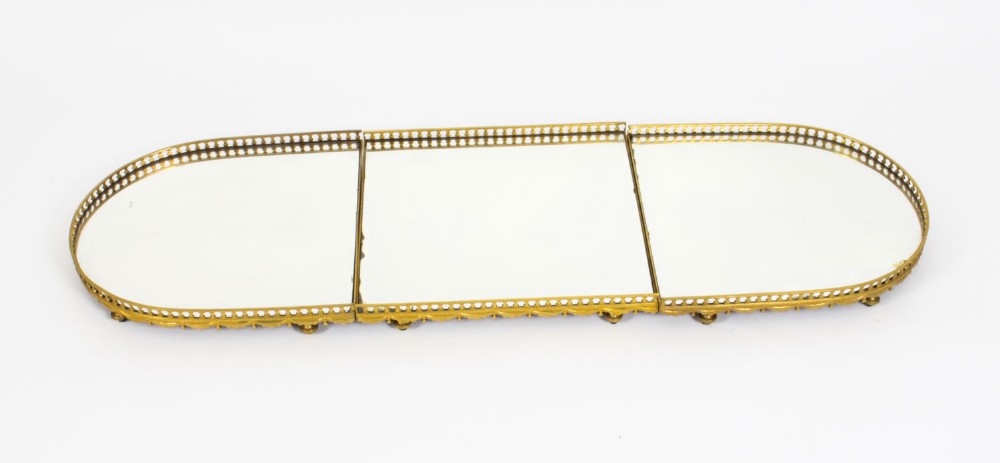
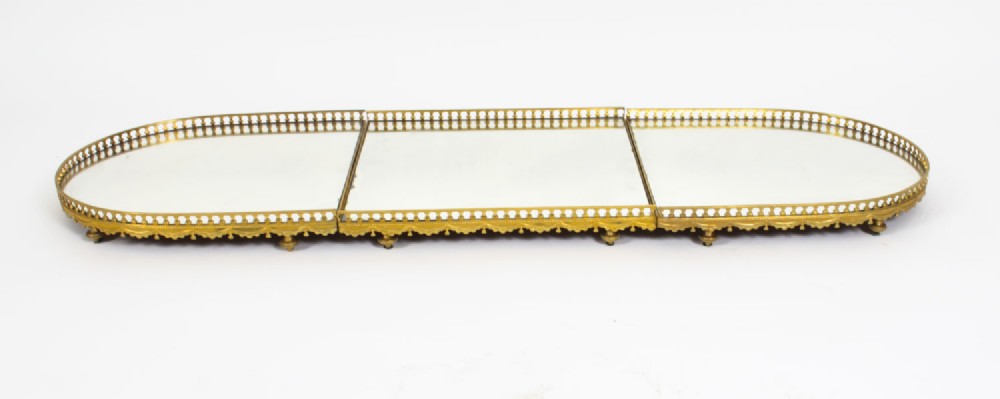
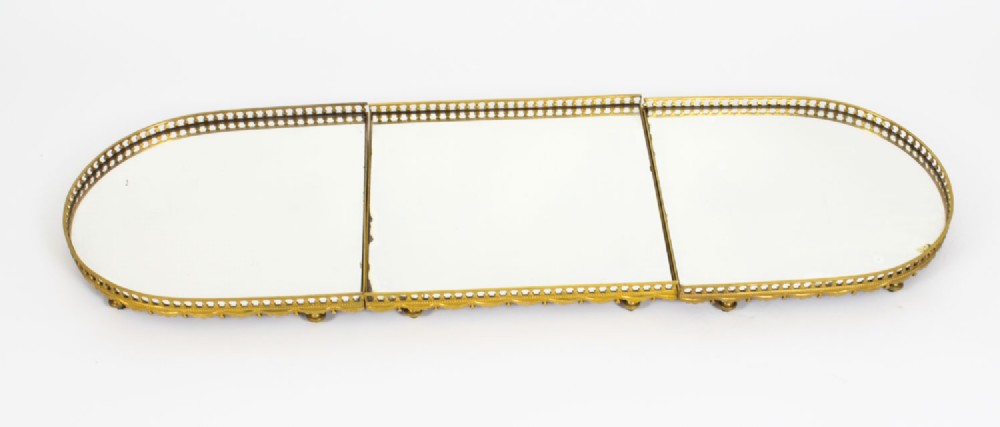
This is a superb antique French ormolu surtout-de-table / mirrored plateau in the classic Louis XVI style, circa 1870 in date.

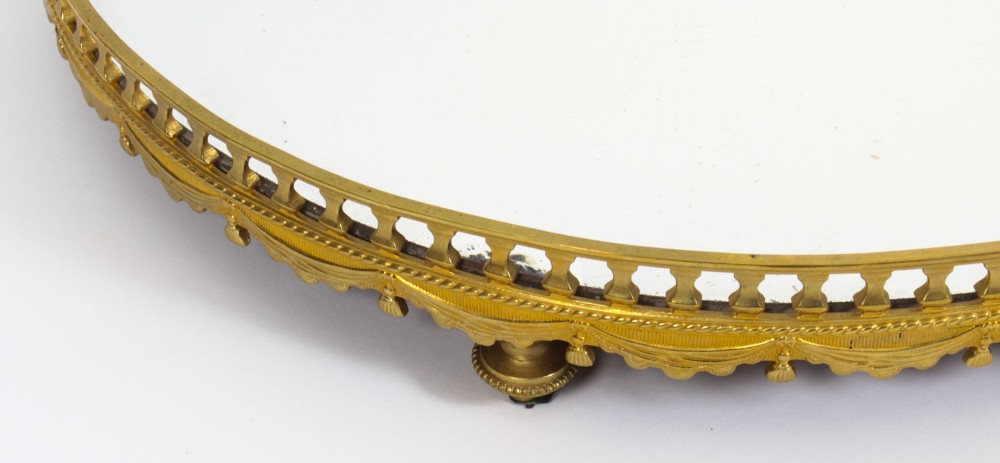
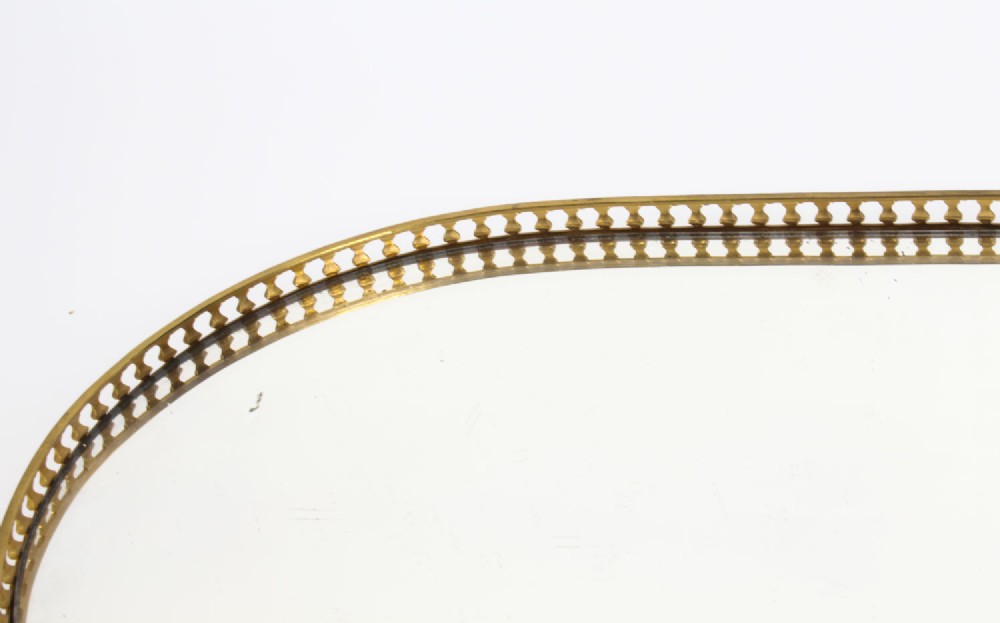
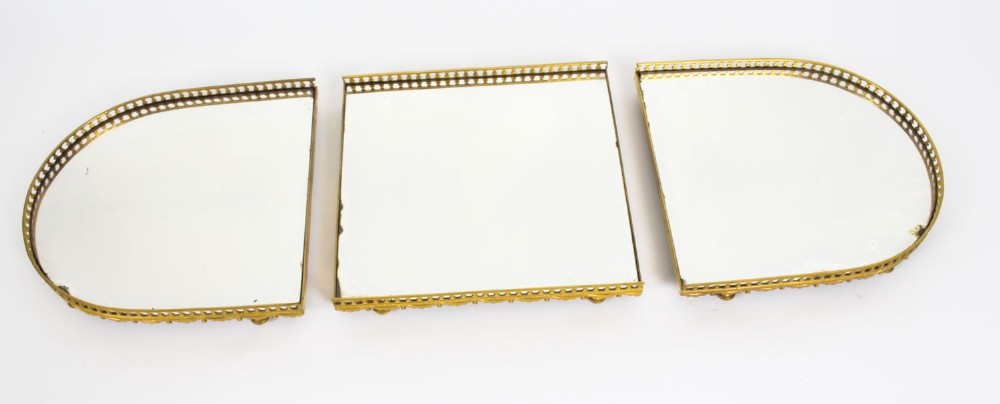
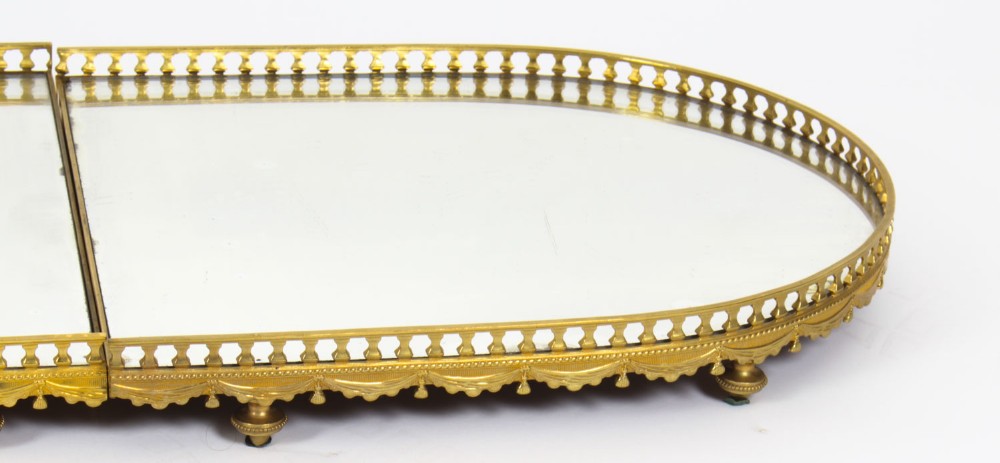
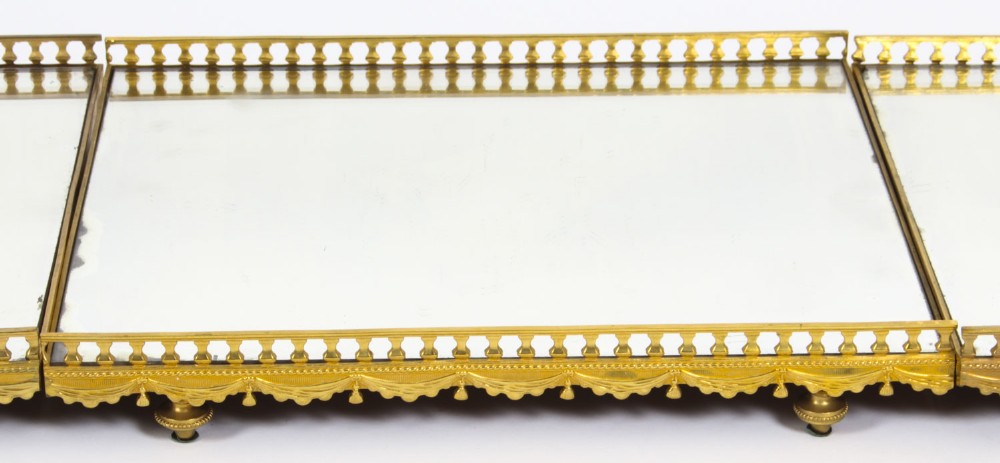
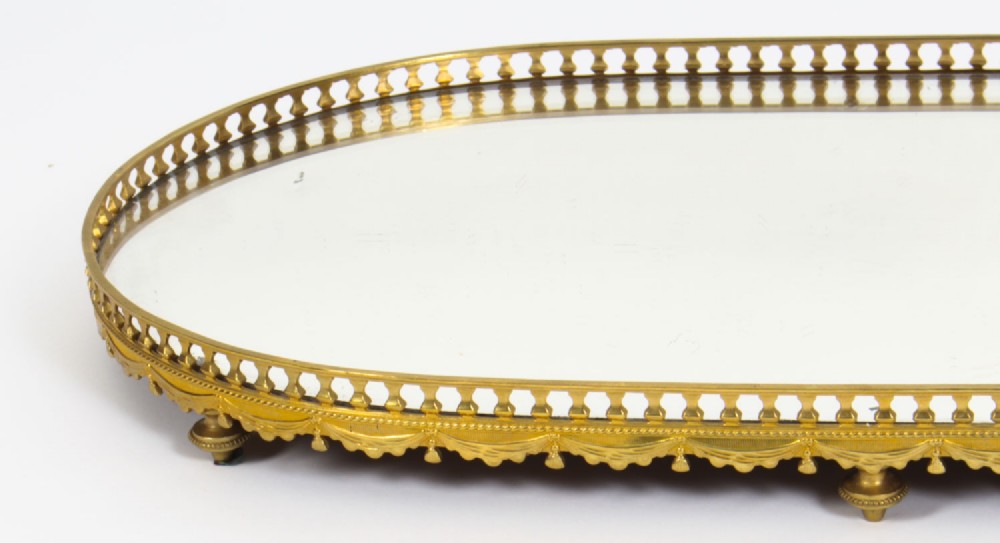
The elongated oval form features three mirrored sections with their original inset mirrored glass. The mirror is surounded by a raised galleried border with an apron of ribbon tied swags to the frieze, and raised on toupie feet

The craftsmanship is second to none throughout and it is sure to add an unparalleled elegance to any fine dining experience.

Condition:

In excellent condition, with some natural ageing to the mirror surface, please see photos for confirmation.

Dimensions in cm:

Height 6 x Width 123 x Depth 39

Dimensions in inches:

Height 2.4 x Width 48.4 x Depth 15.4

A surtout de table is an ornamental centrepiece displayed on a formal dining table, "a large centerpiece with mirrored plateaus and numerous candelabra and other possible display pieces on top". In French surtout de table is the usual term for any type of centrepiece, but in English this "tray" type, along with the objects placed on it, is the usual meaning.

Evolving from a simple plate or bowl on which to stand candlesticks and condiments, a surtout de table often took the form of a long galleried tray made of precious or gilded metals, on which a series of other objects were placed for display. It was often made in sections allowing its length to be determined by the leaves added to the table. During the later half of the 18th century and throughout the 19th century, no formal table was considered compete without one. Today, they are still seen and used in the most formal dining rooms.

Surtout de table first appeared in 1692 at the meals for the wedding of Philippe II, Duke of Orléans (then duc de Chartres) and Louis XIV's legitimized daughter Françoise Marie de Bourbon, as "a great silver gilt piece of a new invention". At first it was designed to hold candles, condiments, and other clutter on the table, and protect a polished wooden table from the staining caused by spillage from the salt and vinegars in the condiments. During the first half of the 18th century, as the great central and ceremonial salt cellars fell from favour, to be replaced by smaller individual salt cellars, and the sugar sculpture trionfo declined, the surtout de table evolved to fill the role of ornamental table centrepiece.

It often took the form of a raised galleried tray which would be filled with matching candelabra, figurines, vases and epergnes, the gallery itself sometimes containing candle sconces. They were not always constructed from precious metals; porcelain and glass were often used, as might be sculptures made from sugar. The top of the tray was often a mirror, to show the underside of the objects on it, and increase reflected light. Others continued as sculptural forms, sometimes becoming extremely extravagant.

It was not uncommon, if a surtout de table were commissioned for a specific house, for an indigenous theme to be used in the style. Hence, a hunting lodge may have a surtout de table with figurines of dogs and their quarry while a grander town palace would feature the most fashionable Rococo or Baroque styles of the day. Military figures and regimental officers' messes often commissioned examples with military subjects.

During the 1850s, the fashion for themed dining table decoration reached its apogee and the surtout de table reflected this. Porcelain factories such as Meissen produced elaborate models and figurines which replaced the classical statuary of the Empire style with coloured porcelain mountains, rustic scenes with cattle and goats and, occasionally, even a jungle theme complete with lifelike porcelain snakes.

Our reference: A1669

Date of Manufacture

Regent Antiques has dated this piece to the 19th Century.

Physical Dimensions
Height
6cm (2.36")
Width
123cm (48.43")
Depth
39cm (15.35")
Reference Numbers
Sellingantiques Reference
SA767548
Dealers Internal Reference
A1669
Antique French Ormolu & Mirrored Surtout de Table Plateau Circa 1870
Detail view 1Detail view 2Detail view 3Detail view 4Detail view 5Detail view 6Detail view 7Detail view 8
SOLD6+ MONTHS AGO
1 / 9
19th Century · SA767548
Antique French Ormolu & Mirrored Surtout De Table Plateau Circa 1870
Sorry, but this item has been sold.
Description
This is a superb antique French ormolu surtout-de-table / mirrored plateau in the classic Louis XVI style, circa 1870 in date.

The elongated oval form features three mirrored sections with their original inset mirrored glass. The mirror is surounded by a raised galleried border with an apron of ribbon tied swags to the frieze, and raised on toupie feet

The craftsmanship is second to none throughout and it is sure to add an unparalleled elegance to any fine dining experience.

Condition:

In excellent condition, with some natural ageing to the mirror surface, please see photos for confirmation.

Dimensions in cm:

Height 6 x Width 123 x Depth 39

Dimensions in inches:

Height 2.4 x Width 48.4 x Depth 15.4

A surtout de table is an ornamental centrepiece displayed on a formal dining table, "a large centerpiece with mirrored plateaus and numerous candelabra and other possible display pieces on top". In French surtout de table is the usual term for any type of centrepiece, but in English this "tray" type, along with the objects placed on it, is the usual meaning.

Evolving from a simple plate or bowl on which to stand candlesticks and condiments, a surtout de table often took the form of a long galleried tray made of precious or gilded metals, on which a series of other objects were placed for display. It was often made in sections allowing its length to be determined by the leaves added to the table. During the later half of the 18th century and throughout the 19th century, no formal table was considered compete without one. Today, they are still seen and used in the most formal dining rooms.

Surtout de table first appeared in 1692 at the meals for the wedding of Philippe II, Duke of Orléans (then duc de Chartres) and Louis XIV's legitimized daughter Françoise Marie de Bourbon, as "a great silver gilt piece of a new invention". At first it was designed to hold candles, condiments, and other clutter on the table, and protect a polished wooden table from the staining caused by spillage from the salt and vinegars in the condiments. During the first half of the 18th century, as the great central and ceremonial salt cellars fell from favour, to be replaced by smaller individual salt cellars, and the sugar sculpture trionfo declined, the surtout de table evolved to fill the role of ornamental table centrepiece.

It often took the form of a raised galleried tray which would be filled with matching candelabra, figurines, vases and epergnes, the gallery itself sometimes containing candle sconces. They were not always constructed from precious metals; porcelain and glass were often used, as might be sculptures made from sugar. The top of the tray was often a mirror, to show the underside of the objects on it, and increase reflected light. Others continued as sculptural forms, sometimes becoming extremely extravagant.

It was not uncommon, if a surtout de table were commissioned for a specific house, for an indigenous theme to be used in the style. Hence, a hunting lodge may have a surtout de table with figurines of dogs and their quarry while a grander town palace would feature the most fashionable Rococo or Baroque styles of the day. Military figures and regimental officers' messes often commissioned examples with military subjects.

During the 1850s, the fashion for themed dining table decoration reached its apogee and the surtout de table reflected this. Porcelain factories such as Meissen produced elaborate models and figurines which replaced the classical statuary of the Empire style with coloured porcelain mountains, rustic scenes with cattle and goats and, occasionally, even a jungle theme complete with lifelike porcelain snakes.

Our reference: A1669
Date19th Century
Height6cm (2.36")
Width123cm (48.43")
Depth39cm (15.35")
ReferenceSA767548
Dealer's referenceA1669
Regent Antiques
Regent AntiquesSellingantiques verified since Sep 2016

We specialise in english and continental furniture, silver, porcelain and decorative items.

Member of LAPADA CINOA

SHARE
SAVE
Archive I Antique French Ormolu & Mirrored Surtout de Table Plateau Circa 1870
SOLD6+ MONTHS AGO

Antique French Ormolu & Mirrored Surtout De Table Plateau Circa 1870

Archive II Antique French Ormolu & Mirrored Surtout de Table Plateau Circa 1870
 View II
Archive III Antique French Ormolu & Mirrored Surtout de Table Plateau Circa 1870
 View III
Archive IV Antique French Ormolu & Mirrored Surtout de Table Plateau Circa 1870
 View IV
Archive V Antique French Ormolu & Mirrored Surtout de Table Plateau Circa 1870
 View V
Archive VI Antique French Ormolu & Mirrored Surtout de Table Plateau Circa 1870
 View VI
Archive VII Antique French Ormolu & Mirrored Surtout de Table Plateau Circa 1870
 View VII
Archive VIII Antique French Ormolu & Mirrored Surtout de Table Plateau Circa 1870
 View VIII
Archive IX Antique French Ormolu & Mirrored Surtout de Table Plateau Circa 1870
 View IX
Enlarged Archival View
Location
Manor Warehouse
318 Green Lanes
London
N4 1BX
United Kingdom
Verified Since Sep 2016
Items For Sale 639
Items Sold 2,756
Regent Antiques
Regent Antiques
Verified Since Sep 2016
View Dealer Info
Location: Manor Warehouse, 318 Green Lanes, London, N4 1BX, United Kingdom
Verified
Sep 2016
For Sale
639
Sold
2,756
Antique French Ormolu & Mirrored Surtout de Table Plateau Circa 1870
Ref: SA767548
Antique French Ormolu & Mirrored Surtout de Table Plateau Circa 1870
Detail View 1
Detail View 2
Detail View 3
Detail View 4
Detail View 5
Detail View 6
Detail View 7
Detail View 8
Archival Detail
Every single antique dealer on our platform is individually approved by our internal team. We verify their professional trade history, ethical standards, and photographic quality to ensure a secure, high-standard buying environment. Upon joining, every dealer agrees to a strict 9-point code of conduct. While issues can occasionally arise, our dealers typically resolve them swiftly and directly with the buyer. In fact, since our founding in 2002, Sellingantiques has only had to step in to help resolve an issue on roughly five occasions—a true testament to the quality of our dealers and their dedication to your happiness.
Our dealers are highly experienced in packing and shipping fragile, high-value antiques. Because you are in direct contact with the dealer, you will be able to easily go through all available shipping and insurance options together to ensure your item arrives safely.
Antiques are the ultimate green purchase. By choosing historical pieces over newly manufactured goods, you completely eliminate the carbon footprint of modern mass production while preserving exceptional, timeless craftsmanship.
Written by Sellingantiques from the dealer’s photographs and listing
  • Period19th century
  • SizeH 6 cm (2 in) x W 123 cm (48 in) x D 39 cm (15 in)
items
Add keywords to the filter
Price
£100
£250000
Era
Period
Style
Material
Origin
Stock Location
Recently Added
Online Payments
Categories