It was listed by Jason Clarke Antiques. Sold pieces stay on Sellingantiques as a record of what has passed through, and the next one is rarely far away.
Jason Clarke Antiques has dated this piece to the 1750s.
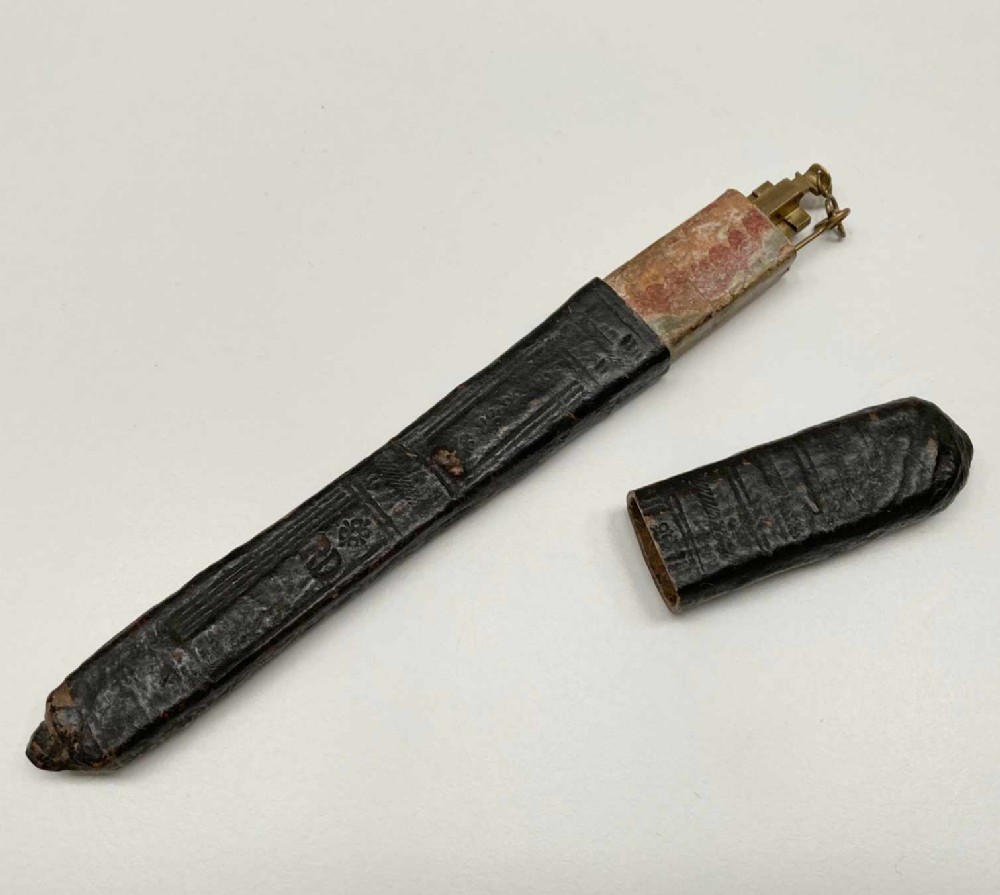
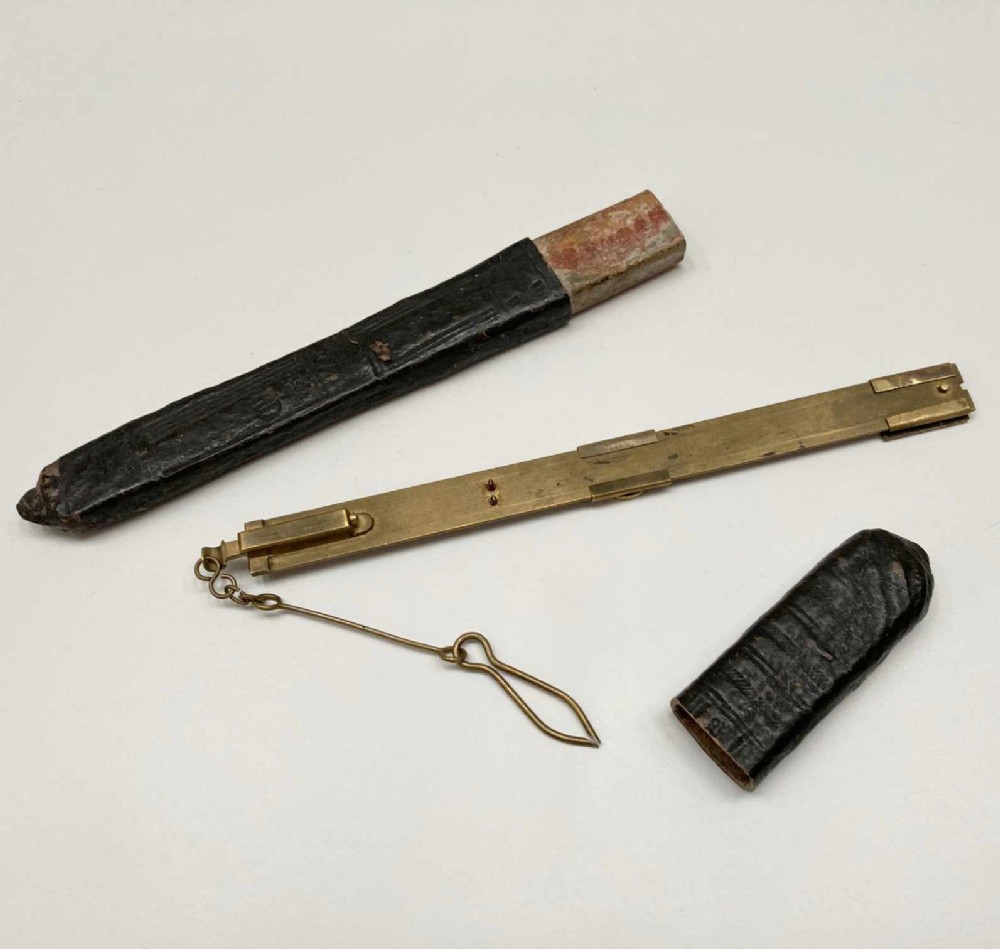
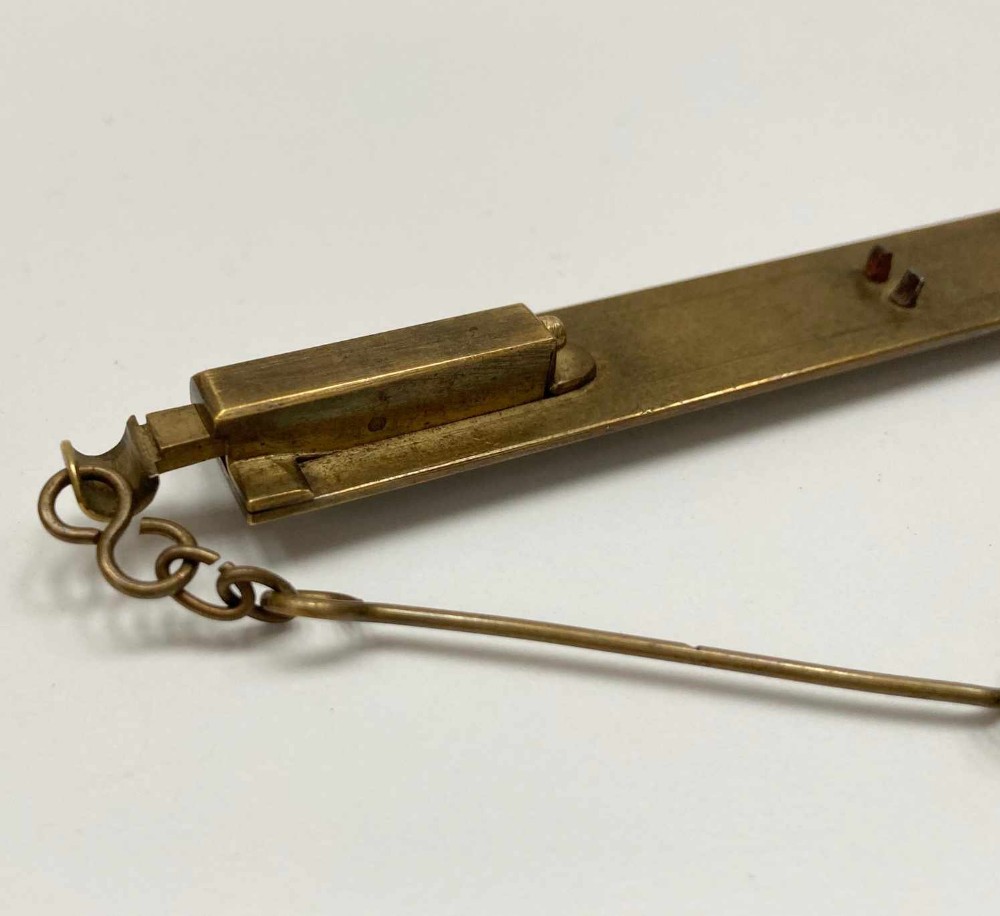
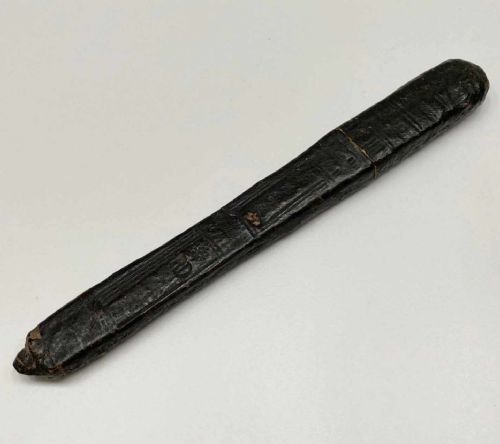
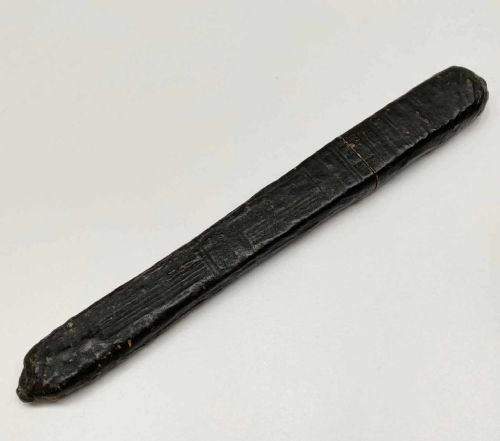
Patented by William Bradford in 1753 as a means to combat the widespread counterfeiting of currency prevalent in the Eighteenth Century, Patent No 686 was described as a “machine for weighing gold coin, rings and all utensils made of gold”. It consists of a long rectangular brass beam with two pins attached to the base to act as pivots.
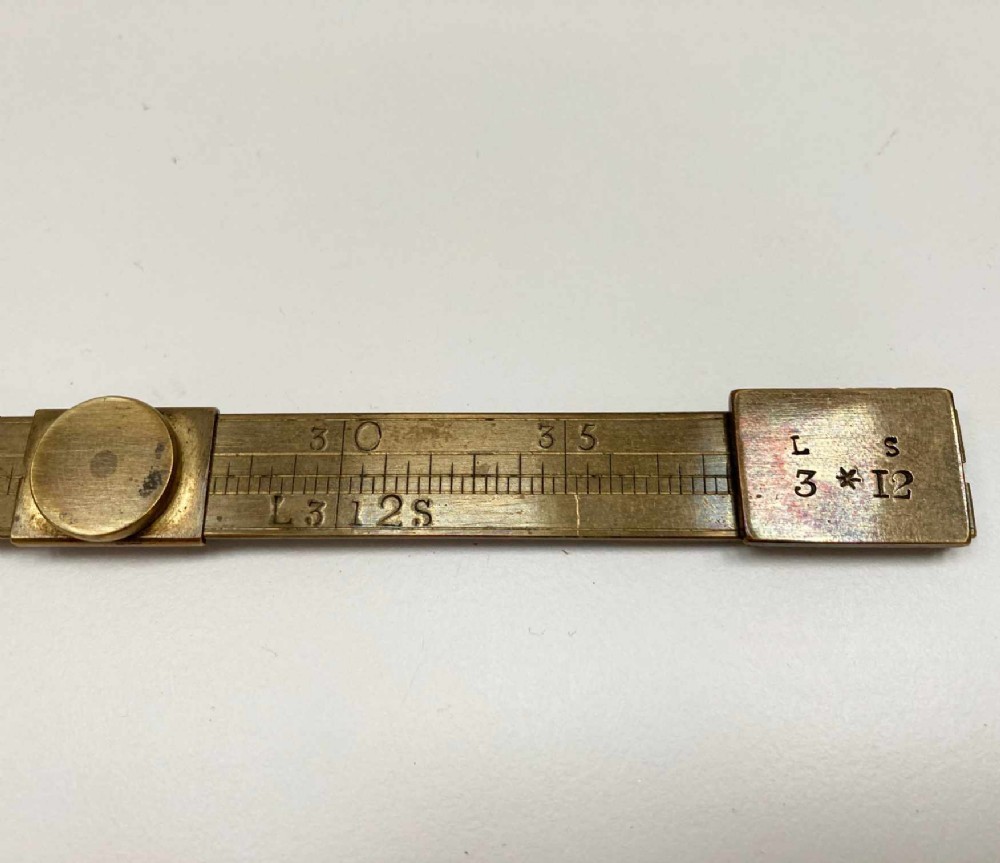
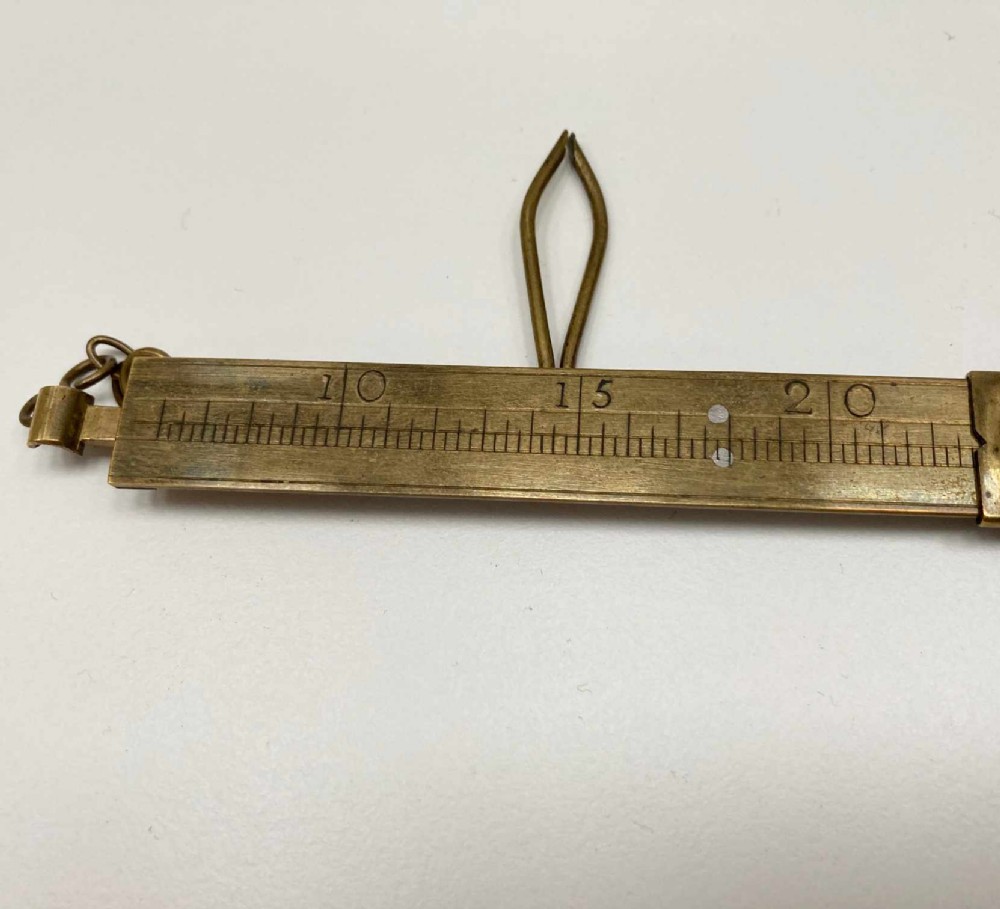
The scale is engraved in recognition of the currency weight and the attached slide weights could be manouvered until equilibrium is achieved with the subject gold held in the pincer.
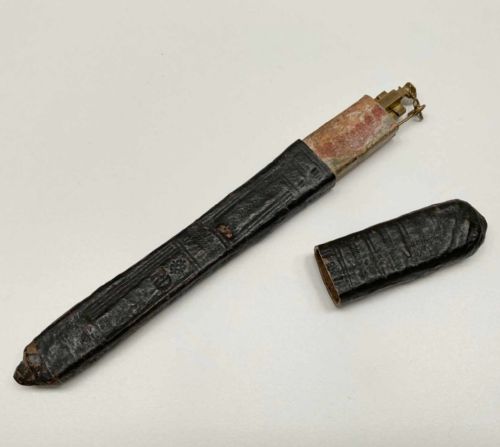
Owing to its rarity most people reasonably assume that this interesting scale was only produced as a hydrostatic scale as described in the original 1753 patent guide below:
“The Gentleman’s & Trader’s Guide containing the description and use of a new invented instrument for preventing frauds by counterfeit gold
First, you have a small thin plate of brass, which you are to lay flat upon a level table or board, with the small centre pins fixed in it undermost, so as they may bear upon the edge of such table or board, and play as the balance shall require, with a small chain and pincers wherein to fix any piece of money intended to be weighed and proved, hanging over the edge of the table; and, note, there are two pairs of these centre pins, one pair of which (to wit, those marked with the letter A) to be made use of for weighing and proving all pieces of gold not exceeding the value of 36s, and those marked B for all pieces from that sum to 72s or 3l 12s.
On each side of the plate are two lines, and a whole division of each line is equal to the weight or value of one shilling in gold, and every sub-division to that of threepence. The lines marked A and B gives the weight only, and are properly statical; and those marked W are designed to show the alloy or adulteration, and are hydrostatical, corresponding with the statical lines.”
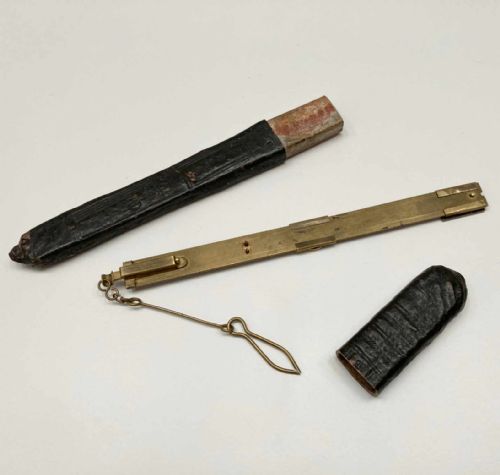
The patent hydrostatic scale with it’s A, B & W scale was certainly an ingenious, if not complex instrument to handle and it has been suggested that the example presented for sale here was an earlier design owing to the lack of these vayring scales. However I suspect that this was probably produced as a less complex model which did not require the use of liquid (or hydrostatic measurement). The main differences in design to the “patented” model are the use of two weights, a spring loaded mechanism for extending or retracting the protruding length of the pincers from the scale end and of course in most extant examples, the lack of the patent badge on the slide weight.
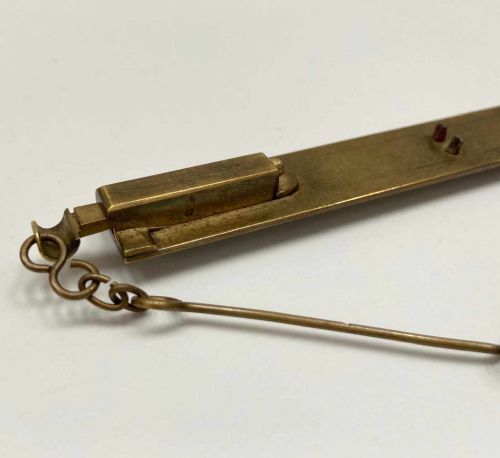
My suspicion is that Bradford probably avoided the need for an A & B scale and differing centre pins by the use of the spring mechanism whereby the length of the balance could be extended by a simple extension of the subject coin further away from the scale and the addition of a second weight for heavier subject pieces. The lack of a W scale would of course not be required if the scale was not meant for hydrostatic comparison. This theory would also explain the lack of the patent stamp on the slide weight as this was not technically a “patented” instrument although Bradford, Darby & Hull would have benefited financially from the accolade. There are no records or “Guides” available relating to an alternative model from the hydrostatic instrument but I suspect that they were sold side by side as simple and complex models. If nothing else I hope that this opens up some kind of debate on the subject as it is evidently clear from examination of this piece that the company produced two differing models.
The partnership of Bradford, Darby & Hulls
Jason Clarke Antiques has dated this piece to the 1750s.
You can view the stock and full dealer information on the Jason Clarke Antiques Profile Page
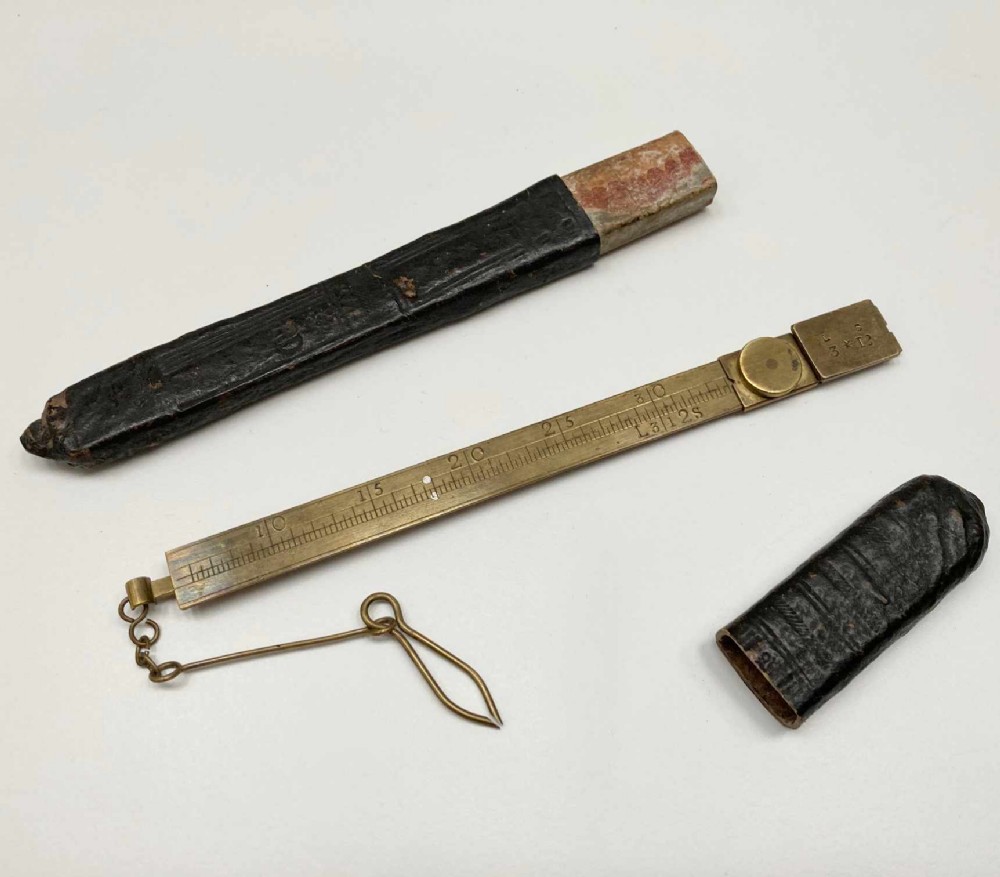
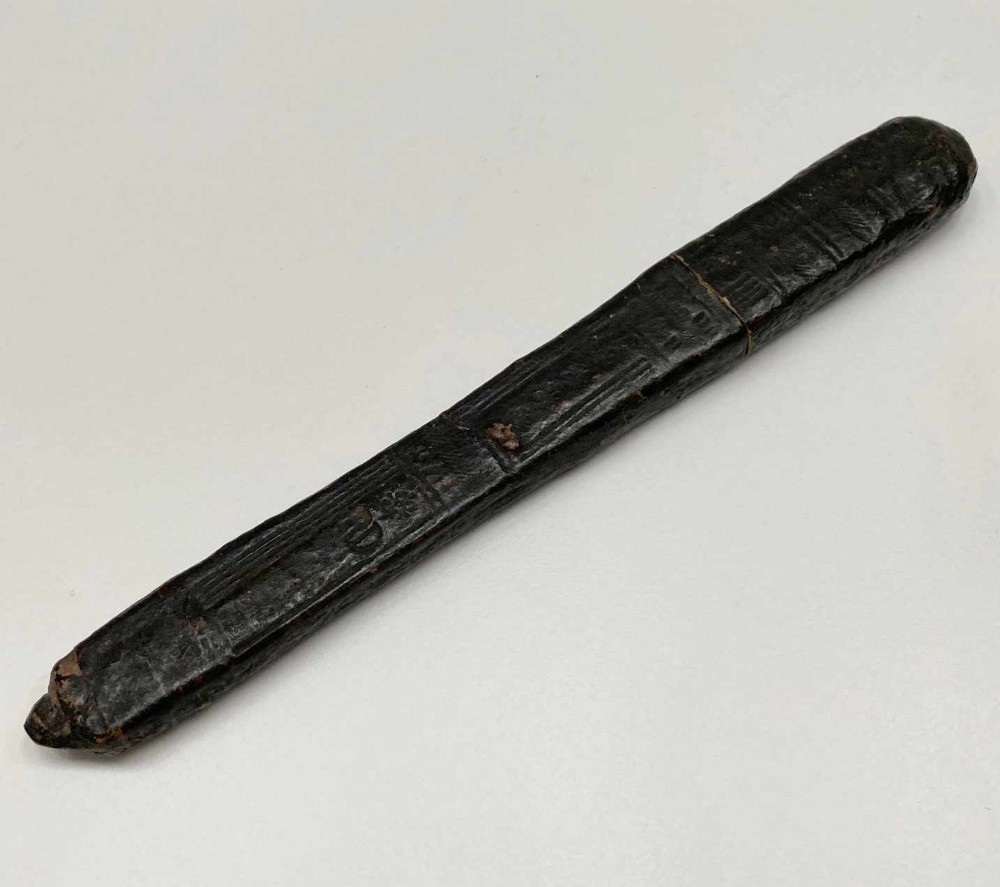
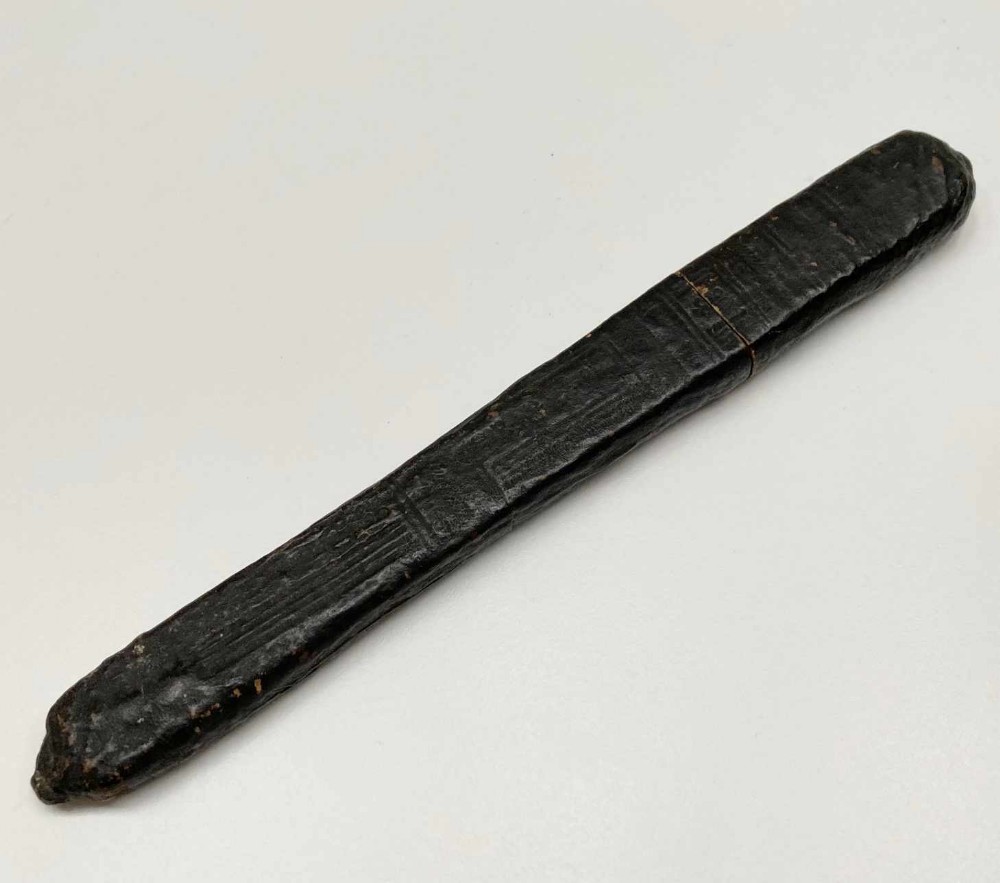
George II Steelyard Gold Balance by Bradford Darby & Hulls of Campden Gloucestershire