16,586  PAGES BROWSED TODAY PAGES TODAY 96 ANTIQUES UPLOADED TODAYNEW ARRIVALS
96 ITEMS ADDED TODAY
Sort Order
Items Per Page
Browse Categories
Sort order
Items per page
ID #SA742678
SOLD
Email
Save
Rare Early Nineteenth Century French Polyaldes Telescope by Cauchoix Paris
Jason Clarke Antiques
sold SA742678
Sorry, but this item has been sold.
Jason Clarke Antiques

Jason Clarke Antiques

Sellingantiques Verified Since Jul 2015
View Dealers Stock Page
Id #SA742678
PDF SHARE
SAVE

Rare Early Nineteenth Century French Polyaldes Telescope by Cauchoix Paris

19th century
Description

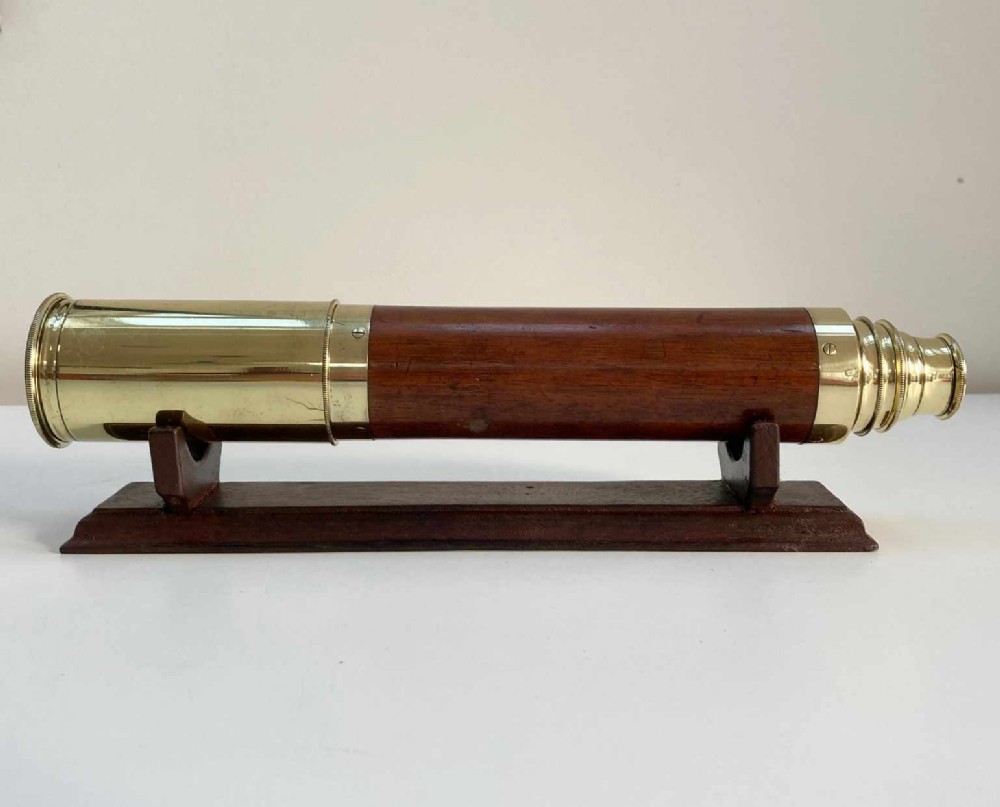
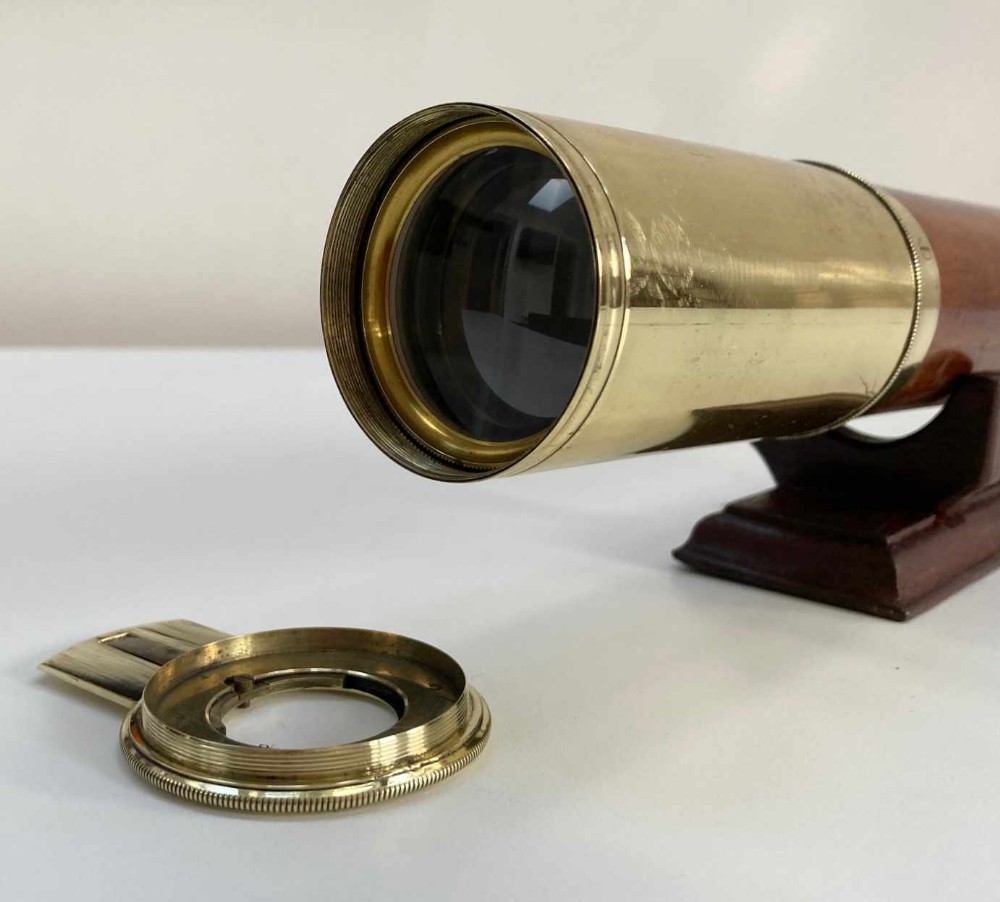
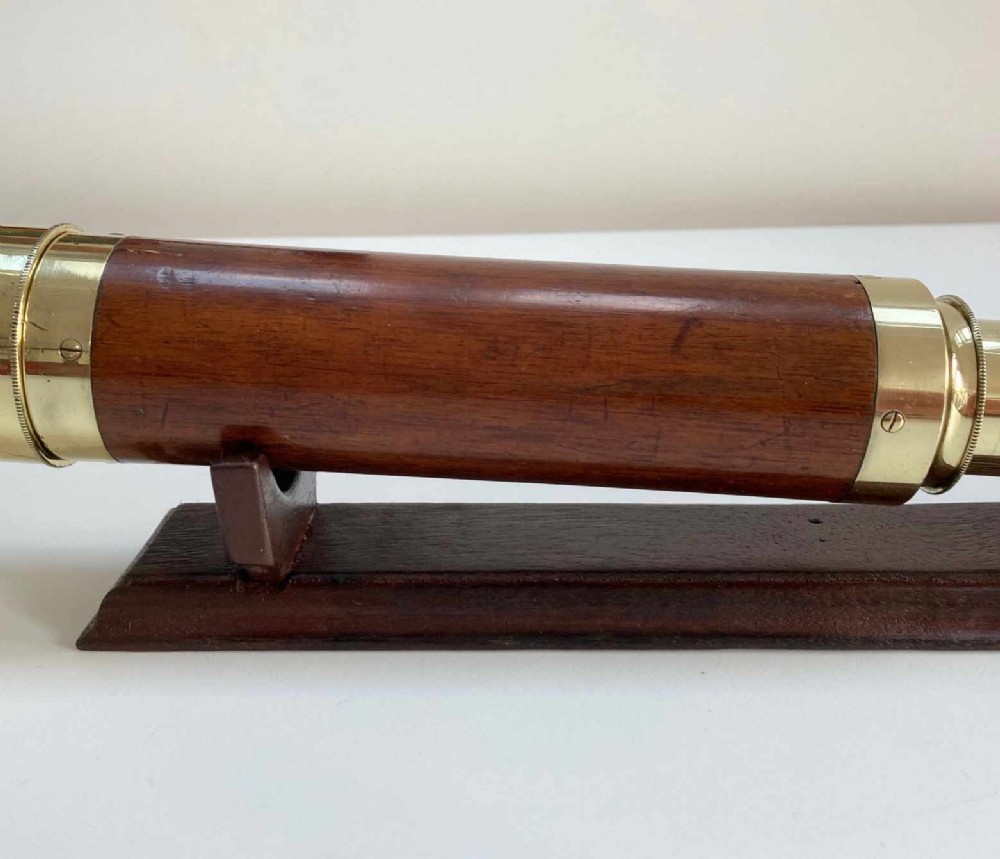
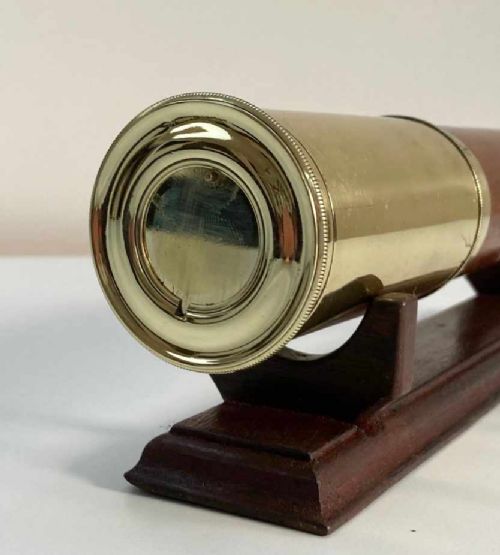
For sale, a very rare early nineteenth Century French two draw “polyaldes” telescope by Robert-Aglae Cauchoix of Paris.

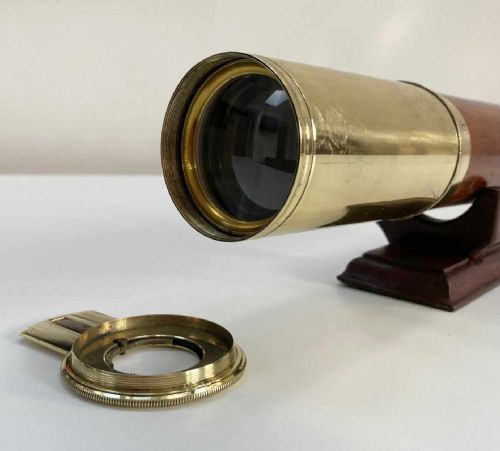
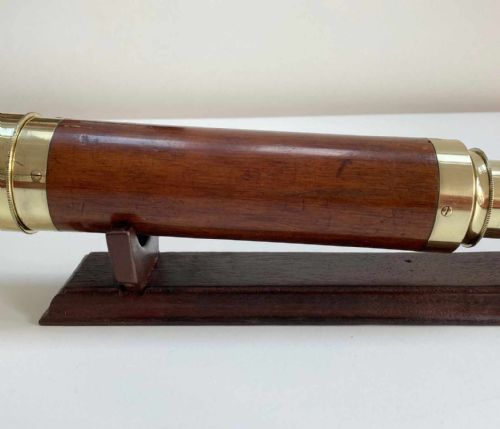
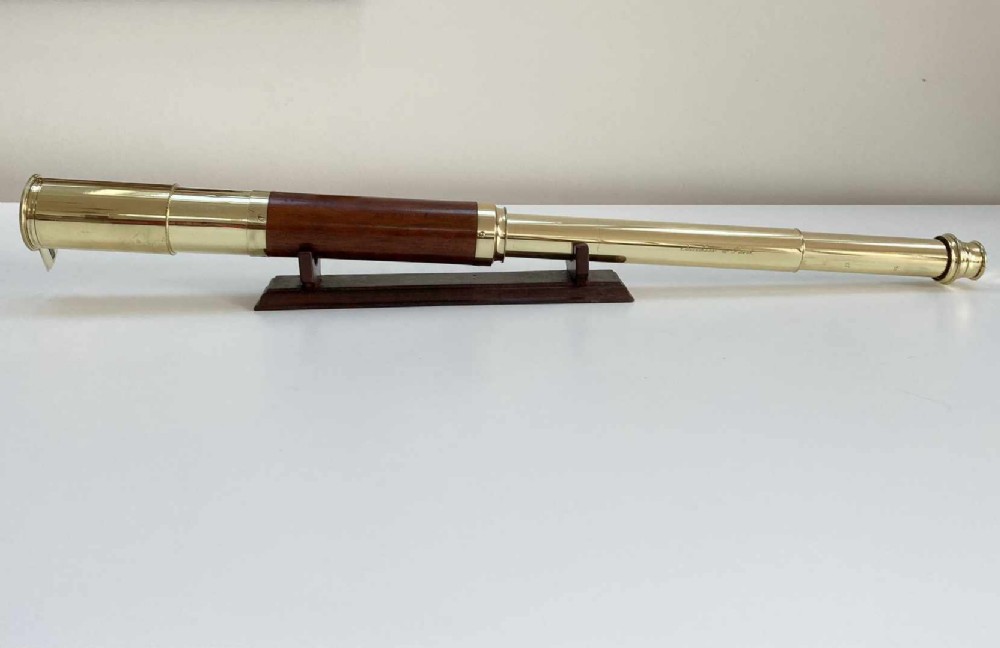
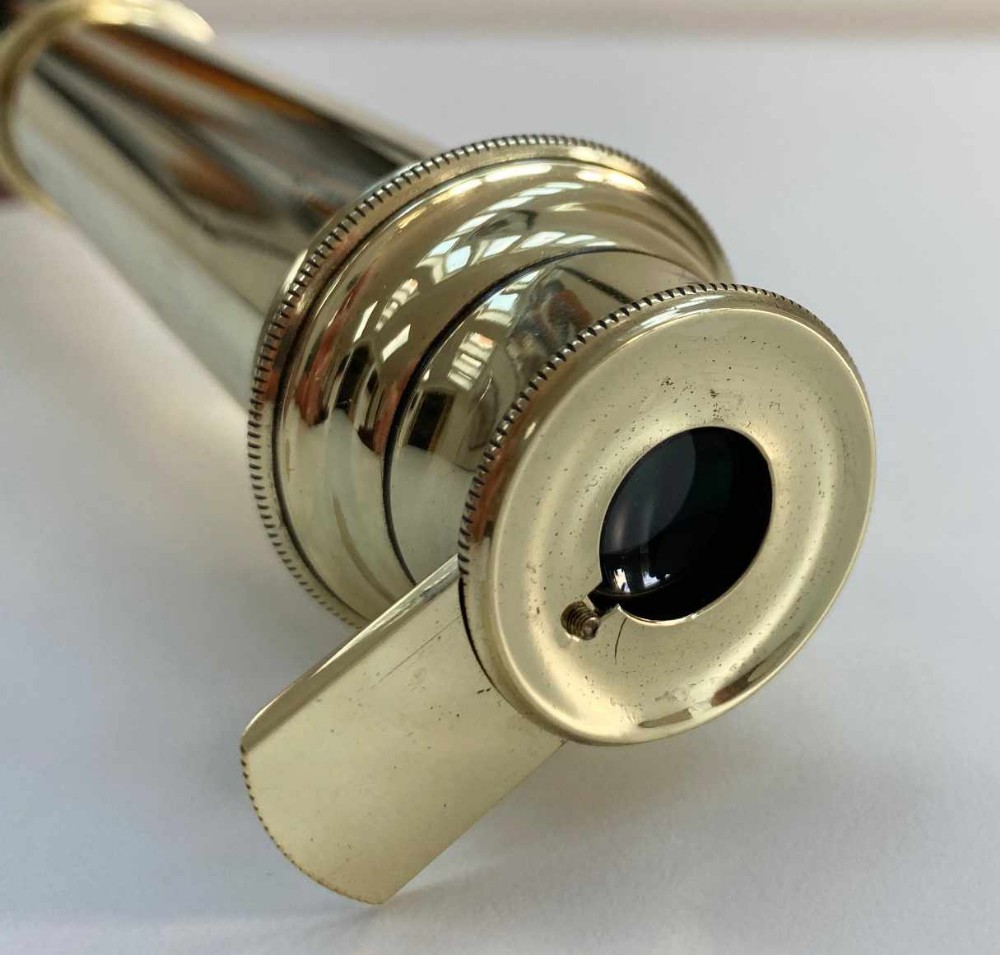
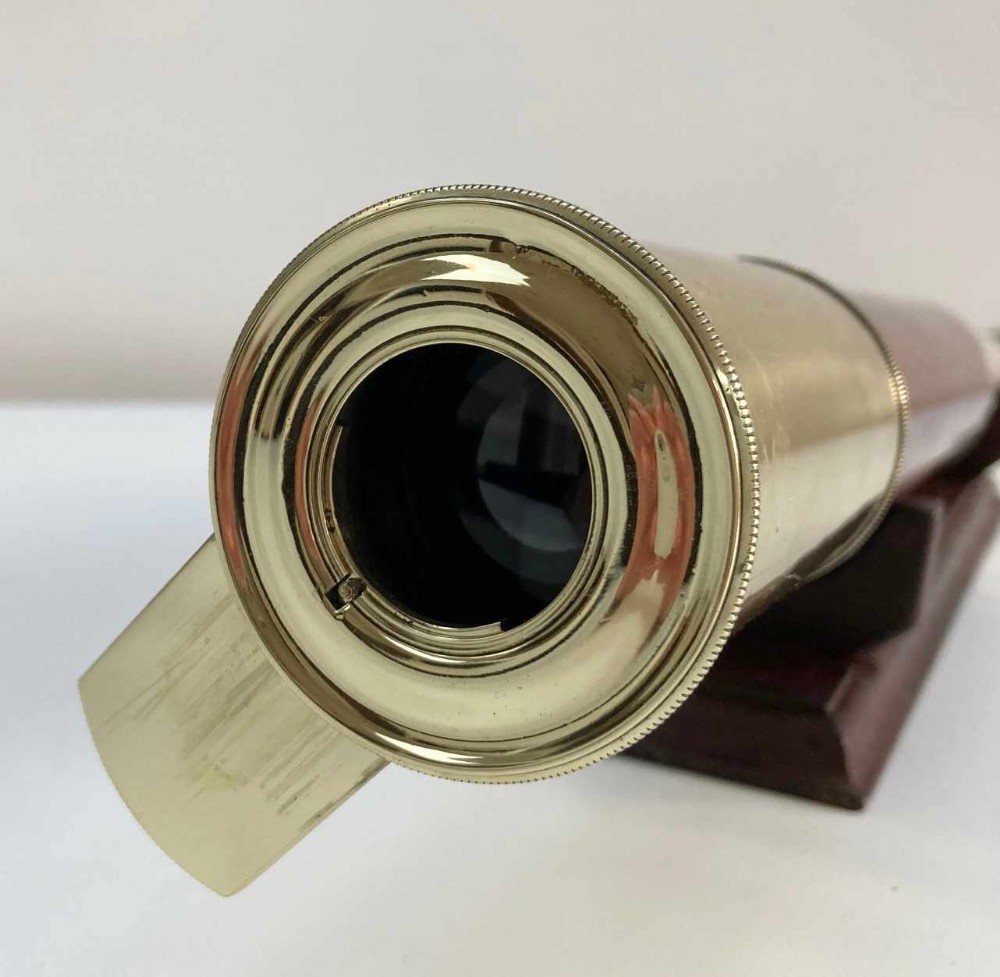
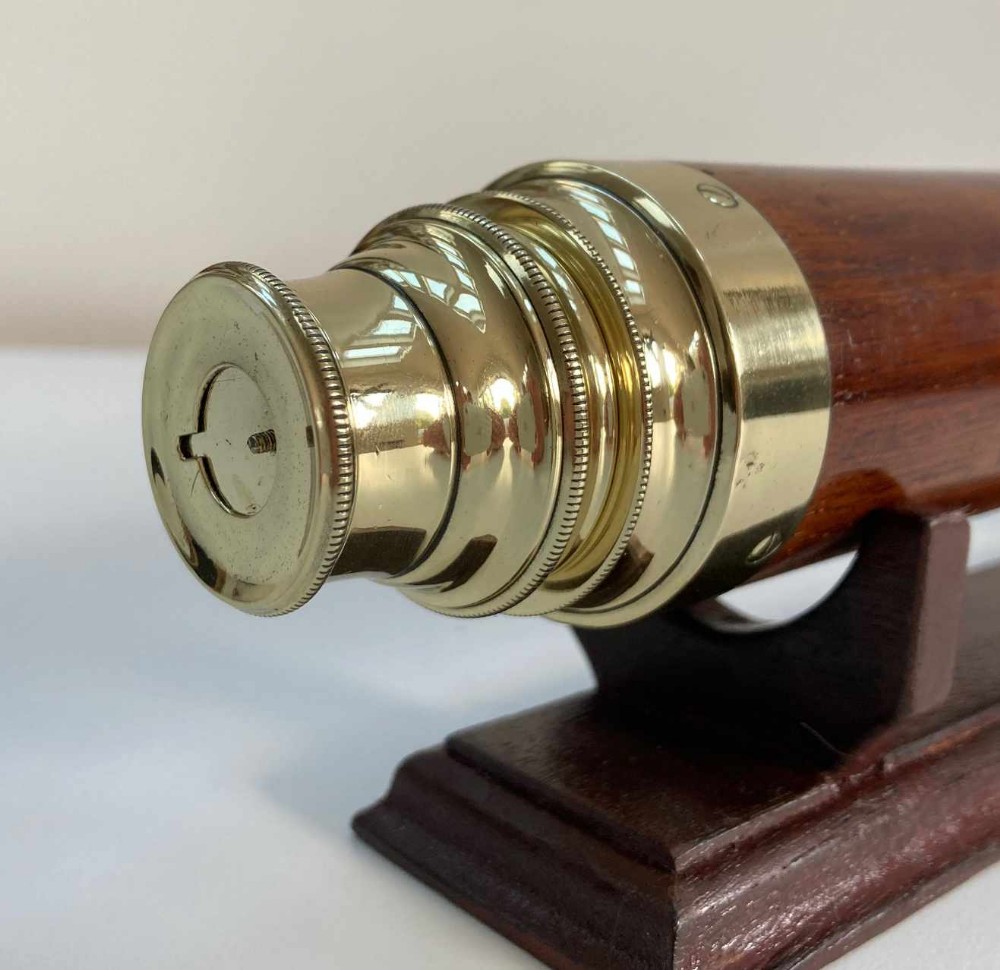
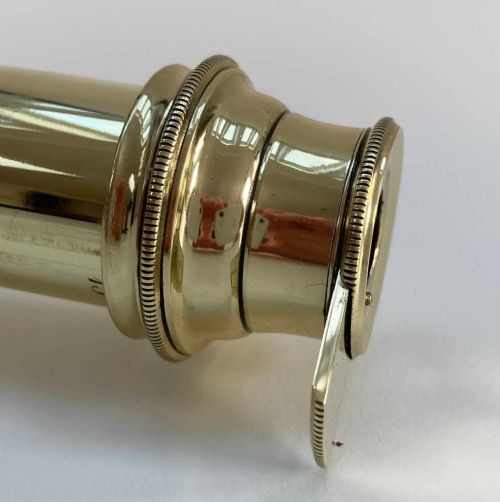
Comprised of a walnut barrel, the telescope extends to 66cms (or 72cms with the sunshade extended) and 32cms closed. The objective lens measures one inch in diameter with the lens cap in place or one and three quarter inches without.
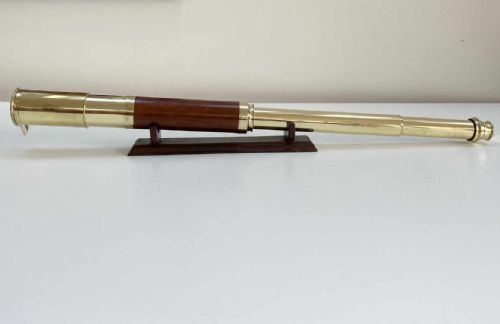
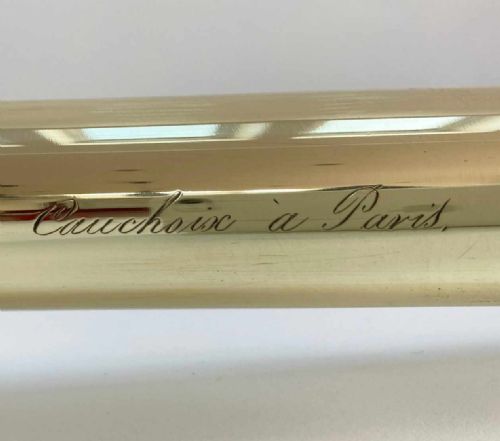
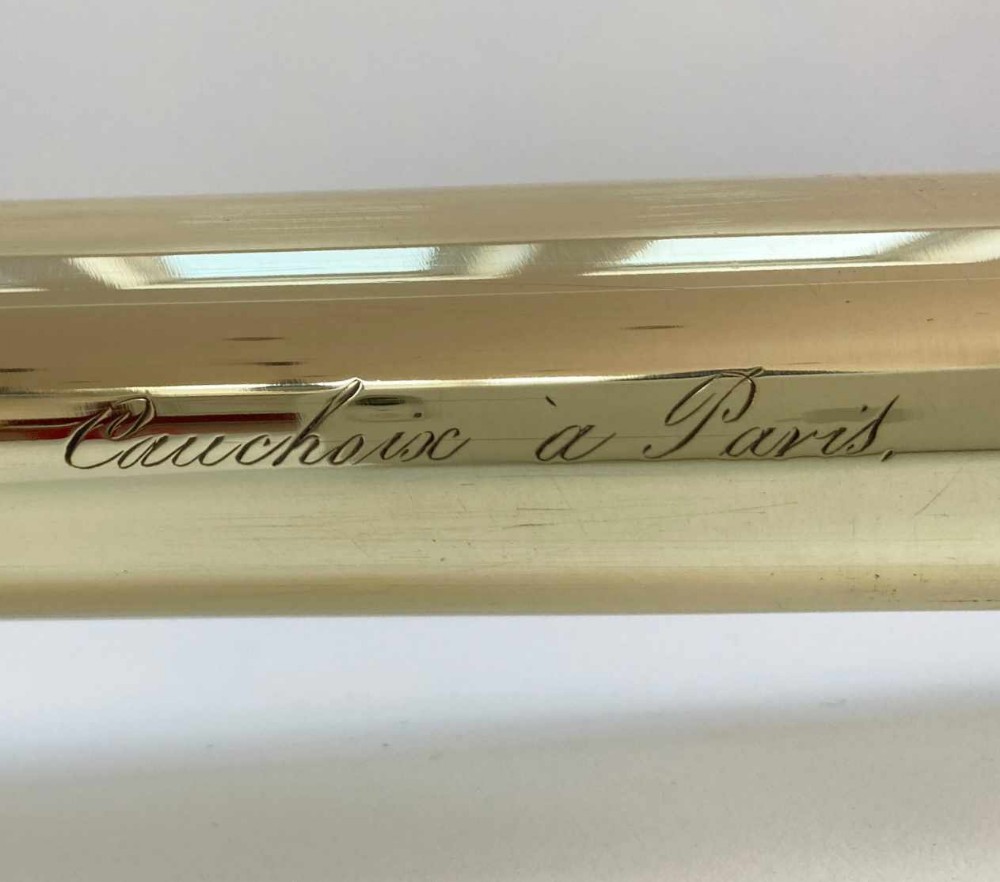
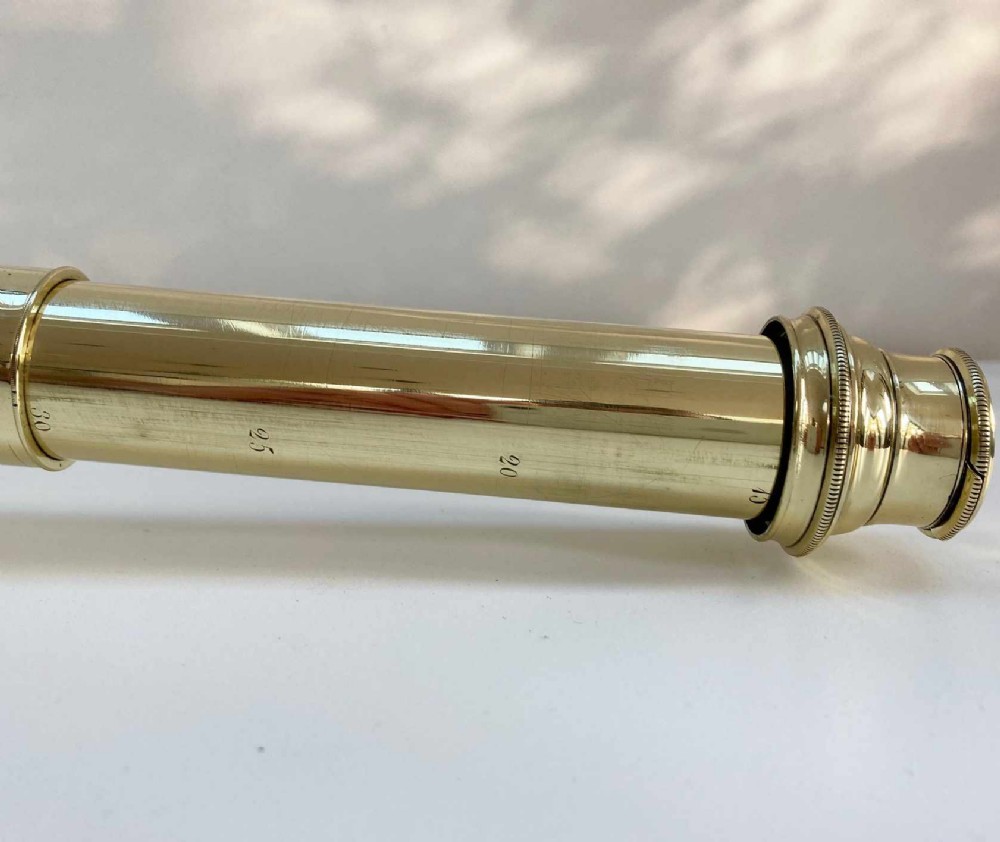
The second draw is inscribed with the maker’s name “Cauchoix a Paris” and the first draw is engraved with a scale from 15 to 30.

Cauchoix developed this telescope in 1815 and it bears many similarities to David Brewster’s invention produced by William Harris in 1811 (see my website) although there is nothing to suggest that Cauchoix’s example involved any plagiarism.
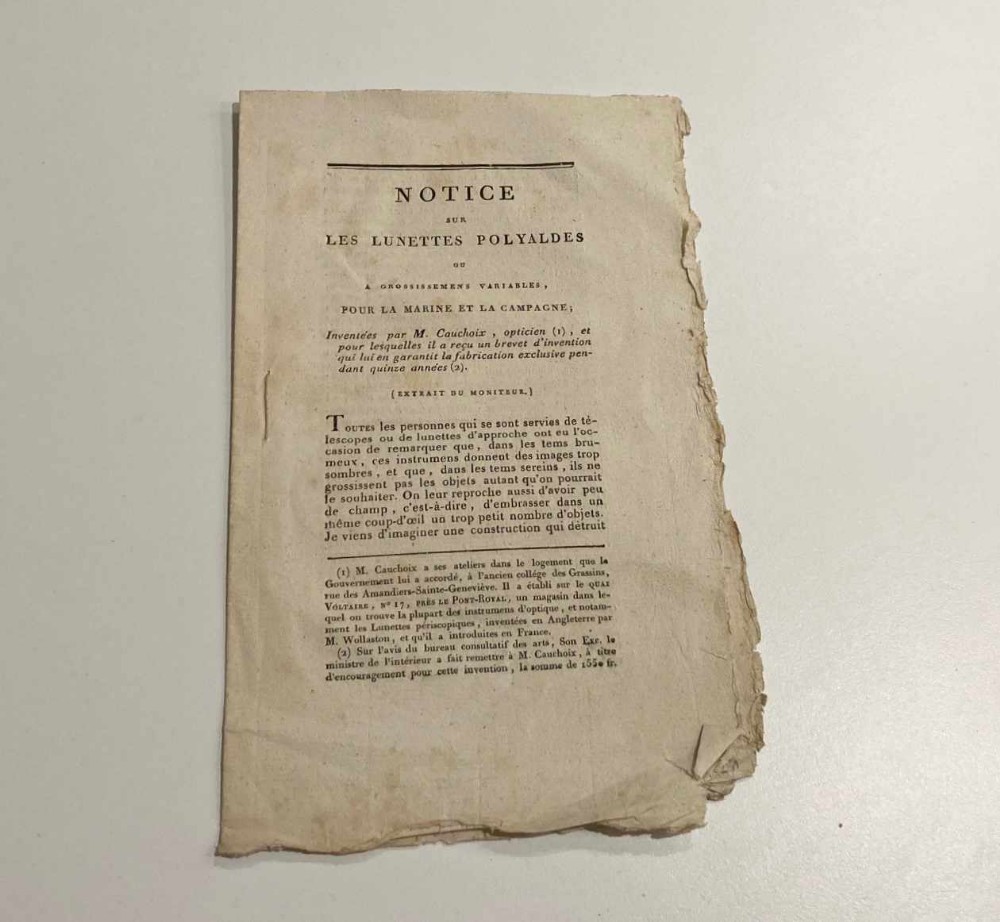
Cauchoix released a phamplet at the time to provide an introduction to his invention which is included in translation below. The original document is also inlcuded in the sale.

“All who have used telescopes have had occasion to notice that, in foggy times, these instruments give too dark images, and that, in calm times, do not magnify the objects as much as one would wish. They are also criticized for having little field, that is to say, for embracing too small a number of objects at the same glance. I have just imagined a construction which destroys these faults as much as possible, in that it allows the degree of magnification to be varied at will.
Hitherto, in order to produce this effect in telescopes, no other means have been known but to adapt several systems of eyepieces embedded in separate tubes which have to be substituted for each other, but this process which I myself have employed is defective for several reasons, such as the inconvenience of carrying with you spare parts, unscrewing and screwing in sometimes very awkward positions, finally the difficulty and sometimes even the absolute impossibility to choose among the various eyepieces which one possesses, the one which would be best suited to the circumstance in which one observes.
People who walk or who travel with glasses which they use frequently, officers of land and sea, and especially the latter, know what these changes in magnification are valuable in their object and inconvenient in their jobs. The means that I propose seems to me to combine all the advantages desirable for the goodness of effect and the convenience of use: but before I say what it consists of, allow me to give some details about the effect of lenses in general. My aim is to prevent and destroy some objections that could be made against this invention to mitigate the advantages it can offer by accusing it of not giving those which it is really impossible to collect.
The effect of all telescopes or telescopes is to direct the rays from distant objects, so as to form images of these objects at a certain point on the axis of the lenses which we call their focus; and as it would be impossible for the images to be clear if they were not limited, they are made to pass through a circular opening made in a copper plate which is placed in the focus itself and which is called the diaphragm; all that remains is to look at these images with a magnifying glass to see them clearly and magnify them further. It is the object of a last glass or of a system of glasses which is placed near the eye, and which is called by this reason ocular.
The magnification of a telescope therefore depends on two elements, namely, the absolute size of the images included in the diaphragm, and the force of the magnifying glass or the eyepiece with which these images are viewed. The magnifying glass becomes stronger, grows more, as one shortens its focus; this shortening would therefore be a means of increasing the total magnification of the telescope, but at the same time it would be necessary to reduce the aperture of the diaphragm, because it is advisable, for sharpness, that the diameter of this ape

Physical Dimensions
Height
32cm (12.60")
Width
5.5cm (2.17")
Depth
5.5cm (2.17")
Declaration

Jason Clarke Antiques has dated this piece to the 1800s.

Reference Numbers
Sellingantiques Reference
SA742678
Description
For sale, a very rare early nineteenth Century French two draw “polyaldes” telescope by Robert-Aglae Cauchoix of Paris.
Comprised of a walnut barrel, the telescope extends to 66cms (or 72cms with the sunshade extended) and 32cms closed.
Jason Clarke Antiques

The objective lens measures one inch in diameter with the lens cap in place or one and three quarter inches without.

fig 1. Rare Early Nineteenth Century French Polyaldes Telescope by Cauchoix Paris

The second draw is inscribed with the maker’s name “Cauchoix a Paris” and the first draw is engraved with a scale from 15 to 30.

Cauchoix developed this telescope in 1815 and it bears many similarities to David Brewster’s invention produced by William Harris in 1811 (see my website) although there is nothing to suggest that Cauchoix’s example involved any plagiarism.

fig 2. Rare Early Nineteenth Century French Polyaldes Telescope by Cauchoix Paris

Cauchoix released a phamplet at the time to provide an introduction to his invention which is included in translation below. The original document is also inlcuded in the sale.

“All who have used telescopes have had occasion to notice that, in foggy times, these instruments give too dark images, and that, in calm times, do not magnify the objects as much as one would wish. They are also criticized for having little field, that is to say, for embracing too small a number of objects at the same glance. I have just imagined a construction which destroys these faults as much as possible, in that it allows the degree of magnification to be varied at will.

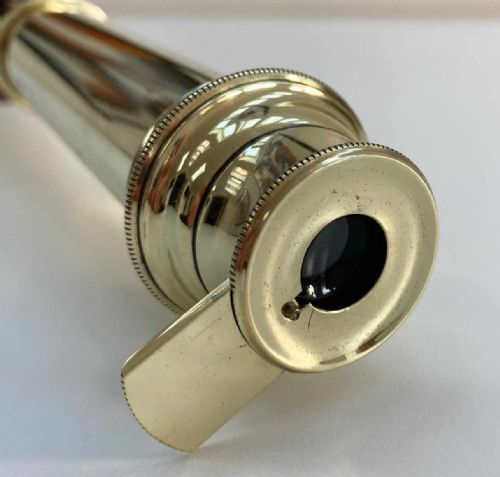
fig 3. Rare Early Nineteenth Century French Polyaldes Telescope by Cauchoix Paris

Hitherto, in order to produce this effect in telescopes, no other means have been known but to adapt several systems of eyepieces embedded in separate tubes which have to be substituted for each other, but this process which I myself have employed is defective for several reasons, such as the inconvenience of carrying with you spare parts, unscrewing and screwing in sometimes very awkward positions, finally the difficulty and sometimes even the absolute impossibility to choose among the various eyepieces which one possesses, the one which would be best suited to the circumstance in which one observes.

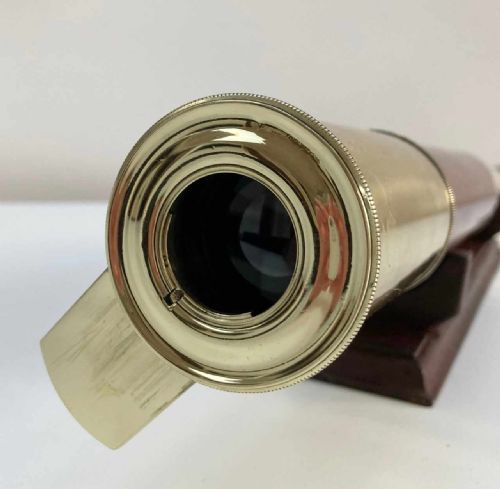
fig 4. Rare Early Nineteenth Century French Polyaldes Telescope by Cauchoix Paris

People who walk or who travel with glasses which they use frequently, officers of land and sea, and especially the latter, know what these changes in magnification are valuable in their object and inconvenient in their jobs. The means that I propose seems to me to combine all the advantages desirable for the goodness of effect and the convenience of use: but before I say what it consists of, allow me to give some details about the effect of lenses in general. My aim is to prevent and destroy some objections that could be made against this invention to mitigate the advantages it can offer by accusing it of not giving those which it is really impossible to collect.

fig 5. Rare Early Nineteenth Century French Polyaldes Telescope by Cauchoix Paris

The effect of all telescopes or telescopes is to direct the rays from distant objects, so as to form images of these objects at a certain point on the axis of the lenses which we call their focus; and as it would be impossible for the images to be clear if they were not limited, they are made to pass through a circular opening made in a copper plate which is placed in the focus itself and which is called the diaphragm; all that remains is to look at these images with a magnifying glass to see them clearly and magnify them further. It is the object of a last glass or of a system of glasses which is placed near the eye, and which is called by this reason ocular.

fig 6. Rare Early Nineteenth Century French Polyaldes Telescope by Cauchoix Paris

The magnification of a telescope therefore depends on two elements, namely, the absolute size of the images included in the diaphragm, and the force of the magnifying glass or the eyepiece with which these images are viewed. The magnifying glass becomes stronger, grows more, as one shortens its focus; this shortening would therefore be a means of increasing the total magnification of the telescope, but at the same time it would be necessary to reduce the aperture of the diaphragm, because it is advisable, for sharpness, that the diameter of this ape

Height
32cm (12.60")
Width
5.5cm (2.17")
Depth
5.5cm (2.17")
Date of Manufacture

Jason Clarke Antiques has dated this piece to the 1800s.

Reference Numbers
Sellingantiques Ref
SA742678
Jason Clarke Antiques
Sellingantiques verified Since Jul 2015
Dealer Profile

You can view the stock and full dealer information on the Jason Clarke Antiques Profile Page
PDF SHARE
SAVE
Rare Early Nineteenth Century French Polyaldes Telescope by Cauchoix Paris
1 / 12
Archive I Rare Early Nineteenth Century French Polyaldes Telescope by Cauchoix Paris
Rare Early Nineteenth Century French Polyaldes Telescope by Cauchoix Paris
Archive II Rare Early Nineteenth Century French Polyaldes Telescope by Cauchoix Paris View II
Archive III Rare Early Nineteenth Century French Polyaldes Telescope by Cauchoix Paris View III
Archive IV Rare Early Nineteenth Century French Polyaldes Telescope by Cauchoix Paris View IV
Archive V Rare Early Nineteenth Century French Polyaldes Telescope by Cauchoix Paris View V
Archive VI Rare Early Nineteenth Century French Polyaldes Telescope by Cauchoix Paris View VI
Archive VII Rare Early Nineteenth Century French Polyaldes Telescope by Cauchoix Paris View VII
Archive VIII Rare Early Nineteenth Century French Polyaldes Telescope by Cauchoix Paris View VIII
Archive IX Rare Early Nineteenth Century French Polyaldes Telescope by Cauchoix Paris View IX
Archive X Rare Early Nineteenth Century French Polyaldes Telescope by Cauchoix Paris View X
Archive XI Rare Early Nineteenth Century French Polyaldes Telescope by Cauchoix Paris View XI
Archive XII Rare Early Nineteenth Century French Polyaldes Telescope by Cauchoix Paris View XII
Enlarged Archival View
Telephone 07815 046645
Location
Newbury
Berkshire
United Kingdom
Verified Since Jul 2015
Items For Sale 80
Items Sold 607
Jason Clarke Antiques
Verified Since Jul 2015
View Dealer Info
Location: Newbury, Berkshire, United Kingdom
Verified
Jul 2015
For Sale
80
Sold
607
Rare Early Nineteenth Century French Polyaldes Telescope by Cauchoix Paris
Ref: SA742678
Rare Early Nineteenth Century French Polyaldes Telescope by Cauchoix Paris
Detail View 1
Detail View 2
Detail View 3
Detail View 4
Detail View 5
Detail View 6
Detail View 7
Detail View 8
Detail View 9
Detail View 10
Detail View 11
Archival Detail
Every single antique dealer on our platform is individually approved by our internal team. We verify their professional trade history, ethical standards, and photographic quality to ensure a secure, high-standard buying environment. Upon joining, every dealer agrees to a strict 9-point code of conduct. While issues can occasionally arise, our dealers typically resolve them swiftly and directly with the buyer. In fact, since our founding in 2002, Sellingantiques has only had to step in to help resolve an issue on roughly five occasions—a true testament to the quality of our dealers and their dedication to your happiness.
Our dealers are highly experienced in packing and shipping fragile, high-value antiques. Because you are in direct contact with the dealer, you will be able to easily go through all available shipping and insurance options together to ensure your item arrives safely.
Antiques are the ultimate green purchase. By choosing historical pieces over newly manufactured goods, you completely eliminate the carbon footprint of modern mass production while preserving exceptional, timeless craftsmanship.
items
Add keywords to the filter
Price
£100
£250000
Era
Movements
Material
Origin
Stock Location
Freshness
Online Payments
Categories