20,994  PAGES BROWSED TODAY PAGES TODAY 96 ANTIQUES UPLOADED TODAYNEW ARRIVALS
96 ITEMS ADDED TODAY
Sort Order
Items Per Page
Browse Categories
Sort order
Items per page
ID #SA738687
SOLD
Email
Save
Russells Hand Anemometer by J Hicks of London
Jason Clarke Antiques
sold SA738687
Sorry, but this item has been sold.
Jason Clarke Antiques

Jason Clarke Antiques

Sellingantiques Verified Since Jul 2015
View Dealers Stock Page
Id #SA738687
PDF SHARE
SAVE

Russells Hand Anemometer by J Hicks of London

19th century
Description

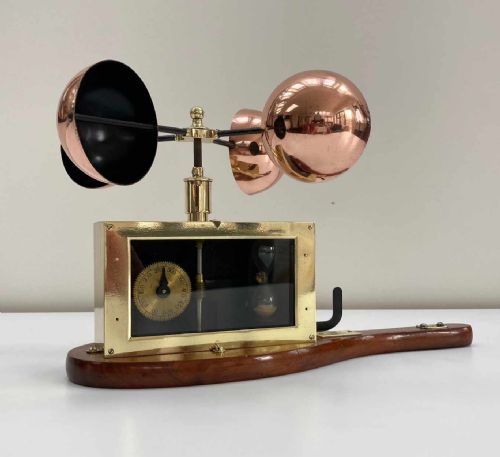
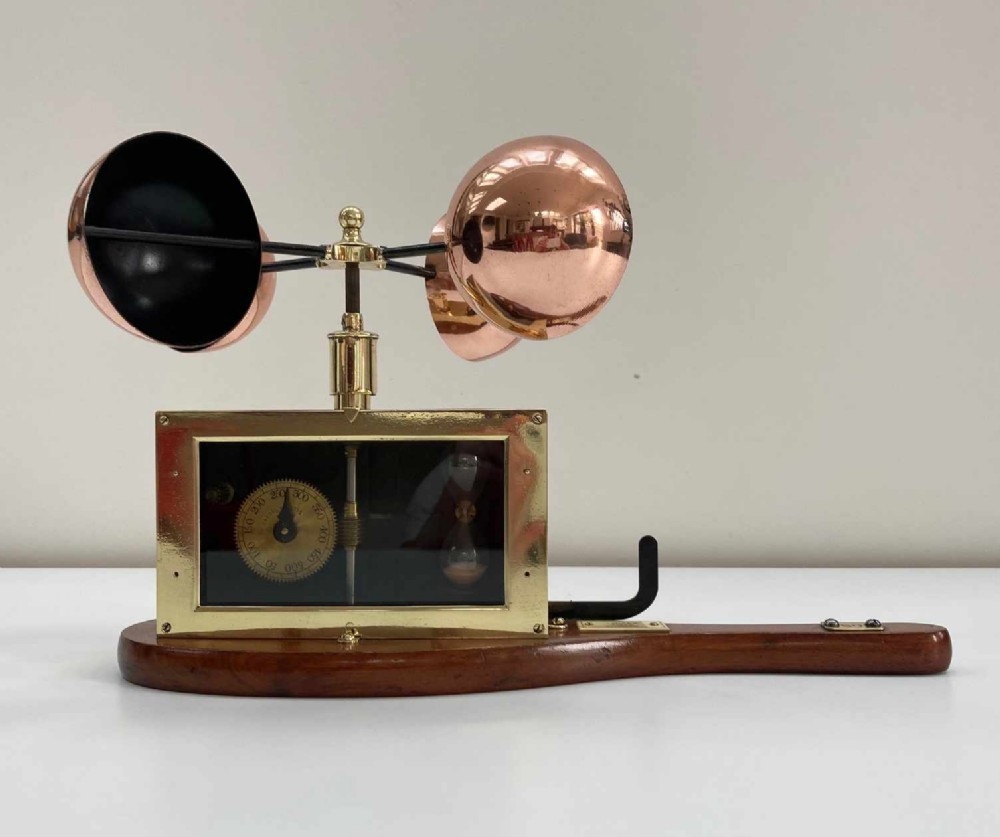
For sale, a scarce Russell’s Hand Anemometer by J Hicks of London.

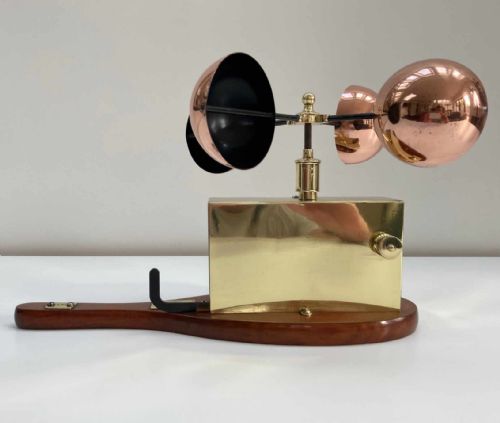
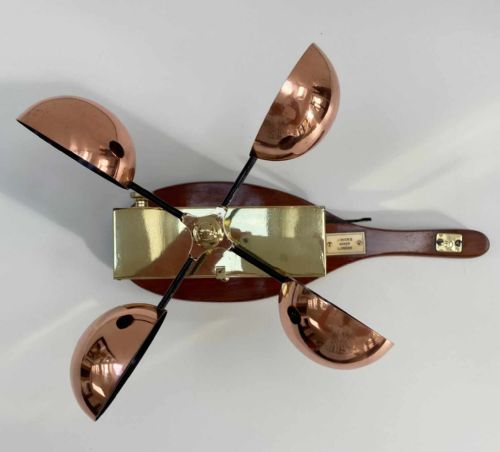
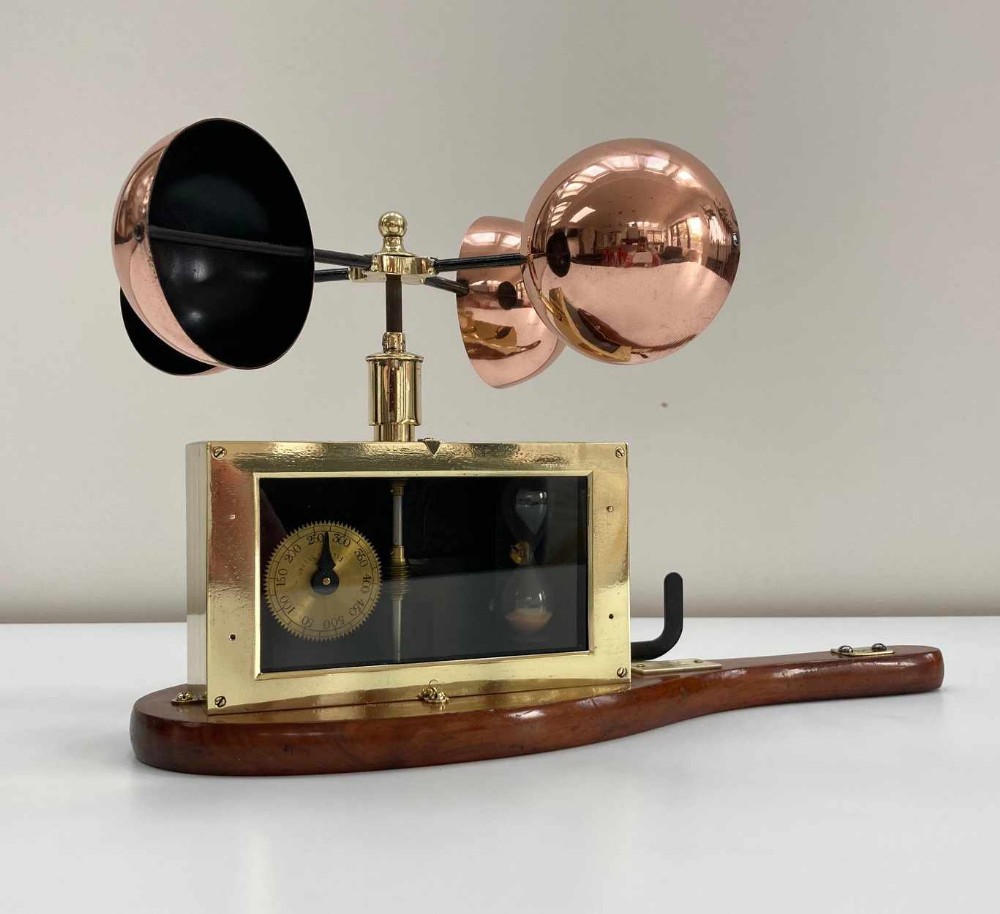
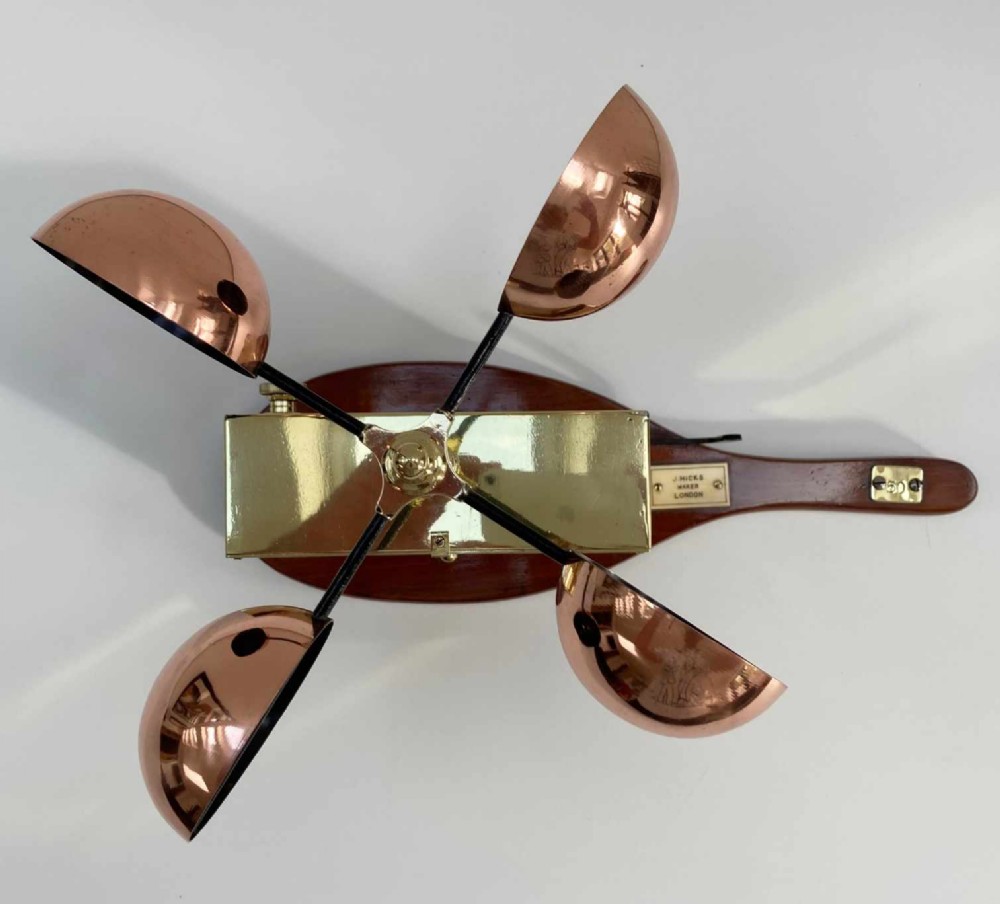
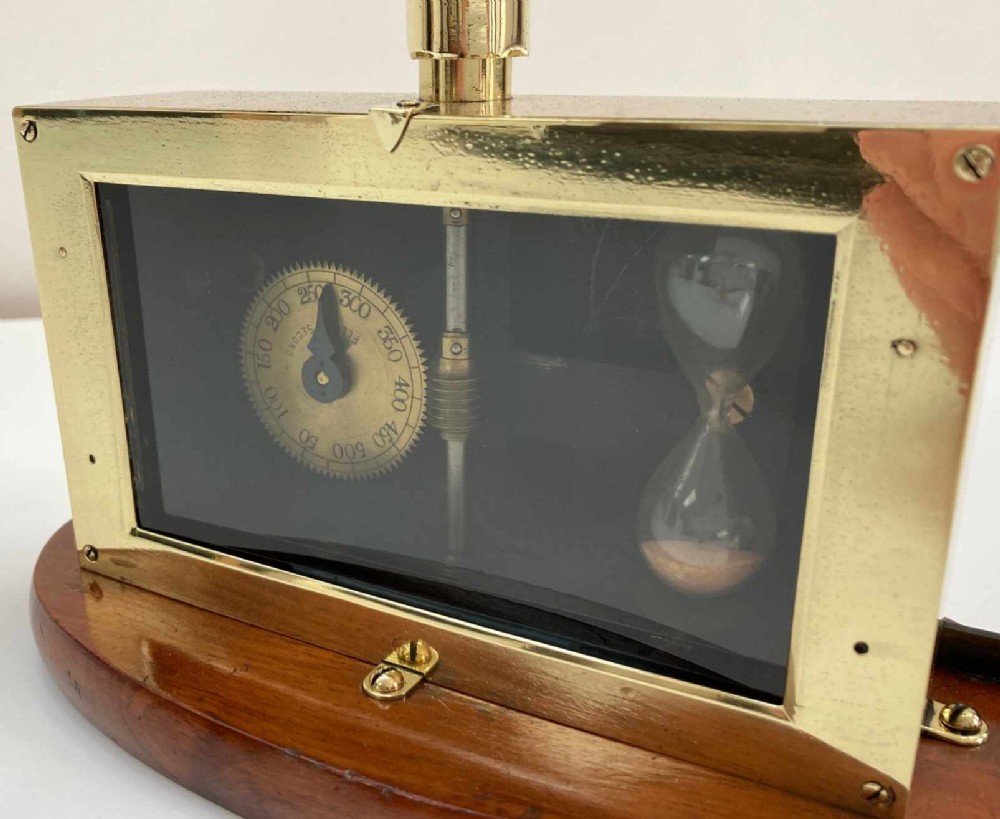
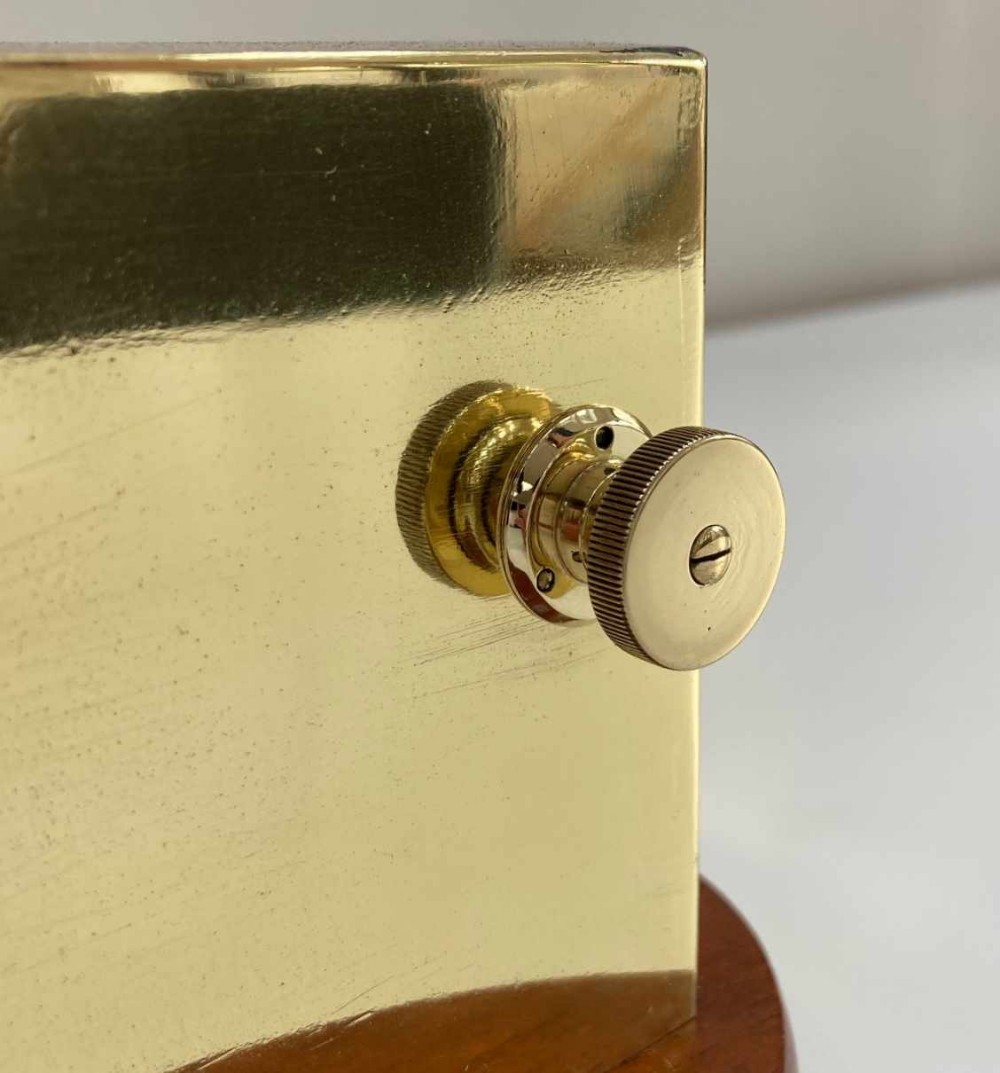
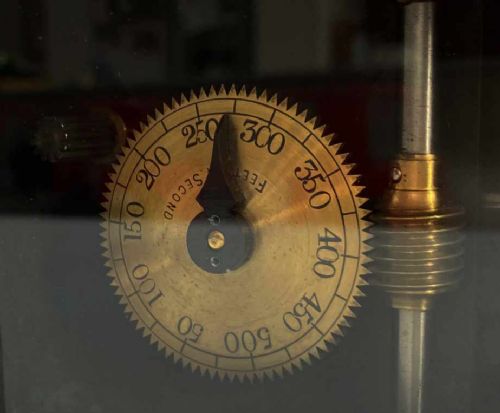
Comprised of a wooden paddle board, the base is mounted with a brass and glazed fronted case containing a sand glass and a brass dial scaled for feet per second. An external finger trigger to the side of the case when pushed, causes the sand glass to turn and simultaneously engages the dial with a central spindle connected to the four cups attached above the case. When operated in windy conditions, the cups would spin and register the amount of wind recorded during the time it took for the sand glass to complete its cycle. At this point the trigger is pulled to disengage the mechanism to allow for precise reading. When disengaged, a knurled screw can be used to reset the dial to zero.
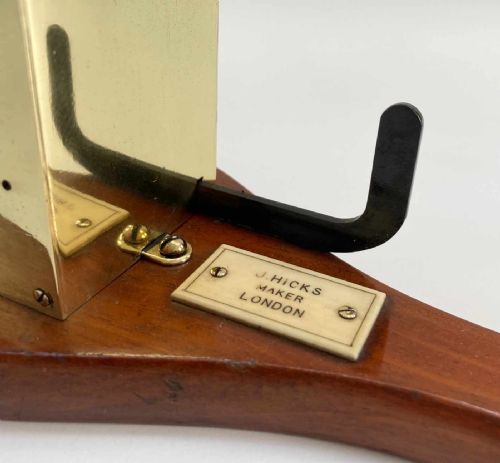
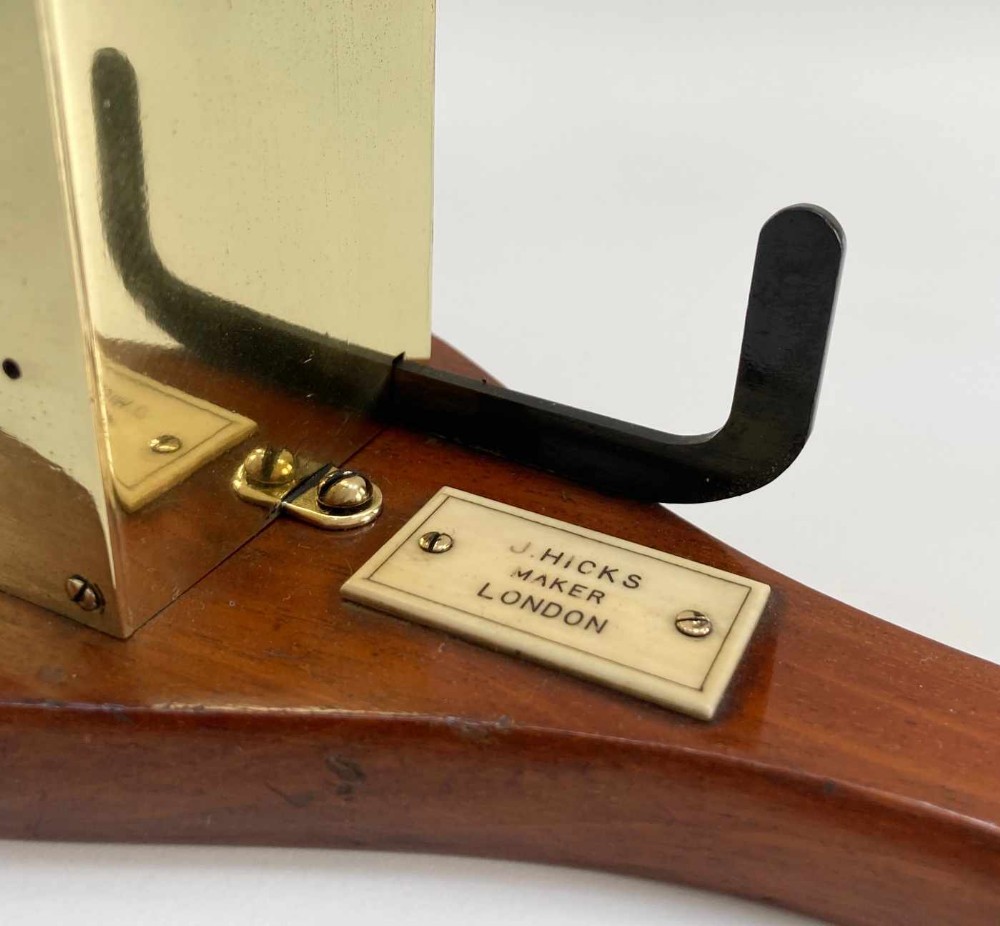
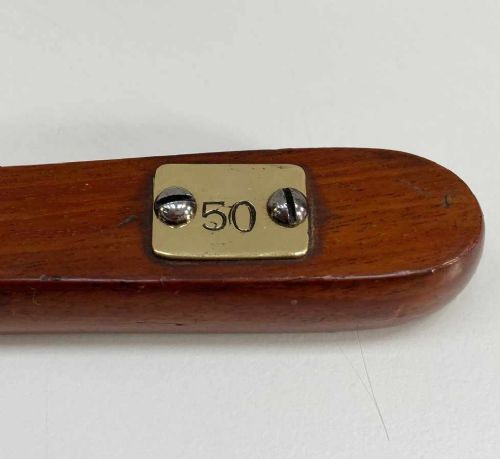
The instrument bears an ivorine plaque to the handle for “J. Hicks Maker, London” and a second brass plaque with the number 50 engraved upon it. We may assume that this was an inventory number for The Met Office or some other similar organisation.
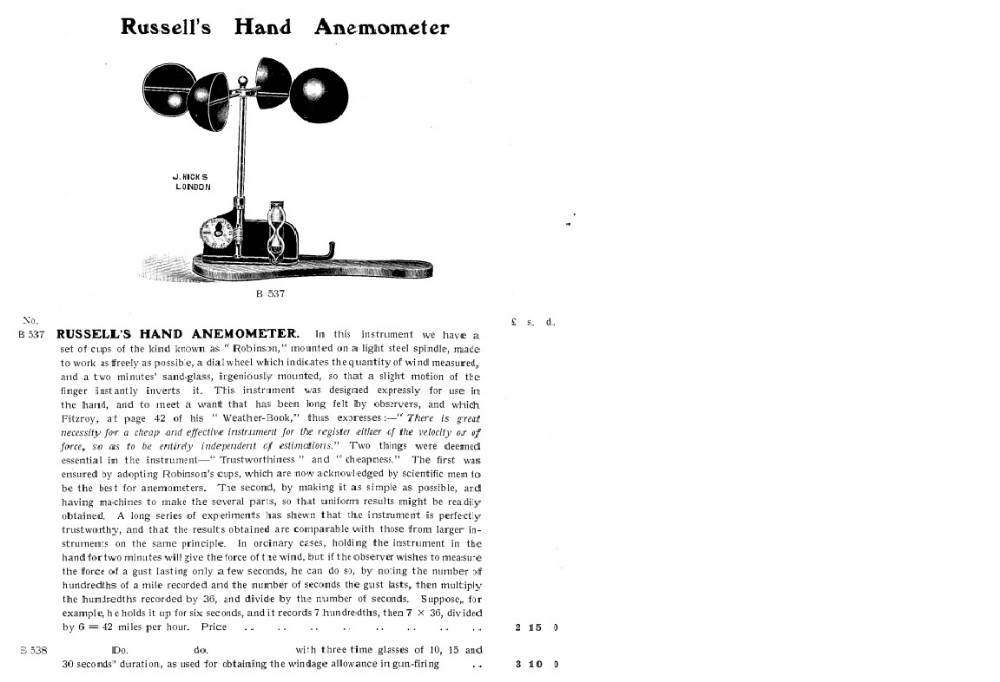
The anemometer is described within Hick’s 1911 Catalogue as follows:

RUSSELL’S HAND ANEMOMETER. In this instrument we have a set of cups of the kind known as “Robinson” mounted on a light steel spindle, made to work as freely as possible, a dial wheel which indicates the quantity of wind measured, and a two minutes’ sand glass, ingeniously mounted, so that a slight motion fo the finger instantly inverts it. This instrument was designed expressly for use in the hand, and to meet a want that has been long felt by observers, and which Fitzroy (Admiral Fitzroy), at page 42 of his “Weather Book” thus expresses:- “There is great necessity for a cheap and effective instrument for the register either of the velocity or of force, so as to be entirely independent of estimations.” Two things were deemed essential in the instrument – “Trustworthiness” and “cheapness”. The first was ensured by adopting Robinson’s cups, which are now achnowledged by scientific men to be the best for anemometers. The second, by making it as simple as possible, and having machines to make several parts, so that uniform results might be readily obtained. A long series of experiments has shewn that the instrument is perfectly trustworthy, and that the results obtained are comparable with those from larger instruments on the same principle. In ordinary cases, holding the instrument in the hand for two minutes will give the force of the wind, but if the observer wishes to measure the force of a gust lasting only a few seconds, he can do so, by noting the number of hundredths of a mile recorded nd the number of seconds the gust lasts, then multiply the hundredths recorded by 36, and divide by the number of seconds. Suppose for example, he holds it up for six seconds, and it records 7 hundredths, then 7 x 36, divided by 6 = 42 miles per hour.”
The price at this time was £2 and 15 shillings

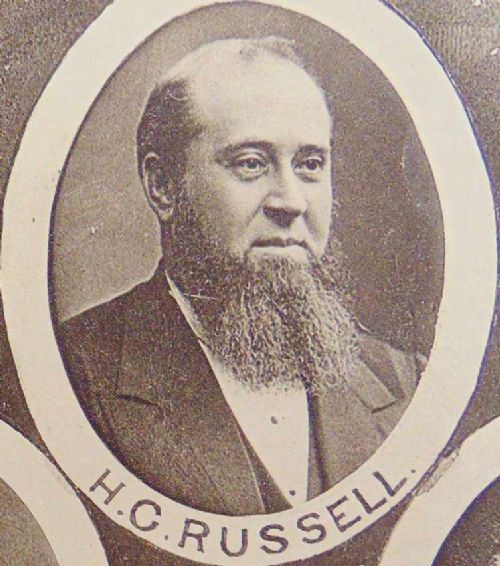
This instrument was originally designed by the Australian astronomer and meteorologist, Henry Chamberlain Russell (1836 – 1907). Russell joined the staff of The Sydney Observatory in the 1860’s and became acting director from 1862 to 1864 until George Smalley was formally appointed. It was, (according to The Sydney Bulletin of 1880) during this period that Russell invented his hand anemometer.
Upon Smalley’s death in 1870, he was formally appointed and continued to hold that position until 1905. He was responsible for greatly expanding the number of observing weather station throughout Australia, most of which were manned by volunteers. His need for cheap and reliable instruments was therefore necessary and Hicks’s advert continued to espouse this sentiment beyond Russell’s death. He was both President of The Royal Society of New South Wales and a Fellow of the Royal Society London and was awarded the CMG in 1890. Russell continued to dedicate his time to The Sydney O

Physical Dimensions
Height
21cm (8.27")
Width
34cm (13.39")
Depth
22cm (8.66")
Declaration

Jason Clarke Antiques has dated this piece to the 1890s.

Reference Numbers
Sellingantiques Reference
SA738687
Description
For sale, a scarce Russell’s Hand Anemometer by J Hicks of London.
Comprised of a wooden paddle board, the base is mounted with a brass and glazed fronted case containing a sand glass and a brass dial scaled for feet per second.
Jason Clarke Antiques

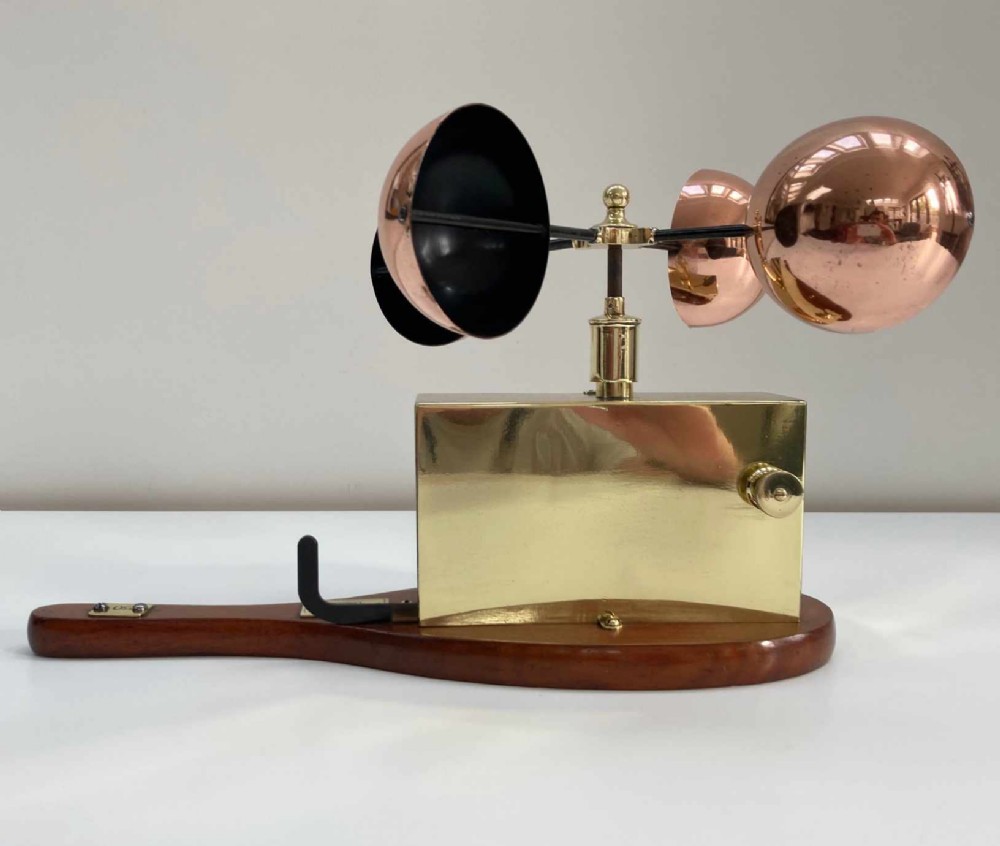
An external finger trigger to the side of the case when pushed, causes the sand glass to turn and simultaneously engages the dial with a central spindle connected to the four cups attached above the case. When operated in windy conditions, the cups would spin and register the amount of wind recorded during the time it took for the sand glass to complete its cycle. At this point the trigger is pulled to disengage the mechanism to allow for precise reading. When disengaged, a knurled screw can be used to reset the dial to zero.

fig 1. Russells Hand Anemometer by J Hicks of London

The instrument bears an ivorine plaque to the handle for “J. Hicks Maker, London” and a second brass plaque with the number 50 engraved upon it. We may assume that this was an inventory number for The Met Office or some other similar organisation.

fig 2. Russells Hand Anemometer by J Hicks of London

The anemometer is described within Hick’s 1911 Catalogue as follows:

RUSSELL’S HAND ANEMOMETER. In this instrument we have a set of cups of the kind known as “Robinson” mounted on a light steel spindle, made to work as freely as possible, a dial wheel which indicates the quantity of wind measured, and a two minutes’ sand glass, ingeniously mounted, so that a slight motion fo the finger instantly inverts it. This instrument was designed expressly for use in the hand, and to meet a want that has been long felt by observers, and which Fitzroy (Admiral Fitzroy), at page 42 of his “Weather Book” thus expresses:- “There is great necessity for a cheap and effective instrument for the register either of the velocity or of force, so as to be entirely independent of estimations.” Two things were deemed essential in the instrument – “Trustworthiness” and “cheapness”. The first was ensured by adopting Robinson’s cups, which are now achnowledged by scientific men to be the best for anemometers. The second, by making it as simple as possible, and having machines to make several parts, so that uniform results might be readily obtained. A long series of experiments has shewn that the instrument is perfectly trustworthy, and that the results obtained are comparable with those from larger instruments on the same principle. In ordinary cases, holding the instrument in the hand for two minutes will give the force of the wind, but if the observer wishes to measure the force of a gust lasting only a few seconds, he can do so, by noting the number of hundredths of a mile recorded nd the number of seconds the gust lasts, then multiply the hundredths recorded by 36, and divide by the number of seconds. Suppose for example, he holds it up for six seconds, and it records 7 hundredths, then 7 x 36, divided by 6 = 42 miles per hour.”

fig 3. Russells Hand Anemometer by J Hicks of London

The price at this time was £2 and 15 shillings

This instrument was originally designed by the Australian astronomer and meteorologist, Henry Chamberlain Russell (1836 – 1907). Russell joined the staff of The Sydney Observatory in the 1860’s and became acting director from 1862 to 1864 until George Smalley was formally appointed. It was, (according to The Sydney Bulletin of 1880) during this period that Russell invented his hand anemometer.

fig 4. Russells Hand Anemometer by J Hicks of London

Upon Smalley’s death in 1870, he was formally appointed and continued to hold that position until 1905. He was responsible for greatly expanding the number of observing weather station throughout Australia, most of which were manned by volunteers. His need for cheap and reliable instruments was therefore necessary and Hicks’s advert continued to espouse this sentiment beyond Russell’s death. He was both President of The Royal Society of New South Wales and a Fellow of the Royal Society London and was awarded the CMG in 1890. Russell continued to dedicate his time to The Sydney O

Height
21cm (8.27")
Width
34cm (13.39")
Depth
22cm (8.66")
Date of Manufacture

Jason Clarke Antiques has dated this piece to the 1890s.

Reference Numbers
Sellingantiques Ref
SA738687
Jason Clarke Antiques
Sellingantiques verified Since Jul 2015
Dealer Profile

You can view the stock and full dealer information on the Jason Clarke Antiques Profile Page
PDF SHARE
SAVE
Russells Hand Anemometer by J Hicks of London
1 / 11
Archive I Russells Hand Anemometer by J Hicks of London
Russells Hand Anemometer by J Hicks of London
Archive II Russells Hand Anemometer by J Hicks of London View II
Archive III Russells Hand Anemometer by J Hicks of London View III
Archive IV Russells Hand Anemometer by J Hicks of London View IV
Archive V Russells Hand Anemometer by J Hicks of London View V
Archive VI Russells Hand Anemometer by J Hicks of London View VI
Archive VII Russells Hand Anemometer by J Hicks of London View VII
Archive VIII Russells Hand Anemometer by J Hicks of London View VIII
Archive IX Russells Hand Anemometer by J Hicks of London View IX
Archive X Russells Hand Anemometer by J Hicks of London View X
Archive XI Russells Hand Anemometer by J Hicks of London View XI
Enlarged Archival View
Telephone 07815 046645
Location
Newbury
Berkshire
United Kingdom
Verified Since Jul 2015
Items For Sale 80
Items Sold 607
Jason Clarke Antiques
Verified Since Jul 2015
View Dealer Info
Location: Newbury, Berkshire, United Kingdom
Verified
Jul 2015
For Sale
80
Sold
607
Russells Hand Anemometer by J Hicks of London
Ref: SA738687
Russells Hand Anemometer by J Hicks of London
Detail View 1
Detail View 2
Detail View 3
Detail View 4
Detail View 5
Detail View 6
Detail View 7
Detail View 8
Detail View 9
Detail View 10
Archival Detail
Every single antique dealer on our platform is individually approved by our internal team. We verify their professional trade history, ethical standards, and photographic quality to ensure a secure, high-standard buying environment. Upon joining, every dealer agrees to a strict 9-point code of conduct. While issues can occasionally arise, our dealers typically resolve them swiftly and directly with the buyer. In fact, since our founding in 2002, Sellingantiques has only had to step in to help resolve an issue on roughly five occasions—a true testament to the quality of our dealers and their dedication to your happiness.
Our dealers are highly experienced in packing and shipping fragile, high-value antiques. Because you are in direct contact with the dealer, you will be able to easily go through all available shipping and insurance options together to ensure your item arrives safely.
Antiques are the ultimate green purchase. By choosing historical pieces over newly manufactured goods, you completely eliminate the carbon footprint of modern mass production while preserving exceptional, timeless craftsmanship.
items
Add keywords to the filter
Price
£100
£250000
Era
Movements
Material
Origin
Stock Location
Freshness
Online Payments
Categories