It was listed by Jason Clarke Antiques. Sold pieces stay on Sellingantiques as a record of what has passed through, and the next one is rarely far away.
Jason Clarke Antiques has dated this piece to the 1900s.
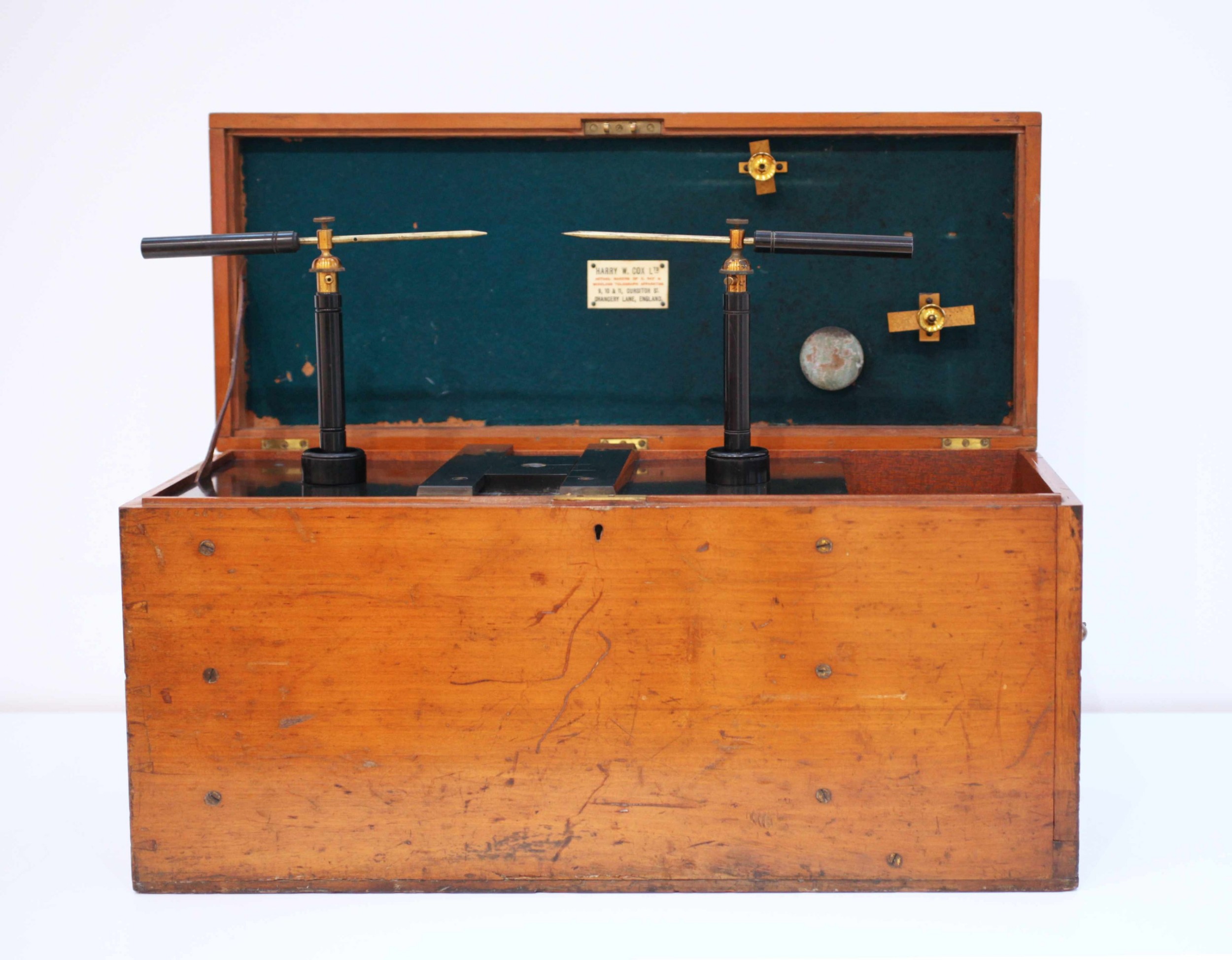
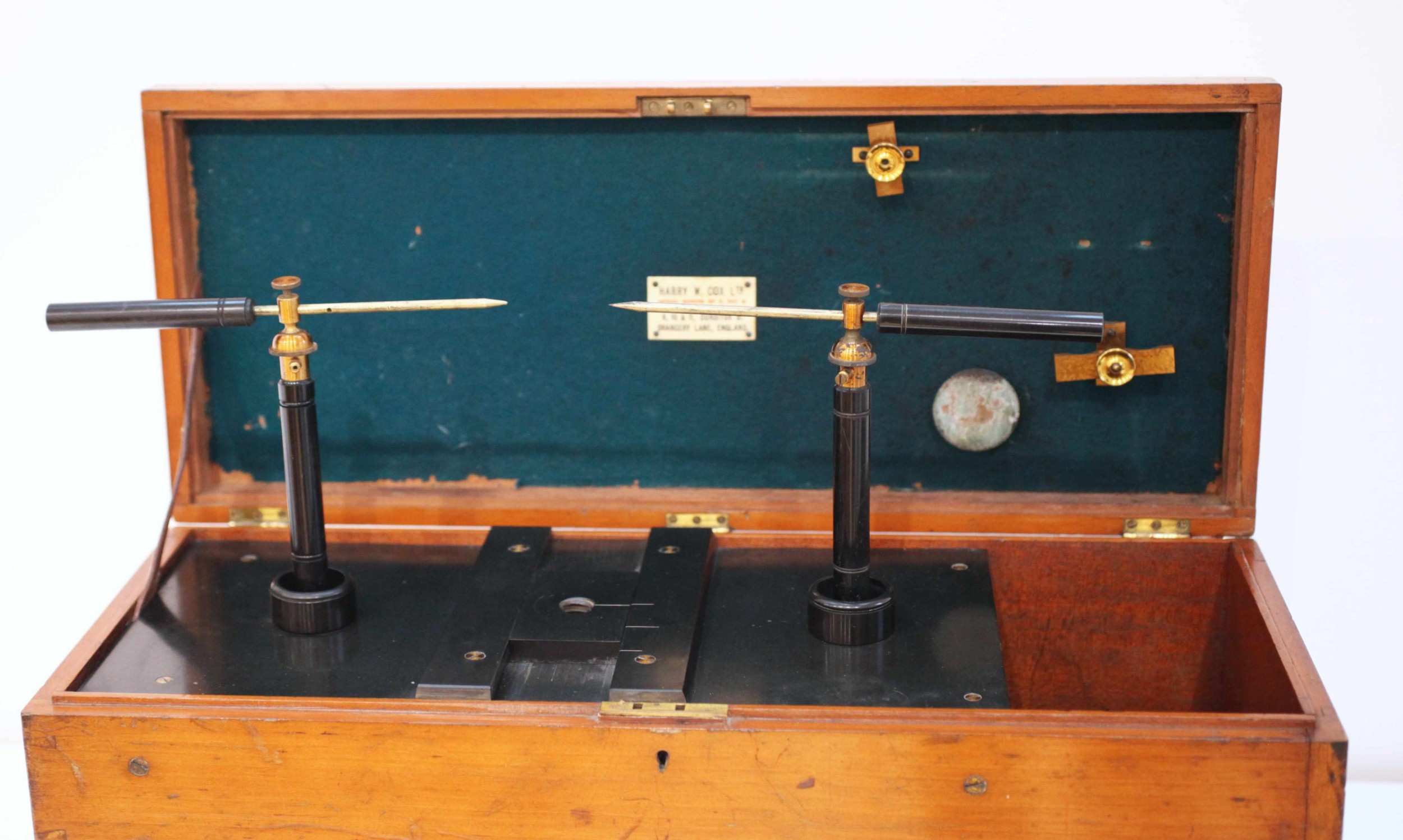
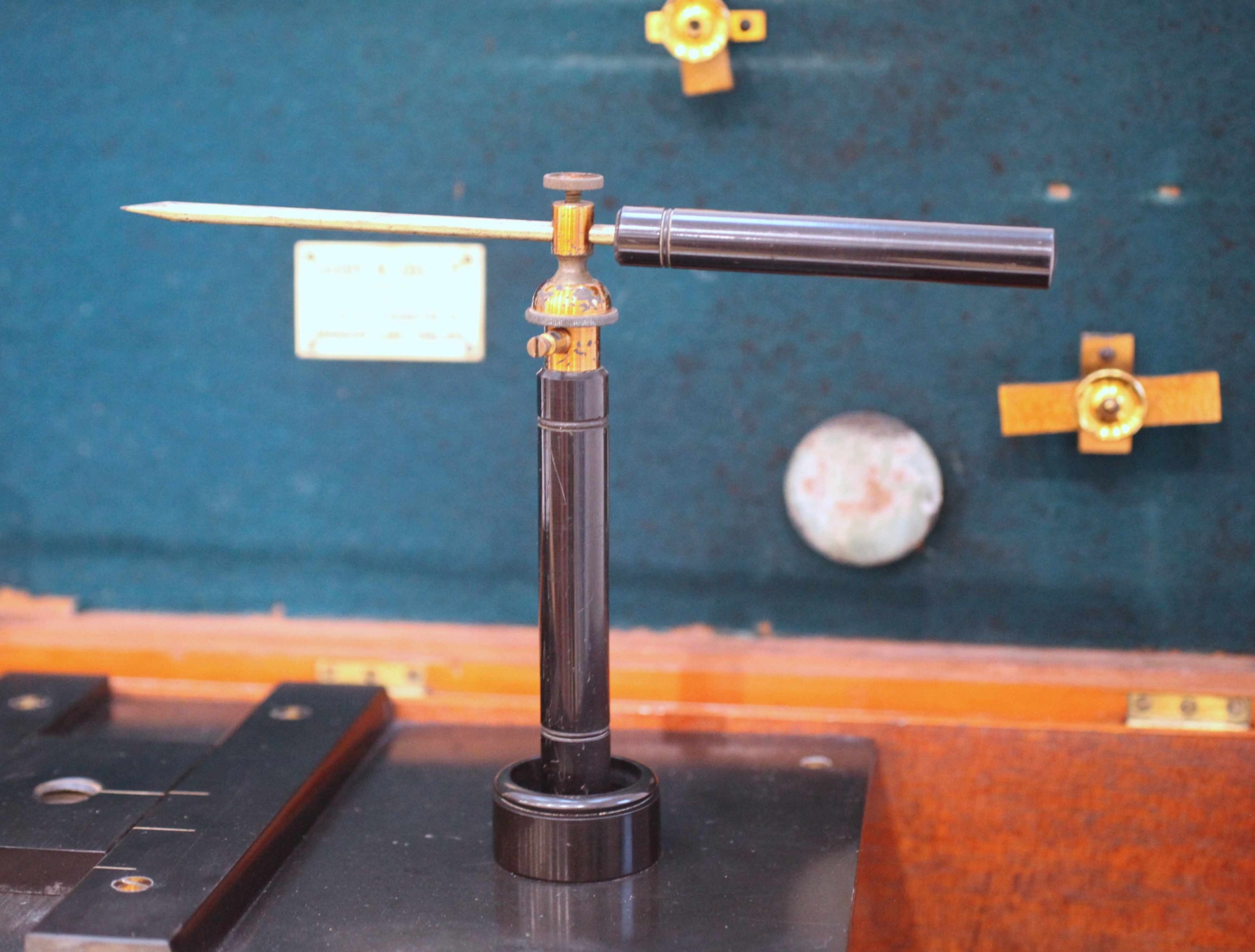
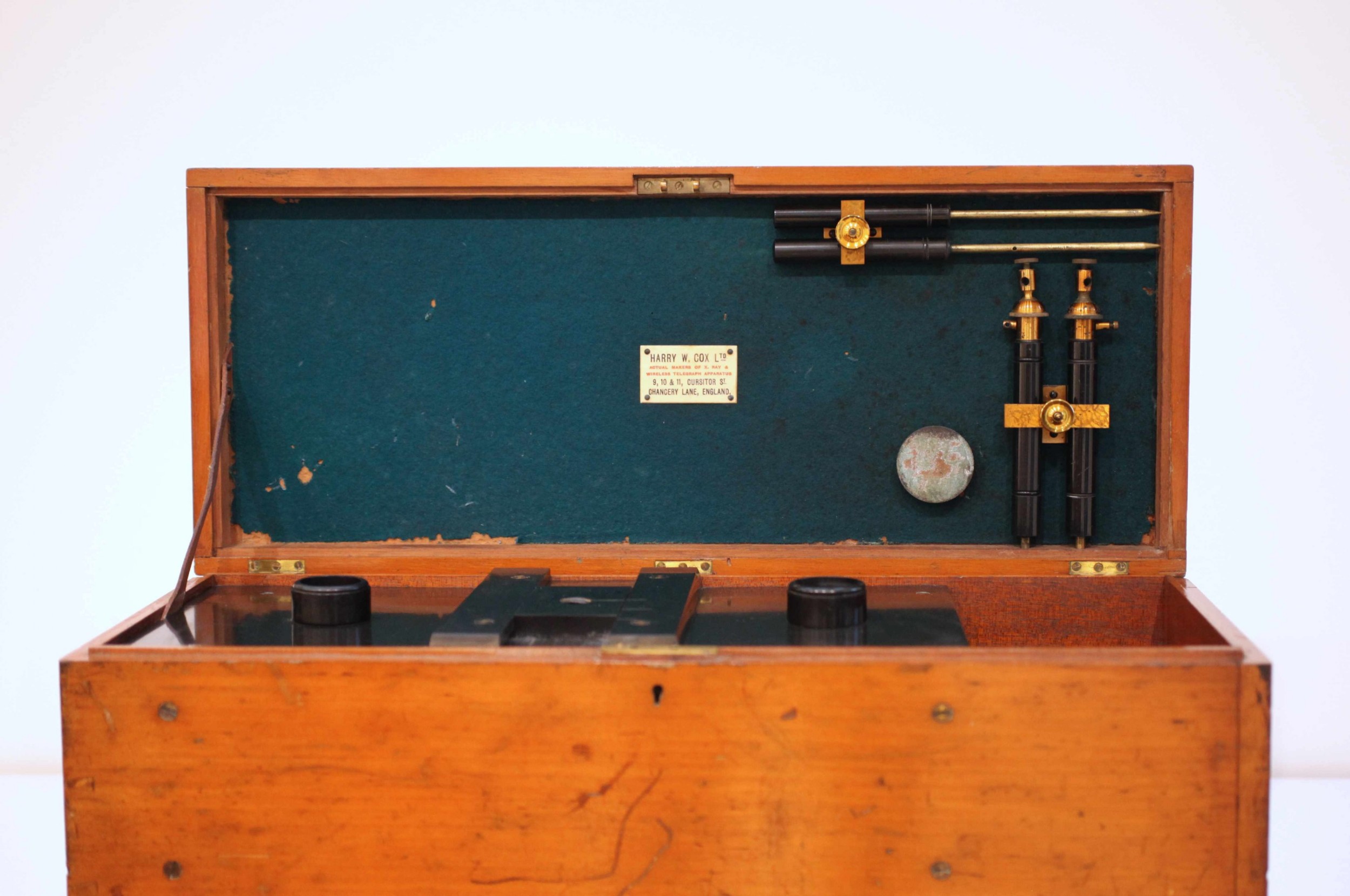
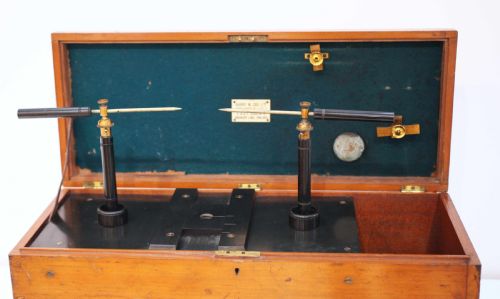
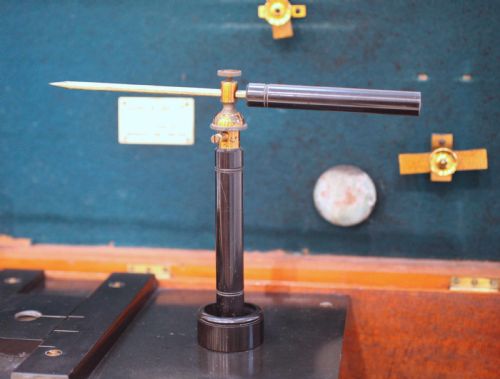
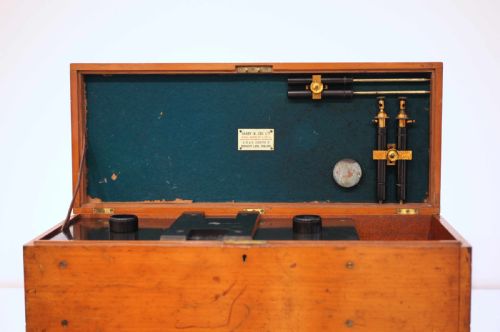
The discharging rods are attached to the underside of the lid for transit and are placed at connecting points above the coil when use is required.
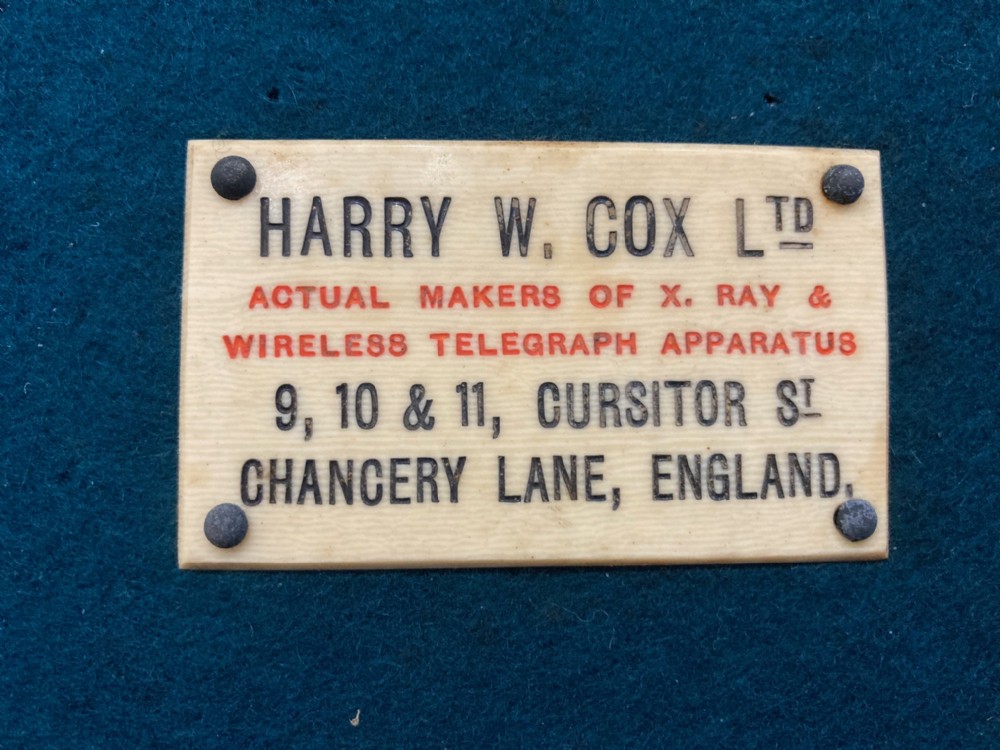
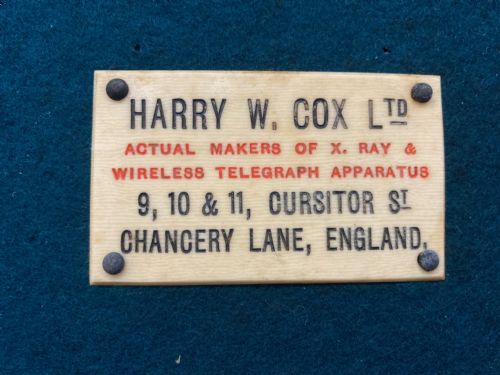
An ivorine plate remains at the centre of the lid, stating: “Harry W Cox & Co Ltd, Actual Makers of X-Ray & Electric Therapeutic Apparatus, 9,10 & 11 Cursitor St, Chancery Lane, England”.
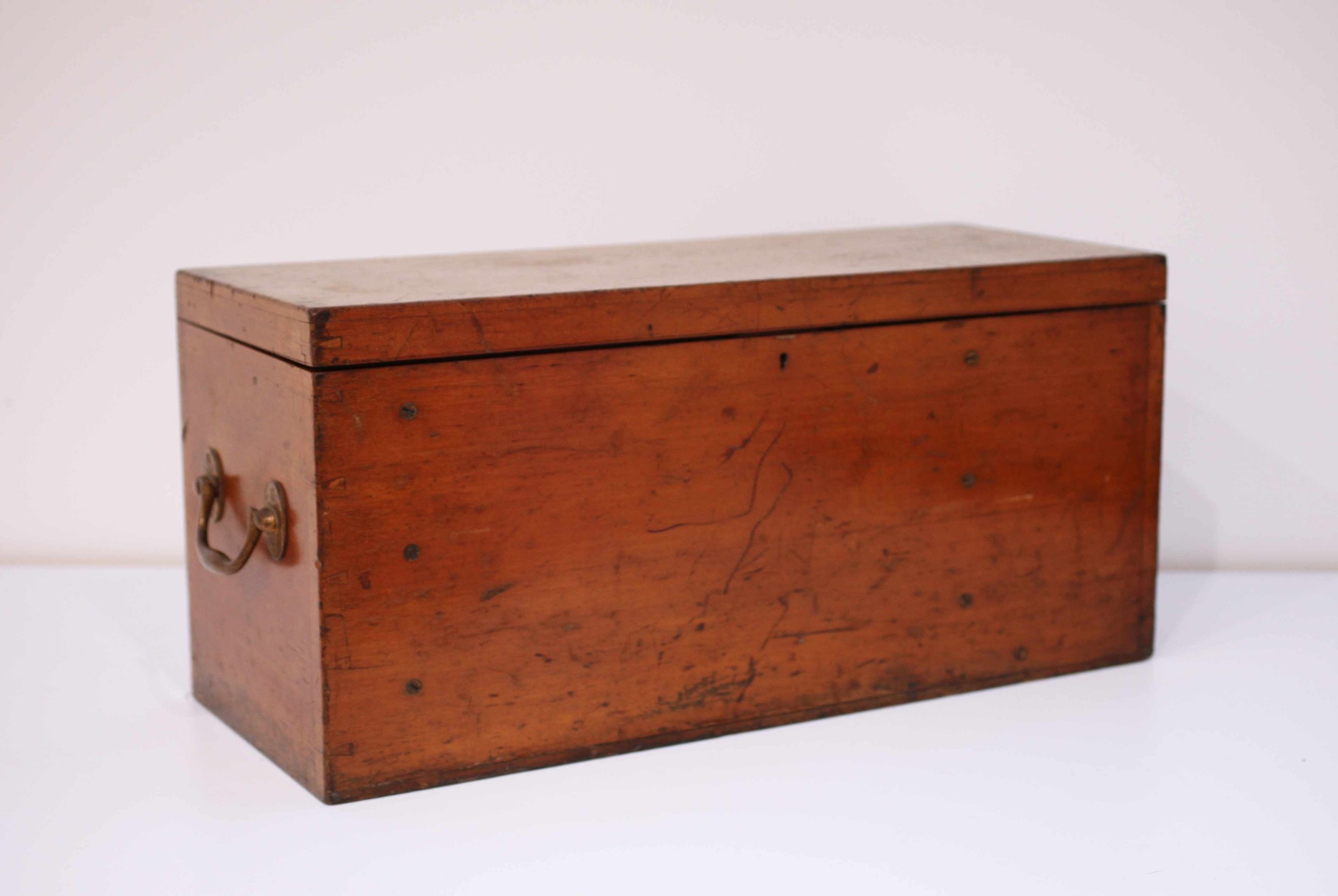
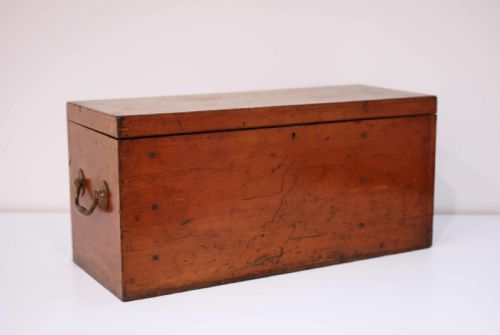
The box measures 65cms in length, 26cms in depth and 30cms in height and has brass carrying handles wither side.
An Edwardian Catalogue provides the following description:
“We were the pioneers of portable outfits, and although many professional men continue to give preference to the ordinary form of coil, we venture to predict that the portable pattern will eventually come into most favour, for the following reasons:
The portable coil, if properly constructed, is in every respect as powerful and effective as the other. The proviso is necessary, because as our experiments have proved, if the casing be not carefully constructed, and of suitable materials, a leakage of current will inevitably result. It is also possible to overstep the limits to which the size and weight of the coil may be safely reduced. Our portable coild are made as light and compact as practicable, without impairing their inefficiency, and we invite X-Ray workers to compare by test, the power of these coils with that of any other coils in the market, of equal spark-gap.
Our portable outfit justifies its appellation. It can be readily carried from place to place by a medical man in his brougham or dog cart and used at the patient’s bed-side. When not in use, the apparatus is completely protected from dust. To veterinary surgeons it should prove specially serviceable.
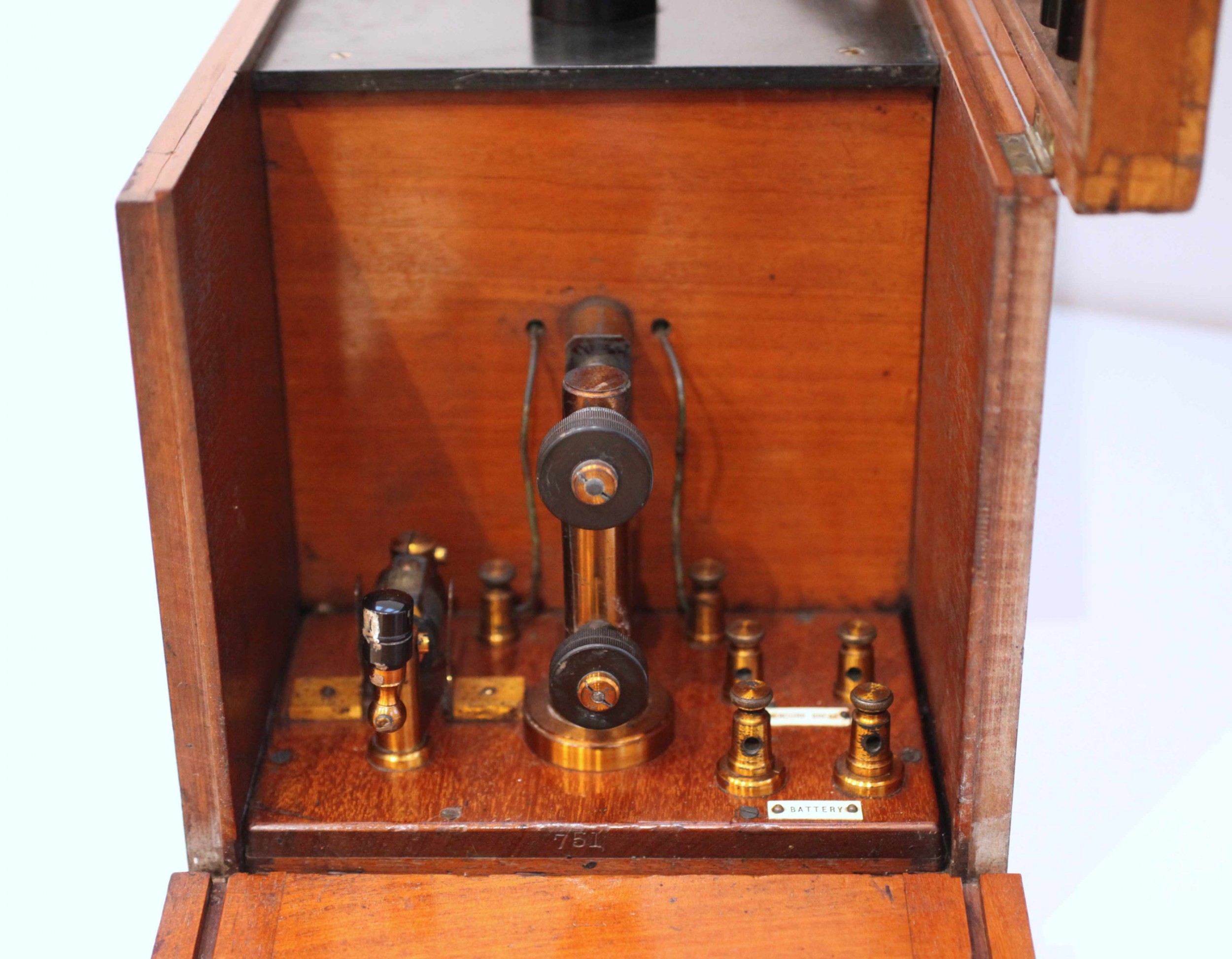
These coils are fitted with our improved oscillating platinum contact breaker, and with quarter inch platinum contacts, and provided with separate terminals for working with mercury, or electrolytic interrupters.
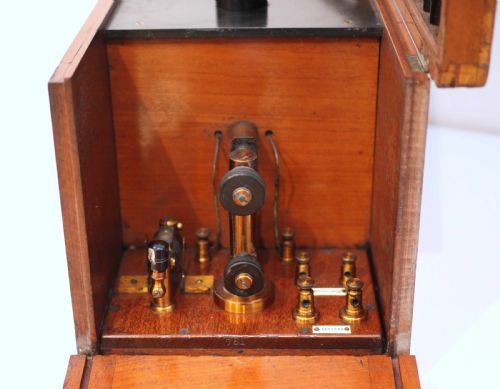
The ball socket discharge pillars fit into the tops of the coil by means of plugs, and when not in use are carried in clips inside the cover of the box. The latter is made of best seasoned mahogany, and the entire apparatus is of the finest English workmanship and finish throughout, and a model of compactness.
We should again impress upon customers that these coild are as effective as those illustrated in Fig 1 but are more compact and portable.
In regards to the heavy discharge coil (Fig 1) it relates that:
“Some of the leading hospitals and X-Ray workers have had our Base Coils, of the above pattern, in use for upwards of six years, and report to us that they still give highly satisfactory results.
With any of the above mentioned sizes, used in conjunction with our fluorescent screens, the spine, ribs and liver in the human body, as well as the movement of the heart and diaphragm can be plainly discerned.”
This portable model was sold in various sizes in reference to the size of the spark produced. The three models available at the time would have cost between £2000 and £3000, a huge sum for the time.
Harry William Charles Cox was born in Shoreditch in 1864, the son of a plumber. How Cox found his success remains unclear. An early catalogue quotes a feature in The Lancet of 1898 after a meeting of the British Medical Association where Cox himself demonstrated his English made coils and fluorescent screens for X-Rays. It is therefore safe to assume that Cox was in business soon after the discovery of the X-Ray by the German scientist Wilhelm Conrad Roentgen in 1895.
For the next twelve years Cox seems to have gained huge success with his X-Ray out
Jason Clarke Antiques has dated this piece to the 1900s.
You can view the stock and full dealer information on the Jason Clarke Antiques Profile Page
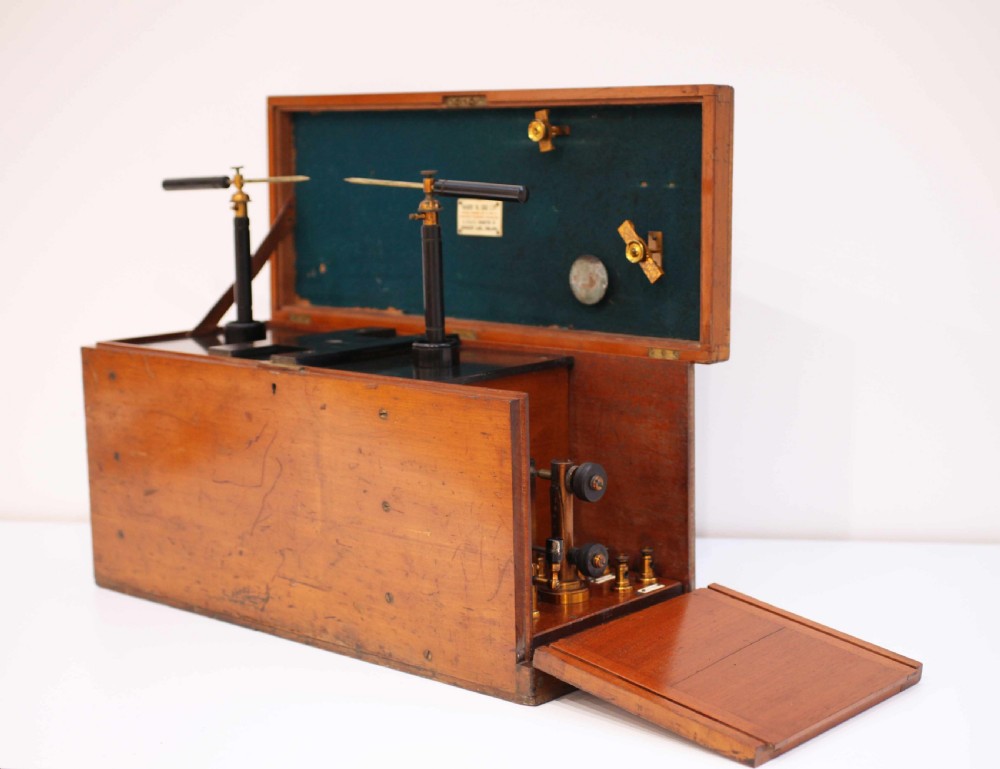
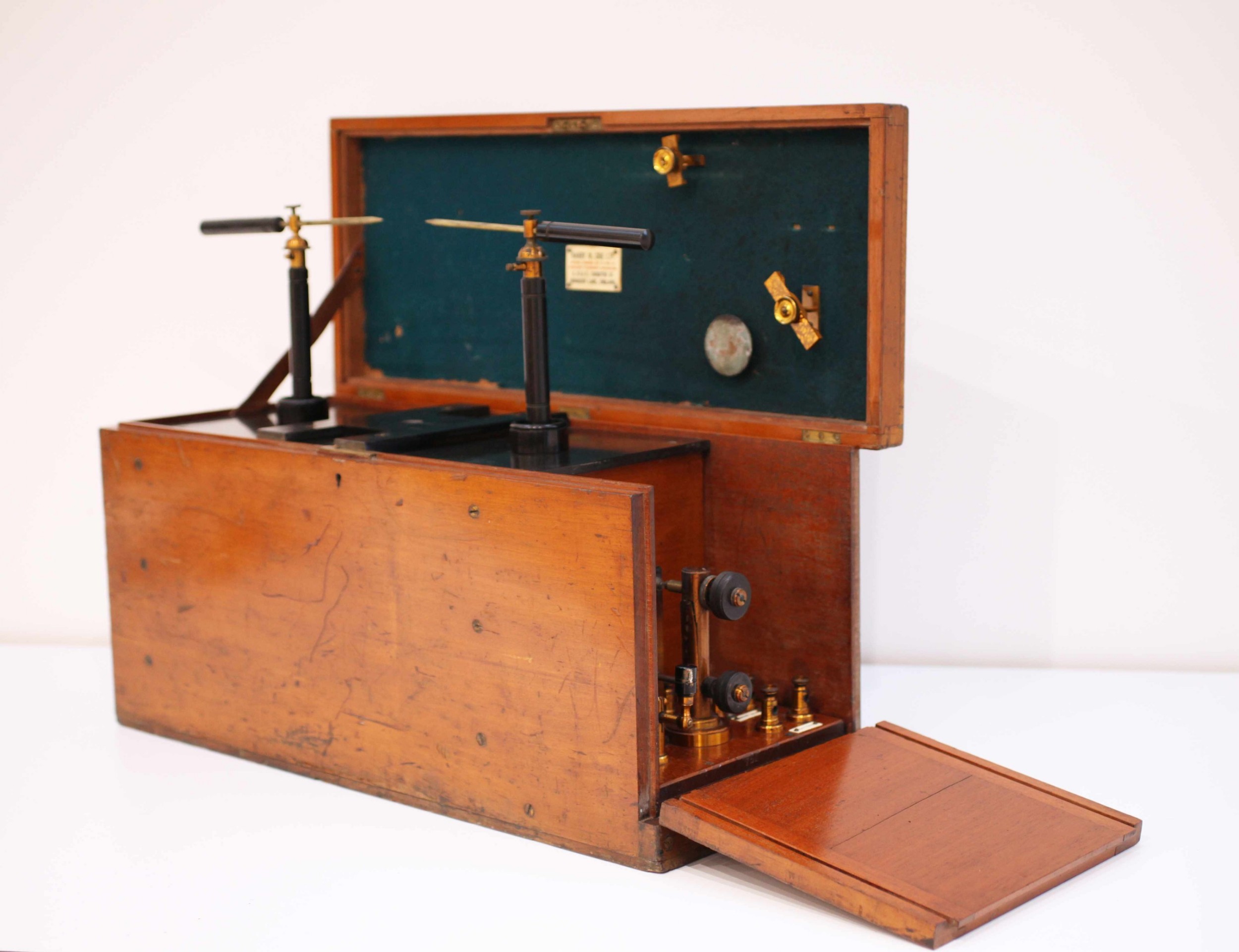
Edwardian Portable Heavy Discharge X-ray Coil by Harry W Cox & Co Ltd London