It was listed by Jason Clarke Antiques. Sold pieces stay on Sellingantiques as a record of what has passed through, and the next one is rarely far away.
Jason Clarke Antiques has dated this piece to the 1850s.
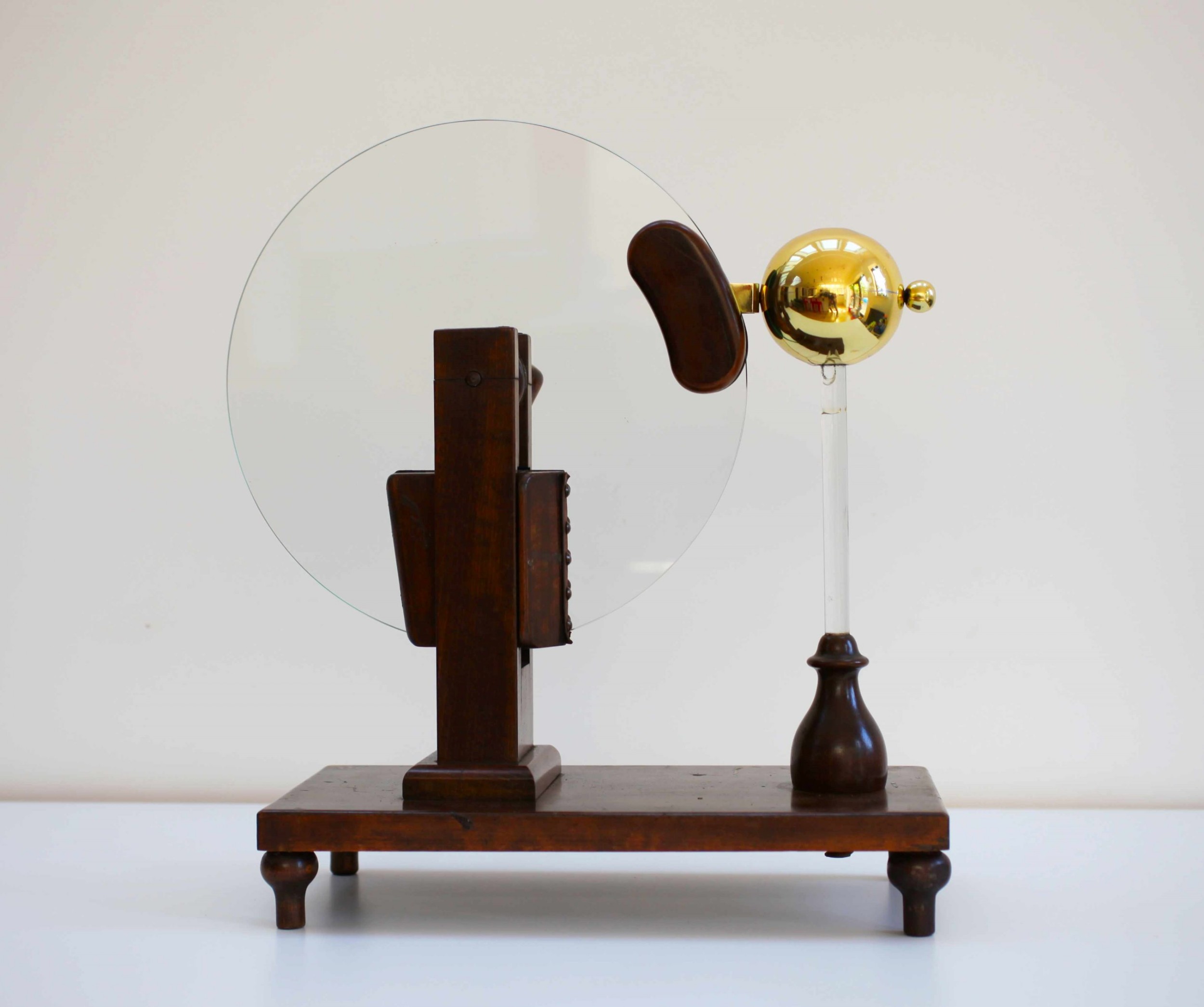
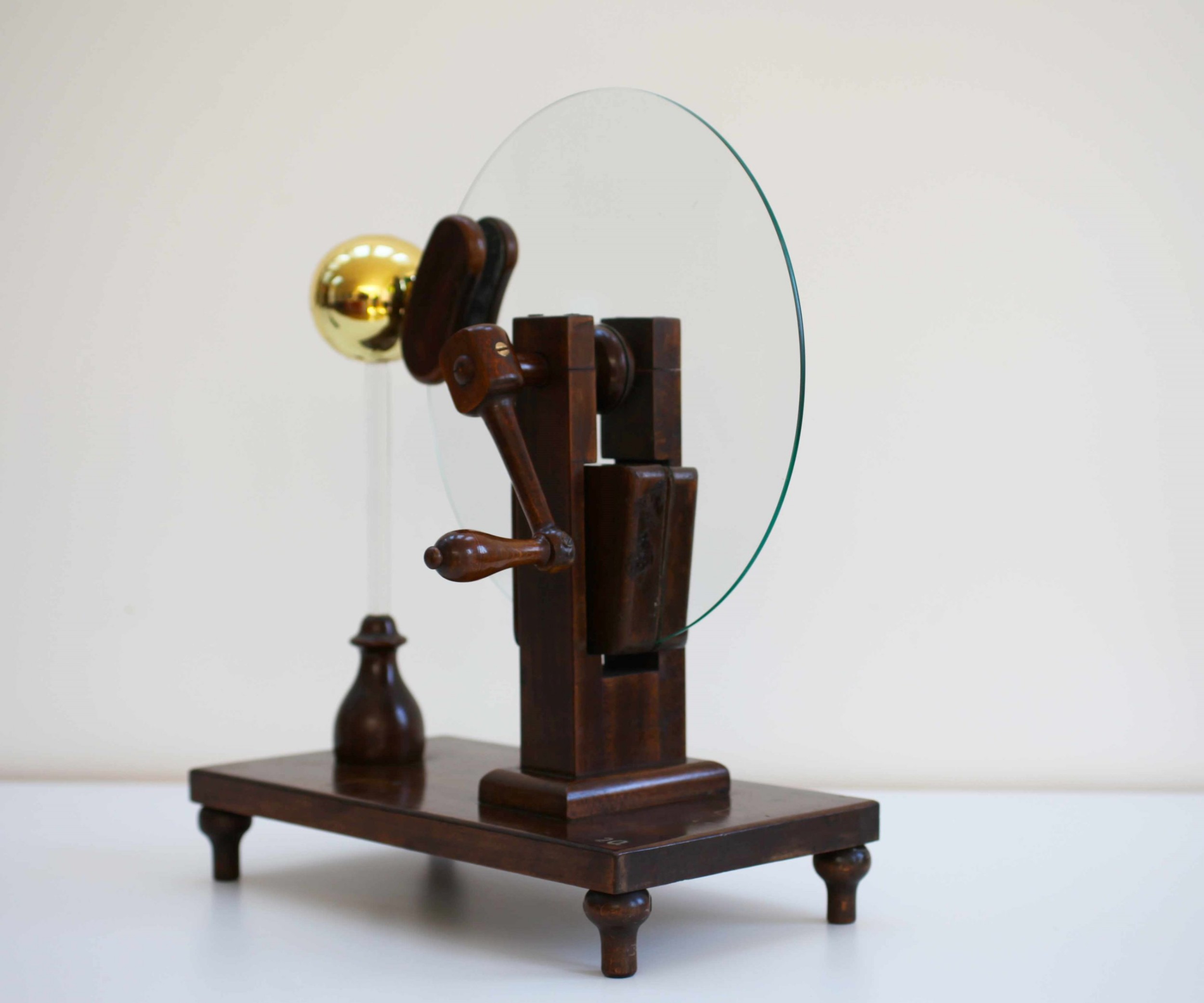
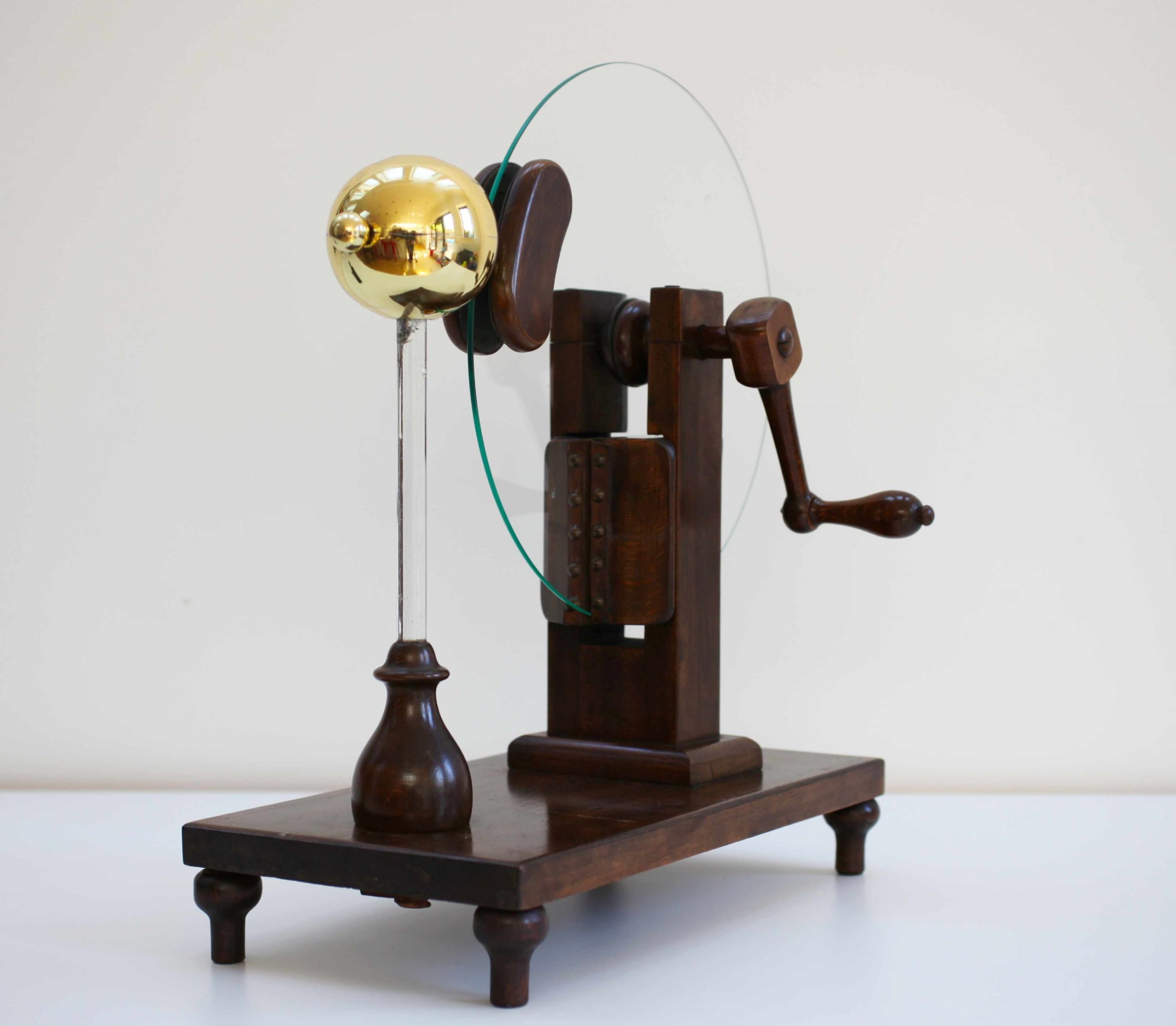
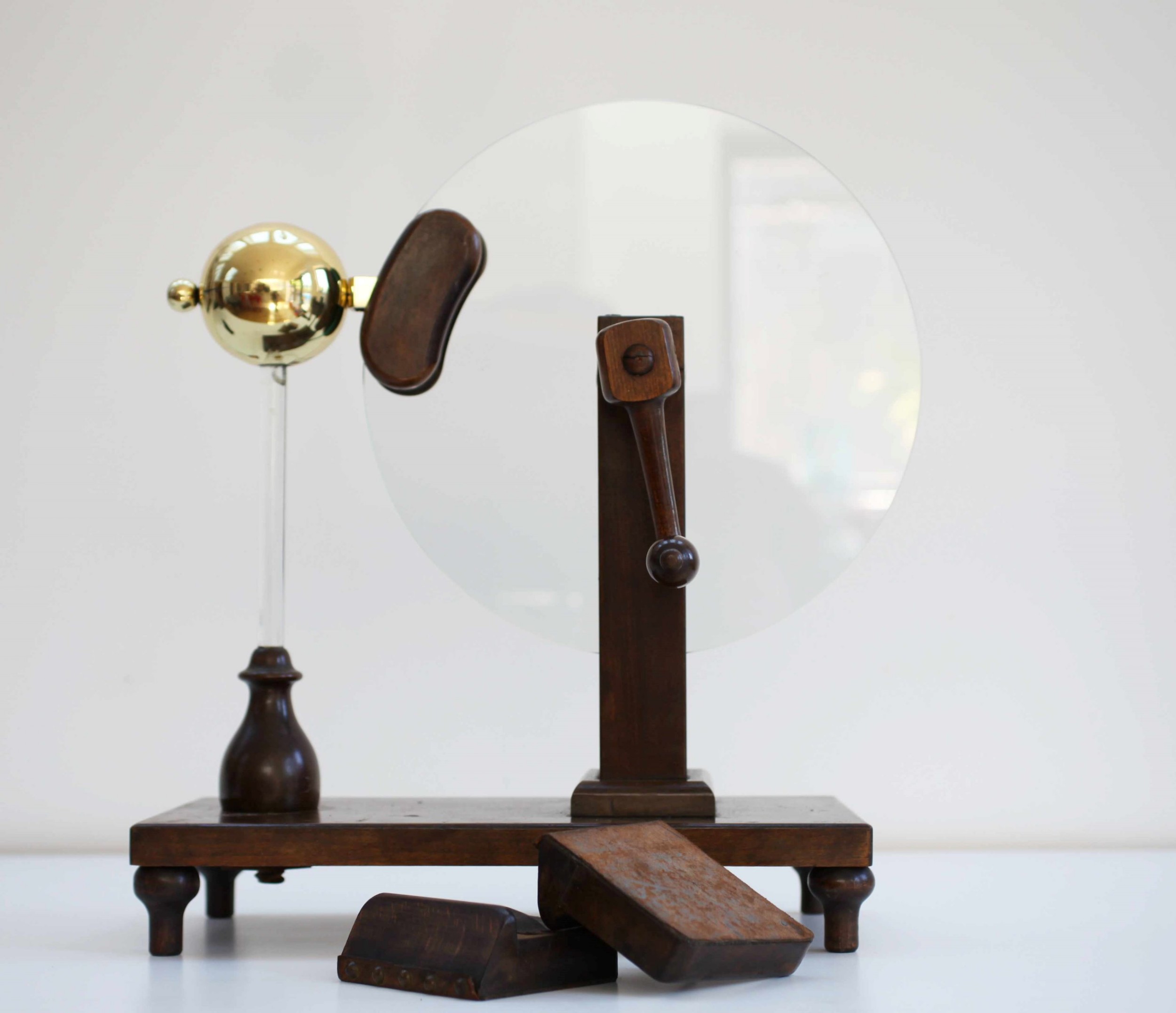
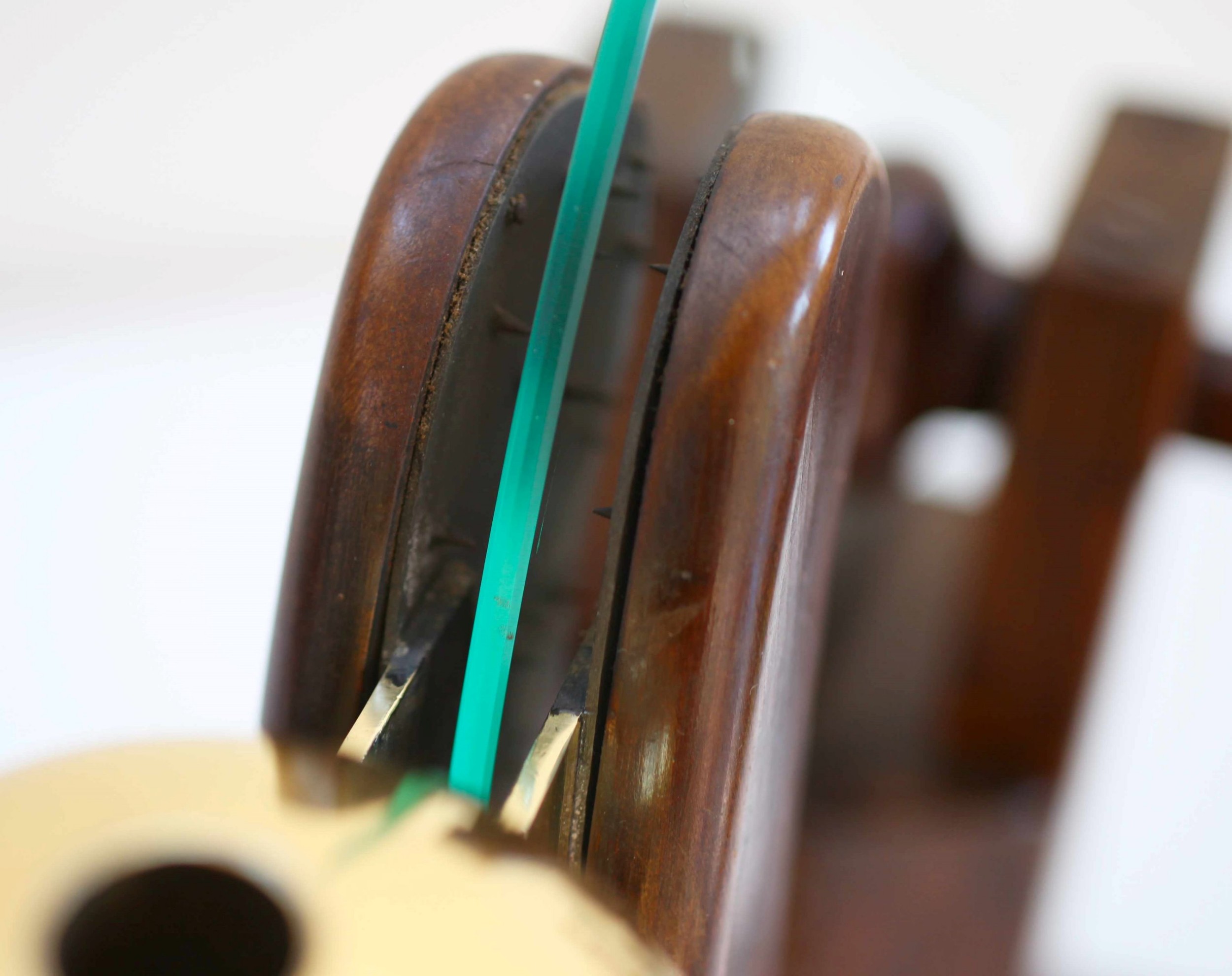
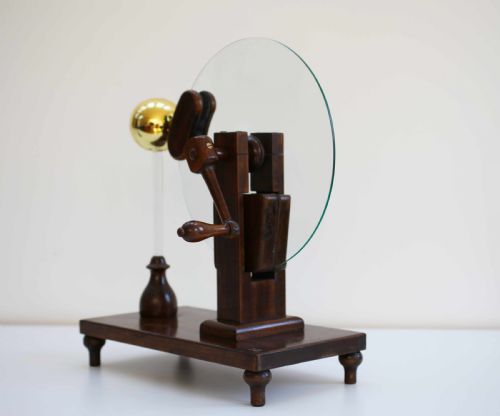
Below are two removable leather padded shoes which are sprung at the back to create a small amount of tension to the plate when it is put in motion by the handle.
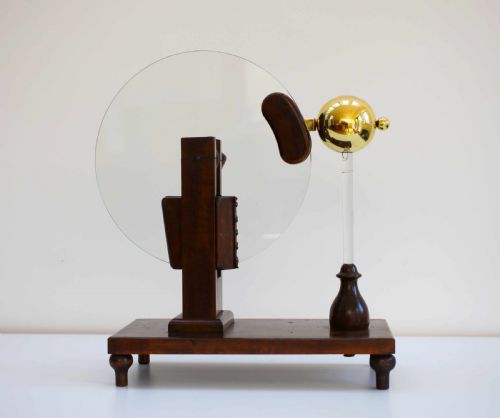
A brass conductor on glass rod is situated next to the plate and is serviced by two metal pinned collector pads which sits either side of the glass.
An extract from Ferguson’s Electricity of 1870 relates that. “"The two rubbers, one of which is shewn on the outside are triangular pieces of wood, covered with a padding of one or two layers of flannel, enclosed in leather, and they present a flat hard surface to the glass, so that friction between it and them takes place in every part. They are placed in a wooden frame on each side of the plate, and the pressure is regulated by metal springs, fixed to the outside, between them and the frame. Before use, they are covered with an amalgam of mercury, zinc, and tin, which is made to adhere with the aid of a little grease, and which increases immensely the production of electricity."
Invented in around 1800 by the Austrian Georg K Winter, the machine was considered a development of a single plate long sparking machine originally invented by the French physicist Jean Baptiste Le Roy in 1772. It was noted for its ability to develop long and dense sparks rather than the accumulation of high charges.
Circa 1850
Jason Clarke Antiques has dated this piece to the 1850s.
You can view the stock and full dealer information on the Jason Clarke Antiques Profile Page
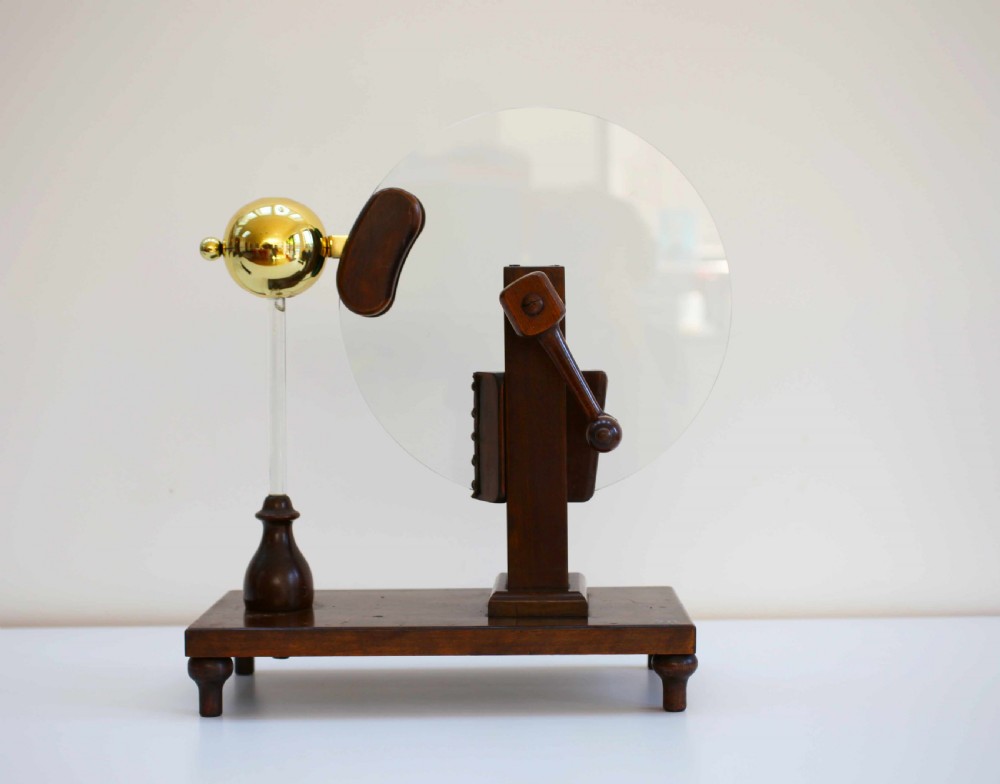
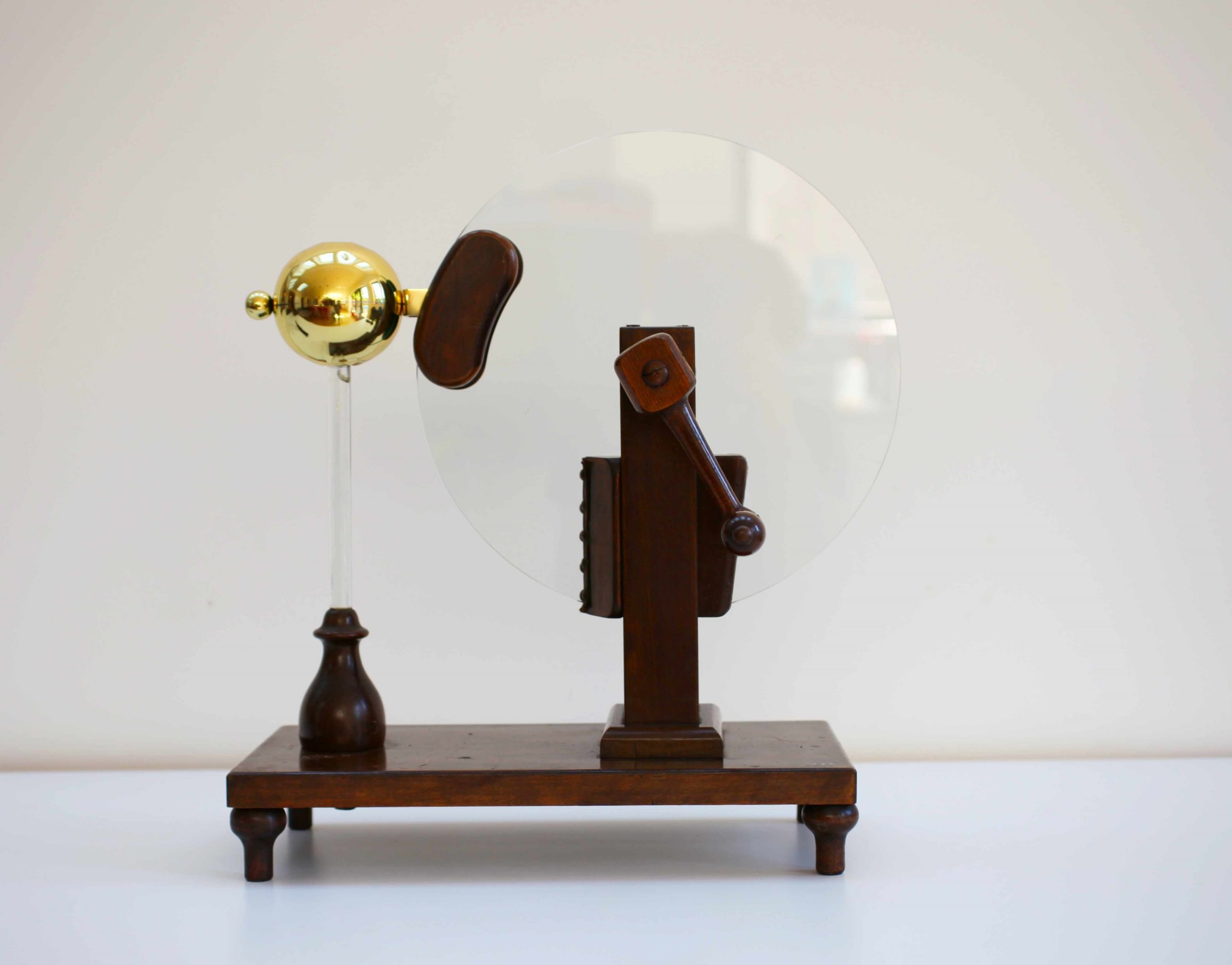
Early Victorian Winters Type Friction Electrostatic Machine