10,834  PAGES BROWSED TODAY PAGES TODAY 51 ANTIQUES UPLOADED TODAYNEW ARRIVALS
51 ITEMS ADDED TODAY
Sort Order
Items Per Page
Browse Categories
Sort order
Items per page
ID #SA696538
SOLD
Email
Save
Early Nineteenth Century Nairne Pattern Electrostatic Friction Machine
Jason Clarke Antiques
sold SA696538
Sorry, but this item has been sold.
Jason Clarke Antiques

Jason Clarke Antiques

Sellingantiques Verified Since Jul 2015
View Dealers Stock Page
Id #SA696538
PDF SHARE
SAVE

Early Nineteenth Century Nairne Pattern Electrostatic Friction Machine

19th century
Description

For sale, an early Nineteenth Century Nairne pattern electrostatic friction machine.

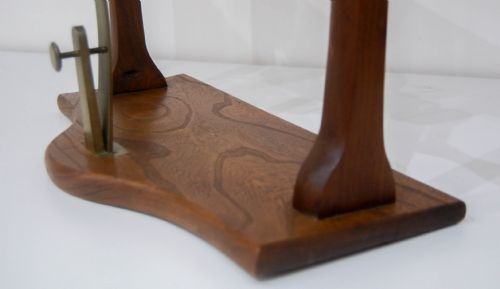
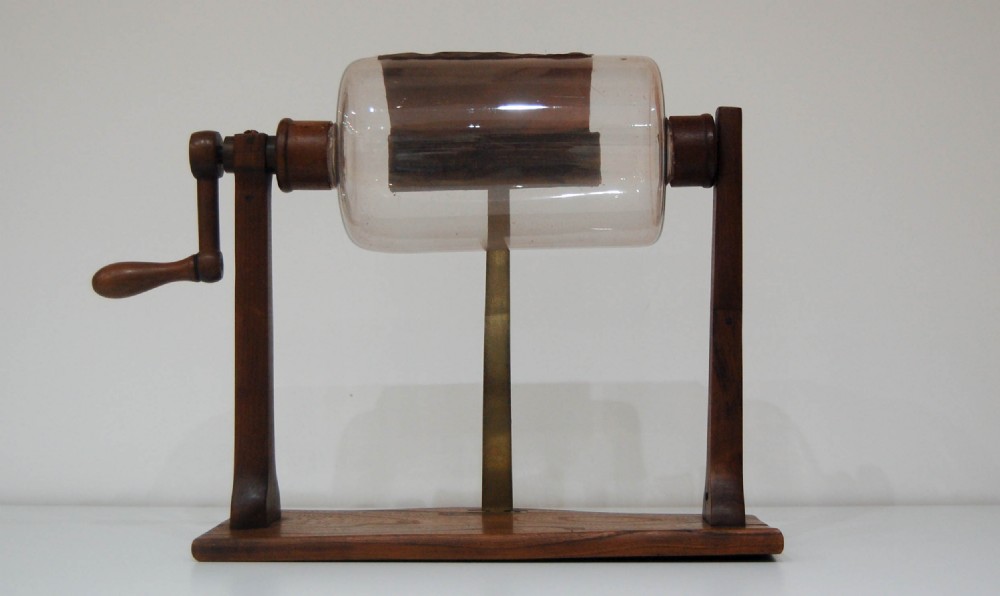
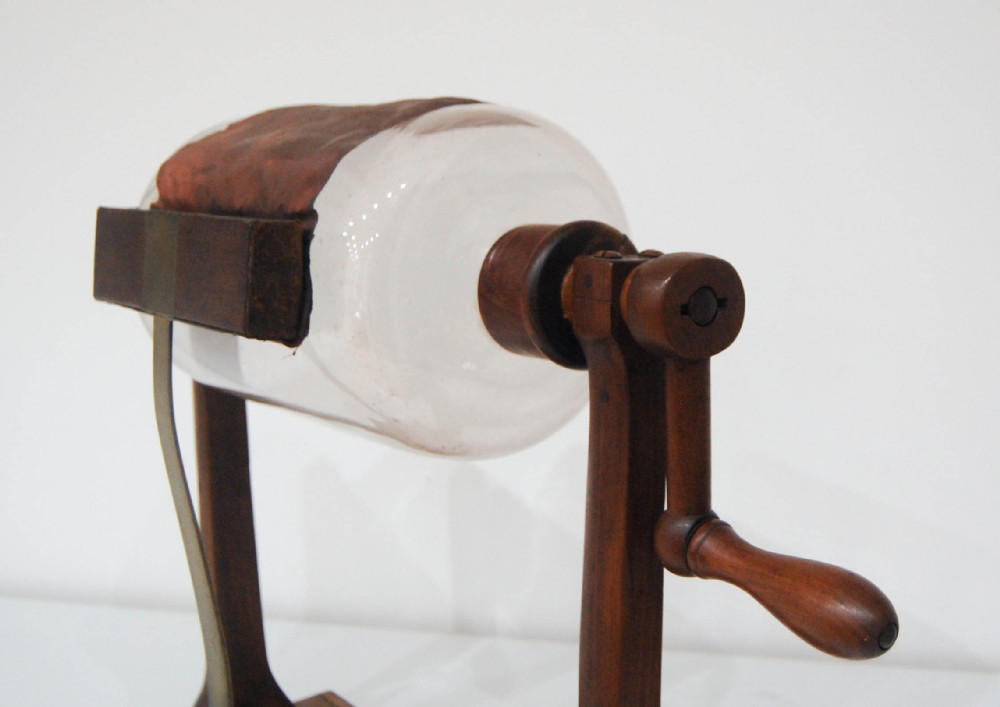
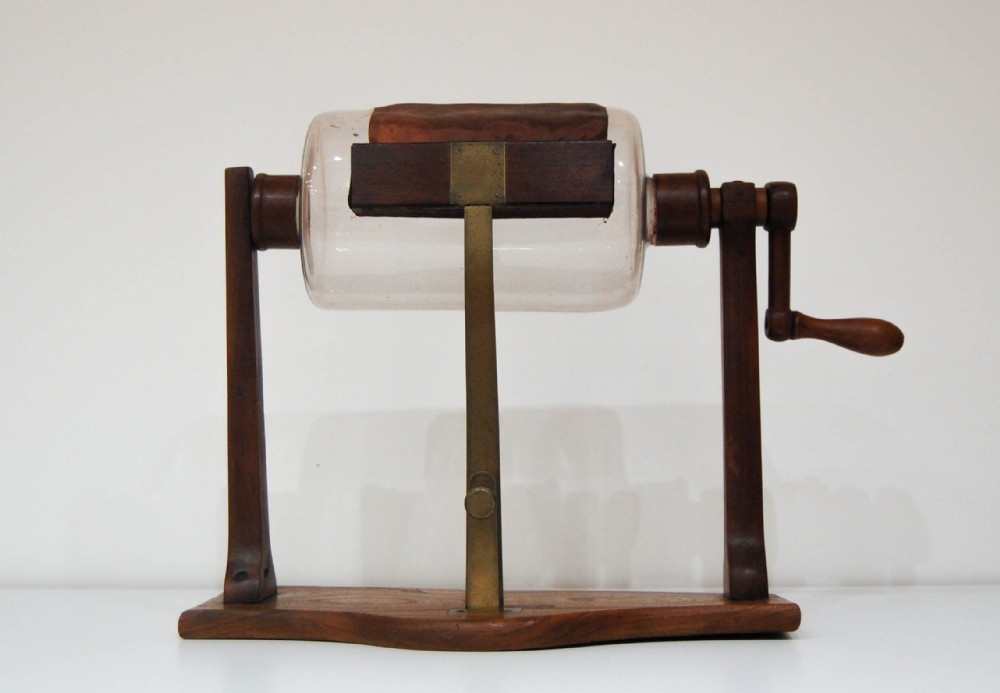
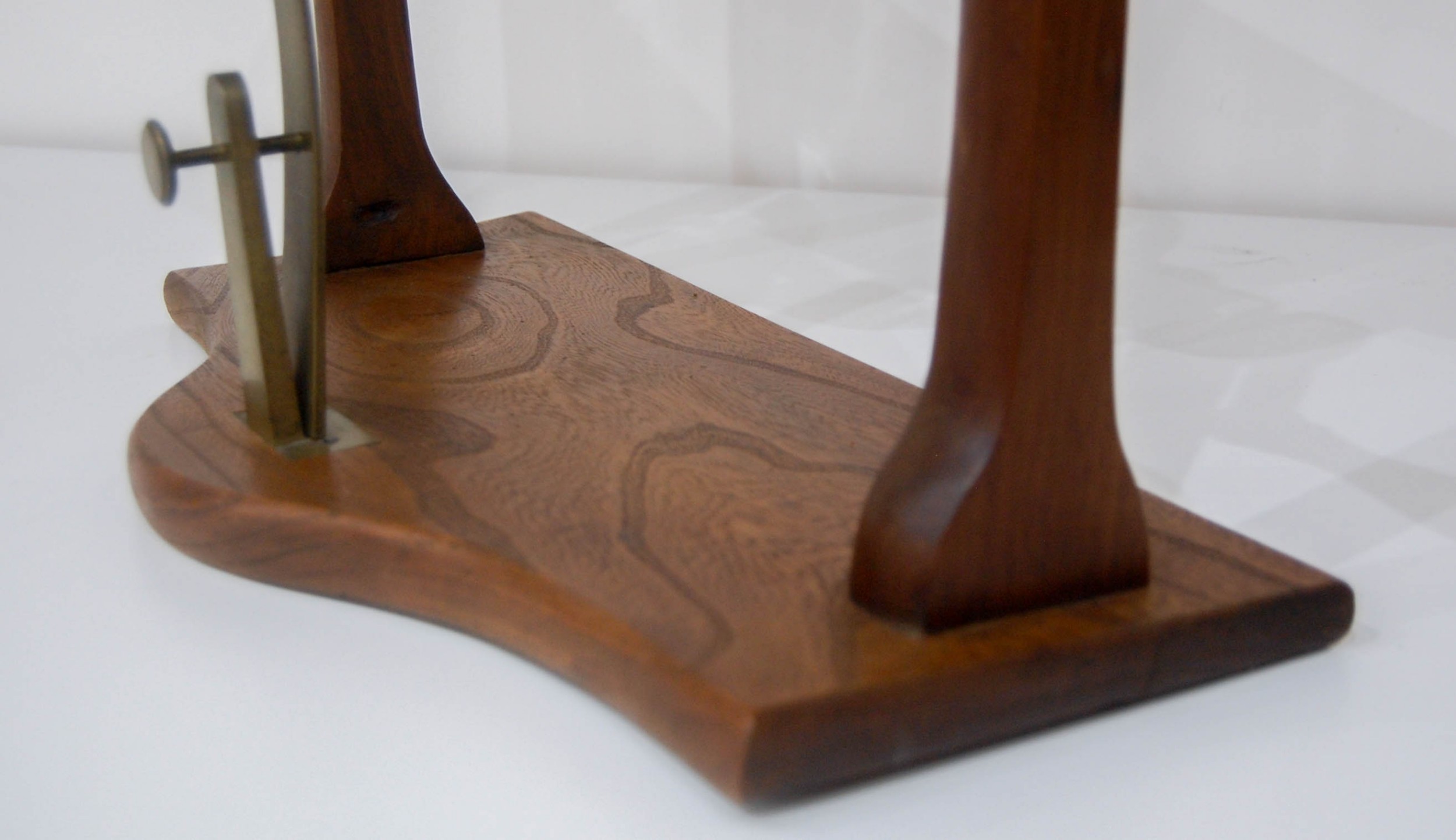
Consisting of a large glass cylinder suspended on mahogany frame with a handle to one end in order to revolve it. Attached to the base behind the cylinder is a brass strut with a mahogany backed leather pad which can be adjusted by means of a screw to make contact with the glass. To the top of the pad is attached a square of silk which rests over the top of the cylinder.
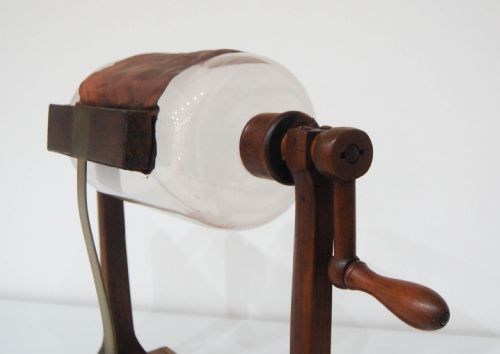
The act of turning the cylinder against the leather creates friction and removes a charge from the pad. Consequently, the resulting charge can be transferred to a collector.

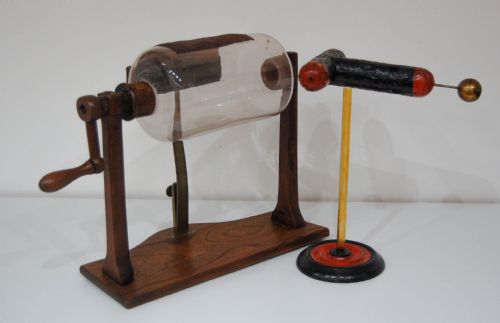
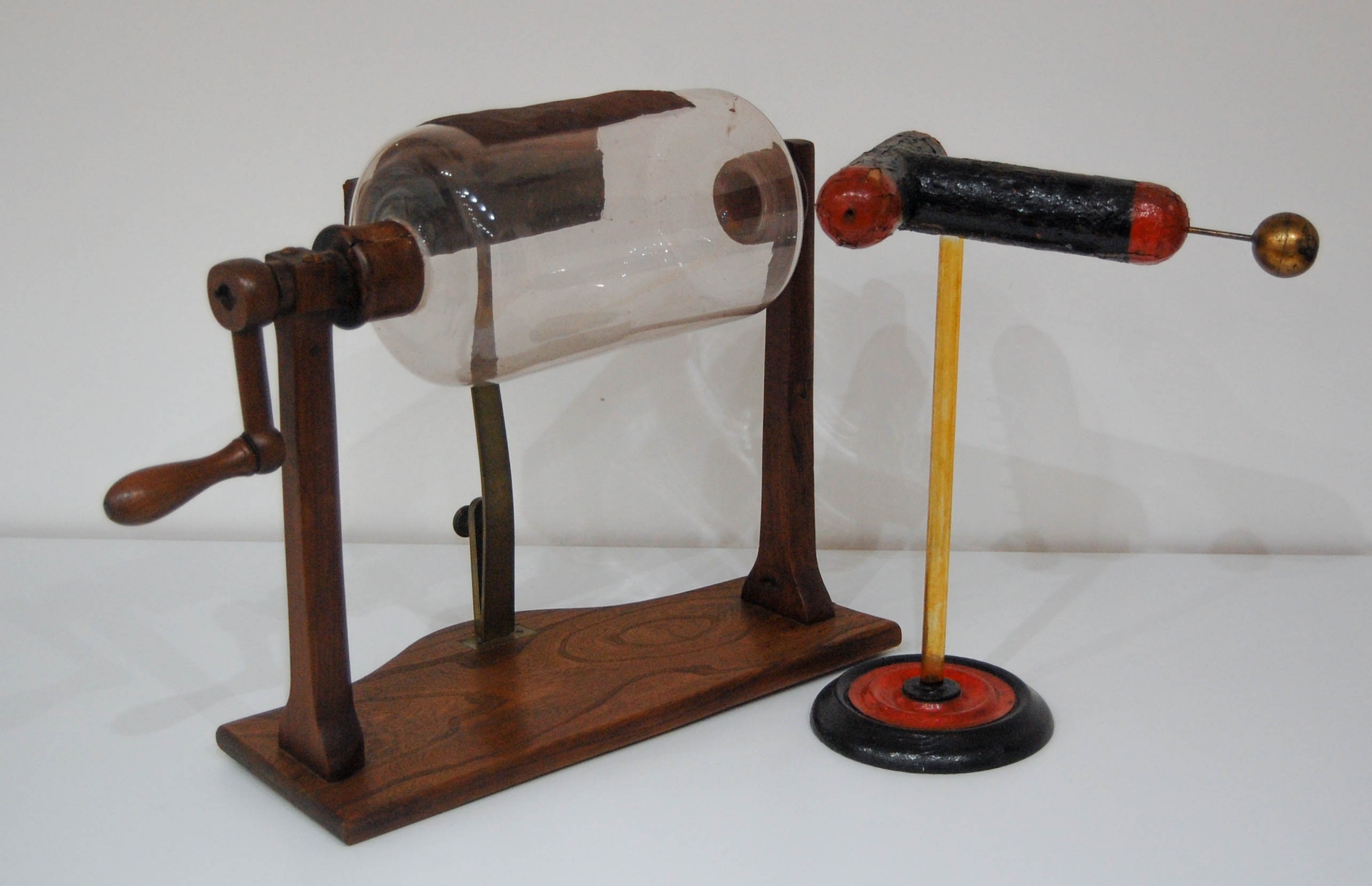
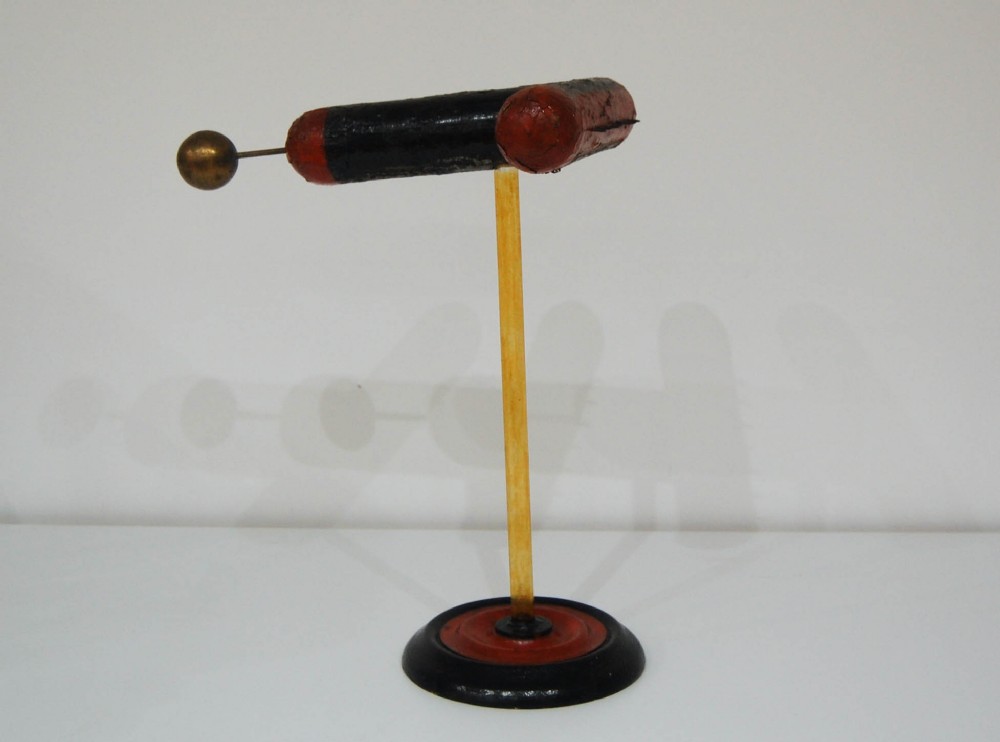
The collector consists of a turned wooden red and black painted base with a glass rod (insulated with shellac) attached to the centre. A painted (some loss extant) and insulated wooden T shaped collector is affixed to the top of the rod with combs fixed to the back and a brass discharge ball fixed to the other end. The combs would be be placed close to the glass to collect the charge which in turn would be transferred through the collector to create a spark at the other end.
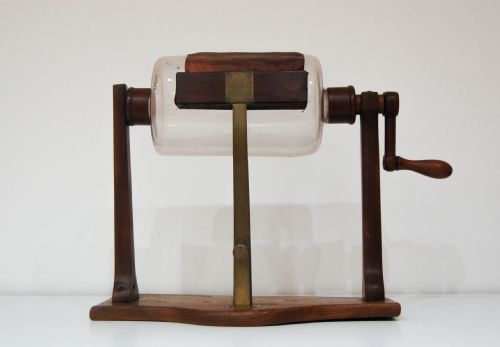
It is impossible to deduce accurately whether the two parts of this machine were manufactured together but I suspect that the collector is little later.

The original device was patented on the 5th of February 1782 by Edward Nairne. (Number 1318), entitled an “Electrical Machine, or a method of insulating such machine, and constructing the conductors so that either shocks or sparks may be received from them. Insulated Medical Electrical Machine”.
It was sold by the partners Edward Nairne and Thomas Blunt and was accompanied by 62 page pamphlet with five explanatory plates, “the Description and Use of Nairne’s Patent Electrical Machine; with the addition of some Philosophical Experiments & Medical Observations”. The plates provide numerous images of a gentleman attaching a variety of electrodes to different parts of his body to demonstrate the therapeutic treatment offered by this machine.
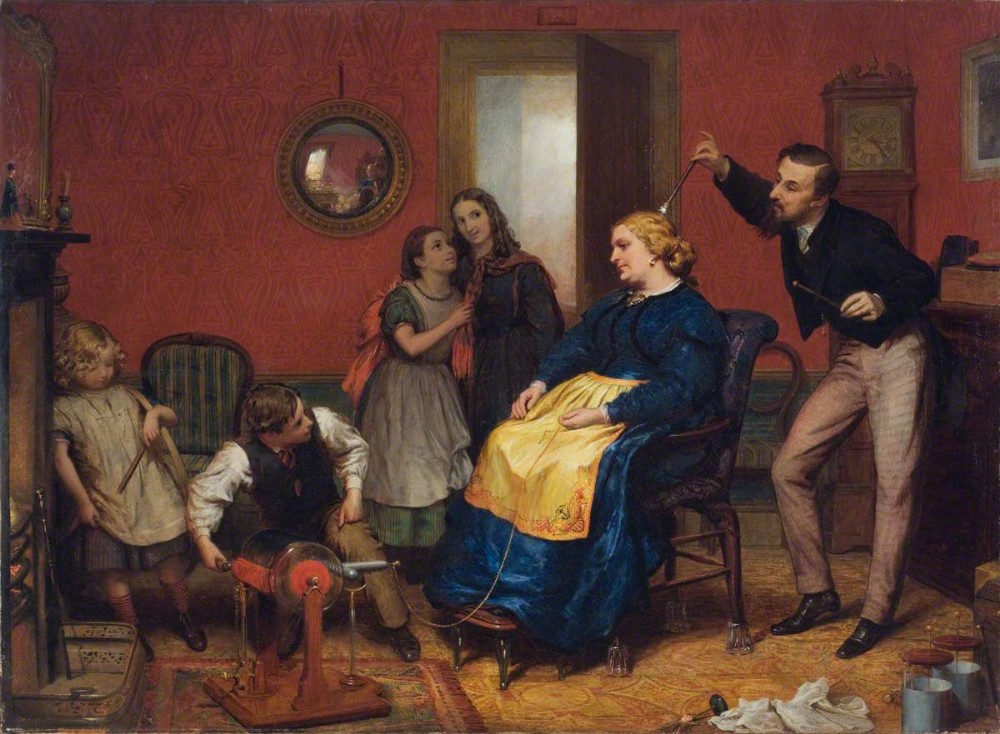
Less common than Ramsden’s slightly later single plate friction machine, this design remained popular until about the middle of the nineteenth century for therapeutic treatments however unsuccessful they may have been. An interesting painting by the artist David Henry Friston depicting a woman receiving treatment from a similar example currently resides in the Geffrye Museum in London.

Physical Dimensions
Height
46cm (18.11")
Width
50cm (19.69")
Depth
24cm (9.45")
Declaration

Jason Clarke Antiques has dated this piece to the 1800s.

Reference Numbers
Sellingantiques Reference
SA696538
Description
For sale, an early Nineteenth Century Nairne pattern electrostatic friction machine.
Consisting of a large glass cylinder suspended on mahogany frame with a handle to one end in order to revolve it.
Jason Clarke Antiques

Attached to the base behind the cylinder is a brass strut with a mahogany backed leather pad which can be adjusted by means of a screw to make contact with the glass. To the top of the pad is attached a square of silk which rests over the top of the cylinder.

fig 1. Early Nineteenth Century Nairne Pattern Electrostatic Friction Machine

The act of turning the cylinder against the leather creates friction and removes a charge from the pad. Consequently, the resulting charge can be transferred to a collector.

The collector consists of a turned wooden red and black painted base with a glass rod (insulated with shellac) attached to the centre. A painted (some loss extant) and insulated wooden T shaped collector is affixed to the top of the rod with combs fixed to the back and a brass discharge ball fixed to the other end. The combs would be be placed close to the glass to collect the charge which in turn would be transferred through the collector to create a spark at the other end.

fig 2. Early Nineteenth Century Nairne Pattern Electrostatic Friction Machine

It is impossible to deduce accurately whether the two parts of this machine were manufactured together but I suspect that the collector is little later.

The original device was patented on the 5th of February 1782 by Edward Nairne. (Number 1318), entitled an “Electrical Machine, or a method of insulating such machine, and constructing the conductors so that either shocks or sparks may be received from them. Insulated Medical Electrical Machine”.

fig 3. Early Nineteenth Century Nairne Pattern Electrostatic Friction Machine

It was sold by the partners Edward Nairne and Thomas Blunt and was accompanied by 62 page pamphlet with five explanatory plates, “the Description and Use of Nairne’s Patent Electrical Machine; with the addition of some Philosophical Experiments & Medical Observations”. The plates provide numerous images of a gentleman attaching a variety of electrodes to different parts of his body to demonstrate the therapeutic treatment offered by this machine.

fig 4. Early Nineteenth Century Nairne Pattern Electrostatic Friction Machine

Less common than Ramsden’s slightly later single plate friction machine, this design remained popular until about the middle of the nineteenth century for therapeutic treatments however unsuccessful they may have been. An interesting painting by the artist David Henry Friston depicting a woman receiving treatment from a similar example currently resides in the Geffrye Museum in London.

Height
46cm (18.11")
Width
50cm (19.69")
Depth
24cm (9.45")
Date of Manufacture

Jason Clarke Antiques has dated this piece to the 1800s.

Reference Numbers
Sellingantiques Ref
SA696538
Jason Clarke Antiques
Sellingantiques verified Since Jul 2015
Dealer Profile

You can view the stock and full dealer information on the Jason Clarke Antiques Profile Page
PDF SHARE
SAVE
Early Nineteenth Century Nairne Pattern Electrostatic Friction Machine
1 / 7
Archive I Early Nineteenth Century Nairne Pattern Electrostatic Friction Machine
Early Nineteenth Century Nairne Pattern Electrostatic Friction Machine
Archive II Early Nineteenth Century Nairne Pattern Electrostatic Friction Machine View II
Archive III Early Nineteenth Century Nairne Pattern Electrostatic Friction Machine View III
Archive IV Early Nineteenth Century Nairne Pattern Electrostatic Friction Machine View IV
Archive V Early Nineteenth Century Nairne Pattern Electrostatic Friction Machine View V
Archive VI Early Nineteenth Century Nairne Pattern Electrostatic Friction Machine View VI
Archive VII Early Nineteenth Century Nairne Pattern Electrostatic Friction Machine View VII
Enlarged Archival View
Telephone 07815 046645
Location
Newbury
Berkshire
United Kingdom
Verified Since Jul 2015
Items For Sale 80
Items Sold 607
Jason Clarke Antiques
Verified Since Jul 2015
View Dealer Info
Location: Newbury, Berkshire, United Kingdom
Verified
Jul 2015
For Sale
80
Sold
607
Early Nineteenth Century Nairne Pattern Electrostatic Friction Machine
Ref: SA696538
Early Nineteenth Century Nairne Pattern Electrostatic Friction Machine
Detail View 1
Detail View 2
Detail View 3
Detail View 4
Detail View 5
Detail View 6
Archival Detail
Every single antique dealer on our platform is individually approved by our internal team. We verify their professional trade history, ethical standards, and photographic quality to ensure a secure, high-standard buying environment. Upon joining, every dealer agrees to a strict 9-point code of conduct. While issues can occasionally arise, our dealers typically resolve them swiftly and directly with the buyer. In fact, since our founding in 2002, Sellingantiques has only had to step in to help resolve an issue on roughly five occasions—a true testament to the quality of our dealers and their dedication to your happiness.
Our dealers are highly experienced in packing and shipping fragile, high-value antiques. Because you are in direct contact with the dealer, you will be able to easily go through all available shipping and insurance options together to ensure your item arrives safely.
Antiques are the ultimate green purchase. By choosing historical pieces over newly manufactured goods, you completely eliminate the carbon footprint of modern mass production while preserving exceptional, timeless craftsmanship.
items
Add keywords to the filter
Price
£100
£250000
Era
Movements
Material
Origin
Stock Location
Freshness
Online Payments
Categories