12,652  PAGES BROWSED TODAY PAGES TODAY 51 ANTIQUES UPLOADED TODAYNEW ARRIVALS
51 ITEMS ADDED TODAY
Sort Order
Items Per Page
Browse Categories
Sort order
Items per page
ID #SA683367
SOLD
Email
Save
Late Victorian Collapsible Artificial Horizon by Cary of London in Original Case
Jason Clarke Antiques
sold SA683367
Sorry, but this item has been sold.
Jason Clarke Antiques

Jason Clarke Antiques

Sellingantiques Verified Since Jul 2015
View Dealers Stock Page
Id #SA683367
PDF SHARE
SAVE

Late Victorian Collapsible Artificial Horizon by Cary of London in Original Case

1900 - 1920
Description

For sale, a late Victorian mercury type collapsible artificial horizon by Cary of London.

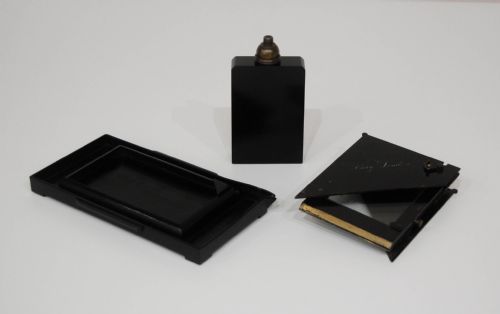
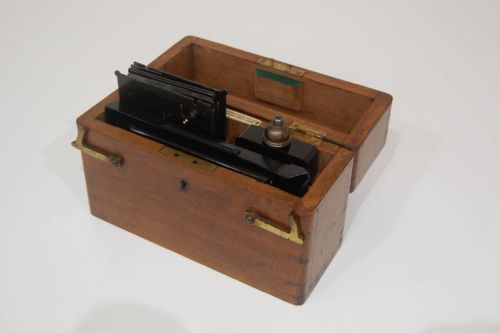
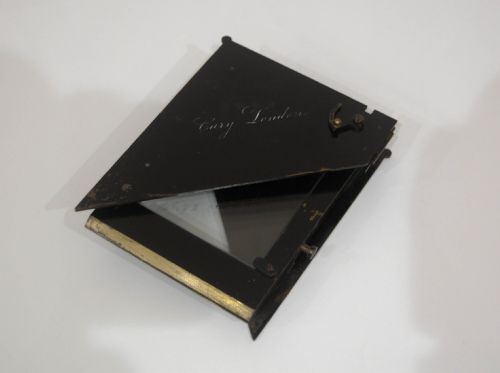
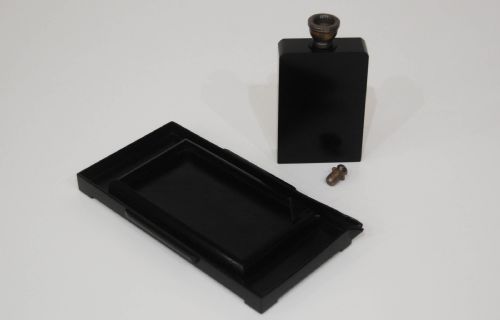
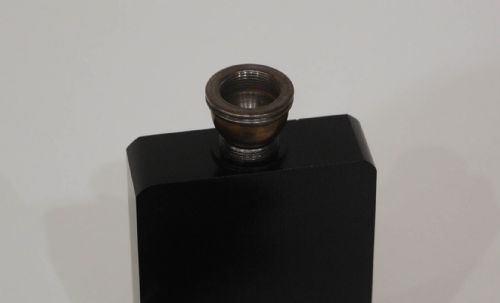
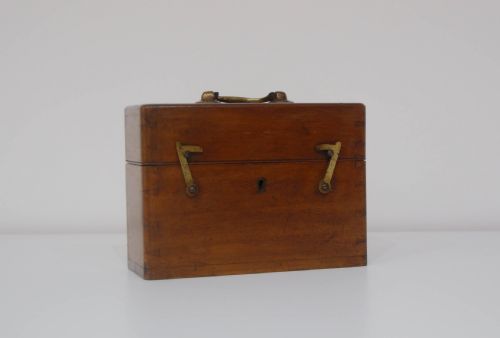
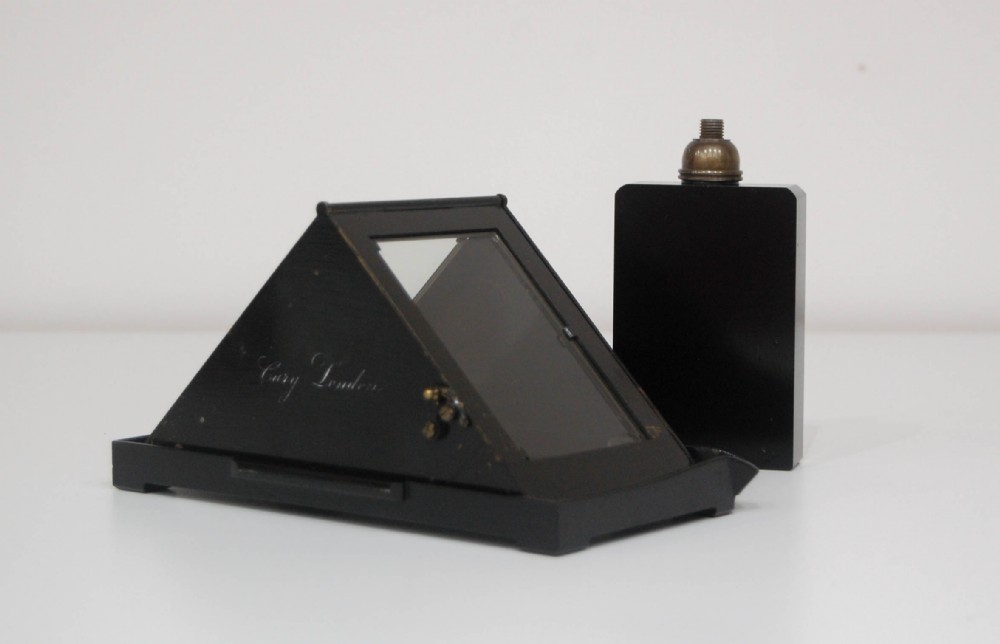
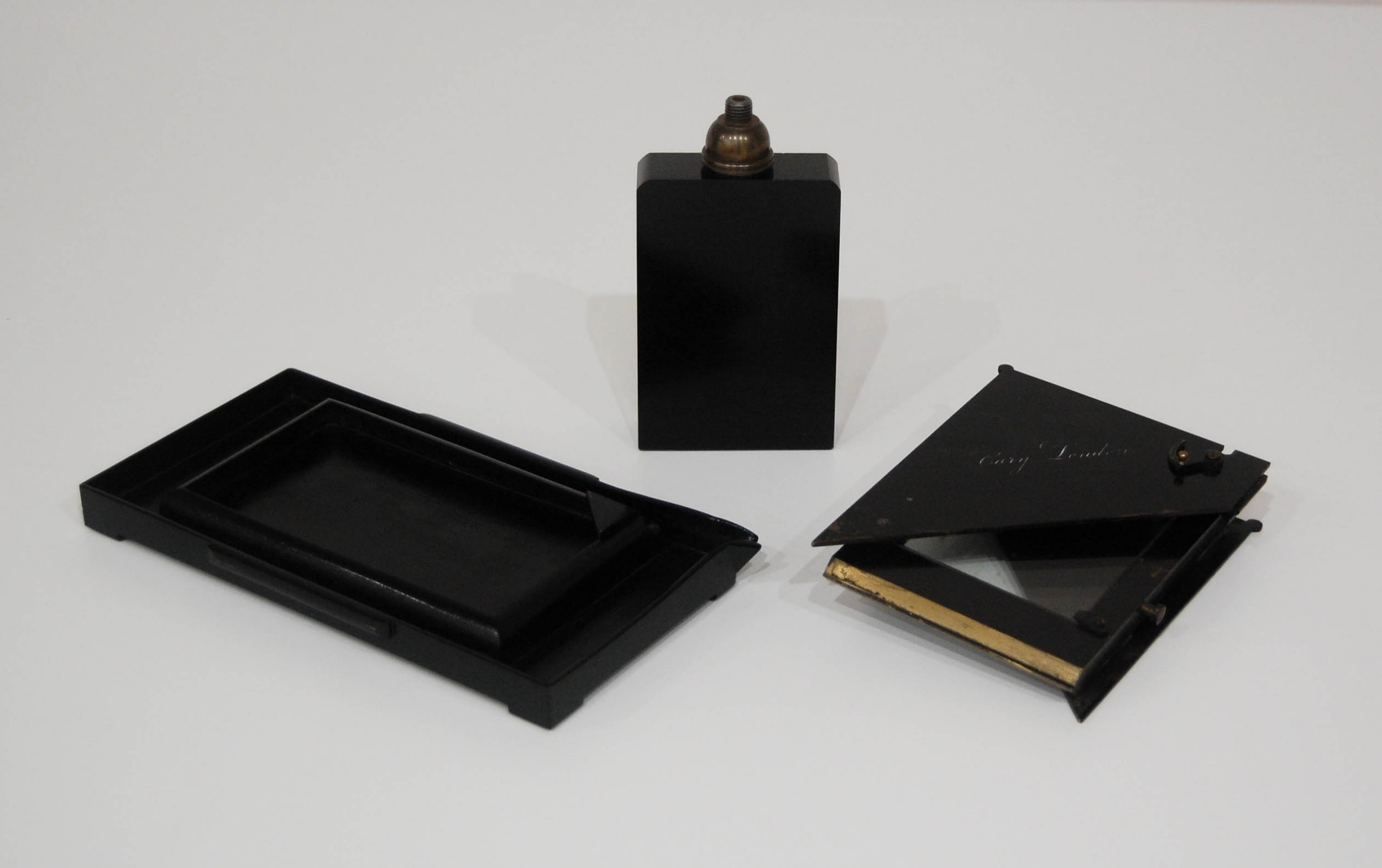
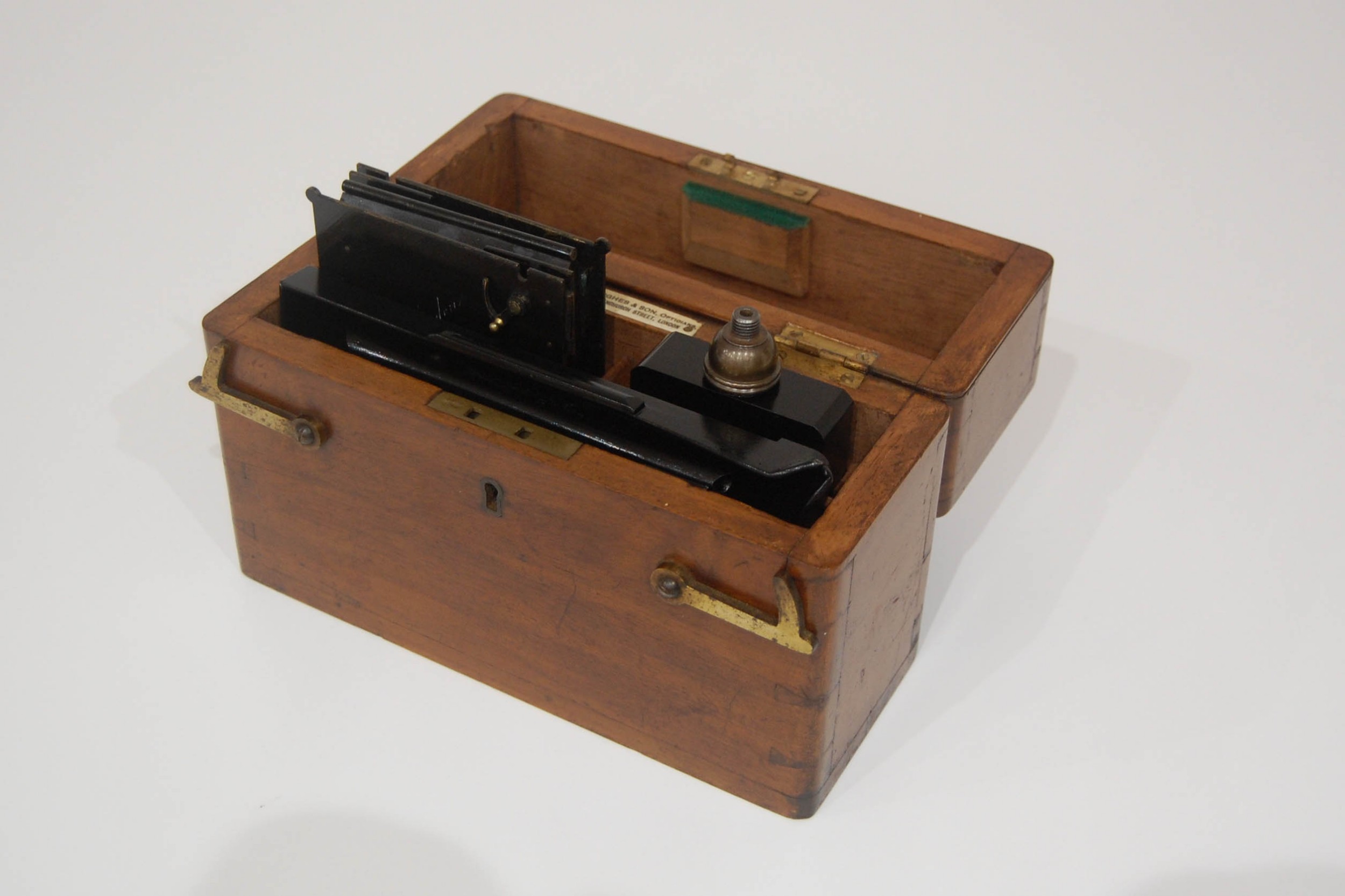
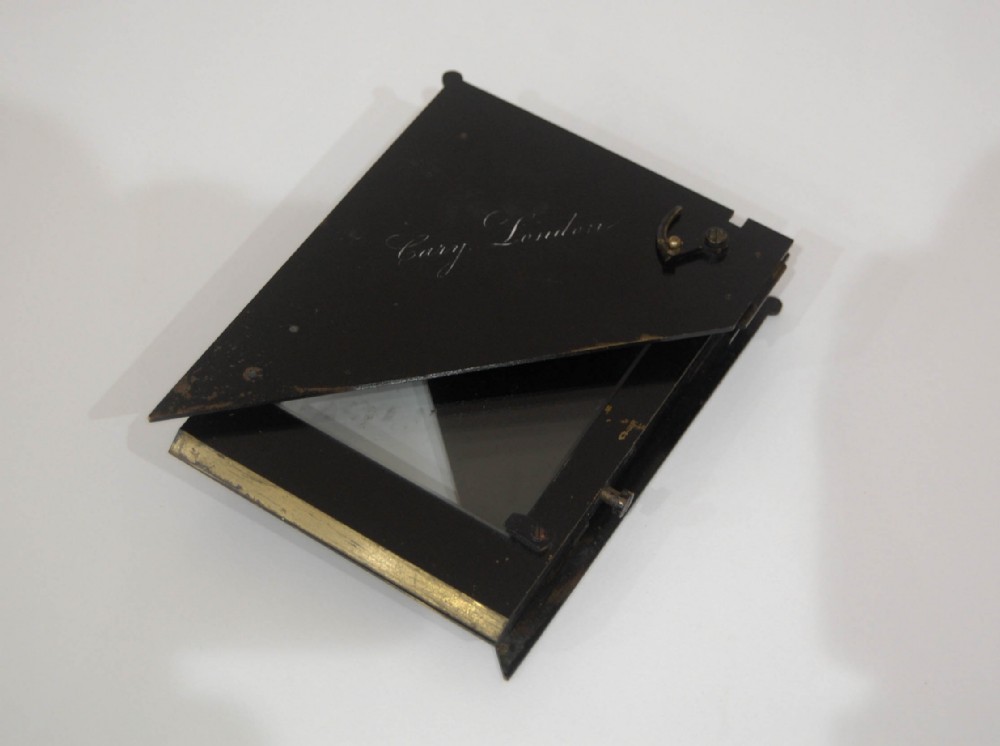
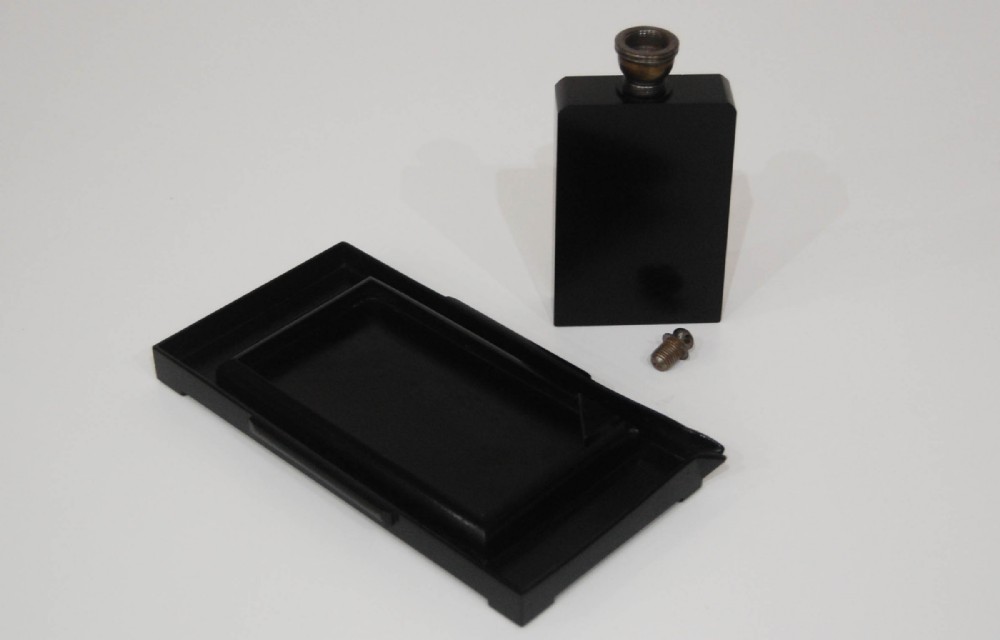
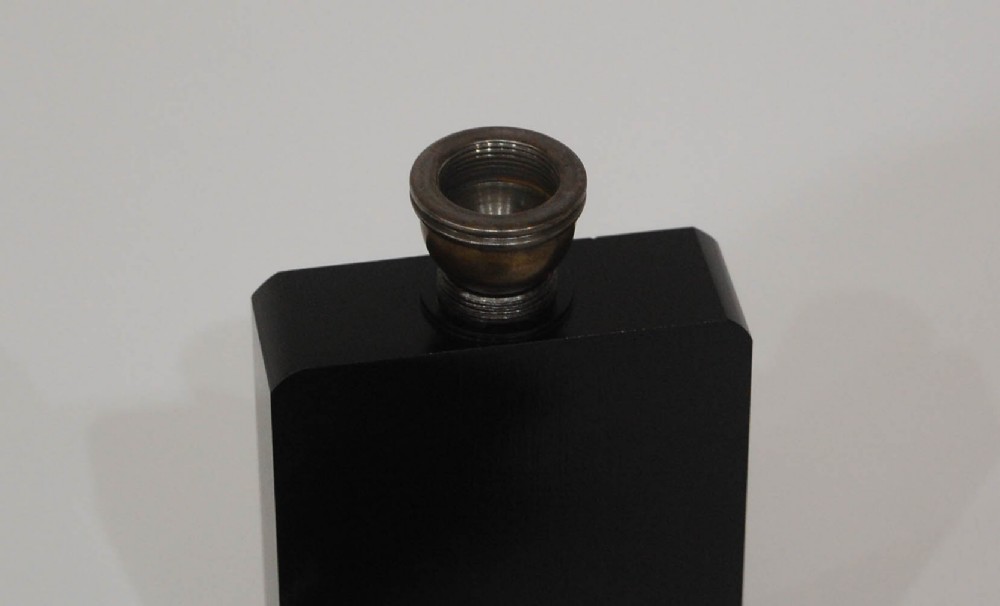
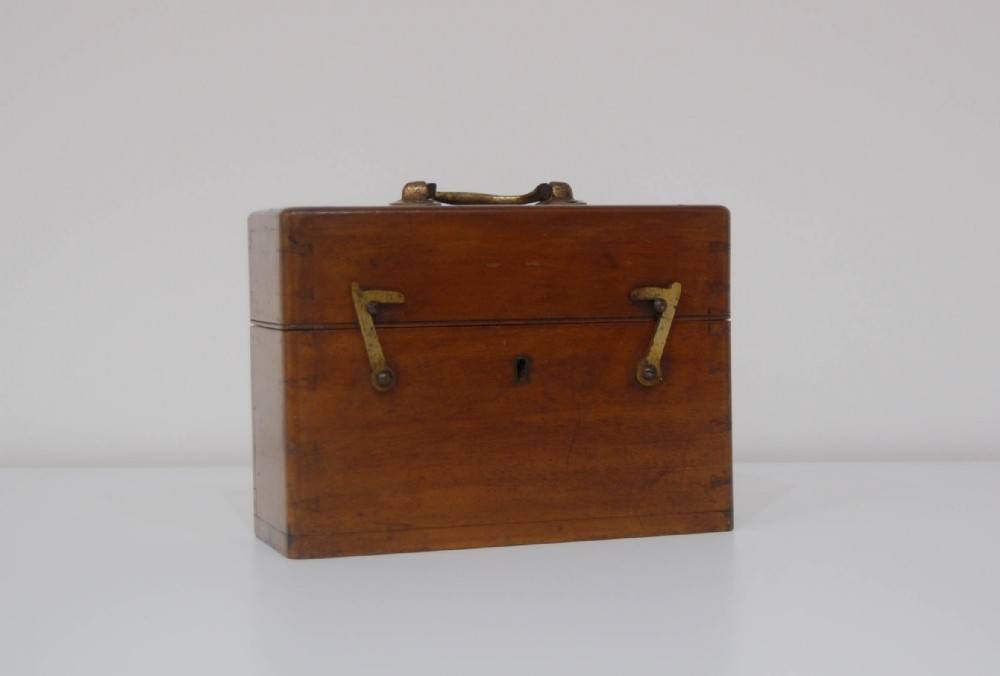
This top quality instrument is comprised of a mahogany hinged case with original lock and additional hook and eye fixings to the front. Contained within the box is a black painted metal trough and triangular lid with a two paned glass top to enable viewing and to protect the mercury from the elements when in use. The case engraved to, “Cary, London” is hinged in such a way that it can be collapsed flat for convenient storage. The box also contains its original painted metal mercury flask with ingenious reversible lid to allow for the decanting of the mercury back from the trough into safe keeping after use. Please note, there is no mercury present with this piece.
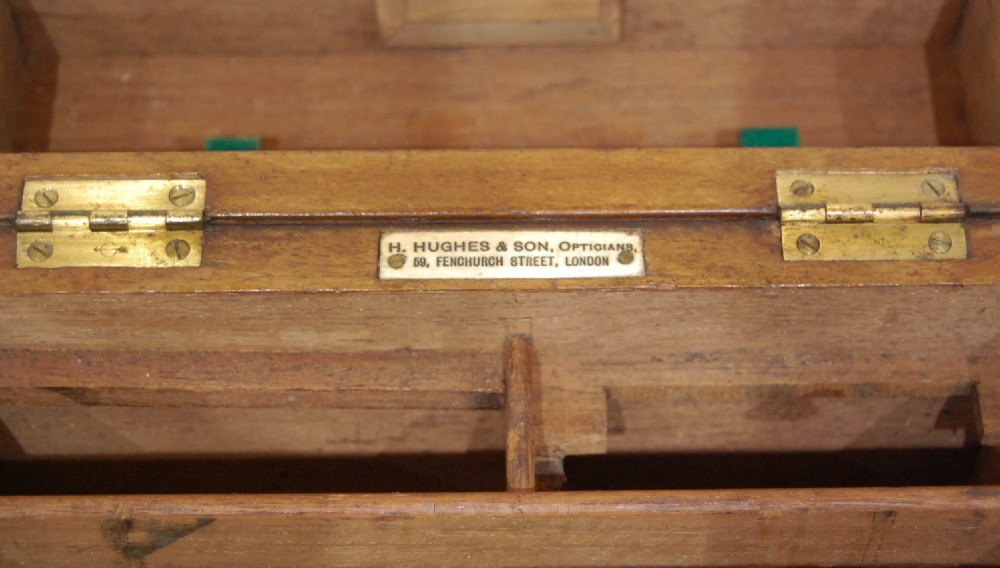
In addition to the engraving on the instrument, there is a second label on the box for the reseller, Henry Hughes & Son Ltd, Opticians, 59 Fenchurch St, London.

Most extant examples of this collapsible type seem to be made by the Cary firm although I can find no form evidence to confirm that it was invented by this company. However, the Porter family who were the last owners of the Cary name advertised an improved example of a similar type which was used by Shackleton during his polar expedition.
The history of the artificial horizon can be traced back to the sixteenth century but developments were largely popularised in the eighteenth century by John Hadley, John Elton and by the famous instrument maker, George Adams, the latter of whom is merited in 1738 with inventing the mercury trough of which this is an example. It was devised as a means of navigation when the horizon was obscured by darkness or through the effect of inclement weather.
Its principle was based upon the first law of optics, that the angle of reflection from a mirror is equal to the angle of incidence, therefore a sextant would be employed to measure the angle between the sun or the stars and their reflection on the mercury contained in the metal trough. Although the instrument was dogged by criticism relating to the tremoring of the mercury when excessive movement was involved, it must have proved popular enough owing to its continuing manufacture.
The Cary dynasty were highly regarded instrument makers of the late eighteenth and nineteenth centuries, the two brothers William and John forming a partnership manufacturing both scientific apparatus and globes from the London address of 181 & 182 The Strand. William had previously served his apprenticeship with the hugely renowned London instrument maker Jesse Ramsden whilst John was a trained mapmaker. A devastating fire in 1820 led to the brothers combining the two businesses into a single premises at 86 St James Street although throughout the 1820’s they seem to have individually occupied various premises on The Strand in addition to the former.
William Cary died in 1825 leaving generous sums of money to his brothers and his immediate family and his nephews George and John Jr Cary continued their Uncle’s business initially at their father John’s original address at 182 The Strand and then later moving to 181 The Strand in 1828 suggesting that they had re-occupied both original premises after the fire. As before it separated the map making and scientific instrument businesses apart but maintained close proximity.
Having both been brought up and trained as map-makers and lacking the training and skill of their Uncle, the brothers maintained the services of Charles Gould, William Cary’s foreman and it seems likely that Gould was largely responsible for running the scientific instrument making arm of the family businesses from this point. Gould was responsible for the invention of the historic Cary-Gould microscope and given the freedom that he was given to advertise his name in association with the instrument, it is sensible to assume that

Physical Dimensions
Height
16cm (6.30")
Width
22cm (8.66")
Depth
9cm (3.54")
Declaration

Jason Clarke Antiques has dated this piece to the 1900s.

Reference Numbers
Sellingantiques Reference
SA683367
Description
For sale, a late Victorian mercury type collapsible artificial horizon by Cary of London.
This top quality instrument is comprised of a mahogany hinged case with original lock and additional hook and eye fixings to the front.
Jason Clarke Antiques

Contained within the box is a black painted metal trough and triangular lid with a two paned glass top to enable viewing and to protect the mercury from the elements when in use. The case engraved to, “Cary, London” is hinged in such a way that it can be collapsed flat for convenient storage. The box also contains its original painted metal mercury flask with ingenious reversible lid to allow for the decanting of the mercury back from the trough into safe keeping after use. Please note, there is no mercury present with this piece.

fig 1. Late Victorian Collapsible Artificial Horizon by Cary of London in Original Case

In addition to the engraving on the instrument, there is a second label on the box for the reseller, Henry Hughes & Son Ltd, Opticians, 59 Fenchurch St, London.

Most extant examples of this collapsible type seem to be made by the Cary firm although I can find no form evidence to confirm that it was invented by this company. However, the Porter family who were the last owners of the Cary name advertised an improved example of a similar type which was used by Shackleton during his polar expedition.

fig 2. Late Victorian Collapsible Artificial Horizon by Cary of London in Original Case

The history of the artificial horizon can be traced back to the sixteenth century but developments were largely popularised in the eighteenth century by John Hadley, John Elton and by the famous instrument maker, George Adams, the latter of whom is merited in 1738 with inventing the mercury trough of which this is an example. It was devised as a means of navigation when the horizon was obscured by darkness or through the effect of inclement weather.

fig 3. Late Victorian Collapsible Artificial Horizon by Cary of London in Original Case

Its principle was based upon the first law of optics, that the angle of reflection from a mirror is equal to the angle of incidence, therefore a sextant would be employed to measure the angle between the sun or the stars and their reflection on the mercury contained in the metal trough. Although the instrument was dogged by criticism relating to the tremoring of the mercury when excessive movement was involved, it must have proved popular enough owing to its continuing manufacture.

fig 4. Late Victorian Collapsible Artificial Horizon by Cary of London in Original Case

The Cary dynasty were highly regarded instrument makers of the late eighteenth and nineteenth centuries, the two brothers William and John forming a partnership manufacturing both scientific apparatus and globes from the London address of 181 & 182 The Strand. William had previously served his apprenticeship with the hugely renowned London instrument maker Jesse Ramsden whilst John was a trained mapmaker. A devastating fire in 1820 led to the brothers combining the two businesses into a single premises at 86 St James Street although throughout the 1820’s they seem to have individually occupied various premises on The Strand in addition to the former.

fig 5. Late Victorian Collapsible Artificial Horizon by Cary of London in Original Case

William Cary died in 1825 leaving generous sums of money to his brothers and his immediate family and his nephews George and John Jr Cary continued their Uncle’s business initially at their father John’s original address at 182 The Strand and then later moving to 181 The Strand in 1828 suggesting that they had re-occupied both original premises after the fire. As before it separated the map making and scientific instrument businesses apart but maintained close proximity.

fig 6. Late Victorian Collapsible Artificial Horizon by Cary of London in Original Case

Having both been brought up and trained as map-makers and lacking the training and skill of their Uncle, the brothers maintained the services of Charles Gould, William Cary’s foreman and it seems likely that Gould was largely responsible for running the scientific instrument making arm of the family businesses from this point. Gould was responsible for the invention of the historic Cary-Gould microscope and given the freedom that he was given to advertise his name in association with the instrument, it is sensible to assume that

Height
16cm (6.30")
Width
22cm (8.66")
Depth
9cm (3.54")
Date of Manufacture

Jason Clarke Antiques has dated this piece to the 1900s.

Reference Numbers
Sellingantiques Ref
SA683367
Jason Clarke Antiques
Sellingantiques verified Since Jul 2015
Dealer Profile

You can view the stock and full dealer information on the Jason Clarke Antiques Profile Page
PDF SHARE
SAVE
Late Victorian Collapsible Artificial Horizon by Cary of London in Original Case
1 / 8
Archive I Late Victorian Collapsible Artificial Horizon by Cary of London in Original Case
Late Victorian Collapsible Artificial Horizon by Cary of London in Original Case
Archive II Late Victorian Collapsible Artificial Horizon by Cary of London in Original Case View II
Archive III Late Victorian Collapsible Artificial Horizon by Cary of London in Original Case View III
Archive IV Late Victorian Collapsible Artificial Horizon by Cary of London in Original Case View IV
Archive V Late Victorian Collapsible Artificial Horizon by Cary of London in Original Case View V
Archive VI Late Victorian Collapsible Artificial Horizon by Cary of London in Original Case View VI
Archive VII Late Victorian Collapsible Artificial Horizon by Cary of London in Original Case View VII
Archive VIII Late Victorian Collapsible Artificial Horizon by Cary of London in Original Case View VIII
Enlarged Archival View
Telephone 07815 046645
Location
Newbury
Berkshire
United Kingdom
Verified Since Jul 2015
Items For Sale 80
Items Sold 607
Jason Clarke Antiques
Verified Since Jul 2015
View Dealer Info
Location: Newbury, Berkshire, United Kingdom
Verified
Jul 2015
For Sale
80
Sold
607
Late Victorian Collapsible Artificial Horizon by Cary of London in Original Case
Ref: SA683367
Late Victorian Collapsible Artificial Horizon by Cary of London in Original Case
Detail View 1
Detail View 2
Detail View 3
Detail View 4
Detail View 5
Detail View 6
Detail View 7
Archival Detail
Every single antique dealer on our platform is individually approved by our internal team. We verify their professional trade history, ethical standards, and photographic quality to ensure a secure, high-standard buying environment. Upon joining, every dealer agrees to a strict 9-point code of conduct. While issues can occasionally arise, our dealers typically resolve them swiftly and directly with the buyer. In fact, since our founding in 2002, Sellingantiques has only had to step in to help resolve an issue on roughly five occasions—a true testament to the quality of our dealers and their dedication to your happiness.
Our dealers are highly experienced in packing and shipping fragile, high-value antiques. Because you are in direct contact with the dealer, you will be able to easily go through all available shipping and insurance options together to ensure your item arrives safely.
Antiques are the ultimate green purchase. By choosing historical pieces over newly manufactured goods, you completely eliminate the carbon footprint of modern mass production while preserving exceptional, timeless craftsmanship.
items
Add keywords to the filter
Price
£100
£250000
Era
Movements
Material
Origin
Stock Location
Freshness
Online Payments
Categories