Steve Sly Japanese Works of Art has dated this piece to the 1860s.

Literature :
Traditionally in Japan gifts were placed in a box on a wooden or Lacquer tray, over which a Fukusa was draped, the choice of a Fukusa appropriate to the occasion was an important part of the gift-giving ritual , the practice of covering a gift became widespread during the Edo or Tokugawa period (1615–1867).

The scenes or the motifs depicted on Fukusa are chosen to indicate either the occasion for which the gift is being given, or because they are appropriate for one of the festivals when gifts are exchanged , the richness of the decoration of the Fukusa attests to the giver’s wealth and aesthetics.

After being admired, a Fukusa, along with its box and tray, were typically returned to the donor, however, when gifts were presented to a high official, the Fukusa was not always returned, this was one of the subtle devices used to control the wealth of the lords and Samurai classes

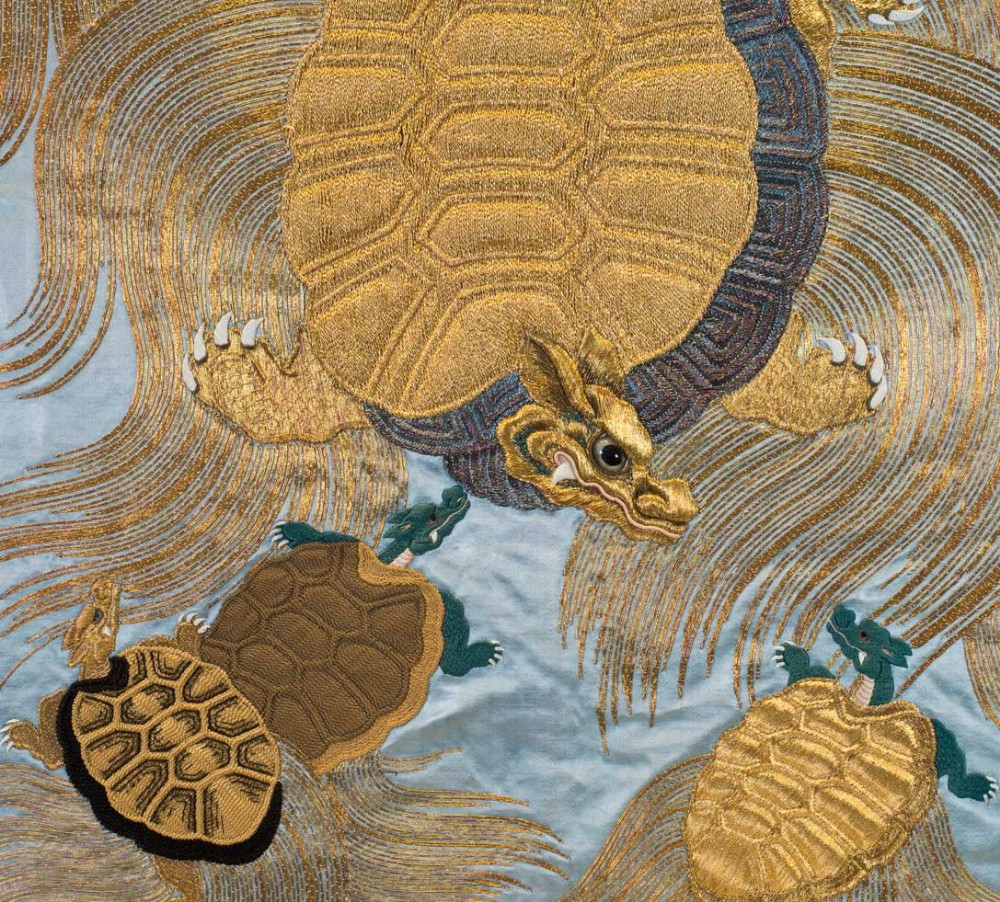
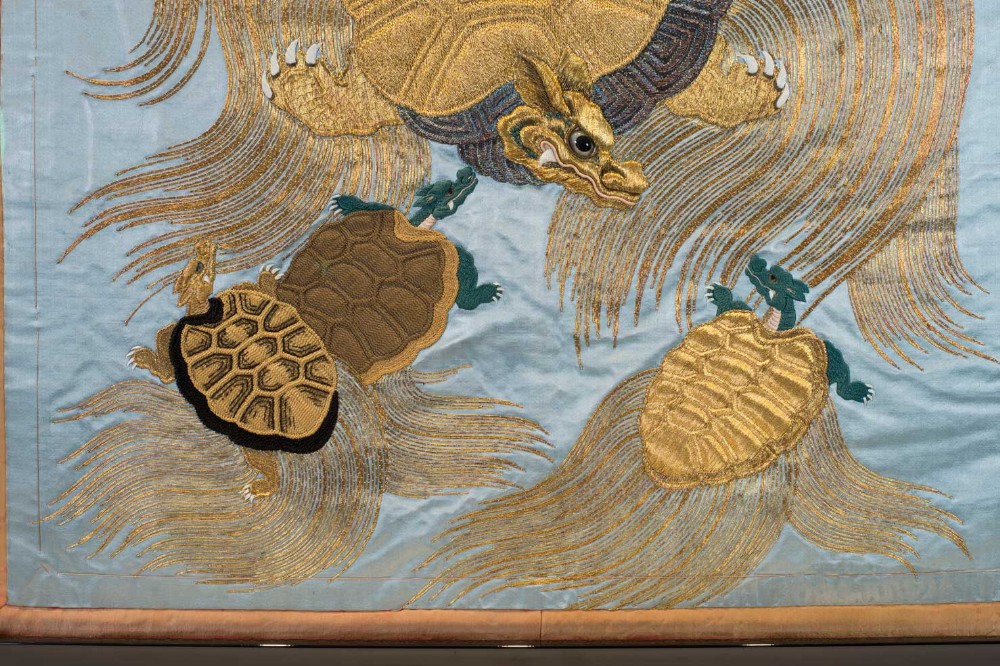
Minogame (??) is basically a turtle in the Japanese culture , and a strong sign of longevity, some Minogame are said to live up to 10,000 years, Minogame are usually thought of as aged and slow , as such its tail is often depicted as formed out of seaweed and algae.
Condition report :
.
Approximate sizes :
Height : 37" 94 cm
Width : 31.5" 80 cm
Depth : 1.25" 3.0 cm
Free worldwide delivery and a certificate of authenticity are included within the price of this item .
Steve Sly Japanese Works of Art has dated this piece to the 1860s.
Specialists in japanese works of art from the meiji period 1868-1912
You can view the stock and full dealer information on the Steve Sly Japanese Works of Art Profile Page
Steve Sly Japanese Works of Art is a registered member of BADA

Superior Quality Edo Period Japanese Gold Thread Silk Fukusa - Minogame (Turtle)