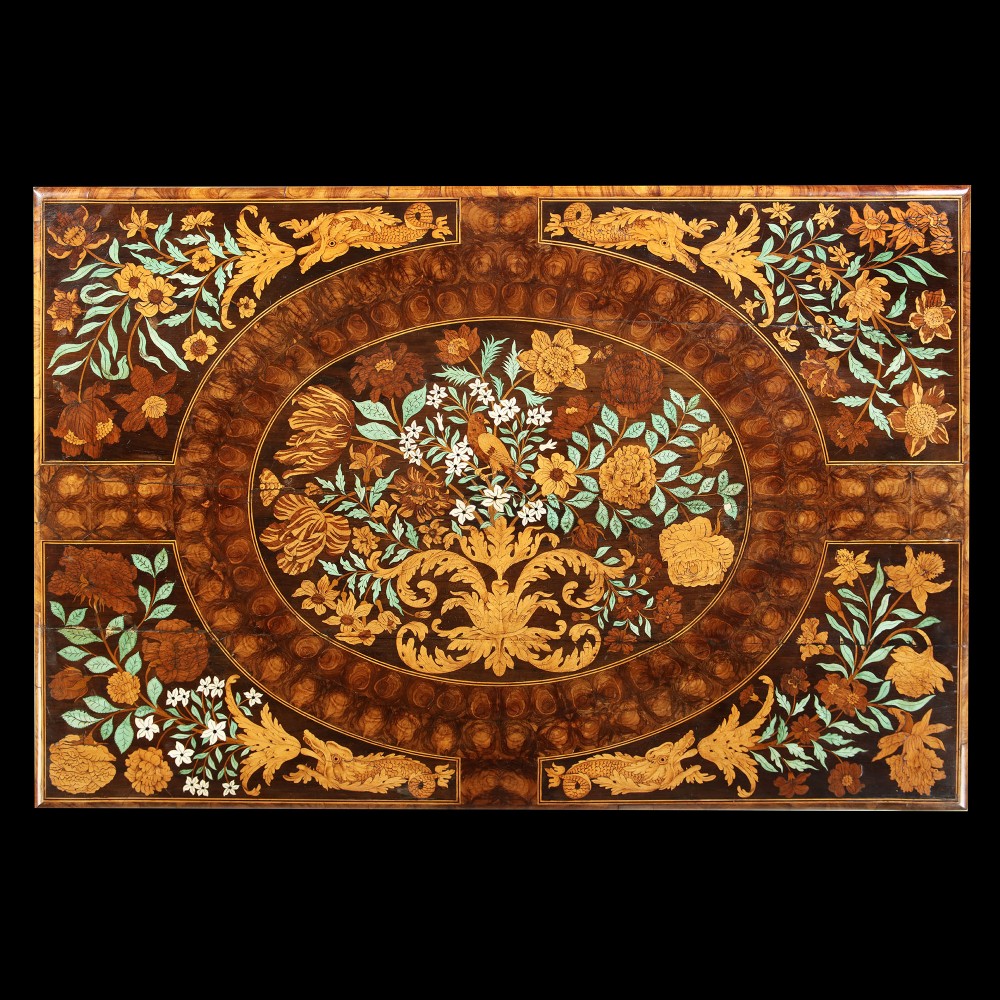
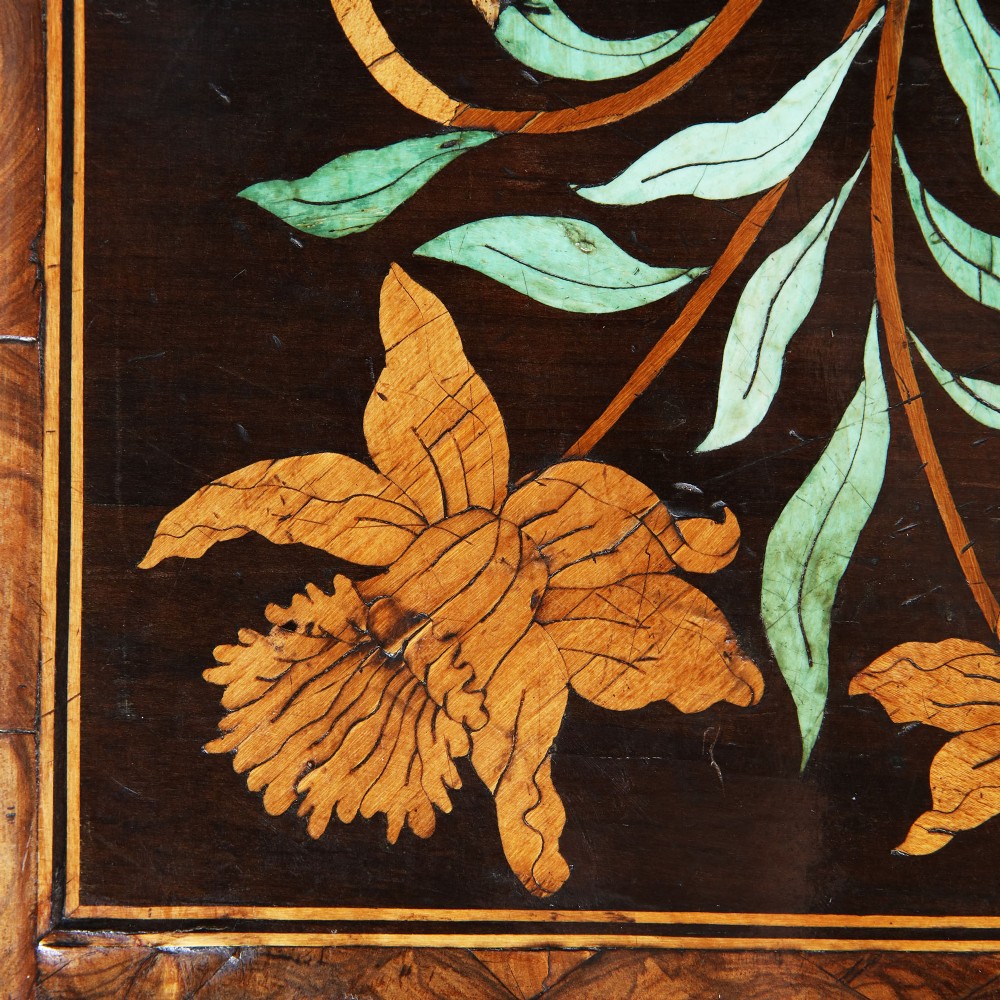
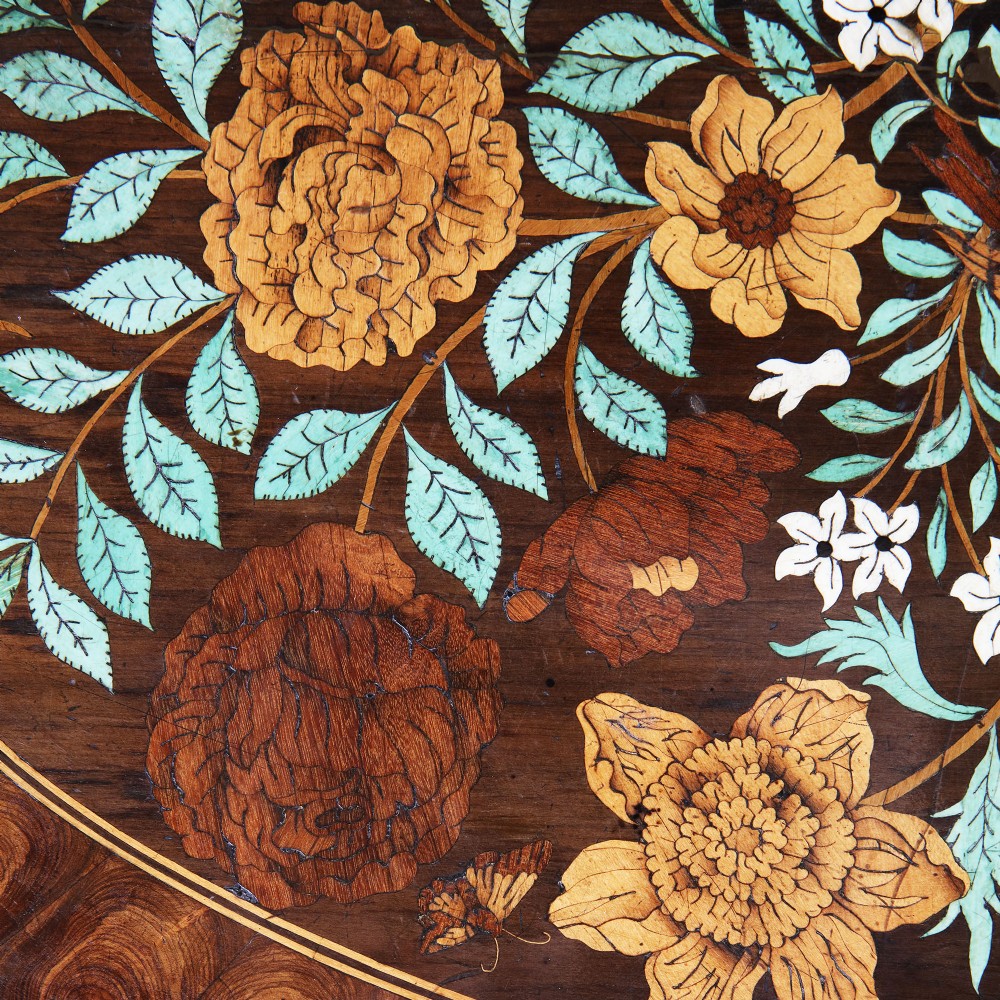
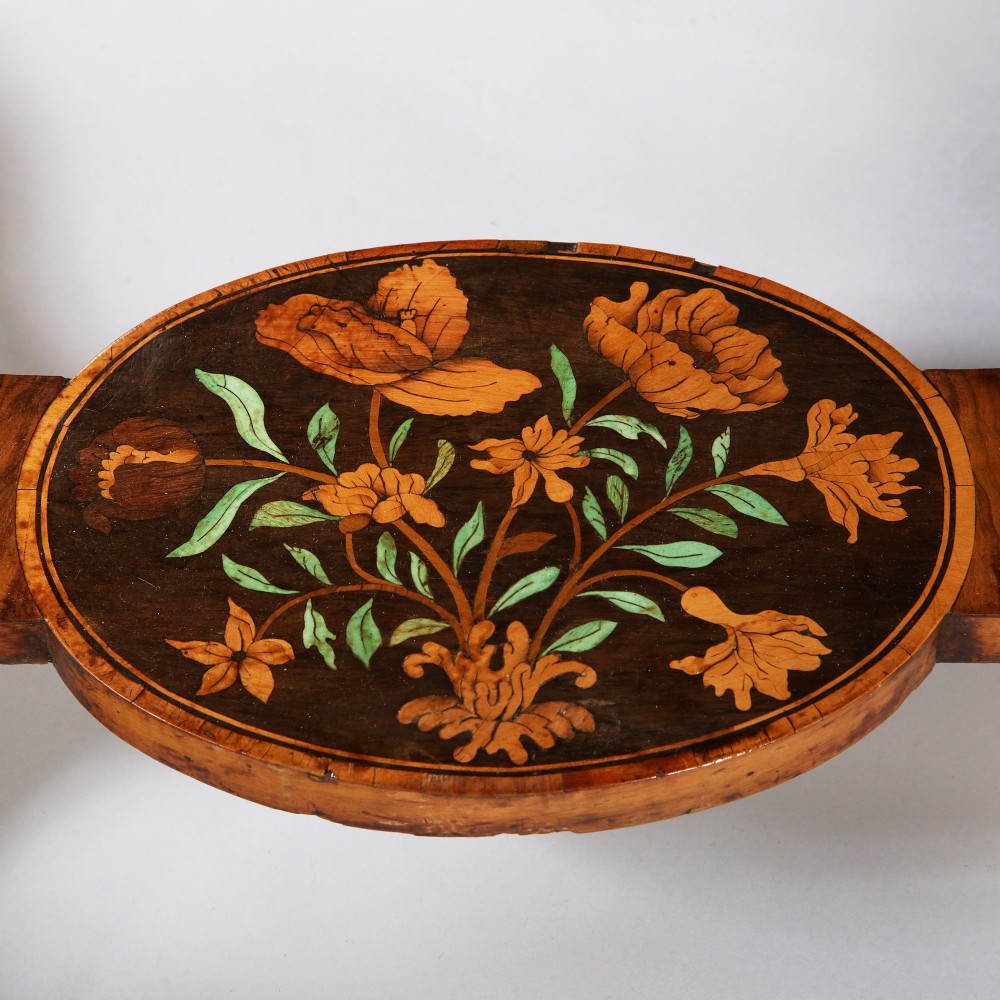
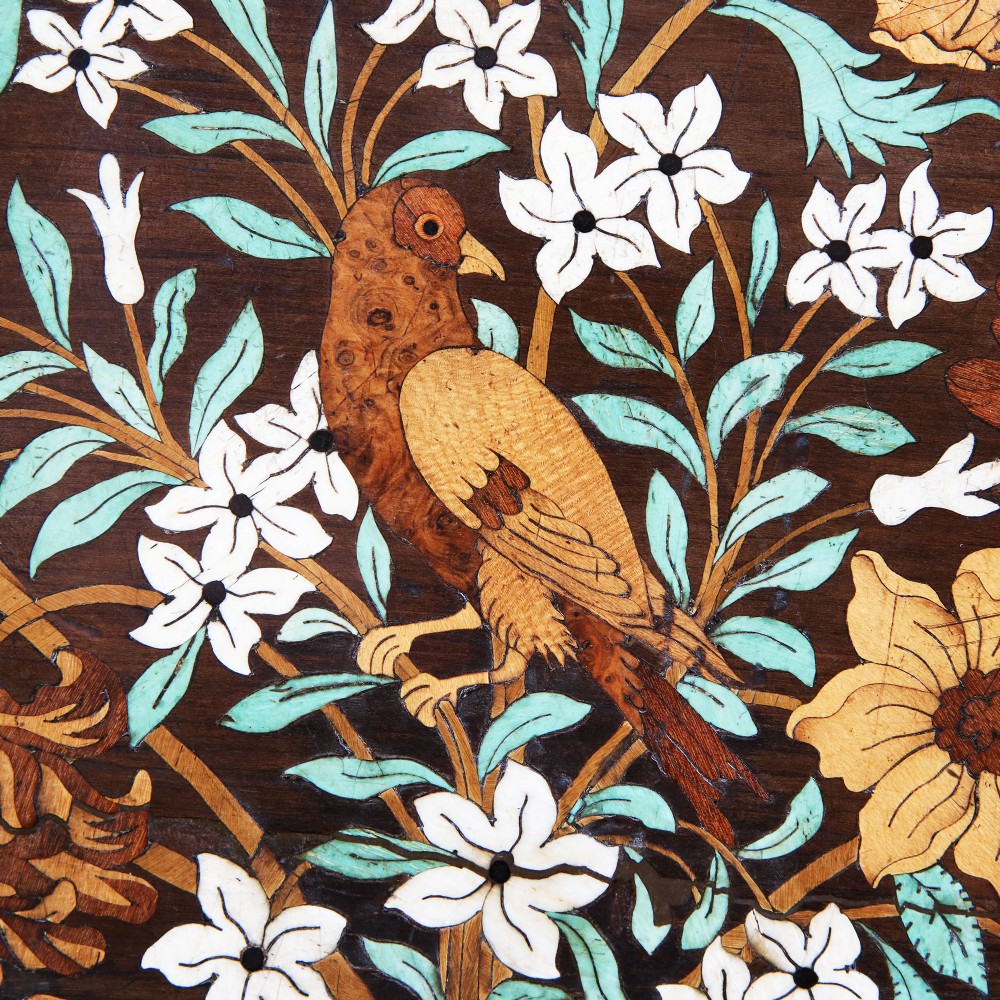
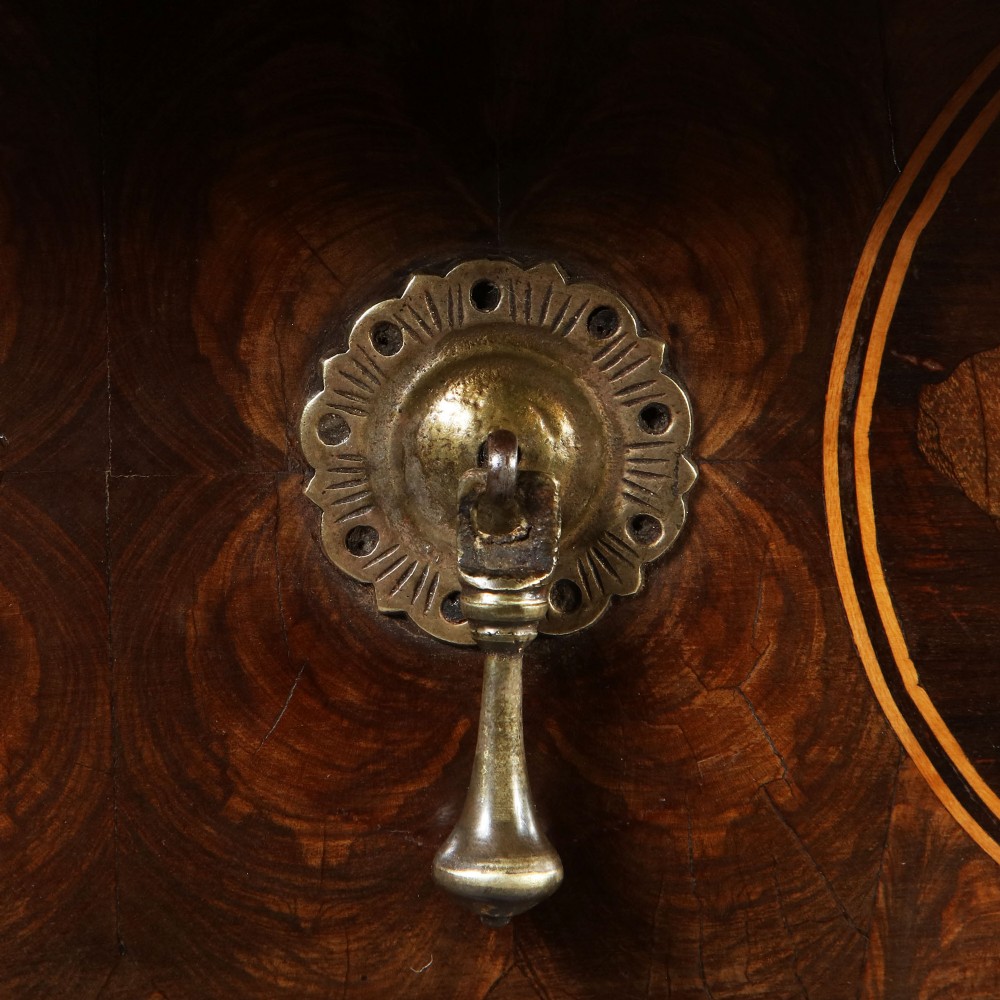
Alexander George Antiques Ltd. has dated this piece to the 17th Century.
Additional Information
Golle's will mentions a sum of money owed to Jensen for glue suggesting that close contact existed between the two masters. The catalyst here may well have been Golle's brother-in-law, Daniel Marot, the Huguenot designer and engraver trained under Bérain, who left France before the Revocation of the Edict of Nantes, entering the service of William and Mary first in Holland and then in England. Marot's engraved furniture designs show remarkable similarities with Jensen's documented pieces in the Royal Collection, and others attributed to him at Boughton, Drayton and elsewhere. It is possible that Jensen had French craftsmen working for him: for instance, one Peter Berew, who signs a receipt on his behalf at Drayton in 1693. French terms, barely anglicized, occur constantly in the accounts, and indeed the 'beuro' or 'scrutore' (escritoire) with 'drawers to stand on the top' (otherwise known as the 'caddinet') may be a form which Jensen introduced to this country from France, together with the narrow gateleg table with a folding top.
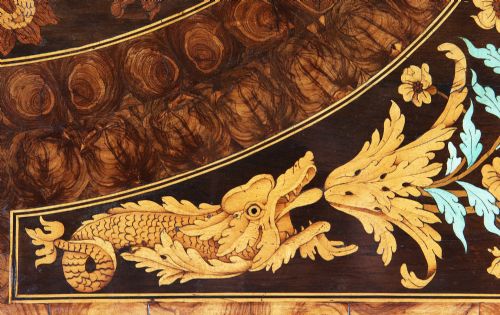
Gerrit Jensen was one of the foremost cabinet-makers of his day and worked in London from his premises in St. Martin's Lane. Jensen served the English crown since the reign of Charles II as the accounts of the Royal Household record a payment to him in 1680, for furniture which King Charles II commissioned as a royal gift for the King of Morocco. In 1689, Jensen was appointed royal cabinetmaker to King William III and Queen Mary – 'Cabinet maker in Ordinary' to the Crown; and he retained his royal appointment throughout the reign of Queen Anne, supplying furniture for St. James's Palace, Hampton Court and Kensington Palace. In addition to the Royal family and the Dukes of Devonshire, Jensen also attracted commissions from senior members of the nobility, including the Dukes of Richmond, Hamilton, Montagu and Somerset, collaborating with other leading artists and craftsmen on the decoration of some of the greatest town and country houses in England. Jensen was one of several artist-craftsmen of foreign background employed at the English court, and his work shows a strong Continental influence, reflecting the fashionable French court styles of Pierre Golle, André Charles Boulle and Daniel Marot earning him the title 'the English Boulle'.
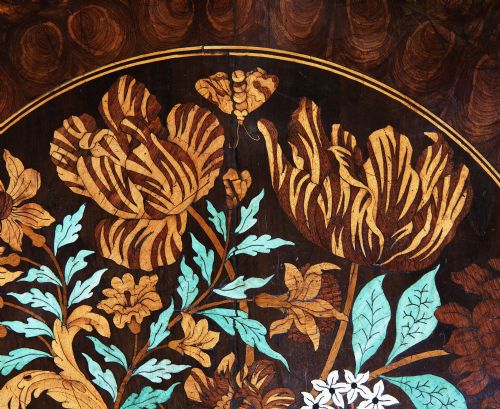
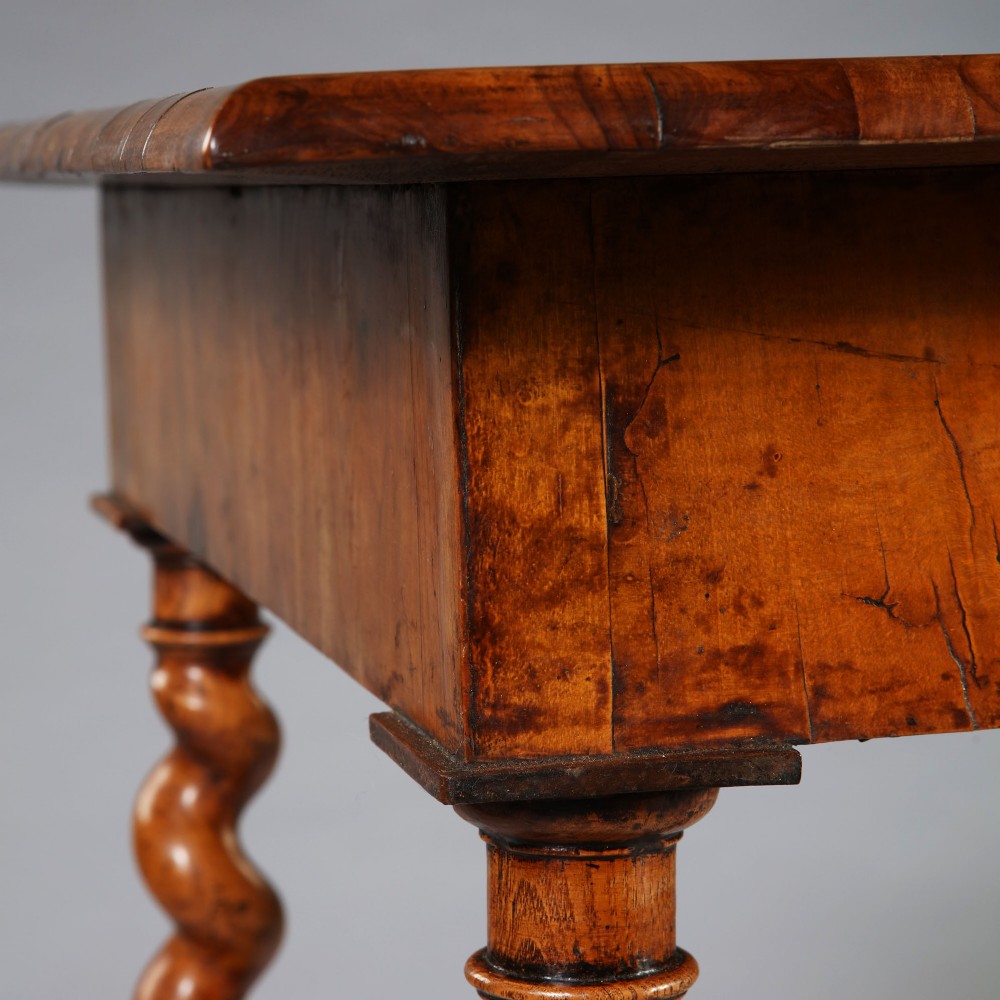
Further stylistic and circumstantial evidence supporting the attribution to Gerrit Jensen in association with Pierre Golle, is in part from a number of tables with attribution to Jensen at Ham House, Chatsworth and Beningbrough Hall, an olive oyster cabinet on chest from Chatsworth House, a cushion mirror in the Boston Museum of Art, a further cushion mirror at Ham House, a cabinet in the Rijkesmuseum, an unattributed table in the V&A and a cabinet from Levens Hall. We also take a brief look into other collaborations and possibility's in the royal collection. It should be noted like our example all legs to the aforementioned tables and the cabinet from Levens Hall, along w
Alexander George Antiques Ltd. has dated this piece to the 17th Century.
Offering carefully selected antique masterpieces from the 17th & 18th centuries
You can view the stock and full dealer information on the Alexander George Antiques Ltd. Profile Page
Alexander George Antiques Ltd. is a registered member of LAPADA
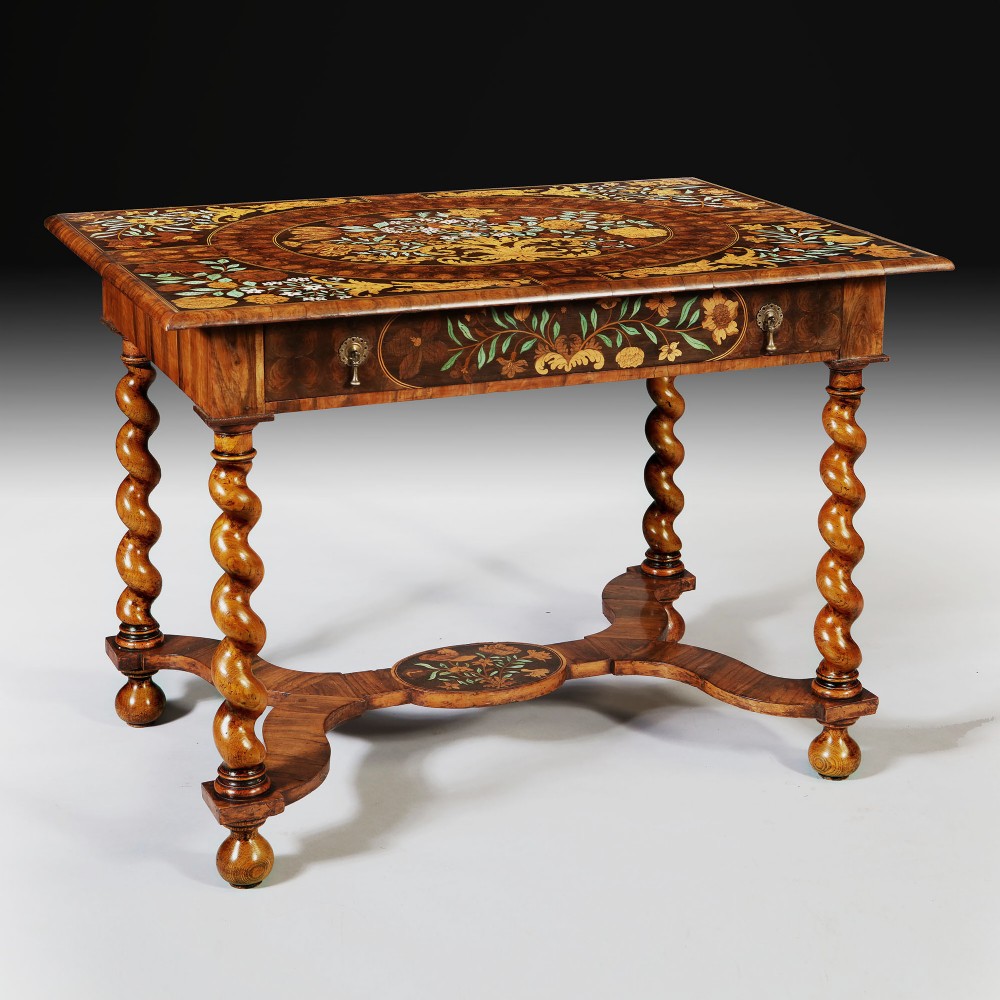
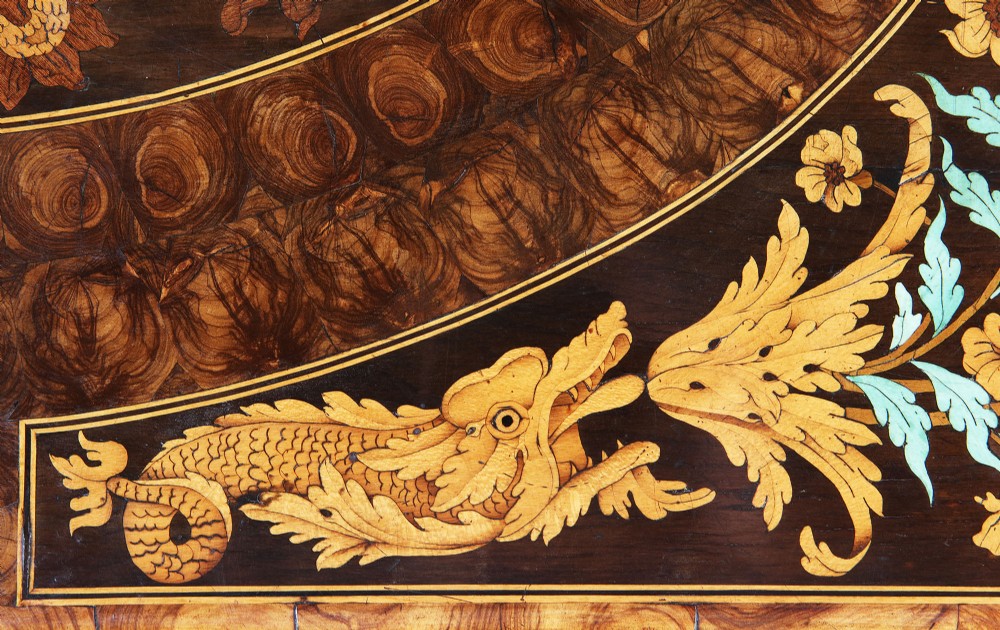
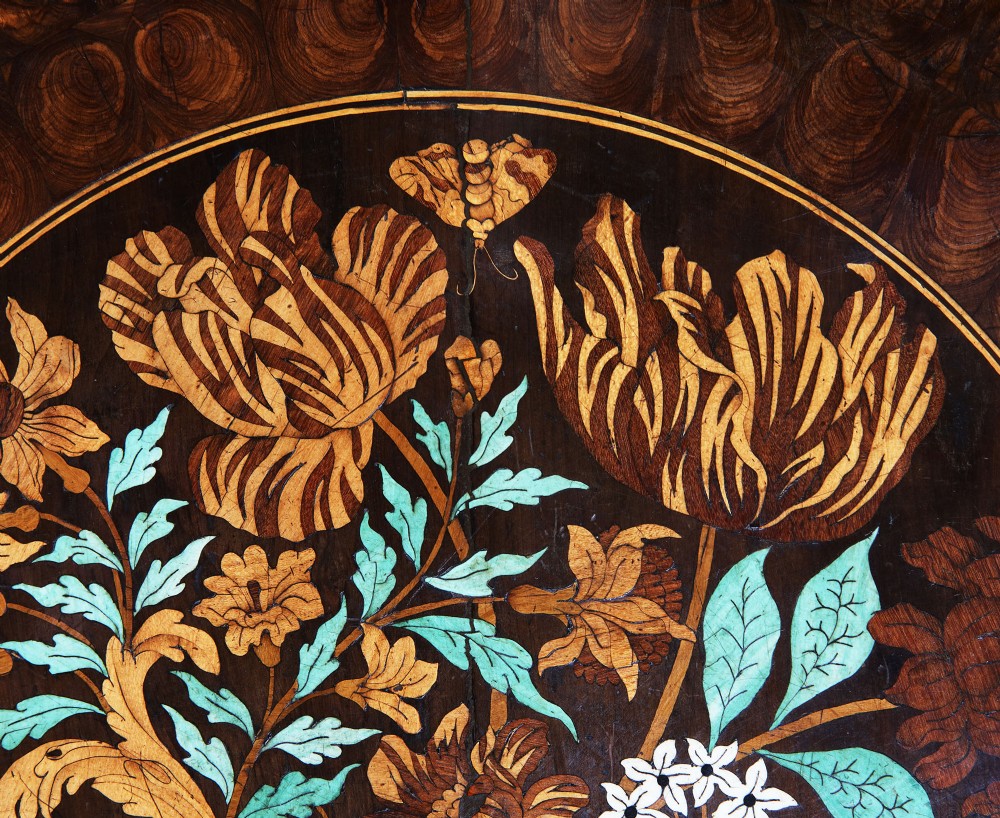
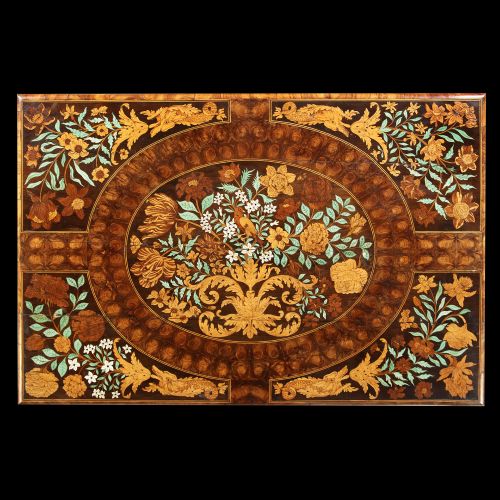
Charles II Olive Oyster Floral Marquetry Table